0

Self-Driving Cars in 2026: What Can They Really Do?

Self-Driving Cars

Fully Self-Driving Cars in 2026 are real, but only as taxi services in specific cities, mostly in the US and China. Cars available to Indian buyers still require drivers to keep their eyes on the road. Industry Standards for Driving Automation Division to Six Levels, Level 0 (no automation) to Level 5, a car capable of driving itself anywhere and anytime without human intervention.

Between Level 2 and Level 4, assisting and steering acceleration comes at Level 2 but the driver must be attentive all the time. A car handling all driving tasks in specific areas without requiring human supervision comes at Level 4.

What Can Driverless Cars Really Do?

The new cars offer advanced features such as cameras, radar, lidar, maps and AI software which detect what’s ahead of the car and give you signals. These features also keep track and plan route, control acceleration and braking with steering control which helps you in:
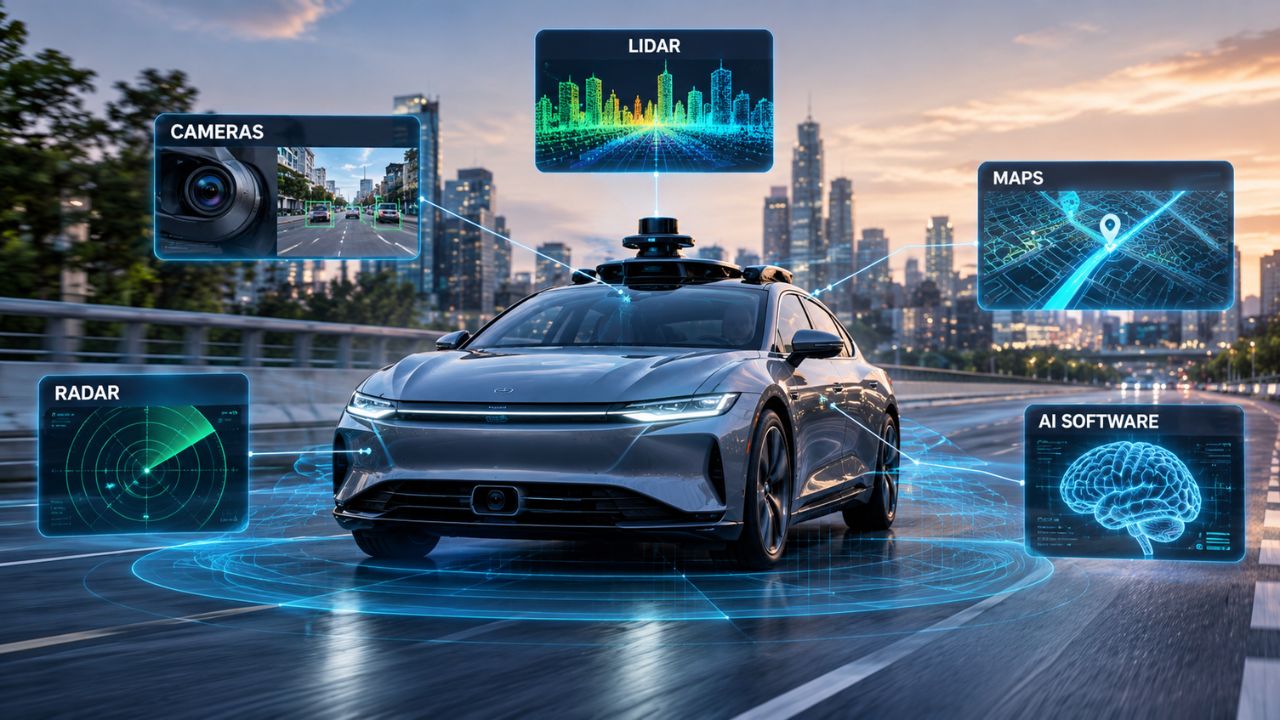
Driverless Cars Really Do

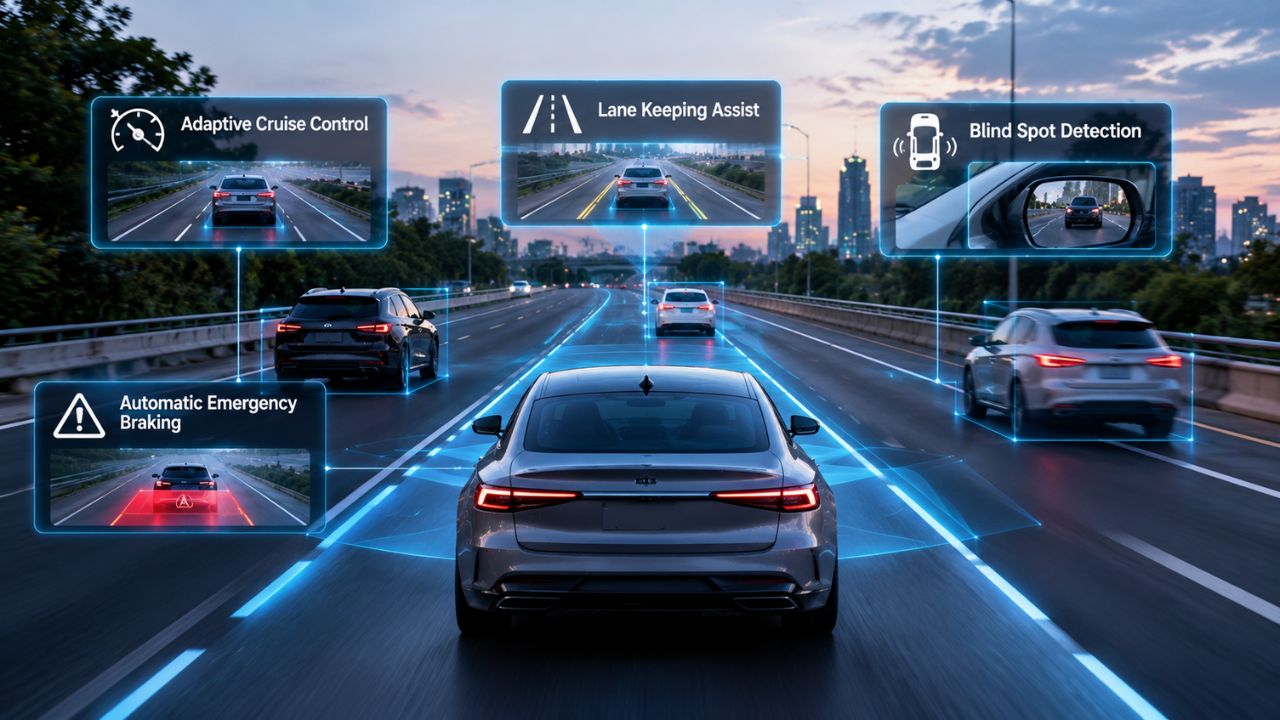
Warn and Intervene: Collision alerts, blind-spot detection, automatic emergency braking, and lane-keeping assistance.

Assist with Driving: Highway assistance, lane monitoring, and adaptive cruise control, while the driver remains in control.

Driverless in Limited Region: robotaxi services running without any human driver but only inside a mapped route with passengers.

React Consistently: software doesn’t get tired or distracted, which is one reason the safety numbers below look as they do.

Reporting cited by Electrek says its Robotaxi service runs unsupervised rides in six US metros: Austin, Dallas, Houston, Miami, Orlando and Tampa. That is a real milestone.

Robotaxis: Where Driverless Cars Actually Work

Waymo, owned by Alphabet, is the clearest example. The company launched paid public rides in Denver, San Diego and Tampa in 2026 along with 14 US cities. There are 500,000 paid rides a week on more than 4000 vehicles. 

China is also moving. One industry roundup puts Baidu’s Apollo Go at over 22 million cumulative rides across 27 cities worldwide as of May 2026. 

Are Self-Driving Cars in 2026 Safer To Go With?

Waymo’s record is positive over 270 million autonomous rides with 82% fewer damage from smaller crashes and 95% fewer injuries from serious crashes than human drivers. These figures show that Self-Driving Cars are thriving and going to take over Indian roads very soon in the future.

Self-Driving Cars in 2026 Safer

The damage of the car is smaller, Insurance Institute for Highway Safety (IIHS) found 81% fewer damage to the vehicle concluded from a test about 50 million driverless miles. Waymo vehicles had 68% fewer police-reportable crashes but IIHS also cautioned that monitoring automated vehicles by the federal system should improve since Austin wasn’t given positive results.

The Self-Driving Cars in 2026 are safer so far in limited areas according to data but still needs improvement to monitor before launching publicly.

👉  How AI in Cars Changing the Future Driving Experience

What Driverless Cars Still Can’t do 

A vehicle that can handle every road, weather condition and situation without human will was never addressed to consumers. The US safety regulator NHTSA says no vehicle for sale is fully automated or “self-driving” and no car sold in the US can be driven without the full attention of a driver at all times. 

Capability Today’s reality
Highway driving assistance Common, but the driver must supervise and take over
Driverless urban rides Possible in limited robotaxi service areas, not broadly available
All-weather, anywhere autonomy Not yet reliable or commercially available
Replacing human judgment Still limited by rare, unpredictable situations

These systems are strongest at repetitive, well-mapped driving in favourable conditions.

What About Cars You Can Actually Buy?

The only other approach extended beyond level 2 is level 3, the car runs in a world of certain and you can do other things until it says you have to look back. Mercedes leads here. Its Drive Pilot runs up to 95 km/h in Germany, but remains limited to 60 km/h in the United States. It is a luxury option, not a mainstream feature.

Self-driving cars cannot be used on Indian roads. Level 2 automation is the highest level of automation available, and drivers are still responsible when ADAS is functioning. Think of it as having a co-pilot, not an autopilot. 
Cars You Can Actually Buy

The policy mood has also been cautious. In 2017, Nitin Gadkari said India would not allow driverless cars, citing drivers’ jobs. That stance has softened, but only partly.

What is improving is ADAS. Level 2 features are now available in cars priced no more than ₹15 lakh, and the 2026 Renault Duster comes with 17 ADAS features. The brand-new Kia Seltos offers a level-2 suite of 21 safety features, including full collision avoidance and adaptive cruise control stop and go. 

Indian roads pose a challenge to ADAS: faded lane markings, two-wheeler traffic, cattle and pedestrians. Check your system, keep your hands on the wheel and make sure everything works before spending extra. 

 👉  Most Anticipated Cars of 2027: What Buyers Should Know

Conclusion

In 2026, self-driving is real but narrow. Waymo and a few rivals run driverless taxis in mapped cities. Tesla is still expanding and still missing its own deadlines. In India, the realistic benefit is better safety assistance, not a car that drives for you. Buy ADAS for the extra protection, not for hands-free promises.

Alok Kabir

Alok is an experienced SEO Specialist skilled in blogging and SEO-friendly content creation. He also specializes in Content Optimization and Technical SEO, including website optimization, crawlability, indexing, site speed, and on-page improvements to enhance search rankings and online visibility.

Leave a Reply

Your email address will not be published. Required fields are marked *

0

Swift vs Baleno 2026 Comparison: Price, Mileage, Features & Verdict

Published Feb 6, 2026, 1:04 PM
Last Updated Apr 8, 2026, 7:07 AM

Swift vs Baleno

If you’re shopping for a zippy, no-frills hatchback that takes the chaotic roads of India in its stride, Maruti Suzuki’s Swift vs Baleno are probably up there in your list of desired cars. I have been obsessing about these two for weeks —- testing driving, researching specs, and talking to owners in the crowded streets of Lucknow and on the highways of Delhi. Both are Maruti legends, but one is a sporty rebel, the other a sensible all-rounder. The Swift shouts fun, the Baleno one-upmanship comfort. 

Design and Presence 

The fourth generation Swift facelift (from 2024) maintains the aggressive design – sharp LED eyes, folded hood, and a slight rear spoiler. At 3,845mm long, it’s compact enough to make parking a breeze. Skinnier, longer (3,990mm), with a flowing coupe-like roofline and those crystal LED tail lamps, the Baleno is sleeker. It even has style, for a mini-crossover. 

Swift vs Baleno

Owners rave about Baleno turning heads at malls, while Swift feels youthful, ideal for young pros zipping through traffic. 

The Engines and Performance 

The 1.2L Z-Series petrol engine from Maruti powers both vehicles and puts out 82 PS of power and 112 Nm of peak torque — a tried and tested, dependable unit designed for daily use on Indian roads. But they are divided by transmission choices. Swift comes with a modern 5-speed manual and a bouncy AMT, Baleno takes it up a notch with a refined 5-speed torque converter automatic. 

The lighter kerb weight of Swift (961kg) makes the Go-kart-styled car nimbler with 0-100kmph acceleration in about 11 seconds, and its playful handling with the Twisty roads of Ghaziabad are Fun. 

Baleno (920-990kg) is quite planted, cruising at 100kmph with ease, but it’s not so “fun” to fling around. 

CNG variants of Swift vs Baleno? Both are superb — Swift just edges out in mileage at 32.85km/kg against Baleno’s 30.61km/kg (ARAI). But in diesel, Maruti abandoned it, but petrol hybrids are on the way in 2026. 

Features Showdown at a Glance


Feature Swift (Zeta/Alpha) Baleno (Alpha)
Infotainment 7″ touchscreen, Android Auto/Apple CarPlay 9″ touchscreen, same + Arkamys sound
Safety 6 airbags, ESP, hill-hold Dual airbags std, 6 optional; 360-cam
Comfort Auto AC, push-start, rear AC vents Heads-up display, sunroof, wireless charging
Mileage (Petrol MT) 24.8 kmpl 22.35 kmpl


The Swift brings its sporty persona to the fore with a head-up display and cruise control on higher variants, while the Baleno dials up the premium feel with a sunroof and ambient lighting, both of which instantly lift the cabin vibe. 

Both have a 5-star NCAP rating for safety — the Swift is a leader in adult and child protection, while the Baleno, although uses an older platform, is still very strong in terms of safety. 

Space and Practicality

In terms of space and day to day family practicality, the Swift feels more ’you’ — supportive seats, a roomy interior, and a 265L boot that’s adequate for daily shopping. The rear seat comfortably accommodates two adults, but getting three on a long drive starts to get cramped.

The Baleno, however, is a whole different league. Its 318L boot can handle weekend luggage with ease and its rear legroom is almost limo like for a hatchback – ideal for family holidays. 

When it comes to mileage, Swift leads in city traffic with a real-world 20–22 kmpl, but on Highway, it is Baleno’s smooth ride and stability which surprises you. 

Price of Swift vs Baleno


Variant Swift Price (₹ lakh) Baleno Price (₹ lakh)
Base (LXi/VXi) 6.49 – 7.29 6.70 – 7.51
Mid (VXi/Zeta) 7.80 – 9.45 8.45 – 9.92
Top (Alpha) 9.95 9.98 – 11.25 (AT)

Best Skoda Car Under 10 Lakhs in India

Conclusion

There was a time when Baleno and Swift were the obvious competitors in their respective segments, however, it’s a different story nowadays.

If driving happiness is your target, let your car be a Swift. It’s smaller, it’s faster, it’s more fun, it’s better suited to weaving through traffic on busy streets, and it’s simply more fun to drive. And it’s fabulous for young professionals and first-time buyers, as well as anyone who really likes a short city drive or weekend jaunts plus that “go-kart” feeling once you get caught in traffic. The enhanced real-world city fuel economy, combined with a robust safety score, make it even more compelling. 

But if you need more comfort, more space and a little more grown-up feel in your life, the Baleno is the smarter pick! It’s bigger, it’s more upmarket, it’s more relaxed, it’s more family-friendly. With its rear seat, larger boot, smoother highway ride, high-end features and refined automatic transmission, it’s a given that it’s a multi-purpose vehicle — it can run your office as efficiently as it can take the family on weekend drives. 

Swift vs Baleno — Which One Should You Buy?

  • If it’s fun, agile and youthful energy you want, pick the Swift.
  • Go for the Baleno if it’s comfort, space, and cost-effective practicality you want.

Both are Maruti legends for a reason — reliable, efficient, safe, and value-for-money. You can’t go wrong. 

0

Tata Launches BaaS Across Its Whole EV Range: Is the Lower Price Real?

Tata Launches BaaS Across Its Whole EV Range

A Harrier.ev advertised at Rs 14.49 lakh looks like a different car from the Rs 21.79 lakh Harrier.ev on the regular price list. It isn’t because Tata launches BaaS. Tata Motors’ EV arm has moved the battery into a separate loan, so the sticker price falls while the battery cost still has to be paid. 

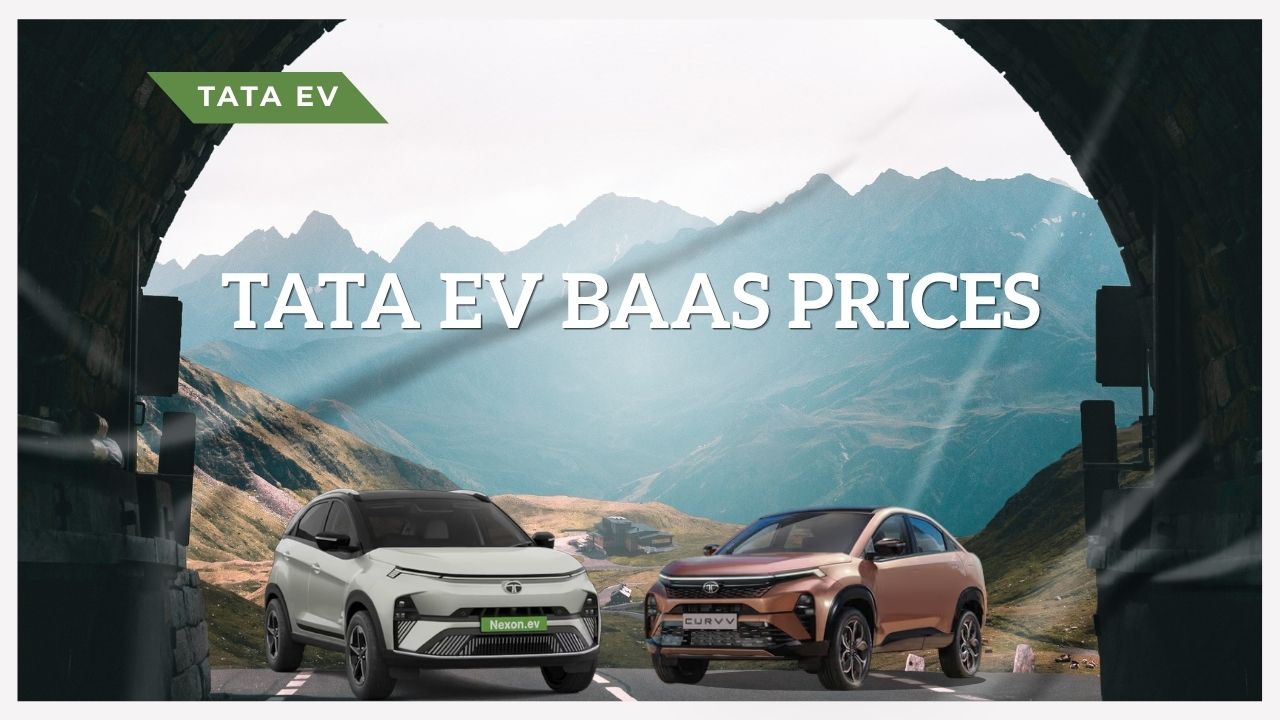
Tata.ev has extended Battery-as-a-Service to Nexon, Curvv, Sierra and Harrier, after launching it on the Tiago and Punch. Tata’s battery financing option now covers all six models, so it’s worth working out what you actually save.

Tata Launches BaaS For All EVs 

Buyers can still purchase any Tata EV with the battery included. Tata launches BaaS as an extra route, not a replacement. Tata calls it a dual-loan finance product: the vehicle and battery sit in separate loan accounts with flexible tenures, and multiple financiers are on board. The vehicle loan works like a normal car loan. The battery payment depends on battery size, down payment and tenure.

Tata’s Chief Commercial Officer, Vivek Srivatsa, said customers now want a choice in how they finance an EV as well as which one they buy. The company says the same vehicle technology, product experience and ownership support apply either way.

Tata Launches BaaS

Model-wise Tata EV BaaS Prices

Model BaaS vehicle price (ex-showroom) Regular starting price (with battery) Upfront saving vs regular price Battery usage cost
Tiago.ev ₹4.69 lakh ₹6.99 lakh ₹2.30 lakh ₹2.6/km
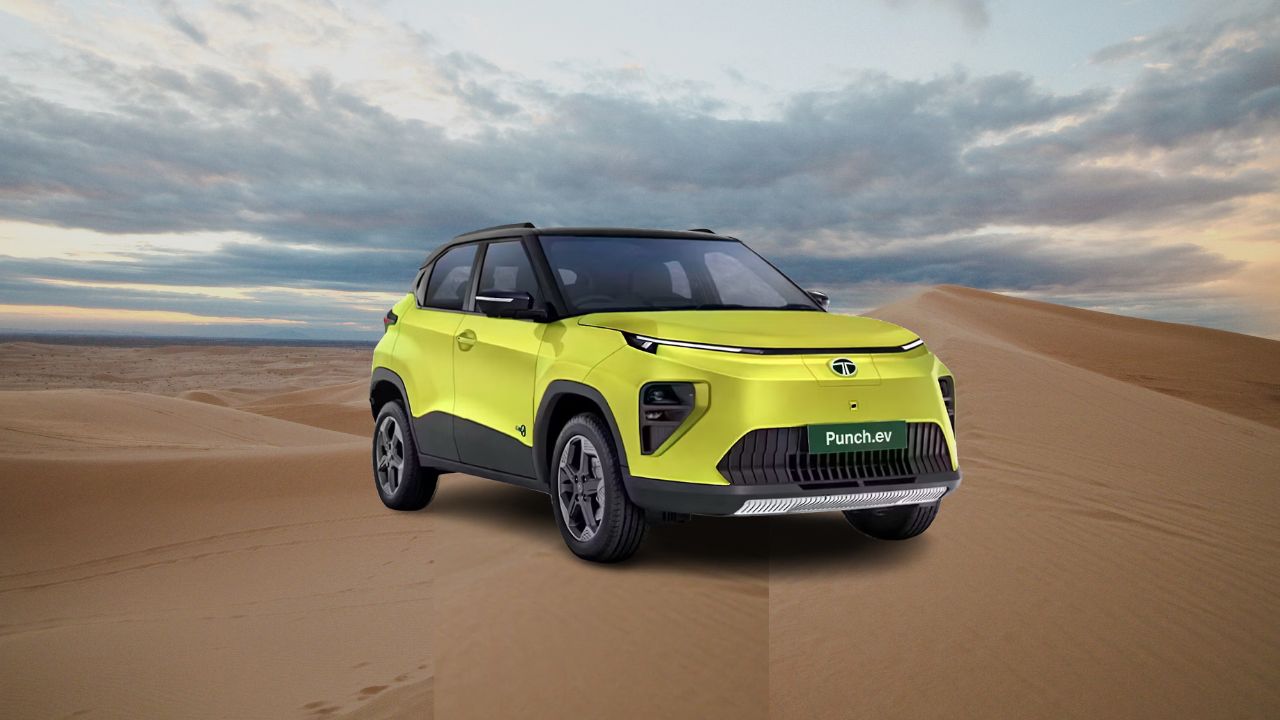
Punch.ev ₹6.59 lakh ₹9.79 lakh ₹3.20 lakh ₹2.6/km
Nexon.ev ₹8.99 lakh ₹14.34 lakh ₹5.35 lakh ₹4.4/km
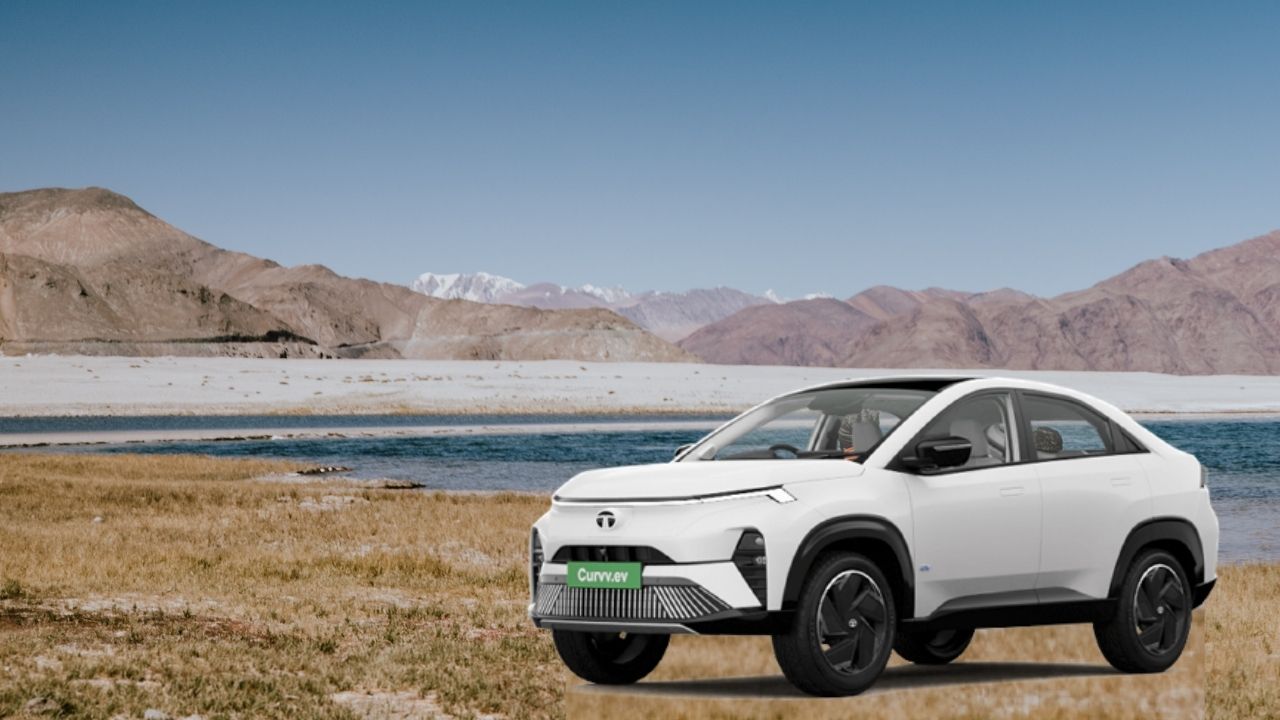
Curvv.ev ₹10.99 lakh ₹17.19 lakh ₹6.20 lakh ₹5.0/km
Sierra.ev ₹11.99 lakh ₹18.79 lakh ₹6.80 lakh ₹5.5/km
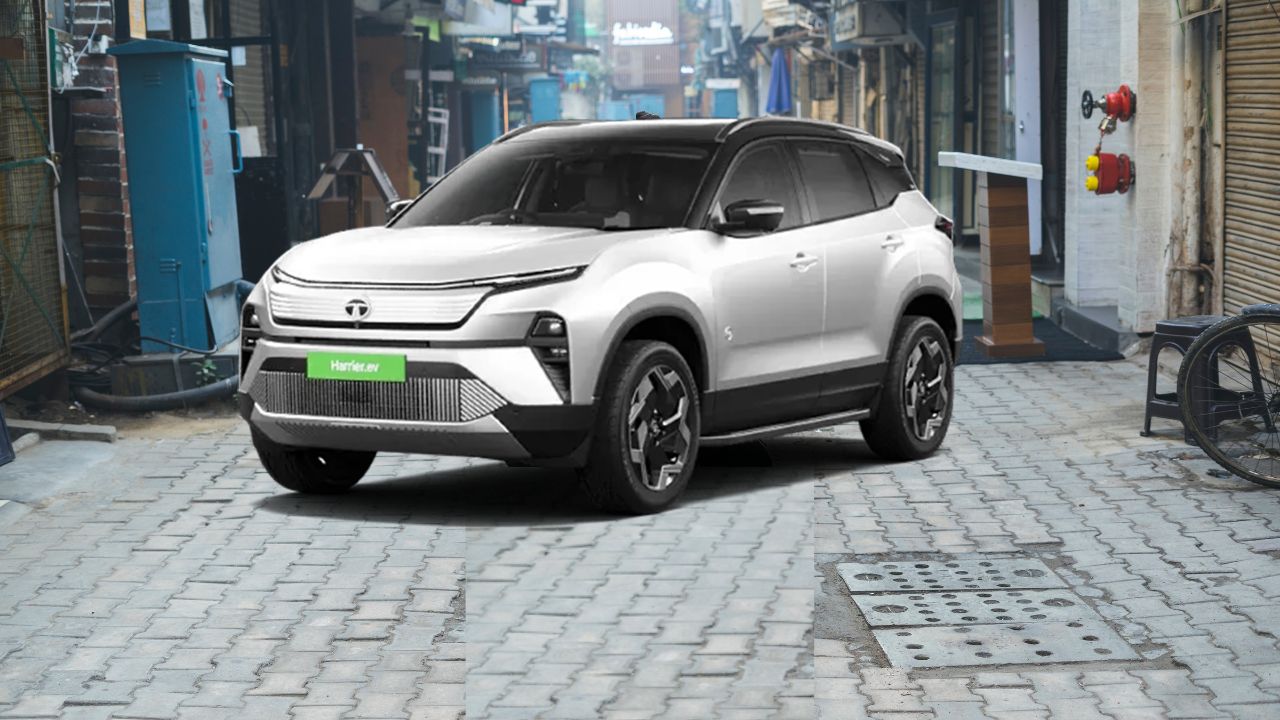
Harrier.ev ₹14.49 lakh ₹21.79 lakh ₹7.30 lakh ₹5.9/km

The Harrier.ev’s ex-showroom price drops from Rs 21.79 lakh to Rs 14.49 lakh under BaaS. The prices apply to entry-level variants for personal users, and they exclude government levies, road tax, insurance and TCS. Tiago’s saving is the smallest and Harrier’s the largest, because a bigger battery means a bigger chunk moved out of the sticker price.

Battery capacity and claimed range for each model weren’t in the launch coverage that could verify, so check Tata’s own configurator before quoting specs in your budget.

See Full Detail :-   New Hyundai Flagship Models Arriving Soon to Dominate Indian SUV Market

How Battery Loan Charges Are Calculated

Tata quotes the battery cost per kilometre. The battery financing or usage cost starts at Rs 2.6 per km. Take a guess with these starting figures, as it’s not the rate for each model, so ask the dealer for the exact number on your variant.

Tata’s illustration assumes 60 km per day for most models and 44 km per day for the Tiago.ev. At Rs 2.6/km and 44 km a day, that works out to roughly Rs 114 a day, or about Rs 3,400 a month. Your real figure will differ with your driving and your financing terms.

Battery Loan Charges

The battery payment isn’t your running cost. Charging, maintenance and repairs are extra. Electricity still comes on top.

One warning applies to the whole scheme. The lower price is a separation of costs for financing purposes, not an equivalent discount on the complete vehicle. You are paying for the battery, just in a different account.

Tata BaaS For All EVs VS Rivals

Tata is catching up to a crowded field. Mahindra recently introduced BaaS for the XEV 9S and XEV 9e, and MG’s Hector Tomahawk EV starts at Rs 13.99 lakh plus a battery rental of Rs 4.90 per km. The same report says Hyundai’s Creta Electric, Kia’s Syros EV, Citroen’s e-C3X and Toyota’s Ebella also have BaaS options.

MG’s Rs 4.90/km is the clearest benchmark. At Tata’s 60 km/day assumption, that rate comes to about Rs 8,800 a month for battery rental alone. Tata hasn’t shared per-km rates for its larger SUVs yet, so it’s too early to say whether the Sierra or Harrier will be cheaper. 

Tata BaaS For All EVs VS Rivals

Tata’s edge is that all six models are covered, so you can stay in one brand whether you want a Rs 4.69 lakh hatchback or a Rs 14.49 lakh SUV.

The main test is how long you’ll keep the car and how far you’ll drive it. Take the Tiago.ev. The Rs 2.30 lakh upfront saving divided by Rs 2.6/km gives about 88,000 km. At 44 km a day, that’s around five and a half years. If the per-km figure is the entire battery payment and the tenure runs that long, the saving is really a deferral. That ignores interest and any structure that couldn’t be confirmed yet.

Which Kind of EV Buyers Opt For BaaS?

  • Tight upfront budgets: you can afford the monthly payments but not a large down payment.
  • Low-mileage drivers: you drive well under Tata’s daily assumptions, so a per-km battery charge costs you less.
  • Short-tenure owners: you plan to sell within a few years and won’t stay on the battery loan long.

If you drive heavily or keep cars for a decade, buying outright with the battery included will likely cost less over time.

Read  Also :-  Renault Duster Hybrid Launches in India on 17 October 

Conclusion 

Tata launches BaaS for EV across models — Tiago, Punch, Nexon, Curvv, Sierra and Harrier. EV buyers can now finance a car on two different routes, this lowers the sticker but not the car price. This is not a discount, it’s a way to make a broader financing option for EVs.

Before signing, ask the dealer for the total down payment across both loans, the total payable over both tenures, and the battery EMI in writing. Compare that with a standard single loan. If the BaaS total isn’t clearly lower for your usage, skip it.

And if your budget is tight, consider this as a chance to buy an EV under Battery-as-a-Service scheme. 

0

Mahindra XUV 7XO Specs and Features: Engine, Mileage, Safety, Interior Details Overview

Mahindra XUV 7XO Specs and Features

It’s December 2025 and if you’ve been tracking the Indian SUV market, you’re aware that the iconic XUV700 is going to hand over the mantle. Entering the Mahindra XUV 7XO – a name that sounds futuristic and a car that will be even sharper.

The official global launch is on January 5, 2026, and the bookings have already started, the XUV 7XO is the talk of the town. Whether you’re a dyed-in-the-wool Mahindra enthusiast or just a person in the market for a luxury SUV that’s not going to cost an arm and a leg, this redesign is a pretty big deal.

So let’s get inside what makes the new XUV 7XO so great, from its refreshed aggressive exterior to the tech-laden cabin we’ve been waiting for. 

Quick Specs Overview

Feature Petrol Variant Diesel Variant
Engine 2.0L mStallion Turbo 2.2L mHawk Turbo
Power 200 BHP 185 BHP
Torque 380 Nm 420 – 450 Nm
Transmission 6-MT / 6-AT 6-MT / 6-AT
0-60 km/h ~5.0 Seconds ~5.8 Seconds
Drive Type FWD FWD / AWD (Optional)

Exterior: Sharper, Bolder, and Unmistakably Mahindra

The XUV700 already looked stunning as is but the 7XO takes that “Cheetah-inspired” styling and slaps on a modern, electric-age layer of paint.

The most noticeable change is the face. The C-shaped DRLs are now long gone, instead, the 7XO sports a more aggressive inverted L-shaped LED DRL configuration that lend a menacing look to the car, especially at night. It definitely shares DNA with its electric relatives such as the XEV 9S. The grille has been blacked out and features slim silver slats, the bulky chrome has been removed for a more athletic, stealthier look.

Sharper, Bolder, and Unmistakably Mahindra

Dropping back, the linked LED tail lights are the centerpiece. They run across all the width of the tailgate and give the car a wider, plusher look. Add a sharpening set of diamond-cut alloy wheels on top and you have an SUV that turns heads when you wait for lights. 

Interior That Leaves a Stunning Impression

If you were impressed with the two-screen layout in the earlier version, just wait till you see the XUV 7XO. Mahindra has spared no effort to make this cabin feel more like a lounge.

The new feature here is the Triple-Screen Dashboard. Like high-end luxury EVs, the 7XO is equipped with three seamless screens—one for the driver’s instrument cluster, a massive central infotainment hub, and a dedicated screen for the co-driver. Maybe it’s the tech lover’s dream.

Interior That Leaves a Stunning Impression

Outside the two screens, the cabin is fancier. Soft-touch materials on the dash, a new two-spoke steering wheel (which looks really nice), and upgraded ventilated seats that now come with a “Boss Mode” for the back passenger — just in case you’re feeling like getting driven around for a change. 

Engine & Performance

Mahindra clearly understands the value of not fixing something that isn’t broken. The XUV 7XO comes with the powerhouse engines that made the XUV a highway king. Punch of Petrol or Torque of Diesel: If you are interested in getting the best out of power of petrol or torque of diesel with 7XO, you are good to go.

Engine & Performance

  • 2.0L mStallion Turbo Petrol: This engine is a rocket. With 200 BHP on tap, it is still the most powerful petrol engine in the segment. The refinement is buttery smooth and when you step on the gas it pulls like a freight train.
  • 2.2L mHawk Diesel: That’s the cruiser. It’s rumored to be available in two configurations, with the top-spec kicking out 185 BHP and 450 Nm of torque. Doing the lambada around lorries is child’s play and so is keeping the revs high in this surprisingly fuel efficient little car.

Both are expected to come with the smooth 6-speed manual and the responsive 6-speed automatic torque converter. 

Safety is Buyer’s First Priority

Safety is a stronghold for Mahindra and the XUV 7XO further builds on that. They anticipate the ADAS (Advanced Driver Assistance Systems) to be upgraded to Level 2+ with better calibration for Indian traffic conditions. That translates to an adaptive cruise control that runs smoother and a lane-keep assist that is more reliable.

Passive safety is also robust, and 7 airbags may become standard on more variants. The quality of the construction is still tank-like, bringing the 5-star safety legacy forward. 

Read More :-  Ishan Kishan’s Luxury Car List: Price, Models & Exclusive Collection

Conclusion

The Mahindra XUV 7XO is not just a facelift, it’s an enhancement to an already great package. It rectifies the few niggles people had with the previous generation (like the dated infotainment system) and adds equipment that are normally reserved for vehicles costing twice as much. With costs likely to be in the ₹15-Lakh to ₹26-Lakh range, it continues to deliver mind-boggling value for money. So if you need a family SUV that’s safe, strong and full of tech, hanging on until January 5 may be the best decision you make all year. 

0

Koenigsegg Cars: Fastest Models, Price, History and Top Hypercars

Published Mar 17, 2026, 12:43 PM
Last Updated Apr 6, 2026, 12:23 PM

Koenigsegg Cars

Let me tell you about a guy who as a kid in the 90s watched a Norwegian stop-motion film about a bike race and decided he was going to create the best sports car in the world. Christian von Koenigsegg was 22 when he established his company in 1994. While his friends were plotting their futures, he was ripping out pages from car magazines, teaching himself physics, and operating a strange trading business that involved importing misprinted plastic bags and — I am not making this up — frozen chickens. That poultry money? It would become the seed capital for what would ultimately supplant Ferrari, Porsche, and Bugatti.

Koenigsegg’s Fastest Creations

Jesko Absolut: Theoretical Velocity Champion

When Koenigsegg unveiled the Jesko Absolut back in 2019, they weren’t shy about making a sweeping statement: this would be their fastest car ever and could be the fastest production car ever. It takes its name from Christian’s father Jesko von Koenigsegg and features the ultimate expression of aerodynamic efficiency. Jesko Absolut’s drag coefficient is just 0.278 and maintaining very low frontal area and the Absolut creates only 40 kg of downforce at top speed – as opposed to around 1,400 kg generated by the Jesko on the track.

The Koenigsegg Jesko Absolut is a technical masterpiece, conceived to break new ground in terms of car performance.

Engine  twin-turbo V8
Power  1,600 horsepower on E85 biofuel
Transmission Koenigsegg’s Light Speed Transmission
Gear  nine-speed multi-clutch
Speed 330 mph

What makes this feat even more incredible is the engine is readily available. Koenigsegg’s V8, on the other hand, is a fairly compact unit compared to the monstrous W16—albeit elephantine in power levels and, really, it shouldn’t come as a surprise that it is also fairly massive. It’s over-efficiency meets excess, a marriage that encapsulates the brand. 

Regera: The Hybrid Game-Changer

The Rager made hybrid performance look easy prior to the Jesko Absolut taking the spotlight. This revolutionary machine, which was presented in 2015, combined 3 electric motors with a 5.0-liter twin-turbo V8 engine generating 1,500 horsepower. Yet it was the transmission — or more specifically, what the car didn’t have in the way of one — that was the real invention, not the power. 

Regera

Koenigsegg has cut out the gearbox altogether, with its new Koenigsegg Direct Drive system. All speeds are taken care of by a single fixed gear ratio and at low speeds electric motors compensate for the torque gap. Regera offers smooth acceleration from 0— 250 mph within the same gear and it goes from 0-250 mph in 20 seconds, this raw number is a reality that feels like a dream but it’s true power.. 

It became an example of Koenigsegg’s thriller hero. The “Autoskin” makes the car open and close all its doors and panels like a transformer would show pieces of metal choreography. It’s redundant, over the top and completely mesmerizing — exactly what a hypercar should be. 

Agera RS: The Record Breaker

Agera RS is the top design car that exists on this land which was introduced in 2015, its mind-blowing power and speed covered with tech is extreme.

Agera RS

Engine  Twin-turbocharged 5.0-liter V8
Power  1,341 horsepower 
Top speed 277.9 mph (447.19 km/h)

It holds a position to break multiple records on the ground, it proves its capabilities and power to stand out as the most powerful engineered car on the platform.

Koenigsegg CC850 

This car is produced on high demand to the 70 units as it is a reboot of the old CC850. The end result is a hypercar that blends such familiar forms with genuinely new technology. 

Key Specifications

  • It offers a 5.0-litre twin-turbo V8 powerful engine to make 1,280 horsepower.
  • That’s not it, with 1,106 pound-feet of torque and 1,385 horsepower on E85—it runs like hell. 
  • The transmission is a cutting edge 9-speed multi-clutch system with gated shifter, which gives driver ability to shift gears manually. 
  • Performance: approximately 2.4 seconds to 0–100 mph.
  • This layout recreates the touch & feel of a real stick-shift without the use of a clutch pedal while keeping the drive-line connected to the driver. 
  • Price: Approximately $3.65 million  

Visually, the CC850 is inspired by the classic CC8S yet it’s completely up to date under the bonnet. It has clean lines, modern mechanics and a removable targa top that improves the driving experience and the timeless look of the car.  

Gemera: Revolutionary Technology

The Koenigsegg Gemera has been touted as the world’s first Mega-GT. The Gemera is not an outlier in that sense, but rather a sign that hypercars can be both blisteringly fast and useful, two traditional requirements that rarely coexist, though that is now changing with more mainstream products resembling megacars.

Gemera

It’s got true four-seat space with comfort and still manages to deliver the mind-bending power Koenigsegg is renowned for. 

Two Powertrain Options:

Three-Cylinder Hybrid

The above engine is one which has been engineered to amazement with extraordinary approach and thinking and hence the innovation in the automotive industry. 

  • It is a 2.0-liter twin-turbo three-cylinder engine with advanced Freevalve technology, which does away with the traditional camshaft. 
  • It produces a respectable 592 horsepower from just the internal combustion engine.
  • When combined with Koenigsegg’s Dark Matter electric motor, the overall total output upgrades to mind-boggling 1,381 horsepower and 1,364 lb-ft of torque. 
  • Despite its small size and lightweight design at a mere 70 kg (154 lbs), this engine is the most powerful three cylinder engine ever made. Its blend of power, efficiency, and innovation establishes a new standard in hypercar performance. 

Efficiency: This technology reduces emissions while driving by about 15–20% and cold-start emissions by nearly 60%, making it marginally cleaner than most hypercars. 

Hot V8 (HV8)

The Koenigsegg car described is the height of engineered automotive perfection and performance. 

engine  twin-turbo-charged 5.0-liter V8
advanced  “Hot-V” turbo
power 1,479 horse power
Combination with Dark Matter, a radical new, high-tech electric motor (800 additional hp)
Power & Torque 2300 total, 2028 torque

 About Transmission: Both the engines are equipped with Light Speed Tourbillon Transmission (LSTT) – a 9-speed, 7-clutch automatic inspired by the Jesko’s LST. For an instant shift from input shaft to the crankshaft for instant shifts of the flywheel. 

Practical Features:

Feature Details
Drivetrain 4-wheel drive and 4-wheel torque vectoring 
Storage 200 liters of storage space
Family-Friendly Options Isofix child seat mounts and roof rack compatibility
Fuel Tank 115-liter capacity
Battery & Electric Range 14 kWh battery pack providing 31 miles of electric-only range
Infotainment & Comfort Apple CarPlay and heated, electrically adjustable seats
Price Starting at $1.7 million USD

The Dark Matter E-Motor

Gemera spearheads Koenigsegg’s “Dark Matter” electric motor is a radical feat of engineering that will shape the design of future automobiles:

  • Output: 800 hp and 922 lb-ft (1,250 Nm) of torque
  • Weight: At only 39 kg (86 lbs), lighter than a bag of cement
  • Design: “Raxial Flux” - a radial and axial flux designs hybrid that wasn´t known in the automotive vocabulary until Koenigsegg designed it.
  • Technology: 6-phase system (double the usual 3-phase) based on silicon carbide semiconductors allowing for faster switching and low heat dissipation,
  • Materials: Motor is up to 90% carbon fiber including rotor and stator structures with no insulator layer added – world first
  • Size: 383.3 mm H × 381.5 mm W × 135.5 mm D – small enough to slip in a backpack! 

Topped off with the “David” inverter (at 33 lbs, the inverter is capable of 1,300+ amps and 850 volts), this system is the bleeding edge of electric propulsion. 

What Excellence Costs

Being able to own a Koenigsegg means you have the matching financial capabilities to the car’s insane performance. The Jesko, in Attack and Absolut versions, costs $3 million prior to options. The Regera, capped at 80, started at $1.9 million but now trades for far more in the secondary market. Even Gemera – which is basically entry-level in the hypercar firm’s product range, being a four-seater hybrid with 1,700hp – has a list price of over $1.7 million.

Excellence Costs

This is all to say: these numbers all make sense. Build a Koenigsegg, it takes about 4,000 hours. The carbon fiber monocoques are baked in autoclaves, the engines are hand built — not by robots — and quality control involves measurements within tolerances gauged in microns. So when you’re making about 50 cars a year, total — from all models — there are no economies of scale. 

Koenigsegg, however, insists its prices represent value relative to the other players. A Bugatti Chiron Super Sport 300+ is around $4 million, and limited edition Ferrari and Lamborghini models regularly go beyond the $2 million mark, although they’re less impressive in terms of numbers. In the wacky hypercar world economics, Koenigsegg is the engineer’s choice — buy for function, not badge heritage. 

Read More:- Gautam Singhania Car Collection 2026: Ferrari, Lamborghini, McLaren & More

Conclusion

What started as an impossible dream for a 22-year-old is now a reality in automotive form. Koenigsegg, the world’s most prestigious manufacturer, shows that passion, mixed with true engineering innovation, can trump the availability of resources. These are not just quick cars – they make statements on what is capable for human, making us think that the established ways really are the only way forward.

Each and every Koenigsegg is a culmination of two decades of obsessively refining, making engineering breakthroughs beyond any conventional understanding and a stubborn belief that perfection remains worth chasing up and chasing down, despite being ultimately unattainable. 

In a business increasingly defined by corporate consolidation and regulatory compromise, Koenigsegg is a beacon that originally appeared on Quattroruote in Italian individual vision and mechanical purity. The Ghost Squadron is still flying, faster and more vibrantly than ever, a reminder that there remains a place for the rebel in the highest veins of automotive excellence. 

0

Buying a Used Car? Don’t Get Cheated! Must-Know Precautions & Tips

Published May 21, 2025, 12:16 PM
Last Updated Nov 5, 2026, 4:18 PM

Chosen to purchase a trade-in vehicle? Indeed, you are not by any means the only one, a great many Indians are currently picking utilized vehicles and on the off chance that we take a gander at measurements the most recent two years have seen a flood in the trade-in vehicle market as an ever increasing number of individuals are presently deciding on private vehicle. Whatever your explanation be, we need you to realize that you’ve settled on the right decision.

In any case, on the lookout, not all things are what it is by all accounts and you ought to consistently have a watchful eye to spot which vehicle vender is a cheat and which isn’t. On those lines we need you to be advised about a couple of insurances that you ought to embrace when purchasing a pre-owned vehicle.

Let a car mechanic accompany you

Unless you are an expert evaluator yourself, it would be wise to take an experienced car mechanic with you to know the nitty-gritty details of the vehicle. Although you might have to pay him for his services, it would be better than buying the wrong car and feeling remorseful afterward.

Check the car thoroughly

Try not to depend on what the merchant claims about the vehicle, check the vehicle for yourself. You can relinquish minor scratches and marks yet be careful about the greater ones, vehicles with body rust are a major no. Check for paint surface contrasts. These will assist you with understanding the circumstance the vehicle might’ve been in. Likewise, watch out for the electricals, everything ought to be in working condition, in case anything is awkward, deal. The tires ought to be in acceptable condition, in case they’re thinning up top, you ought to have the option to set aside more cash.

Test Drive

A very important aspect of buying a car is the test drive. Starting the car should be a very smooth process. There shouldn’t be any untoward noises, hop out of the car with the engine running and open the bonnet to check weird noises. Check the tailpipe, there shouldn’t be any smoke or oil spouts.

Gear shifting should be effortless, you should not apply any extra pressure on the stick. Engage the clutch and when you release it, the vehicle should move forward in a gentle manner without jerks or vibrations.

Take the car out for a ride, feel the suspension, no squeaking or odd vibrations should be felt. Another way to test the suspension is to tackle corners with a little more speed than you usually drive at. Sharp turns put the suspension into action and if you feel anything is out of place, take the call.

Document verification

Check documents when buying a used car

So, the car is good, but don’t move ahead until you’ve verified the documents and the information on them. A few pointers:

  • Registration Certificate is a crucial document that confirms the legality of the vehicle and ownership. Make sure that the certificate is not a duplicate one  – Duplicate Registration Certificate. If you are buying from a dealer check if the RC has the name of the dealer, this would mean that you would be the third buyer, which should not be the case as the market value will be low for a third-hand car.
  • VIN and Engine no. should be the same everywhere i.e., on the Registration Certificate and the car. A few places where you can find the VIN no.
  • Insurance is another important vehicle document without which a car cannot ply on the roads. Make sure that the insurance is also transferred in your name and has a validity of at least three weeks post purchase. If it doesn’t you can bargain and buy new insurance which is much more beneficial.
  • A vehicle service book tells a lot about the car, for example if the servicings are consistent then you know that the car was cared for and maintained to the highest standards. But, on the flip side it can be forged as well. If it is too good to be true then maybe it is not true. Be sure to ask as many questions to the owner. Like the dents and major scratches.
  • Road tax certificate is another important document that certifies that no taxes are due. Although it is a one time payment that is paid at the time of purchase of the car. In any case if it isn’t, there is something fishy.
  • Pollution under control certificate shows the emission levels of the car, via which you can ascertain the condition the engine is in.
  • A Loan NOC is something that you should be aware of in case the vehicle was purchased on a loan, this confirms that all loan dues have been paid and the financier has no claim on the vehicle.

Vehicle modifications

Many people opt for vehicle modifications to make their car look a certain way, and any part of the vehicle can be modified, that is, as long as it is legal. Certain changes like car color, engine tweaking are illegal. So are installation of tyres bigger than what the manufacturer recommends.

Here’s a list of car modifications that are considered illegal in India.

  • Fancy number plates
  • Loud exhausts
  • Roof modifications
  • Engine mods
  • Wide tyres
  • Body lifting kits
  • Car color

Make sure that the car you are going to buy doesn’t have the above modifications, if it has then it would be best to look out for another vehicle.

Get an idea of the price online

Image depicting a search for a used car online

Before you go out hunting for a used car, select the car that you think is the right choice for you, this includes the no. of kilometers it has run and its age. Check these details online to get an idea of the price, compare it, and bargain accordingly.

Know when to pay

At times delay is not denial, this also holds true when you buy a car. Take into account all your options, go through them again and again, and make the decision only when you deem it is right.

If all of this overwhelms you and makes you think twice about buying a used car, don’t give up as we have got a better alternative for you, Badicar.com .

Buying a used car on Badicar.com  is the easiest thing and the most hassle-free thing you will ever do.