0

Tata Punch vs Nissan Magnite: Which Compact SUV Should You Buy?

Published Aug 25, 2025, 6:23 AM
Last Updated Aug 25, 2025, 8:14 AM

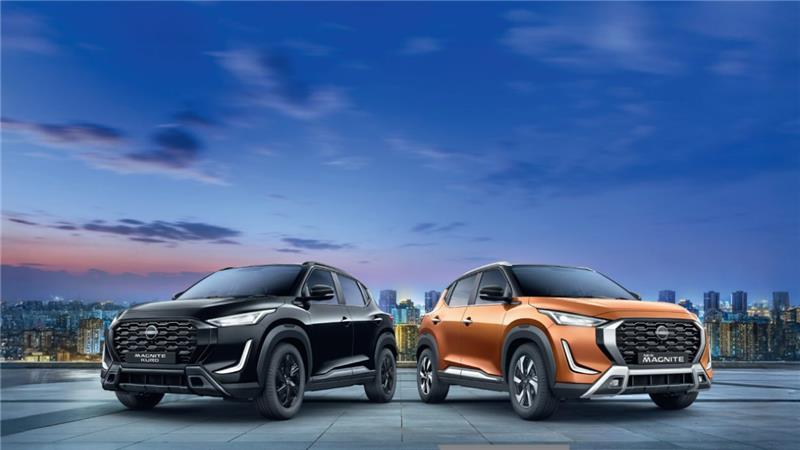
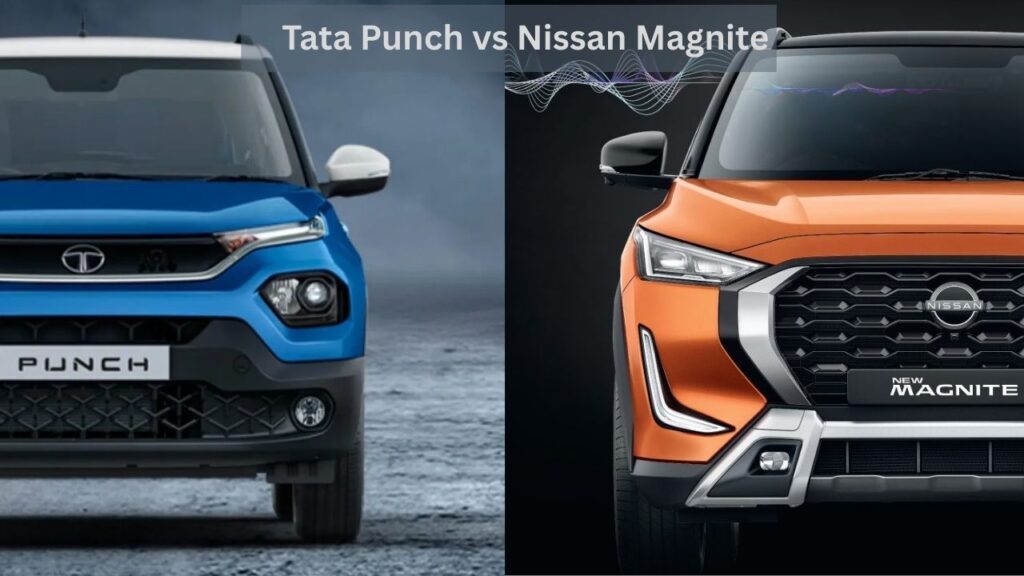
Tata Punch vs Nissan Magnite Compact SUV front side comparison

When it comes to Best Compact SUVs then Tata Punch vs Nissan Magnite is a top debating buzz. The debate between these two is a never ending road because both have similar price points and offer powerful engines. It’s hard to decide one when the other doesn’t back down to show its power and stunning look. 

Both Tata Punch and Nissan Magnite offer a compelling package that makes it hard for the buyer to choose one between them. But both are slightly different from each other in their features and design, you can explore the details to decide which Compact SUV should you buy.

Performance and Engine

Tata Punch is offering a 1.2-litre Revotron petrol engine that delivers wonderful speed up to 87 bhp for city trips but feels a little bit underpowered on highways with both 5-speed manual and automatic transmission. It also offers a CNG variant for the eco-conscious who doesn’t want to compromise powerful features. 

Tata Punch 1.2L Revotron petrol engine with manual and AMT options

Nissan Magnite is offering 1.0-litre natural aspirated petrol engine and turbo-petrol engine for providing a more spirited and engaging driving experience on highways. It becomes your best off-road partner with its continuously variable transmission that gives a smoother and comfortable ride experience. 

Nissan Magnite turbo-petrol engine with CVT transmission

If you prefer more power driving experience and looking for the best highway partner then Nissan Magnite (Turbo Variant) is the best option. While Tata Punch is actually best for city commutes.

Features Tata Punch Nissan Magnite
Max Power 87 bhp 71 bhp, 99 bhp (turbo)
Max Torque 115 Nm 96 Nm, 152 Nm (turbo)
Transmission 5-speed manual & AMT 5-speed manual & AMT

Safety

Tata Punch got a 5-star safety rating from Global NCAP for delivering safety standards features including dual airbags, ABS with EBD, and ISOFIX child safety that prevent huge damage to its passengers. 

Nissan Magnite is also got 5-star from Global NCAP that is worth it because of its extra features for safety purposes. It got a slightly lower rating for its base model in its earlier test. But overall safety features are perfect in both the cars. The Tata Punch has an excellent reputation for its strong structure and quality, Magnite also has 5-star rating to the higher-end variants with more airbags.

Features and Interior

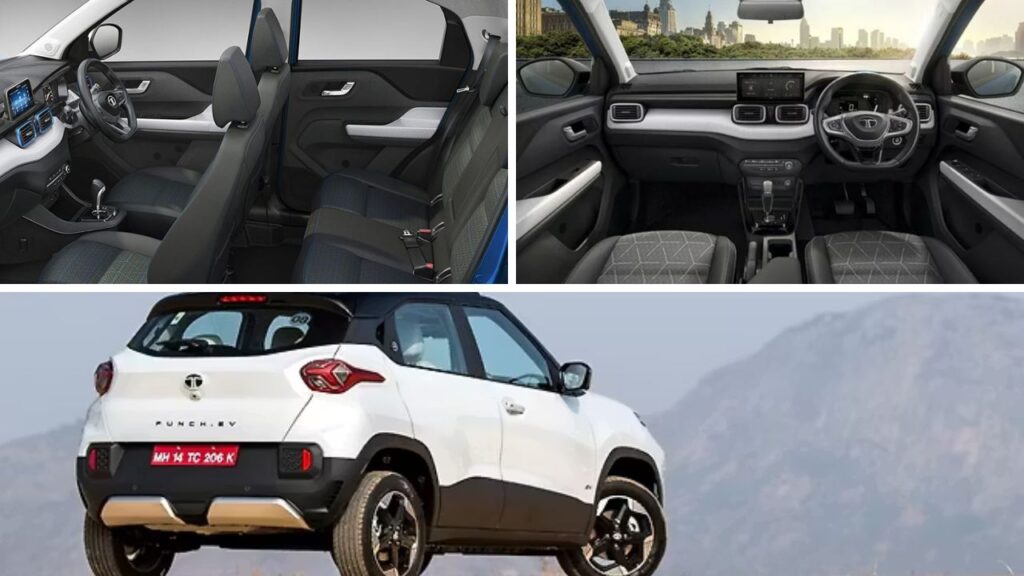
The Tata Punch is offering a well-equipped cabin with advanced tech of infotainment system, single-pane sunroof, automatic climate control, and cruise control that makes it feel more premium to sit inside the car and take a comfortable trip. 

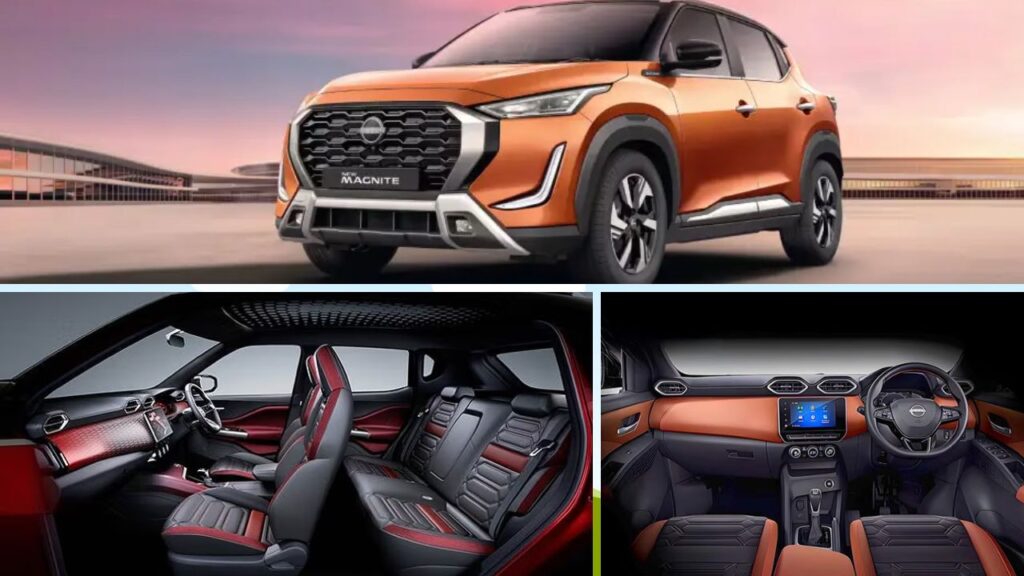
Tata Punch interior cabin vs Nissan Magnite digital dashboard

Nissan Magnite comes with a strong body with a perfect 360 degree camera and infotainment system, and digital instrument cluster which makes it perfect for long trips with advanced features and comfortable premium-feel interior. 

Space and Practicality

Tata Punch is offering larger space up to 366 litres that gives comfortable long trips. It delivers a quality ride and handles rough roads with excellent ways that ease up everything. 

The Magnite is slightly longer than the Punch that delivers more space for better legroom for rear passengers. Its ground clearance is also higher as it has a longer wheelbase at 205 mm compared to the Punch’s 187 mm. The Magnite’s boot space is 336 liters.

Tata Punch is ideal for those who want a comfortable ride on rough roads and Magnite is offering other advantages with more ground clearance and legroom space.

Read More:- Inside Mark Zuckerberg’s Car Collection: Luxury, Style & Surprises

Price and Value for Money

Punch has many variants and price varies upon their model, base models have attractive prices. The price lies upon a range of Rs. 6.20 lakh to Rs. 10.32 lakh. Tata Punch is accessible to a wider audience due to its availability in the market.

The Magnite is also an affordable SUV which offers advanced features and powerful engine. Magnite price ranges between Rs. 6.14 Lakh and Rs. 13.59 Lakh which is slightly different from Punch.

Both Nissan and Tata have offered similar price points with slightly different features. Nissan has more features and provides a smoother ride with more comfortable space.


Choose If… Tata Punch Nissan Magnite
Safety Priority 5-star Global NCAP (base model itself is very safe) 4-star safety (good, but not the best)
Build Quality & Ride Solid build, comfortable ride, spacious cabin for city drives Decent comfort, focuses more on driving fun than heavy build
Interiors More conventional, well-appointed cabin Stylish, youthful interiors with quirky design
Driving Performance Adequate for city & casual highway drives Turbo-petrol option gives strong highway performance
Budget-Friendly Slightly higher starting price due to safety & solid build Pocket-friendly, excellent value for money
Features Good but not feature-loaded in base trims Feature-rich (360° camera, larger touchscreen, connected features)
Ground Clearance / Rough Roads Good enough for city and small potholes Higher ground clearance, better for rough/unpaved terrain

Conclusion

In Tata Punch vs Nissan Magnite, there is no winner because you should choose a vehicle according to your need and preferences. Some people need more comfort and space. Nissan Magnite is best for them. Tata Punch on the other hand, offers best safety precautions to prevent crashes and good for city commutes.

Sharey Khan

Sharey Khan is an IT entrepreneur and petrol head & a car enthusiast. With a special focus on car-related content, he combines his deep passion for vehicles with a talent for crafting informative, engaging, and easy-to-understand content. His writing is driven by a genuine love for cars and he is committed to providing readers with accurate, up-to-date, and trustworthy information that empowers smarter driving decisions. 

Leave a Reply

Your email address will not be published. Required fields are marked *

0

Hypothecation in Car Insurance: Everything You Need to Know

Published Jul 23, 2026, 10:58 AM
Last Updated Jul 23, 2026, 11:06 AM

Hypothecation in Car

Bought a car on loan? Then Hypothecation in Car Insurance is already part of your insurance policy, whether you’ve noticed it or not. Most people only come across this term when they’re trying to sell their car or close a loan, and by then it’s often associated with confusing paperwork instead of what could have been a simple five-minute process.

This guide walks through what hypothecation actually means for your car insurance, why it exists, and how to deal with it at every stage — from adding it when you take a loan to removing it once you’ve paid the last EMI.

What Is Hypothecation in Car Insurance?

Hypothecation is the legal arrangement where your car acts as collateral for the loan you took to buy it. You own the car and drive it every day, but the bank or NBFC that financed it holds a legal claim over the vehicle until the loan is fully repaid. In car insurance, this shows up as a clause naming the financier — so if the car is damaged beyond repair or stolen, the insurer pays the claim to the financier first, not directly to you.

This is different from a car being fully owned outright. When hypothecation is active, your registration certificate (RC) and insurance policy both carry the financier’s name alongside yours.

How Does Hypothecation Work?

During an auto loan procedure, the lender won’t just give you cash to buy a vehicle and walk away. They add their interest according to the current percentage with the Regional Transport Office (RTO). That will be reflected in your car insurance policy. The hypothecation clause is added to your policy at the time of purchase or shortly after.

Once hypothecation is in place, any claim above a certain threshold — usually total loss or theft — routes through the financier. Minor repair claims are typically still paid to you or the garage directly. The arrangement stays active for as long as the loan is running, and it’s automatically renewed each year your policy renews, unless someone actively removes it.

Why Is Hypothecation Required?

Lenders need protection. Since there is no hypothecation, the bank can’t come after its money without your car if your car is stolen or totaled and you stop paying the loan. By associating their name with insurance and RC, they ensure that the insurance amount in case of total loss claim is first utilized to clear the loan amount and then the balance, if any, is paid to you.  

Hypothecation is not a formality the bank just adds to the paperwork, it is the fundamental mechanism that allows lenders to finance a borrowing against a depreciating asset such as a car. Without hypothecation, auto loans would carry far more risk for lenders, and interest rates would likely be higher.

Read More 👉  What is ORVM in a Car and How Does it Work?

Difference Between Hypothecation and Car Ownership

This is where a lot of car owners get confused. Hypothecation does not mean the bank owns your car. You are the registered owner (RO) on the RC, and you have full rights to drive, use, and maintain the vehicle. What the bank holds is a charge over the asset — a legal claim that activates only if you default on the loan or if the car is written off in an insurance claim.

Ownership means you control the asset day to day. Hypothecation means someone else has a financial stake in that asset until a debt is cleared. The two can — and usually do — coexist until the loan is closed.

Who Are the Parties Involved in Hypothecation?

Three parties are typically involved in a car insurance hypothecation arrangement:

  • The car owner (you): the person who bought the vehicle and is listed as the registered owner.
  • The financier or lender: the bank, financing company, or financial institution that financed the purchase and holds the hypothecation charge.
  • The insurance company: the insurance company that writes the policy and handles the claims, taking into consideration the hypothecation clause in the event when settling total-loss or theft claims.

Each party has a defined role — you drive and insure the car, the lender protects its loan exposure, and the insurer mediates claim payouts according to the hypothecation agreement.

When Is Hypothecation Added to a Car Insurance Policy?

Hypothecation is usually added at the very start — right when you buy the car on loan and the insurance policy is first issued. The dealer or financier typically handles this as part of the loan disbursement process, so most buyers never fill out a separate form for it.

There are also cases where hypothecation gets added later: if you take a loan against an already-owned car, or if you switch your loan to a new bank (a process called loan transfer or balance transfer), the new financier’s name needs to be added to your car insurance policy through a fresh hypothecation endorsement.

How to Check if Your Car Insurance Has Hypothecation

Checking this is straightforward. Pull out your car insurance policy document and look for a section usually labeled “Hypothecation,” “Financier Details,” or “Loan/Hypothecation to.” If a bank or NBFC name appears there, hypothecation is active on your policy.

You can also check your RC — hypothecated vehicles carry the financier’s name printed on the registration certificate itself. If both your RC and insurance policy show a lender’s name, the hypothecation clause is very much in effect.

Read More 👉  Best Cars for Daily Office Commute: Top Comfortable & Fuel-Efficient Cars

Documents Required to Add Hypothecation in Car Insurance

To add hypothecation to your car insurance, you’ll typically need:

  • Loan sanction letter from the bank or NBFC
  • Copy of the RC showing the financier’s name (if already updated)
  • A signed hypothecation form or endorsement request
  • Car insurance policy copy
  • Policyholder’s KYC documents (PAN, Aadhaar, or any other valid ID proof) 

Requirements while adding hypothecation in Car insurance may differ slightly from one insurer to another, so check the precise list of the 2-3 insurers before confirming it.

How to Add Hypothecation to Your Car Insurance Policy

Adding hypothecation to your car insurance policy usually involves these steps:

  1. Contact your insurer (or use their online endorsement portal) and request a hypothecation addition.
  2. Submit the loan sanction letter and other required documents listed above.
  3. Fill out the endorsement form specifying the financier’s exact name and branch.
  4. Pay any applicable endorsement fee, if the insurer charges one.
  5. Wait for the insurer to issue an updated policy document reflecting the hypothecation clause.

Most insurers process this within a few working days, and many now offer this as an online self-service option through their app or website.

How to Remove Hypothecation from Car Insurance

Once your loan is fully repaid, hypothecation doesn’t disappear automatically from your insurance policy — you need to request its removal. Skipping this step is one of the most frequent mistakes made by car owners and may cause problems down the road, particularly when you are going to resale it. 

To cancel hypothecation, you need to provide a No Objection Certificate (NOC) from your lender to the insurer along with a request to remove the hypothecation clause from your insurance policy. The insurer then issues a revised policy showing you as the sole owner with no financier listed.

Documents Required for Hypothecation Removal

For removing hypothecation from your car insurance, keep these documents ready:

  • No Objection Certificate (NOC) from the bank or NBFC confirming loan closure
  • Loan closure or foreclosure letter
  • Copy of the updated RC (if the hypothecation has already been removed from it)
  • Current car insurance policy copy
  • A written request or form for hypothecation removal, as specified by your insurer

Submitting all of these together usually speeds up processing and avoids back-and-forth with the insurer.

What Happens After Loan Repayment?

Paying off your car loan is only half the job. Two separate updates need to happen afterward: removing hypothecation from your RC through the RTO, and removing hypothecation from your car insurance policy through your insurer. These are handled by different authorities and neither one automatically updates the other.

Many people close their loan, get the NOC, and stop there — leaving both the RC and the insurance policy still showing the old financier’s name. This may lead to delays when the car is sold again or taken for an insurance claim, or even inspections, so it’s worth completing both updates as soon as the loan is closed.

Does Hypothecation Affect Car Insurance Premiums?

No, your car premium is not changed by hypothecation. Premiums are determined on the basis of the car’s insured declared value (IDV), make and model, city, add-on covers, and no-claim bonus — hypothecation does not factor into that calculation. 

What hypothecation does affect is how a claim payout is processed, not how much you pay for the policy. So whether hypothecation is active or removed, your premium stays governed by the usual rating factors.

Read More 👉 ROI of Commercial Vehicles in India: Costs, Profits & Business Returns

Can You Transfer Car Insurance with Hypothecation?

Yes, car insurance with an active hypothecation clause can be transferred, but the process needs a bit more care. If you’re selling the car, the new owner’s insurance policy will need the hypothecation clause carried forward if the loan hasn’t been closed, or removed first if you’ve paid it off before the sale.

In case of loan transfer, hypothecation entry on the RC, and in the insurance policy should be modified in the name of the new financier, if you are moving your loan from one bank to another. Skipping this update can lead to ownership conflicts later on, so it is better to take care of it prior to the transfer is completed. 

Common Mistakes to Avoid During Hypothecation

A few mistakes come up repeatedly with hypothecation in car insurance:

  • Not removing hypothecation immediately after loan closure, assuming it clears automatically
  • Selling a car without updating or removing the hypothecation clause first
  • Submitting mismatched financier names or loan details that don’t match RTO records
  • Forgetting that RC and insurance hypothecation removal are two separate processes
  • Not keeping the NOC and loan closure letter safe, which are needed for both removals

Avoiding these keeps your paperwork clean and prevents delays when you actually need to act on the policy.

Benefits of Removing Hypothecation on Time

Removing hypothecation as soon as your loan closes has real, practical benefits. It gives you full, unencumbered ownership on record, which matters a lot if you plan to sell the car later — buyers and used-car platforms often ask for a hypothecation-free RC and insurance policy before finalizing a deal.

It also simplifies future insurance claims, since payouts go directly to you without routing through a financier who no longer has any stake in the vehicle. And it just closes the loop cleanly — no old bank names sitting on your documents years after you’ve paid off the debt.

Read More 👉 How to Claim Car Insurance for Own Damage: A Step-by-Step Guide

Conclusion

Hypothecation in car insurance is a simple concept once you see how it fits together: it protects the lender’s stake in your car for as long as the loan is active, and it needs to be added and removed at the right points — loan start, loan transfer, and loan closure. The step people miss most often is removal after repayment, and that’s the one that causes the most hassle later. 

Keep your NOC and loan closure letter handy, update both your RC and your insurance policy, and hypothecation stops being a confusing clause and just becomes a box you’ve already ticked.

0

Pagani Utopia, Hypercar, Luxury Cars, Supercars 2025, V12 Engine, Pagani Cars, Exotic Cars

Published Mar 30, 2026, 11:42 AM
Last Updated May 23, 2026, 9:44 AM

Pagani Utopia

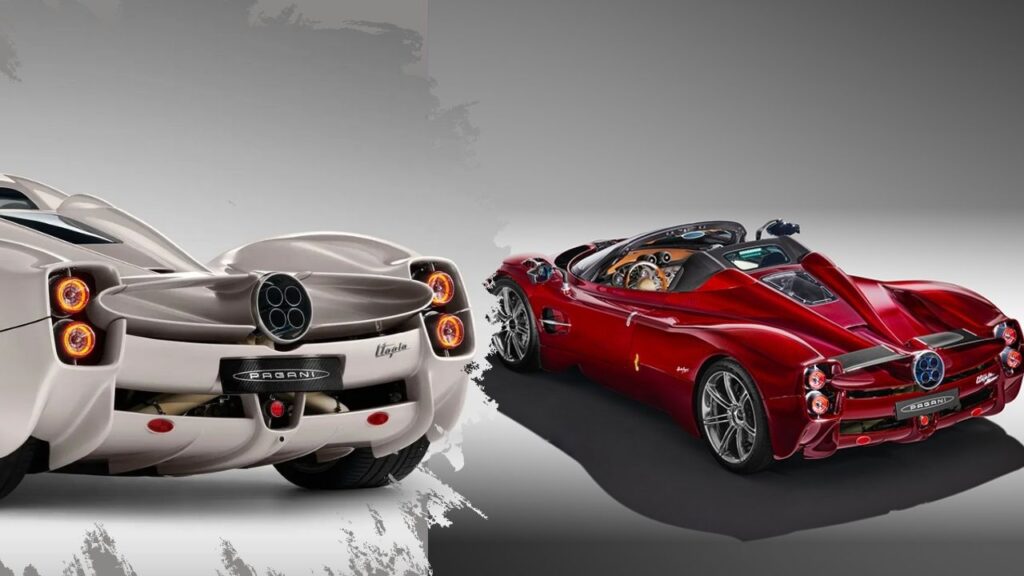
When you see the Pagani Utopia for the first time, something inside you clicks. It is recognition not just appreciation. You’re looking at an uncompromising machine that harks back to an era when engineering and art were soul mates, not just neighbors.

The Utopia is a fiery expression of human handcrafting, the pure physical excitement of the driver, and classic dreams of the V12 engine in an era in which hyper cars are more and more beginning to look like spaceships being steered by computers. 

The Third Symphony

Horacio Pagani had three seemingly simple goals to give his team as he prepared to build his third work of art, after the legendary Zonda and the revolutionary Huayra: simplicity, lightness and driving enjoyment. That wasn’t a tagline, that was the attitude.

In 2022, the result, the Utopia, was revealed and is slated for delivery in 2025. It has that race-bred thoroughbred spirit, even though it’s as heavy as a small hatchback, at just 1,280 kg dry. 

Not a single option listed in this line-up will be suitable for the selector, for just 99 Coupes and 130 Roadsters will ever be produced. Each begins at approximately €3.1 million. Hopefully, you’re not reading this too late and they’re still available. But rarity doesn’t account for the Utopia’s allure. what it has in it and what it does to you. 

The Heart That Refuses to Surrender

The Pagani M158, a 6.0-liter twin-turbo V12 engineered by Mercedes-AMG for Pagani, is visible under the rear clamshell Michael Kübler, one man in Affalterbach, Germany, who uses his hands to assemble every engine. This is mechanized high fashion, not industrial manufacturing. 

It produces but a laughable 864 hp at 6,000 rpm with 1,100 Nm of torque between 2,800 and 5,900 rpm. It is, however, only part of the picture. What truly determines the character of the V12 – how it spins smoothly like a turbine at low revs and comes alive when you really focus on it – is the sense of what matters.

The Heart That Refuses to Surrender

The turbos spool up super fast, delivering boost without the lag that plagued earlier models. In fact, the sound of four valves opening and closing at four times the engine speed is the distilled roar of a 12-cylinder engine breathing fire, not much different than the sound from the speakers. 

 No help from a hybrid. Without regenerative braking. None of those aids. One of the last great V12 engines ever made, just you and a mechanical throttle cable. 

The Sacred Ritual of Shifting

Pagani could have just gone with the flow and put in a dual-clutch transmission. They would have been faster, more efficient, more… modern. Instead they teamed up with British specialists Xtrac to create an increasingly rare thing: a real seven-speed manual gearbox.

It’s not like it was simple to engineer a manual transmission for 1,100 Nm of torque. The clutch is a light adjustable triple disc unit. The synchronizers had to be designed to handle forces that would destroy lesser transmissions.

But the payoff is worth every engineering hour – a shift feel that has been described as having “real lightness of touch,” a clutch pedal that doesn’t require leg-press strength, and a driver-machine connection that’s vanishing in the hypercar realm. 

There is indeed an automated manual for those who want it. But Pagani expects 80 per cent of Utopia customers to go for the stick. These are people who understand that driving is more than just arriving — it is the trip, the ritual, the dance. 

Sculpted by Wind, Finished by Hand

The Utopia’s outline is instantly that of a Pagani, but it’s softer and more mature than those that came before. Where the Huayra bore its aerodynamics like armor—active flaps opening and closing like fighter-jet wings—the Utopia makes downforce part of its DNA. Six years of wind tunnel testing fine-tuned every curve, every surface, until the vehicle was more aerodynamically efficient than the Huayra without one visible wing. 

Sculpted by Wind, Finished by Hand

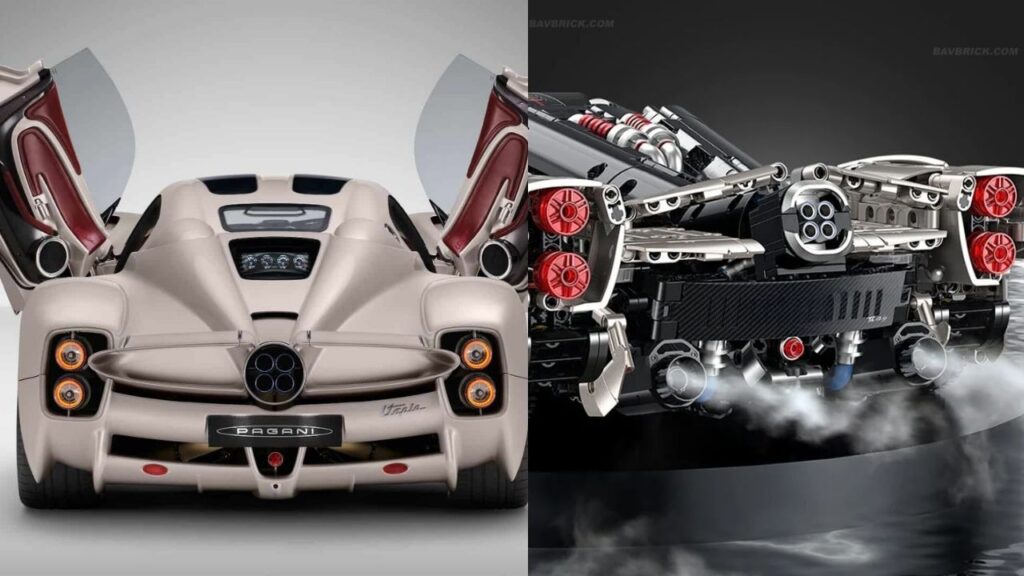
Worthy inspection brings about detailed rewards. The turbine shaped carbon fiber wheels are not only beautiful, they actively pull hot air away from the brakes while reducing turbulence. The headlights are inspired by 1950s Vespa scooters, and the ceramic-coated­titanium exhausts that emerge from the rear like mechanical sculptures. Even the side mirrors, which rest on airfoil-shaped arms, help the car’s aerodynamic performance. 

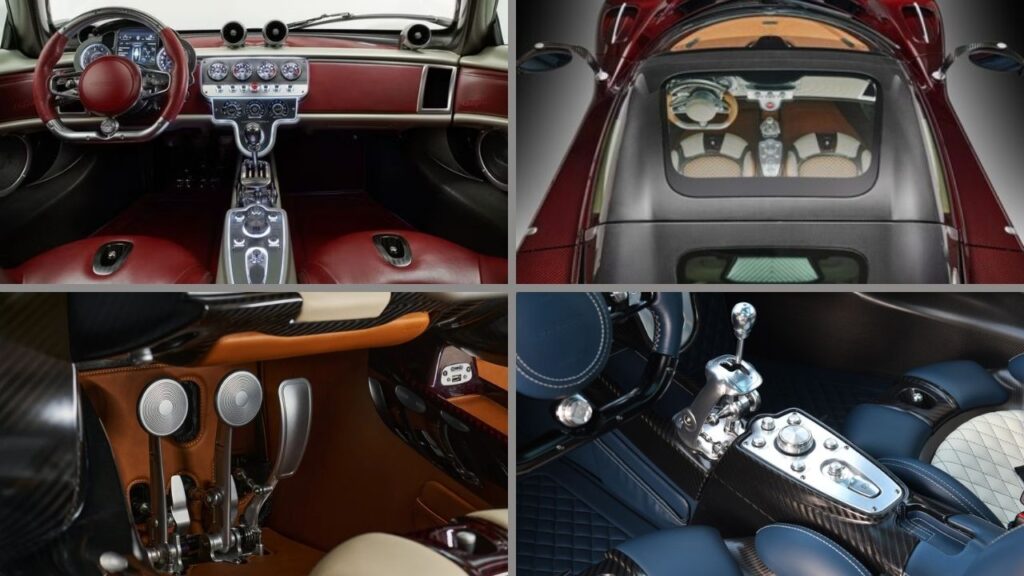
The sentiment of mechanical honesty is prevalent within. The digital screens so common in today’s supercars have been replaced by analog dials, with real needles that sweep. The wheel is billet aluminum shell which has been multi axis machined.

Rather than hide behind plastic casings, the mechanisms of the pedals are on display and celebrated as they are made from solid metal and cut. Every toggle switch, vent and surface is vetted by human eyes and hands. 

The Weight of Lightness

The monocoque of the Utopia, made from Pagani’s own Carbo-Titanium HP62 G2 and Carbo-Triax HP62 materials, is as robust as it is lightweight. Suspension triangles are forged from aerospace-grade aluminum alloy.

This preoccupation with weight pays off in handling. Utopia doesn’t ram the road; it twirls with it. Steering is light and accurate. The chassis tells you every subtlety in the texture of the road below. You don’t lurch as you brake the car just responds.

A Pagani Utopia for the Senses

In driving this hypercar, you utilize all your senses. You can feel the weave of the road under the tires in the steering wheel as if you were running a hand over the pavement. Hear how the voice of the V12 varies with load and revs on this link.

There’s the warm electronics and leather, and a faint whiff of high- performance lube. Through narrow A-pillars and a domed canopy you look out upon a world almost alien to the supercars of today. 

The 2025 Pagani Utopia is far from perfect in the usual sense. It’s not the quickest hypercar in a straight line with a respectable but by no means record-breaking 0-60 mph time of around 3.1 seconds. Its electronically limited maximum speed of 217 mph is nothing compared to Bugatti’s chasing 300+ mph. A Porsche 911 GT3 RS will lace the ‘Ring faster than it. 

A Utopia for the Senses

In the era of drone delivery and smart toasters, the Pagani Utopia is a glimpse of what we have lost and what we might lose. It’s a celebration of mechanical purity, human ingenuity and the simple yet irreplaceable connection between driver, car and open road.

It’s more than just a hypercar, it’s a love letter to driving itself, penned in carbon fibre, titanium and the roaring song of a V12 engine.

And that is what will be handed down to the lucky, and for those lucky few who own one it means something much more rare: the knowledge that even in an imperfect world, moments of true utopia can be found. You just need the right key – and €3.1 million. 

Read More:- The Garage of Dreams: Inside C.J. Roy’s Car Collection

Conclusion

The Pagani Utopia isn’t trying to set records or follow trends—it’s pursuing an emotion. In an era when speed is increasingly defined by software and electrification, this car is a testament to what driving used to be and, on occasion, still is. It sacrifices pure numbers to emotion and precision and to a profoundly human connection between machine and driver.

It probably won’t be the fastest or the most technologically advanced hypercar of 2025, but that’s precisely the point. The Utopia is craftsmanship over convenience, analog over artificial, passion over perfection. It’s not designed to own the lap time – it’s designed to be memorable.

And maybe that’s the reason why it is so important. Because cars like the Utopia, they don’t just move you physically — they move you mentally long after you’ve turned the engine off. 

0

How to Claim Car Insurance for Own Damage: A Step-by-Step Guide

Published Jul 22, 2026, 9:04 AM
Last Updated Jul 22, 2026, 12:06 PM

How to Claim Car Insurance for Own Damage

Whether it’s a major accident or a minor scratch, damage to your car can leave you wondering what your insurance actually covers. That’s where understanding the Own Damage Cover section becomes important, as many car owners are not fully aware of how it works. Learning How to Claim Car Insurance for Own Damage can help you save money and ensure a hassle-free claims experience.

If you already have a comprehensive car insurance policy, you can claim compensation for damage to your own vehicle—not for damage caused to someone else’s. This is known as an Own Damage (OD) claim. However, simply having coverage isn’t enough. Understanding How to Claim Car Insurance for Own Damage correctly is essential to ensure your claim is processed smoothly and you receive the benefits you’re entitled to.

See Best Cars for Daily Office Commute.

What Counts as “Own Damage”

When your car gets damaged due to reasons that aren’t someone else’s fault or if it is but you are using your own damage cover to get your car repaired instead of relying on the other party’s insurance. 

For instance, your car faces situations including road accidents, collisions, fire, theft, natural disasters like floods, storms, or earthquakes. And even malicious damage like vandalism. That’s where Own Damage covers for repairs.

It is distinct from third-party liability, which covers damage you cause to another person’s vehicle or property. If you want coverage to repair your own vehicle, you need a comprehensive policy (with own damage included) – a third-party-only policy will not assist you in this matter. 

How to Claim Car Insurance for Own Damage

Step 1: Inform Your Insurer Immediately

When car trouble strikes, call your insurer or agent. Many companies allow for damage to be reported within 24-48 hours after the fact, and waiting can make your claim more complicated, or potentially even deny it. Have your policy number ready when you dial — it makes a big difference. 

If another vehicle is involved, or if your vehicle has been stolen or you suffered major damage, report it to the police too. Insurance companies frequently require such documentation, particularly for theft and hit-and-run, so it’s not wasted time even if it seems like you’re doing too much paperwork. You Know that Which Engine Oil is best for Your Car?

Step 2: Get the Vehicle Inspected

When you have reported the claim, the insurer will either arrange for a surveyor to inspect your car or ask you to take your car to a network garage for inspection. Don’t drive the vehicle or do any repairs until this happens — it’s an inspection prior to repair which validates your claim. If you go ahead of time and just fix it, you run the risk of your insurer denying the claim completely. 

Take photos or video of the damage from several angles before anything is touched. Seems like a simple step, but a lot of people forget it in the heat of the moment, and it really helps if there is any argument later on. 

Step 3: Choose Cashless or Reimbursement Claims

You’ll typically have two routes to get your car repaired.

Cashless claim: You bring your car to a garage in your insurer’s network. The insurer pays the garage bill directly, and you only pay the deductible and anything else your policy doesn’t cover. This is the easier, less stressful method and what the majority of people want. 

Reimbursement claim: You have the vehicle fixed at a garage of your choice, pay the full amount and then send the bills to your insurer for reimbursement. This option is good if your favorite garage is not in the insurer’s network, but that means you are paying first and then waiting for the money to come back to you. 

Step 4: Submit the Required Documents

Each insurer requires a unique set of documents, but the standard documents required are:

  • Your policy copy 
  • A filled and signed claim form 
  • Your driving license 
  • Vehicle’s registration certificate 
  • And the repair estimate or bill

In case a third party though or theft is involved, include the FIR or police report as well. 

Missing or incorrect documentation is also a frequent cause of claims being held up, so it’s worth making sure everything’s in order before you submit rather than doing it in dribs and drabs. 

Step 5: Claim Settlement

Once the surveyor approves the damage assessment and your documents are verified, the insurer settles the claim. For cashless claims, they pay the garage directly. For reimbursement claims, the amount is transferred to your account after you’ve paid the garage.

Keep in mind your No Claim Bonus (NCB) will reset if you file an own damage claim, and you’ll have to pay the compulsory deductible plus any voluntary deductible you opted for when buying the policy. For minor damage where repair costs are close to your deductible amount, it’s worth calculating whether filing a claim is even worth it — sometimes paying out of pocket protects your NCB and saves you more in the long run.

A Few Things That Trip People Up

Own damage claims get rejected more often than people expect, usually for avoidable reasons. Driving without a valid license, being under the influence at the time of the accident, using the vehicle for a purpose outside what’s declared in the policy (like using a private car for commercial purposes), or letting your policy lapse before renewal are all common grounds for rejection.

It also helps to know your Insured Declared Value (IDV) going in. This is the maximum amount your insurer will pay in case of total loss or theft, and it directly affects your premium and your payout. Setting it too low to save on premium can leave you underinsured exactly when you need the cover most.

Conclusion for 

Filing an own damage claim isn’t complicated once you know the sequence — report fast, get it inspected before repairs, pick the claim route that suits you, submit clean documentation, and stay aware of how it affects your NCB. The part that actually saves people money and stress isn’t the claim process itself, it’s understanding How to Claim Car Insurance for Own Damage and your policy terms before you’re standing next to a damaged car needing answers immediately.

0

Hyundai Exter Facelift: Smarter Looks, Bigger Tech, Same City-Friendly Charm

Published Jan 31, 2026, 8:26 AM
Last Updated Apr 8, 2026, 7:20 AM

Hyundai Exter facelift

Hyundai Exter Facelift refresh is a smart play with no radical redesign, just some sharper styling, a tech-loaded cabin, plus practical upgrades that really matter. It stays true to being small, affordable, and ready for the city, while quietly levelling up to take on rivals like Punch and Fronx. 

Exterior Refresh: Subtle but Sharp

There’s no need to wait for car overhaul—Hyundai is playing it relatively safe and just cleaning up its looks. Spy shots reveal new alloy wheels as the first element catching the eye, together with a sportier stance. The front grille could be a bolder mesh style, the tail lights could be sharpened brighter with smoked accents, a redesigned rear spoiler brings that little bit extra for highway runs.

The full reveal is obscured by camouflage, but rumors point towards chunkier wheel arch cladding and redesigned side sills for a rougher look, inspired by the Venue’s rugged charm. 

Colors Options? New choices, such as a deeper Abyss Black or starlight Titan Grey, may be included in the range. Measuring less than 4 meters in length (to be exact, 3.8 m long), it’s compact and cute enough to be rested in the city, while vowing a firm stance on rough roads. 

Read More:-  Creta vs Seltos: The Battle of Korean Siblings That’s Tearing Car Buyers Apart

Interior Upgrades: Space and Smarts

This is the brightest point of the facelift – Hyundai is addressing real-world complaints. Cabin space increases up a notch, with whispers of some clever packaging to provide more rear legroom and a driver armrest for those long drives to Delhi or Agra. Split folding rear seats (60:40 format) also mean easier cargo hauls for weekend getaways. 

Tech also jumps forward in Hyundai Exter facelift. Imagine a giant 12.9-inch touchscreen powered by Android Auto OS (AAOS) — Hyundai’s first-wide market offering through which you can access third-party apps like maps or music without any hiccups. 

Placed alongside a 9.9-inch digital driver’s display, it is a cockpit upgrade that feels premium without the Venue price tag. Voice-enabled sunroof is also given and Ventilated seats? Possibly in top trims. Add Alexa integration, wireless charging, and a dual-camera dashcam and it’s a gadget lover’s dream. 

Comfort features such as a cooled glove box, plenty of USB ports and ambient lighting make things cosy. Considering the dimensions (under 4 meters) and the price (starting about ₹6-11 lakh), the interior feels well above its league for a sub-4-meter SUV. 

Powertrain

It offers 1.2-litre petrol engine to generate 82 bhp and 113.8 Nm of torque. With a slick 5-speed manual or an AMT on the flipside, it produces lively city dynamics and a claimed 19–20 kmpl fuel efficiency, gentle on your pocket and perfect for daily rides. 

Powertrain

Hyundai Exter facelift offers 68 bhp/95.2 Nm twin-jet unit with 5-speed manual comes back, and CNG-AMT tandem could make an appearance to take on competitors such as the Punch. No turbo or hybrid, yet, but Hyundai’s idle start-stop and battery saver are making this one clean. ARAI claims hold strong, which is a good thing considering the fuel prices in India. 

Safety Suite: Leveling Up

Safety is not a second thought. It retains the existing Exter’s 5-star Global NCAP rating with the addition of six airbags, ESC, hill assist and TPMS. Facelift Eyes adds ADAS goodies in the form of forward collision warning, lane keep assist, adaptive cruise, and blind spot alerts in top variants is rare for this price point.

Driving Experiencing on the Road

From the test mules, the Hyundai Exter facelift is expected to drive like the original – light steering for on U-turns, good high speed stability and suspension that absorbs bumps without feeling too soft. That extra cabin space? It’ll make a difference on family outings, cramming five with bags in no strain.

Driving Experiencing on the Road

Idle in mixed traffic 16-18 kmpl petrol, on CNG is good. It’s not a rocket, but overtakes feel confident, and the AMT eases the stop-go misery. 

Pricing Strategy for Hyundai Exter facelift

Expected to be priced around ₹6.5 — 11.5 lakh (ex-showroom) for Hyundai Exter facelift, the will be positioned below the facelifted Venue and bring in handsome volumes by stealing sales from Tata Punch, Maruti Brezza, and Mahindra XUV3OO. Pro Pack variants with extras such as dashcams sweeten the deal. 

Conclusion

With updated styling, a surprisingly premium cabin, robust safety features and familiar running gear, the Hyundai Exter facelift seems like a comprehensive package rather than a cursory update. If Hyundai prices it right, this sub-4-meter SUV has all the makings of the new value king of its segment. 

0

Best Car Battery for Your Vehicle: Top Picks & Buying Guide 

Published Aug 10, 2026, 9:30 AM
Last Updated Aug 10, 2026, 12:56 PM

Car Battery

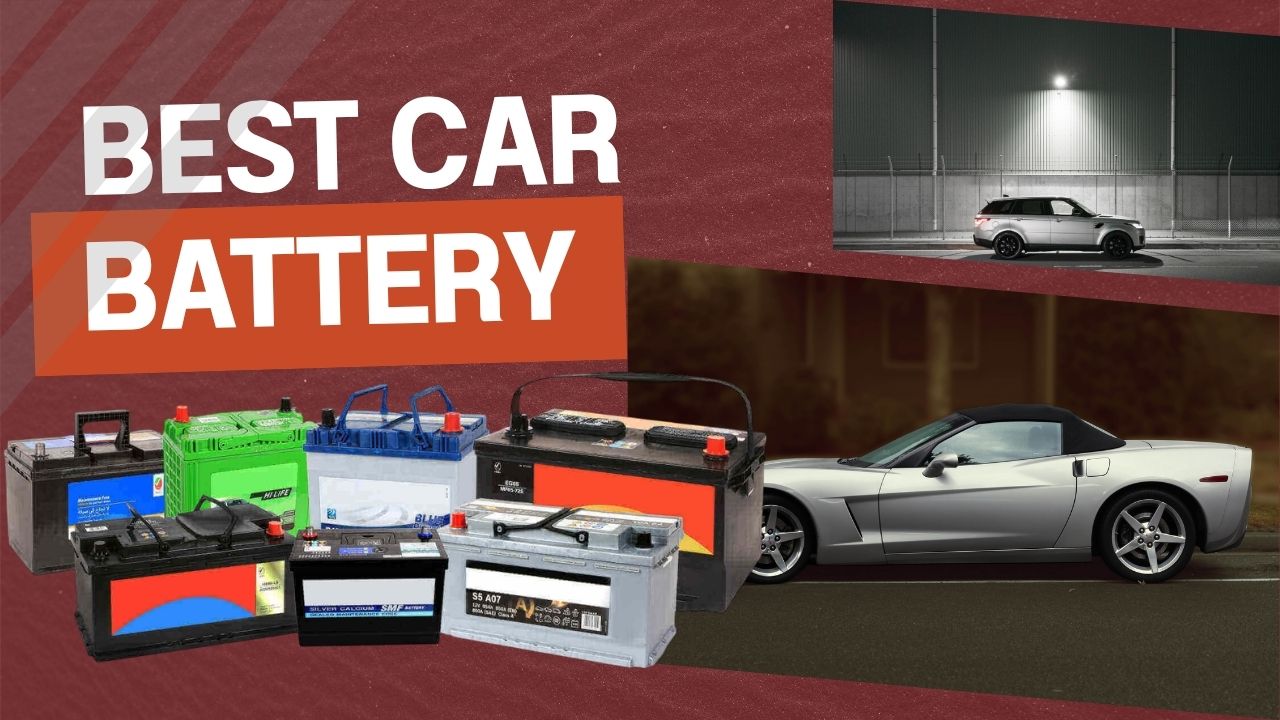
A car battery almost never announces its own death. Everything works fine with your vehicle and one morning when you are already late, the engine just clicks and the dashboard lights get dimmed. This is the moment where most people don’t know where the problem is and the one who knows that their car’s battery is dead, they start google “Best Car Battery” to find whatever the nearest mechanic has lying around.

Stop making this mistake by understanding which one fits your car. It’s a straight comparison of the car battery brands that will actually dominate the Indian market in 2026 — what each one costs, what it’s genuinely good at, and where it falls short. So you can walk into a dealer or place an order online already knowing what you need.

What Actually Decides Which Battery Fits Your Car

Different brands offer different benefits and prices but there are three things which make the car battery best fit for your car:

Ah (Ampere-hour) Rating. Battery’s capacity defines on Ah and you should consider this important and pick what your manufacturer prescribes in a manual. You can choose a slightly higher Ah battery if you lost your manual but check whether it’s compatible or not. 

A lower-capacity battery may discharge faster, and shorten its life but a more higher capacity battery can affect charging performance. Hatchbacks typically run 35–45Ah, sedans 45–55Ah, and SUVs or MPVs 55–75Ah. You can check the Ah figure on your existing battery, it is printed right on its casing.

CCA (Cold Cranking Amps). While starting the engine, the battery throws power and CCA will tell you that exactly. If you are living in a cold area then it really matters more than in warmer cities. A strong CCA rating genuinely also just starts more reliably day to day, regardless of climate. 

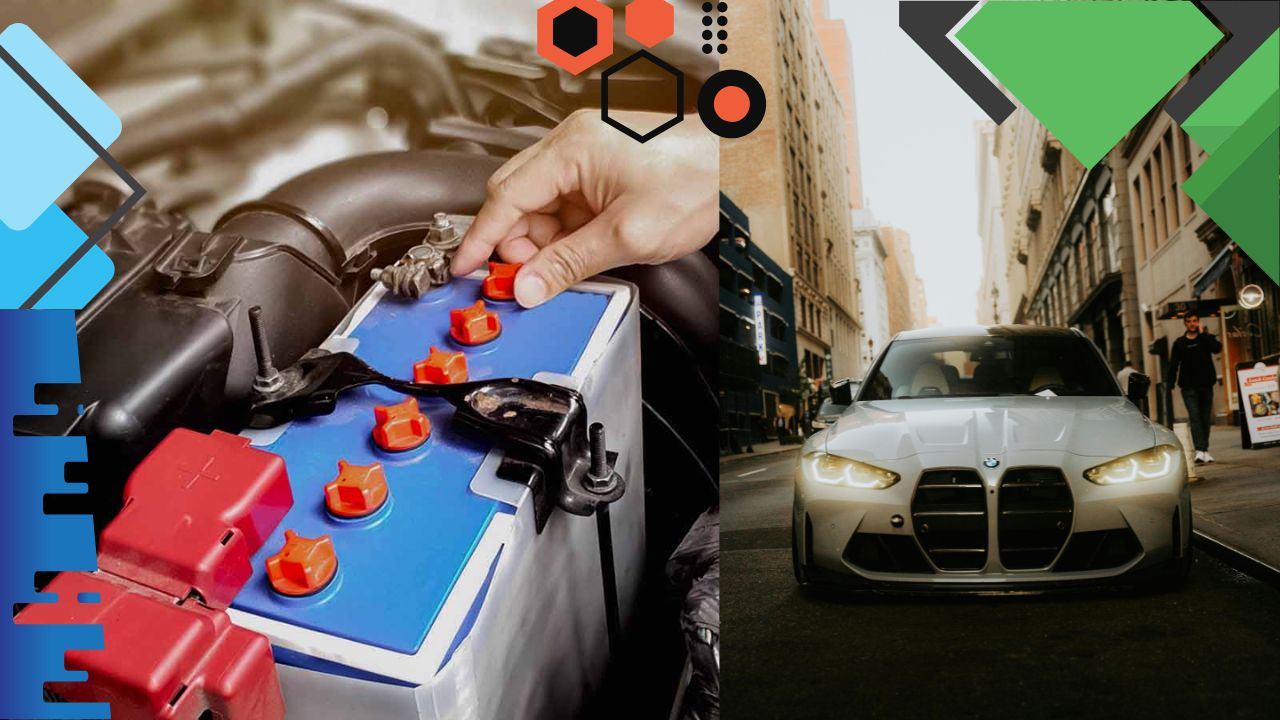
Battery type — flooded, MF, EFB, or AGM. This is the one buyers get wrong most often, and it’s not a minor detail. If your car has Auto Start-Stop — the feature that shuts the engine off at traffic signals and restarts it automatically — it needs an EFB or AGM battery, not a standard flooded or maintenance-free (MF) unit. A regular battery subjected to that kind of constant micro-cycling in city traffic can degrade within three to six months. Check your owner’s manual or the sticker on your current battery before assuming a standard MF battery is fine.

Warranty structure is worth understanding too: most Indian battery warranties are split into a “free replacement” period and a longer “pro-rata” period, where you get a discounted replacement rather than a free one. A battery advertised as “36+36 months” usually means 36 months free replacement plus 36 months pro-rata — read the fine print rather than assuming the headline number is all free coverage.

Read More:- How to Improve Gas Mileage: 15 Proven Tips That Actually Save Fuel

Best Car Battery Picks for 2026

1. Amaron GO / Amaron Pro Rider — Best for Everyday Reliability

Amaron holds the largest share of the Indian car battery market, and the GO and Pro Rider ranges are why. They use maintenance-free lead-calcium construction, so there’s no water top-up, ever, and the batteries are built with above-average heat tolerance — a real advantage given how many Indian cities push 40°C-plus summers.

  • Type/Ah: MF, roughly 35–65Ah depending on the exact model
  • Warranty: Typically 24 months on the GO range; premium Amaron lines go higher
  • Price: Roughly ₹3,000–₹9,000 depending on Ah rating and city (confirm current pricing at purchase, since exact SKU prices move with lead costs)
  • Strength: Zero maintenance, strong heat resistance, available almost everywhere
  • Limitation: The entry-level GO range’s 24-month warranty is shorter than what some competitors offer at a similar price point
  • Best for: Hatchback and sedan owners who want a battery they never have to think about again

2. Exide Mileage / Exide Matrix — Best for Warranty Length

Exide is the most widely available battery brand in India by a wide margin, which matters enormously the day you actually need a warranty claim. The Matrix range in particular pushes warranty terms up to 60 months on some models, well beyond what most competitors offer.

  • Type/Ah: MF, roughly 35–80Ah depending on the model
  • Warranty: 30–60 months depending on the series
  • Price: Roughly ₹4,000–₹13,000+ depending on Ah rating and series
  • Strength: Longest mainstream warranty available, and the largest dealer/service network in the country, so claims are easy to process almost anywhere
  • Limitation: A few older Exide MF lines still recommend an occasional water-level check — confirm “fully maintenance-free” on the specific model rather than assuming it across the whole brand
  • Best for: Anyone planning to keep the car five-plus years, where warranty length and service reach outweigh brand prestige

Car Battery

3. SF Sonic — Best Budget Pick

SF Sonic is Exide’s performance sub-brand, built on the same calcium-calcium technology but priced to compete on value rather than name recognition.

  • Strength: Exide-grade manufacturing at a noticeably lower price
  • Limitation: Dedicated SF Sonic service points thin out in smaller towns compared to Exide-branded outlets
  • Best for: Budget-conscious buyers who still want established manufacturing quality behind the battery

4. Tata Green Batteries — Best for Mainstream Family Cars

Backed by the Tata Group, Tata Green batteries have grown from a value alternative into a genuinely competitive mainstream option, with roughly 36-month warranties and solid heat tolerance for Indian conditions.

  • Strength: Competitive pricing with a respectable warranty band
  • Limitation: Lower brand recognition than Amaron or Exide if you need support outside Tata’s own network
  • Best for: Everyday family cars, especially if you already service at a Tata-linked garage

5. Livguard — Best Challenger Brand

Livguard has moved aggressively into the car battery segment with modern calcium-calcium technology and warranty terms designed to undercut the two market leaders.

  • Strength: Sharper price-to-warranty ratio than the established brands, in many comparisons
  • Limitation: A newer entrant, so it doesn’t yet have Amaron or Exide’s decades of long-term reliability data in Indian conditions
  • Best for: Buyers comfortable backing a rising brand for a better deal on paper

6. Bosch S4/S5 or ACDelco (AGM) — Best for Start-Stop and Premium Cars

This is the one category where “best” isn’t really a matter of preference. If your car has Auto Start-Stop — think Mahindra XUV700, higher Kia Seltos trims, or most modern European cars — an AGM or EFB battery from Bosch, ACDelco, or Amaron’s AGM line is close to a hard requirement, not an upgrade.

  • Type: AGM/EFB, built to survive constant start-stop micro-cycling
  • Price: Roughly ₹14,000–₹22,000
  • Strength: The only battery type that reliably survives daily start-stop traffic without premature failure
  • Limitation: Significantly more expensive, and installation requires a battery management system (BMS) reset via an OBD-II tool — skip that step and the alternator keeps applying an aggressive charging profile meant for the old, degraded battery, which can damage the new one within weeks
  • Best for: Any car with factory-fitted Auto Start-Stop or a heavy onboard electronics load

Read More:- How to Save Money on Car Insurance?

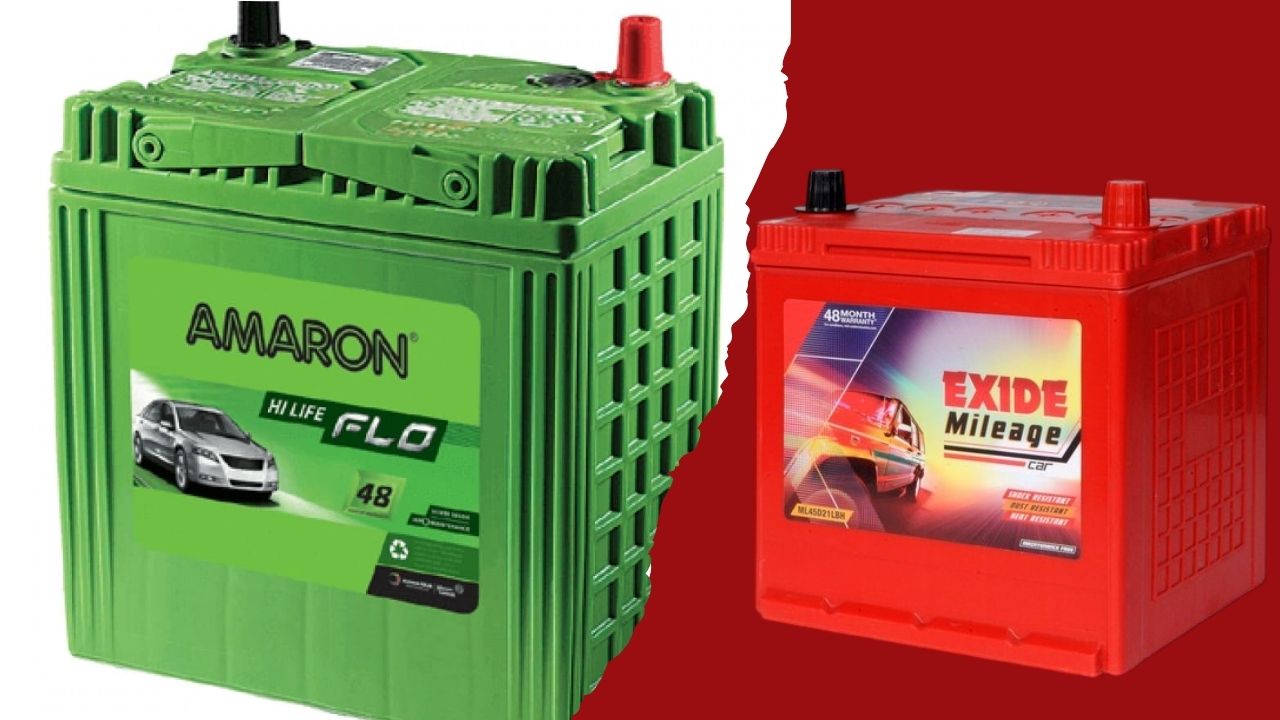
Amaron GO vs. Exide Mileage: A Direct Comparison

Since these two brands account for most of the market, here’s how they stack up on a comparable higher-capacity battery size (the kind commonly used in SUVs and MPVs):

Amaron GO (95D26L-class) Exide Mileage (equivalent class)
Approx. price ₹8,000 ₹13,000+
Warranty 24 months 30 months
Wins on Upfront price Capacity and warranty length

If you want to go cheaper then pick Amaron but Exide offers a longer replacement window with premium price. Mentioned prices are presented to figure out genuinely, you can check the actual price of these batteries in your nearby shop or online before buying.

Where to Buy Best Car Battery

Don’t limit yourself to whichever shop is closest. A few reliable channels worth comparing:

  • Brand websites directly. Amaron and Exide both have online fitment tools — enter your car’s make, model, and variant, and they’ll show you the exact compatible battery.
  • Authorized dealer networks. Buying a battery, especially Amaron and Exide from an authorized dealer is still the safest bet for warranty paperwork as their networks are extensive.
  • Battery-specific online retailers. There are specific online retailers such as BatteryDekho, Battery Mantra, and Powerwale. Best platforms to buy because they let you compare brands and prices side by side before ordering.
  • Doorstep installation services. Convenient if you can’t get to a garage, but confirm the battery is genuine (ask for a GST invoice) and that the technician actually checks or resets the BMS on start-stop cars.

Car Battery

Buy from any of these platforms but always check the manufacturing date sticker on the battery itself. If that date is past two to three months then it’s good to go. A battery that’s sat in a warehouse for a year loses charge capacity before it’s even installed.

The Detail Most Buyers Skip

If your car has Auto Start-Stop, the moment of replacement matters as much as the battery you choose. Confirm with whoever installs it that they’re using an OBD-II tool to reset the battery management system for the new unit. Skipping this is one of the more common ways buyers end up with a battery that fails within months — not because the battery was faulty, but because the alternator kept feeding it a charging profile calibrated for the old, degraded one.

Which One Should You Get?

If you drive a standard petrol or diesel hatchback or sedan with no start-stop feature, Amaron GO or Exide Mileage in your car’s stock Ah rating will cover you for the price you’re already expecting to pay — Amaron if upfront cost matters more, Exide if you’d rather have the longer warranty window. 

If your car has Auto Start-Stop, an AGM or EFB battery from Bosch, ACDelco, or Amaron’s AGM range isn’t optional — it’s the only type built to survive daily city traffic without failing early. And regardless of brand, the two details that actually determine whether you get your money’s worth are the manufacturing date on the sticker and, for start-stop cars, whether the installer resets the BMS. Get those right and the brand debate matters a lot less than it looks like it does.

Read More :- Top Car Insurance Plans to Buy in August 2026

Conclusion

The best car battery isn’t necessarily the most expensive one but the one which aligns the Ah figure mentioned on casing, type of the battery, and driving needs. Two most reliable batteries are Exide and Amaron for most of the cars. Start-stop cars need an EFB or AGM battery. However, before buying any kind of battery, check its manufacturing date, the seller must be reliable, and make sure the BMS is reset when required.