0

EMI vs Lease: Which Is Better If You Plan to Upgrade Your Car Every 3 Years 

EMI vs Lease

Car enthusiasts love to upgrade their cars frequently just like people upgrade their iPhone every year. The real difference is the money. EMI vs Lease are two very different versions of car loan, which one is better for you to take a car loan for actually buying a car is hard to understand. That’s why many people get confused and make the wrong decision.

So if you want to make the right choice for your car loan then read the full article to understand where each one fits. 

When you buy a car by taking a car loan, you have to pay the fixed amount monthly (principal + interest) over a tenure which is usually 3-7 years. When it’s fully repaid, you own the car outright. Until the loan closes, the bank holds a hypothecation on the vehicle but legally the car is yours from day one. This is Equated Monthly Installment (EMI). Higher monthly outgo because you’re paying off 100% of the car’s value plus interest. 

In Lease, however, you never own the car. You pay a rent to use it for a set amount of time then give it back, pay a residual value to buy it, or get into a new lease. The difference is the monthly fixed amount is lower than EMI because you don’t own it, you are just paying for depreciation for a period + interest + fees. There’s one catch – overage charges hit hard and sometimes bundle maintenance. So you have to be careful with mileage and maintenance.

Which Is Better in EMI vs Lease If You Plan to Upgrade Your Car Every 3 Year

In the EMI vs Lease option for buying a car, there’s no single answer yet. As it depends on your choice and income, here’s the thing to consider before making any decision.

Car Loan’s Core Problem With EMI on a 3-Year Cycle

Most car loans are structured for 5 to 7 years. The calculation behind them assumes you’ll hold onto the car long enough for the interest-heavy early payments to even out, and long enough for depreciation to slow down.

When you sell or trade in at year 3, you’re stepping out mid-loan. That means:

  • You’re still carrying a decent chunk of outstanding principal
  • You’ve paid a disproportionate amount of interest relative to how much of the car you actually “own”
  • The car’s resale value has already taken its steepest depreciation hit (new cars lose the most value in the first 2-3 years)

Put these together and you often end up underwater — owing more than the car is worth, or barely breaking even after resale. You then roll whatever gap exists into your next purchase, and the cycle repeats, sometimes getting worse each time.

Leasing Is a Good Option If You Upgrade Car in 3 Year

Leasing was built for exactly this kind of usage pattern. You’re not paying for the whole car — you’re paying for the depreciation that happens during the years you use it, plus interest on that portion, plus fees.

For someone upgrading every 3 years, this lines up almost perfectly with typical lease terms (24-36 months). A few real advantages:

Lower monthly payments than an EMI on the same car, since you’re not financing the full price. For example, if the car is worth ₹12 lakh today and is expected to be worth ₹7 lakh after 3 years, the lease payment is broadly based on the ₹5 lakh depreciation over those three years. 

When three years are completed, you can return the car to the leasing company and they’ll check mileage, damage and condition according to the contract. You don’t have to worry about negotiating a resale price. But if there’s any damage and higher mileage then you have to compensate for it. If you are eligible, the lease company can offer you a replacement/new-lease program. You still need to sign a new lease and meet the new contract’s approval and payment requirements. 

Lease is a good option if you are confused about EMI vs Lease if you are buying a new car. Many leases cover a new car while it’s still under the manufacturer’s warranty, which can reduce your exposure to unexpected repair bills for covered defects. 

The car resale value gets down right after it leaves the showroom. In one year, the retention by 60% is going to hit so if you don’t want to worry about car worth in three years, that risk is not on you anymore, its leasing company.

Probable Risk That You Must Know Before Considering Lease

There are some conditions that are set on the contract on lease while taking a car. Always remember that you never own a car. For example, you rent an apartment and the owner takes a security deposit. If you damage it, they won’t return it. Same happens with leasing, if mileage limits hit, damage that can cost much, you have to pay extra for it and in the end return it back.

If you drive over your allotted kilometers, you’ll pay a penalty per extra km so this adds up fast if you drive a lot. If you are buying it to travel out of the city then there’s no benefit in it.

Wear-and-tear charges always happen when you drive in rush areas or in traffic. Scratches, interior damage, anything beyond “normal use” can cost you at lease-end.

You build zero equity. As you give a rent every month. At the end of three years, you own nothing — not even a trade-in value to offset your next vehicle.

Long-term cost. If you ever decide to stop upgrading and just keep a car for 6-7 years, leasing back-to-back will almost always cost more than one EMI held to term.

Which One Saves Money If You Swap Cars in Few Years

Don’t just start comparing EMI vs Leasing on monthly payments. That’s a trap, use calculation and figure out the total cost for a confirmed set of periods. Let’s say you are buying a car for 3 years and then want to change it, total payment made over these years, lease end-fees if any, regular maintenance cost, driving habits are the effective majors that hit your total cost. 

Whichever number is lower for your driving habits and your market’s resale trends is your answer — not a generic rule of thumb.

Here’s a Maruti Suzuki Victoris LXI petrol example to calculate the total cost of your car by taking both EMI and Lease. Its current ex-showroom price is ₹15.13 lakh, while the estimated on-road price is around ₹17,50,000 (assume). 

EMI (5-year loan, 20% down, 9.5% interest)  Lease (3-year operating lease, bundled) 
Down payment  ₹3,50,000  No large down payment, security deposit which often refundable
Tenure  5 years = 60 months  60 months  
Monthly Pay ₹29,500  ₹32,700  
Total Cost ₹21.2L (include downpayment) ₹19,62L  
Ownership  Yes, you own the car after 5 years  No, unless you pay a separate buyout near residual value. 

If you want to buy Maruti Suzuki Victoris LXI petrol car on lease and later buyout then:

Option Monthly outflow Total paid (5 yrs) Ownership at end
EMI (loan) ~₹29,500 EMI + ₹3.5L down ~₹21.2L (down + EMI) Yes (you own; can resell)
Lease (no buyout) ~₹32,700 rental ~₹19.62L (rentals only) No (car returned)
Lease + buyout ~₹32,700 rental + buyout ~₹27.49L (rentals + buyout) Yes (after paying residual)

Buying An EV On Lease Is More Profitable Than EMI

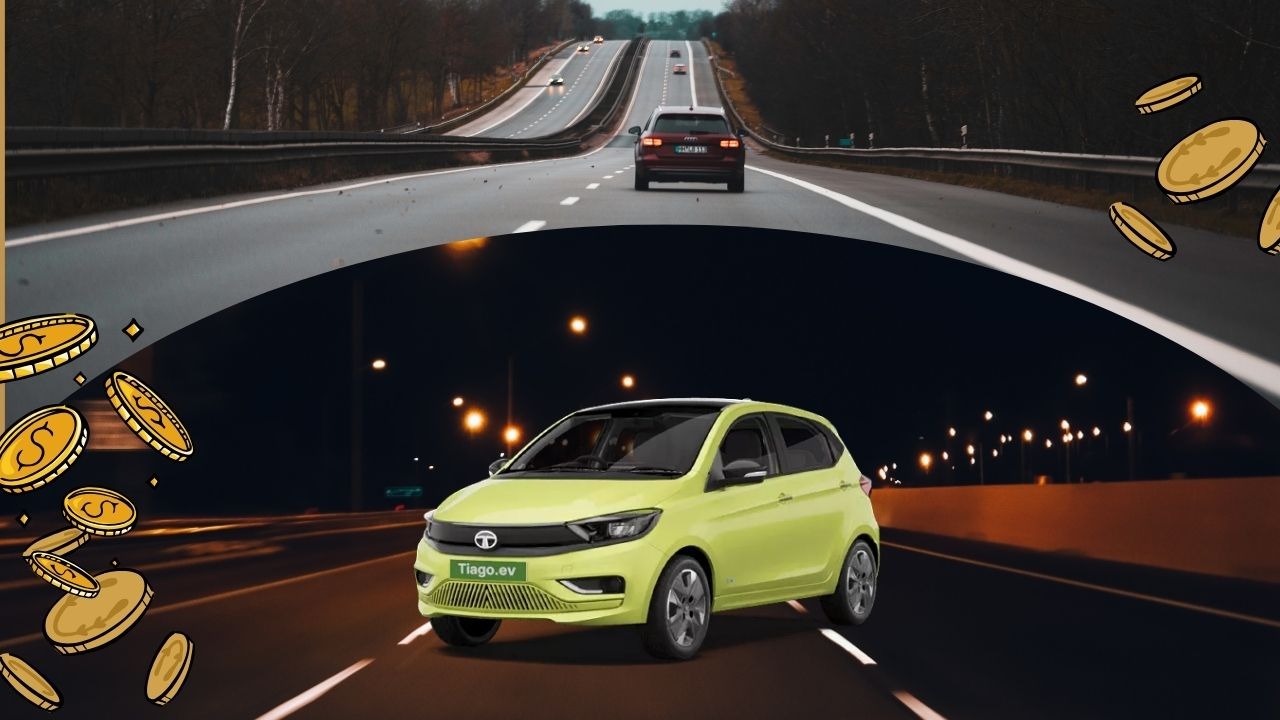
A 3‑year total cost comparison for a Tata Tiago EV using loan as EMI vs Lease. Let’s look into quick comparison on assuming numbers but you can swap this with your exact dealer quote and calculate the actual total cost using EMI calculator: 

Tata Tiago EV EMI (loan, 3 yrs) Lease (operating, 3 yrs)
On-road price used ₹8,90,000 ₹8,90,000
Down payment / initial ₹1,78,000 ~₹0 (small fee possible)
Monthly payment ~₹22,800 EMI ~₹20,000 rental
Total paid over 3 yrs (cash out) ₹9,98,800 (down + EMI) ₹7,20,000 (rentals)
Ownership at end Yes (you own) No (car returned)
Approx. 3‑yr resale / residual ~₹4,89,500 (you keep) ~₹4,89,500 (goes to lessor)
Net 3‑yr cost (cash out − asset value) ~₹5,09,300 ~₹7,20,000
Typical inclusions Loan only; insurance & maintenance separate Often includes insurance + maintenance (check contract)

Note: any price and figures mentioned above is assumed by the current price provided, you must check the actual amount by calculating it with your own variant, tenure, mileage and other terms.

Read More:-  What Your Car Loan Covers Beyond the Ex-Showroom Price 

Conclusion

When it comes to EMI vs Lease, leasing can be worth considering when predictable monthly costs and, depending on the lease, maintenance and other expenses may be bundled in. No ownership equity can make it expensive if your driving habits don’t match the contract. An EMI makes more sense if you want to own the car, drive it for 5–7 years or longer.

Before signing either agreement, calculate the total price you pay and compare the complete three-year cost of both options including interest, insurance, maintenance, taxes, lease fees, penalties and the car’s expected resale.

You can choose a lease for flexibility and frequent upgrades; choose an EMI when long-term ownership and building resale value matter more.

Alok Kabir

Alok is an experienced SEO Specialist skilled in blogging and SEO-friendly content creation. He also specializes in Content Optimization and Technical SEO, including website optimization, crawlability, indexing, site speed, and on-page improvements to enhance search rankings and online visibility.

Leave a Reply

Your email address will not be published. Required fields are marked *

0

Maruti Suzuki Top Variant Cars 2025: Luxury, Hybrids & EV Revolution Revealed

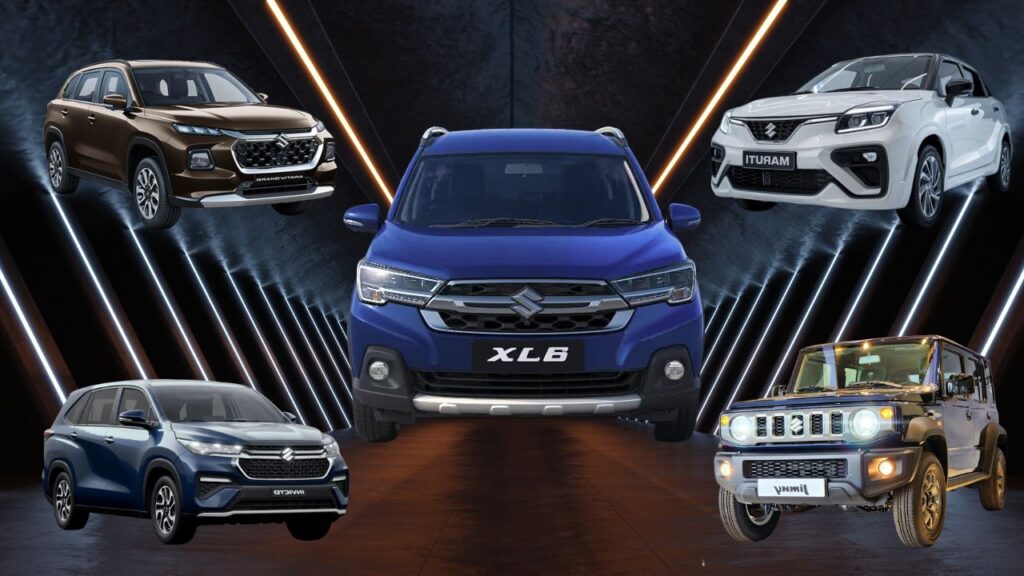
Maruti Suzuki is one of the best brands for its impressive lineup of premium variants across different segments. From the flagship Invicto Alpha+ 7S MPV at ₹29.22 lakh all the way to the high-feature hatchbacks and subcompact SUVs. The brand has set its position in the automotive market in 2025 after the GST price cuts on its successful models. With offering high-end features and strong body build segments, it takes the company’s achievement to the next-level. 

Premium Flagship Models

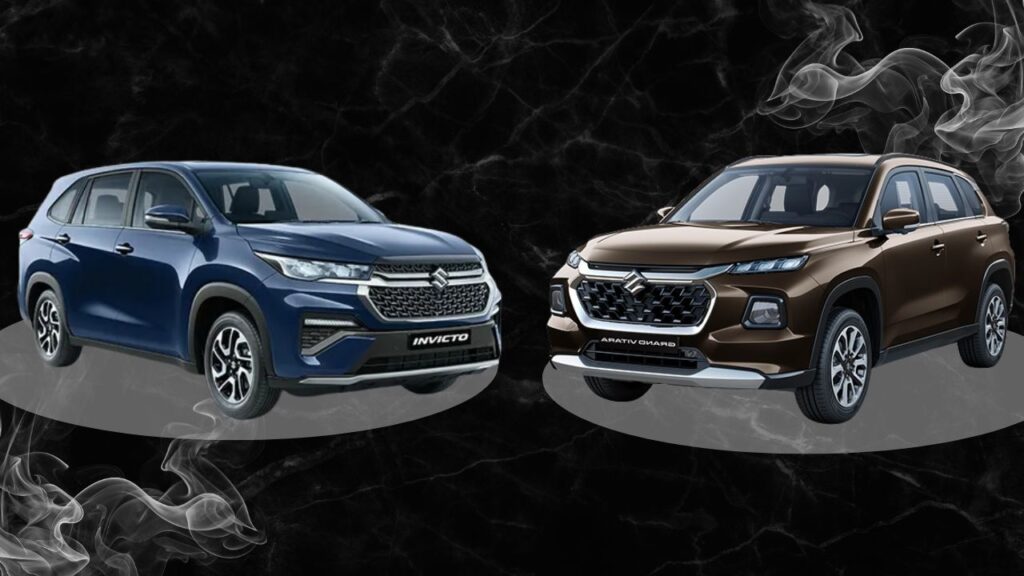
Maruti Invicto Alpha+ 7S is the priciest from the lineup costing ₹29.22 lakh. This luxury MPV comes with a 2.0L hybrid petrol engine developing 186.2 PS power and offers best-in-class fuel efficiency of 23.24 kmpl. Some of the top features are panoramic sunroof, ventilated front seats, 360° camera system, powered tailgate, 8-way power-adjustable driver seat with memory function, and SmartPlay Magnum+ 25.65 cm touchscreen.

Maruti Grand Vitara Alpha+ is the top-of-the-line SUV variant with a price of ₹19.72 lakh. This variant gets Maruti’s able strong hybrid tech with a 1.5L engine churning out 102 PS and great fuel efficiency of 27.97 kmpl. Some of the interesting features include AWD, panoramic sunroof, Level-2 ADAS, 360-degree camera, and ventilated seats.

Game-Changing New Launch

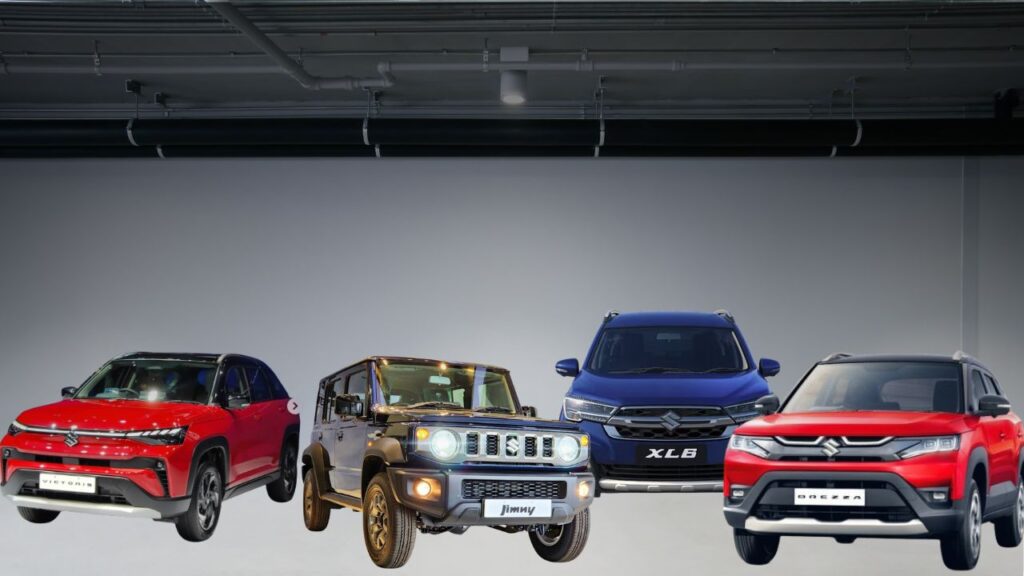
Maruti Victoris is a curious addition to the Arena lineup, priced in the vicinity of ₹15.50 lakh. This is the flagship Arena SUV and brings with it some firsts to the sector such as Level-2 ADAS (the first ever from Maruti’s stable), bottom-mounted CNG tank, and hybrid powertrain choices. The Victoris has achieved a stellar 5-star Bharat NCAP safety rating.

Off-Road Specialist

Maruti Jimny Alpha AT fulfills adventure enthusiasts’ needs at ₹14.45 lakh. This compact off-road SUV has proper 4WD capability with low ratio gear transmission, 210mm of ground clearance, and 103 PS power from the 1.5L petrol engine.

Unique features include headlight cleaning with washer, 9-inch infotainment with wireless charging, and solid off-road engineering.

Family-Oriented Premium MPVs

Maruti XL6 Alpha+ AT targets high-end family buyers at ₹14.48 lakh. The 6-seat MPV offers second-row captain chairs, front ventilation seats, connected car tech, and 4 airbags as standard. The vehicle achieves 20.27 kmpl efficiency with its 1.5L petrol powerplant developing 103 PS power.

Read More:- Maruti Suzuki Invicto Gets Perfect 5-Star Bharat NCAP Rating — Safety Redefined!

Best-Selling Performers

Among all current bestsellers, the Maruti Brezza ZXI+ AT has been a success with 13,620 unit sales in August 2025. At a price of ₹13.98 lakh, it has 360-degree camera, 6 airbags as standard, HUD display, and all-round safety features.

Maruti Ertiga ZXI+ AT topped the charts in August 2025 with 18,445 unit sales. This 7-seater family MPV is all about functionality with high-end features, so it’s the best-seller in India during the month.

Upcoming Electric Revolution

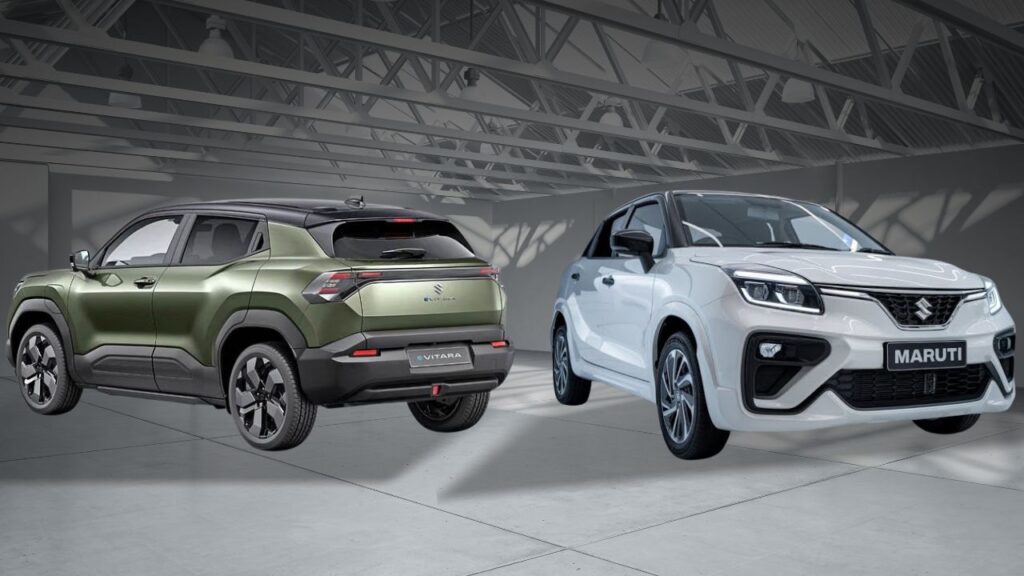
Maruti is all set to take a step into the EV domain with the e Vitara, set to arrive in December 2025. The battery EV SUV will have two battery sizes – 49 kWh and 61 kWh – with more than 500 km drive range.

Other unique characteristics include Level-2 ADAS, standard 7 airbags, built-in information display system, and an all-inclusive ‘e for me’ charging infrastructure.

Technology and Safety Leadership

Maruti’s best variants in 2025 exemplify excellent technical evolution. The 2025 Baleno also comes with standard 6 airbags across all variants, better protection features with ESP with hill-hold assist, and new connectivity features. The new car has maintained high-profile looks but with new safety norms.

Market Dominance Statistics

Maruti Suzuki registered exceptional marketplace dominance during the month of August 2025, wholesaling 1,31,278 automobiles and occupying 8 out of 10 spots in the bestseller ranking. The portfolio of the brand ranges from the budget-friendly Alto K10 costing ₹4.23 lakh to the luxury vehicle Invicto costing ₹29.22 lakh, hence covering the entire gamut of the marketplace.

Overall data here shows Maruti Suzuki’s strategic alignment of all price segments with leadership variants with premium facilities, high-level safety features, and best-in-class fuel efficiency continuing to drive the brand’s leadership status in 2025.

Conclusion

Maruti Suzuki Top Variant Cars in 2025 marks its position at the top in best cars. These cars not only have excellent design but build on high-performance engine, powerful powertrain, and beautiful interior to give you premium rides on every road. These marvellous designs are ensuring enthusiastic buyers with trim variants and new models. Its strong body provides safety with a high score rating, making it best for families.

0

Volkswagen Confirms Plans to Launch New Sub-4-metre SUV by 2027

Volkswagen

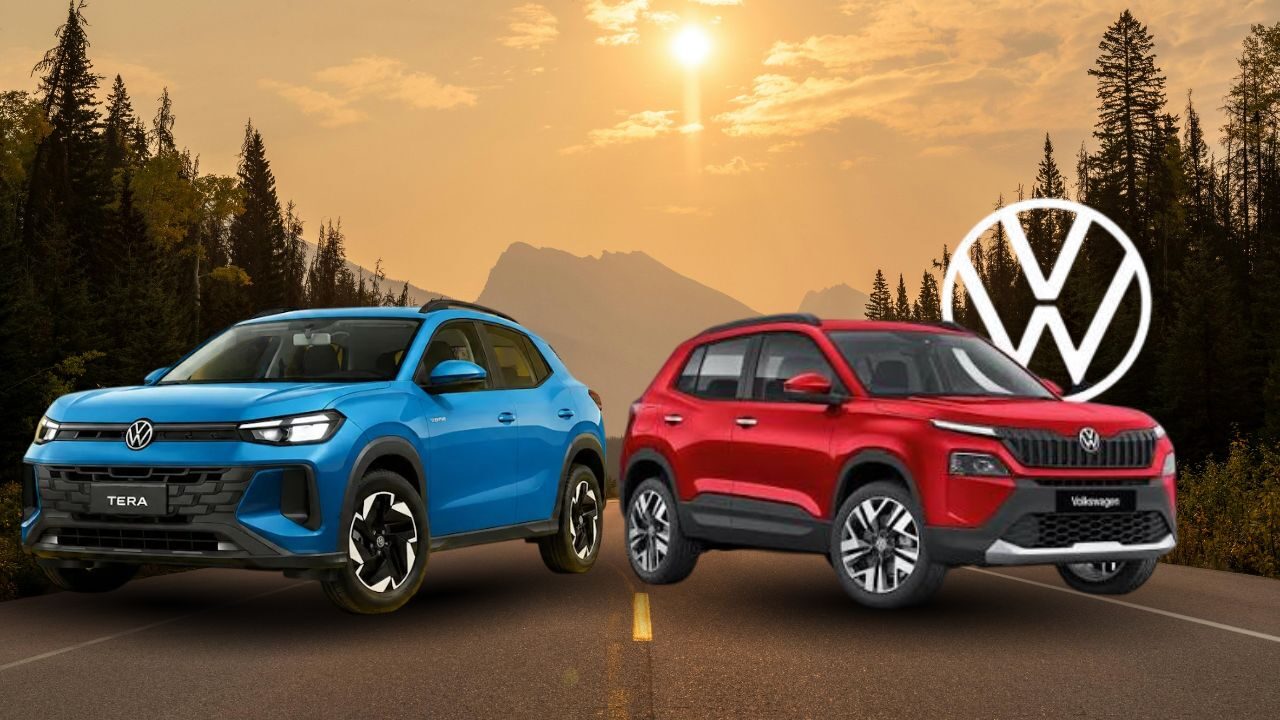
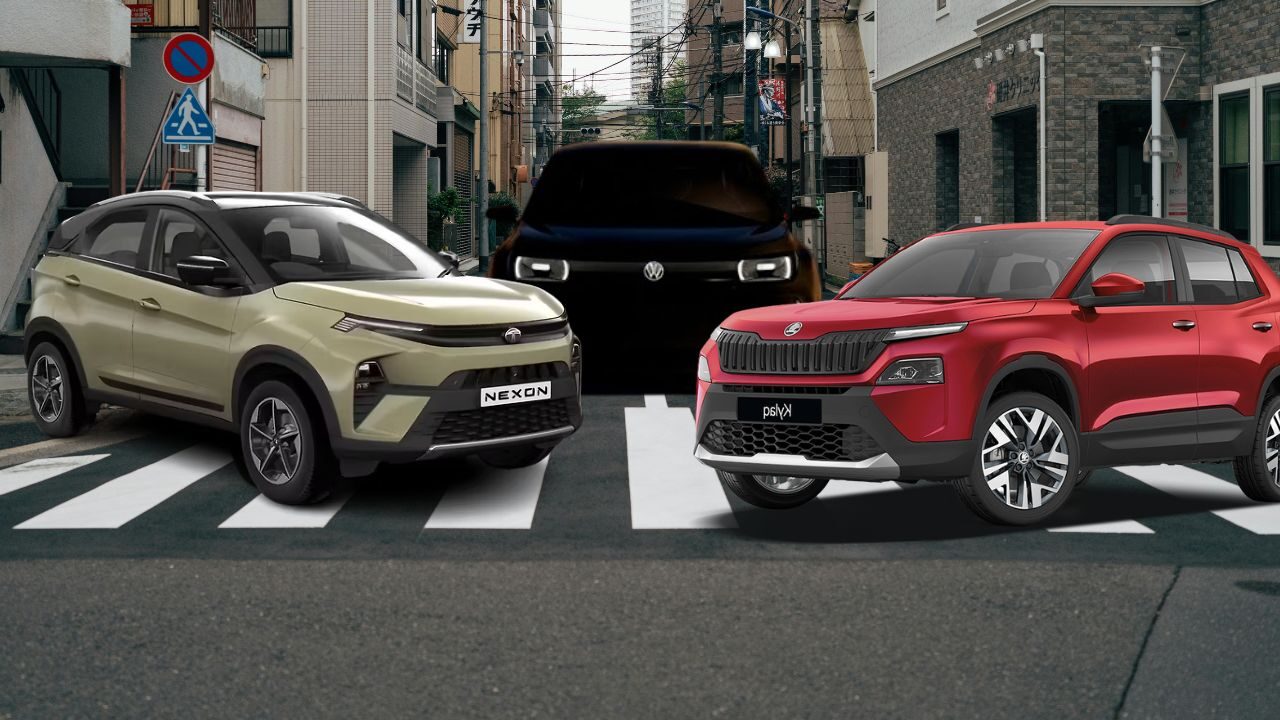
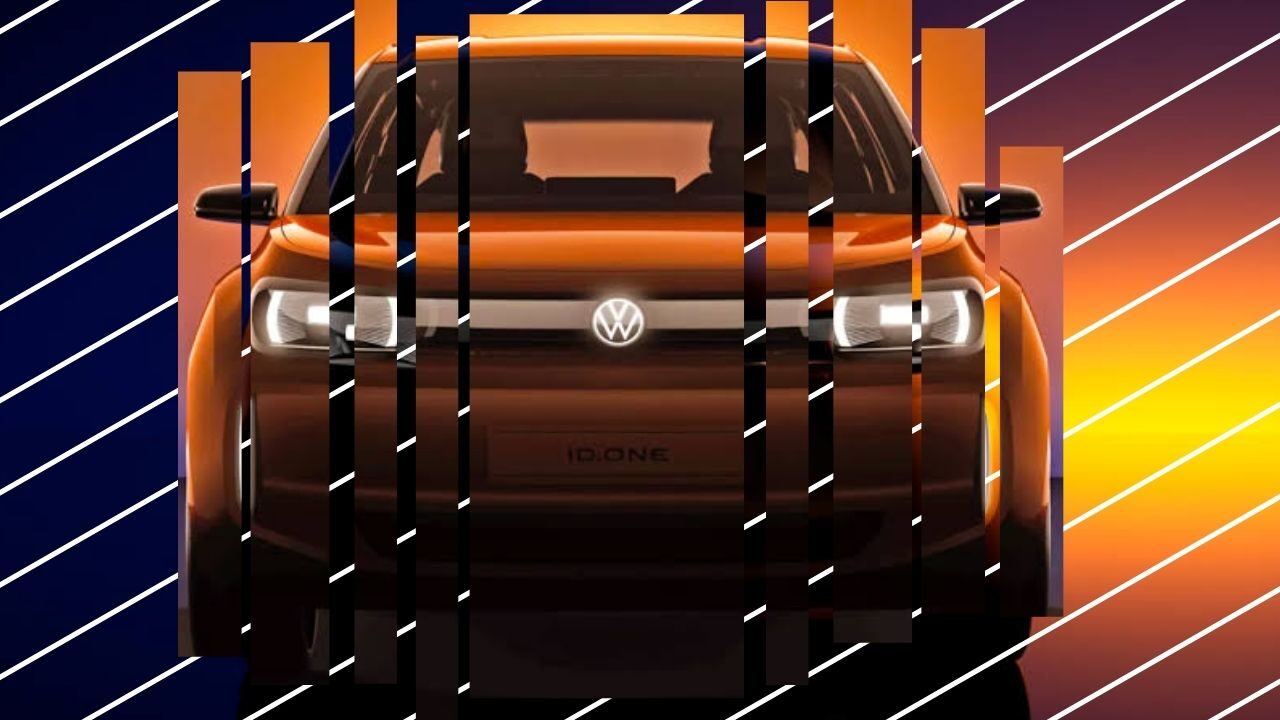
Volkswagen confirms plans to launch a new sub-4-metre SUV for India in 2027 and it is the first b-segment SUV of the brand. It will be placed below the Taigun, beginning at approximately ₹12 lakh. This new model of VW is a direct competitor of Tata Nexon, Maruti Brezza, Hyundai Venue and Kia Sonet, while avoiding a segment that ‘actually moves volume’. It will share most of its mechanical components with the Skoda Kyiaq, but Volkswagen might equip it with a different bodywork, interior and driving feel.  

Scheduled to be launched in November 2024 and opened for bookings that December, Skoda’s Kyla crossed 10,000 bookings within its first ten days on sale. That figure is a strong response that changed Volkswagen Group India’s approach. After discontinuation of Polo and Ameo, VW retreated from the sub-4-metre segment. 

This is what we currently know about the next compact VW SUV – powertrain, size, features and where it will fit within the VW lineup. 

Why Volkswagen Is Finally Entering the Sub-4-Metre Race

The sub-4-metre SUV segment is where the volume is in India. The tax regime keeps these compact SUVs more affordable than their larger counterparts, and vehicles such as Tata Nexon, Maruti Brezza, Hyundai Venue, Kia Sonet and Mahindra XUV 3O off these have been topping the monthly sales charts consistently.Volkswagen had this one idled for years, with the Taigun and Virtus serving as its points of entry instead and both clocking in way above what most first-time SUV buyers in India actually pay. 

Volkswagen Is Finally

That strategy capped how many people could realistically consider a Volkswagen. The new SUV changes that by sitting below the Taigun, giving VW its first genuine mass-market play in the country since the Polo era. It also allows the Skoda Auto Volkswagen India plant in Chakan to run at a higher capacity as the car will share tooling and components with the Kylacq and will not require a separate production line. 

Read More:-  Personal Loan vs Car Loan: What is the Better Choice for Buying a Car? 

Volkswagen Expected Engine, Dimensions and Performance 

Volkswagen has yet to announce a name, styling images or a final spec sheet, so consider some of this an educated guess as to what’s confirmed versus what’s probable. 

The SUV is based on the MQB-A0-IN platform, and will be produced in India. It targets its launch in 2027, with most reports indicating a mid-year launch rather than a January or Q1 date. It’s also confirmed to sit below the Taigun as VW’s new entry-level SUV in India. 

Power will come from the familiar 1.0-litre TSI turbo-petrol three-cylinder engine, producing 115 PS and 178 Nm of torque — the same unit working in the Kylaq, Kushaq, and Taigun today. A 6-speed manual gearbox is the expected base option. Volkswagen may fit an 8-speed torque converter automatic rather than carrying over the Kylaq’s 6-speed unit, which would be a genuine point of differentiation. 

Volkswagen Expected Engine

Dimensions should land close to the Kylaq’s 3,995mm length and 2,566mm wheelbase, since staying under 4 metres is the entire point of the tax bracket this car is built for. The design is rather than a straight Kylaq clone, Volkswagen is expected to give the car a distinct front and rear, inspired from the Volkswagen Tera, a related model already sold in Brazil. 

Expect a new grille, revised bumpers, and a different lighting signature, following the same playbook VW used to differentiate the Taigun from the Kushaq. 

Pricing is expected in the range between ₹9-16 lakh on-road Mumbai range, but that’s a media estimate, not a Volkswagen number, and on-road figures swing by state due to registration and road tax. Don’t plan a budget around it yet.

How It Stacks Up Against the Competition

Volkswagen SUV vs Skoda Kylaq 

Since both share the MQB-A0-IN platform and, in all likelihood, the same 1.0-litre TSI engine, the Kylaq is your clearest preview of what VW’s new SUV will feel like to drive. The Kylaq measures 3,995 mm in length with a 2,566 mm wheelbase, and its adult occupant safety score of 30.88 out of 32 in Bharat NCAP testing gives an early indication of the safety baseline the VW version should meet or beat. 

Where the two are expected to differ is transmission choice and cabin finish, with Volkswagen typically pitching its Group cars as the sportier-driving option compared to Skoda’s more feature-loaded value pitch.

Volkswagen SUV vs Tata Nexon 

The Nexon continues to be the benchmark in the segment, based on Tata’s tried and tested X1 platform powered by a 1.2-litre turbo petrol producing 120 PS and a 1.5-litre diesel variant that VW’s petrol-only line-up won’t get. Tata is also selling an electric Nexon, which Volkswagen’s ICE-centric entry couldn’t compete with directly.

What VW brings instead is badge value and a European driving character that Nexon buyers moving up from a hatchback often say they want but can’t get at this price point today. 

Read More:-  BMW X1 LWB vs Audi Q3 vs Mercedes GLA: Which Entry-Luxury SUV Actually Makes Sense in 2026?

Conclusion 

Volkswagen’s new sub-4-metre SUV might also enable the brand to tap into India’s largest SUV segment more effectively. With Kylaq already showcasing what the platform can offer, a Volkswagen variant with the familiar TSI engine, unique styling and competitive pricing could possibly pose a real threat to the Nexon, Brezza, Venue and Sonet. 

Let’s wait and see how aggressively will VW price and position it when the SUV hits the market in 2027. 

0

Ford vs Chevrolet: The Ultimate 2025 Showdown You Can’t Ignore!

Published May 1, 2025, 7:16 AM
Last Updated Apr 8, 2026, 7:11 AM


Ford vs Chevrolet The Ultimate 2025 Showdown You Can’t Ignore!

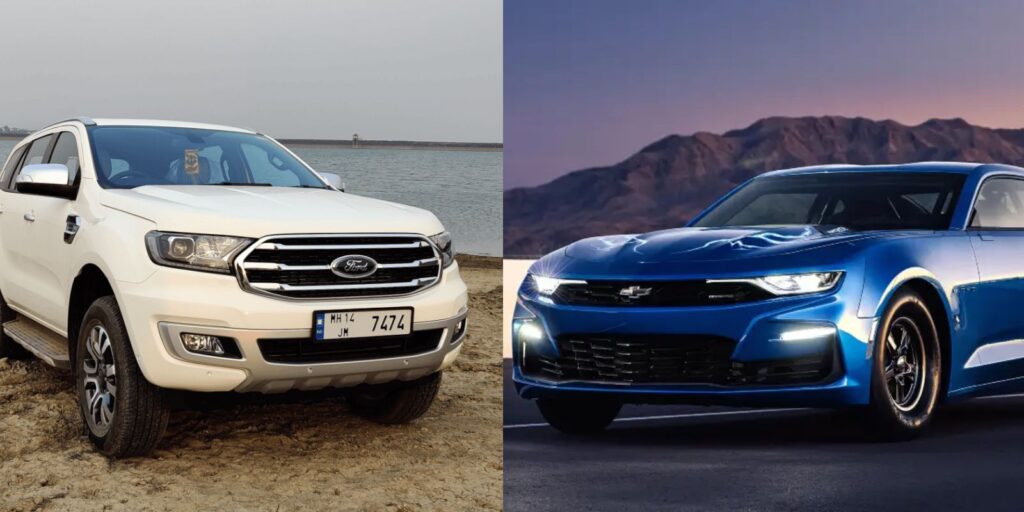
The Ford vs Chevrolet debate is an old one. Both brands make many cars, trucks, and SUVs. In 2025, each has new models and features. We compare them in six key ways below. This will help readers see how Ford and Chevy stack up in sales, electric vehicles, reliability, performance, price, and customer reviews.

Sales Numbers and Market Share

General Motors (Chevrolet’s parent) still sells more vehicles in the U.S. than Ford. In 2024, GM sold about 2.70 million cars and trucks. Ford sold about 2.08 million. That means GM had a larger share of the U.S. market (about 16.5%). Ford’s share was a bit lower.

Early in 2025, GM was doing better. In the first quarter of 2025, GM sold about 693,000 vehicles. That is 17% more than the same time last year. Ford sold about 501,000 cars and trucks in Q1 2025. This was 1.3% fewer than a year earlier. Ford’s best seller was its F-Series truck, with 190,389 sold (up 24.5%). GM noted that Chevy and GMC trucks were 40% of all U.S. truck sales in that quarter.

Overall, GM (with Chevy) has more sales and a bigger market share than Ford. Both brands do well, but recently GM has the edge in total sales.

Electric Vehicle (EV) Models and Popularity

Electric vehicles (EVs) are a big part of the 2025 car market. Ford and Chevrolet both offer electric models. Ford’s main EVs include the Mustang Mach-E SUV and the F-150 Lightning pickup truck. Chevrolet has the Bolt EV and EUV small cars, and it plans new EVs like the Equinox SUV and Silverado pickup.

Ford vs Chevy (2)

In 2025, GM’s EV sales jumped a lot. In Q1 2025, Chevy EV sales rose 119% over a year earlier. This was led by models like the Equinox EV and Blazer EV. Ford’s EV sales are growing too. The Mach-E sold 11,607 units in Q1 2025 (up 21% from a year before). Overall Ford sold 73,623 “electrified” vehicles (EVs + hybrids) in Q1, up 25.5%.

Both brands are putting more effort into EVs. In early 2025, Chevy saw its EV sales nearly double, while Ford’s EVs had steady growth. Popular EVs right now include the Mach-E and Lightning for Ford, and the Bolt plus upcoming Equinox/Blazer EVs for Chevy.

Reliability and Repair Costs

Reliability is how well cars avoid problems. It’s important to know if a car will last. RepairPal, a site that tracks repair data, gives both Ford and Chevrolet the same reliability rating: 3.5 out of 5.0. This means both brands are about average for reliability.

RepairPal also compares repair costs. On average, fixing a Ford costs about $775 per year. For a Chevrolet, the average cost is about $649 per year. So Ford repairs cost roughly 20% more than Chevy on average. This suggests that while reliability scores are the same, Ford owners pay a bit more in repairs.

In general, Ford and Chevy are similar in how often things break. Both have models that are praised for lasting a long time and models that get middling reviews. Consumer surveys (like those by J.D. Power or Consumer Reports) tend to rank them close to average. For example, both brands have some models ranked high for reliability and some that are just okay.

The data shows: Ford and Chevy both have a 3.5/5 reliability rating. Chevy’s average repair cost is about $649 a year; Ford’s is about $775. Both brands have many reports of minor issues, but no brand is clearly much more reliable. Overall, they tie on reliability, though Ford owners may pay slightly more for repairs.

Performance and Features

Both Ford and Chevrolet make powerful and feature-rich vehicles. A key comparison is their full-size pickup trucks, which many buyers use for work and play.

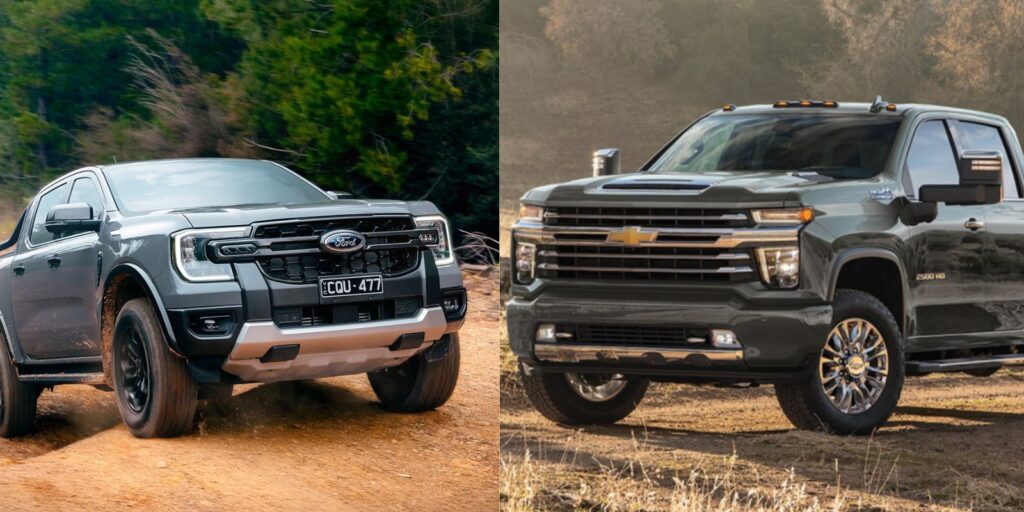
For example, the Ford F-150 and Chevy Silverado trucks can tow heavy loads. The 2025 F-150 can tow up to 13,500 pounds. The 2025 Silverado can tow about 13,300 pounds. This means each can haul big trailers, boats, or campers. Ford offers more engine choices (including hybrids and even a supercharged option). Chevy has fewer engine options but also a strong diesel version. The bottom line is that both brands have trucks with ample power, and Ford’s top engines can be even more powerful (up to 720 HP in special models, though Silverado’s biggest V8 is 420 HP.

Ford vs Chevy

Inside the vehicles, both brands have modern tech and comfort features. Ford’s trucks often have a larger touchscreen display – for example, the 2025 F-150 has a 12-inch screen. The photo below shows a Ford F-150 interior with that large screen. By comparison, a base Silverado has a 7-inch screen. Both systems work with Apple CarPlay and Android Auto to connect smartphones. Ford’s SYNC 4 system on the big screen and Chevrolet’s Infotainment 3 on its screen are both easy to use.

Ford’s trucks also offer unique options. For example, Ford has a “Pro Power Onboard” feature. This turns the truck into a generator so you can plug in tools or lights while you work. Chevy does not have this exact feature on Silverado (though they have other power accessories on some models). Both trucks have driver safety tech like lane-keeping assist, automatic emergency braking, and blind-spot monitors. In short, Ford and Chevy both pack their vehicles with advanced features and strong performance. Ford may have a slight edge with more engine and tech options, but Chevrolet offers competitive power and good features in its own right.

Ford vs Chevrolet Pricing and Value

The pricing of Ford and Chevrolet models is generally close. Both brands offer entry-level cars in the mid-$20,000 range. Their trucks and SUVs often start in the mid-to-high $30,000s for base models. For example, a base Ford F-150 and base Chevy Silverado each start around $36,000–$37,000 for 2024/25 models. Higher trims with more features can climb into the $50,000–$60,000 range. With options or luxury editions, prices can reach $70,000 or more.

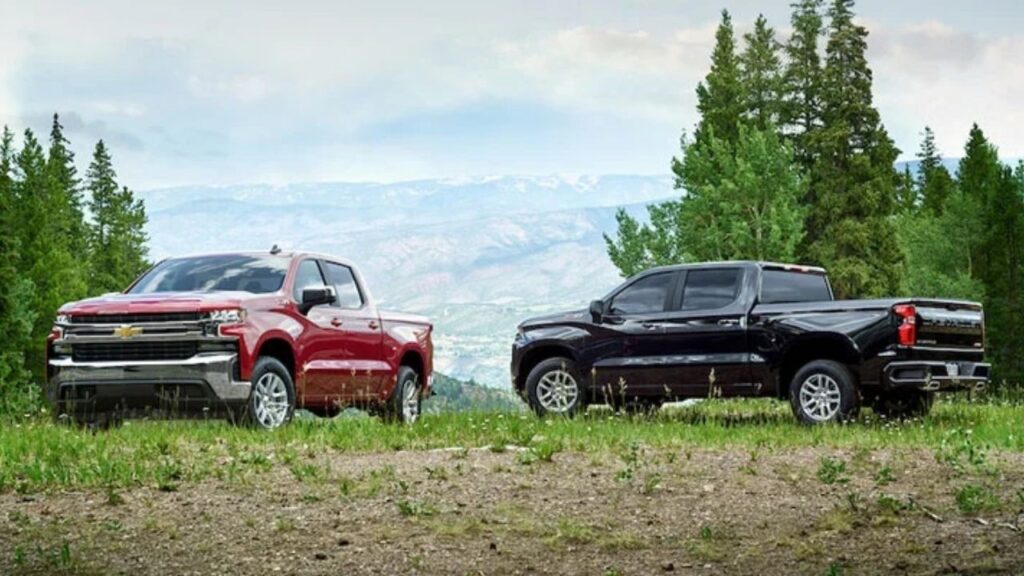
Ford vs Chevrolet Pricing and Value

Image Credit: claycooleychevy

In terms of value, many reviewers find Ford and Chevy similar. Both brands often give good features for the price. For instance, even the base trucks come well-equipped. Ford’s trucks might have a bit more modern design and tech at a given price, while Chevy trucks might offer slightly more traditional styling or comfort. Deals can change value too: some months one brand may have incentives or lower prices.

Overall, neither brand is clearly cheaper. You can buy a basic Ford or a basic Chevy for about the same cost. At higher trim levels, costs are also similar. So the “value for money” fight is largely a tie. Buyers often look at specific features (like fuel economy or towing) rather than a big brand advantage. In 2025, both brands give buyers a lot of options in a similar price range.

Customer Satisfaction and Reviews

Customers generally like both Ford and Chevrolet. In surveys and studies, both brands score fairly well. For example, J.D. Power’s 2024 U.S. Sales Satisfaction study shows Chevrolet with an overall score of 812 out of 1000 and Ford with 805. That means customers reported slightly better buying experiences at Chevy dealers in that study. It does not mean the cars are rated; it means the sales process satisfaction. Still, it suggests buyers felt a bit more pleased on average with Chevrolet’s sales experience.

When looking at owner reviews of specific models, both brands have loyal fans. For instance, the Ford F-150 and Chevy Silverado each have thousands of online reviews, and both tend to average around 4 out of 5 stars on many websites. Owners praise Ford for its strong engines and innovative tech, and they praise Chevy for its comfort and smooth ride. Some buyers say Ford trucks feel tougher and offer more choices, while others say Chevy trucks feel roomy and easy to live with.

Brand loyalty is strong in the truck market. Around 2021–2022, roughly 58–59% of Ford truck owners returned to buy another Ford truck when they upgraded. For Chevrolet truck owners, it was about 54–56%. This shows both brands keep most of their customers. It also shows a lot of buyers pick based on familiarity.

In summary, reviews and satisfaction ratings do not give a runaway winner. Both brands get good marks for many models. Ford and Chevy each have passionate owners who mostly give positive feedback. Differences in satisfaction tend to be small and depend on the model and year. Right now, the customer scores are close enough that neither brand dominates on public opinion.

Conclusion

Both Ford and Chevrolet have strong points in 2025. Ford’s family of trucks and SUVs offers many high-tech features and strong performance. Chevrolet’s lineup shows big improvements in electric vehicles and a long record of reliable trucks. GM (Chevy) currently sells more vehicles overall, and its EV sales are growing faster. Ford’s gas-powered trucks are still best-sellers in the U.S., and Ford leads in pickup sales. Reliability ratings and repair costs end up about the same for each brand, with Chevy being a bit cheaper to fix.

There is no clear single winner. The choice often comes down to what a buyer needs. If you want the latest tech and a slightly larger truck cabin, you might lean toward Ford. If you want more electric model choices and a strong track record, you might lean toward Chevy. In surveys, both brands have many fans. In the Ford vs Chevrolet question, the answer is: it depends on the buyer’s priorities. Both brands win in different ways for different people.

Swift vs Baleno 2026 Comparison: Price, Mileage, Features & Verdict

0

Hyundai Exter Facelift: Smarter Looks, Bigger Tech, Same City-Friendly Charm

Published Jan 31, 2026, 8:26 AM
Last Updated Apr 8, 2026, 7:20 AM

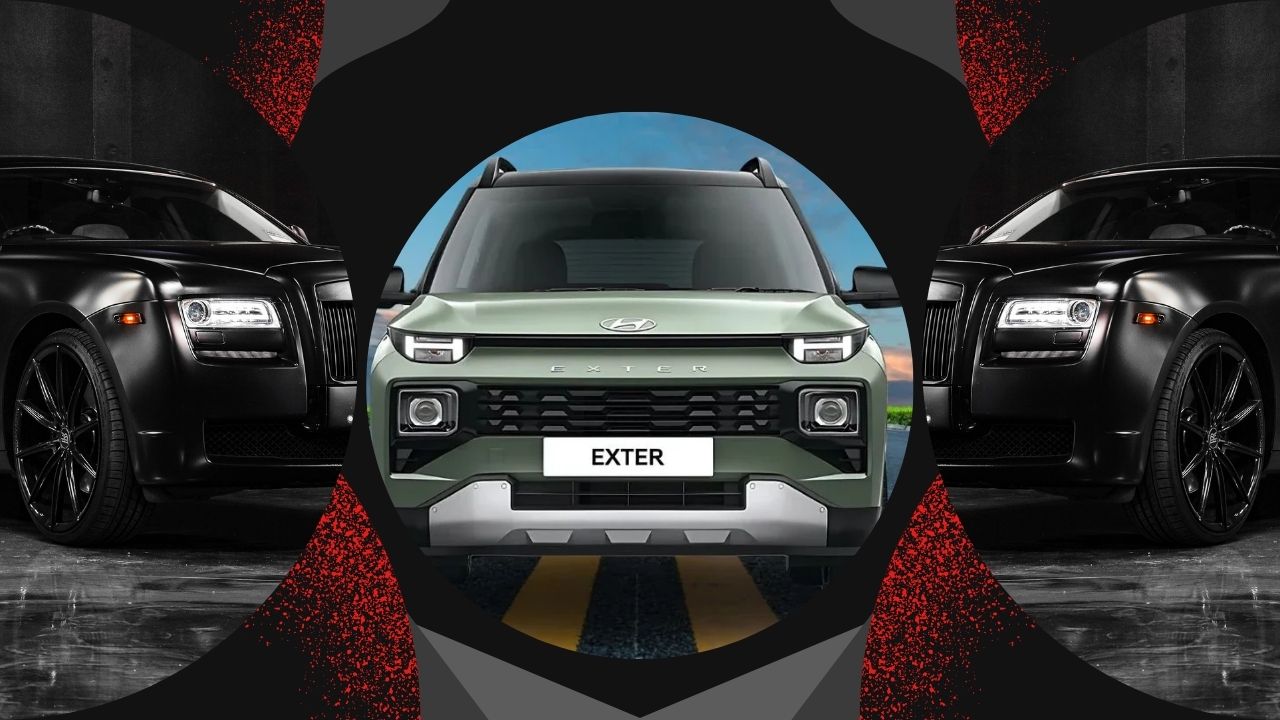
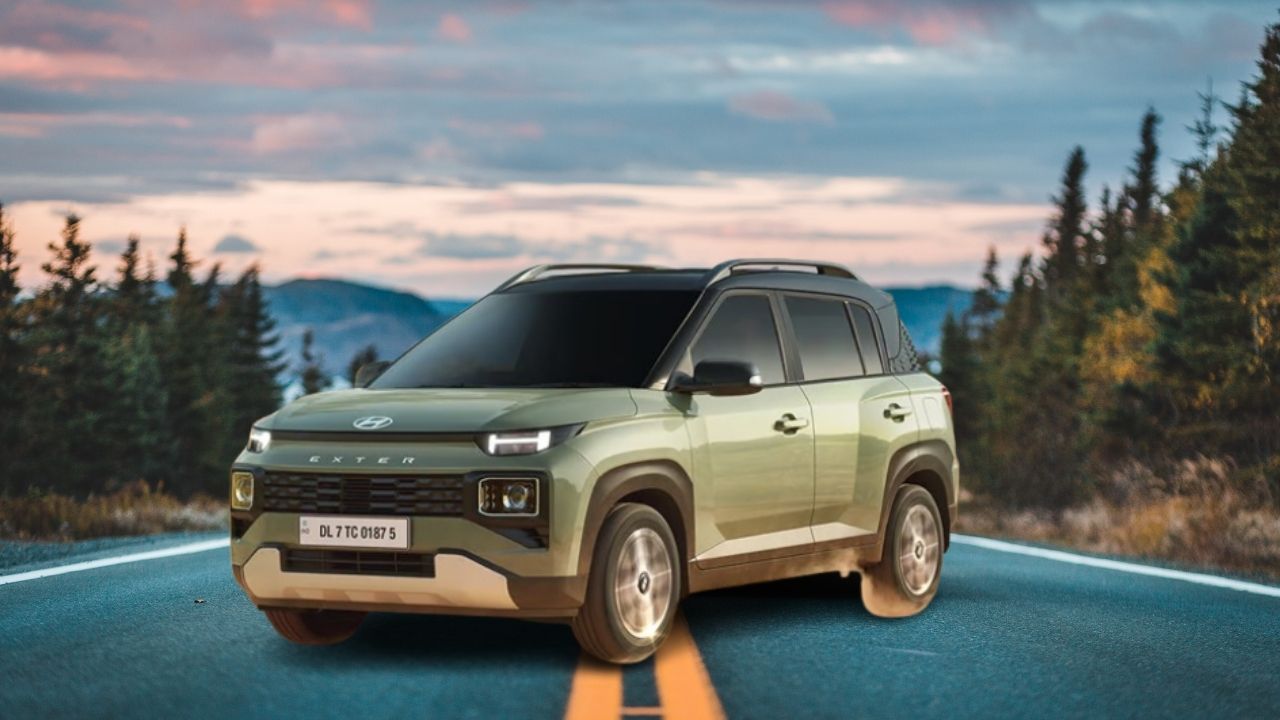
Hyundai Exter facelift

Hyundai Exter Facelift refresh is a smart play with no radical redesign, just some sharper styling, a tech-loaded cabin, plus practical upgrades that really matter. It stays true to being small, affordable, and ready for the city, while quietly levelling up to take on rivals like Punch and Fronx. 

Exterior Refresh: Subtle but Sharp

There’s no need to wait for car overhaul—Hyundai is playing it relatively safe and just cleaning up its looks. Spy shots reveal new alloy wheels as the first element catching the eye, together with a sportier stance. The front grille could be a bolder mesh style, the tail lights could be sharpened brighter with smoked accents, a redesigned rear spoiler brings that little bit extra for highway runs.

The full reveal is obscured by camouflage, but rumors point towards chunkier wheel arch cladding and redesigned side sills for a rougher look, inspired by the Venue’s rugged charm. 

Colors Options? New choices, such as a deeper Abyss Black or starlight Titan Grey, may be included in the range. Measuring less than 4 meters in length (to be exact, 3.8 m long), it’s compact and cute enough to be rested in the city, while vowing a firm stance on rough roads. 

Read More:-  Creta vs Seltos: The Battle of Korean Siblings That’s Tearing Car Buyers Apart

Interior Upgrades: Space and Smarts

This is the brightest point of the facelift – Hyundai is addressing real-world complaints. Cabin space increases up a notch, with whispers of some clever packaging to provide more rear legroom and a driver armrest for those long drives to Delhi or Agra. Split folding rear seats (60:40 format) also mean easier cargo hauls for weekend getaways. 

Tech also jumps forward in Hyundai Exter facelift. Imagine a giant 12.9-inch touchscreen powered by Android Auto OS (AAOS) — Hyundai’s first-wide market offering through which you can access third-party apps like maps or music without any hiccups. 

Placed alongside a 9.9-inch digital driver’s display, it is a cockpit upgrade that feels premium without the Venue price tag. Voice-enabled sunroof is also given and Ventilated seats? Possibly in top trims. Add Alexa integration, wireless charging, and a dual-camera dashcam and it’s a gadget lover’s dream. 

Comfort features such as a cooled glove box, plenty of USB ports and ambient lighting make things cosy. Considering the dimensions (under 4 meters) and the price (starting about ₹6-11 lakh), the interior feels well above its league for a sub-4-meter SUV. 

Powertrain

It offers 1.2-litre petrol engine to generate 82 bhp and 113.8 Nm of torque. With a slick 5-speed manual or an AMT on the flipside, it produces lively city dynamics and a claimed 19–20 kmpl fuel efficiency, gentle on your pocket and perfect for daily rides. 

Powertrain

Hyundai Exter facelift offers 68 bhp/95.2 Nm twin-jet unit with 5-speed manual comes back, and CNG-AMT tandem could make an appearance to take on competitors such as the Punch. No turbo or hybrid, yet, but Hyundai’s idle start-stop and battery saver are making this one clean. ARAI claims hold strong, which is a good thing considering the fuel prices in India. 

Safety Suite: Leveling Up

Safety is not a second thought. It retains the existing Exter’s 5-star Global NCAP rating with the addition of six airbags, ESC, hill assist and TPMS. Facelift Eyes adds ADAS goodies in the form of forward collision warning, lane keep assist, adaptive cruise, and blind spot alerts in top variants is rare for this price point.

Driving Experiencing on the Road

From the test mules, the Hyundai Exter facelift is expected to drive like the original – light steering for on U-turns, good high speed stability and suspension that absorbs bumps without feeling too soft. That extra cabin space? It’ll make a difference on family outings, cramming five with bags in no strain.

Driving Experiencing on the Road

Idle in mixed traffic 16-18 kmpl petrol, on CNG is good. It’s not a rocket, but overtakes feel confident, and the AMT eases the stop-go misery. 

Pricing Strategy for Hyundai Exter facelift

Expected to be priced around ₹6.5 — 11.5 lakh (ex-showroom) for Hyundai Exter facelift, the will be positioned below the facelifted Venue and bring in handsome volumes by stealing sales from Tata Punch, Maruti Brezza, and Mahindra XUV3OO. Pro Pack variants with extras such as dashcams sweeten the deal. 

Conclusion

With updated styling, a surprisingly premium cabin, robust safety features and familiar running gear, the Hyundai Exter facelift seems like a comprehensive package rather than a cursory update. If Hyundai prices it right, this sub-4-meter SUV has all the makings of the new value king of its segment. 

0

BMW 5 Series Price in India: Latest Cost, Features & Buying Guide

BMW 5

The BMW 5 Series has been the defining executive sedan for years, striking that elusive balance of sports-car thrill and luxury cruiser. In the constantly growing Indian automobile industry, the 5 Series gets a big facelift. BMW 5 Series Price In India is worth the features to experience the real luxury ride. Understanding the Indian luxury car buyers unique requirements, — essentially they drive on weekends and get driven on weekdays, BMW has introduced the Long Wheelbase (LWB) model. 

This change in strategy changes the sedan’s value proposition entirely. If you have your eyes set on this Bavarian marvel, then it’s important that you know the BMW 5 Series Price In India, running costs and what makes it so special. 

This all-inclusive guide goes in depth on all the things you need to know before you spend your money. 

The BMW 5 Series Price in India

When shopping in the high-end car category, the price tag is just the beginning. From 2026, BMW 5 Series will be offered only in the very popular 530Li variant. The price (ex-showroom) for the BMW 5 Series in India is now ₹72.90 Lakh – ₹75.80 Lakh. 

Yet, the on-road price is a more accurate indication of what you have to spend, as it includes the RTO registration, road tax, insurance, and any handling charges. The taxes are ridiculous in some Indian states and the final amount you pay will depend largely on the state where you register the vehicle. 

Estimated On-Road Prices in Major Indian Cities

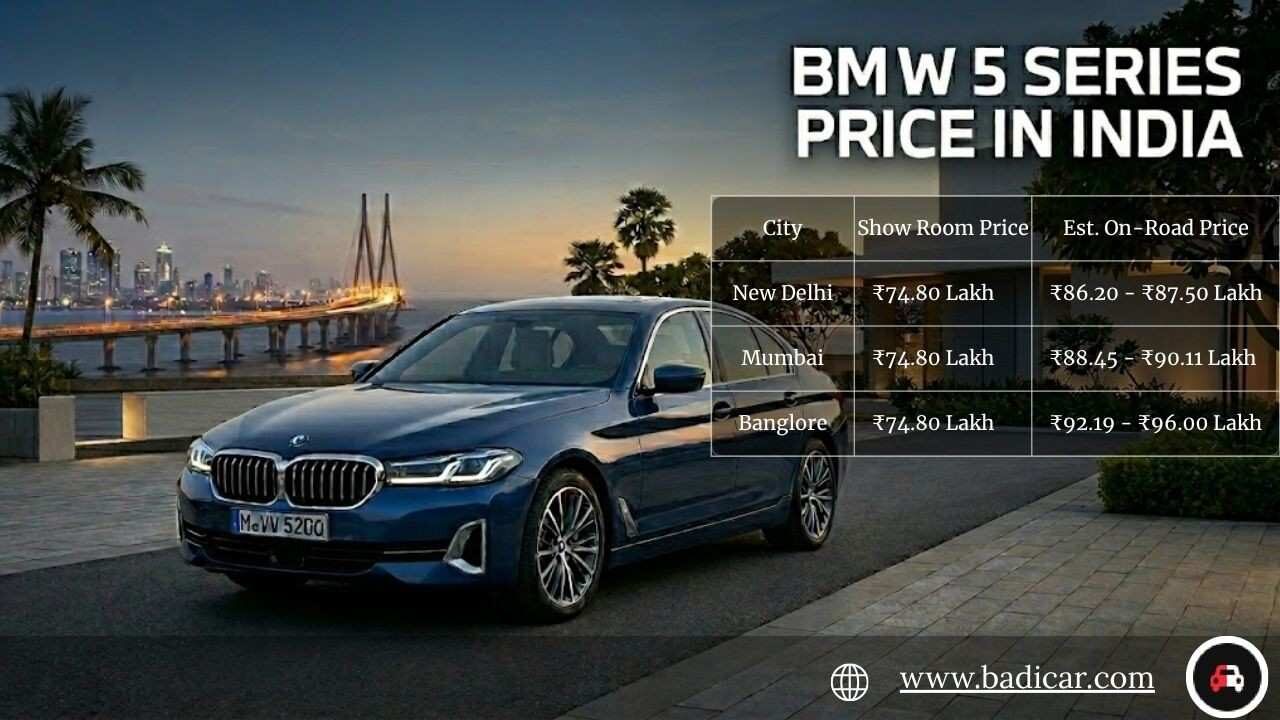
City Ex-Showroom Price Estimated On-Road Price
New Delhi ₹74.80 Lakh ₹86.20 Lakh – ₹87.50 Lakh
Mumbai ₹74.80 Lakh ₹88.45 Lakh – ₹90.11 Lakh
Bangalore ₹74.80 Lakh ₹92.19 Lakh – ₹96.00 Lakh
Chennai ₹74.80 Lakh ₹93.68 Lakh – ₹95.23 Lakh
Chandigarh ₹74.80 Lakh ₹86.03 Lakh – ₹87.00 Lakh

Under the Hood: Performance Meets Refinement

A BMW is ultimately defined by what lies under its bonnet, and the new BMW 5 Series LWB is no exception. The Indian market have seen a major focus move towards refined, high performance petrol engines. 

The BMW 5 series offers a 2.0-litre four-cylinder petrol engine that drives you with a super speed with quite punchy 255 bhp @ 4500 rpm power. It also offers 8-speed Steptronic automatic transmission to add ultra-smooth experience with rear wheels and a healthy 400 Nm peak torque from as little as 1600 rpm. 

It provides a smooth ride while accelerating high with LWB 530Li and takes you from 0 to 100 km/h in 6.5 seconds. For a big executive limousine that’s quite an achievement. Also, the fuel efficiency claimed by ARAI is a staggering 15.7 kmpl, however in the city you will get anywhere between 10-12 kmpl depending on the traffic and the way you drive.

See Also: New BMW M4  2028 Coupe Digitally Enters The BMW Neue Klasse M4 Era

Design and Features: The Luxury of Space

The move to a Long Wheelbase format is what sets the current 5 Series apart. The longer wheelbase results in rear-seat legroom that is simply enormous, encroaching on the space that is traditionally reserved for the 7 Series flagship. 

Exterior Styling

BMW has gone for a brave, modern look. The front of the car is dominated by the signature kidney grille which is also lighted with a soft illumination to give more presence at night. On top of the grille are sharp adaptive LED matrix headlights. The shape is clean with flush door handles and 19-inch alloy wheels as standard for a sleek, aggressive and refined look. 

Interior & Technology

The interior is first-class lounge which makes you experience the premium cabin comfort and style with: 

  • BMW Curved Display: It offers a large 12.3 inch driver display and 14.9-inch touchscreen makes it more convenient for every driver to take a care-free ride.
  • Panoramic Glass Roof: Making this car more like a home, BMW is not gonna leave a chance for a dislike. A glass roof lets you enjoy the sunshine and rain while you sit in the back.  
  • Rear seat comfort: Special contours have been developed for the rear seats to provide comfort and luxury with individual climate control zones and high-quality leather material and larger legroom. 
  • Technology: advanced design that supports wireless charging, all-round camera and a premium Harman Kardon audio system that make your ride more fun and ventilated front seats to make you comfortable.

Strong Focus on Safety and Sustainability

Mostly in the luxury vehicles, the focus is more on the performance but BMW keeps its brand more safe and sustainable with their well constructed model of new BMW 5 Series which holds an excellent safety rating. 

Key Safety Features include:

  • Maximum Airbags: Everyone inside the car will be protected with both front and rear seat airbags from various impact directions.
  • Active Safety Systems: More advanced control over safety is implemented with Traction control, EBD, and ESC which helps to keep the car balanced and avoid destruction particularly on abrupt turns or when braking suddenly. 
  • Advanced Driver Assistance Systems (ADAS): It’s one of the most advanced safety systems which detects sudden obstacles with cruise control, blind-spot alerts, and automatic emergency braking.

Besides, BMW is striving for sustainable production in an all-round way. The cabin is adorned in “Veganza,” a vegan material which is highly durable and akin to the texture and breathability of traditional leather but only results in a fraction of the typical leather carbon waste. 

Is the BMW 5 Series the Right Choice?

Spending more than ₹85 lakh for a car is a call that needs to be made after a lot of thought. The segment for luxury executive sedans does have a handful of very strong contenders, so deciding between them is a question of your priorities. 

BMW 5 Series Competition Check

  1. Mercedes-Benz E-Class LWB: A long-wheelbase model gives you a more comfortable ride. Most people who want to sit back and enjoy the ride while the driver is handling the streets then it’s best for them.
  2. The Audi A6: One of the luxurious cars everyone craves for as it offers modern hightech features to make you experience the true luxury. But it can’t match the 5 Series for commanding road presence or long-wheelbase composure.  
  3. Lexus ES: If you are more interested in mileage and hybrid engine to become eco-friendly then it is best but you can’t get the experience of sporty drive as the rear-wheel-drive BMW 5 Series.    

BMW 5 Series LWB strikes the elusive sweet spot. It’s the ideal car for the corporate executive with a chauffeur for the weekday grind and who loves to speed down the Sunday highway behind the wheel.

While considering BMW 5 Series Price in India, it is advisable to go for the BSI (BMW Service Inclusive) packages. These prepaid maintenance plans cover your service expenses for a certain number of years or kilometers and protect you against inflation and give you complete peace of mind. 

Conclusion

The BMW 5 Series is new again, and it raised the bar for what an executive sedan could be in India. With the 5 Series now available in a specifically designed Long Wheelbase version, BMW has perfectly met its customers’ needs for a chauffeur-driven car without betraying the “Ultimate Driving Machine” credo on which the brand rests.

If it’s the high-tech curved display, the expansive rear-seat space, or the relaxed punch of the 2.0-liter turbo-petrol engine that charms you, the 5 Series is a very well-rounded offering. Yes, the BMW 5 Series Price in India is beyond the reach of the segment, straddling the ₹90 Lakh mark on-road in many states. Still, for that kind of premium, you’re getting a car that refuses to make compromises—delivering a decked-out luxury experience and a thrilling ride on the weekends.