0

Best Second Hand Cars to Buy in India – Used Car Buying Guide

Published Jun 22, 2026, 10:37 AM
Last Updated Jun 22, 2026, 11:04 AM

Best Second Hand Cars

Car pricing is rising constantly in India and right now, cars are becoming an essential part of everyone’s life. Buying a Second Hand Cars is becoming a smart option because every new model of car value depreciates after two or three years, so most people secure themselves by spending over on a new one when they can get that model at half of price. Used cars are also a great option for first time buyers.

But it’s not that simple, you must know that the used cars market is in large numbers and choosing the right one is difficult. Every seller wants to pass off the car by saying “fully maintained”, “good condition”, and present it in an excellent condition without telling you the truth. They won’t tell you if there’s any flood-damaged or accident-repaired. That’s why buying a used car requires more than just finding a good deal. 

Let’s look into this guide to understand how you can buy a Second Hand Cars and which models can be good to pick in 2026. 

Why Second Hand Cars Are a Smart Choice in 2026

There is a financial reason for buying Second Hand Cars. A new car loses its value around 15–20% in the first year after it leaves the showroom. So buying a two or three-year-old car instead, you avoid that major depreciation which was faced by first hand car owners. While you get a well-maintained vehicle at a much lower price. 

A few other reasons second hand cars are gaining popularity in India:

  • Lower upfront cost means smaller loan amounts and lower EMIs.
  • Better insurance premiums since the insured declared value (IDV) is lower than a new car.
  • Access to higher segments – don’t pick five/six years old models to buy, choose a used premium sedan or SUV for the price of a brand-new entry-level hatchback.
  • Certified used car programs like Maruti True Value, Mahindra First Choice, clear your mind and help you to choose the right car. There are other brands that offer such programs like Hyundai Promise, and Toyota U Trust, these have made the process far more trustworthy than it used to be.
  • Online platforms also provide inspection reports, warranties, and even doorstep delivery for second hand cars. You can check OLX autos and CarDekho to find out. 

Those days were long gone when buying a second hand cars was a mistake because the market has now matured enough to make it a sensible financial decision rather than a compromise.

Best Second Hand Cars to Buy in India by Category

Not every used car is a good used car. There are few models that offer reliability, better value and easier to maintain over time. So let’s check out which second hand cars are best to buy.

Best Second Hand Hatchbacks

Hatchbacks are usually the easiest entry point into car ownership, and they remain extremely popular in the used car segment because of low maintenance costs and great fuel efficiency.

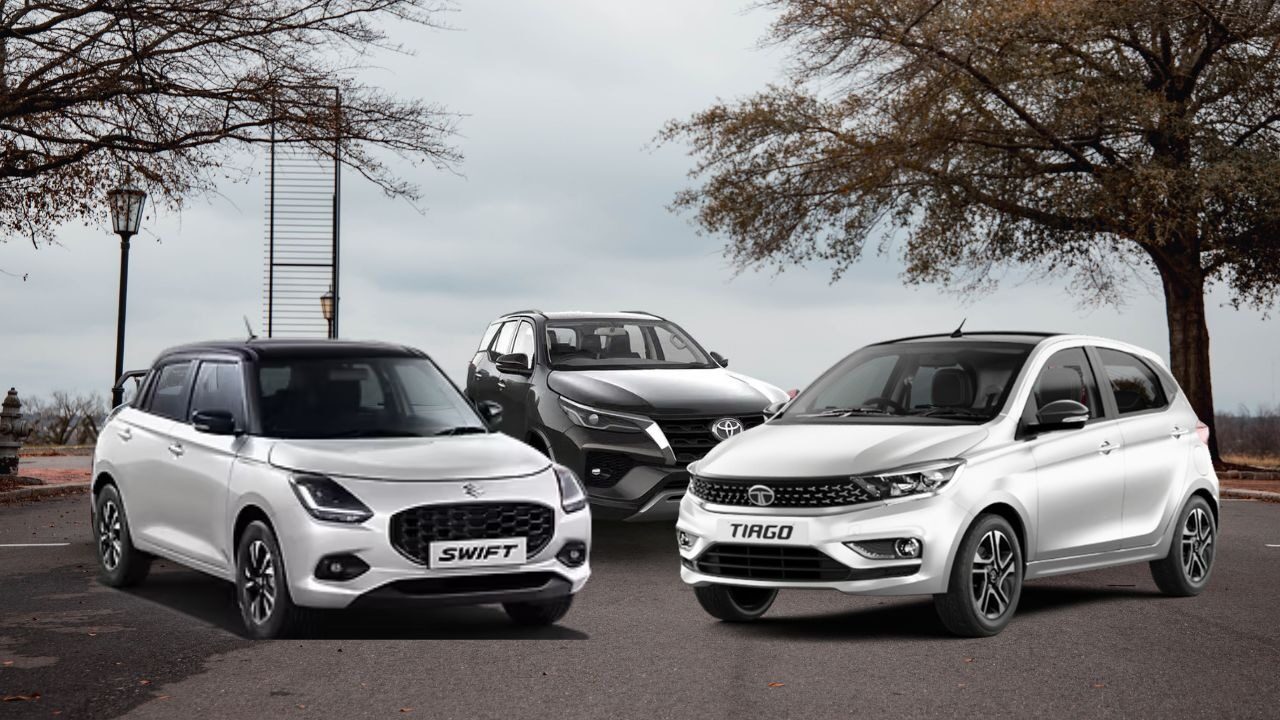
  • Maruti Suzuki Swift – Arguably India’s most popular used car. Strong resale value, easy availability of spare parts, and a massive service network make it a safe choice.
  • Hyundai i20 – It offers more premium features that let you feel excellent drive, a good pick if you want something a notch above the basics.
  • Maruti Suzuki Baleno – Ideal for those who are looking for a hatchback that offers good fuel economy, and decent resale value.
  • Tata Tiago – Tata is number one in safety rating, proved in many real accidents. Some variants build on solid structure, appealing to safety-conscious buyers.

Best Second Hand Sedans

If you want more comfort on long drives and a bit more road presence, a used sedan is worth considering.

  • Honda City – Known for being a driver’s car with smooth performance and excellent reliability. A used City is almost always a safe bet.
  • Maruti Suzuki Ciaz – Best to buy if you want a spacious cabin, low maintenance costs, and reasonable fuel economy.
  • Hyundai Verna – Offer best features and comfort drive that let you have a premium experience.
  • Skoda Rapid / Volkswagen Vento – Great for those who want a more “European” driving feel, though maintenance costs can be a bit higher.

Best Second Hand SUVs and Compact SUVs

New SUVs and compact SUVs attract everyone these days with their comfort and reliable nature. The Second Hand SUV market has grown rapidly as a result. 

  • Maruti Suzuki Brezza – Brezza is easy to maintain so it’s the top pick in the used compact SUV list. It offers good fuel efficiency that also makes it the best choice.
  • Hyundai Creta – Most buyers wanted a powerful SUV with advanced features and safety suite and Creta is the best option in used SUV.
  • Kia Seltos – If you want to buy a stylish second hand SUV loaded with tech then Seltos is the best option.
  • Mahindra XUV300 – Good safety ratings and a punchy engine, a strong contender if you want something rugged.
  • Tata Nexon – Excellent safety scores and solid built quality, often available at attractive used prices.

Best Second Hand Premium Cars

If your budget allows and you’re chasing a more luxurious driving experience, certain premium used cars offer incredible value because of how steeply they depreciate.

  • Toyota Fortuner – Holds resale value better than most SUVs in its class, but always gets a thorough inspection given its heavy usage profile in many cases.
  • Honda Civic / Honda Accord (older generations) – Solid build Honda Civic offer smooth and excellent ride but maintenance is costly. 
  • Mercedes-Benz C-Class / BMW 3 Series (5+ years old) – Before buying these cars, check their maintenance history. The value of these cars depreciates massively, so a 5-6 year old model can be available at a fraction of the original price. 

Read More :- How to Increase Your Car Resale Value Without Overspending on Maintenance

What to Check Before Buying a Used Car

Don’t rush here because regretting later can give you nothing but a headache. Because these parts are essential to consider while buying a Second Hand Cars. 

1. Verify the Paperwork First

Before you even look at the car, check the documents. check the registration certificate and match the used car engine number. If the car is registered in a different state, ask for a No Objection Certificate (NOC). There are also insurance documents and PUC certificates along with these documents. Also, check that the loan is cleared if the previous car owner made a purchase on loan.

2. Check the Service History

If the previous car owner follows regular service then it becomes trustworthy because gaps in service cause problems in engine parts quickly. Ask them to show records or documents of previous servicing of a car from authorized centers.

3. Inspect for Accident or Flood Damage

Look closely at the car exterior, if you see mismatched paint or even panel gaps that may indicate a car was involved in an accident. If you wanna check flood damage, take a look under the carpets for rust. If there is a smell when you open the doors that suggest a water exposure. then check the tyres for uneven wear which could point to alignment or suspension issues from an accident.

If you’re not confident inspecting this yourself, it’s worth paying for a professional pre-purchase inspection. Several services now do this for a few hundred rupees and can save you from a very expensive mistake.

4. Take It for a Proper Test Drive

Take a test drive on different routes at different speeds to test its engine and transmission. It also lets you know how smoothly it runs. Check AC cooling capacity, and other features while driving. Any sound from a car, loose brake, or suspension must be checked carefully. Steering must turn right and left smoothly.

5. Compare the Asking Price With Market Value

Visit offline used car markets or visit online platforms like Cars24, or OLX Autos to check and compare the specific model price. If the kilometers are exceeded, you can negotiate with the sellers to lower the price. Do not trust on anyone’s word, use your inspection process to negotiate if the car is lacking something but check the least compared value of the second hand car to negotiate logically.

Read More:-  Car Maintenance Tips That Save Money And Valuable Time

Buying Used Cars Through Dealers vs Buying Privately

Both routes have their pros and cons, and the right choice depends on how much risk you’re comfortable with.

Buying from a certified dealer  Buying from a private seller
Comes with a warranty and inspection report. No inspection report or guarantee
Price is higher Lower price from dealers
Documents and transfer process is easy Paperwork and transfer handled by yourself
No hidden issues Buy with experienced car owners or check by yourself for hidden issues

Beginners must consider buying from a certified dealer or platform rather than directly as this is generally the safer choice, even if it costs a little more.

Financing a Used Car in India

Most banks give used car loans but with higher interest rates. That typically ranges between 9% and 14% depending on the lender, the car’s age, and your credit profile. You can compare those rates with other lenders and try to give higher down payment for less EMI burden. The older the car, the higher the interest rates. Always compare the price before finalizing it.

Common Mistakes to Avoid When Buying Second Hand Cars

  • Looks, avoid making choices based on shiny exterior but buy based on working of the car under the hood. 
  • Test drive is non-negotiable for buying any car
  • Car papers are more important than anything as multiple ownership in a short span indicates a red flag.
  • Kilometers matters for every used cars so check the odometer
  • Do not rush, take your time and check everything carefully.

Read More :- Manual vs Automatic Cars — Which One Should You Buy?

Conclusion

Buying Second Hand Cars in India was not that easy a few years ago but because of certified dealers it has become possible to buy used cars that don’t give you a headache later. It is a more smart and practical choice these days as the car market is massively growing but still checking carefully every corner of the car is your duty. Spend time checking the paperwork, get the car inspected, compare prices across used cars in the same segment, and don’t let urgency cloud your judgement.

Whether you’re eyeing a budget-friendly hatchback like the Swift, a feature-loaded SUV like the Creta, or a luxury sedan that’s depreciated nicely, the right used car is out there — you just need to buy smart, not fast.

Sharey Khan

Sharey Khan is an IT entrepreneur and petrol head & a car enthusiast. With a special focus on car-related content, he combines his deep passion for vehicles with a talent for crafting informative, engaging, and easy-to-understand content. His writing is driven by a genuine love for cars and he is committed to providing readers with accurate, up-to-date, and trustworthy information that empowers smarter driving decisions. 

Leave a Reply

Your email address will not be published. Required fields are marked *

0

Online Used Car Valuation Process

Published Mar 30, 2021, 8:07 AM
Last Updated Aug 13, 2025, 5:30 AM

There are many factors taken into consideration when setting value for a used car. While the car valuation process remains more or less the same for all vehicles, it is worth noting that not every car is the same. The valuation of two cars belonging to the same brand and same model might differ in many cases because of their condition.


There is no exact science when it comes to determining the accurate value of a car. No matter how reasonable you try to be, certain amount of subjectivity from the owner’s point of view is unavoidable. It could be a daunting task to assess the exact value of a car considering the fact that owners always prefer to get more money from a resale. However, the car valuation process given here can guide you on arriving at the true value of a used car.

The value of a car is usually determined by the following factors.

  • Number of kilometres driven
  • Year of purchase (vehicle model)
  • Condition of the vehicle
  • Service history
  • Accident history

Number of Kilometers Driven

It goes without saying that the number of kilometers driven is inversely proportional to the value of a car. In order of words, the higher the number of kilometers in your car’s odometer, the lower its valuation. The general thinking here is that a car can be driven for a certain number of kilometers before it starts causing frequent troubles. Most people in Indian metros drive around 10 thousand to 15 thousand kilometers per year. If the yearly average is much higher than this, the valuation is likely to be less.

Most car owners try to sell their cars before they reach the 1 lakh kilometers mark. Cars that have more than 1 lakh kilometers in the odometer reading are likely to have very low resale value even if they are well maintained. This is because many people have a psychological barrier in choosing a car with over 1 lakh kilometers. Odometer reading is one of the most crucial factors in valuing your car. During a car valuation process, you must take this into consideration.

Year of Purchase

In addition to the number of kilometers driven, the year of purchase is also an essential factor to be considered in the car valuation process. If a car is older than 10 years, it will significantly impact the price of the car. In certain cases, a particular vehicle model may be discontinued by the manufacturer. In such cases, it might be harder to find spare parts for those vehicles. The valuation of these vehicles might be lower than the valuation of vehicles that are still in production.

This is a sample grid that can be used in the car valuation process. For instance, let’s assume that you have bought a car for Rs.5 lakh. After one year and 10,000 kms driven, the vehicle will be worth Rs.4.25 lakh (depreciation 15%).

Cars that are driven for more than 1 lakh kilometres typically experience more than 85% in depreciation. Moreover, cars that are older than 15 years can be sold only for scrap value.

*The table given here is not an absolute one used to calculate the value of a car. It gives a sample estimate on how a car can be priced. The actual purchase value of a car may vary based on its condition, service history, accident history, and other parameters.

Condition of the Vehicle

The external look of a car is important in making a good first impression. If there are any scratches or dents, it could bring down the value of your vehicle even if the interiors are in great condition. Make sure that you fix the exterior damages before you put your car up for sale. A car is considered to be in good condition if it has proper maintenance records, no major mechanical problems, and passed all inspections set forth by state regulations.

It is common for a car to suffer normal wear and tear consistent with its age. To arrive at the exact value, it is necessary to check the car’s engine condition, gear smoothness, clutch, braking system, steering ease, tyre tread, etc. Based on the wear and tear suffered by these systems, you can get a fair assessment of your car’s condition. Also, make sure that there is no unnecessary noise coming from the car. If you don’t have

Service History 

A car’s service history can provide a lot of information about its present-day quality. There are many car owners who perform periodic checkup even if there is nothing wrong with the car. If a car is serviced regularly at authorized service centres, it is highly likely to be well maintained. Some owners prefer to get their cars serviced at private garages rather than authorized service centres. Bear in mind that it is not uncommon to see private garages provide service quality as good as (or even better than) authorized service centres.

When reviewing a car’s service history, it is necessary to look at the spare parts changed for the car. Cars that have genuine replacement parts value higher than the ones with OEM (not made by the manufacturer) parts. Also, minor things like periodic engine oil replacement can help value a car better. If you maintain the complete service history of your vehicle, you could negotiate a better price with a buyer.

Accident History

It is quite obvious that damaged cars are worth less in value. However, this also holds true even for cars that are fully repaired after an accident. If the damages are only cosmetic, the resale value of a car may not be heavily affected. On the other hand, a car involved in a full on collision will be worth a lot less than its trade-in value. The car might be fully repaired, but buyers are always going to have doubts about any secondary problems that may emerge from the vehicle. If your car has sustained any major structural or mechanical damages, it could significantly bring down its price in the car valuation process. In most cases, buyers prefer to look at the insurance claim history of a car to know the accident history.

Other Factors

In addition to the ones listed here, a few other factors may also have a moderate impact during the car valuation process. For instance, the location of a vehicle is also likely to affect its resale value by a certain extent. Certain vehicles tend to perform well in certain locations. This could mean that the demand for used car vary based on specific locations. Other factors like colour of the car and number of owners may also impact the resale value of a car.

Used Car Valuation Online

Based on the above-mentioned factors, you can get a fair idea about the resale price you can expect for your car. If you are not sure about how to value your vehicle, you can use an online tool to get the approximate price of the car. There are many websites that can help you with this task. All you have to do is enter the vehicle details including brand, model, version, location, ownership, etc.

Once you have entered these details, you can get the approximate price you can expect for this vehicle. It must be noted that this tool considers the depreciation value of the vehicle, but it does not account for any damages that may have sustained during an accident. The actual trade-in value of the car might differ a little from this estimate price.

Impact of Personalization

There are many car owners who like to personalize their vehicles with some aftermarket modifications. Strictly speaking from the resale point of view, this kind of customizations may not add any value to a car. In fact, these modifications could hurt the value of a car. Buyers might doubt the quality of modifications performed in a vehicle. Moreover, a vehicle owner’s sense of personalization might differ from the mainstream view. Hence, this might affect the price of a vehicle in the car valuation process.

Visit –  Badicar.com 


0

How to Claim Car Insurance for Own Damage: A Step-by-Step Guide

Published Jul 22, 2026, 9:04 AM
Last Updated Jul 22, 2026, 12:06 PM

How to Claim Car Insurance for Own Damage

Whether it’s a major accident or a minor scratch, damage to your car can leave you wondering what your insurance actually covers. That’s where understanding the Own Damage Cover section becomes important, as many car owners are not fully aware of how it works. Learning How to Claim Car Insurance for Own Damage can help you save money and ensure a hassle-free claims experience.

If you already have a comprehensive car insurance policy, you can claim compensation for damage to your own vehicle—not for damage caused to someone else’s. This is known as an Own Damage (OD) claim. However, simply having coverage isn’t enough. Understanding How to Claim Car Insurance for Own Damage correctly is essential to ensure your claim is processed smoothly and you receive the benefits you’re entitled to.

See Best Cars for Daily Office Commute.

What Counts as “Own Damage”

When your car gets damaged due to reasons that aren’t someone else’s fault or if it is but you are using your own damage cover to get your car repaired instead of relying on the other party’s insurance. 

For instance, your car faces situations including road accidents, collisions, fire, theft, natural disasters like floods, storms, or earthquakes. And even malicious damage like vandalism. That’s where Own Damage covers for repairs.

It is distinct from third-party liability, which covers damage you cause to another person’s vehicle or property. If you want coverage to repair your own vehicle, you need a comprehensive policy (with own damage included) – a third-party-only policy will not assist you in this matter. 

How to Claim Car Insurance for Own Damage

Step 1: Inform Your Insurer Immediately

When car trouble strikes, call your insurer or agent. Many companies allow for damage to be reported within 24-48 hours after the fact, and waiting can make your claim more complicated, or potentially even deny it. Have your policy number ready when you dial — it makes a big difference. 

If another vehicle is involved, or if your vehicle has been stolen or you suffered major damage, report it to the police too. Insurance companies frequently require such documentation, particularly for theft and hit-and-run, so it’s not wasted time even if it seems like you’re doing too much paperwork. You Know that Which Engine Oil is best for Your Car?

Step 2: Get the Vehicle Inspected

When you have reported the claim, the insurer will either arrange for a surveyor to inspect your car or ask you to take your car to a network garage for inspection. Don’t drive the vehicle or do any repairs until this happens — it’s an inspection prior to repair which validates your claim. If you go ahead of time and just fix it, you run the risk of your insurer denying the claim completely. 

Take photos or video of the damage from several angles before anything is touched. Seems like a simple step, but a lot of people forget it in the heat of the moment, and it really helps if there is any argument later on. 

Step 3: Choose Cashless or Reimbursement Claims

You’ll typically have two routes to get your car repaired.

Cashless claim: You bring your car to a garage in your insurer’s network. The insurer pays the garage bill directly, and you only pay the deductible and anything else your policy doesn’t cover. This is the easier, less stressful method and what the majority of people want. 

Reimbursement claim: You have the vehicle fixed at a garage of your choice, pay the full amount and then send the bills to your insurer for reimbursement. This option is good if your favorite garage is not in the insurer’s network, but that means you are paying first and then waiting for the money to come back to you. 

Step 4: Submit the Required Documents

Each insurer requires a unique set of documents, but the standard documents required are:

  • Your policy copy 
  • A filled and signed claim form 
  • Your driving license 
  • Vehicle’s registration certificate 
  • And the repair estimate or bill

In case a third party though or theft is involved, include the FIR or police report as well. 

Missing or incorrect documentation is also a frequent cause of claims being held up, so it’s worth making sure everything’s in order before you submit rather than doing it in dribs and drabs. 

Step 5: Claim Settlement

Once the surveyor approves the damage assessment and your documents are verified, the insurer settles the claim. For cashless claims, they pay the garage directly. For reimbursement claims, the amount is transferred to your account after you’ve paid the garage.

Keep in mind your No Claim Bonus (NCB) will reset if you file an own damage claim, and you’ll have to pay the compulsory deductible plus any voluntary deductible you opted for when buying the policy. For minor damage where repair costs are close to your deductible amount, it’s worth calculating whether filing a claim is even worth it — sometimes paying out of pocket protects your NCB and saves you more in the long run.

A Few Things That Trip People Up

Own damage claims get rejected more often than people expect, usually for avoidable reasons. Driving without a valid license, being under the influence at the time of the accident, using the vehicle for a purpose outside what’s declared in the policy (like using a private car for commercial purposes), or letting your policy lapse before renewal are all common grounds for rejection.

It also helps to know your Insured Declared Value (IDV) going in. This is the maximum amount your insurer will pay in case of total loss or theft, and it directly affects your premium and your payout. Setting it too low to save on premium can leave you underinsured exactly when you need the cover most.

Conclusion for 

Filing an own damage claim isn’t complicated once you know the sequence — report fast, get it inspected before repairs, pick the claim route that suits you, submit clean documentation, and stay aware of how it affects your NCB. The part that actually saves people money and stress isn’t the claim process itself, it’s understanding How to Claim Car Insurance for Own Damage and your policy terms before you’re standing next to a damaged car needing answers immediately.

0

Affordable CNG Cars Under 20 Lakhs in India

CNG Cars Under 20 Lakhs

Finding the right CNG car that balances your needs can be worth your money. With the plethora of choices available in the Indian car market, the affordable CNG cars under 20 lakhs which offer fuel efficiency and good performance are hard to find. CNG cars offer good value whether you are a family looking for reliable transport or a daily commuter eager to cut fuel costs. All the CNG cars under 20 lakh are included in this article with detailed specs and analysis to help you choose the best. 

Why Choose a CNG Car?

It is important to understand the reasons for the popularity of CNG among automobile buyers in India before we discuss individual models. With an average mileage of 17.44km/kg to 35.6 km/kg (based on the model), CNG vehicles consume less fuel compared to petrol vehicles. Besides, CNG is also cheaper than petrol, which makes it a great option for the family or business owner on a budget. The engines are dual-fuel flexible (CNG and gasoline) which allow you to switch according to your availability and preference. 

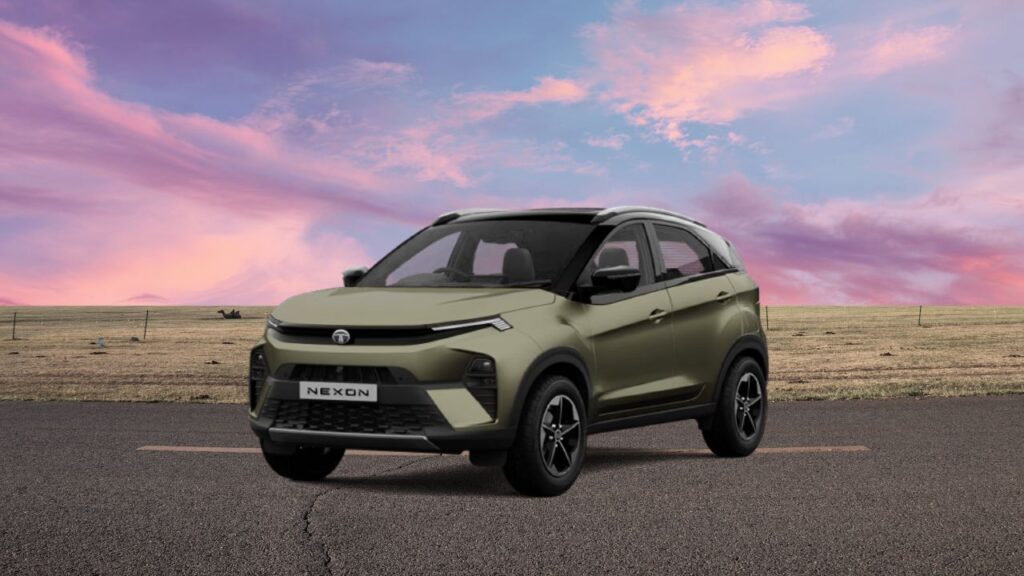
Tata Nexon

The car offers 5-star safety rating by both global NCAP and Bharat NCAP ensuring passengers are provided with best possible protection. Its stylish 16-inch dimple Dual-tone alloy wheels along with its sleek LED lights are inspired enough to attract young hearts. With three powered options – a 1.2L turbo-petrol, a 1.2L turbo-petrol CNG, and a 1.5L diesel, and multiple transmission options – manual (5/6-speed), AMT, and a 7-speed DCT for petrol variants, and manual and AMT variants for diesel. 

Tata Nexon

The infotainment system is easily synced to the driver with a 10.25-inch touch screen and an accompanying driver’s display. It comes with a panoramic sunroof, front seats which are ventilated, a high-end JBL audio system and an air purifier. Advanced technology contributes to convenience and safety, including a wireless charger, around view monitor, cruise control, dual zone climate control, rear air ventilation, and advanced internet features. Also, the blind spot camera adds to the driver’s peace of mind. 

The Tata Nexon comes in a range of Rs. 8.4 lakh to Rs. 16.58 lakh. Buyer can get this feature packed compact SUV in 2025.

Maruti Grand Vitara

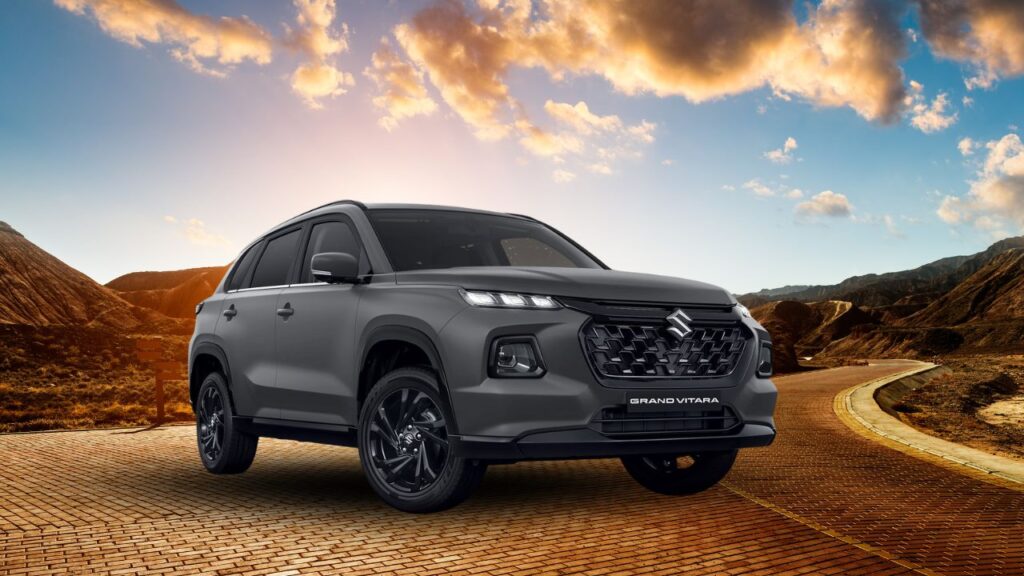
There are powertrain options in a Maruti Grand Vitara, it comes with a 1.5-litre mild-hybrid petrol engine, a 1.5-litre strong-hybrid petrol engine paired with an electric motor and dedicated CNG variants. You can get CVT and automatic transmissions, both with AWD. The cabin is spacious five-seater with premium materials used and thoughtful design.  

Maruti Grand Vitara

Occupant protection is better with now six standard airbags across all versions of the car. Panoramic sunroof (only on high spec variants) adds to the open and airy feel of the cabin. More comfort and convenience are added with 9-inch touchscreen, ventilated seats, head-up display, 360-degree camera, air purifier, and wireless charging. Front-wheel drive (FWD) and all-wheel drive (AWD) are offered, with the addition of a new AWD automatic version. 

With a 5-speed manual gearbox and a fuel efficiency of 21.11 kmpl, the Base Sigma Petrol variant is priced at ₹10.77 lakh. The cost of the Delta CNG variant is ₹13 lakh. The cost of the high-end Alpha Plus Opt Hybrid CVT DT variant is ₹19.72 lakh. 

Maruti Ertiga 

There are two engines options available for the car, a 1.5L petrol engine offers 102 horsepower and 136.8 Nm of torque and a 1.5L CNG engine delivers 87 horsepower and 121.5 Nm of torque. The gasoline version is available with a 5-speed manual and a 6-speed torque converter automatic transmission, while the CNG version is only a manual. The fuel consumption figures are fact – the CNG variant delivers 22.75 km/kg while the petrol variant delivers 20.3 – 20.51 kmpl as per ARAI. 

A 7-inch touchscreen infotainment system with Android Auto and Apple CarPlay, automatic climate control, paddle shifters (AT), cruise control, 40+ linked car features, rear AC vents, tumble fold seats, rear parking sensors and cameras, and ventilated seats in upper trims are just some of the highlights. Safety also benefits from dual airbags, ABS with EBD, rear sensors and a 3-star Global NCAP rating. The 209-liter boot is handy for all sorts of storage and can be extended by folding down the third-row seats. 

For 2025, the Ertiga gets a reduction in its GST price, making it more affordable, with prices beginning at ₹8.80 lakh (ex-showroom), while the top variants touch around ₹12.94 lakh. 

Toyota Rumion

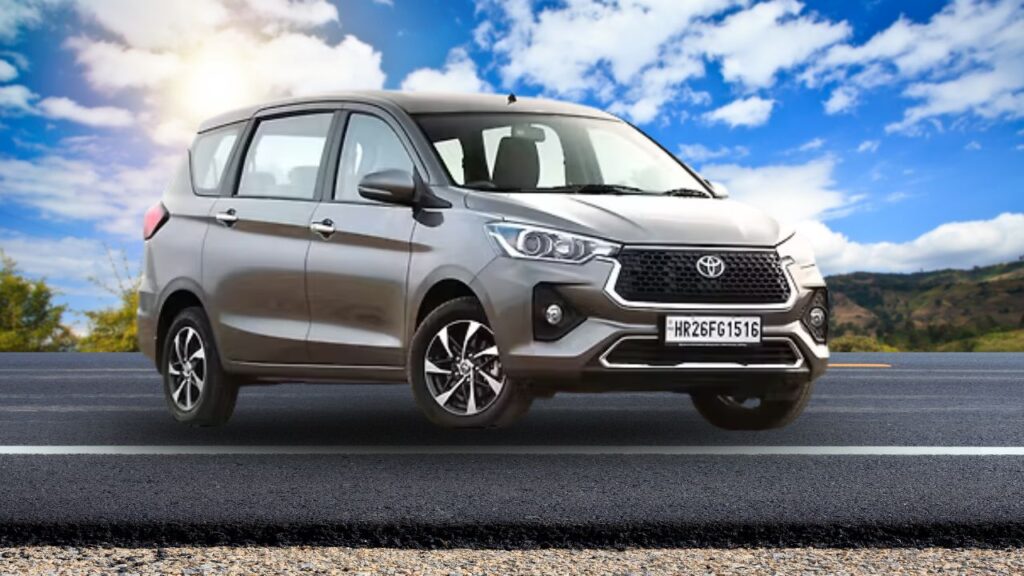
A 1.5-litre naturally aspirated petrol engine gives 103 PS of horsepower with 137 Nm of torque which is ready to hit the road at a speed. The CNG version comes with a 1.5L engine to generate 88 PS and 121.5 Nm which is ready to give 26.11 km/kg impressive mileage. The petrol version is available with two transmission options, a 5-speed manual and a 6-speed torque converter automatic.  

Toyota Rumion

The 2025 Toyota Rumion is starting at ₹10,44,000 but choosing more options in the car will cost you around ₹13,62,000. The S variant is the lowest-priced option, while the automatic one tops the list of the non-CNG models. With recent GST price cut, the CNG variant is priced at ₹11.39 lakh (ex-showroom). 

Maruti XL6

The vehicle is offered with two engine options that comply with BS6 Phase II standards – a 1.5L mild-hybrid petrol engine producing 102hp and 137Nm of torque, and a 1.5L CNG engine producing 87hp and 121.5Nm of torque. A 5-speed manual transmission would be available for both variants and the petrol variant would get a 6-speed automatic (torque converter) only. That’s good fuel economy, too, with the petrol versions delivering 20.27–20.97 kmpl and CNG model delivering 26.32 km/kg. The infotainment system includes a 7-inch touchscreen (with wireless charging), a 360° camera, Apple CarPlay, Android Auto, and Suzuki Connect. 

Nexa is the exclusive channel for buying Maruti Suzuki’s premium, 6-seater, MUV the XL6. The 2025 prices of the top Alpha Plus AT Dual Tone trim and Zeta petrol variant of the car are ₹14.48 lakh and ₹11.52 lakh, respectively. 

Read More:-  The Best Skoda Cars Under 10 lakh In India – Stylish, Reliable And Budget-Friendly Options

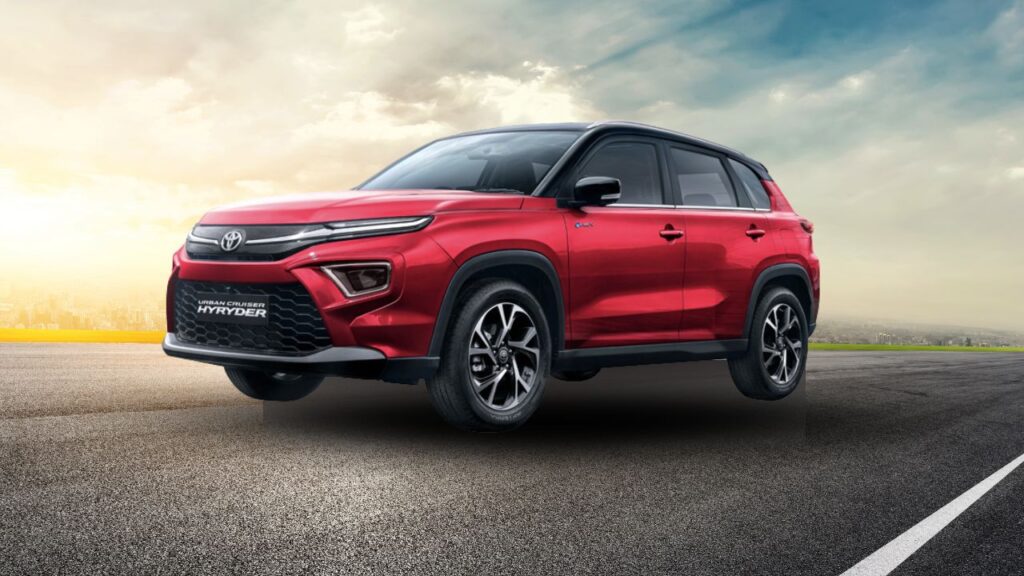
Toyota Urban Cruiser Hyryder

Engine options for the car include a 1.5L mild-hybrid petrol, a 1.5L strong hybrid petrol with a CVT, and a 1.5L CNG variant. Transmission options include 5-speed manual, 6-speed automatic torque converter (for petrol and CNG variants) and CVT (gasoline-only for the high-output hybrid model). Be it for fuel economy of 21.11 kmpl, petrol-manual and 20.58 kmpl, automatic, an incredible 27.97 kmpl in hybrid mode as per ARAI certification and 26.6 kg per km with CNG variant, this automobile draws all eyes. 

Toyota Urban Cruiser Hyryder

Toyota Urban Cruiser Hyryder technically comes with FWD but some of the high-end trims provide All-wheel drive (AWD). The modern built cabin ensures passengers comfort and convenience. 

In 2025, the price of the V Hybrid Dual Tone top variant (automatic, strong hybrid) ex-showroom is ₹19.76 lakh and the E base variant (manual, mild hybrid petrol) begins at ₹10.95 lakh.  

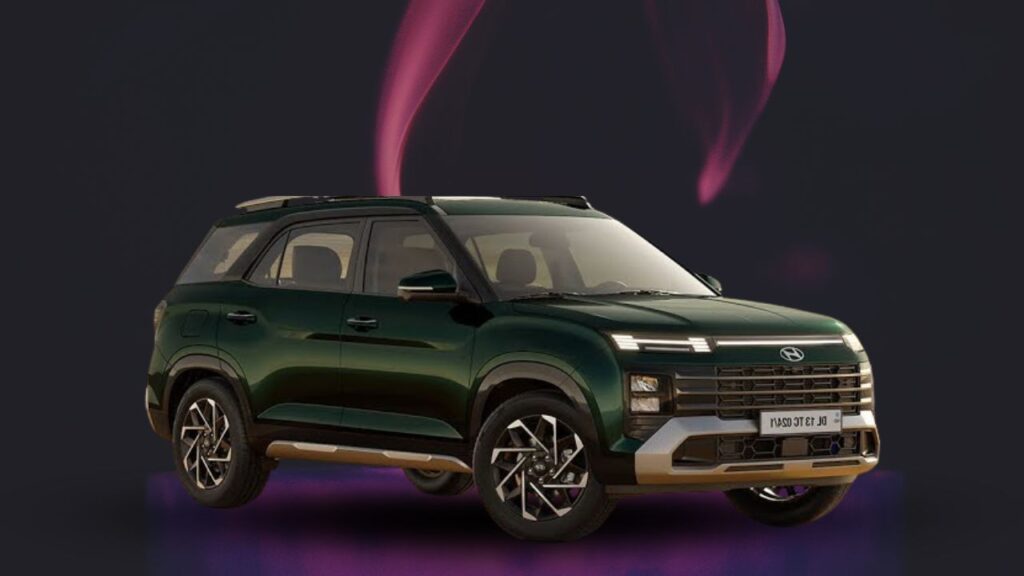
Hyundai Alcazar CNG

The 1.5L petrol engine of the upcoming model that has been adapted for compressed natural gas generates 130–135 hp and 170 Nm of torque. This is a 15% drop from its petrol counterpart. It is expected to come with a 6-speed manual transmission as standard; an automatic variant could be in the offing. With awesome mileage of over 25 km/kg, the CNG variant is a pocket friendly option for long distance travellers. 

Its 6 and 7 seater configurations are on offer, same as petrol and diesel trims. We expect premium features such as ADAS, wireless charging, air purifier, powered driver seat, third row a/c, ABS with EBD, hill assist, TPMS, and ISOFIX. The expected price range is between Rs 15 and 20 lakh (ex-showroom), depending on the variant and features you select. 

Conclusion

In India, CNG cars under ₹20 lakh are now redefining efficient driving without compromising on features and comfort. The CNG models available today are practical, safe and affordable, from premium MPVs like the Toyota Rumion and Maruti XL6 to compact SUVs such as the Tata Nexon CNG. For 2025, these affordable CNG cars under 20 lakhs will be a good option to buy but take a test drive for a vehicle you are going to buy because each model brings something unique that should match with your vibe.

0

First-Time Buyers: How to Sell Your Car

Published Jun 24, 2021, 7:20 AM
Last Updated Aug 13, 2025, 5:29 AM

Increasing disposable incomes and the availability of a large number of makes and models has resulted in a boom in the used car market. People are graduating from two-wheelers to four-wheelers and those with four-wheelers are looking at upgrading their ride. So if you were planning to sell a car in India, this is the right time to do so. There are various avenues that you can explore to sell your ride. Let’s take a quick look at them and their pros and cons.


How To Sell Car The Traditional Way?

Placing an advertisement in the local newspaper, getting in touch with local car dealers, informing your friends and family members and asking them to spread the word around, sticking a ‘For Sale’ sign with your contact details on the rear windshield of your car, putting up leaflets on the notice board of your housing complex, office, clubs etc – these are all the traditional or offline ways of selling your used car.


How To Sell Car The Modern Way?

Placing an advertisement on online classified portals, availing trade-in and exchange offers, utilizing the power of the social media and using car buying services are some of the modern ways to sell car.


There are four major steps if you plan to sell the car yourself:


Preparing the car for sale

Interacting with prospective buyers

Documentation and payments

And finally, things to do post sales

  1. Preparing The Car For Sale

The first step consists of preparing the car and advertising your intentions to attract prospective buyers for your vehicle. Let us break this down further:


Preparing your used car for sale


In order to be able to sell car at the best possible price, it is important that you put in place the following steps:


Get your car serviced and cleaned –  Remove all personal belongings from the car and if possible and viable, get scratches and dents repaired. Make sure that the interiors are clean and free from blemishes and stains. Of course, if you have maintained your car properly, these should not be a big issue

Gather all the papers of the car and make a copy of them –  If you have a service record of the car, be sure to include it with the other documents. Do not forget to include the owner manual, battery warranty cards, PUC certificates and any other document that is related to the car

Park your car in a clutter free area and take at least ten to fifteen photographs of the car –  Take good photographs of your car – both the exteriors and the interiors – and from different angles. Though you do not need to get a professional to do this job, you need to make sure that the photographs are in focus, sharp and clear.

The next step is creating the advertisement – Along with the photographs of the car that you have taken, your advertisement should contain as much information about the car as possible. This would include:

1) The year and month of manufacture or registration

2) The state or city of auto registration

3) Commercial or individual lifetime tax

4) The total number of owners

5) Comprehensive or Third party insurance type and its validity

6) The availability of service history

7) Colour of the car, both interior and exterior, and if original or re-painted.

8) Variant or Trim level

9) The number of kilometres covered

10) A list of accessories fitted

11) Reasons for selling

12) Expected price


Ensure that your expected price for selling your car is neither too high nor too low – Again some amount of research will give you an indication of the price range for cars of similar make, model, and age. Along with the above, state the salient features of the car which would count as advantages – for example – single ownership, low mileage, accident-free, extended warranty coverage etc. Include an email id (you can create a new one for this purpose) and a phone number (with timings for receiving calls if you wish). If possible, scan the car documents – this will help as you can email the same to prospective buyers if they wish to inspect them beforehand.

Research will help you to find out the best portals for placing your online advertisement. You can also place the advertisement on your social media platforms, as well as on the notice boards of your apartment, office, and club. However, do find out if you are allowed to do so before you pin your advertisement on the notice boards.


  1. Interacting With Prospective Buyers To Sell Your Car

Selling your used car


Once your car advertisement is in place, you will start receiving calls and emails from prospective buyers. How you interact with your potential buyers can make or break the deal.


The first step is to screen the potential buyers – You will receive inquiries from businesses, agents, individual buyers and also from sellers like yourself who are calling up to do their research on the price factor. You need to focus your time and energy on serious buyers only – hence, you need to separate the serious potential buyers from the rest at the first call/email stage

When talking/answering queries, be as straight forward as you can in your interactions –  Do not get too eager to sell or overly aggressive. Remain focused and to the point, answering all queries to the best

Once you have screened the buyers, send them the scanned copies of the documents – This will save both of you time and effort before the buyer decides to physically inspect your car

Fix a time that is convenient to both for the physical inspection of the vehicle – Request the buyer to be punctual and make sure that you are punctual too – this shows your seriousness. Be prepared by asking the buyer beforehand if he would like to test drive the car, and set the time accordingly. Remember to go along with the prospective buyer on the test drive

The prospective buyer might want the car inspected by an authorized, reliable and credible service station or his mechanic – This is a commonly placed, reasonably valid request and shows the serious intent of the buyer. Discuss the most convenient way to get this done – the mechanic could come to your place and inspect the car or you could drive it to the service center/ mechanics workshop. However, ensure that you or your representative is present at the time of the inspection

Negotiate for a reasonable deposit – It is possible that the buyer might say yes to the deal, but requires time to get the finance in place (either his own or from a bank/NBFC). It is wise to hold negotiations for a reasonable deposit – maybe between 10,000 and 30,000 and clearly state the time frame by which the entire amount of the payment should be made. Failure to pay within the stipulated time would lead to forfeit of the deposit and allow you to subsequently offer the car to a different buyer.

Lastly, never be in a rush to sell the car or feel pressurized into doing so – Inform the prospective buyer that you will get back to him/her within a stipulated time period and stick to it. Think the deal through before committing yourself to the sale.

  1. Documentation & Payment – Which documents should you give to the buyer and which ones should you keep

Documents for selling a used car


Assuming that you have been able to find a buyer for your car and confirmed the deal, the next step is documentation and payments. This is the most crucial step in selling your car.


Wait for the cheque/ demand draft to be cleared before handing over the documents and the vehicle – There is a slew of documents that need to be prepared and signed for transferring the ownership of the car. However, remember this cardinal rule – signing of transfer papers and delivery of the vehicle must happen only after receiving the full payment for the car.

Ask the buyer to provide you with a copy of his government issued photo id and address proof – It could be a copy of the passport, driving license or any other acceptable document.

All fields in the transfer forms issued by the RTO, and the delivery note, should either be filled or N.A written if not applicable – Do not, I repeat, do not leave any blank fields on the forms. Similarly, the forms need to have the signature of both the buyer and the seller. The best way, if time permits, is for both parties to visit the RTO in unison and help the transfer process to reach its completion.

Along with the duplicate keys, the list of documents that is required to be given to the buyer of your vehicle is:

1) Form No.28 (3 originals) – This pertains to the N.O.C. as well as the grant of certificate when the buyer happens to belong to another RTO’s jurisdiction

2) Form No.29 – Notice of the transfer of car’s ownership (Original)

3) Form No.30 – Report of the transfer of vehicle’s ownership (Original)

4) A copy of the delivery note

5) The Registration Certificate in original

6) All RTO tax related documents in original

7) Insurance cover/ policy – in case it has been included in the deal

8) The vehicle’s owner’s manual

9) All warranty papers

10) Service history

11) Copy of the original invoice of the car

12) PUC certificate.

13) Form No.35 – The finance organization has to provide the NOC. If the outstanding loan on your vehicle is still unpaid, as per the general procedures in place, you have to foreclose the loan. Thereafter, procure the NOC and forward it to the buyer.


While you hand over the documents to the buyer, remember there are some documents that you need to keep in your custody. These include:

1) Copy of Form No.29

2) Copy of Form No.28

3) Original delivery note

4) Copy of Form No.30

5) Copy of the Government issued id (with photo) of the buyer

6) Copy of the vehicle’s RTO tax papers, Registration, insurance policy

7) Original car invoice

8) Copy of NOC from the finance company, only if applicable


  1. After You Sell Car

Used car sold


The fourth step consists of actions to be taken after selling and giving delivery of your vehicle to the buyer. Although these may come across as additional work, they are important as they ensure your safety and security.


Inform the RTO – As per the law, as long as the car is registered in your name, you hold the responsibility for the car and any unwanted incident that takes place because of it. Therefore, it is your responsibility to inform the RTO of the transfer. You need to inform the RTO, belonging to where the vehicle was registered, in a period of 14 days of the sale, by sending copies of all the relevant categories of documents (the documents retained by you) through registered post. The postal confirmation needs to be maintained for records. Once the delivery acknowledgement is received, only then can you be indemnified of all the liabilities associated with the car sold by you. Remember, just in case, the address of the buyer happens to be the jurisdiction presided by another RTO, an identical document has to be dispatched to him as well.

Inform the insurance company – The insurance company has to be appropriately informed of the transfer; especially if the insurance cover happens to be part of your deal with the buyer. If not, then you need to inform them of the cancellation. This should be done by registered post, just as it was to be done with respect to the RTO.  If you decide to visit your insurance company, do carry an “acknowledgement” stamp on your application’s copy. All No Claim Bonus benefits cannot be transferred and are available for use towards the car that you decide to hold next.

Ask for the updated RC from the buyer – Remember to ask the buyer to dispatch a copy of his updated RC book (which has been duly transferred to the buyer’s name) to you. While this will, in all probability, need consistent follow-up, it is important that you do so. Keep the copy along with the other retained documents of the car.

Found the article helpful? Do share and explore more tips on selling car online. Looking to sell car quickly? Sell it to Badicar.com From free online car valuation, guaranteeing the best price for your used car, taking care of ownership transfer and other paperwork to instant payment – we ensure a simple and hassle-free way to sell your car.

0

Hybrid Showdown: 2026 Honda Accord vs Toyota Camry hybrid

Published Apr 20, 2026, 11:06 AM
Last Updated Apr 20, 2026, 11:36 AM

Honda Accord Vs. Toyota Camry

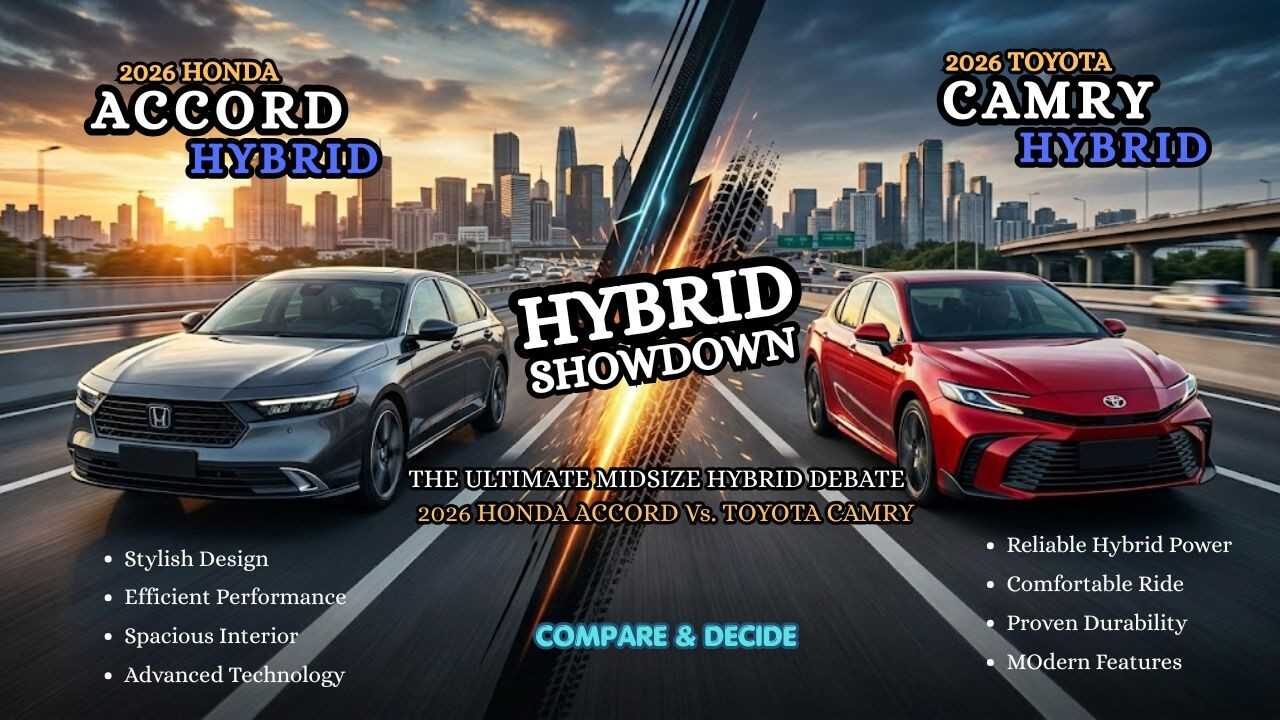
Deciding between the Honda Accord vs Toyota Camry hybrid is difficult when you want to buy a midsize sedan which is perfect for you and your family. Whether you want to hang-out with your friends or take a tour trip with your family, both are outstanding variants which are great for running anywhere with you.

Let’s compare 2026 Honda Accord vs 2026 Toyota Camry variants in detail so you will get to know everything before making a choice. Both followed ‘going green’ goals with electrification gaining momentum. The premium trims of Honda’s Accord come with premium-feeling twin-motor hybrids, and Toyota is making the entire 2026 Camry range hybrid-only. 

They offer high-end tech features without compromising its sleek design. Now you can save time and fuel with hybrid kings. Well, which hybrid king deserves a place in your garage?  

Engine Specifications and Powertrain

The 2026 Toyota Camry vs Honda Accord comparison begins with some similarities in their engines which provide superpowers to the car. They both offer hybrid systems, combining gas engines with electric motors for smooth, efficient power, but they don’t drive the same.

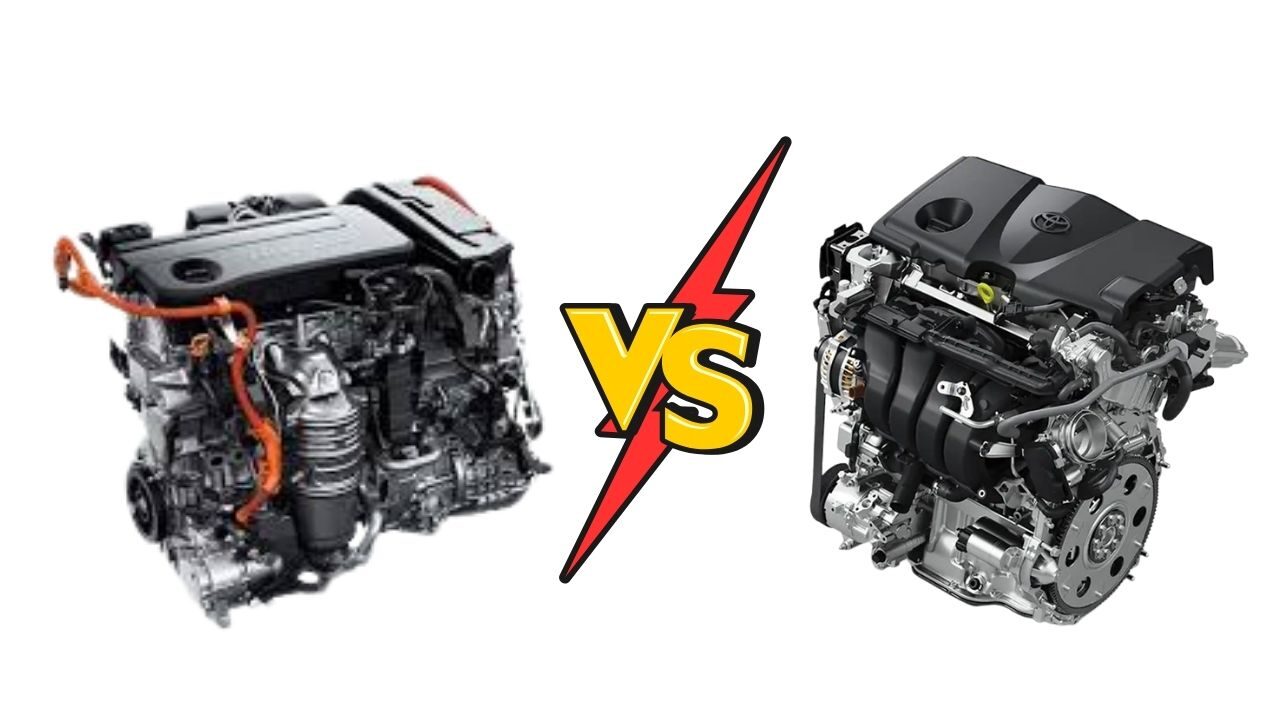
Camry drives on 225 horsepower in front-wheel drive (FWD) or 232 horsepower in all-wheel drive (AWD) with 5th-gen combined 2.5L four-cylinder and electric motors engine. It provides an amazing ride and automatically engages on slick roads without driver’s intervention.

Accord provides two-motor 2.0L 4-cylinder engines to run with 204 hp and 247 lb-ft of torque. This 4th-gen Honda gives a feel free ride on FWD and excellent features.

There e-CVT transmission of both cars give gear-free acceleration to switch smoothly and take seamless driving experience. Take a sports reverse vibe and it features let you shine in snow or rain.

Feature 2026 Toyota Camry Hybrid 2026 Honda Accord Hybrid
Engine 2.5L 4-cyl + electric 2.0L 4-cyl + two motors
Horsepower (FWD) 225 hp 204 hp
Torque ~200 lb-ft 247 lb-ft
Drivetrain FWD or AWD FWD only
Transmission e-CVT e-CVT simulated shifts

Fuel Efficiency of Honda Accord vs Toyota Camry Hybrid

A real challenge of Honda Accord vs Toyota Camry hybrid begins with their super variants fuel efficiency. It supports the long run without worrying about your money on fuel. 

Toyota Camry hybrid offers 51 MPG combined base model, 44-47 MPG on other (XLE/XSE or AWD) variants which provides excellent rides. If we compare these variants then there is not much difference shown. It has three modes: ECON, Sports and Normal. 

Accord 2026 gives 48 MPG on combined engine in Ex-L variant and 44 MPG on sports vibe variant with larger wheels. 

But they both roll up in silent, EV-only mode for short distances, ideal for your daily commute in stop-and-go city traffic. 

Trim/Model Camry Combined MPG Accord Combined MPG
Base (LE/EX-L) 51 48
Upper (XSE/Sport) 44-47 44
AWD Option 44-47 N/A

Exterior Design and Styling Updates for 2026 Honda Accord vs 2026 Toyota Camry

The days when the “practical” family sedan was a bland design basket case are long behind us. Both brands bring their 2026 versions to the plate with a serious attitude.

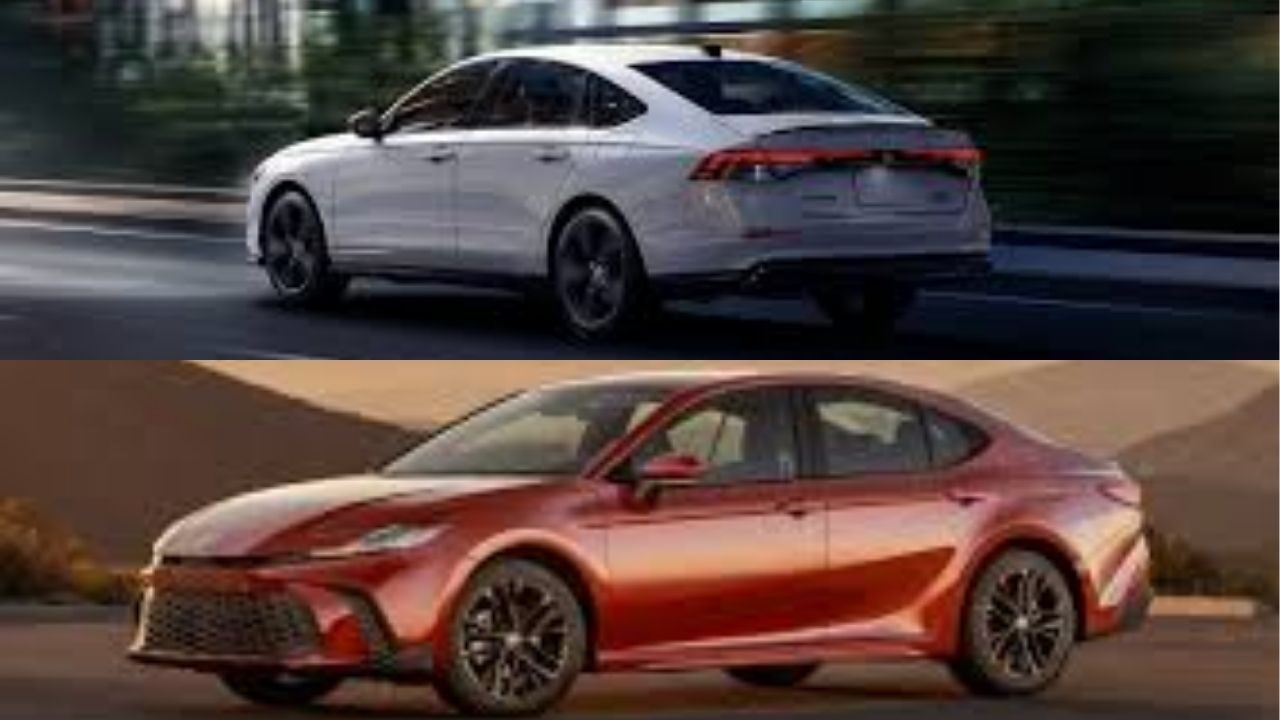
The Honda Accord has grown up pretty well into a good looking, sleek fastback. It appears to be a remarkable supercar with its sleek design that makes people remember forever. The smooth functioning slopes down the roofline and active shutter grille is unique and fascinating. 

To support the best driving experience and mark its presence Honda engineers fit dual low-beam LED headlamps and covered in a gloss-black mesh to the new Honda Accord for taking the center stage.

The 2026 Accord Sport models are quite a bit sportier inside with window highlights, a redesigned rear diffuser, more aggressive blacked-out exterior badging that ties the athletic stance together without being too flamboyant. 

Toyota is going in a more aggressive direction with the 2026 Camry. The front-end has a distinctive “hammerhead” look that exudes breadth and power when viewed on the road. The addition of the new Nightshade edition for 2026 adds a further layer of flair, complete with a black rear spoiler, 19-inch black alloy wheels and an eye catching new Dark Cosmos paint color. 

If you like your cars more refined and mature as the Accord delivers or more bold and sharply creased like the Camry comes down to personal preference, but both will ensure you have a modern and eye catching presence. 

Interior Comfort, Technology, and Cabin Space

Both have upgraded with major features and luxury materials in their cabin so you would have fallen for these two models as well as get confused in 2026 Honda Accord vs Toyota Camry hybrid.

  • Room like cabin, perfectly structured with hidden vents behind sleek metal. Its shape is horizontal, looks clean and dashing. 
  • Seats are more comfortable and supportive for driver and passengers on each level variant, just a slight upgrade on higher trims.
  • 12.3 inch touchscreen display which is amazing for fun rides and supportive feature for beginners with connectivity availability (wireless Apple CarPlay/Android Auto).
  • Premium features like a 12-speaker audio system and AI assist are also provided.
  • Passengers on the rear seat get comfortable space so it becomes ideal for adults.

The 2026 Toyota Camry has an equally impressive technology offering. An 8-inch screen is standard. The other trims quickly jump to a stunning 12.3-inch central screen and a fully digital 12.3-inch gauge cluster. The Camry’s infotainment system is quick to respond and offers standard wireless smartphone integration on all but the base model. 

The interior noise level is further reduced with acoustic noise dampening glass (standard on XLE and XSE), isolating you from wind and road noise. Toyota also has an extremely well regarded JBL audio system and a Head-Up Display which can be Optioned, that Display projects important driving information on the windshield. 

Both are safe bets for resale value. As we know that both are new models with upgraded safety features like Toyota Safety Sense 3.0 which provide: 

  • Pre-Collision System, 
  • Full-Speed Range Dynamic Radar Cruise Control, 
  • Blind Spot Monitoring 
  • Rear Cross-Traffic Alert 

And it gives all levels of Toyota Camry so be relaxed while you drive. When someone crashes onto you, this car will protect you with all its features.

On the other hand, Honda’s Sensing suite takes you safely to your destination, it boasts Adaptive Cruise Control with Consistent speed and Traffic Assist. They’re built with your family’s safety in mind, but Toyota holds a slight price edge since blind-spot monitoring is standard on every model. 

Tata Sierra EV 2026: Price, Range, Features & Launch Details

Cargo Space and Everyday Practicality

A mid-size sedan needs to be an all-around capable daily driver. 2026 Honda Accord vs 2026 Toyota Camry Cargo Space While comparing cargo space of Honda Accord vs Toyota Camry hybrid, both companies have employed clever engineering that their hybrid batteries don’t intrude on utility. 

Historically, hybrid batteries took up a large portion of trunk space. But the problem has been solved now with practically both Honda and Toyota packaged, their battery replaced from the trunk and packs under the back seat. 

The 2026 Honda Accord provides 16.7 c.f space to lift bulky luggage. The wide opening of the trunk makes it easier to lift everything with self-opening of the gate. Additionally, the Accord has a 60/40 split folding rear seat as standard you can slide longer goods right into the cabin. 

The 2026 Toyota Camry has a decent trunk space of 15.1 cubic feet. Camry trunk is deep and tall, so useful that even if the published dimensions make it smaller than the Accord’s, it doesn’t feel that way. A 60/40 split folding rear seat is standard as well. Camry cleverly offers more cabin storage with large door pockets and center console bin which makes it superior for overall cargo and rear seat space.

New BMW M4 2028 Coupe Digitally Enters The BMW Neue Klasse M4 Era

Driving Dynamics: Ride, Handling, and Comfort

Both Honda Accord and Toyota Camry offer more than just specs, you can experience the comfort & reliability once you take a ride on these titans. 

While Toyota Camry is more user-friendly and easy on a daily traffic road. It is also the best option for rough roads because of its well-balanced suspension, you don’t have to feel the potholes. It stands firmly to hold the balance on rough roads and responsive steering provides flexibility. 

The Honda Accord engineered with more engaging and dynamic features to handle all kinds of roads to give excellent driving experience. Its steering allowed it to handle corners with its sharp and precise movements and also wheel-mounted deceleration selectors. Accord minus the chances of panic in braking because of regenerative braking to slow down the car. If you enjoy a car that feels connected to the road, the Accord is the standout choice.

Conclusion

Honda Accord vs Toyota Camry hybrid is a huge battle for car lovers. As both serve excellent driving experiences and build on a powerful system that represents 2026 Honda Accord vs 2026 Toyota Camry highly debated on the stage. It has been popular for decades thanks to unmatched highway fuel efficiency and a fundamental package of safety. 

But if you place a higher value on sleek, polished looks, best-in-class cargo space, and a hint more involving, sporty driving experience with some punchy electric torque on the line, the 2026 Honda Accord Hybrid is worth a look.

At the end of the day, whichever you drive off the lot in, the nimble Accord or the reliable Camry, you’re buying an exquisitely engineered, highly efficient vehicle that will provide years of dependable service. The real winner in this hybrid battle is the buyer, who can select from two outstanding machines.