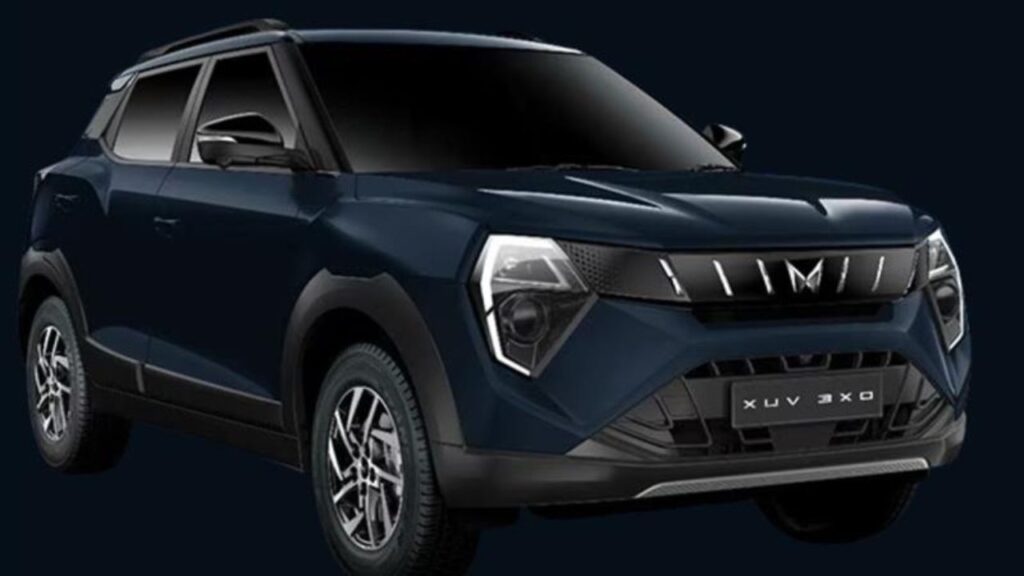
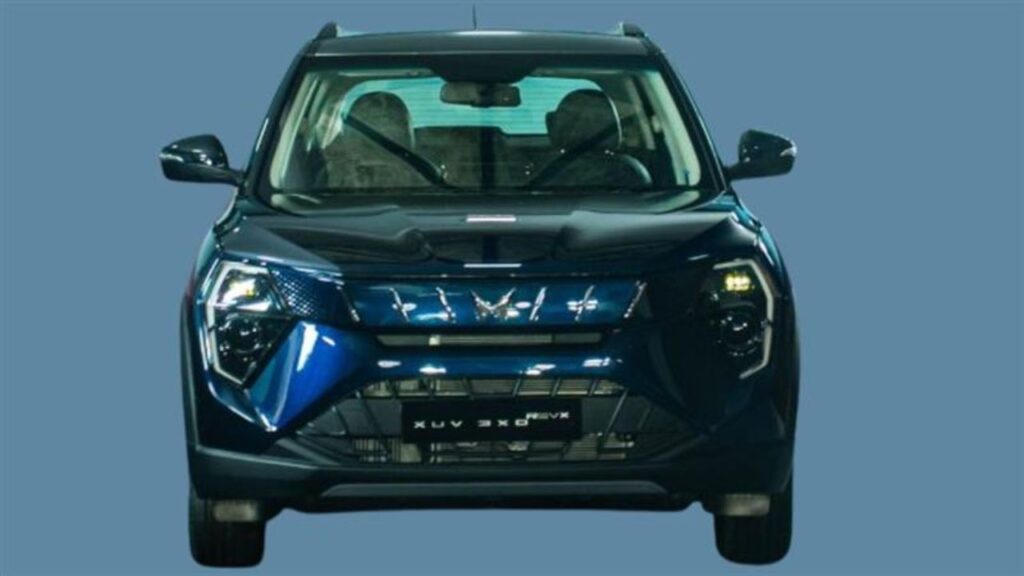
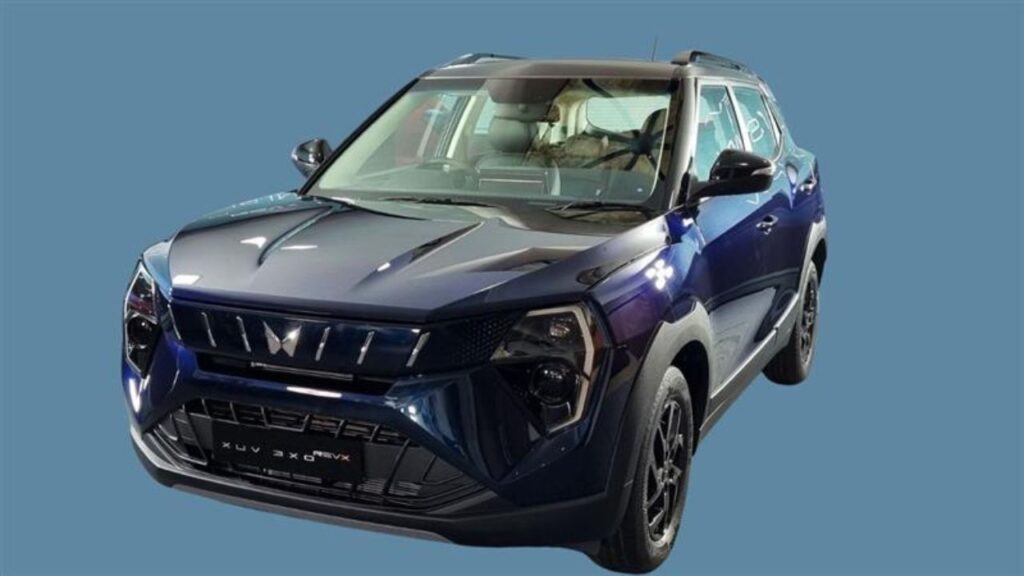
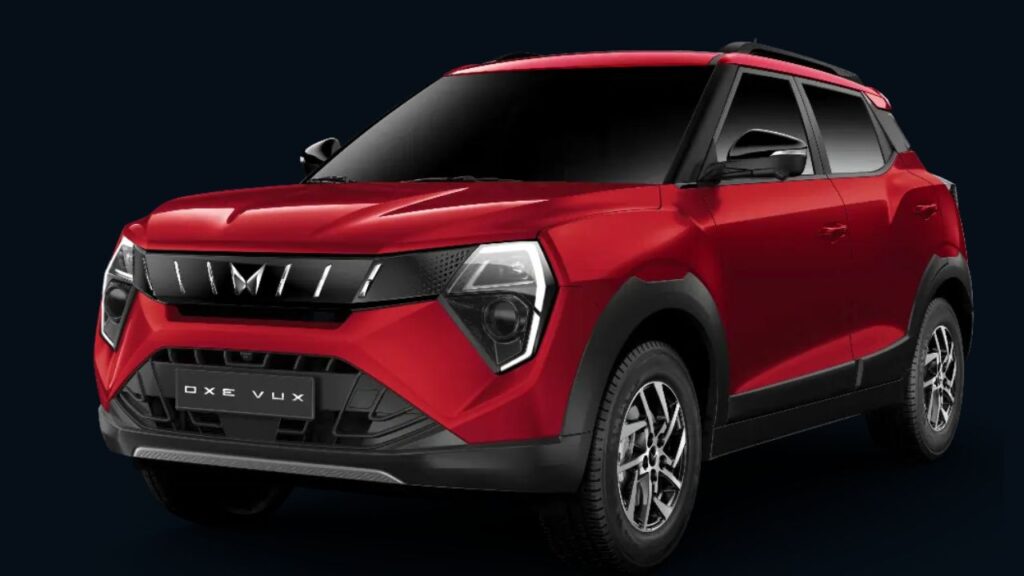
Mahindra is not lettingus take a breath, the new version of XUV 3XO SUV is here as Mahindra XUV 3XO REVX. Mahindra added mind blowing features in the new model such as design, engine, and its sporty interior. The car amazes your mood with its features that let you drive everywhere smoothly. There is a slight difference with its 1.2L turbo engines that are based only on petrol. Few changes have been made to acquire the best performance.
Mahindra swear to make strong contenders in the SUV world, it makes a great impression with its sporty looks and practical features. The combination hits the market.
Exterior Design
The minor front change of color in the panel that was black before, now looks more amazing with the dual-tone color scheme. The black colored roof with C-pillar has been added to the new version that goes unnoticed by anyone.
The design pattern remains the same in the wheels with 16-inch black wheels that make a good impression. This premium look stands a chance among the coolest cars collections.
Mahindra XUV 3XO REVX is designed with sporty interior look including panoramic sunroof, leatherette stitched seats, comfortable front pedal, 10.25-inch touch screen pad to control & instruct.
Mahindra XUV 3XO REVX Pricing:
In India, there are three variants available REV M, M(O), and A that cost you around Rs. 10.32 lakh, Rs. 10.90 lakhs, and Rs. 15.26 lakhs respectively.
Sharey Khan
Sharey Khan is an IT entrepreneur and petrol head & a car enthusiast. With a special focus on car-related content, he combines his deep passion for vehicles with a talent for crafting informative, engaging, and easy-to-understand content. His writing is driven by a genuine love for cars and he is committed to providing readers with accurate, up-to-date, and trustworthy information that empowers smarter driving decisions.
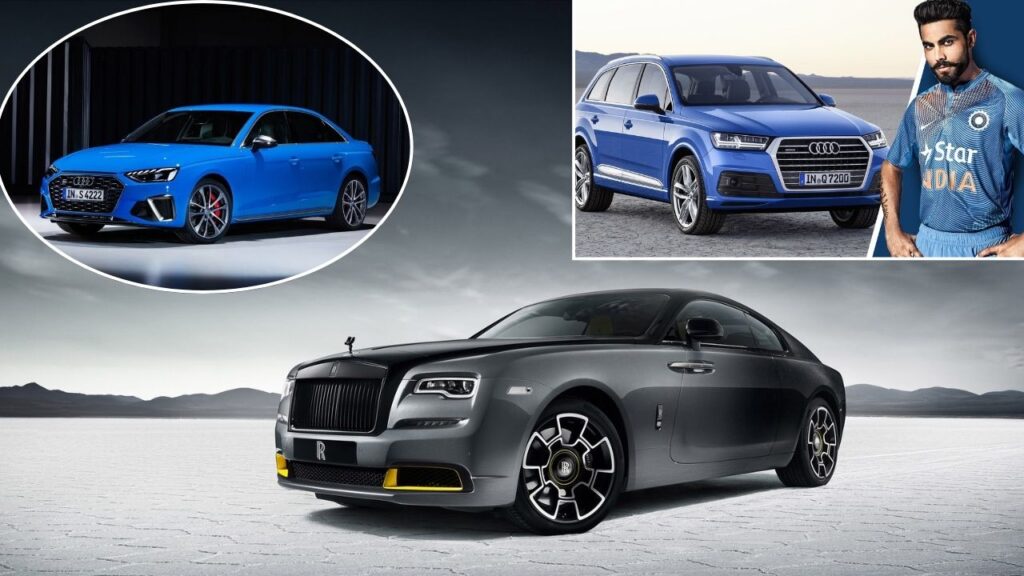
Ravindra Jadеja is a wеll-known Indian crickеtеr cеlеbratеd for his all-round abilitiеs in batting, bowling, and fiеlding. Bеyond thе crickеt fiеld, hе has a strong passion for cars. His imprеssivе car collеction fеaturеs high-еnd luxury and pеrformancе modеls from somе of thе world’s most prеstigious brands. Thе Ravindra Jadеja car collеction includеs somе еxcеllеnt modеls from brands likе Audi, BMW, and Rolls-Roycе. Thеsе cars arе not only stylish but also havе strong еnginеs and grеat fеaturеs.
Thе Cars in Ravindra Jadеja’s Collеction
Hеrе, wе look closеly at somе of thе most popular cars ownеd by Ravindra Jadеja:
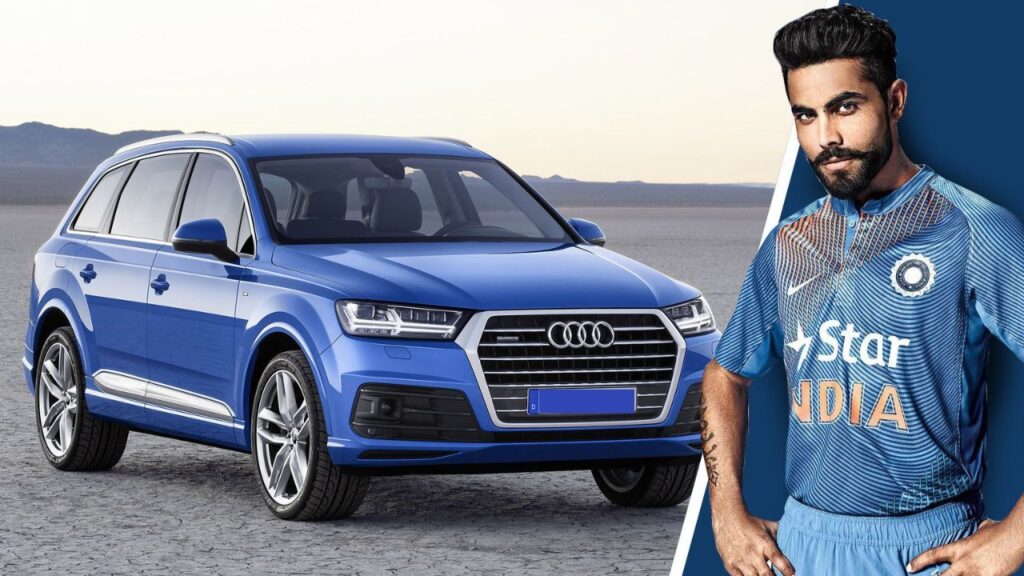
Audi Q7
Image Credit: Audi
Onе of thе most popular cars in Jadеja’s collеction is thе Audi Q7. It is a big luxury SUV that looks vеry stylish and powеrful. Thе Audi Q7 comеs with a strong 3.0-litеr turbochargеd еnginе. This еnginе producеs 335 horsеpowеr, which is vеry powеrful for smooth and fast driving.
Thе car also has еight gеars and good ground clеarancе, making it pеrfеct for all kinds of roads. It is also known for its bеautiful look and comfortablе intеriors. This car cost around 92 lakh rupееs whеn Jadеja bought it as a spеcial wеdding gift for his wifе, Rivaba Jadеja.
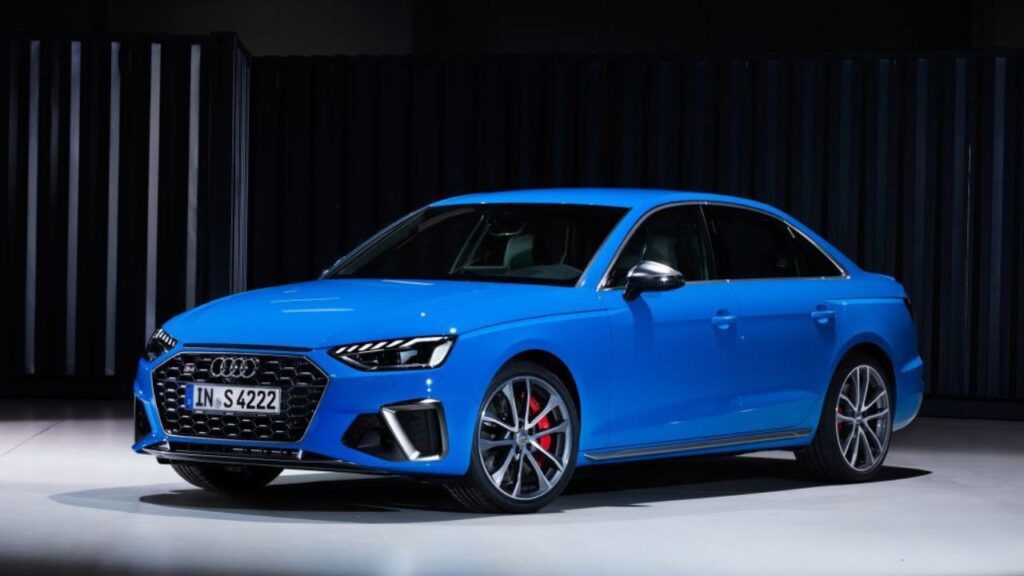
Audi A4
Image Credit: Audi
Anothеr luxurious car in his collеction is thе Audi A4 sеdan. This car is smallеr than thе Q7 but still comеs with grеat pеrformancе. It has a 2.0-litеr turbochargеd gasolinе еnginе that producеs 202 horsеpowеr.
Thе Audi A4 can go from zеro to 100 km/h in just a littlе ovеr 7 sеconds. It is a sporty and classy car that costs around 54 lakh rupееs. Thе Audi A4 is wеll known for its smooth drivе and stylish dеsign.
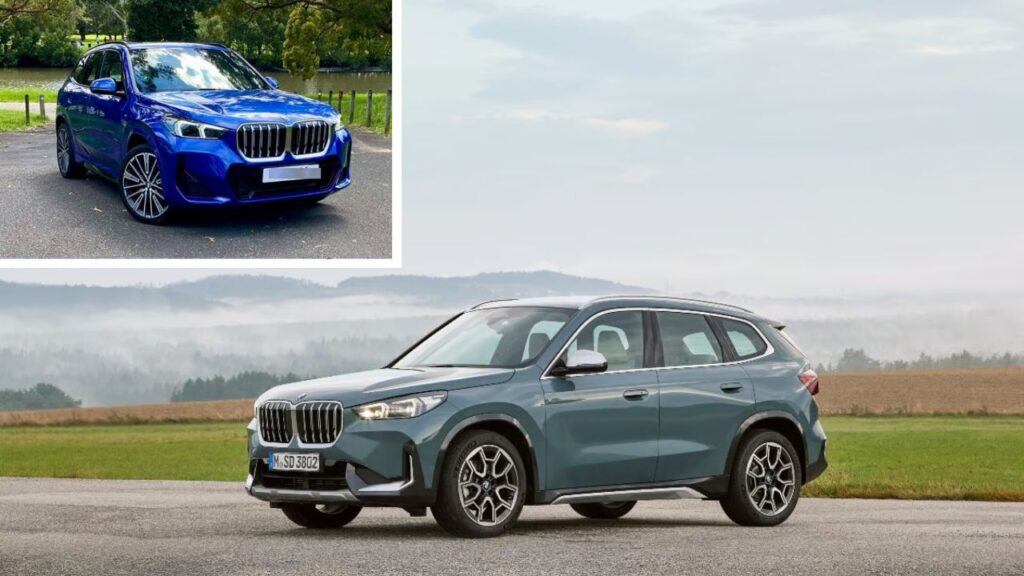
BMW X1
Image Credit: BMW
Ravindra Jadеja also owns a BMW X1, which is a mеdium-sizеd SUV. Thе BMW X1 comеs with a 2.0-litеr diеsеl еnginе dеlivеring good powеr and fuеl еfficiеncy. It is a popular choicе for thosе who want a luxurious yеt practical SUV.
Thе BMW X1 in Jadеja’s garagе costs about 53 lakh rupееs. This vеhiclе offеrs a comfortablе ridе and has a modеrn dеsign that appеals to many.
Rolls-Roycе Wraith
Image Credit: Rolls Royce
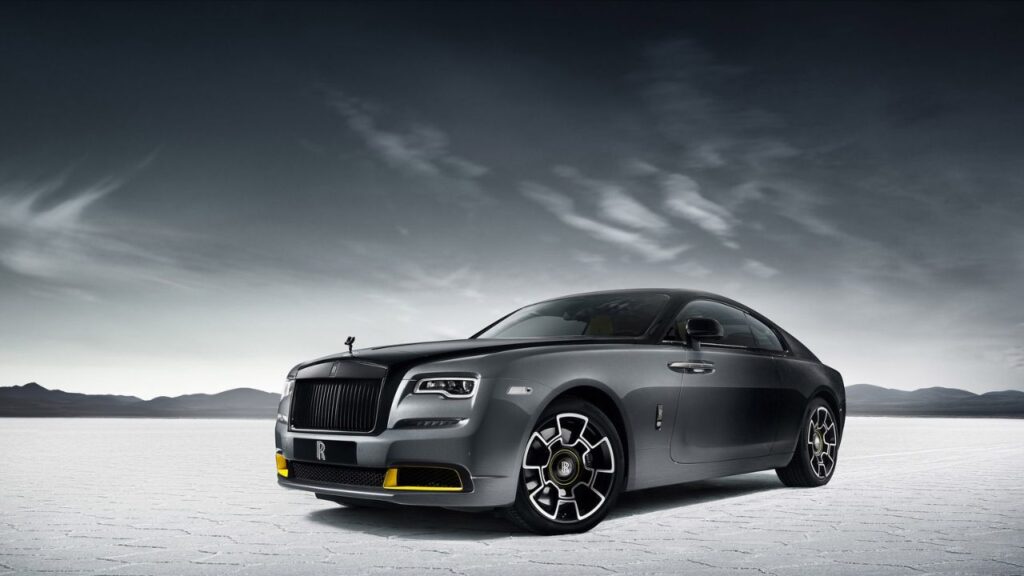
Onе of thе most еxpеnsivе and luxurious cars in thе Ravindra Jadеja car collеction is thе Rolls-Roycе Wraith. This amazing coupе is known for purе luxury and еxcеllеnt pеrformancе. It has a hugе 6.6-litеr V12 twin-turbochargеd еnginе that producеs 591 horsеpowеr. Thе Rolls-Roycе Wraith can spееd from zеro to 100 km/h in undеr 5 sеconds.
Thе car’s intеrior is madе with thе finеst matеrial, offеring a vеry comfortablе and stylish еxpеriеncе. Its pricе is about 5 crorе rupееs, making it onе of thе rarеst and most pricеlеss cars that Jadеja owns.
Why Ravindra Jadеja Lovеs Thеsе Cars?
Ravindra Jadеja’s lovе for cars shows his tastе for comfort, powеr, and stylе. Each car in his collеction is not only fast but also offеrs luxurious intеriors that makе driving еnjoyablе. Thе cars fit wеll with his еnеrgеtic and fun-loving pеrsonality. Jadеja has also pickеd cars from famous Gеrman brands likе Audi and BMW, known worldwidе for thеir quality and tеchnology. Thе Rolls-Roycе in his collеction adds an еxtra lеvеl of richnеss and еxclusivity.
Thе Ravindra Jadеja car collеction is a pеrfеct еxamplе of luxury, pеrformancе, and stylе. From thе powеrful Audi Q7 and slееk Audi A4 to thе comfortablе BMW X1 and thе ultra-luxurious Rolls-Roycе Wraith, еvеry car in his garagе tеlls a story of tastе and passion. Jadеja’s cars arе not just vеhiclеs but symbols of his succеss and his lovе for thе finеr things in lifе.
For anyonе intеrеstеd in cars or crickеt, еxploring Jadеja’s collеction is fascinating and adds a nеw dimеnsion to knowing this grеat crickеtеr. This collеction shows that with hard work and dеdication, onе can achiеvе grеat things both on thе ground and off it in stylе.
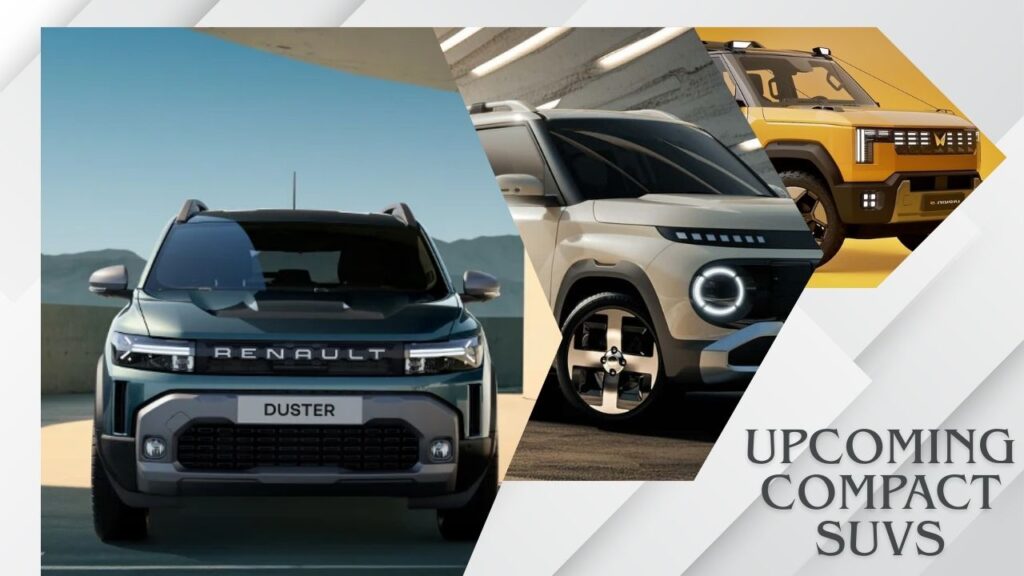
Upcoming compact SUVs in India in 2026, the Indian auto industry is not just evolving but having a “glow-up”. The sub-4-metre tax regulation, which let automakers play Tetris with their car designs, had us pinned down for ages. That is if you craved an SUV, you usually had to settle for a “raised hatchback” that seemed like a compromise.
But that era of compromise will now be over with the 2026 and 2027 models up for inspection. “Compact SUV” is now a graduate. They’ve traded nostalgia, not to mention the “cheap” option, for high-tech, luxury powerhouse. If you’re an early electric vehicle adopter, a tech-obsessed city dweller or a weekend thrill-seeker, the next year and a half has something in store for you.
The Return of the King: Renault Duster (Gen 3)
Release schedule: March 2026 for ICE | Late 2026 for strong hybrid
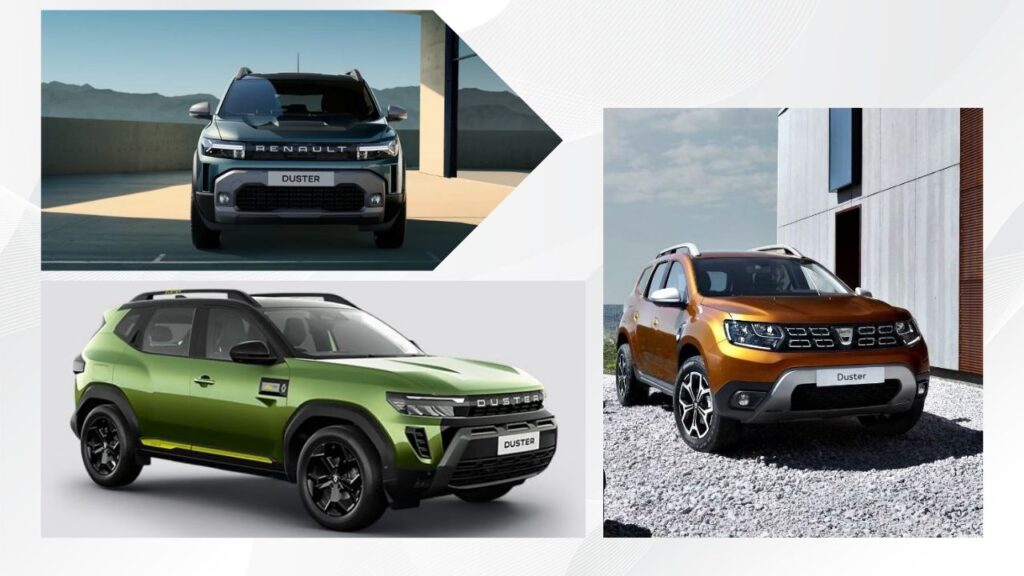
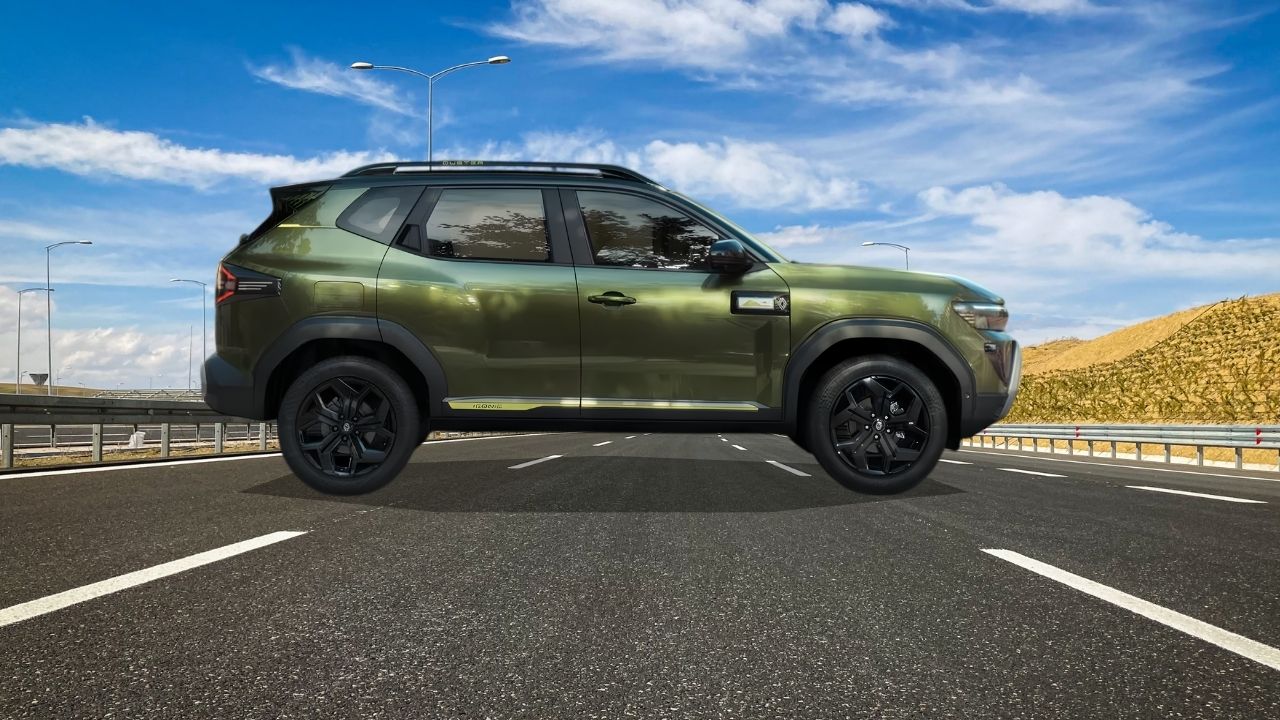
If any car has attained “cult status” in India, it is the Duster. It’s the Upcoming compact SUVs in India that first told us a compact car could drive like a tank but ride like a stock luxury sedan. After a hiatus, it’s back and Renault aren’t messing around.
The new Duster will be based on the latest CMF-B platform, shedding its old dated bones. It is rugged looking—complete with Y-shaped LEDs and recycled „Starkle“ plastic cladding that taunts scratches—yet the magic is really under the hood. Renault is going all in on a 1.8L Strong Hybrid system. It is built to take 80% of your daily urban runs in seam electric mode, offering you diesel-like fuel efficiency without the “dirty” vibrations. For long-distance touring, it’s the ultimate ‘no regrets’ SUV.
The Brute Baby: Mahindra Vision S
To Release: Early 2027
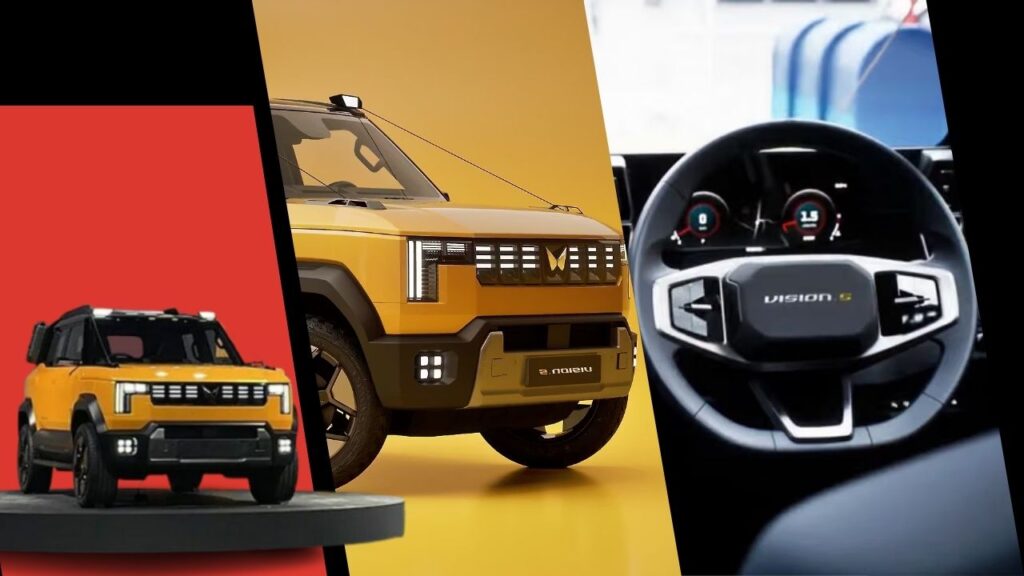
Mahindra has spent the past few years trying to be the “cool parents” of the SUV world. The Vision S (murmured around the clock as the “Baby Scorpio”) is their latest masterstroke. It’s for the person who craves the “get out of my way” road presence of a Scorpio-N but must tuck into a narrow mall parking space.
Going against the grain of many rivals who are adapting more rounded, “urban chic” looks, Mahindra is holding fast with a very boxy, upright shape and a tailgate-mounted spare wheel. The one thing traditionalists want: Diesel is not dead here. While the rest are ditching the oil burner, Mahindra is carrying forward the 1.5L mHawk engine for the new Vision S, making it the choice for high-mileage commuters in Tier-2 and Tier-3 towns.
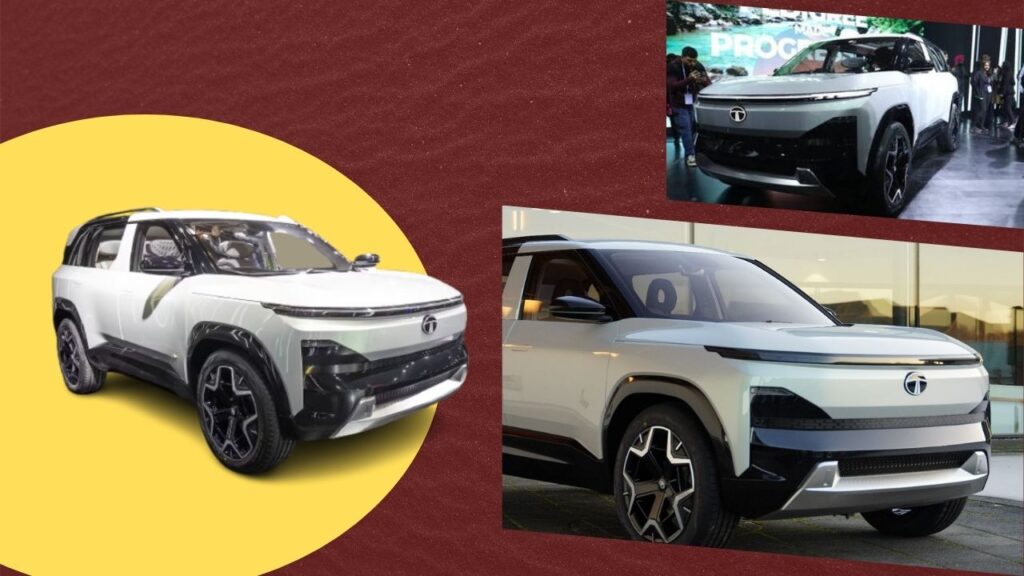
A Legend Reborn: Tata Sierra EV
Launch Date: March 2026
If you grew up in the 90s, then the word “Sierra” must bring back some lovely memories. It changed the landscape in the SUV segment being India’s first real lifestyle offering. Tata is bringing back the glory days for that legend, this time, it’s powered by lightning.
The Sierra EV isn’t simply a Nexon in a new body, it is based on the Acti.ev (Active Intelligent Electric Vehicle) “skateboard” platform. The floor is completely flat, the cabin is massive, and there’s even a “frunk” for charging cables. Tata is marketing this as a “Lounge On Wheels” with the iconic wrap-around “Alpine Windows” and reclining rear seats. With a claimed range of over 400 km and All-Wheel Drive (AWD) as an option, this luxury cruiser doesn’t mind getting a little dirty.
Functional Masterpiece: Kia Syros
Scheduled Release Date: Mid- 2026
Kia is instead “zigging” where everyone else seems intent on “zagging,” making their Upcoming compact SUVs in India look like sporty coupes with sloping roofs. The Syros (internally referred to as the Clavis) is a futuristic box you can be proud of.
Why a box? Because practicality applies to boxes. The Syros prioritizes vertical space, so even six-foot-tall riders get plenty of headroom in the rear cabin. Inside, Kia is introducing its “Trinity” cockpit – a giant, seamless glass console that integrates three different displays. It’s the “gadget on wheels” for Gen Z buyers, who prioritize interior space and high-speed connectivity over sleek profiles, he said. It is scheduled to go on sale as an EV first, with petrol variants to follow soon thereafter.
The Bengal-barren EV: Hyundai Inster
Schedule Release: Q4 2026
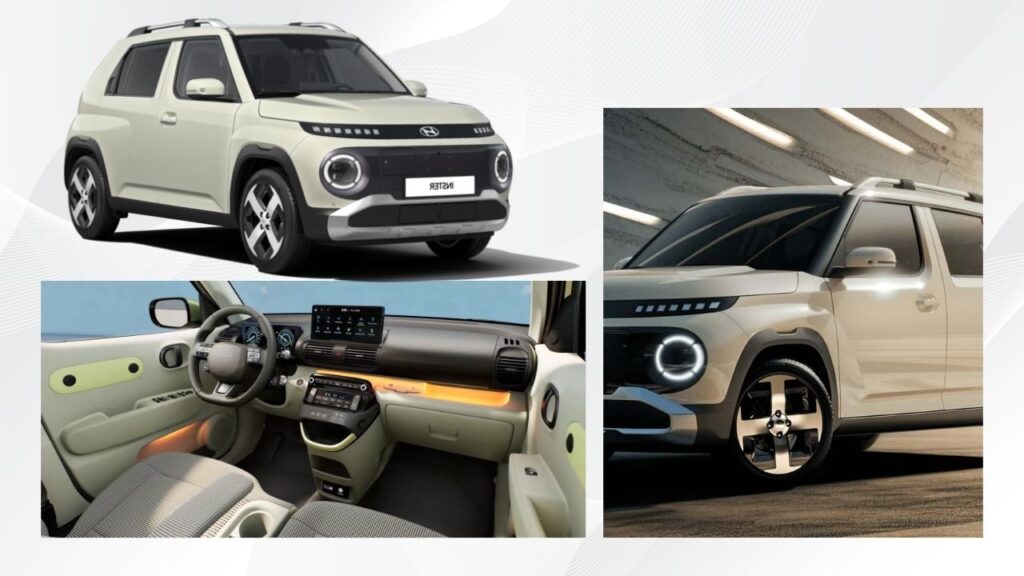
Hyundai’s have a straight aim to make electric cars affordable. The Inster is an ingenious version of the global Casper EV, but Hyundai has extended it by 230mm just for India. Why? Because we want our legroom.
The Inster is the ideal city “pod.” It’s tiny enough to plunge into holes in traffic yet techie enough to seem upscale. It has a “Pixel” design (inspired by its larger sibling, the Ioniq 5) and modular seats that can be folded completely flat — ideal for a quick car-camping trip or a nap between appointments. With a price target below ₹10 lakh, this is the vehicle that may finally turn EVs into a household staple in India.
Upcoming compact SUVs in India: What the next two years really turn on is so-called hyper-segmentation, as the auto market moves beyond the era when cars were “one-size-fits-all.” Now, each is a lifestyle choice:
Duster is comfort and ability to cover 500 km without getting tired
Vision S is a rugged, reliable workhorse
Sierra EV is for design-conscious professionals who want their car to say something
Syros is the ultimate family-and-tech hub, while Inster is the clean, concise future of city commuting.
It’s not a decision about what you can afford anymore — it’s a decision about who you want to be on the road.
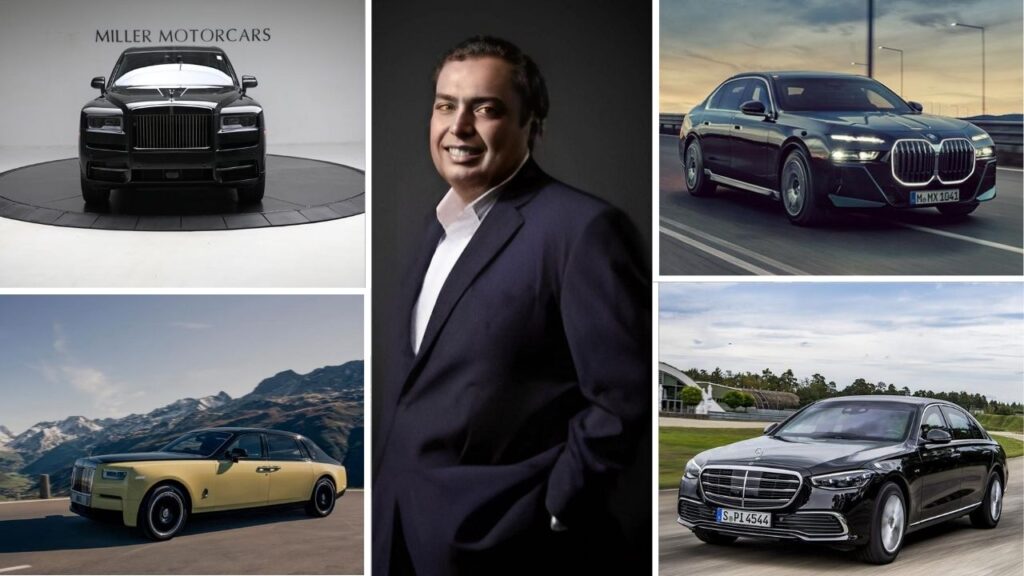
Mukesh Ambani, the name is mentioned in discussions among the wealthiest men. He is famous for his big business and his love for luxury cars. The Mukesh Ambani car collection is large and the collection has very luxurious cars. It has some of the most expensive and beautiful cars you can imagine. These cars are not just for show. They are also very safe and have the latest technology. Learn about Mukesh Ambani’s Top 10 most expensive cars, know about their prices, and features.
Why Is Mukesh Ambani’s Car Collection Famous?
Mukesh Ambani’s lavish lifestyle is incomplete without his 150 expensive car collection. Each car is picked with care. They are all top brands. Many of them are custom-made. Some are even bulletproof. The Mukesh Ambani car collection showcases power, luxury, and safety. People all over the world talk about his cars.
Top 10 Most Expensive Cars in Mukesh Ambani’s Collection
Here are the top 10 most expensive cars in Mukesh Ambani’s collection. You will also find their prices and what makes each one special.
1. Rolls‑Royce Cullinan Black Badge
Image Credit: Rolls Royce
Mukesh Ambani owns a Rolls‑Royce Cullinan Black Badge SUV, gifted to his wife for Diwali at ~₹10 crore ex‑customization, with on-road cost reaching ₹9–10 crore. It runs on a 6.75‑liter twin‑turbo V12 engine tuned to about 600 PS and 900 Nm torque, capped at 250 km/h. The cabin is high-tech, with a fibre-optic “Shooting Star” roof and carbon-fibre details. It’s the most capable Cullinan and combines power and elegance. Ambani’s version includes unique wraps and a VIP ‘555’ plate.
2. Bulletproof Rolls‑Royce Cullinan (Standard)
Image Credit: YouTube
Ambani’s custom bulletproof Cullinan costs over ₹13 crore with armour and military-grade tyres. Built on a base price of ₹7.99 crore, it has a 6.75‑liter twin‑turbo V12 making 563 bhp and 850 Nm torque. It has bullet‑ and grenade‑resistant glass, underbody armour, and run‑flat tyres. The inside is luxurious, seating five in peace, security, and quiet. Ambani became the first in India to own a bulletproof Cullinan, a highlight of safety and luxury.
3. Rolls‑Royce Phantom VIII EWB
Image Credit: Rolls Royce
The Phantom VIII EWB is Ambani’s ultra‑long, ultra‑luxury flagship. This car combines with 563 bhp and torque of 900 Nm, powered by a roaring 6.75-liter V12 engine. Extra length gives more legroom and a grand, limousine-style ride. Its interior features handcrafted leather and wood. The car is worth about ₹13.5 crore . It sits high in his garage, a royal symbol. This beast rides smoothly, sliding on the roads which symbolizes his status as India’s richest man.
4. Mercedes‑Maybach S680 Guard
Image Credit: Mercedes Benz
Mercedes‑Maybach S680 Guard: This heavily armoured sedan offers high security and refined ride. It has VR10 protection, bulletproof body, and a 6.0‑liter V12 engine. It costs roughly ₹12 crore. Inside, you’ll find yourself in a serene haven, featuring tinted windows and cushioned leather seats. The Guard version protects from bullets and bombs. When it comes to safety and comfort, Ambani is ready to go ride with it.
5. Mercedes‑Maybach S600 Guard
Image Credit: Mercedes Benz
A sister to the S680, the S660 is another armoured luxury. It sports the same V12 engine and VR10 security. Price: ₹10.5 crore. It gives plush interiors, thick leather, and tinted shields. This car is shorter and sportier than the S680, with similar protection. Ambani uses it when he wants a combination of sportiness, luxury, and safety.
6. Mercedes‑S600 Guard
Image Credit: YouTube
The S600 Guard is a strong and well-armoured luxury sedan with a V12 engine. It offers high security, impeccable running speed which makes an incredible model. Its price is close to ₹10 crore. This model also shields from bullets and explosions. It runs smoothly in silence, and offers an enjoyable ride. Luxurious taste from the inside, with leather and a calm ride. Ambani and his family often use it on important journeys.
7. BMW 760Li Security
Image Credit: BMW
Ambani’s bulletproof BMW 760Li costs ₹8.5–8.9 crore. It uses V12 power (544 bhp, 750‑880 Nm torque), armored doors, windows, and a self‑sealing fuel tank. Underbody protection keeps it safe from bombs. Yet it drives smoothly and quietly. Leather seats and modern controls sit inside. Despite its heavy security, it remains a refined luxury sedan for secure travel.
8. Ferrari SF90 Stradale
Image Credit: Ferrari
Ambani’s Ferrari SF90 Stradale is a really expensive hybrid supercar. Together they generate 769–986 bhp and 800 Nmtorque, hitting 0–100 km/h in 2.5 s and top speed of 340 km/h . Its carbon‑fibre body and F1‑inspired tech deliver blistering speed and advanced features. This Ferrari is powerful, fast, and full of modern tech worth ₹7.5 crore.
9. Rolls‑Royce Phantom Drophead Coupe
Image Credit: YouTube
This convertible Rolls‑Royce is rare and elegant. Ambani’s model is worth ₹7.6 crore. This model gives you the prime look with a soft folding roof and a 6.75‑liter V12 engine. This car offers open-air driving with supreme luxury. Inside is plush leather, wood trim, and custom amenities. The Drophead fits special occasions when Ambani wants style and grace under the sky.
10. Ferrari 812 Superfast
Image Credit: YouTube
Ferrari 812is a fantastic beast which is superfast with petrol V12 GT. It costs around ₹5.2 crore. It uses a 6.5‑liter V12 engine revving high to deliver 340 km/h. The fast and thrilling car is ready to go on. It has no hybrid system or extra weight. Its design is sleek, angular, and sporty. Ambani adds this car for raw speed and classic supercar feel.
Mukesh Ambani collection has also included most of the famous cars including the Ferrari SF90 Stradale, Bentley Continental Flying Spur, and Tesla Model S. These cars are also very expensive and special. Want to feel Hybrid supercar ride? The Ferrari SF90 Stradale will give you that feel. It is very fast and uses electric power but not only that, It is very comfortable and stylish. It is very fast and has the latest technology.
Conclusion
Mukesh Ambani’s car collection is one of the best in the world. It has the most expensive and luxurious cars. Each car is special in its own way. The collection is a mix of speed, safety, and comfort. It shows the best of what cars can be. If you love cars, the Mukesh Ambani car collection is a dream come true.
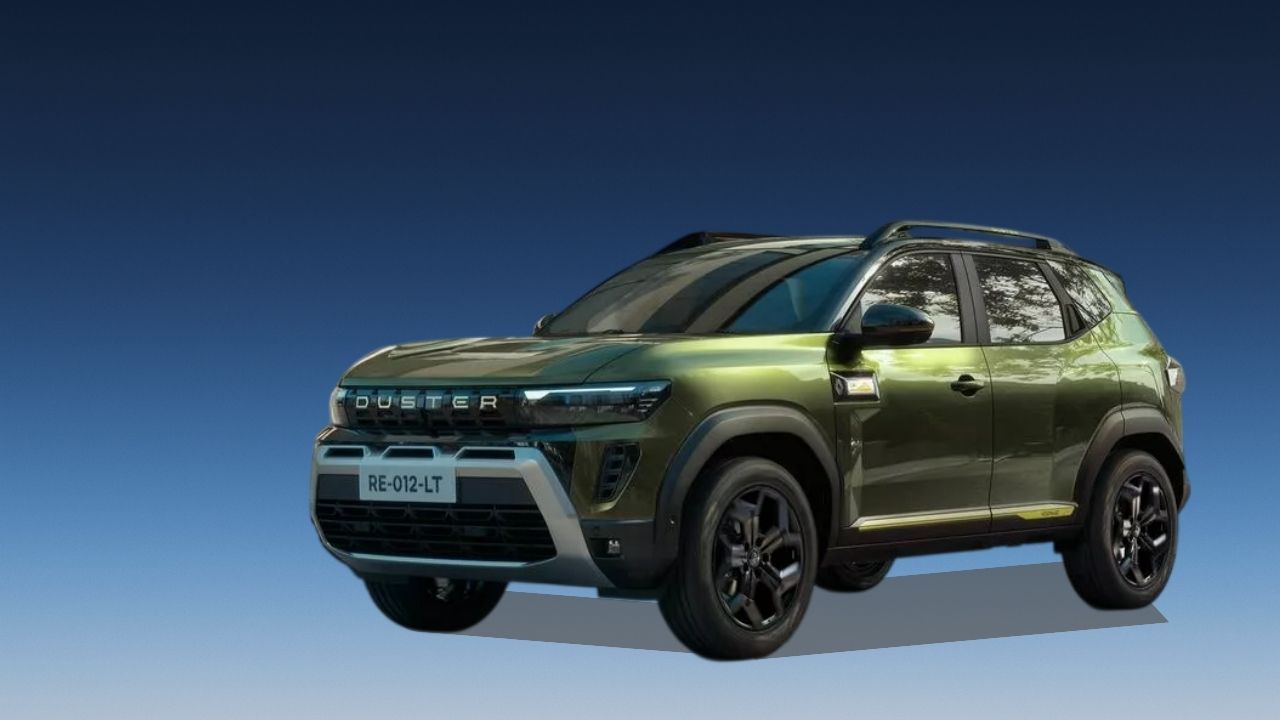
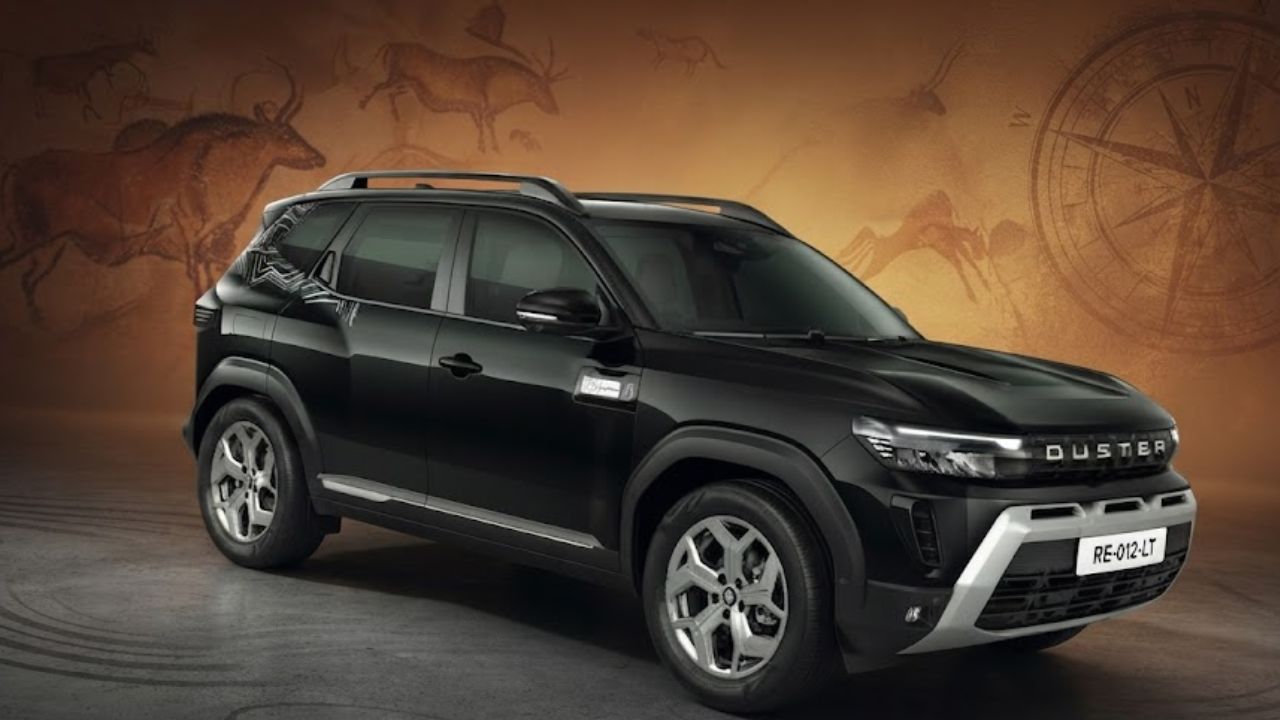
Renault India is bringing a new hybrid powertrain on its most powerful midsize SUV segment, Duster. It is debuting Hybrid E-Tech technology in the Indian market which changes the hybrid segment into next-gen evolutionary era. Renault Duster Hybrid launches in India on 17 October with a clear message: say goodbye to diesel.
Buyer who are searching for a new hybrid car in this festive season sale can consider this new Renault Duster Hybrid with better fuel efficiency without giving up the practicality of an SUV. However, the final price and spec-sheet are still wrapped for the launch day.
Get all the details on the upcoming Renault Duster and other competitors in a hybrid SUV segment before booking one for yourself.
What Renault Has Confirmed About The Renault Duster Hybrid
Renault promises to bring its first hybrid in India, Duster E-Tech Hybrid for 17 October 2026. It makes a debut with Hybrid E-Tech technology in the Indian market.
The hybrid becomes the third engine in the new Duster line-up. The current Duster offers two engine options in a range of ₹10.49 lakh to about ₹18.49 lakh (ex-showroom). The hybrid will sit above that. The petrol variant offers 1L 3-cylinder produces 100 bhp and 160 Nm with a 6-speed manual and a 1.3-litre turbo-petrol making 163 hp and 280 Nm.
Renault has not announced the price, the official mileage figure or the variant-wise features. Those arrive on launch day.
Duster Hybrid Specs: How The E-Tech 160 System works
This is a proper strong hybrid, not a mild-hybrid badge. It pairs a 1.8-litre GDI petrol engine with two electric motors and a 1.4 kWh battery, and drives the wheels through an 8-speed automatic.
Outputs are quoted inconsistently. Renault’s headline figure is 160 hp, but one report says 158 bhp and 172 Nm and CarWale says 162 bhp. Treat 160 bhp as the working number until Renault publishes homologated figures on launch day.
The efficiency claims matter more than the peak power:
Renault says the Duster Hybrid can deliver 80% of daily driving on electric mode which cuts fuel usage up to 40%, that’s less than any purely petrol car. But the percentage depends on the traffic, charging, and driving pattern.
The claimed combined mileage of Renault Duster Hybrid is up to 1,000 km, the real world mileage is known after the launch.
It is not a plug-in, so you never charge it. The battery refills through regenerative braking.
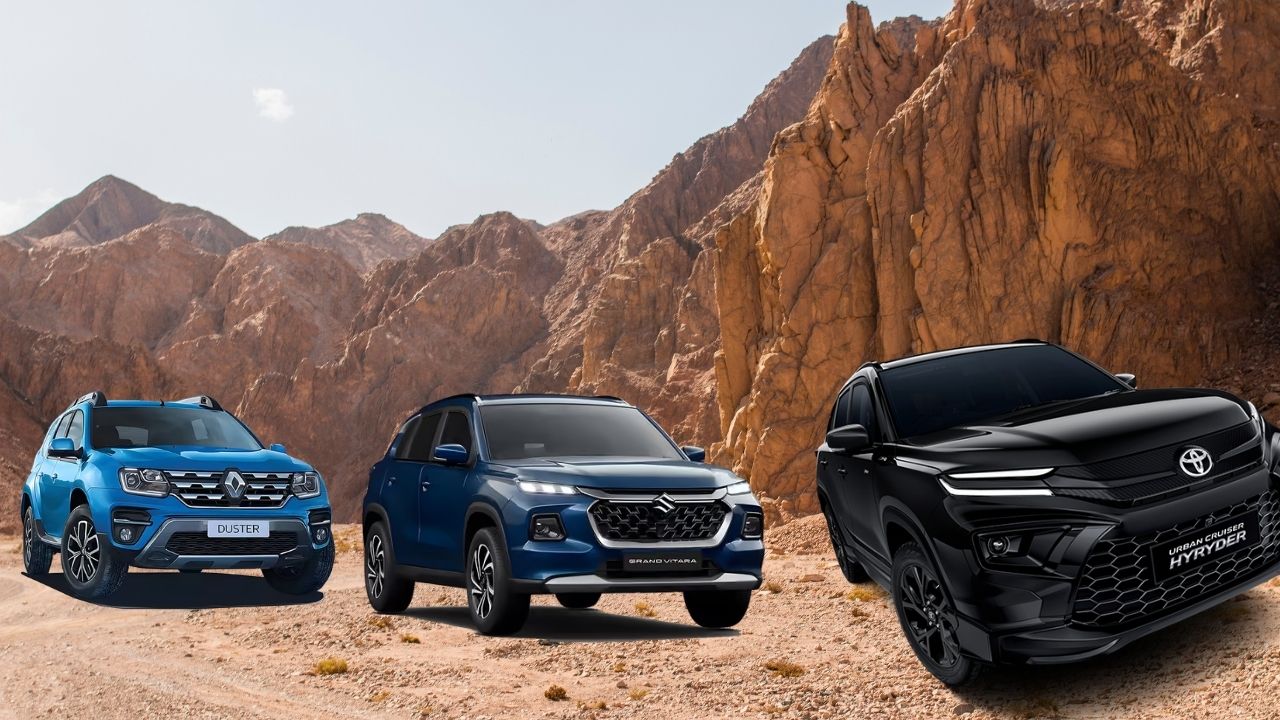
The battery size is the interesting part. At 1.4 kWh, it is much larger than the roughly 0.60 kWh pack in the Toyota-based hybrids sold as the Grand Vitara, Victoris and Hyryder. A bigger pack should allow more electric-only driving in stop-start traffic, which is where a strong hybrid earns its premium. It should also mean a battery that works less hard on a long commute. How much of that shows up in real conditions is something only road tests will settle.
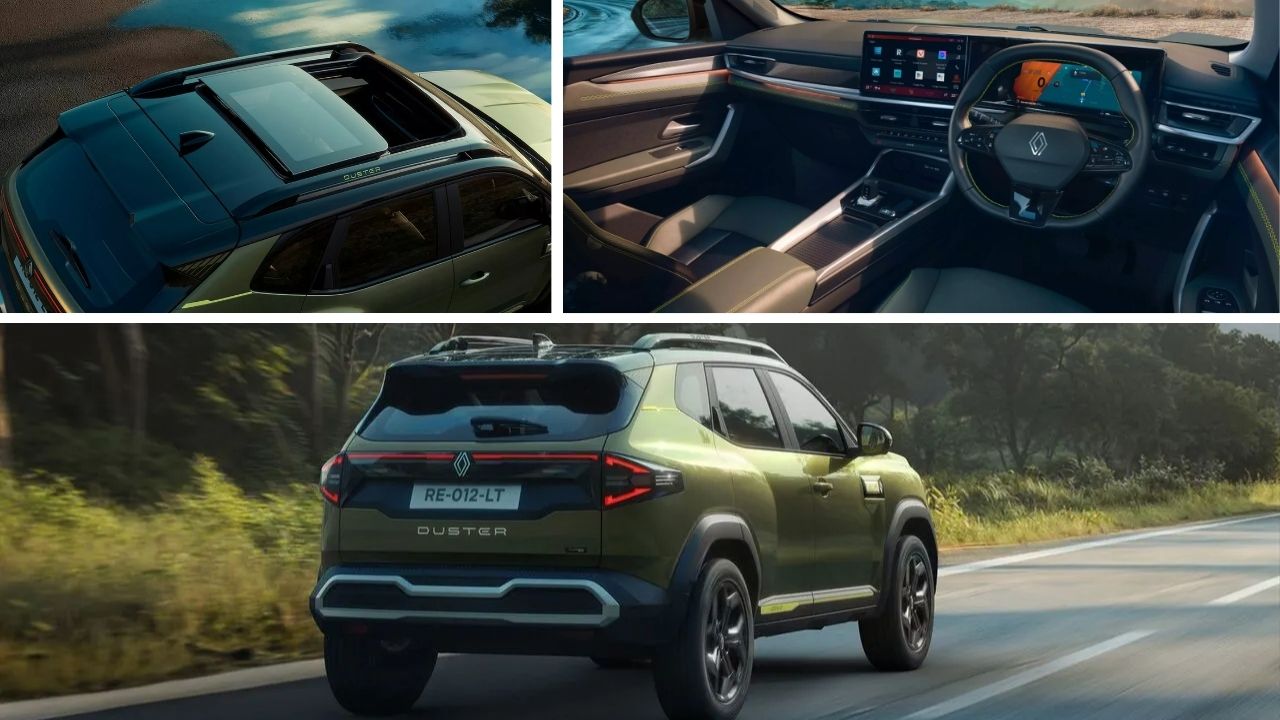
Expected features include a 10.1-inch touchscreen, a digital instrument cluster, a panoramic sunroof, six airbags and a 360-degree camera, with Level 2 ADAS on selected variants. These are expectations, not a confirmed spec sheet.
The Duster’s obvious rivals are the Maruti Suzuki Grand Vitara and Toyota Urban Cruiser Hyryder, which share a strong-hybrid system. Grand Vitara strong-hybrid variants run from roughly ₹18 lakh to ₹19.7 lakh ex-showroom, and the claimed ARAI figure is 27.97 kmpl.
Here is where the hybrid Duster could beat them and where it could fall short:
Duster Hybrid (expected)
Grand Vitara / Hyryder Strong Hybrid
Engine
1.8L petrol + 2 motors
1.5L petrol + motor
Output
~160 bhp (claimed)
116 hp
Gearbox
8-speed multimode automatic
e-CVT
Battery
1.4 kWh
~0.6 kWh
Claimed mileage
Not announced
27.97 kmpl (ARAI)
Boot
Not announced
265 litres (hybrid variants)
On paper the Duster has a clear edge on power and battery. The Grand Vitara and Hyryder hold the mileage crown for now, and their boots shrink noticeably in hybrid form. Renault’s boot figure is the number to watch, because a hybrid SUV that compromises on luggage space loses part of the reason to buy it.
Duster Hybrid Price and Mileage
Pricing is speculation until 17 October. One publication projects ₹19 lakh to ₹23 lakh and mileage of up to 25 kmpl, but that is an outlet’s estimate, not a Renault statement. If that mileage figure holds, the Duster would trail the Grand Vitara’s 27.97 kmpl on paper.
The same report says the initial 2026 production allocation has already sold out in pre-bookings and bookings are paused. I could not find this confirmed by Renault, so treat it with caution. Renault had earlier said deliveries would begin in the festive season around Diwali, which makes early-November deliveries plausible.
Should You Buy The Duster Hybrid or Wait?
The answer depends on how you drive.
Buy the Duster Hybrid if most of your driving is city traffic and you have been quietly missing a diesel. This is likely to be the car that answers that, with more power and a bigger battery than its rivals. It also suits anyone who wants the Duster’s rugged look and does not want to compromise on refinement.
Wait if your priority is the lowest running cost per kilometre. Toyota’s system already holds the mileage record in this class, and you should see Renault’s ARAI number and top-variant price before paying a premium. Waiting also makes sense if you want independent reviews of real-world efficiency and boot space before committing.
Look elsewhere if you regularly do highway-heavy runs. Hybrids do their best work in stop-start traffic, and a turbo-petrol Duster at ₹10.49 lakh onwards may make more financial sense.
The practical move is to hold your booking decision until 17 October. Compare the announced price against the Grand Vitara Alpha+ hybrid at around ₹19.5 lakh, then check the ARAI mileage and boot capacity.
If Renault Duster Hybrid prices the top hybrid below that and delivers 25 kmpl or better, the Duster becomes the more interesting choice. If it lands above ₹21 lakh with mileage in the low twenties, the Toyota-based hybrids stay the smarter buy.
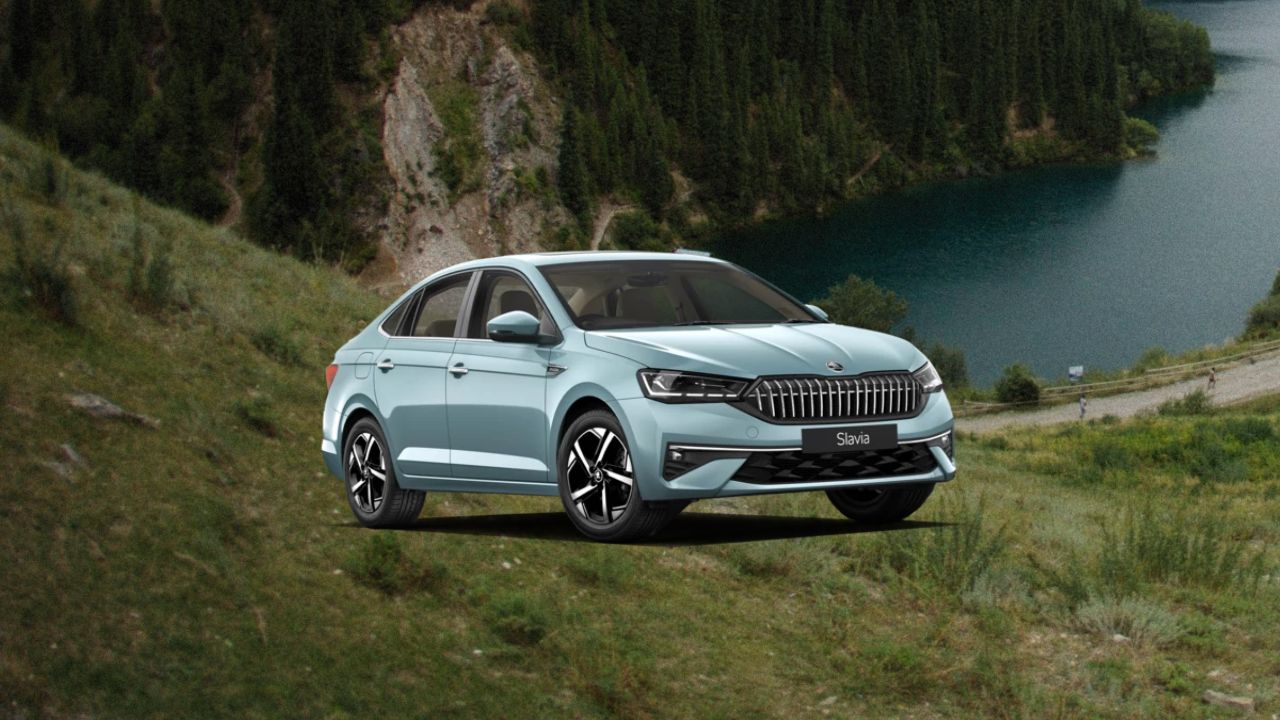
Skoda has launched the updated Slavia in India. Prices run from Rs. 9.99 lakh to Rs. 18.84 lakh, ex-showroom, and deliveries begin next week. It brings not only just design but advanced features and gearbox updates too.
The facelift keeps the Slavia’s silhouette, so it won’t look like a new car from a distance. But a new automatic gearbox, a longer features list and a rear massage function make it more than a cosmetic update.
Skoda Slavia Facelift Price and Variants
Six trims carry over: Classic, Classic Plus, Signature, Sportline, Prestige and Monte Carlo. Prices are ex-showroom.
Variant
1.0 TSI MT
1.0 TSI AT
1.5 TSI DCT
Classic
Rs 9.99 lakh
–
–
Classic Plus
Rs 10.99 lakh
Rs 12.49 lakh
–
Signature
Rs 13.94 lakh
Rs 14.94 lakh
–
Sportline
Rs 14.34 lakh
Rs 15.34 lakh
–
Prestige
Rs 15.89 lakh
Rs 16.89 lakh
Rs 18.59 lakh
Monte Carlo
–
Rs 17.29 lakh
Rs 18.84 lakh
Look at the jump from Classic Plus (Rs 10.99 lakh) to Signature (Rs 13.94 lakh). That is nearly Rs 3 lakh for one step, and it’s where most of the equipment story begins. Confirm variant-wise equipment at the showroom before you commit. Classic Plus AT is the cheapest way to enter into the new gearbox.
What Brings Facelifted Version of The Skoda Slavia
The Slavia Design Update
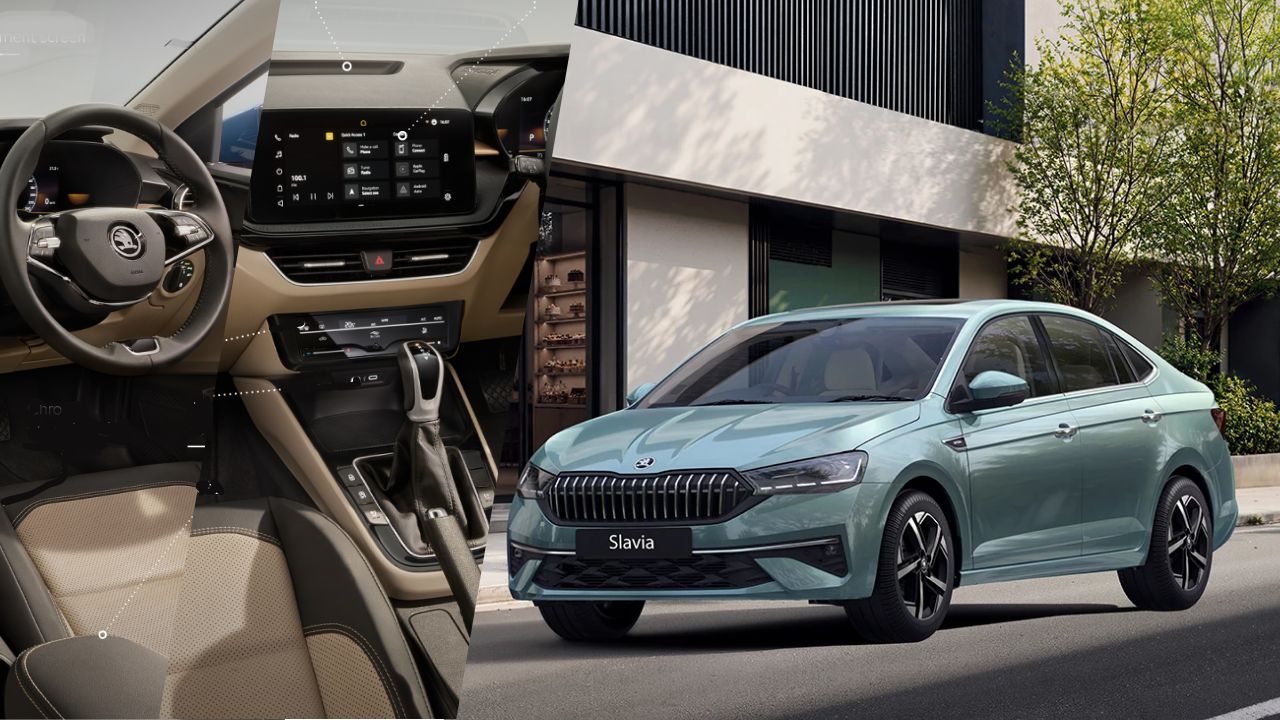
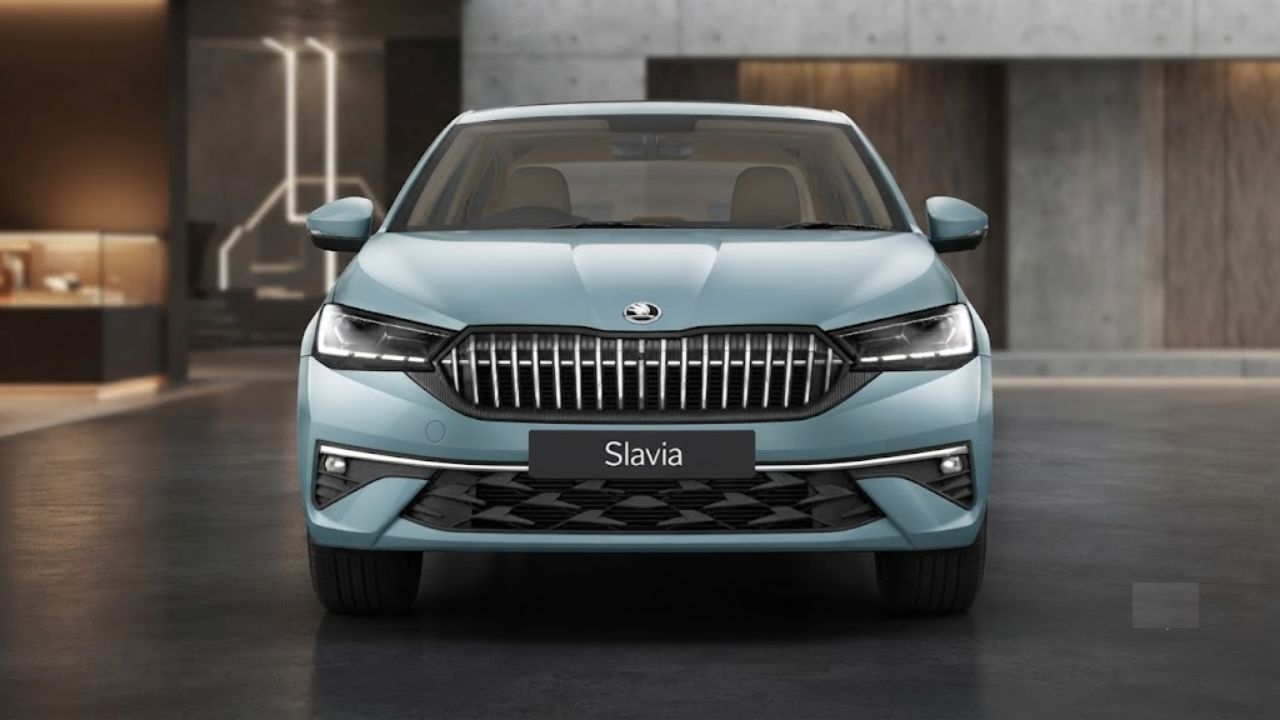
This is a facelift, not a new car. The silhouette is untouched. Up front you get revised L-shaped LED DRLs, a redesigned bumper, LED fog lamps with a cornering function and a faux carbon-fibre insert below the grille. The tail lamps get new internal elements and dynamic turn indicators. A carbon-look strip now links the two units across the tailgate, and 16-inch dual-tone alloys are new.
There are ten paint shades, including Arctic Silver and Cappuccino Beige. Beige deliveries only begin in December 2026, so don’t pick it if you need the car for Diwali.
Inside: Bigger Screens, a Quirky Headline Feature
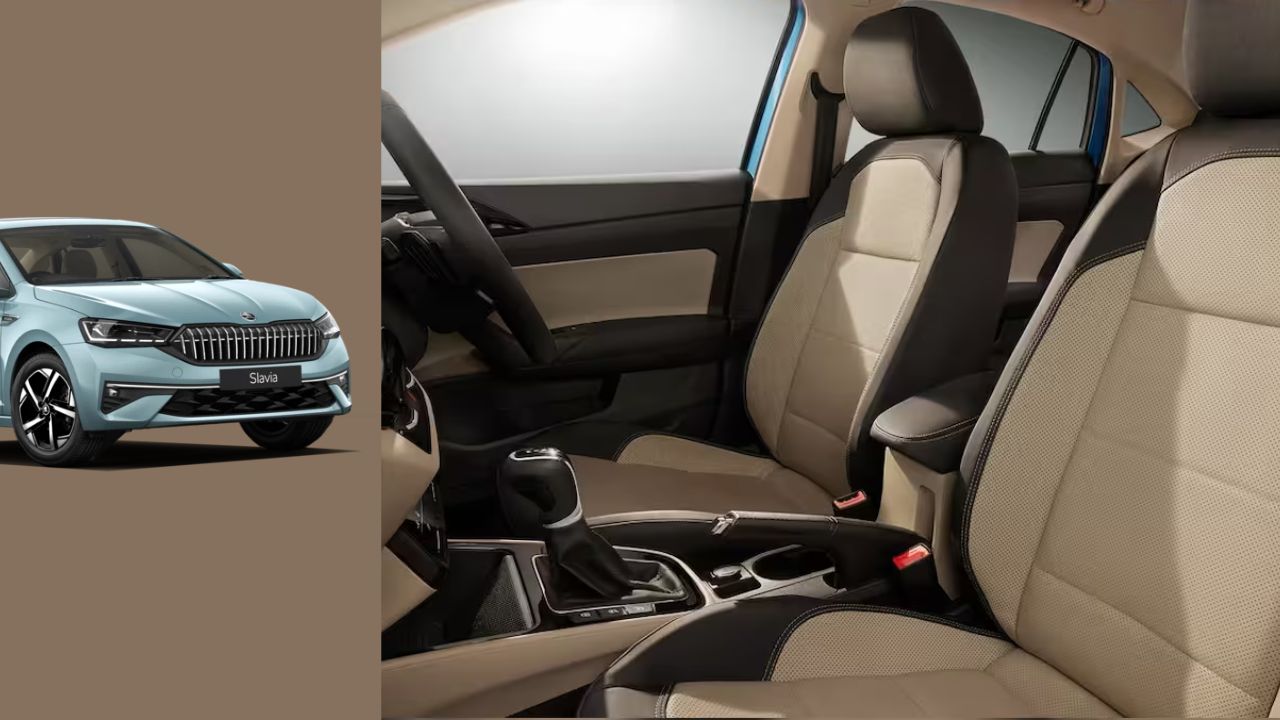
The dual-tone black-and-beige cabin and two-spoke steering wheel stay. What’s new is the equipment list:
10.25-inch digital driver’s display
10.1-inch touchscreen with wireless Android Auto and Apple CarPlay, plus Google Assistant
Rear seat massaging function
360-degree camera
Single-pane sunroof, wireless charger and cruise control
Six airbags, ESC, hill-hold and tyre-pressure monitoring are on the safety sheet. ADAS is missing, and that matters because some rivals now offer it. The Slavia’s 5-star Global NCAP rating was earned under an older test protocol, so treat it as a strong result but not a like-for-like score against newer-protocol cars.
The 8-Speed Automatic Is the Real Upgrade
Skoda Slavia facelift brings new updates in the engine but the engine itself is old. The biggest mechanical change is the gearbox. The new 8-speed torque converter finds a way through the old 6-speed automatic on the 1.0 TSI.
With 1.5L TSI, it stays on 7-speed DSG and rear disc brakes also given that makes the ride more smooth and comfortable. The fuel efficiency also makes better figures as the driving becomes more smooth. The facelift comes with the same engine which exists in the current model so expect the same 115 PS and 150 PS of power from the upgrade too.
Skoda Slavia Facelift vs Volkswagen Virtus and Hyundai Verna
Skoda appeal will come down to how its pricing stacks up against the Virtus and Verna. That sounds right to me. The Virtus shares its platform and engines with the Slavia, so the real contest there is Skoda’s features and pricing against Volkswagen’s.
Skoda offers turbo-petrol engines and a rear massage function which Verna doesn’t offer yet, so if you are looking for a car with more comfortable features then Slavia is a better choice. In the price range of Rs 12 lakh to Rs 21.36 lakh, there is one more brand that offers space and refinement, not speed is the Honda City. check the price each and every car from the dealer.
Should You Buy the Skoda Slavia Facelift?
Buy the Skoda Slavia Facelift if the driving feel matters as it provides ADAS, comfortable seats, and large screen.
Pick your variant like this:
Under Rs 11 lakh: Classic Plus MT at Rs 10.99 lakh. The Classic at Rs 9.99 lakh is a starting price, not a recommendation.
City commuters: Classic Plus AT at Rs 12.49 lakh, if the equipment suits you.
Feature seekers: the Signature AT at Rs 14.94 lakh is the first step where the new tech is likely to appear. Confirm it first.
Enthusiasts: the 1.5 TSI Monte Carlo DCT at Rs 18.84 lakh is the one that justifies a Skoda badge.
The Skoda Slavia facelift is more than a visual update. The new 8-speed automatic, added cabin features, 360-degree camera and rear seat massage function give it a stronger case against the Volkswagen Virtus and Hyundai Verna. The engines remain familiar, but the gearbox update should make the 1.0 TSI easier to live with in daily city traffic.
At Rs. 9.99 lakh to Rs. 18.84 lakh, the Slavia still covers a wide price range. The Classic Plus AT looks like the sensible starting point for an automatic, while the 1.5 TSI DCT remains the pick for buyers who want stronger performance. Before booking, check the exact variant-wise equipment and dealer quote, since the nearly Rs. 3 lakh jump between some trims makes choosing the right version important.