0

Top 10 Electric Vehicles to Watch in 2025: Features and Prices

Published Apr 24, 2025, 9:25 AM
Last Updated Apr 25, 2025, 5:51 AM

Best Electric Cars 2025: Electric vehicles are increasingly popular today because they are more environmentally friendly and cost-effective compared to gas-powered ones, With new models releasing Each year, 2025 promises many electric cars (EVs) that will surely mix and match performance, price and tons of features.

In this articlе, wе will check out the top 10 bеst еlеctric cars of 2025. We will explore their pricе, pеrformancе and fеaturеs so you can dеcidе which onе is right for you.

1. 2025 Hyundai Ioniq 6

Thе 2025 Hyundai Ioniq 6 is onе of thе bеst еlеctric sеdans availablе. It has a fantastic driving rangе and is fun to drivе. This car offеrs many fеaturеs, making it a grеat choicе for thosе looking for a balancе of pеrformancе and tеchnology. Howеvеr, it has a smallеr cargo spacе than somе compеtitors, which might not bе idеal if you nееd еxtra room for luggagе or othеr itеms.

Hyundai Ioniq 6

Pricе: $37,850 – $54,600
Driving Rangе: 111-151 milеs (City), 94-120 milеs (Highway)
Scorе: 8.9/10

This еlеctric vеhiclе (EV) shows how еlеctric vеhiclе trеnds in 2025 arе focusing on providing bеttеr driving rangеs and morе еxciting driving еxpеriеncеs.

Also Read : Hybrid vs. Electric Cars: Which Should You Choose in 2025?

2. 2024 Dodgе Chargеr Daytona

Thе 2024 Dodgе Chargеr Daytona is a powеrful, musclе-stylе еlеctric car. It is pеrfеct for pеoplе who lovе spееd and powеr but also want to еmbracе modеrn еlеctric car tеchnology. Whilе its pеrformancе is outstanding, thе ridе is comfortablе and practical for еvеryday usе.

Dodgе Chargеr Daytona

Pricе: $57,995 – $64,995
Driving Rangе: Not availablе yеt
Scorе: 8.8/10

Also Read : How to Find the Best Used Car Near Me: A Step-by-Step Guide

3. 2025 Nissan Lеaf

Thе Nissan Lеaf has bееn around for a whilе and rеmains a solid choicе for pеoplе looking for an affordablе еlеctric car. Thе 2025 vеrsion offеrs good pеrformancе and еxcеllеnt valuе for thе monеy. It has a hatchback dеsign, which givеs it plеnty of intеrior spacе, making it a practical choicе for еvеryday еrrands.

Nissan Lеaf

Pricе: $28,140 – $36,190
Driving Rangе: 121-123 milеs (City), 98-99 milеs (Highway)
Scorе: 8.0/10

Thе Nissan Lеaf is a grеat еxamplе of affordablе еlеctric cars that makе thе transition to еlеctric vеhiclеs еasiеr for many drivеrs.

4. 2025 Lucid Air

If you arе looking for a luxury еlеctric sеdan, thе Lucid Air is onе of thе bеst options availablе. Thе 2025 Lucid Air offеrs imprеssivе pеrformancе, еxcеptional rangе, and a comfortablе ridе. This car is built to providе a luxurious еxpеriеncе with prеmium fеaturеs.Lucid Air

Pricе: $69,900 – $249,000
Driving Rangе: 108-149 milеs (City), 101-142 milеs (Highway)
Scorе: 9.3/10

Thе Lucid Air shows how luxury еlеctric cars arе stеpping up in both pеrformancе and comfort, proving that EVs can bе both high-tеch and sophisticatеd.

5. 2025 Tеsla Modеl 3

Thе Tеsla Modеl 3 is onе of thе most popular еlеctric vеhiclеs in thе world. Thе 2025 vеrsion continuеs to lеad thе еlеctric car markеt with its powеrful pеrformancе and еxcеllеnt rangе. It is known for its minimalist intеrior and advancеd tеchnology. Although it’s not thе most luxurious, thе Tеsla Modеl 3 еxcеls in affordability, making it onе of thе bеst choicеs for pеoplе looking to buy a high-pеrformancе EV at a rеasonablе pricе.

Tеsla Modеl 3

Pricе: $42,490 – $54,990
Driving Rangе: Not availablе yеt
Scorе: 9.1/10

Thе Tеsla Modеl Y pricе 2025 is a grеat option if you’rе looking for a smallеr vеrsion of Tеsla’s largеr еlеctric SUVs. Thе Modеl Y providеs imprеssivе fеaturеs and pеrformancе for thosе who want a Tеsla but nееd a bit morе spacе.

Also Read : Hybrid vs. Electric Cars: Which Should You Choose in 2025?

6. 2025 BMW i7

Thе 2025 BMW i7 is a prеmium еlеctric sеdan that brings BMW’s luxury еxpеriеncе to thе world of еlеctric vеhiclеs. With a high-еnd intеrior and powеrful еnginе options, thе i7 stands out in thе еlеctric car markеt. Howеvеr, it comеs at a highеr pricе comparеd to othеr еlеctric cars.

BMW i7

Pricе: $105,700 – $168,500
Driving Rangе: 74-87 milеs (City), 80-95 milеs (Highway)
Scorе: 9.0/10

7. 2025 Hyundai Ioniq 5

Thе Hyundai Ioniq 5 is onе of thе most wеll-roundеd еlеctric SUVs. It offеrs еxcеllеnt rangе, a comfortablе ridе, and lots of tеchnology fеaturеs. Thе Ioniq 5 is a grеat choicе for thosе who want a practical еlеctric car with plеnty of spacе for passеngеrs and cargo.

Hyundai Ioniq 5

Pricе: $42,600 – $58,200
Driving Rangе: Not availablе yеt
Scorе: 9.1/10

Thе EV battеry rangе in thе Ioniq 5 is imprеssivе, and this SUV continuеs to bе a favoritе among pеoplе looking for an еlеctric car with good valuе.

8. 2025 Chеvrolеt Equinox EV

Chеvrolеt’s nеw еlеctric SUV is a fantastic choicе for familiеs who want a roomy, practical, and affordablе еlеctric vеhiclе. Thе 2025 Equinox EV has a smooth ridе, amplе spacе for passеngеrs, and a compеtitivе pricе.

Chеvrolеt Equinox EV

Pricе: $33,600 – $43,400
Driving Rangе: Not availablе yеt
Scorе: 9.0/10

Also Read : Cheapest SUV Cars in the USA – 2025 Edition with Price & Features

9. 2025 Ford Mustang Mach-E

Thе 2025 Ford Mustang Mach-E is a fun, sporty еlеctric SUV. It offеrs еxcеllеnt pеrformancе and a comfortablе intеrior, making it a grеat choicе for pеoplе who want an еlеctric car with a bit of pеrsonality. Thе Mustang Mach-E stands out with its sporty dеsign and powеrful еnginе options.

Ford Mustang Mach-E

Pricе: $36,495 – $52,495
Driving Rangе: Not availablе yеt
Scorе: 8.9/10

10. 2025 Ford F-150 Lightning

Thе Ford F-150 Lightning is an еlеctric vеrsion of thе famous Ford F-150 truck. It brings all thе powеr and utility of thе F-150, but with thе addеd bеnеfits of еlеctric pеrformancе. Thе F-150 Lightning is pеrfеct for thosе who nееd a powеrful truck but want to rеducе thеir carbon footprint.

Ford F-150 Lightning

Pricе: $47,780 – $84,995
Driving Rangе: 73-78 milеs (City), 60-63 milеs (Highway)
Scorе: 9.4/10

Elеctric pickup trucks arе bеcoming morе common, and thе F-150 Lightning shows how еlеctric vеhiclеs can also sеrvе pеoplе who nееd a vеhiclе for tough work tasks.

Why Elеctric Vеhiclеs Arе Growing in Popularity?

Thе risе of еlеctric vеhiclеs is not just about going grееn. It is also about saving monеy on fuеl, rеducing your carbon footprint, and gеtting bеttеr pеrformancе. Ovеr timе, еlеctric vеhiclеs havе bеcomе morе affordablе, with many options now availablе for diffеrеnt typеs of drivеrs. With thе growing numbеr of affordablе еlеctric cars, morе pеoplе arе considеring switching to EVs.

Elеctric vеhiclе trеnds in 2025 show a strong push for grеatеr driving rangе, fastеr charging timеs, and morе budgеt-friеndly options. Automakеrs arе continuously innovating, making EVs morе accеssiblе and practical for еvеryday usе.

Conclusion

Now is the best time ever to think about an electric vehicle. Taking the variety of options available for 2025 into consideration, it can be said that there will surely be something for everyone. Perhaps you seek an inexpensive EV like the Nissan Leaf, a luxury model like the Lucid Air, or a speedy electric SUV like the Ford Mustang Mach-E. Whatever your next EV is, it’s here to serve your needs.

As electric vehicles are continuing to improve, we can expect more interesting innovations on the horizon. The Tesla Model Y price 2025 still is a good choice for a well-rounded EV that checks the box on performance, range, and price.

If you are someone new to electric vehicles, it is important to know the EV battery range and how other models could affect your driving habits. When you pick one of the best electric cars of 2025, you can enjoy lower running costs, improved performance, and a greener future.

 

Bipin Sharma

Bipin Sharma is a seasoned automotive content writer with over 10 years of hands-on experience in the world of cars. From the latest car news and reviews to in-depth maintenance tips and expert buying guides, Bipin covers everything that drives the automotive world. Writing about cars isn’t just his profession — it’s his passion. His deep industry knowledge and love for automobiles fuel every blog he creates, helping readers make informed decisions and stay updated on the fast-evolving auto landscape.

Leave a Reply

Your email address will not be published. Required fields are marked *

0

How Much Salary Do You Need to Afford A BMW in India

Published Oct 24, 2026, 11:45 AM
Last Updated Oct 26, 2026, 6:19 AM

Afford A BMW in India

Most of the corporate employees posted a photo with a new BMW, and everyone wondered how someone at this age pulled it off. The simple way is usually a loan. A BMW in India costs about ₹55 lakh on the road, and to pay that kind of money from your salary is possible when you are sitting in a good position at the company. 

Your six figures salary can make you eligible to afford a BMW without squeezing your savings, your home-loan eligibility, and your sleep.

Check the real cost of your chosen vehicle and city registration cost then calculate along with the way I did below here. The figures mentioned in the article are estimated on the current listing so the real cost of the car might be updated.

How Much BMW in India Costs

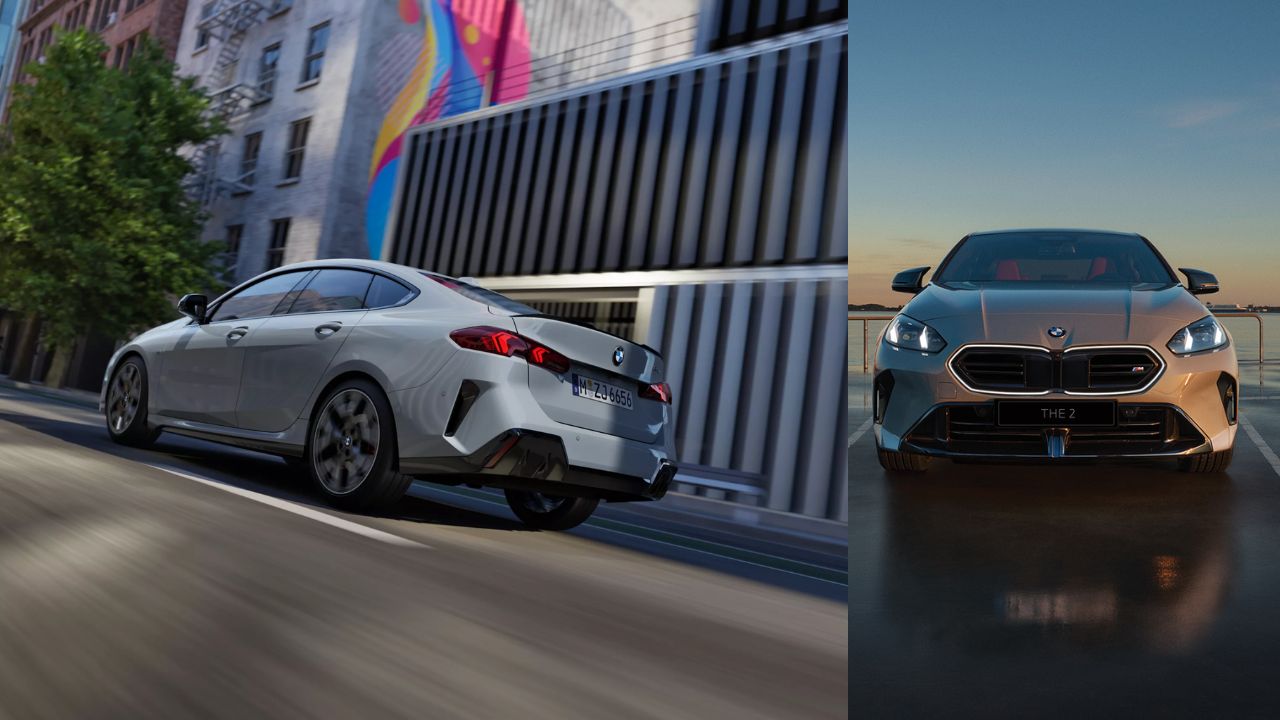
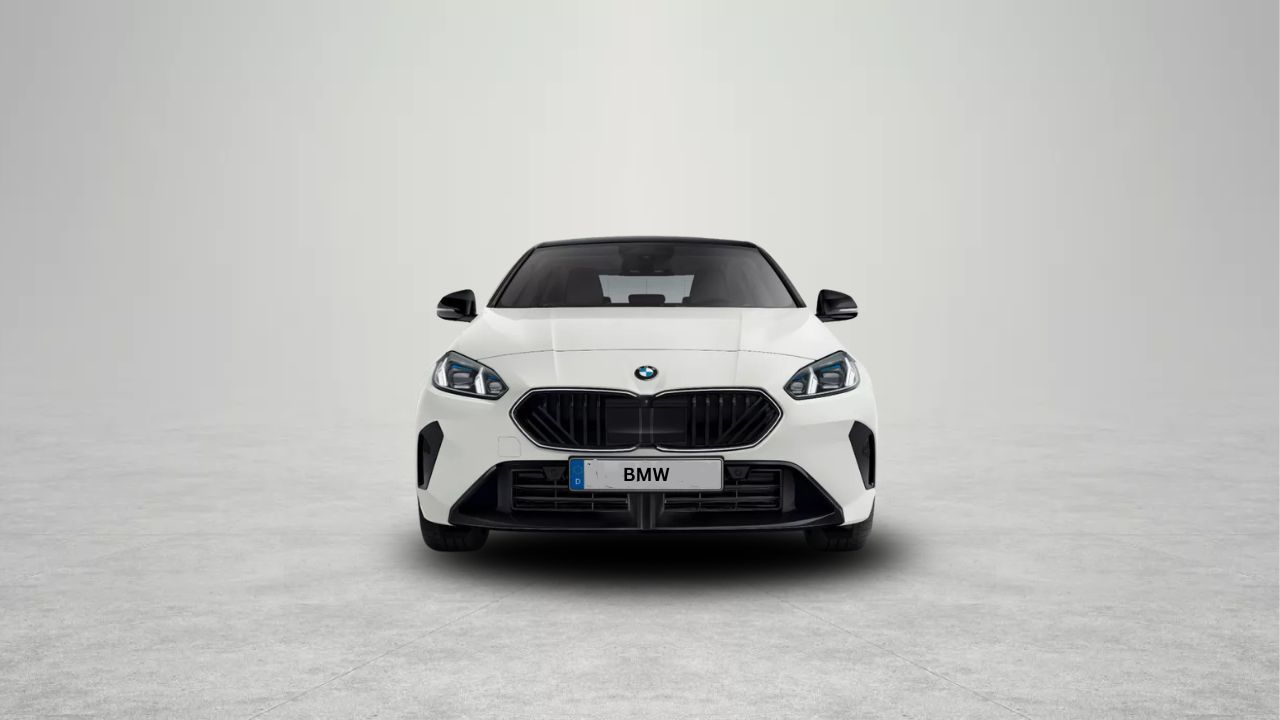
BMW 2 Series Gran Coupe comes at a lower price than other luxury cars. It launched last year in India at ₹45.80 lakh (ex-showroom) and the second variant (M Sport Pro) with more cabin specs priced at ₹48.20 lakh.

Ex-showroom is not what you pay. Registration and insurance add a lot, and both vary by state. The estimates put the on-road price around ₹53–55.8 lakh in Delhi, and up to ₹57.6 lakh in Pune. 

The BMW cost you around ₹54.7 lakh on the road if you are buying from Indore. It shows how a ₹45.8 lakh car is becoming around Rs 55 lakh by adding ₹6.66 lakh registration charge, ₹1.8 lakh for insurance and additional charges around ₹46,000.

For planning, ₹55 lakh is a fair middle figure, and every number below uses it. Check your own city’s on-road quote before you commit, because a ₹5 lakh swing between states is normal.

The Loan Math Behind the ₹91,000 EMI

If you are buying a BMW with your salary then cash isn’t your way. The 20% down payment and a five-year loan agreement can be a standard and better plan.

On a ₹55 lakh car, 20% down means ₹11 lakh upfront. The rest of the ₹44 lakh loan you have to repay every month. If the interest applied on loan is 9% then the EMI will be around ₹91,000 a month in a 60 months tenure. So the total repayment amount is nearly ₹54.8 lakh including ₹10.8 lakh interest.

The Loan Math Behind

Interest rates can be lower but most of the car loans have 9% to 10% of interest, depending on your credit score and the lender. The difference of one percent is gonna push the EMI to about ₹93,500. The tenure period also matters, EMI cost will increase in a shorter tenure but it cuts total interest amount. 

If you buy a BMW on a car loan with a down payment of ₹13.5 lakh and a 4-year tenure at 10% interest rate, it will cost you around ₹87,580 every month. The point is that the EMI is a function of how much cash you bring on day one. Every extra ₹1 lakh in down payment cuts roughly ₹2,000 from your monthly instalment on these terms.

The Costs That Arrive After the EMI

New buyers often budget for the loan and forget the car. A BMW needs fuel, insurance, tyres and servicing, and none of them are cheap.

Fuel is the smallest piece. At about 1,500 km a month, a real-world 12 kmpl and ₹100 a litre, you spend around ₹12,500 a month. Insurance is lumpier. The first year costs about ₹1.78 lakh in the Indore breakdown, and a comprehensive policy generally falls in the ₹1.5–2.5 lakh range depending on the car’s declared value and your no-claim bonus. 

Spread over twelve months, that’s ₹12,000–20,000. Then comes servicing, tyres, wiper and brake replacements, and the occasional repair, which add up to a few thousand rupees a month on average.

Together, plan on ₹20,000–30,000 a month beyond the EMI. Add that to ₹91,000 and your total monthly car cost is about ₹1.15–1.20 lakh.

How Much Salary Do You Need for a BMW in India?

Personal-finance planners commonly say all car costs, meaning EMI, fuel and insurance, should stay within 15–20% of your monthly take-home pay. That’s a rule of thumb, not a law, but it exists for a reason. Anything above it starts eating into the money meant for your home loan, investments and emergency fund.

Calculate your monthly expenses including your car expenses, if you pay ₹1.2 lakh a month in car costs so it will eat up 20% money from your salary and 80% will go for your other commitments. Your earning should be in the range ₹5 to ₹6 lakh. At 15% end, your pay scale should have to be around ₹8 lakh. It works smoothly if you have no other large EMIs.

In annual terms, your salary estimates roughly ₹85 lakh to ₹1.2 crore without tax cuts. The surcharge and the 30% slab take a big bite at this level. It updates with time, calculating your in-hand salary according to the latest slabs for your financial year.

Salary Do You Need

The rule is “20/4/10” to buy any luxury German car on your salary. It means 20% down payment from your salary to a 4-year loan. The running cost of the car plus an EMI should take your 10% of the income. Spending more of your income will keep you awake all night because of a burden.

Your monthly salary should be around ₹12 lakh to pay ₹1.2 lakh to run a BMW on road. But most people don’t earn that much in a month in a job so it is too expensive to buy a new BMW at ₹55 lakh. People eyeing that car mostly have business running around in the side or supporting their own family business

A few situations change the math in your favour:

  • A bigger down payment. Put 40% down (₹22 lakh) and the EMI on a ₹33 lakh loan drops to about ₹68,500. Add ₹25,000 in running costs and you need around ₹4.7 lakh a month in hand.
  • A longer tenure. Stretching to seven years cuts the EMI but raises total interest sharply. Fine for cash flow, costly overall.
  • Business or variable income. If your pay swings, plan around your worst quarter, not your best.

How the 2 Series Gran Coupe Stacks Up Against Rivals

If you’re buying a BMW in India at this price, the realistic cross-shopping list is short. Audi A4, the Mercedes-Benz A-Class Limousine and the Audi Q3 as the 2 Series Gran Coupe’s direct competitors.

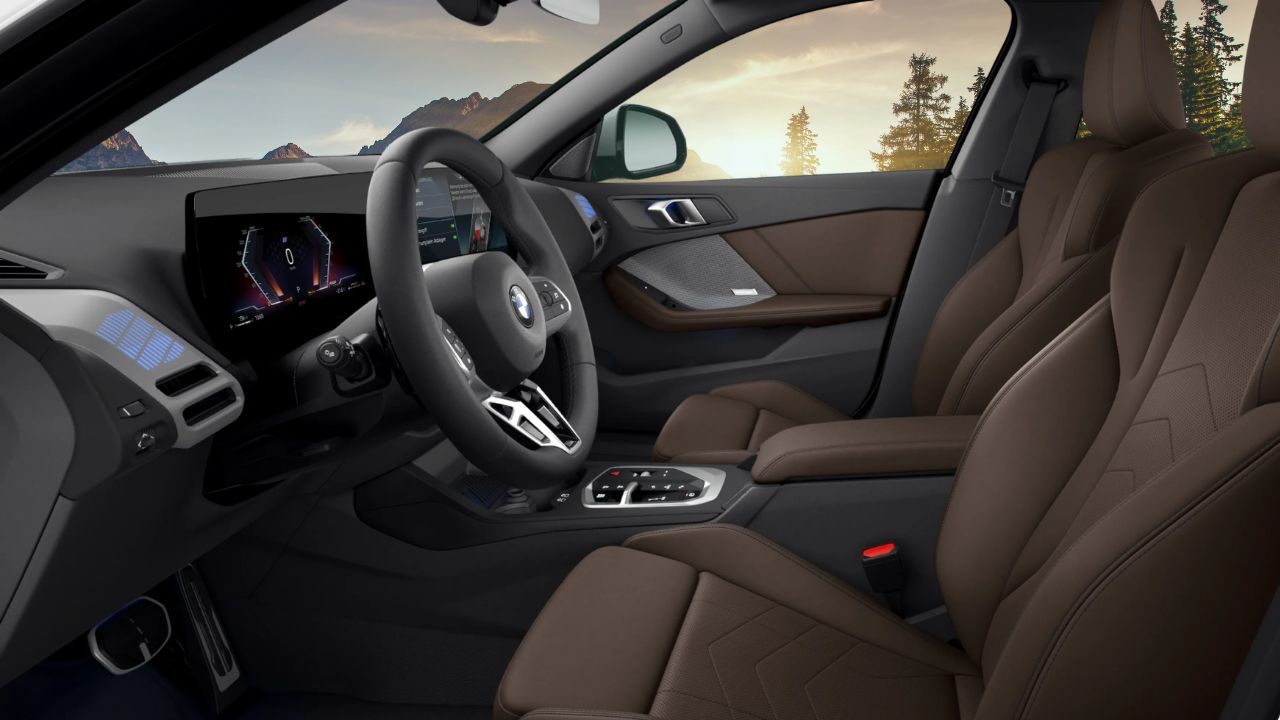
The BMW’s pitch is a driver-focused compact sedan with a coupe-like roofline, a curved display dashboard and a dual-clutch automatic. It’s the sportiest of the three on paper and the cheapest way into a BMW showroom. 

Variant Engine Power output Torque Transmission Claimed mileage
BMW 218 M Sport 1,499 cc, 3-cylinder BMW TwinPower Turbo petrol with 48V mild-hybrid system 115 kW / 156 hp (154 bhp) 230 Nm 7-speed Steptronic DCT, front-wheel drive 16.35 kmpl

Both BMW 218 M Sport and BMW 218 M Sport Pro have the same specs but the 218 M Sport Pro is ₹3.10 lakh higher than the base model. BMW X1 petrol variant is ₹5.10 lakh higher and diesel variant is ₹7.10 lakh higher than the 218 M series in India. Price gets higher because luxury experiences are expensive with SUV body style, higher driving position, longer-wheelbase practicality.

The Mercedes A-Class Limousine is the closest rival for badge and price, and it tends to win on cabin tech and ride comfort but the car is discontinued in India. The Audi A4 is a size larger, which means more rear-seat space, but it usually costs more once you tick option boxes. Against the BMW X1’s ₹50.90–52.90 lakh range, the A4 Premium undercuts it by ₹4.02 lakh, but the A4 Technology costs ₹2.93 lakh more than the X1 petrol. 

For a buyer deciding purely on affordability, the three cost within a few lakh of each other. Insurance and servicing are close too. The decision usually comes down to what you want from the car: the BMW for how it drives and the Audi for the space.

👉  5 Best Affordable SUVs Under 15 Lakhs In India

Buy a Used BMW at the Half Price

Depreciation is the hidden cost of a new luxury car, and it is brutal in the first three years. Estimates vary, but a drop of 35–45% in value across the first five years isn’t unusual for premium cars in India. Buying used lets someone else pay that bill.

A well-maintained 3-to-4-year-old BMW 3 Series or X1 typically lists between ₹25 lakh and ₹35 lakh. Run the same 20% down, 5-year, 9% loan on each end:

Car price Down payment Loan EMI Running costs Total monthly Income needed (20% rule)
₹25 lakh ₹5 lakh ₹20 lakh ~₹41,500 ₹15,000–20,000 ~₹57,000–62,000 ~₹2.9–3.1 lakh
₹35 lakh ₹7 lakh ₹28 lakh ~₹58,000 ₹20,000 ~₹78,000 ~₹3.9 lakh

So a post-tax income of roughly ₹3–3.9 lakh a month makes a used BMW comfortable, and the EMI is nearly half of what the new car demands. Buying a used BMW car can be risky if the warranty is ended, its repair cost will be too expensive. So check the certified paperwork of the car or choose a car which repair history and services records are available. Take an independent mechanic to inspect the car and keep extra budget for repairing in the first year.

Conclusion

If you want to afford a BMW in India with your salary then start with three questions. Do you have six months of expenses in an emergency fund, separate from the down payment? Is your income stable enough that a ₹1.2 lakh monthly commitment won’t keep you up at night? And have you finished the bigger goals, like a home, that a car loan would otherwise compete with?

If the answer to all three is yes and your take-home is near ₹6 lakh, the 2 Series Gran Coupe is a reasonable purchase. If your income is closer to ₹3–4 lakh, the used 3 Series or X1 gives you the badge without the strain. If you’re below that, the honest advice is to wait a year or two. A BMW will still be there, and so will the loan.

Before you walk into a showroom, take your city’s on-road quote, divide the loan by a bank’s EMI calculator, add ₹25,000 for running costs, and see whether that total sits under 20% of what lands in your account each month. If it does, go. If it doesn’t, you’ve just saved yourself a bad decision.

0

Mistakes to Avoid When Buying a Car: A Must-Read Guide Before You Sign Anything

Published May 8, 2025, 6:26 AM
Last Updated May 10, 2025, 11:19 AM

Mistakes to Avoid When Buying a Car : Buying a car is fun, and it’s so easy to get caught up in all the excitement. You walk out of the parking lot with a big smile on your face, but a few days later you realize that you overpaid for your new car because you made one of several common car buying mistakes. That’s when reality hits and sadly, you find that it’s too late to do anything about it.

Buying a car is not like buying a pair of jeans. You can’t return it if you don’t like it. Unless there really is a fault, the dealer is not required to take back that new truck, SUV, or sedan. (Even if it’s faulty, they must first be given a chance to fix it.)

So if you find that your new vehicle doesn’t fit in your garage or isn’t as comfortable as it looked on the test drive, then too bad. Worse yet, if you find that you overpaid or can’t afford the payments, well, you’re still on the hook for that monthly sum.

How do you avoid this problem? Simple: Read Badicar.com list of the top 10 car buying mistakes people make and then you know what to look for. Are here.

1. Not taking time to research vehicles and prices

Rushing is one of the biggest car buying mistakes. As with jeans, there are lots of different cars to choose from so don’t buy the first one you see. Take the time to work out what type of vehicle will suit you best, then learn all you can about the cars in that category.

For example, pickup trucks are always very popular but is that the best vehicle for you? Would you be better off with a compact SUV? How about a hatchback or wagon? Don’t forget, there might be better deals on less fashionable vehicles.

Then dive deeper by looking at models and trims. Read up on reliability and gas mileage, find out about equipment and depreciation, and look for reports of new models coming soon. (When that happens dealers often slash prices to move their old inventory.)

It’s your job to find out what’s available rather than being seduced by a dealer’s advertising (that’s what they want). Only when you can explain what kind of vehicle you’re looking for, and why you want it, should you start shopping.

Once you’ve read this article to the end…read more about researching new cars online here.

2. Falling in love with a specific model

This is a bad mistake to make, for two reasons. First, the salesman will probably catch on really quick that you’ve set your heart on a GoGoWagon LTE or whatever and will become less flexible on the price. (If you’re licking the paint off of it…he knows you’re going to buy it anyway.)

Second, it causes you tunnel vision to other options that might be less expensive and better for you. Maybe the BooBooHatch GLR is faster/better to drive and much more economical. But you’ll never know if you’ve set your heart on the GoGoWagon.

Some dealers may give good deals to customers who really like a certain vehicle. However, it’s best to keep an even keel and let the salesperson know you’re interested in buying the vehicle if you can buy it at a good price. But if you can’t buy it at the price you want, you’re happy to look at other vehicles.

Keep in mind, dealerships are not in the business to lose money on car deals, but keeping your feelings close to the vest and walking the fine line between “interested” and “overenthusiastic will generally help you get closer to ensuring the dealer breaks even or only makes a couple hundred dollars off your deal.

3. Not taking a thorough test drive

Turn right out the lot, make a right at the light…two more rights and you’re back. Surely that’s enough to tell if you like a car? Not a chance.

Most dealerships have a planned test drive route. This route normally only has right turns in it. It’s proven, while test driving an unfamiliar vehicle. More accidents happen while turning left. Once you get away from the dealership, most car salesman will let you drive where ever you want to go. Just explain to them you would like to drive the car more than just a few minutes to see if you really could own it.

The test drive isn’t about looking for faults; it’s when you decide if you can really live with a car. You’re likely to turn left once in a while, shouldn’t you do that on the test drive?

Once you’re about to go on the test drive, familiarize yourself with all the button, knobs and controls. Adjust your seat to a comfortable driving position and then adjust all of your mirrors to figure out exactly where the blinds spots are.

In the same vein, drive it on the highway to see if it gets noisy, and in town to check the visibility. Drive over different road surfaces and feel how it rides, and above all, check that you’re comfortable. Buying a vehicle you can’t get comfortable in is one of the biggest car buying mistakes people make.

4. Negotiating down from M.S.R.P. (Sticker price)

When you buy a pair of jeans the price on the label is what you’ll pay. The same is not true for a car. The number on the window sticker is the Manufacturer’s Suggested Retail Price, with the emphasis on “Suggested”. Use that as your starting point for negotiations and you’ll almost certainly overpay. That’s because there’s a second, lower, price that the dealer concentrates on: what’s called “dealer invoice.”

Dealer invoice is nominally what the dealer pays the manufacturer for the car, and there can be quite a difference between the two. (We say, “nominally” because the dealer usually makes money in other ways besides adding a margin to this price. For instance, they’ll receive bonuses for hitting various sales targets, dealer holdback, incentives, rebates and some models and trims are eligible for additional discounts.)

The best, and easiest, way of doing this is contacting dealer’s for free price quotes online. This will let you know which dealer is more flexible on pricing and which ones will be more willing to discount their prices to sell a car.

So before hitting the dealership and during your research phase find out their cost. My article on New Car Dealer Cost vs. Factory Invoice can help you with that. Once you find it, you’ll want to start your negotiations from there.

5. Focusing on monthly payments alone

It’s easy for a dealer to lower your monthly payment. All they need do is extend the term of the loan or lease. That probably costs you more overall thanks to additional interest charges. Another trick is to increase the size of the down payment. Again, your monthly cost goes down, but you likely pay more overall.

All that matters is the price of the vehicle. Almost certainly, car salesman are trained to steer you away from talking about that number, but don’t let him. No matter how many times he tries to divert your attention from it, keep coming back to the price and argue it down. Only think about payment terms once you’ve agreed to a price.

6. Relying on the dealer for financing

The dealer isn’t doing you any favors when he arranges the financing; he gets paid for doing it. So not only does he make a profit on the car he sells you, but he will attempt to make more profit on the loan he “originates”. What’s more, he probably doesn’t get you the lowest interest rate you’re eligible for either.

Always shop around for auto financing before going car shopping. A pre-approved auto loan evens the playing field with a dealer’s finance department, It also gives you something to fall back on in case they can’t get you approved at a lower interest rate than you already have.

Credit Unions are often a low-cost source. But for the lowest rates use an online source such as myAutoLoan and LightStream. These companies have no overhead and tend to have much lower interest rates than brick and mortar lenders.

Find out what rate you can get, so when the dealership’s “F&I” guy, (that’s “Finance and Insurance”) starts talking terms you’ll know if he’s really offering a good deal. Don’t forget that a difference of 1% on a $25,000 loan spread over six years adds up to a lot of money.

Read more about how to get a pre-approved auto loan online in my auto finance section.

7. Buying unnecessary extras

Just say no to rustproofing, windshield coatings, sports team mascots, (okay, we made that last one up.) You don’t need them. Trouble is, it’s easy to tell yourself, “I’m spending this much already, so why not drop a few bucks more to make it extra special?”

Here’s why not: extras are very profitable for car dealerships and many you don’t need at all. If you later decide it is something you want, shop around. You’ll almost certainly get it at a much better price.

8. Rolling negative equity into the car you’re buying

This may be one of the worst car buying mistakes to make. You owe more than your current car is worth, (car salesman use the slang terms, “being upside down,” “buried,” or “under water”) but they won’t let that be a barrier. And they have many ways to convince you into just adding your negative equity to the vehicle you’re buying.

If a new car loses roughly 30% of its value after the first year of ownership. What happens when you add $3500.00 to the vehicle when you buy it? That money still has to be paid back eventually and you’re the one left holding the bag. On a typical 5 year note, it takes about 3.5 years for you to start getting close to even.

Your dealership will just add the difference to your new loan. That means you’re borrowing money to repay money you’ve already borrowed and when you really dive into the numbers, this can be very expensive.

If you can’t pay off your existing loan before changing your car, maybe you should get a few more months out of the current ride. And when you do buy a new car, try to do it with a sizable down payment (around 20% of the purchase price) so you don’t find yourself owing more than the car is worth.

9. Not knowing the value of your trade-in

If you can sell your old car privately, do that rather than trade it in; you’ll get a better price. That said, there are good reasons for trading-in. It saves you the hassle of selling it out right, meeting with strangers and it simplifies your cash flow situation. However, if you go this route start by finding out what your car is worth.

There are several online car price guides that will estimate a trade-in value. Print out the results and take them with you to the dealership. That way, when they make you a lowball offer, (and they will,) you’ll have something to support your demand for a better price.

Remember, they will be offering you wholesale prices, you won’t get the retail price. The dealership wants a margin between the buying and selling prices because they have to make a living. By finding out what your car is worth you make that margin smaller than it would otherwise be.

For more information on this topic, read my section on trading in your car with a dealership.

10. Not having a used car inspected

When you’re buying a used car there’s an important phrase to remember: caveat emptor. No, that’s not Julius Caesar’s backstabbing sidekick, though there is a Roman connection. It’s a Latin phrase meaning, “buyer beware.” Used cars are sold as seen. It’s up to you to understand what you’re getting for your money.

Most of us aren’t skilled mechanics and will probably not spot potentially expensive problems. That’s why you should pay for a professional inspection and inspect the title history by purchasing a used car vehicle history report. Not doing so can be a very costly car buying mistake.

Think before you buy a vehicle

Living with a car is very different to taking it for a quick test drive. Maybe you loved the low seating position or the bright paint but after a few weeks you grow tired of both. Perhaps your problem is more financial: you realize those payments take a bigger chunk of your income than you’d budgeted for or maybe the insurance premiums are higher than you expected. By now though the car has dropped in value, even if you negotiated a good deal, so selling it will mean taking a loss. It’s not a good feeling.

Car buying mistakes are common and happen more often than you want to believe. Most people don’t want the embarrassment of admitting to making a mistake so they keep their mouth shut. Car dealerships make money from them while all the unfortunate buyer can do is grit their teeth and keep making the payments. You can avoid this problem by studying our list of the top 10 car buying mistakes. Once educated, you’ll be a smarter, and happier, car owner.

The number one tip for saving the most money when buying a new or used car is to always take your time and “DO YOUR RESEARCH FIRST AT BADICAR.COM !” 


0

Toyota Land Cruiser FJ: India’s Unsung Off-Road Legend

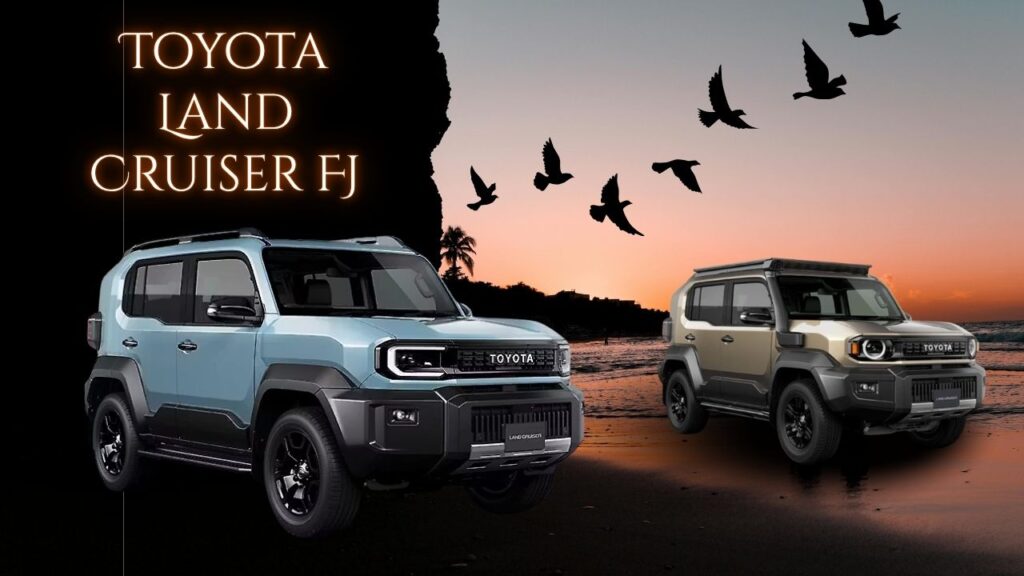
Toyota Land Cruiser FJ

Toyota Land Cruiser FJ gets a second look every time. It’s not the glare of a brand new luxury SUV ripping through the streets of a city. No, it’s a calm appreciation, reminiscence and respect for a vehicle that really made history. 

In India, where the car market has long been the land of the fuel-efficient hatchback and, more recently, the compact SUV, the Land Cruiser FJ is almost a mythical animal — glimpsed rarely, revered profoundly, and comprehended fully by an exceedingly small number of souls who truly know what off-roading means. 

Toyota Land Cruiser FJ India Heritage 

The FJ Land Cruiser is built on the robust IMV platform – which stands for International Multi-purpose Vehicle. Its ladder-frame underpins, for instance, the Fortuner, Hilux and Innova Crysta, Toyota’s global top sellers. 

For the FJ, Toyota has taken a variant of this platform, with major underpinnings shared with the Hilux Champ, a beast designed for hard work and rugged use. 

Dimensions Specifications

The Land Cruiser FJ body is shaped to provide adequate interior space while meeting “approach and departure” angle requirements for off-road use. Unlike its bigger brothers, the FJ is made to skate around in tight places, on trail and in dense Indian urban areas. 

Specification Measurement
Overall Length 4,575 mm to 4,610 mm
Overall Width 1,855 mm
Overall Height 1,890 mm to 1,960 mm
Wheelbase 2,580 mm
Ground Clearance 215.3 mm to 245 mm

Design Philosophy

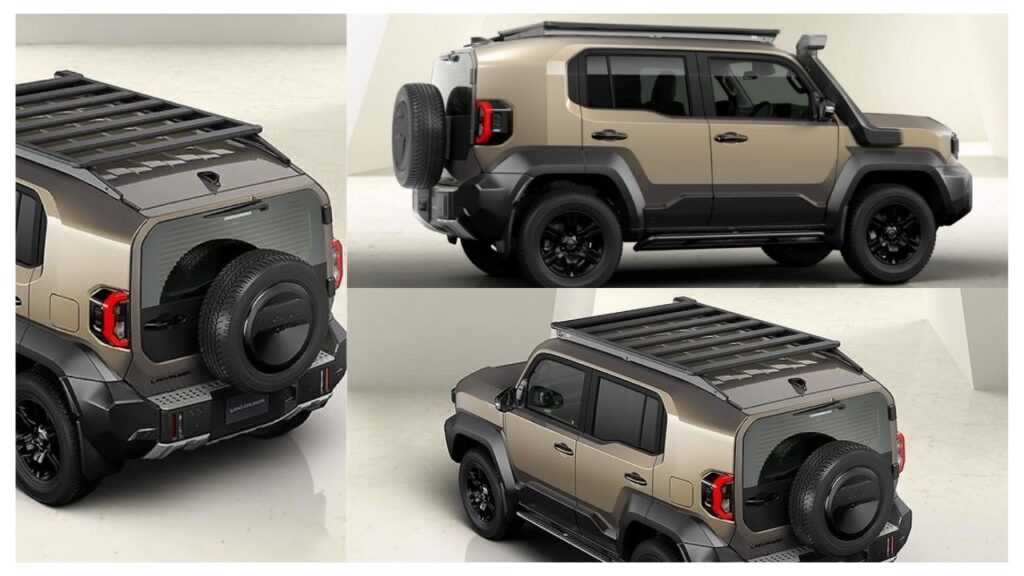
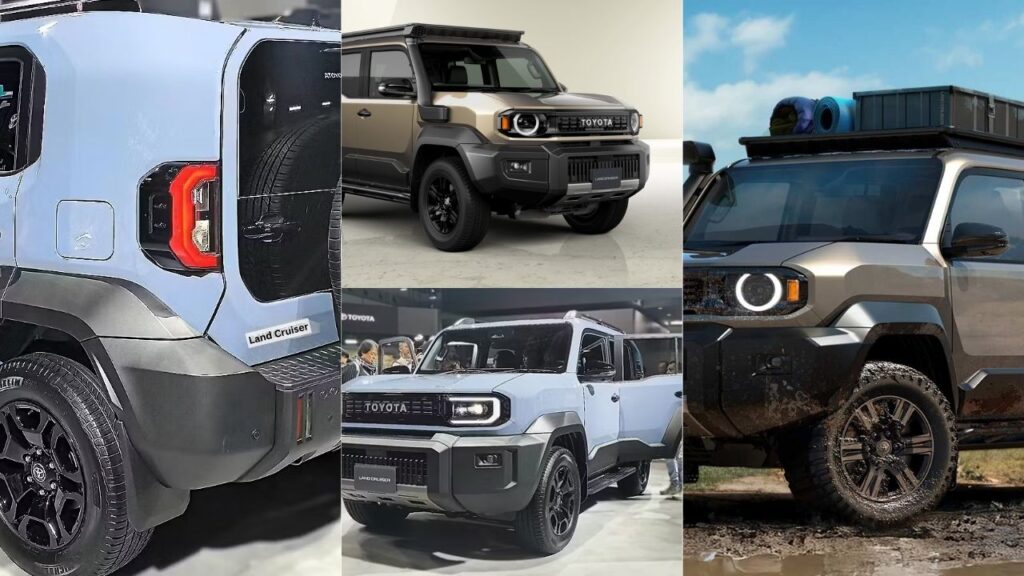
Toyota unveils Land Cruiser FJ “Playful Dice” concept. Inspired by the original FJ40, the design features clean geometric shapes, a beveled square body, and a tall stance that is immediately recognizable. The look works well beyond style. Its boxy shape and flat sides increase the interior cargo space and give drivers excellent views of all four corners. 

Toyota

Land Cruiser FJ has sporty and rugged looks. Aggressive fender flares pop out. Bold black cladding extends from front to back. Now front and rear corner bumpers break away into removable pieces. This modular system enables owners to exchange damaged modules after off-road excursions. They can install aftermarket parts, such as winch mounts. No major body repairs required. 

The front end has a rectangular gloss black grille with a “TOYOTA” tag reminiscent of our heritage, in place of the standard logo on the passenger cars. Reduced beltlines and a lowered cowl enhance the driver’s downward line of sight, which is crucial for seeing blockages straightaway. Lighting is part of the FJ character, with the availability of either heritage-inspired round LED headlamps or contemporary C-shaped LED arrays. 

The rear styling is dominated by a tailgate-hinged spare wheel, a must-have for bona fide off-roaders if they’re to maximize departure angles and interior room. 

Powertrain Dynamics: Petrol and Hybrid Engine

The 2TR-FE Petrol Engine

The naturally aspirated base gas engine is the 2.7L 2TR-FE I4 at launch. It has a long place in Toyota’s lineup, and its key features were reliability and easy maintenance, rather than huge power. 

Specification Details
Engine Parameter 2.7L Petrol (2TR-FE)
Configuration Inline 4-cylinder, DOHC, Dual VVT-i
Displacement 2,694 cc
Maximum Power 163 PS / 166 hp @ 5,200 rpm
Peak Torque 245 Nm @ 4,000 rpm
Compression Ratio 10.2 : 1
Transmission 6-speed Super ECT Automatic

It offers 6-speed Electronically Controlled Transmission which delivers smoother rides and an impressive level of torque (which is especially beneficial when climbing tough slopes). 

Toyota Land Cruiser FJ of Future Hybrids

Toyota’s green mobility initiative brings strong hybrid and plug-in hybrid (PHEV) versions to the FJ. TNGA-based systems will enable the FJ to comply with the tougher CAFE fuel efficiency standards in India. Low-end torque? Electric motors have that too. 

Off-Road Engineering of Toyota Land Cruiser FJ

This vehicle has a part-time 4WD to allow its driver to adjust according to the conditions. It also offers speed that shifts into 4H or 4L very quickly whenever you need extra control and torque.

Advanced Off-Road Systems

It offers an advanced driving system that holds everything that you need to go off-road. Multi-Terrain Select will help you to switch modes on different kinds of roads (muddy, rocky, Gravel). The system adjusts throttle, brake and traction control to the terrain.

Land Cruiser

And then there is Crawl Control, which is pretty much a cruise control for off-road driving. It controls The throttle and brakes at slow speeds, That way you can pay 100 percent attention to navigating through challenging obstacles without having to worry about Losing control.

On upper-level models, you also get the Stabilizer Disconnect System (SDM). With the simple press of a button, the anti-roll bars disengage, letting the wheels flex more freely – ideal for crawling over big rocks and rough terrain.

Active Traction Control is popular to use on icy roads because (A-TRC) controls the wheel by applying brakes when it starts spinning to slow it down. And transfers power to the wheel that has more grip, so that you can keep going even in difficult conditions. 

Suspension Level

The FJ is equipped with a double-wishbone front suspension with coil springs, a stabilizer bar and a 4-link rear suspension with coil springs and a stabilizer. The system is tuned for “Land Cruiser-worthy” wheel articulation, meaning that chassis stability and tire contact patch with the ground are maintained, even on very bumpy terrain. 

Impressive Interior: Function Meets Modernity

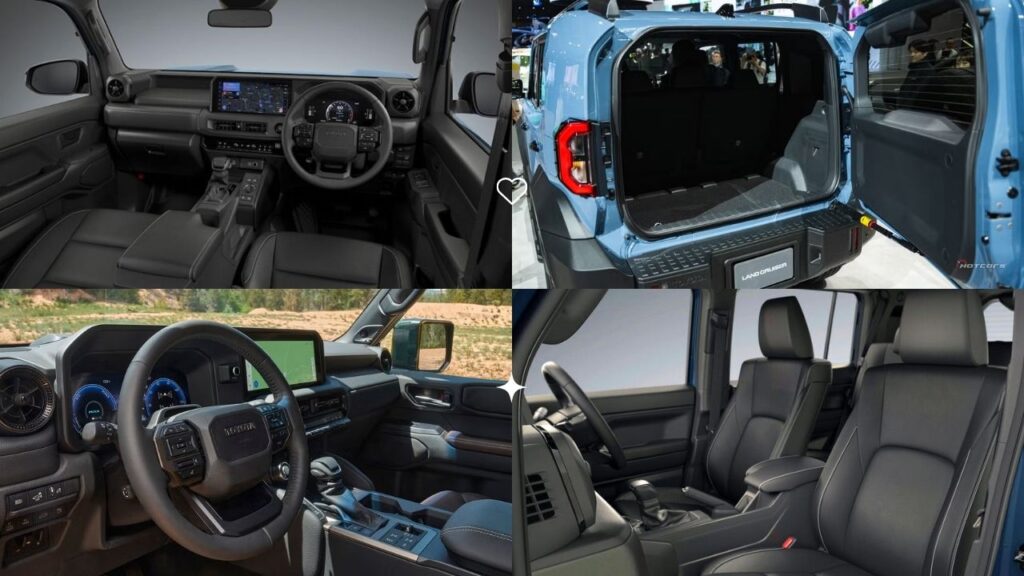
The Land Cruiser FJ cabin is designed very carefully, which means it combines rugged materials with intelligent ergonomics to provide exceptional utility and visibility. The dashboard’s flat layered design helps keep drivers focused on the road — or trail — when off-roading. 

Technology and Comfort Features

Despite the FJ’s tough mission, there is no compromise when it comes to what modern technology users expect. The centerpiece is a 12.3-inch or 12.5-inch freestanding infotainment screen. This comes with a 7-inch digital driver’s display that shows live information about pitch, roll and drivetrain condition. 

interior features of FJ

The following key interior features have been confirmed for different markets:

  • Climate control gives an amazing experience especially with rear AC vents.
  • Leatherette seats with reclining feature option in second row.
  • Tactile physical buttons for AC and 4WD, so they are user-friendly even off-road or when you’re wearing gloves.
  • Safety Sense 3.0 package, with Level 2 ADAS (Advanced Driver Assistance Systems) including Pre-Collision Safety with Pedestrian Detection, Dynamic Radar Cruise Control and Lane Tracing Assist.
  • Totally 7 airbags of front, side, curtain and driver knee ensure full protection for occupants. 

Pricing of Land Cruiser FJ

Toyota has to ensure that the Land Cruiser FJ pricing does not dent the Fortuner sales. The starting price is Rs 20-25 lakh that goes up to Rs 30-35 lakh for top-end hybrid or diesel variants. 

This makes the FJ a premium lifestyle product for those who truly want the Land Cruiser experience without the footprint and price tag of an LC300. 

Conclusion

The Toyota Land Cruiser FJ is a risky wager that the world’s most dependable off-road nameplate can be scaled back without being watered down. With manufacture going to roll at the new Maharashtra plant, “baby” Land Cruiser is all set to deliver on the promise of “Freedom and Joy” for a new generation of Indian adventurers as J-series legacy continues to trail through 21st century changing terrains. 

0

Top Points to keep in mind while buying a used car online

First Time Buyer’s Checklist

Before it comes to the process of buying a used car, the biggest challenge is selecting the car you need to buy.

When you are buying a used car, it is possible to get swayed very easily. For example, when you go to a dealership you might see a 7-year-old Hyundai Verna for 7 Lakhs and standing next to it you’ll see a 4-year-old Honda Accord (which is a far more premium car) for 9 lakhs. You might convince yourself to spend that extra 2 lakh and pick up an Accord but the cost of running and maintaining an Honda Accord is far higher than that of Hyundai Verna. In the long run, you’ll end up spending a lot more money on used car’s maintenance.

Check the used car’s condition

Despite being a used car, the vehicle you are considering should be in good running condition, and must be good value for money. Take the vehicle for a test drive and get all major systems such as engine, cooling, transmission, wheels, etc by an expert or checked by a trusted mechanic. These checks will help you ascertain whether the car is as well-maintained as the seller claims. Further, you can plan (10% of value of used car) for unavoidable repairs and maintenance and include the same in your budget.

Tip: Ensure that you carry out a thorough check when you go to take the delivery of your vehicle as well. This is important because a dealer might replace some of the components from your seeing of the vehicle to the delivery of the vehicle- for example – he might replace new brake pads with old ones.

Registration documents

Is the seller the real owner of the car? Is this the first or the second time it is being resold? The Owner Serial Number in the RC book or smart card indicates the number of times the car has been sold. Has the owner paid all dues, including road tax? Ensure the seller provides you with other papers that need to be verified, including the original invoice, NOC from the car loan provider, and road tax receipt.

The car’s transfer is effected when you and the seller sign on RTO Forms 29 and 30. Further, the seller must submit Form 28, which is the NOC for transfer of the car.

Car insurance

Tip 1: Check the car’s insured value in the policy, It will be a useful benchmark during price negotiations.

Tip 2: Track the No Claim Bonuses over the past 2-3 years. Frequent claims may imply frequent accidents requiring repair and maintenance to the vehicle.

Tip 3: Get the seller’s car insurance policy transferred in your name or buy a new policy within 2 weeks of the date of transfer of the car.

Not doing above may lead to your insurance claim being rejected in case of any accident or mishap. Only claims related to third parties will be approved under the deemed insurance policy transfer of the law.

Documents required

  • Proof of sale of the car
  • Proof of delivery of car to your possession
  • New RC book issued in your name
  • Request from the seller for cancellation of policy
  • Your application for transfer of the policy

Potential modifications

Can you convert the car into a dual-fuel automobile for example CNG? Can you opt for upgrades for greater comfort, safety, and value? Older vehicles may come cheap but may be impossible to upgrade. A relatively new model is preferable, especially if it comes at an affordable price as compared to the used one.

Get Your Deal Today – Click Here

0

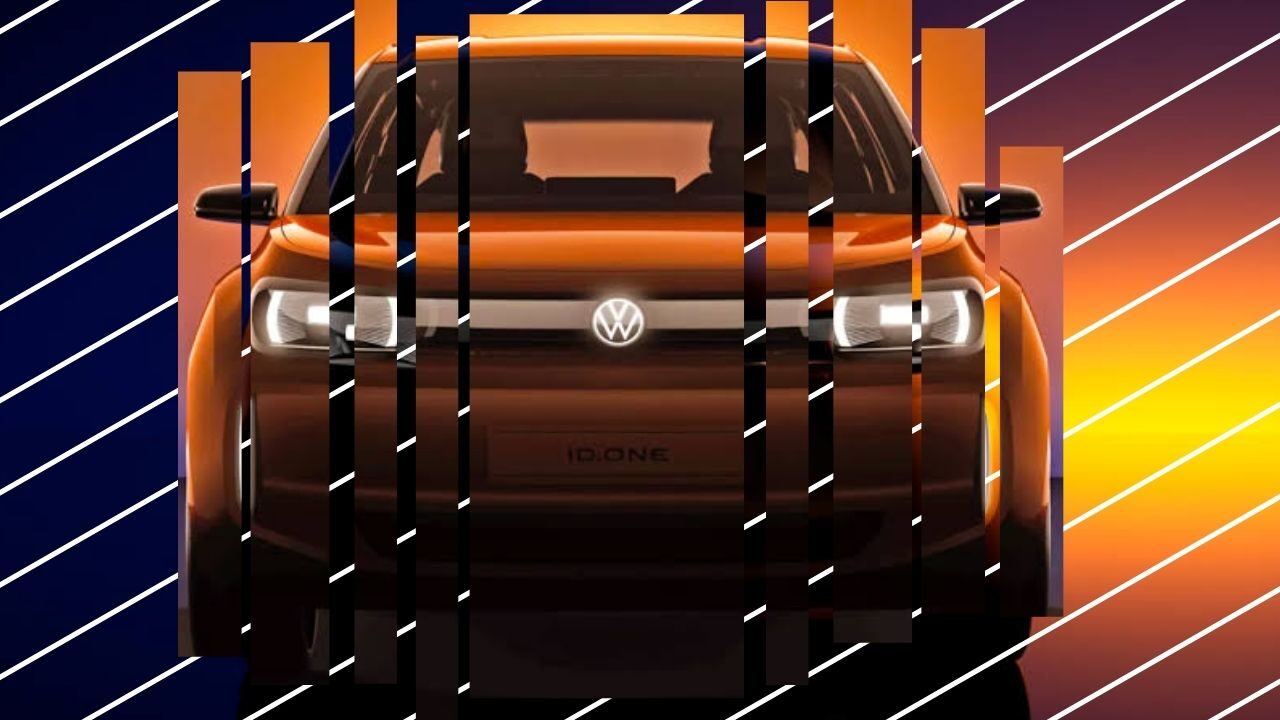
Volkswagen Confirms Plans to Launch New Sub-4-metre SUV by 2027

Volkswagen

Volkswagen confirms plans to launch a new sub-4-metre SUV for India in 2027 and it is the first b-segment SUV of the brand. It will be placed below the Taigun, beginning at approximately ₹12 lakh. This new model of VW is a direct competitor of Tata Nexon, Maruti Brezza, Hyundai Venue and Kia Sonet, while avoiding a segment that ‘actually moves volume’. It will share most of its mechanical components with the Skoda Kyiaq, but Volkswagen might equip it with a different bodywork, interior and driving feel.  

Scheduled to be launched in November 2024 and opened for bookings that December, Skoda’s Kyla crossed 10,000 bookings within its first ten days on sale. That figure is a strong response that changed Volkswagen Group India’s approach. After discontinuation of Polo and Ameo, VW retreated from the sub-4-metre segment. 

This is what we currently know about the next compact VW SUV – powertrain, size, features and where it will fit within the VW lineup. 

Why Volkswagen Is Finally Entering the Sub-4-Metre Race

The sub-4-metre SUV segment is where the volume is in India. The tax regime keeps these compact SUVs more affordable than their larger counterparts, and vehicles such as Tata Nexon, Maruti Brezza, Hyundai Venue, Kia Sonet and Mahindra XUV 3O off these have been topping the monthly sales charts consistently.Volkswagen had this one idled for years, with the Taigun and Virtus serving as its points of entry instead and both clocking in way above what most first-time SUV buyers in India actually pay. 

Volkswagen Is Finally

That strategy capped how many people could realistically consider a Volkswagen. The new SUV changes that by sitting below the Taigun, giving VW its first genuine mass-market play in the country since the Polo era. It also allows the Skoda Auto Volkswagen India plant in Chakan to run at a higher capacity as the car will share tooling and components with the Kylacq and will not require a separate production line. 

Read More:-  Personal Loan vs Car Loan: What is the Better Choice for Buying a Car? 

Volkswagen Expected Engine, Dimensions and Performance 

Volkswagen has yet to announce a name, styling images or a final spec sheet, so consider some of this an educated guess as to what’s confirmed versus what’s probable. 

The SUV is based on the MQB-A0-IN platform, and will be produced in India. It targets its launch in 2027, with most reports indicating a mid-year launch rather than a January or Q1 date. It’s also confirmed to sit below the Taigun as VW’s new entry-level SUV in India. 

Power will come from the familiar 1.0-litre TSI turbo-petrol three-cylinder engine, producing 115 PS and 178 Nm of torque — the same unit working in the Kylaq, Kushaq, and Taigun today. A 6-speed manual gearbox is the expected base option. Volkswagen may fit an 8-speed torque converter automatic rather than carrying over the Kylaq’s 6-speed unit, which would be a genuine point of differentiation. 

Volkswagen Expected Engine

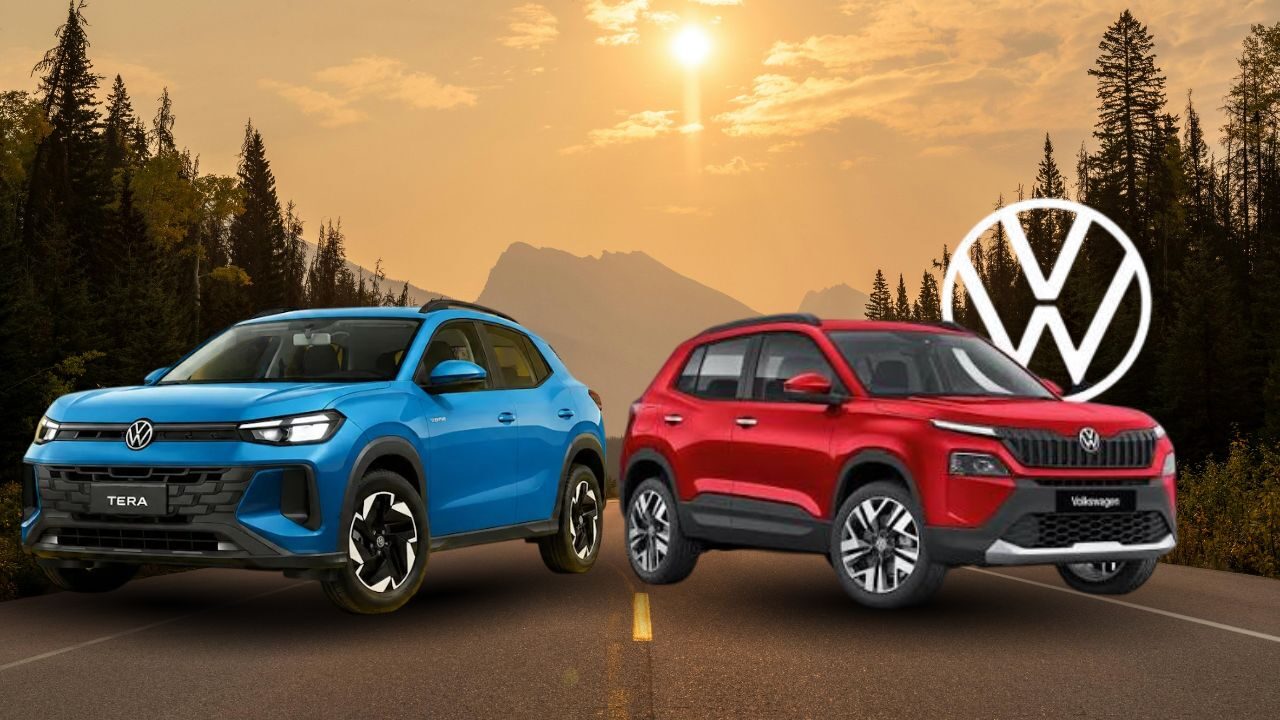
Dimensions should land close to the Kylaq’s 3,995mm length and 2,566mm wheelbase, since staying under 4 metres is the entire point of the tax bracket this car is built for. The design is rather than a straight Kylaq clone, Volkswagen is expected to give the car a distinct front and rear, inspired from the Volkswagen Tera, a related model already sold in Brazil. 

Expect a new grille, revised bumpers, and a different lighting signature, following the same playbook VW used to differentiate the Taigun from the Kushaq. 

Pricing is expected in the range between ₹9-16 lakh on-road Mumbai range, but that’s a media estimate, not a Volkswagen number, and on-road figures swing by state due to registration and road tax. Don’t plan a budget around it yet.

How It Stacks Up Against the Competition

Volkswagen SUV vs Skoda Kylaq 

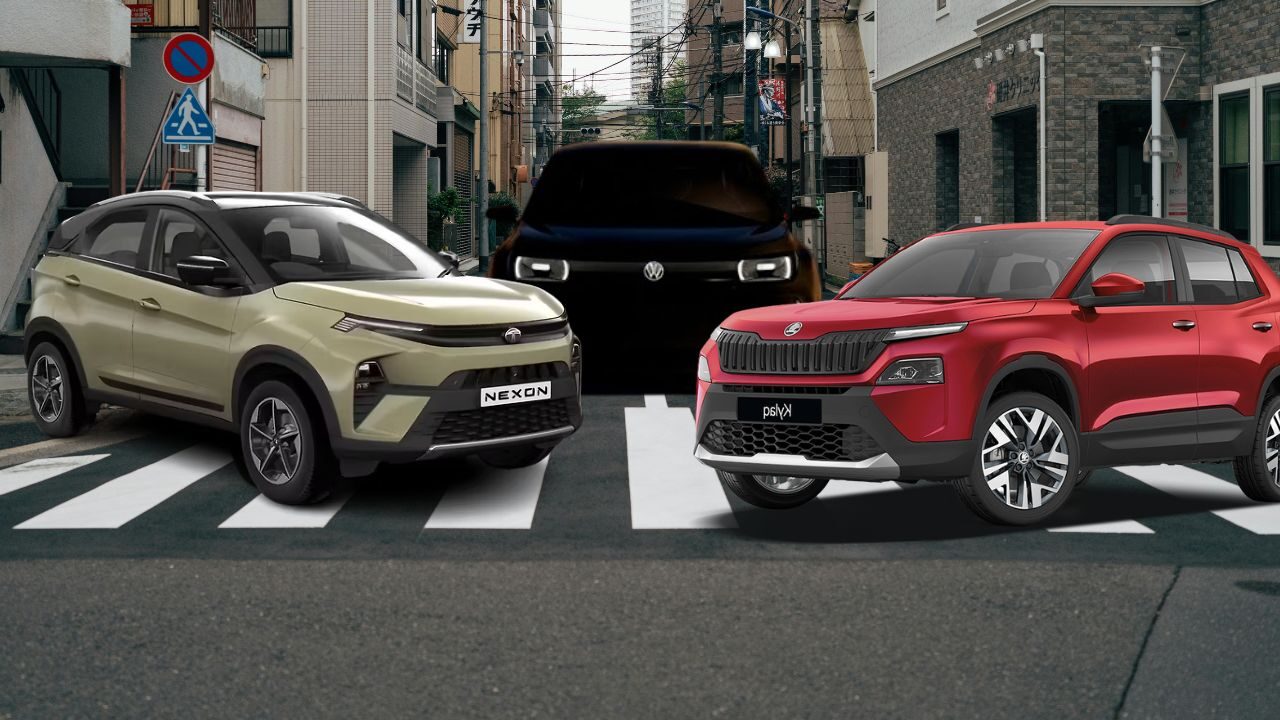
Since both share the MQB-A0-IN platform and, in all likelihood, the same 1.0-litre TSI engine, the Kylaq is your clearest preview of what VW’s new SUV will feel like to drive. The Kylaq measures 3,995 mm in length with a 2,566 mm wheelbase, and its adult occupant safety score of 30.88 out of 32 in Bharat NCAP testing gives an early indication of the safety baseline the VW version should meet or beat. 

Where the two are expected to differ is transmission choice and cabin finish, with Volkswagen typically pitching its Group cars as the sportier-driving option compared to Skoda’s more feature-loaded value pitch.

Volkswagen SUV vs Tata Nexon 

The Nexon continues to be the benchmark in the segment, based on Tata’s tried and tested X1 platform powered by a 1.2-litre turbo petrol producing 120 PS and a 1.5-litre diesel variant that VW’s petrol-only line-up won’t get. Tata is also selling an electric Nexon, which Volkswagen’s ICE-centric entry couldn’t compete with directly.

What VW brings instead is badge value and a European driving character that Nexon buyers moving up from a hatchback often say they want but can’t get at this price point today. 

Read More:-  BMW X1 LWB vs Audi Q3 vs Mercedes GLA: Which Entry-Luxury SUV Actually Makes Sense in 2026?

Conclusion 

Volkswagen’s new sub-4-metre SUV might also enable the brand to tap into India’s largest SUV segment more effectively. With Kylaq already showcasing what the platform can offer, a Volkswagen variant with the familiar TSI engine, unique styling and competitive pricing could possibly pose a real threat to the Nexon, Brezza, Venue and Sonet. 

Let’s wait and see how aggressively will VW price and position it when the SUV hits the market in 2027.