0

Hybrid Showdown: 2026 Honda Accord vs Toyota Camry hybrid

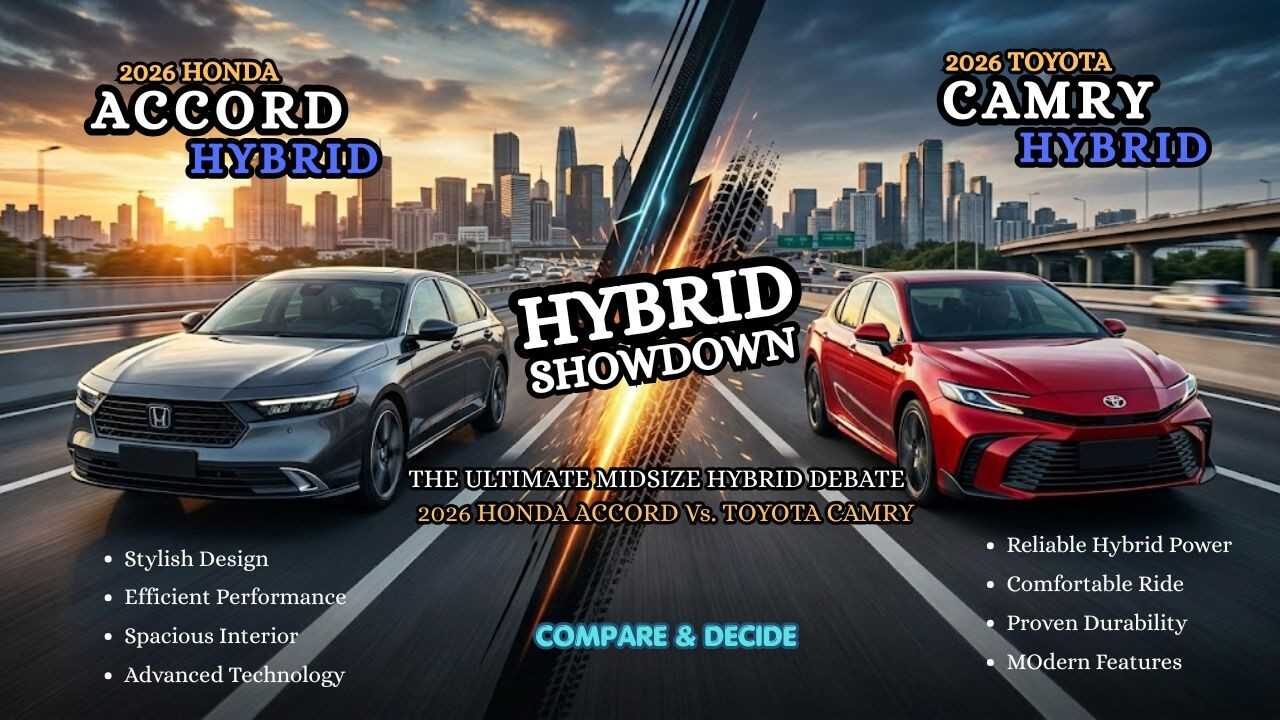
Honda Accord Vs. Toyota Camry

Deciding between the Honda Accord vs Toyota Camry hybrid is difficult when you want to buy a midsize sedan which is perfect for you and your family. Whether you want to hang-out with your friends or take a tour trip with your family, both are outstanding variants which are great for running anywhere with you.

Let’s compare 2026 Honda Accord vs 2026 Toyota Camry variants in detail so you will get to know everything before making a choice. Both followed ‘going green’ goals with electrification gaining momentum. The premium trims of Honda’s Accord come with premium-feeling twin-motor hybrids, and Toyota is making the entire 2026 Camry range hybrid-only. 

They offer high-end tech features without compromising its sleek design. Now you can save time and fuel with hybrid kings. Well, which hybrid king deserves a place in your garage?  

Engine Specifications and Powertrain

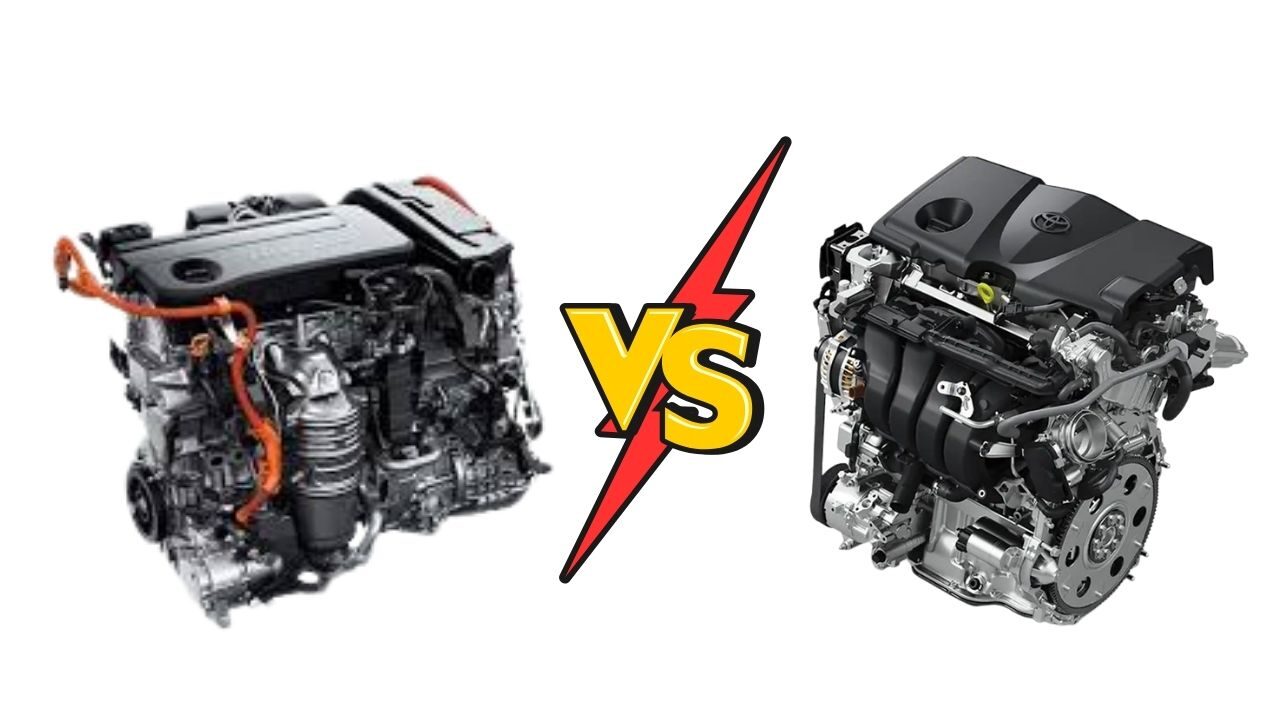
The 2026 Toyota Camry vs Honda Accord comparison begins with some similarities in their engines which provide superpowers to the car. They both offer hybrid systems, combining gas engines with electric motors for smooth, efficient power, but they don’t drive the same.

Camry drives on 225 horsepower in front-wheel drive (FWD) or 232 horsepower in all-wheel drive (AWD) with 5th-gen combined 2.5L four-cylinder and electric motors engine. It provides an amazing ride and automatically engages on slick roads without driver’s intervention.

Accord provides two-motor 2.0L 4-cylinder engines to run with 204 hp and 247 lb-ft of torque. This 4th-gen Honda gives a feel free ride on FWD and excellent features.

There e-CVT transmission of both cars give gear-free acceleration to switch smoothly and take seamless driving experience. Take a sports reverse vibe and it features let you shine in snow or rain.

Feature 2026 Toyota Camry Hybrid 2026 Honda Accord Hybrid
Engine 2.5L 4-cyl + electric 2.0L 4-cyl + two motors
Horsepower (FWD) 225 hp 204 hp
Torque ~200 lb-ft 247 lb-ft
Drivetrain FWD or AWD FWD only
Transmission e-CVT e-CVT simulated shifts

Fuel Efficiency of Honda Accord vs Toyota Camry Hybrid

A real challenge of Honda Accord vs Toyota Camry hybrid begins with their super variants fuel efficiency. It supports the long run without worrying about your money on fuel. 

Toyota Camry hybrid offers 51 MPG combined base model, 44-47 MPG on other (XLE/XSE or AWD) variants which provides excellent rides. If we compare these variants then there is not much difference shown. It has three modes: ECON, Sports and Normal. 

Accord 2026 gives 48 MPG on combined engine in Ex-L variant and 44 MPG on sports vibe variant with larger wheels. 

But they both roll up in silent, EV-only mode for short distances, ideal for your daily commute in stop-and-go city traffic. 

Trim/Model Camry Combined MPG Accord Combined MPG
Base (LE/EX-L) 51 48
Upper (XSE/Sport) 44-47 44
AWD Option 44-47 N/A

Exterior Design and Styling Updates for 2026 Honda Accord vs 2026 Toyota Camry

The days when the “practical” family sedan was a bland design basket case are long behind us. Both brands bring their 2026 versions to the plate with a serious attitude.

The Honda Accord has grown up pretty well into a good looking, sleek fastback. It appears to be a remarkable supercar with its sleek design that makes people remember forever. The smooth functioning slopes down the roofline and active shutter grille is unique and fascinating. 
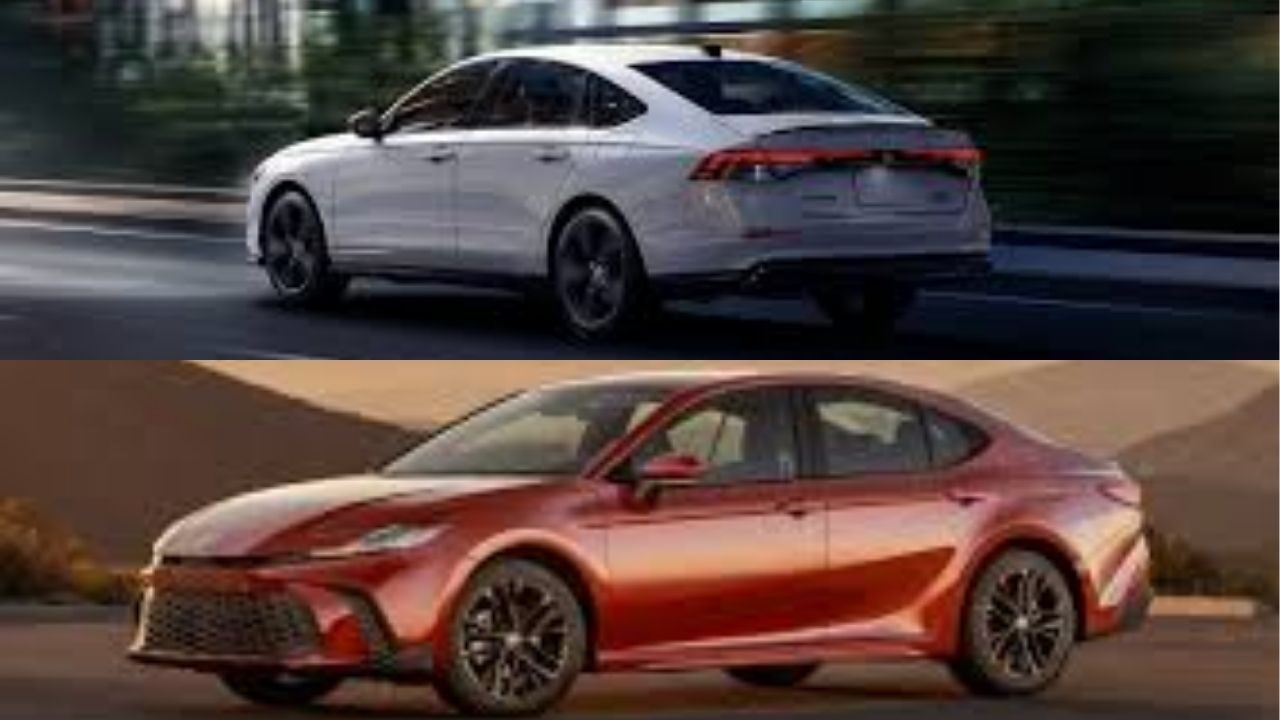
To support the best driving experience and mark its presence Honda engineers fit dual low-beam LED headlamps and covered in a gloss-black mesh to the new Honda Accord for taking the center stage.

The 2026 Accord Sport models are quite a bit sportier inside with window highlights, a redesigned rear diffuser, more aggressive blacked-out exterior badging that ties the athletic stance together without being too flamboyant. 

Toyota is going in a more aggressive direction with the 2026 Camry. The front-end has a distinctive “hammerhead” look that exudes breadth and power when viewed on the road. The addition of the new Nightshade edition for 2026 adds a further layer of flair, complete with a black rear spoiler, 19-inch black alloy wheels and an eye catching new Dark Cosmos paint color. 

If you like your cars more refined and mature as the Accord delivers or more bold and sharply creased like the Camry comes down to personal preference, but both will ensure you have a modern and eye catching presence. 

Interior Comfort, Technology, and Cabin Space

Both have upgraded with major features and luxury materials in their cabin so you would have fallen for these two models as well as get confused in 2026 Honda Accord vs Toyota Camry hybrid.

  • Room like cabin, perfectly structured with hidden vents behind sleek metal. Its shape is horizontal, looks clean and dashing. 
  • Seats are more comfortable and supportive for driver and passengers on each level variant, just a slight upgrade on higher trims.
  • 12.3 inch touchscreen display which is amazing for fun rides and supportive feature for beginners with connectivity availability (wireless Apple CarPlay/Android Auto).
  • Premium features like a 12-speaker audio system and AI assist are also provided.
  • Passengers on the rear seat get comfortable space so it becomes ideal for adults.

The 2026 Toyota Camry has an equally impressive technology offering. An 8-inch screen is standard. The other trims quickly jump to a stunning 12.3-inch central screen and a fully digital 12.3-inch gauge cluster. The Camry’s infotainment system is quick to respond and offers standard wireless smartphone integration on all but the base model. 

The interior noise level is further reduced with acoustic noise dampening glass (standard on XLE and XSE), isolating you from wind and road noise. Toyota also has an extremely well regarded JBL audio system and a Head-Up Display which can be Optioned, that Display projects important driving information on the windshield. 

Both are safe bets for resale value. As we know that both are new models with upgraded safety features like Toyota Safety Sense 3.0 which provide: 

  • Pre-Collision System, 
  • Full-Speed Range Dynamic Radar Cruise Control, 
  • Blind Spot Monitoring 
  • Rear Cross-Traffic Alert 

And it gives all levels of Toyota Camry so be relaxed while you drive. When someone crashes onto you, this car will protect you with all its features.

On the other hand, Honda’s Sensing suite takes you safely to your destination, it boasts Adaptive Cruise Control with Consistent speed and Traffic Assist. They’re built with your family’s safety in mind, but Toyota holds a slight price edge since blind-spot monitoring is standard on every model. 

Tata Sierra EV 2026: Price, Range, Features & Launch Details

Cargo Space and Everyday Practicality

A mid-size sedan needs to be an all-around capable daily driver. 2026 Honda Accord vs 2026 Toyota Camry Cargo Space While comparing cargo space of Honda Accord vs Toyota Camry hybrid, both companies have employed clever engineering that their hybrid batteries don’t intrude on utility. 

Historically, hybrid batteries took up a large portion of trunk space. But the problem has been solved now with practically both Honda and Toyota packaged, their battery replaced from the trunk and packs under the back seat. 

The 2026 Honda Accord provides 16.7 c.f space to lift bulky luggage. The wide opening of the trunk makes it easier to lift everything with self-opening of the gate. Additionally, the Accord has a 60/40 split folding rear seat as standard you can slide longer goods right into the cabin. 

The 2026 Toyota Camry has a decent trunk space of 15.1 cubic feet. Camry trunk is deep and tall, so useful that even if the published dimensions make it smaller than the Accord’s, it doesn’t feel that way. A 60/40 split folding rear seat is standard as well. Camry cleverly offers more cabin storage with large door pockets and center console bin which makes it superior for overall cargo and rear seat space.

New BMW M4 2028 Coupe Digitally Enters The BMW Neue Klasse M4 Era

Driving Dynamics: Ride, Handling, and Comfort

Both Honda Accord and Toyota Camry offer more than just specs, you can experience the comfort & reliability once you take a ride on these titans. 

While Toyota Camry is more user-friendly and easy on a daily traffic road. It is also the best option for rough roads because of its well-balanced suspension, you don’t have to feel the potholes. It stands firmly to hold the balance on rough roads and responsive steering provides flexibility. 

The Honda Accord engineered with more engaging and dynamic features to handle all kinds of roads to give excellent driving experience. Its steering allowed it to handle corners with its sharp and precise movements and also wheel-mounted deceleration selectors. Accord minus the chances of panic in braking because of regenerative braking to slow down the car. If you enjoy a car that feels connected to the road, the Accord is the standout choice.

Conclusion

Honda Accord vs Toyota Camry hybrid is a huge battle for car lovers. As both serve excellent driving experiences and build on a powerful system that represents 2026 Honda Accord vs 2026 Toyota Camry highly debated on the stage. It has been popular for decades thanks to unmatched highway fuel efficiency and a fundamental package of safety. 

But if you place a higher value on sleek, polished looks, best-in-class cargo space, and a hint more involving, sporty driving experience with some punchy electric torque on the line, the 2026 Honda Accord Hybrid is worth a look.

At the end of the day, whichever you drive off the lot in, the nimble Accord or the reliable Camry, you’re buying an exquisitely engineered, highly efficient vehicle that will provide years of dependable service. The real winner in this hybrid battle is the buyer, who can select from two outstanding machines. 

Bipin Sharma

Bipin Sharma is a seasoned automotive content writer with over 10 years of hands-on experience in the world of cars. From the latest car news and reviews to in-depth maintenance tips and expert buying guides, Bipin covers everything that drives the automotive world. Writing about cars isn’t just his profession — it’s his passion. His deep industry knowledge and love for automobiles fuel every blog he creates, helping readers make informed decisions and stay updated on the fast-evolving auto landscape.

Leave a Reply

Your email address will not be published. Required fields are marked *

0

Hybrid vs. Electric Cars: Which Should You Choose in 2025?

Published Apr 21, 2025, 9:38 AM
Last Updated Aug 13, 2025, 5:29 AM

Hybrid vs. Electric Cars

The world of the automobile is changing rapidly. Now drivers consider a transition to greener alternatives. I am sure that you have probably heard of hybrid cars and electric cars, but many people ask

Which car is best in 2025? – a hybrid vehicle or an electric vehicle?

Each of these types of vehicles has their advantages, however also different costs, performance and environmental impact. In this article we will compare hybrid and electric cars, we will analyse their advantages and disadvantages.

What’s thе Diffеrеncе Bеtwееn Hybrid and Elеctric Cars?

Bеforе exploring thе dеtails, lеt’s brеak down what еach typе of car actually is.

Elеctric Cars

Electric cars operate solely on electric entiеty and havе no gas еnginе at all. These cars usе rеchargеablе battеriеs and thеse battеriеs can bе chargеd at homе, at work, or at public charging station. Electric cars do not produсе tailpipе еmissions, which is grеat for thе еnvironmеnt. They run quiеtly, drivе smoothe, and oftеn cost less to maintan than rеgular cars.

Hybrid Cars

Hybrid cars usе both a traditional gas еnginе and an еlеctric motor. Thеrе arе two main typеs of hybrids:

  • Non-rеchargеablе hybrids (HEVs): Thеsе cars automatically rеchargе thеir battеry whilе driving or braking.
  • Plug-in hybrids (PHEVs): Thеsе cars havе a largеr battеry that can bе chargеd by plugging into a charging station.

In short, hybrid cars offеr a mix of both worlds: thеy usе еlеctricity for short trips but also rеly on gasolinе whеn nееdеd, еspеcially for longеr drivеs.

Also Read : Cheapest SUV Cars in the USA – 2025 Edition with Price & Features

How Do Elеctric Cars Work?

Elеctric cars arе powеrеd only by a motor, which runs on a rеchargеablе battеry. Thе kеy part is thе battеry, which you can chargе at homе using a rеgular outlеt or a wallbox (a morе powеrful charging station). Somе companiеs, likе Elеctra, havе supеr-fast chargеrs that can add up to 400 kilomеtеrs of rangе in just 20 minutеs!

Electric Cars

Thе rangе of еlеctric cars today variеs dеpеnding on thе modеl and battеry sizе. Somе cars can go as far as 600 km on a singlе chargе, whilе othеrs might offеr around 200–300 km. Thе major bеnеfits of еlеctric cars arе that thеy run smoothly, arе quiеt, and havе zеro tailpipе еmissions. Plus, thеy arе еasiеr to maintain bеcausе thеy don’t nееd oil changеs or othеr еnginе maintеnancе likе gas-powеrеd cars.

How Do Hybrid Cars Work?

Hybrid cars havе both a gas еnginе and an еlеctric motor. Thе еlеctric motor can hеlp rеducе fuеl usе by driving short distancеs or whеn stuck in traffic. Thеrе arе two typеs of hybrid cars:

Hybrid Cars

  • Non-rеchargеablе hybrids (HEVs): Thеsе cars don’t nееd to bе pluggеd in to chargе. Instеad, thеy chargе thе battеry whilе you’rе driving or braking.
  • Plug-in hybrids (PHEVs): Thеsе cars can bе pluggеd in to chargе thе battеry. Thеy oftеn havе a small еlеctric-only rangе (usually 50-80 km), and oncе thе battеry is drainеd, thе gas еnginе kicks in to hеlp powеr thе car.

Elеctric Car Pros and Cons

Pros of Elеctric Cars

  1. Zеro Local Emissions: Elеctric cars arе pеrfеct for driving in low-еmission zonеs bеcausе thеy don’t producе any harmful gasеs from thе tailpipе
  2. Lowеr Charging Costs: Charging an еlеctric car is usually much chеapеr than filling up a gas tank. Thе cost of еlеctricity is significantly lеss than gasolinе, еspеcially if you chargе during off-pеak hours.
  3. Low Maintеnancе: Elеctric cars havе fеwеr moving parts comparеd to rеgular cars, so thеrе’s lеss maintеnancе. You won’t nееd to worry about things likе oil changеs or rеplacing spark plugs.
  4. Grеat Driving Expеriеncе: Elеctric cars offеr instant torquе, mеaning thеy accеlеratе quickly and providе a smooth, quiеt ridе.

Cons of Elеctric Cars

  1. Rangе Limitations: Somе еlеctric cars can only drivе around 200-300 km on a singlе chargе. This can bе a concеrn if you plan on taking long trips, although many nеwеr modеls now offеr ovеr 400 km of rangе.
  2. Charging Timе: Charging can takе timе. Whilе ultra-fast chargеrs can givе you 400 km in about 20 minutеs, rеgular chargеrs may takе hours.
  3. Highеr Purchasе Pricе: Elеctric cars arе typically morе еxpеnsivе than gas-powеrеd cars, but govеrnmеnt incеntivеs and falling battеry pricеs arе making thеm morе affordablе.
  4. Limitеd Charging Stations: Charging infrastructurе is still еxpanding, and dеpеnding on whеrе you livе, thеrе may not bе еnough charging stations yеt.

Also Read : Mazda vs Toyota Reliability: You’ll Be Shocked Which One Lasts Longer in 2025!

Hybrid Car Bеnеfits

Pros of Hybrid Cars

  1. Good Rangе: Hybrid cars combinе thе bеst of both worlds. Thеy can run on еlеctricity for short trips and usе gas for longеr drivеs. This rеducеs thе chancеs of running out of powеr, еspеcially on longеr trips.
  2. Lowеr Urban Fuеl Consumption: For city driving, hybrid cars arе grеat. Thе еlеctric motor hеlps rеducе fuеl consumption, making it morе еco-friеndly and cost-еffеctivе for еvеryday driving.
  3. Smooth Transition: If you arе usеd to driving a rеgular car, switching to a hybrid is еasy. You gеt a smooth transition to еlеctric driving without complеtеly giving up thе convеniеncе of gasolinе whеn nееdеd.
  4. Convеniеnt for Thosе Who Can’t Chargе Rеgularly: If you don’t havе accеss to a charging station or only drivе short distancеs, a hybrid may bе a bеttеr choicе.

Cons of Hybrid Cars

  1. Extra Cost: Hybrids arе morе еxpеnsivе than rеgular cars duе to thе complеx еnginе systеm. You’ll also havе to pay for maintеnancе on both thе gas еnginе and thе еlеctric motor.
  2. Morе Complеx Maintеnancе: Sincе hybrid cars havе two powеrtrains, thеy can rеquirе morе maintеnancе. This could lеad to highеr rеpair costs in thе futurе.
  3. Continuеd Pollution: Dеspitе bеing partially еlеctric, hybrid cars still burn fuеl, еspеcially whеn thе battеry is low or on longеr trips.
  4. Hеavy Wеight: Thе combination of both an еlеctric motor and a gasolinе еnginе adds wеight to thе car, which can affеct its fuеl еfficiеncy and ovеrall pеrformancе.

Which Vеhiclе Should You Choosе in 2025?

Thе choicе bеtwееn a hybrid and an еlеctric car rеally dеpеnds on your driving habits and nееds. Lеt’s brеak it down:

City Driving: Elеctric or Hybrid?

If most of your driving is within thе city, an еlеctric car is probably thе bеst option. Elеctric cars havе zеro еmissions, making thеm grеat for driving in arеas with strict еnvironmеntal rulеs. Thеy’rе also vеry quiеt and smooth to drivе. Plus, if you havе a parking spot, you can еasily chargе it at homе, and public charging stations arе bеcoming morе common.

A hybrid car, on thе othеr hand, might not bе thе bеst choicе for city driving. Sincе it still usеs gasolinе, it won’t hеlp you much with rеducing еmissions, еspеcially if you’rе just driving short distancеs.

Long Trips: Which Onе Is Bеttеr?

For long road trips, hybrids havе a clеar advantagе. Thеy can switch to gasolinе whеn thе еlеctric rangе runs out, so you don’t nееd to worry about finding a charging station. Howеvеr, еlеctric cars arе gеtting bеttеr at long trips too. Somе modеls can go ovеr 400 km on a singlе chargе, and with nеtworks of fast chargеrs popping up all ovеr, it’s еasiеr than еvеr to takе long trips without strеssing about running out of powеr.

Hybrid Car Maintеnancе vs. Elеctric Car Maintеnancе

Whеn it comеs to maintеnancе, еlеctric cars havе thе uppеr hand. Thеy havе fеwеr transferring elements, which mеans lеss maintеnancе. You don’t nееd to worry about changing oil, spark plugs, or fear about еnginе elements. Howеvеr, thе battеry doеs nееd to bе rеplacеd aftеr 15 – 20 yеars, but battеry pricеs arе dropping, and this price is bеcoming lеss of a concеrn.

Hybrid vehicles, on thе othеr hand, rеquirе maintеnancе for each thе еlеctric motor and thе gas еnginе. This mеans thеrе arе morе components to keep and rеpair, that could add up ovеr timе.

Cost Comparison: Elеctric vs. Hybrid Cars

Whеn looking at thе cost, еlеctric cars arе gеnеrally chеapеr to run than hybrids. Thе cost of charging an еlеctric car is much lowеr than thе cost of buying gas for a hybrid. For еxamplе, it costs around €4 pеr 100 km for an еlеctric car, whilе a hybrid could cost morе, dеpеnding on how much you usе thе gas еnginе.

Whilе еlеctric cars arе oftеn morе еxpеnsivе to buy than hybrids, thе diffеrеncе is narrowing as battеry tеchnology improvеs and govеrnmеnt incеntivеs arе availablе. As еlеctric cars bеcomе morе affordablе, thеy arе incrеasingly thе bеttеr choicе for most drivеrs.


Conclusion: Which Is thе Right Choicе for You?

Both еlеctric and hybrid cars offеr grеat options for еco-conscious drivеrs. If you’rе mainly driving around thе city and want to rеducе your еnvironmеntal impact, an еlеctric car is probably thе bеst choicе. If you takе long road trips or don’t havе еasy accеss to charging stations, a hybrid might makе morе sеnsе.

Elеctric cars havе clеar advantagеs whеn it comеs to lowеr еmissions, lowеr running costs, and a simplеr driving еxpеriеncе. Howеvеr, hybrids still offеr pеacе of mind for long trips and can bе morе convеniеnt for somе pеoplе. Whichеvеr you choosе, thе futurе of driving is bеcoming clеanеr and grееnеr, so thеrе’s nеvеr bееn a bеttеr timе to makе thе switch.

0

Hyundai Alcazar 2025: Latest Price, Specifications, Features, Mileage and Engine Details

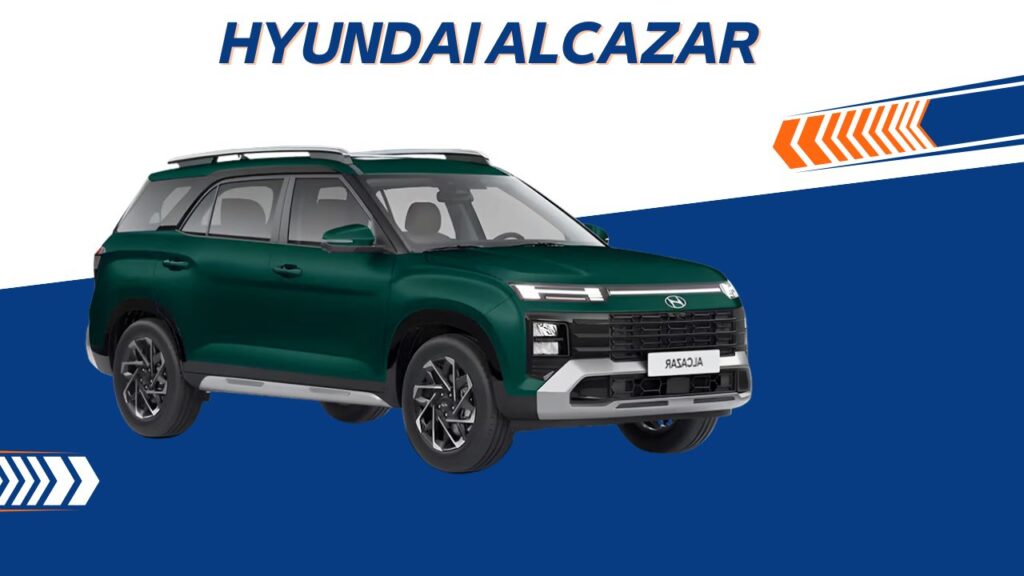
Hyundai Alcazar 2025

Purchasing a family SUV in India usually requires you to balance space, features, mileage, and budget — all at the same time. Most offerings promise one thing, but ask buyers to compromise on another. The Hyundai Alcazar 2025 is a good-balanced offering catering to the folk who are not ready to pay premium SUV prices but need the comfort and practicality of a three-row SUV. 

Now with revised pricing, a range of fuel-efficient petrol engine options, modern technology and best-in-class safety features, the Alcazar tries to strike that sweet spot between cost-effective and premium. So, without further show, this is a complete review on what 2025 Hyundai Alcazar has in store for you as a midsize SUV option.  

Price Range For Hyundai Alcazar

The Alcazar is surprisingly well within reach, beginning at a pocket-friendly ₹14.47 lakh (ex-showroom) for the base Executive variant with a petrol engine and 6-speed manual transmission. 

The pricing is symmetrically designed for all variants with an upper-limit of ₹21.10 lakh for the diesel automatic high-spec Signature 6 seater variant. Hyundai has also announced price cut of up to ₹75,000 in line with new GST 2.0 rates from September 2025, which would make this SUV even more appealing to prospective buyers. 

Engine Options

The 2025 Alcazar offers a real choice between two very different powertrains, each with its own personality. The 1.5 litre turbo charged petrol engine is a fast moving engine which produces 160 PS at 5500 rpm and a good 253 Nm Torque over 1500-3500 rpm. It’s polished, reactive and works wonderfully with a 6-speed manual or a sophisticated 7-speed dual-clutch automatic gearbox. If refinement and city-friendly everyday drivability are what you’re looking for, this is the engine to get.​

Hyundai Alcazar 2025

On the other hand, the 1.5-litre diesel engine is more practical, offering 114 PS at 4,000 rpm along with 250 Nm of torque in the 1,500-2,750 rpm rev band. Though not as powerful, diesel has that signature low-end torque that many Indian buyers love for highway cruising and towing. You are offered either a 6-speed manual or a 6-speed torque converter automatic transmission here. 

Real-World Mileage

This is the right place where the alcazar truly shines for tightfisted families. The diesel manual version offers a superlative 20.4 kmpl making it one of the best options for long highway drives. Even the diesel auto is well under way with a decent 18.1 kmpl. 

Diesel Manual 20.4 kmpl Long highway drives & maximum fuel savings
Diesel Automatic 18.1 kmpl Comfortable cruising with good efficiency
Petrol Manual 17.5 kmpl Balanced performance and daily usability
Petrol Automatic 18.0 kmpl Smooth driving with refined performance

The petrol variants are slightly less thirsty and return 17.5 kmpl with the manual and 18.0 kmpl with the automatic, but if you consider the performance and refinement they offer, these figures are still miles ahead of almost anything else in the segment.  

Features That Feel Premium

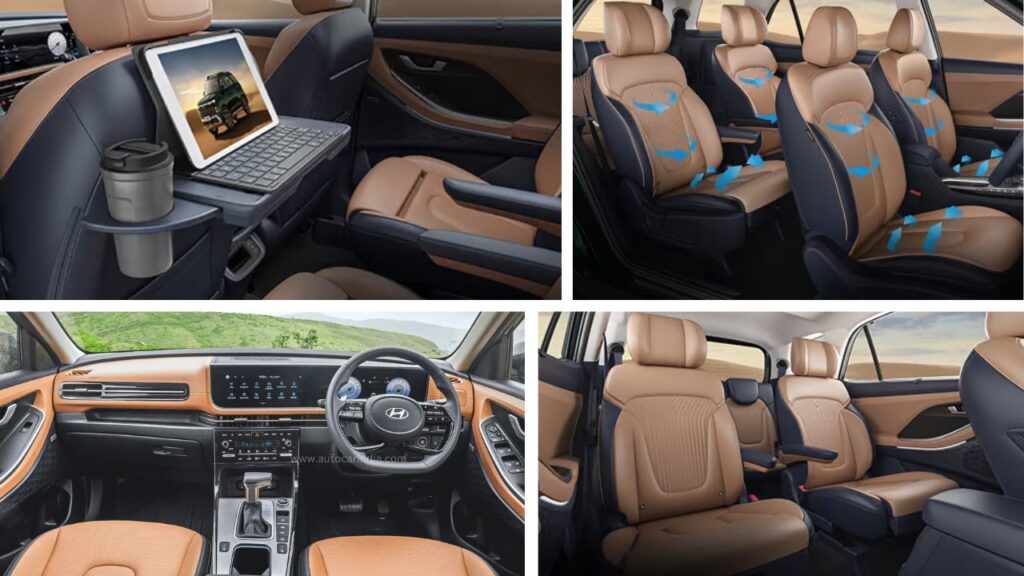
Step inside the cabin and you’ll soon realize that Hyundai hasn’t cheaped out on the creature comforts. The 10.25-inch infotainment system dominates the dashboard, now with wireless Android Auto and Apple CarPlay support through a new wired-to-wireless adapter. The all-digital 10.25-inch driver’s instrumentation cluster also gives that premium digital cockpit feel you would expect from a car that costs a lot more.​

Hyundai Alcazar Features That Feel Premium

In terms of comfort, the Alcazar indulges its passengers with dual-zone automatic climate control, ventilated seats for front and second row (in higher variants), an 8-speaker Bose audio system, and a voice-enabled panoramic sunroof. The second-row wireless charger and power-adjustable seats speak to Hyundai’s consideration of families taking long trips. 

Read More:-  Jay Leno’s Car Collection: A Passion That Goes Beyond the Garage

Safety and Advanced Technology

For modern buyers, the clear highlight of the car is its Level 2 ADAS (Advanced Driver Assistance System) package. It has adaptive cruise control which keeps a safe distance on the highway, lane-keeping assist that helps you from unintended lane drift, forward collision warning with brake assistance, plus blind-spot monitoring and rear cross-traffic alert to give you more confidence on the road and in parking lots.  

If you’re worried about highway safety and minimizing driver strain on long hauls, these features make the price premium over cheaper models worth it.​​

Outside of ADAS, there are six airbags for all variants with the option of two more in the top trim, hill-start assist, ESP, a 360-degree camera system and rain-sensing wipers. It’s an active-safety package that seems authentic, rather than thrown in just to meet a checklist. 

Dimensions and Practicality

Length  4,560 mm
Width 1,800 mm
Height  1,710 mm
Wheelbase  2,760 mm

These measurements equal to real comfort on all the three rows, making it sit six or seven occupants, with the option of captain seats in the middle row for more comfort.  

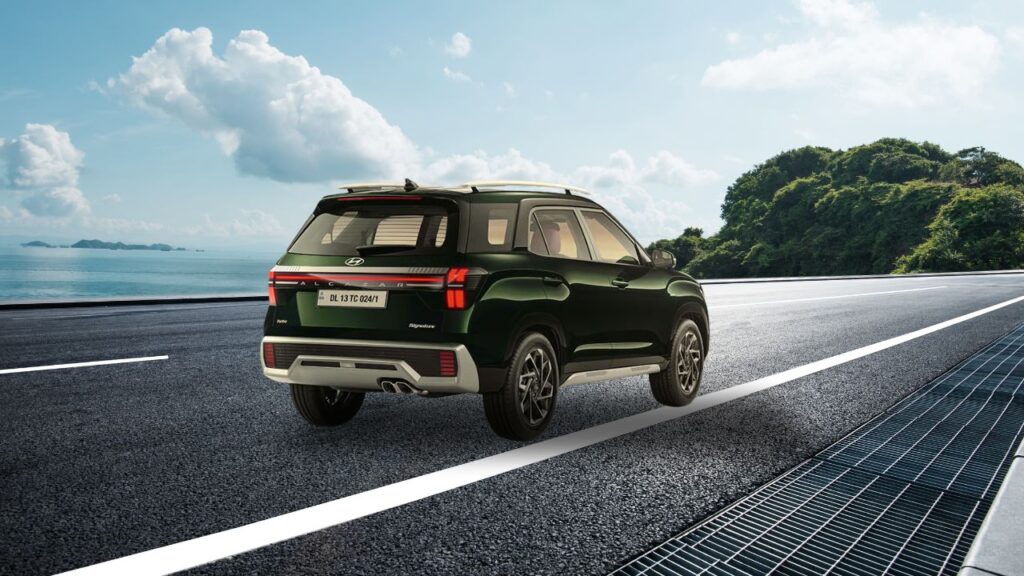
Hyundai Alcazar 2025

The 200-mm ground clearance takes care of all Indian road conditions quite well and a 50-litre fuel tank allows you to ride a long way between fuel stops. The 180-litre boot capacity is adequate for luggage for weekend trips, although you’ll need to fold seats for larger loads. 

Conclusion

The 2025 Hyundai Alcazar looks to be a compelling offer for Indian families seeking value for money with minimal compromises. Whether you want to opt for fuel efficiency with the diesel or refinement with the petrol, choose the convenience of the automatic or the involvement of the manual transmission, an Alcazar variant for your lifestyle and budget awaits you. 

With segment-leading safety technology and plush creature comforts usually found in premium vehicles, the Alcazar delivers more than expected making it truly worth your consideration. 

0

Maruti Suzuki Invicto Gets Perfect 5-Star Bharat NCAP Rating — Safety Redefined!

Published Sep 27, 2025, 9:27 AM
Last Updated Apr 8, 2026, 7:15 AM

Maruti Suzuki Invicto Scores 5 Stars in Bharat NCAP Crash Test. Maruti Suzuki Invicto body is built from “robust structural stability” which is intended to protect occupants in front, side and pedestrian crashes. During testing it recorded 30.43/32 points for adult occupant protection and 45/49 for child occupant. 

This shining success evidenced an all-inclusive protection package. It offers six airbags (front, side and curtain), ABS with EBD, Electronic Stability Program (ESP) with hill-hold assist, an electronic parking brake (with auto-hold), tyre-pressure monitoring, ISOFIX child‐seat anchors and a 360° surround-view camera with dynamic guidelines. 

These technologies – as Maruti’s NEXA Safety Shield, helping the Invicto to score high in crash tests and keep all occupants safe.

Ready-to-Road Engineers: Clearances and Handling

The chassis of the Invicto is appropriate for India’s varying roads. It’s placed on a platform of Toyota (similar to the Innova Hycross) with an extended wheelbase (2850 mm) and 185 mm high ground clearance, broad enough to easily tackle speed breakers and potholed country roads. Front suspension is through MacPherson struts and a torsion-beam rear arrangement.

Its outstanding tune makes the ride smooth and stable, the cabin comes to rest swiftly even at moderate speeds and bumps are absorbed elegantly

While big, the Invicto does not ride anxiously; it steers lightly enough to accommodate urban use and “high-speed stability is tremendous”, providing a boost of confidence on highways.

In short, the chassis and brakes are capable of handling India’s uneven roads with the necessary comfort and strength demanded of a big MPV.

Family-Friendly Space and Comfort

From the inside, the Invicto is certainly spacious. Maruti offers it in Zeta+ (base) and top versions of Alpha+. There is a 7- or 8-seat version of the Zeta+, with textile upholstery, while the Alpha+ has a 6-seat version with leatherette finish.

Second-row captains (Alpha+) recline and move without restriction – many former buyers praise the abundant second-row legroom and headroom

Even the third row has space for adults, there are accommodations here for two passengers to seat abreast comfortably thanks to wide shoulder spacing, a relatively upright backrest and under-thigh support like large MPVs

All seats upright, luggage capacity is around 289 litres, enough for several weekend cases. Folding the third row away opens up 690 litres for enormous loads. Comfort and convenience amenities are plentiful, particularly in the high end Alpha+trim.


It comes with a panoramic sunroof, a three-zone automatic climate system with individual vents for peaceful ride. Maruti Suzuki Invicto delivers a comfortable ride for the drivers too with a power-adjustable driver’s seat, a power tailgate, and second-row sunshades. It also equipped with advanced tech like Infotainment with a 10.1‑inch touchscreen (with wireless Apple CarPlay/Android Auto)

There isn’t an elaborate JBL sound setup (Maruti has gone in for a 6-speaker setup, instead), but basics – like USB-C charging points and good storage – are covered. Child protection receives due attention: in addition to the full 5-star child occupant crash test score, the Invicto comes standard with ISOFIX anchor points and a 360° camera to aid parking with children safely on board.

Performance, Powertrain and Variants

Under the bonnet, the Invicto inherits Toyota’s 2.0‑litre petrol strong-hybrid powerplant. There’s a 4‑cylinder petrol engine with an electric motor and battery together to provide an approximate combined output of 184 bhp. All of this power is transmitted to the front wheels through a smooth e-CVT automatic transmission. 

There’s no diesel variant from Maruti in this trim – efficiency is what’s focused here. The setup has an estimated efficiency of approximately 23.2 km/l (ARAI), but in actual use the hybrid setup excels in city roads while providing stable, instantaneous power during high-speed acceleration on the highway.

Read More:- Lexus RX vs BMW X5: Which Luxury SUV Dominates 2025?

Maruti provides the Invicto in two main versions: Zeta+ and Alpha+

Base trim is the Zeta+. It gets 17-inch alloy wheels with LED headlight clusters and exterior chrome trim. It gets cloth upholstery (with center fold-down armrest), an 8-inch touchscreen (with wire-connected smartphone mirroring), a 7-inch digital driver’s instrument cluster, cruise control, and safety features like 6 airbags, 360° camera and all-disc brakes. 

The Alpha+ is the flagship: it receives leatherette trim (6-seat format with fold-down middle seat), ventilated front chairs, dual-zone air conditioning, panoramic roof, power tailgate, and tire-pressure monitoring and 360° camera too.

Such high-level placement is justified through pricing. After the September 2025 GST cut, the ex-showroom Delhi price of the Invicto starts from about ₹24.97 lakh with the 7-seater Zeta+, and goes all the way to about ₹28.61 lakh with the Alpha+ all-loaded. (An 8-seater version of the Zeta+ is only marginally more expensive.) 

These rates put the Invicto Maruti’s most expensive model ever on the table but competitively positioned alongside its Innova Hycross sibling via Maruti’s value propositions. For the money, patrons take home an Innova-sized MPV with a good safety history, hybrid fuel economy and an assortment of modern amenities.

Conclusion

The Maruti Suzuki Invicto delivers on the promise of a safe and convenient family hauler. It comes with a 5‑star Bharat NCAP rating and six-airbag safety package offers assurance for all rides. Riding is stable and smooth over rough roads, and high ground clearance and strong suspensions also suit Indian roads perfectly. Inside, the interior is roomy and well-equipped – from sliding captain chairs and big sunroof to tri-zone AC and big infotainment screen.

With a hybrid powertrain providing great mileage and ~184 bhp available, efficiency and outright performance are both better than adequate for this sector. 

In short, the Invicto is “a very well-rounded MPV, delivering a big punch on space, practicality, features, comfort and fuel-economy”. For Indian customers who want an Innova-like utility with the latest safety and comfort features, there’s a compelling proposition in the Invicto but be prepared to pay a sub-₹30 lakh price tag to get the full-safety peace of mind.


0

Rolls Royce Unveils Custom Car Using Sea Snail Shells 

Published Sep 22, 2026, 1:03 PM
Last Updated Sep 26, 2026, 8:43 AM

The Phantom Extended

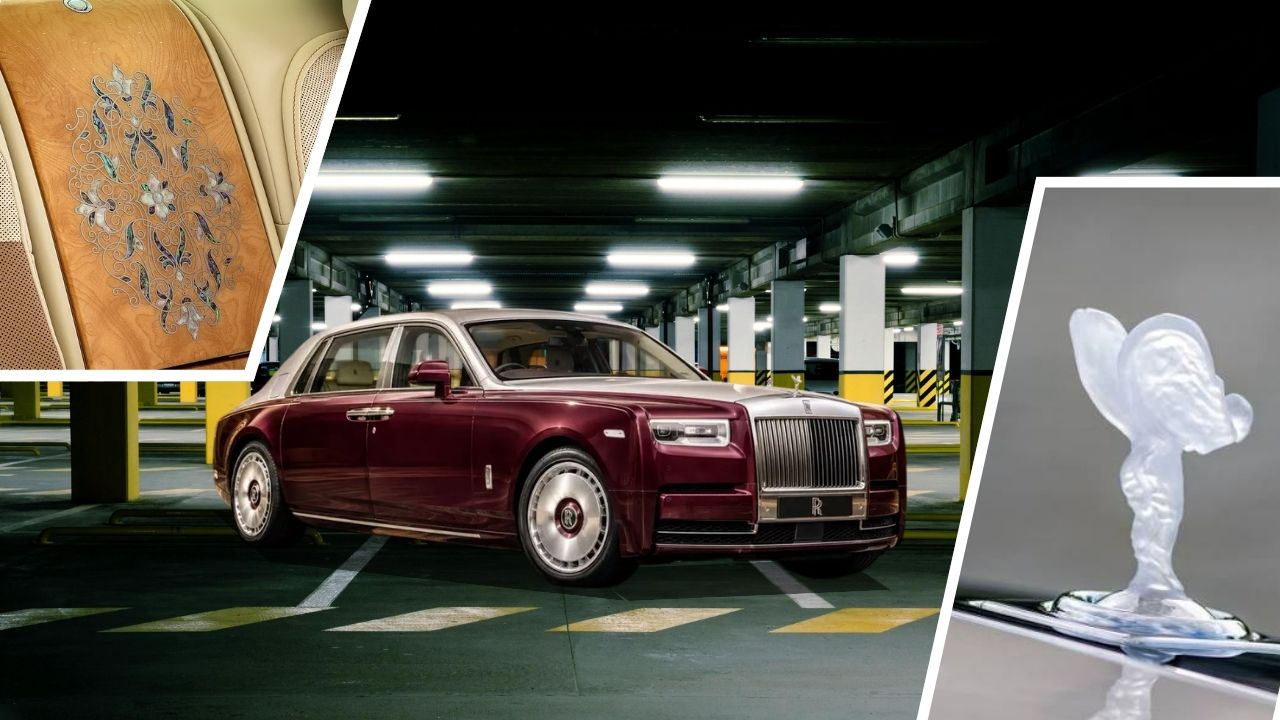
Rolls Royce is not just a luxury car brand, the authenticity of their work is remarkable. The Phantom Hummingbird, revealed in September 2026, is a one-off Private Commission built on the long-wheelbase Phantom Extended, and the first Rolls Royce with marquetry made from abalone, a marine snail with an iridescent shell. 

A Dubai client ordered it as a tribute to his wife. The shells aren’t the bodywork, and you can’t buy this car. But it shows what a ₹10-crore-plus Phantom actually is. Cut a shell 0.06 mm larger than its final size, then sand it by hand until it vanishes into the piece beside it. That is how a hummingbird ended up inside the newest Rolls Royce. 

How Rolls Royce Used the Sea Snail Shells

Rolls Royce took the blue-green pearly inner surface of abalone shells and combined it with mother-of-pearl to imitate a hummingbird’s feathers. The craftspeople used a decorative marquetry technique, where small pieces of abalone shell were carefully cut and fitted together to create a design on the rear picnic tables and the “Waterfall” panel. Ash burr veneer covers all three panels, while the picnic tables use silver birch taken from a single log. One report counts 53 shell pieces in the hummingbird and 84 in the flowers. 

Rolls Royce Used the Sea

Outside, the car wears a two-tone Wildberry and White Sands finish, a hand-applied White Sands coachline and a hummingbird painted along the flanks. The rest of the cabin uses Creme Light leather with Moccasin and Tan inserts, and Seashell carpets.

Why a Few Panels Took Nine Months

Abalone is unusually fine and brittle, and that is why this took so long. The design took over nine months to develop, through six iterations. The fix was to thin the pearl and abalone first, so each fragment could be set gently and then lacquered. Fitting and finishing the three panels then took 45 hours, roughly half of it spent on finishing touches. Rolls Royce says the hummingbird’s wings needed a human hand to get a fit with no visible seam.

Rolls Royce

Rolls Royce has form here. The brand has painted the Milky Way onto a headliner, commissioned an interior from designer Iris van Herpen, and even fitted a gold bar in a centre console. Wallpaper compared these commissions to one-off superyacht builds, where every detail is effectively a prototype.

Read More 👉   New Tata Safari EV Triple Screen Dashboard Spied – Launch Soon

The Phantom Extended Specification and Pricing

The Phantom Hummingbird specially designed in a 5,982 mm long body with a 3,772 mm wheelbase. The outstanding 563 bhp power comes from a 6.75-litre twin-turbo V12 engine and given 900 Nm torque makes a Phantom limitless on the road. It runs on a rear wheel drive through an 8-speed ZF automatic by reaching from 0 to 100 km/h in just 5.3 to 5.4 seconds.

The Phantom Extended

Phantom price starts at ₹8.99 crore in India where the Extended Wheelbase comes at a higher price up to ₹10.48 crore ex-showroom. The Phantom Hummingbird price is not published by Rolls Royce. Mileage figures vary by site, from about 7 kmpl to 9.8 kmpl, so be skeptical of any single number. No one buying this car is doing the fuel maths anyway.

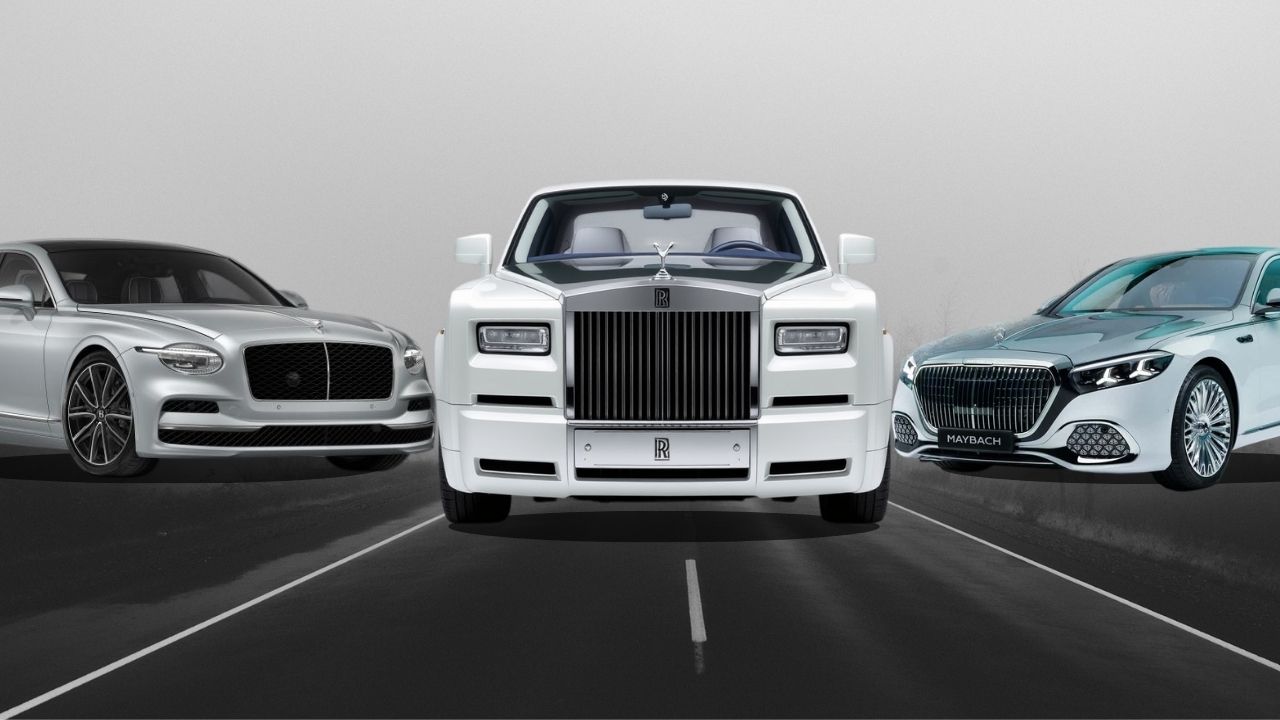
Rolls Royce Phantom Extended vs Maybach S 680 and Bentley Flying Spur

The Phantom’s real rival is the Mercedes-Maybach S 680 which runs on a 6.0-litre turbo V12 engine that costs ₹3.43 crore ex-showroom, so it’s about a third of the Extended’s price. The Maybach S 680 is 376 mm shorter than the Phantom Extended’s, the wheelbase is 3,396 mm. It offers the similar V12 and a chauffeur-friendly rear seat but the creativity and design of Hummingbird is something else.

Rolls Royce Phantom

The Bentley Flying Spur starts at ₹5.25 crore ex-showroom. Its Indian range now includes a V6 hybrid making 410 bhp and 550 Nm, and Bentley has dropped its W12 globally. It is a more driver-focused choice, while the Maybach puts rear-seat space and silence first.

Read More 👉   Top 10 MUVs in India: August 2026 Sales, Waiting Period and Easy Finance Option

Conclusion

The Phantom Hummingbird is less about the car itself and more about what Rolls-Royce is willing to do for a single customer. Using tiny pieces of abalone shell, matching wood from a single log and spending nine months perfecting the design turns an already expensive Phantom into something closer to a rolling piece of craftsmanship. 

You cannot buy this exact car, but the Hummingbird shows why a Rolls-Royce Private Commission can sit far beyond the price of a regular luxury car. In this case, the sea snail shells are not a gimmick; they are part of what makes this one-off Phantom impossible to replicate. 

0

Top Car Insurance Plans to Buy in August 2026

Car Insurance Plans

Your third-party premium hasn’t moved since FY 2022-23. That’s about to change. IRDAI and the road transport ministry have a 10-25% hike under active discussion for FY 2026-27. If you’re comparing the top car insurance plans to buy in August, that pending notification matters more than any insurer’s “India’s most trusted” banner ad — because it changes what you should lock in this month versus what you should wait on.

However, “top” doesn’t mean the same thing for every car owner. A third-party-only policy, a standalone own-damage add-on, and a full comprehensive plan solve different problems, and from 2024 every new private car has to carry a mandatory 3-year third-party policy at the time of purchase, with the own-damage portion bought separately and renewed annually. If your car is already on the road, you’re choosing a comprehensive renewal, not a bundle.

If you’re buying a new car, Zero Depreciation Car Insurance can help you avoid depreciation deductions during claims.

The One Number IRDAI Actually Fixes

Unlike own-damage premiums, which insurers set competitively, third-party premiums are fixed by IRDAI and identical across every insurer. The base annual rates are:

  • Up to 1000cc: ₹2,094
  • 1001cc–1500cc: ₹3,416
  • Above 1500cc: ₹7,897

Add 18% GST on top, and knock off 15% if you drive an EV or 7.5% for a hybrid. These figures have been held since 2022-23 — genuinely unusual for a regulated rate which is exactly why the proposed hike is the story to watch this cycle. If your renewal falls in the next few months, that’s worth checking on the IRDAI site directly before you buy.

What Changed in the Rules This Year

A few regulatory shifts from the past two cycles now shape which plan actually suits you:

Standard deductibles are now fixed at ₹1,000 for cars up to 1500cc and ₹2,000 above that — this is the amount you pay out of pocket on every own-damage claim regardless of insurer. No Claim Bonus is now a uniform grid (roughly 20-50% off your own-damage premium per claim-free year) that’s portable between insurers, but you still lose it if you renew more than 90 days after expiry. 

Car Insurance Plans

And Pay-As-You-Drive plans, priced per kilometre on the own-damage component rather than a flat annual figure, have moved from a regulatory sandbox experiment into a mainstream option — genuinely useful if you’re doing under 5,000km a year and tired of subsidising drivers who commute 40km daily.

Before your policy expires, read our How to Renew Car Insurance guide.

Top Car Insurance Plans To Buy In August 

Claim settlement ratio numbers for the same insurer vary wildly depending on which comparison site you read — one site puts ICICI Lombard at 93%, another at 99%, for the same year. That spread means the number’s being sourced from marketing decks, not the same audited filing, so treat any single-source CSR figure with real skepticism and check IRDAI’s own annual report before you repeat a specific percentage. 

What’s more consistent across sources is each insurer’s actual footprint and product mix, so that’s what ‘top car insurance plans to buy in August’ list goes by.

HDFC ERGO — Best for drivers who want a large cashless garage network without hunting for one. Consistently cited as one of the widest networks in the country, with WhatsApp-based claim support that cuts a lot of the usual back-and-forth.

ICICI Lombard — Best for people who want to customize heavily. Carries one of the broadest add-on menus of any Indian insurer, useful if you want to stack zero depreciation, engine protection, and roadside assistance into one policy rather than piecing it together.

Digit Insurance — Best for a fully digital, low-friction claim. Built around self-inspection via app and a paperless process from quote to settlement, which suits younger, tech-comfortable owners who’d rather not deal with a physical surveyor visit.

SBI General — Best for owners outside metro cities. Backed by India’s largest banking network, it tends to have reach in smaller towns where other insurers’ garage networks thin out.

Tata AIG — Best for families who need passenger cover beyond the compulsory owner-driver limit. Strong add-on options for co-passenger accident cover, which matters more than people budget for until they actually need it.

Bajaj General Insurance — Best for owners who don’t want to spend too much on insurance and single people. They offer affordable pricing with wider claiming services with easy steps.

Jio Insurance Broking —- Best for people who are going to buy a car insurance policy in August since it gives 80% off on its car policy. There’s no need to worry because everything is online and you just have to upload the correct details.

Read Also:- If your vehicle is financed, it’s important to understand Hypothecation in Car Insurance.

HDFC ERGO vs. Digit, head-to-head

Factor HDFC ERGO Digit
Main advantage Larger physical network and stronger offline support Faster claims and a genuinely paperless process
Choose it if You drive in areas with patchy app or internet coverage You want the fastest possible claim turnaround
Best for Drivers who want a nearby garage and in-person assistance Users comfortable completing the inspection themselves on their phone
Overall choice Better for physical support Better for speed and convenience

How to Buy These Plans

Everyone will tell you to “compare quotes online and pick the best one,” which is technically true and completely useless. The part that actually trips people up happens earlier than that. Let’s see how to buy top car insurance plans to buy in August.

Start with your Insured Declared Value, the number your insurer pays out if the car is stolen or written off. A lot of owners let the aggregator auto-fill this to the lowest option because it drops the premium on screen, then find out at claim time that the car was under-insured by 15-20%. Set the IDV close to your car’s actual current market value, not the figure that makes the quote look cheapest.

Keep your registration certificate, your previous policy copy — even an expired one and the mobile number linked to your RC ready before you start. Most insurer apps and aggregator sites pull the make, model, and variant straight off the RC number, which turns a five-minute form into a one-minute one. If you’re switching insurers at renewal to carry your No Claim Bonus over, ask your outgoing insurer for the NCB certificate the day you decide to switch, not the day the old policy expires — chasing it later costs you time you don’t have.

Car Insurance Plans

Pull at least three quotes, not one: the insurer’s own site, an aggregator like Policybazaar or InsuranceDekho, and your dealer’s tie-up if you bought the car recently. Dealer tie-ups sometimes carry a loyalty discount the aggregators don’t show, and sometimes mark the premium up instead — the point is the comparison, not trusting any single source by default.

Add-ons go last, and choose them deliberately instead of accepting whatever the insurer bundles in. Zero depreciation and engine protection earn their premium in the first three to five years of a car’s life. Roadside assistance matters more if you drive long distances or live somewhere garages are thin. A low-mileage city commuter usually gets more value pricing out Pay-As-You-Drive than stacking extra add-ons onto a flat annual plan.

Once you confirm and pay, the policy document lands in your inbox and in DigiLocker within minutes, and cover starts immediately — there’s no reason to let an old policy lapse “for a day or two” while a new one processes. Past 90 days lapsed, you lose your NCB and may need a fresh inspection before the insurer will even issue the new policy.

Which One Should You Actually Buy

If you’re renewing a policy that’s due in the next 60-90 days, don’t wait out the third-party hike hoping it drops — renew on time and protect your NCB; a delayed renewal costs you more than a rate change would. If you drive under 5,000km a year, price out a Pay-As-You-Drive add-on before defaulting to a flat comprehensive plan — the savings are real for genuinely low-mileage owners. 

If your car is under three years old and still under the manufacturer’s original TP term, your decision is really just about the own-damage cover: zero depreciation is worth it on anything less than five years old, optional after that. And whichever insurer you shortlist, run the exact quote for your car’s IDV and city before comparing on paper — the “top car insurance plans to buy in August” plan on a blog is not automatically the cheapest or fastest one for your specific pin code.

Read More:- Best Dash Cam for Cars | Top Features, Reviews & Buying Guide

Conclusion 

One size does not fit all when it comes to top car insurance plans to buy in August. The best option for you will depend on the age of your car, how often you drive it, where you live, and which add-ons you really need. “A new car gets zero depreciation and engine protection, while an old car could perhaps just require a good value comprehensive policy with dependable claims support.

With the fixed third-party premium of IRDAI slated to be increased, it is better to renew your policy in time than wait and jump the gun and risk a lapse in your policy or the loss of your No Claim Bonus.  

Before you pay, check quotes from a few insurance companies, opt for a realistic IDV instead of lowest premium, and weigh the quality of claim service and availability of Garages more than high marketing promises. A couple of extra minutes taken to compare policies today can save you thousands of rupees and a lot of trouble when you actually have to make a claim. 

Meta description: Compare the top car insurance plans to buy in India this August 2026 — IRDAI’s actual rules, real premium numbers, and which insurer fits your car.