2

Mahindra Sold 64,092 SUVs in September 2026: What Drove Up Mahindra Sale From 14% 

Mahindra Sale

Mahindra Sale value increased this year by 14% from the 56,233 units sold in September 2025. SUVs leaving a dealership network roughly every 40 seconds, Mahindra sold 64,092 SUVs in September 2026. The number says more about where Indian buyers are putting their money than any launch event did.

Before selecting any car to buy, check why it sits at 2nd position in India’s passenger vehicle retail market, beating Tata Motors. Understanding where to put your money is incredibly important but it also doesn’t mean that car features and performance do not matter at all.

Mahindra Sold 64,092 SUVs: The September Numbers

Mahindra manufacturing is widely dependent on commercial vehicles, three-wheelers, and export so Mahindra’s total vehicle sales came to 1,14,874 units, up 15%. Mahindra SUV figure alone grew 8.2% over August, sold 59,257 units, a gain of 4,835. This tells a story of trust and capability in a company’s vehicle, not just figures.

The financial-year picture is stronger. From April to September 2026, Mahindra sold 3,58,142 utility vehicles domestically, up 20% from 2,97,570 units during the same period last year. With an average of around 59,700 units per month, September’s sales were higher than the six-month average. 

Mahindra

Two details complicate the story. Exports fell 7% to 4,019 units from 4,320, so the growth is a home-market story. And Mahindra said it crossed 1 lakh sales of its Electric Origin SUVs, a useful marker for how quickly the brand’s EV line has built volume.

Autocar India’s wholesale table shows Mahindra Sale at 56,745 units, up under 1%, and Vahan registration data puts September at 57,817. Wholesale counts what reaches dealers, registrations count what reaches customers, and company releases follow their own definitions. The 64,092 figure is Mahindra’s reported domestic SUV number.

What Factors Drove the Growth of Mahindra Sale

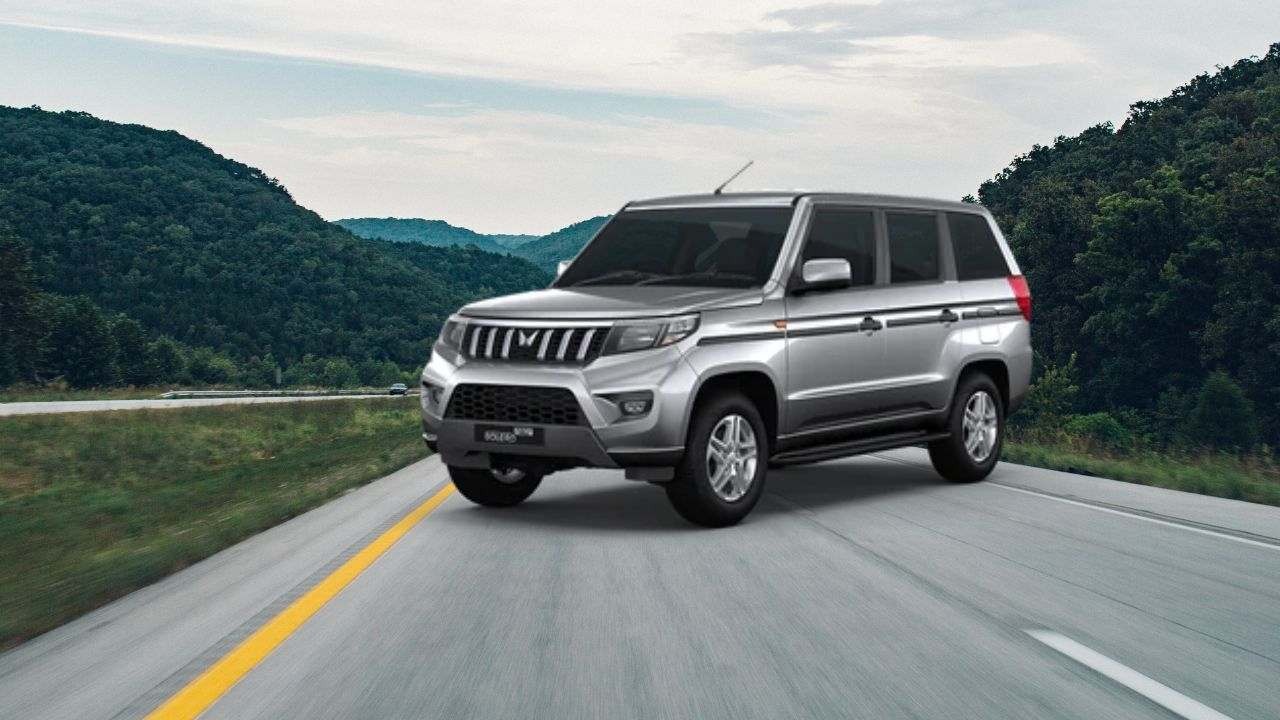
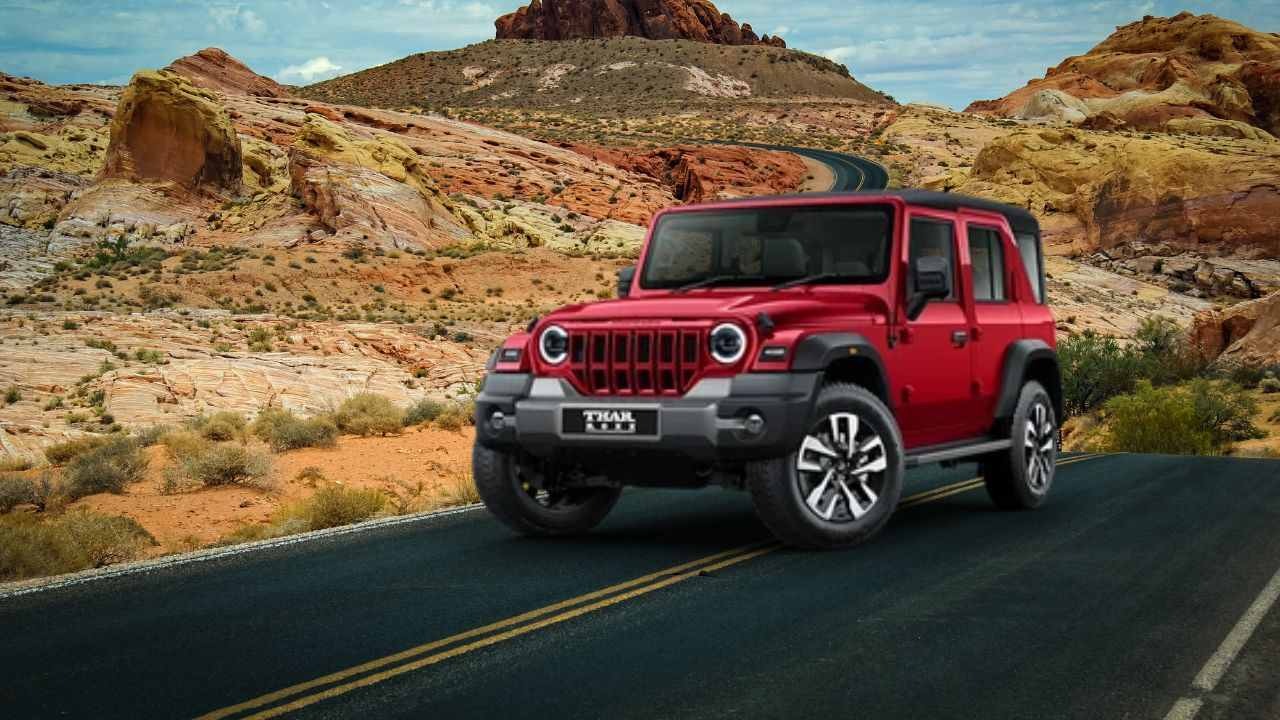
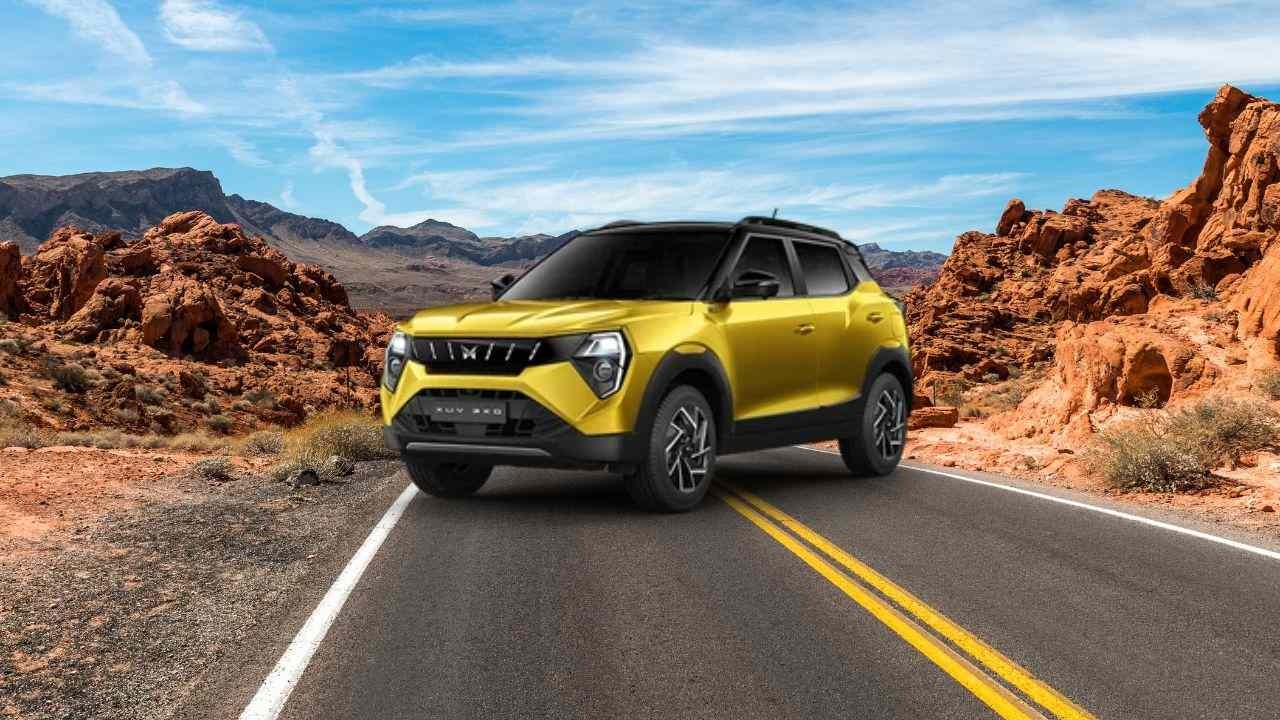
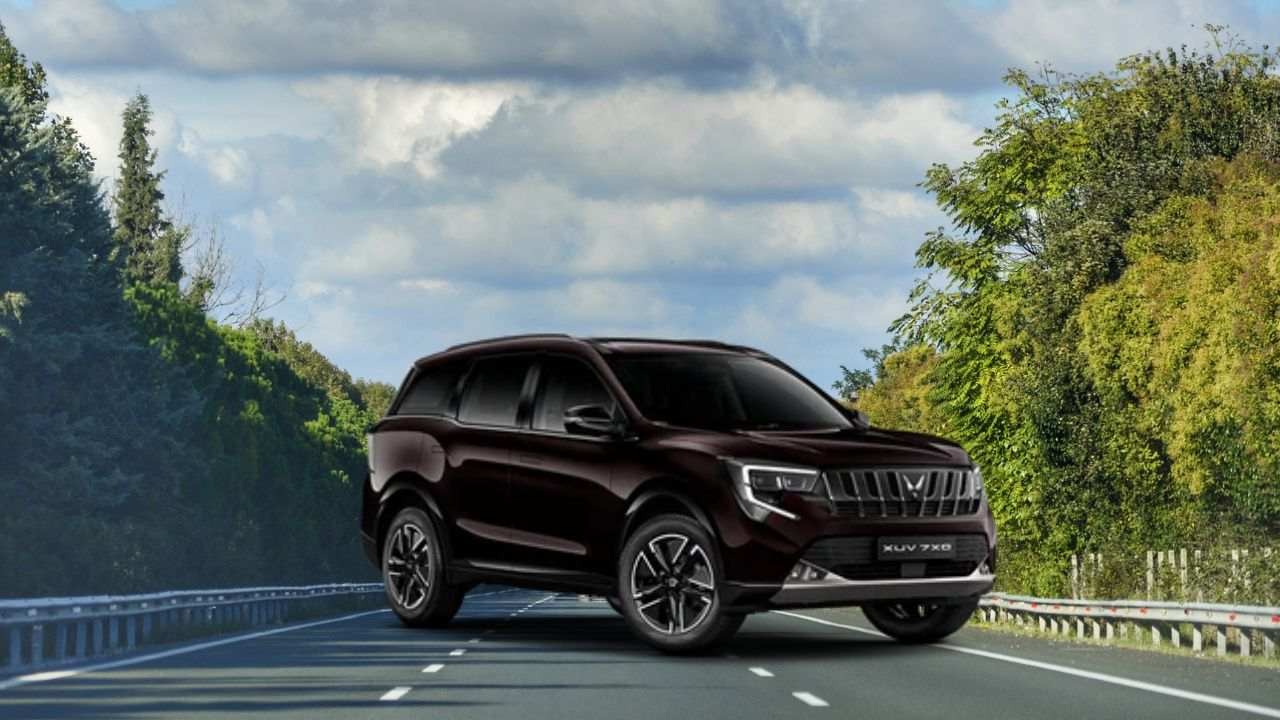
The festive season is the obvious tailwind. Industry coverage notes that sub-4-metre and mid-size SUVs contributed most to September’s market sales, and Mahindra’s range covers both, from the Bolero and Bolero Neo through the Scorpio Classic, Scorpio N, Thar Roxx and XUV 7XO. The Thar OG launch added fresh news to the showroom conversation.

Mahindra vs Tata vs Hyundai

The base effect matters too. Every SUV gets full attention when we look over September 2025 which was itself a strong month. SUV sales had already risen 43% in September 2025 compared with August, making this year’s 14% growth more significant. 

Mahindra vs Tata vs Hyundai in September 2026

Mahindra’s domestic SUV sales trailed Tata Motors’ reported 68,810 passenger vehicles by 4,718 units, and led Hyundai’s domestic 57,166 by 6,926. 

Growth rates were close: Tata at 15.32%, Mahindra at 14%, Hyundai at 10.9%. Tata’s figure varies by source Autocar India lists a much lower number.

The comparison is also not like-for-like. Mahindra sells almost entirely SUVs, while Tata and Hyundai’s totals include hatchbacks and sedans. Against Hyundai in particular, Mahindra is winning with a narrower product mix, which is the stronger result.

Mahindra Tata Motors Hyundai
Sept 2026 domestic 64,092 68,810 (verify) 57,166
YoY growth 14% 15.32% 10.9%

Mahindra sold 64,092 SUVs in September 2026 could work as a proof for the company to say “Worth The Money”, even though sales volume is not a quality score, but this figure speaks louder.

Mahindra sold

For the buyer, higher volume sales usually suggests that the company’s service-network is broader and resale value is strong. So you can plan your next vehicle easily after taking a written quote from the dealer for your choice of variant.

From August to December, it is a peak time of the Indian car market so companies also offer discounts and exchange offers. Confirm it from the 2-3 dealers because a month of record sales gives the company leverage. You could negotiate on accessories, insurance and exchange value instead of expecting a headline price cut.

 Skoda Slavia Facelift Comes With Automatic Shift & More Features

Conclusion

Mahindra’s September 2026 sales show that its SUV range continues to attract strong demand, helped by the festive season, a broad model lineup and growing interest in electric SUVs. The 14% year-on-year rise is encouraging, especially with sales staying above the company’s April–September monthly average. 

For buyers, though, Mahindra sold 64,092 SUVs in September 2026 holding a strong Mahindra Sale alone shouldn’t decide the purchase. Compare variants, check delivery timelines and negotiate insurance, accessories and exchange offers before booking. 

Alok Kabir

Alok is an experienced SEO Specialist skilled in blogging and SEO-friendly content creation. He also specializes in Content Optimization and Technical SEO, including website optimization, crawlability, indexing, site speed, and on-page improvements to enhance search rankings and online visibility.

2 Comments

Leave a Reply

Your email address will not be published. Required fields are marked *

0

Best Self Driving Cars in India 2026: Top Models, Prices & Features

Published Sep 1, 2025, 9:40 AM
Last Updated Apr 2, 2026, 8:22 AM

Top self-driving cars in India with ADAS technology

The automobile market is changing rapidly with more advanced features. Cars emerging with high-end tech improves the capability for both driver and passengers, making their journey beautiful. Self-driving cars doesn’t mean that there will be no need for a driver. It just makes driving easy and safe with the Advanced Driver Assistance System (ADAS). Whether you use it for daily office travel or long trips, these best self-driving cars in India are creating a new era with comfort, reliability, and tech features. 

What is ADAS and why is it important?

ASAD is a system that comes from a group of technologies that makes driving safer and easier. It includes features such as Adaptive Cruise Control, Lane Departure Alert, Emergency Brakes, Collision Alert, and it comes on a different level. The level 2 is best for cars in India, level 2 ADAS includes control over steering and braking to some extent but the driver must be alert on the road. It is just making the driving easy, not holding the position of a driver. 

Let’s see some of the best self-driving (ADAS) cars of 2026

1. Mahindra XUV700

Starting Price: Rs. 13.99 Lakh 

The price of Mahindra XUV700 varies on the variants and it can go up to Rs. 26.99 Lakh. It offers Level 2 ADAS technology, petrol & diesel engine with manual and automatic transmission. 

Mahindra XUV700 SUV with Level 2 ADAS features

Image credit: Auto Mahindra

Features of Mahindra XUV700

Category Feature
Engine Options 2.0L Petrol , 2.2L Diesel 
Transmission Manual/Automatic
Seating Capacity 6 or 7
Panoramic Sunroof Skyroof (Panoramic)
Infotainment Dual 10.25” displays (instrument + media)

2. Hyundai Creta

Starting price: Rs. 11 Lakh

The Price of Hyundai Creta is depending upon the variants of the car which can raise up to Rs 20 Lakh. It offers Level 2 ADAS technology within its mid-range variants. 

Hyundai Creta mid-size SUV with ADAS technology

Image credit: Hyundai Creta

Features of Hyundai Creta

Category Feature Details
Engine Options 1.5L MPi Petrol, 1.5L Turbo Petrol, 1.5L Diesel
Power 113-157 bhp
Torque 143-253 Nm
Transmission 6-speed Manual, CVT, Automatic
Drive Type FWD
Mileage (ARAI) 17 – 21 kmpl
Ground Clearance 190 mm

Read More :- Toyota RAV4 vs Honda CR-V: The Ultimate SUV Battle of 2025

3. MG Astor

Starting Price: 10 Lakh

MG Astor : The price can go high with different variants, valued around Rs. 18 Lakh. Astor comes with Level 2 ADAS, making it the most affordable car in India. It not just offers advanced features but is also known for its technology and stylish interior.

MG Astor compact SUV with Level 2 ADAS

Image credit: MG Motor

Features of MG Astor

Category Feature
Engine Options 1.5L Petrol MT/CVT, 1.3 Turbo AT
Transmission Manual, Automatic (CVT & AT)
Mileage (ARAI) 14.8–15.4 kmpl
Seating Capacity 5
Infotainment Dual 10.25” displays (instrument + media)

4. Kia Seltos

Starting Price: Rs. 10 Lakh 

The price varies on the variant, going up around Rs. 20 Lakh. Kia Seltos also offers Level 2 ADAS for self-driving with 19 features included. It is well-known for its strong performance and advanced features.

Kia Seltos SUV with advanced ADAS features

Image credit: Kia

Category Features
Engine 1.5L Petrol / Diesel
Power 157 bhp
Transmission 6-speed manual / CVT / 7-speed DCT
Drive Type  FWD
Mileage 19.1 kmpl

5. Tata Harrier

Starting Price: 15 Lakh

Tata Harrier price can go higher around Rs. 24 Lakh. It offers a camera-based ADAS system, making flagship SUV for safe driving. The premium gives an incredible experience in both diesel and automatic variants, ideal for families with its stability and comfort. 

Tata Harrier flagship SUV with camera-based ADAS

Image Credit: TataMotors

Features of Tata Harrier

Category Features
Engine 2.0L Diesel
Power 170 PS
Transmission 6-speed manual / 6-speed automatic
Drive Modes  City, Sports, Rough
Mileage 16.8 kmpl

City-Wise Best Picks for Self-Drive Cars

Most of the people prefer cars that can be easily adapted in their cities. Mid-size cars are perfect for some cities but compact SUVs are more convenient for rush cities. 

Tata Harrier and Kia Seltos are considered as the best self drive cars in Bangalore. These are the most running SUVs on the tech city roads because it offers both comfort and stability, handles Bangalore traffic and weekends gateways easily.

The XUV700 and Hyundai Creta are best self drive cars in Hyderabad for daily commutes, even people prefer these cars as best self drive car rentals in Hyderabad. These spacious and powerful SUVs are perfect for road trips.

Narrow roads of Guwahati demanded compact SUVs like MG Astor. This is the best self drive car in Guwahati which offers compact and fuel efficient SUV. 

Conclusion

In 2025, best self-driving cars in India  are required to handle the rush and bitter roads which can cause accidents easily. These vehicles are useful for India to prevent accidents. These self-driving cars are becoming common due to their advanced safety features in both metro cities and normal cities.

0

Kia Seltos vs MG Hector: Which SUV Offers More For Your Money?

Published Aug 20, 2025, 9:25 AM
Last Updated Aug 21, 2025, 10:40 AM

Making a decision for buying an SUV which is worth your money then Kia Seltos vs MG Hector are two beasts ready to roar on roads. Both deliver wonderful performance with unique features and style. If you look from outside MG Hector is bigger in comparison to Kia Seltos, which makes it ideal for large families who consistently travel. 

Kia Seltos vs MG Hector side by side comparison showcasing design, size, and performance differences


Kia Seltos cunning design is making a valuable impression and gives an incredible feeling to experience the compact SUV ride with powerful petrol engine. Both offer full safety features with different functions and their price is also slightly different. 


If you prefer to buy an SUV for yourself or a small family then Seltos is best but if you want a spacious cabin and boot space for a big family then Hector is good for you.


Let’s explore their details in depth to make a better choice for yourself before buying a car.

Kia Seltos vs MG Hector: Key Difference at a Glance

Size and Space: MG Hector has a bigger body than Kia Seltos, is spacious for its segment but not as Hector. Because of the larger body Hector has larger space inside the SUV which makes it ideal for families.


Price: The Seltos’ starting price is Rs. 11.19 Lakh which is lower than Hector Rs. 14.50 Lakh. 


Engine and Performance: Both cars offer different performance with different engines, Kia Seltos turbo-petrol engine and Hector Diesel engine is powerful. Seltos’ diesel and Hector’s petrol engine are also good but not that powerful. Seltos offers more transmission options than Hector.


Features: MG Hector has a 14-inch touchscreen infotainment system and extensive connection functions. Seltos has dual-screen setup that integrates both infotainment & digital cluster, along with ADAS suite.


Let’s dig deeper into their features that make them different from each other.

Exterior and Dimensions

The MG Hector has a bigger body which makes a more commanding road presence. It offers more interior space while expanding its dimensions to make it bigger.

Kia Seltos vs MG Hector exterior and dimensions comparison showcasing sporty compact SUV design versus larger spacious SUV body

The Kia Seltos look more sportier and have an impressive modern design with sharp lines. It is easier to handle in a small space in the city and easily park with its compact size.

Interior and Features

Both cars offer advanced features but in different areas. Hector offers a larger infotainment system which controls car overall functions and advanced suite of connected car features. 

Seltos is more driver centric with two integrated screens of infotainment and digital cluster. A dual-zone climate control system is also available in Seltos.

Also Read: Honda City vs Toyota Corolla Altis: Which Sedan Rules the Road?


Performance and Driving Dynamics

A 2.0-litre engine of Hector is ready for adventurous trips to give you an unstoppable journey ride. Its diesel engine is a proven powerhouse than Seltos. However, Seltos’ 1.5-litre turbo-petrol engine is more powerful than Hector’s turbo-petrol engine.

Kia Seltos vs MG Hector performance and driving dynamics comparison highlighting turbo petrol and diesel engines with smooth transmission options

In terms of transmission, the Seltos offers a iMT (intelligent manual transmission and 7-speed DCT which delivers mind-blowing driving dynamics.

Safety

If your priority is safety first then both SUV has wider features for safety measures including six airbags and level 2 ADAS. For preventing car crashes, lane departure warning, automatic emergency braking, and forward collision warning are marvellous features that are really helpful. Hector has still not been officially tested but Seltos got 3-star rating from Global NCAP rating.


Feature Kia Seltos MG Hector
Dimensions 4365×1800×1645mm

Wheelbase: 2610mm

4699×1835×1760mm

Wheelbase: 2750mm

Boot Space 433 Litres 587 Litres
Engine Options 1.5L Petrol, 1.5L Turbo-Petrol, 1.5L Diesel 1.5L Turbo-Petrol, 2.0L Diesel
Power Petrol / Turbo / Diesel

113bhp / 158bhp / 114bhp

Turbo / Diesel 

141bhp / 168bhp

Torque 144Nm / 253Nm / 250Nm 250Nm / 350Nm
Transmission Manual/ iMT, CVT, 7-DCT, 6-Automatic Manual, CVT (Petrol only)
Mileage (ARAI) Up to 20.7kmpl (Diesel) Up to 15.58kmpl (Diesel)
Infotainment 10.25-inch HD Touchscreen 14-inch HD Touchscreen
Safety 6 airbags, Level 2 ADAS, all-wheel disc 6 airbags, Level 2 ADAS, all-wheel disc
Comfort Features Ventilated seats, dual-zone climate control, sunroof, 8-way power-adjustable driver’s seat, 360-degree camera Ventilated seats, sunroof, 6-way power-adjustable driver’s seat


Conclusion

Choosing between Kia Seltos vs MG Hector is highly confusing when a buyer wants a car with full modern features and powerful performance as both offer the same. But:

If you prefer more space, more big, and comfortable SUV then MG Hector fits in. 

If you prefer a more sportier look compact style SUV then the Kia Seltos is the best option.

1

What Is ADAS? A Complete Guide to Advanced Driver Assistance Systems

Published Jul 10, 2026, 12:19 PM
Last Updated Jul 22, 2026, 12:07 PM

ADAS

Advanced Driver Assistance System is a friend of driver in new cars as safety tech to prevent the crash. That vagueness is the problem. ADAS isn’t one feature. It’s a bundle of separate systems, each doing a very specific job, and understanding them individually is the only way to actually judge whether a car’s ADAS package is worth paying for — or whether it’s mostly a marketing sticker.

ADAS features fall into three buckets — ones that warn you (FCW, LDW, BSM), ones that act for you (AEB, LKA, ACC), and ones that inform you (TSR, TPMS, parking cameras). A car with a long feature list might lean heavily on the “inform” bucket, which sounds impressive but does less heavy lifting than one solid AEB system.

So let’s break it down properly, one system at a time.

What Does ADAS Actually Stand For?

ADAS stands for Advanced Driver Assistance Systems. The keyword there is assistance — not automation. Every ADAS feature is built to support the driver, not replace them. When you drive a car with an ADAS system, it watches the road through cameras, radar, and sensors, to detect any object or something so it intervenes with a warning or a slight correction that driver might miss.  

The car suddenly braking up front, a vehicle slowly drifting into your lane, a pedestrian emerging from between parked cars. Think of it less like autopilot and more like a very alert co-passenger who’s looking at the rearview mirrors and road behind you at the same time you’re looking at the road in front of you, and who taps you on the Shoulder or takes the wheel for half a second when something feels off. 

How ADAS Actually Works Behind the Scenes

Every ADAS feature runs on the same basic loop, even though the end result looks different each time. It helps to understand this loop before getting into individual features, because it explains why some systems work brilliantly on Indian highways and struggle in city traffic.
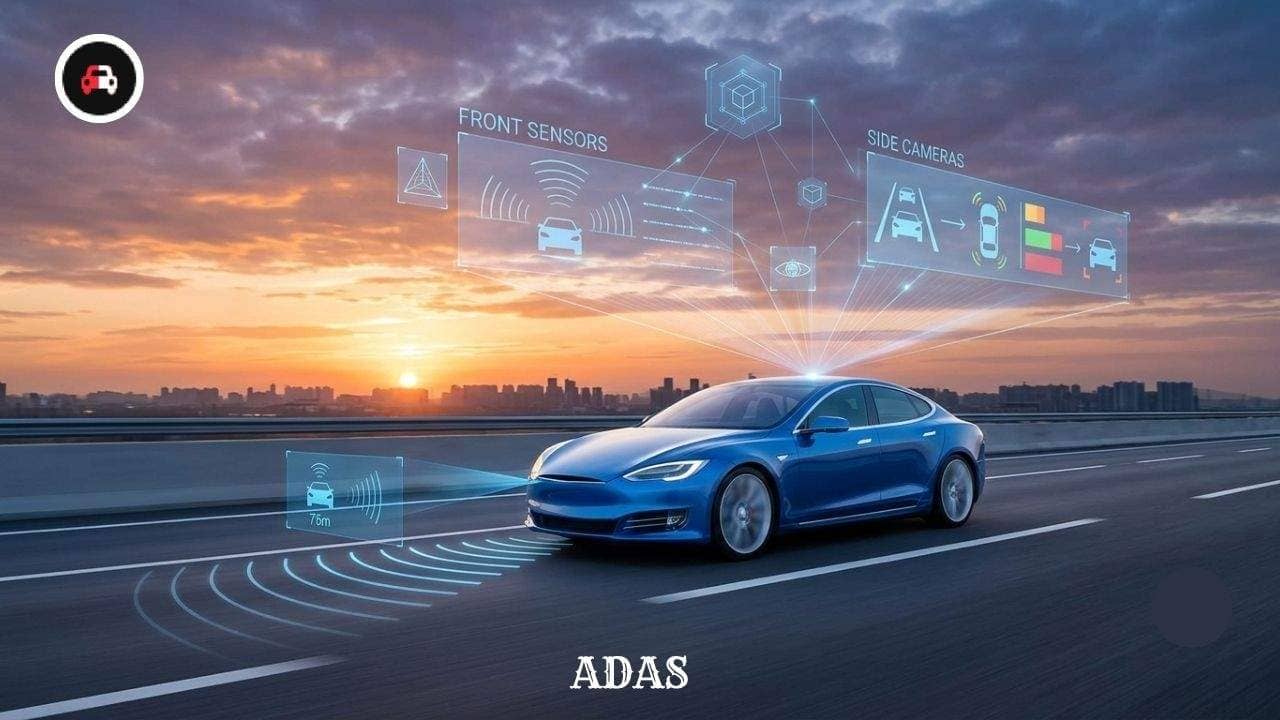
ADAS

Step 1: Sensing

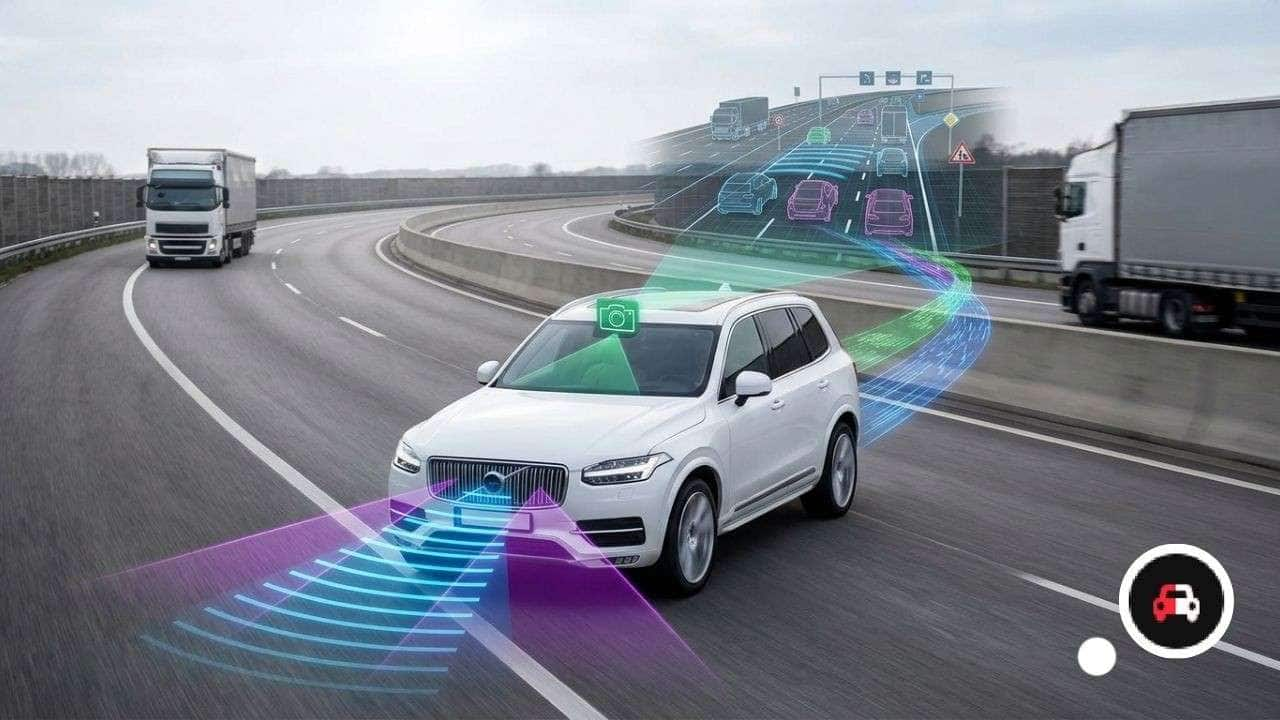
The car continuously gathers information from a combination of hardware — typically a forward-facing camera located near the rearview mirror, radar sensors embedded in the front bumper, ultrasonic sensors distributed around the body for close-range detection, and in some cases LiDAR on more advanced platforms. They’re all looking at the world in a different way: radar is good at measuring distance and speed in the rain or fog, while cameras get a better look at lane markings, traffic signs, and what an object, well, actually is. 

Step 2: Processing

All that raw information is sent to an onboard computer that runs it through algorithms trained to identify patterns — a pedestrian outline, a motorised two-wheeler darting through lanes, brake lights ahead. This needs to be done in a matter of milliseconds because when you’re driving on the highway, half a second lag means you’ve travelled several car-lengths of road. 

Step 3: Decision

Using this information, the system decides if the situation warrants a warning like a beep, alert on the dashboard, or seat vibration or intervention by braking, trimming the steering, or limiting the power of the engine. 

Step 4: Action

The car either alerts you or acts automatically applying brakes, correcting steering input, or adjusting speed, depending on which specific ADAS feature has triggered.


Once you understand this four-step loop, every individual ADAS feature is just a variation of “sense something specific, process it, decide, act.”

The Core ADAS Features, Explained One by One

1. Adaptive Cruise Control (ACC)

Standard cruise control maintains a constant speed. Adaptive cruise control takes this a step further – it travels at a set speed, but will also slow down and speed up to maintain a preset gap between your car and the one in front of you, using radar to keep tabs on that vehicle. In Indian highways like the Yamuna Expressway or Mumbai-Pune, this is actually helpful as it does away with the endless pressing on the accelerator and brake pedals in the moving traffic. 

2. Autonomous Emergency Braking (AEB)

This is arguably the most safety-critical feature in the whole ADAS suite. AEB watches the road ahead and, if it detects an imminent collision that the driver hasn’t reacted to, applies the brakes on its own — sometimes fully, sometimes partially to reduce impact speed. It’s designed as a last line of defence, not a substitute for paying attention.

3. Lane Keep Assist (LKA) and Lane Departure Warning (LDW)

These two often get bundled together but do slightly different jobs. Lane Departure Warning simply alerts you — a beep or a steering wheel vibration — if you drift out of your lane without indicating. Lane Keep Assist goes further and gently steers the car back into the lane. On Indian roads where lane discipline is, let’s be honest, inconsistent at best, this feature can be a bit of a mixed bag — it works well on marked highways but can get confused on roads with faded or missing lane paint.

4. Blind Spot Monitoring (BSM)

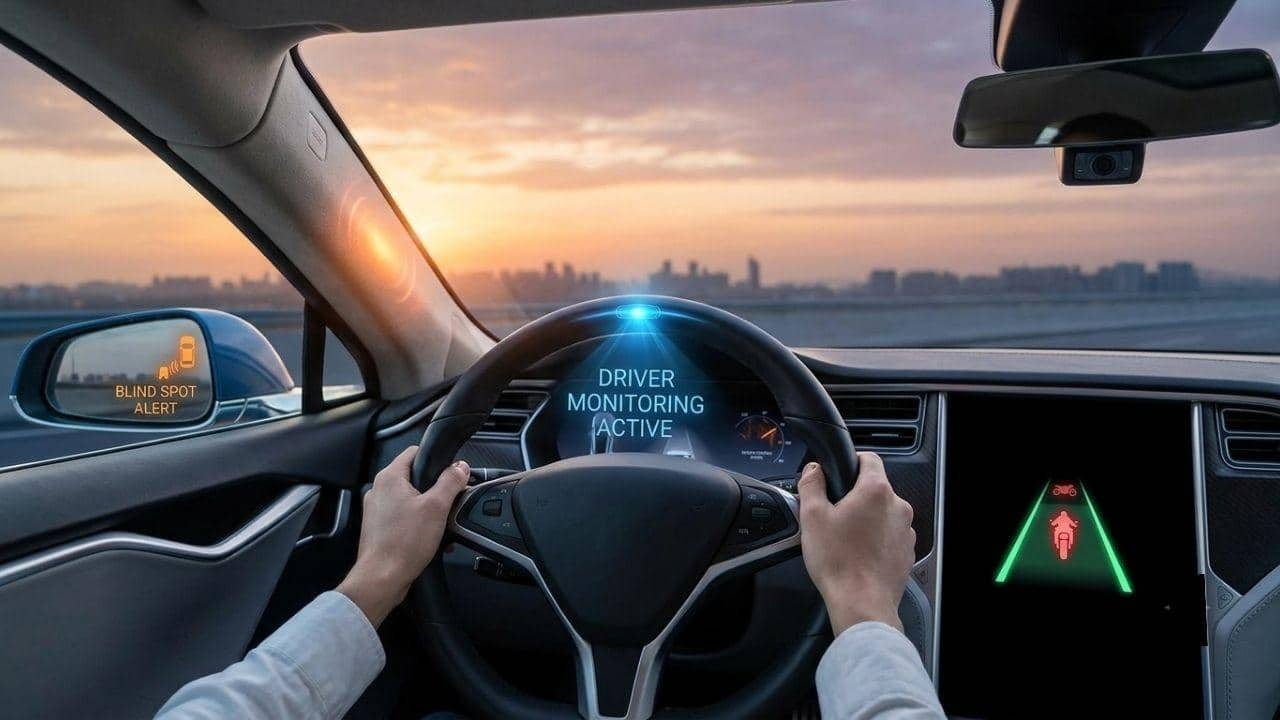
Sensors placed on the back corners of the car keep an eye on your blind spots for adjacent vehicles like cars, motorcycles, and more. If an object is detected, a warning light appears on the corresponding side mirror and many systems also emit an audible alert if you signal to change lanes. It is quite handy in Indian traffic where two-wheelers and auto-rickshaws tend to criss-cross in the blind spots quite easily. 

5. Forward Collision Warning (FCW)

This feature is a warning system and does not perform the function of an intervention. If it detects that you are closing in on the car ahead too quickly, it will activate visual and audible alerts, allowing you to brake or steer away to avoid a collision. 

6. Parking Assist and Surround View / 360-Degree Camera

Multiple cameras and ultrasonic sensors are combined to generate a top-down view of the vehicle, which takes the stress out of parallel parking or driving through tight residential gates. Certain systems are now equipped with semi-automated parking, with the car manoeuvring into a space while you control the brake. 

7. Traffic Sign Recognition (TSR)

Based on the feed from a forward-facing camera, the system recognizes speed limit, no-entry, other traffic signs, and shows them on the instrument cluster or on the screen of the infotainment system. So you can keep track of the road rules, even if you do accidentally drive past a sign. 

8. Driver Attention/Fatigue Monitoring

Using either steering pattern analysis or an in-cabin camera, this system tracks signs of drowsy or distracted driving — inconsistent steering corrections, prolonged eye closure — and prompts you to take a break. Extremely relevant for long highway drives, which is a big part of Indian road travel culture.

9. Tyre Pressure Monitoring System (TPMS)

While TPMS isn’t always considered an ADAS, it certainly falls under the umbrella of vehicle safety tech systems. It constantly monitors the tyre pressure and notifies you if it goes below the recommended level, saving you from trouble of poor handling, decreased fuel efficiency or even a tyre blowout. 
ADAS

The Levels of Driving Automation — Where Does ADAS Fit?

Much of the confusion around ADAS happened due to being confused with self-driving vehicles. There are six levels of driving automation as defined by the Society of Automotive Engineers (SAE), and it’s helpful to understand where ADAS fits on that spectrum. 


Level Name What It Means
Level 0 No Automation Driver does everything; car may just have basic warnings.
Level 1 Driver Assistance One system helps, like cruise control OR lane keeping — not both together.
Level 2 Partial Automation Car controls steering and speed together, but driver must stay fully alert. Most ADAS cars sold in India today sit here.
Level 3 Conditional Automation Car handles most driving in specific conditions; driver can look away briefly but must be ready to take over.
Level 4 High Automation Car drives itself fully within a defined area or condition, no driver needed in that zone.
Level 5 Full Automation No steering wheel needed at all, under any condition. Still not commercially available anywhere.


Almost all cars that are sold in India with “ADAS” slapped on as a feature — the Mahindra XUV700 and Scorpio-N, Tata Curvv, Hyundai Creta, MG Astor, and a bunch of Toyota and Honda models, are all Level 1 or Level 2. That means the car is helping, not driving. Taking your hands off the wheel because the car has ADAS is the exact kind of assumption that gets people killed.  

Why ADAS Matters More in India Than the Marketing Suggests

It’s easy to dismiss ADAS as a Western safety obsession bolted onto Indian cars for export-market compliance. But the argument in favour of it in Indian conditions is perhaps stronger, not weaker. Indian traffic is dense, heterogeneous, and chaotic — two-wheelers darting across lanes, pedestrians jaywalking, sudden braking on tailgated city traffic, and long monotonous stretches of highways where drowsiness easily sets in. These are precisely the situations where AEB, FCW, and driver fatigue monitoring earn their keep.

That’s also a fair point on the other side of the argument. Features like Lane Keep Assist require crisp lane markings, which are still a rarity on many Indian roads. The better question isn’t just “does this car have ADAS,” but “what ADAS features does it have, and do those features correspond to the roads and conditions I deal with, day-in and day-out?” 

Is ADAS Worth Paying Extra For?

If the choice is between a base variant and one with AEB, forward collision warning, and blind spot monitoring, the safety case is strong enough that it’s hard to argue against it, especially for anyone doing regular highway driving. Features like fully automated lane keeping or advanced parking assist fall more into the comfort category — genuinely nice to have, but not something to stretch your budget for if money’s tight.

A useful way to assess ADAS is to weigh more the functions that can intervene to avoid accidents, such as Automatic Emergency Braking (AEB) and Adaptive Cruise Control (ACC), compared to those that are more informative, such as Traffic Sign Recognition (TSR) or a 360° camera. Active intervention systems have a more direct impact on safety, informational features are mostly aimed at convenience and driver awareness. 

Conclusion

ADAS is really a collection of safety features, not just one. Every system helps with a different part of driving, from alerting you to potential dangers to actively working to prevent a crash. Understanding the capabilities and limitations of these features can help you select the right vehicle and the safety systems that you can best take advantage of on the road.

1

What Salary Is Needed to Buy a Mahindra Scorpio-N?

Mahindra Scorpio-N

The monthly salary needed to buy a Mahindra Scorpio-N could be between ₹1 lakh and ₹2 lakh and the EMI depends on the tenure, interest, and variant you choose to buy. If you earn around ₹70,000 a month, a  new Scorpio-N ₹13.69 lakh ex-showroom would be possible if there’s not other EMI running along.

The new Mahindra Scorpion-N was launched in August at ₹13.69 lakh for base trim and price gets higher across its variants, the highest trim price being ₹25.49 lakh ex-showroom. It offers the same engine as the old model. It comes with new cabin features like screens and panoramic sunroof. 

The variants start from Z2 at ₹13.69 lakh, the Z4 at ₹15.57 lakh, there’s two lakh difference. Z6 is priced around ₹17.17 lakh and few more thousands add to the Z8S variant which price around ₹17.79 lakh. The top two variants of Scorpio are Z8T and Z8L which price around ₹20.38 lakh and ₹25.49 lakh which comes with diesel 4WD automatic. This car is available in petrol, diesel, manual and automatic versions.

These figures are ex-showroom prices and you have to pay more this price tag. The price may differ in different cities because of road tax and insurance and on-road prices run about 12% above ex-showroom. Check the actual price on your Scorpio-N by asking from a dealer individually.

What Salary Is Needed to Buy a Mahindra Scorpio-N on a Loan?

Most salary people buy this size of car on finance. The below numbers table is created on assuming 20% down payment, 5-year loan plan, at 9.5% interest. An EMI no higher than 25% of monthly take-home so you could pay your rent, daily expenses, and fuel.

Variant (starting) Ex-showroom Est. on-road Down payment EMI (5 yrs) Monthly in-hand needed
Z2 ₹13.69 lakh ₹15.3 lakh ₹3.1 lakh ₹25,700 ₹1.03 lakh
Z4 ₹15.57 lakh ₹17.4 lakh ₹3.5 lakh ₹29,300 ₹1.17 lakh
Z8S ₹17.79 lakh ₹19.9 lakh ₹4.0 lakh ₹33,500 ₹1.34 lakh
Z8L 4WD AT (top) ₹25.49 lakh ₹28.5 lakh ₹5.7 lakh ₹48,000 ₹1.92 lakh

If you stretch the loan to seven years

By stretching the year, EMI will be reduced to a lower amount but the total cost of Scorpio will be much higher because of the interest. With seven years tenure, the base Z2 EMI drops to around ₹20,000 per month, which means a monthly take-home approximately ₹80,000 could make you eligible for this purchase.

The Z4 comes to about ₹22,800, which needs around ₹91,000. You pay more interest overall, so treat the long tenure as a way to stay comfortable rather than a way to afford a bigger car.

Running Costs That Decide Whether the EMI Feels Light

The EMI is just a fraction of what would be the cost of owning a Scorpio-N. The SUV is equipped with a 2 L petrol and a 2.2 L diesel twin. The lower diesel states of tune, make 132 hp and 300 Nm, and the 4WD is a drop in option in the diesel variants made by the fire. 

Petrol economy is the sore spot. One comparison lists the Scorpio-N’s ARAI figure at 12.17 kmpl (manual) and 12.12 kmpl (auto). That is a claimed number, and a heavy body-on-frame SUV in city traffic will return less. I’ve seen no ARAI figures for the updated diesel that I can confirm, so check Mahindra’s brochure before you plan around diesel economy.

With 10 kmpl real-world, ₹95 a litre and 1,000 km a month. Consider ₹9,500 in fuel alone, before insurance renewals and servicing. Plan to spend about ₹12,000 to ₹15,000 extra a month, aside from the EMI on a petrol Scorpio-N. It pays back its difference in favour of diesel if you cover 40 km or more a day. 

Scorpio-N vs XUV 7XO and Tata Safari

The Scorpio-N is the only body-on-frame, three-row SUV in this price bracket, and it overlaps with monocoque rivals like the Tata Safari, Mahindra XUV7XO, MG Hector and Hyundai Alcazar.

The XUV 7XO costs almost the same. At the base level, one estimate puts the price of the Scorpio-N above ₹30,000, and the price difference in the top variant is nearly ₹40,000. The 7XO has bigger wheels, a larger driver display and an extra (seven instead of six) airbag. Its monocoque build contributes to a smoother ride. For a daily city commute, the 7XO is the better fit.

The Tata Safari’s starting price is ₹13.29 lakh but confirm the current figure with a dealer. Its claimed mileage of 14.1 to 16.3 kmpl beats the Scorpio-N on paper. The Safari made its position higher with its polish and family comfort. The Scorpio-N counts on ladder-frame toughness, 4WD availability and a stronger road presence.

Conclusion

Even for the base Z2 on a seven year loan is going to be a stretch if your take-home is below ₹1 lakh a month. A range of ₹1 lakh to ₹1.35 lakh a month will allow you to buy the Z4 and Z6. The Z8S, the one with the sunroof and the new screens, takes roughly ₹1.34 Lakh on a five-year loan. At prices above ₹1.9 lakh you can afford the top diesel 4WD automatic without breaking the bank. 

If you are a mostly city driver that never leaves the tarmac, look into the XUV 7XO, or Safari, before you book. Take the Mahindra Scorpio-N and one of its rivals on the road one after the other, ask for an on road quote written down to your dealer and test it against your actual take home after it hits you in EMI.

0

Subaru Outback vs Jeep Grand Cherokee: Don’t Buy Until You Read This!

Published May 10, 2025, 5:18 AM
Last Updated Apr 22, 2026, 11:39 AM

Subaru Outback vs Jeep Grand Cherokee

If you are deciding between an SUV or something more wagon-like, you may find yourself in the battle: Subaru Outback vs Jeep Grand Cherokee. Both are adventure-capable, AWD-equipped, and family comfy. But they are wildly different in price, power, and purpose. In this article, we dissect the two and their main differences to give you an idea of which SUV would be perfect for you.

Cost, space, safety, performance, fuel use, towing, off-road ability, tech features. Whether you’re road-tripping or gear-hauling, this guide will help you pick your next vehicle.

Subaru Outback vs Jeep Grand Cherokee Pricing Comparison

The Subaru Outback is cheaper than the Jeep Grand Cherokee. A 2024 base Outback begins at about $30,000. Even top trims such as the Wilderness or the Touring XT don’t crest the $45,000 mark.

Subaru Outback

The Jeep Grand Cherokee, however, begins at $38,000. The top models, such as those with the Summit or Trailhawk trim, can go for as much as $65,000 or more. If price is your primary concern, the Outback is your winner. It offers solid features and AWD without the luxury price tag.

Size and Interior Space

The Jeep Grand Cherokee is larger all over. It measures about 193 inches long, and stands more than 70 inches tall. The Subaru Outback is a few inches shorter, at 191 inches long and 66 inches tall. It also makes the Outback easier to park and more car-like to drive.

Both SUVs seat five people. The Outback even has a smidgen more rear legroom compared to the Jeep. Both also have a particularly robust cargo area: 75.6 cubic feet in the Outback and about 70.8 cubic feet in the Grand Cherokee.

If you need more room inside and expect to haul a lot of stuff, they’re both excellent—but the Outback uses space a little more efficiently.

Safety: Who Is the Safest?

Both vehicles are extremely safe, though the Subaru Outback is a stand-out in this area. It received a five-star overall safety rating from the NHTSA. All come with Subaru’s EyeSight safety suite, which incorporates lane-keep assist, auto emergency braking, and adaptive cruise control.

The Jeep Grand Cherokee also possesses modern safety aspects. Those include blind-spot monitoring, forward collision warning, and emergency braking. That said, some security options are restricted to pricier trims.

If you value safety more and want it standard, the Outback is the better choice.

Performance and Engine Options of Subaru Outback vs Jeep Grand Cherokee

The Subaru Outback is available with two engines. The base 2.5L engine produces 182 horsepower, while the turbo version provides 260 horsepower. It’s smooth to drive and quick enough, especially with the turbo.

2025 Jeep® Grand Cherokee - The New Legendary Full Size SUV

The Jeep Grand Cherokee starts with a 293-horsepower V6 engine. There’s also a stout V8 option with up to 357 horsepower and a 4xe hybrid model that has 375 horsepower and far better torque.

If you are after stronger acceleration and more muscle for hauling, the Grand Cherokee has you covered. For daily driving and comfort, however, the Outback leaves little wanting for most people.

Fuel Economy: Save on Gas

This is where the Subaru Outback comes in. The base engine is good for up to 33 miles per gallon (mpg) on the highway, and approximately 26 mpg in the city. Even the turbo engine gets decent gas mileage, around 30 mpg highway.

The Jeep Grand Cherokee is heavier and uses more fuel. The V6 achieves around 22 mpg combined; the V8, 17–18 mpg. The 4xe hybrid is a fuel saver, if you charge it often, but it’s much more expensive.

Keep your Subaru on the road, not at the pump, for those long hauls.

Towing Power

The Jeep Grand Cherokee has way more strength if you need it for towing a trailer or boat. The V6 iteration can tow up to 6,200 pounds, while the V8 can pull as much as 7,200 pounds.

The Subaru Outback pulls a maximum of 3,500 pounds with its turbo engine. The base engine is rated to tow only about 2,700 pounds.

So if you’re planning to tow—say, go camping with a big trailer—the Grand Cherokee would be the wise choice. But for light hauling, the Outback will be fine.

Off-Road Ability

Both crossovers are proficient on dirt, snow, and trails. The Subaru Outback has all-wheel drive as standard and a feature called X-Mode, which aids traction on slippery surfaces. It also has about 8.7 inches of ground clearance, or 9.5 inches in the Wilderness version.

The Jeep Grand Cherokee, however, is more serious about off-roading. It has a number of 4×4 systems, high-clearance air suspension, and Trailhawk trims able to tackle rocky terrain and deep mud. It also offers sand, snow, and rock settings, among others.

If your weekend involves challenging trails or serious off-roading, the Jeep is the better choice. But the Outback is perfectly capable of snow, gravel tracks, and light off-road fun.

Technology Features

Both cars are tech-savvy. In higher trims, the Subaru Outback sports a supersize 11.6-inch touchscreen, Apple CarPlay, Android Auto, and a premium sound system.

4xe Plug-in Hybrid & Electric SUV Lineup _ Jeep®

The Jeep Grand Cherokee is also available with high-end technology. It features a 10.1-inch touchscreen, wireless smartphone features, and even an optional screen for the front passenger. High-end trims are equipped with a premium McIntosh sound system and other luxury tech.

If it’s top-tier gadgets you crave, the Grand Cherokee has you covered. But the Outback provides all the essentials most drivers need.

Read Also : Mistakes to Avoid When Buying a Car: A Must-Read Guide Before You Sign Anything

Dependability and Long-Term Costs

The Subaru Outback has a strong reliability history. It’s known to last long with fewer costly repairs. Insurance and maintenance are also less expensive than for most midsize SUVs.

The Grand Cherokee is capable, but it’s generally more expensive to maintain. And it may even face more issues down the road. So for longer-term ownership, the Outback might be the more reliable pick.

Final Word: Which SUV is the Best Buy?

Who comes out on top in this Subaru Outback vs Jeep Grand Cherokee match-up?

Choose the Subaru Outback if:

  • You want a lower price
  • Fuel savings matter to you
  • You don’t have to pull heavy trailers
  • You’re looking for a dependable, safe SUV for daily driving
  • You enjoy light off-road adventures and winter driving

Go for the Jeep Grand Cherokee if:

  • You need serious towing power
  • Off-road trails are part of your lifestyle
  • You want more luxury and stronger engine options
  • You’re okay spending more for premium features

Both the Subaru Outback and Jeep Grand Cherokee have their strengths. One offers smart value and efficiency. The other delivers brute power and off-road might. It all comes down to your driving needs and what features you value most.

Now that you’ve read the information, you decide!