1

Renault Duster Strong Hybrid E-Tech 160 Is Yours at ₹21,000

Published Oct 10, 2026, 10:23 AM
Last Updated Oct 13, 2026, 6:40 AM

Renault Duster Strong Hybrid is now available to book at ₹21,000 through its website and dealerships, and the full reveal comes on October 17, 2026. This figure is a deposit for the car to own but the showroom price is still not shared by Renault  and no variant list either.

Bookings officially opened on October 9, 2026, you are reserving a place in the delivery queue, not locking a price. The refund policy for the token amount hasn’t been published in anything, so ask the dealer to put it in writing before you pay.

The timeline is already fairly clear. The strong hybrid was promised by October 2026 at the time when turbo-petrol Duster was launched. Now this reveal fits that report perfectly before the Diwali. Expect deliveries around the festive season, though Renault hasn’t confirmed dates.

Renault Duster Strong Hybrid Specs: What Sits Under the Bonnet

This is Renault’s first E-Tech model in India, and the hardware is more sophisticated than most mid-size SUVs here. The Duster strong hybrid E-Tech 160 pairs a 1.8-litre petrol engine with two electric motors and a 1.4 kWh battery. The transmission is a multi-mode automatic. It isn’t a CVT, and it isn’t a conventional torque-converter automatic. Renault’s European hybrids use a clutchless dog-box design, and I’d confirm the India-spec details at the reveal.

Spec Duster Strong Hybrid E-Tech 160
Engine 1.8-litre petrol, hybrid
Electric motors Two
Battery 1.4 kWh
Combined output 160 PS (about 158 bhp)
ARAI mileage 29 km/l
Charging Self-charging, no plug
Dimensions (Duster, all variants) 4,343 mm long, 1,813 mm wide, 1,659 mm tall, 2,657 mm wheelbase
Price Not announced

The 160 PS figure is a combined output, and the pieces aren’t official yet. Expect a power range of 109 bhp, but one source shared a 49 bhp served by electric motor and 20 bhp through starter generator. Treat that as reported rather than confirmed until Renault publishes the breakdown. Also, hybrid power figures aren’t simply added together in real driving, so 160 PS doesn’t tell you how the car will feel at 100 km/h.
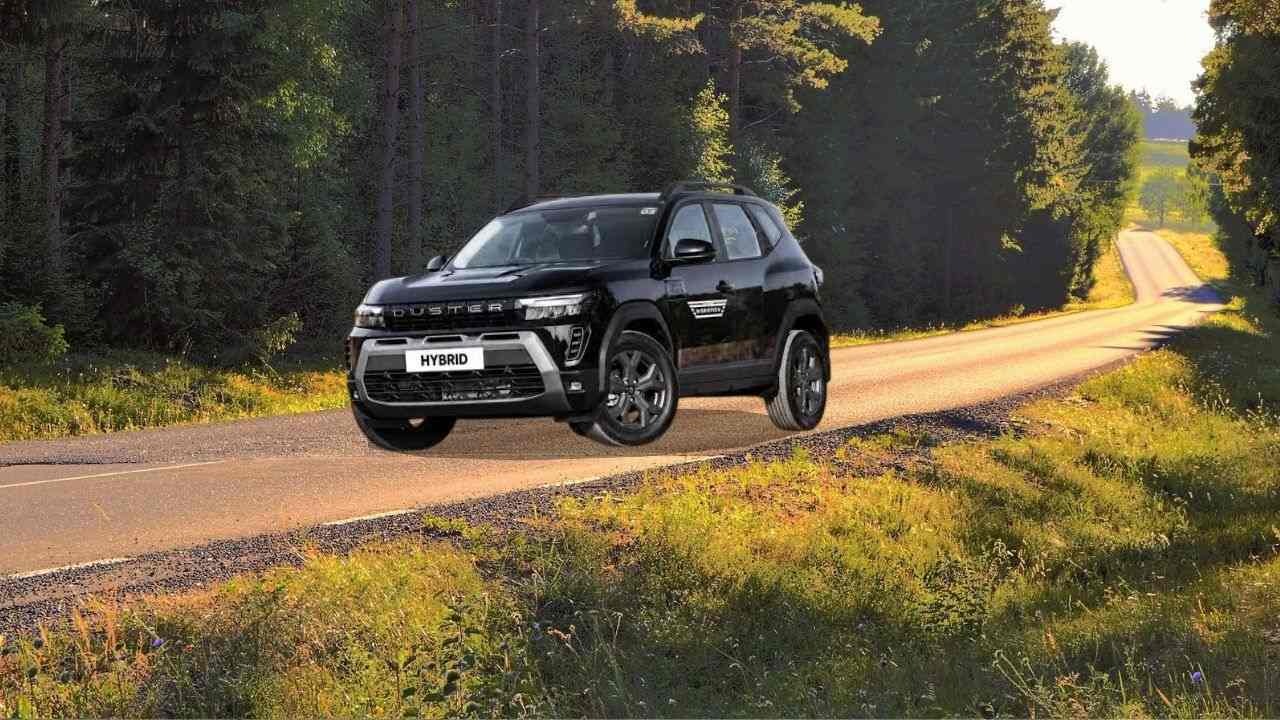
Renault Duster

The 1.4 kWh battery is small, and that’s deliberate. You don’t plug it in, so the car recharges through braking and the engine, and you’ll find the electric-only stretches are short, mostly crawling traffic and gentle cruising. It also means no change in your routine. You fill up at the same pump you always used.

Renault is building the car locally. Production is at its Oragadam plant near Chennai, backed by roughly 638 sales and service touchpoints across India. That network matters for a hybrid, because a technology this new needs dealers who can actually service it. 

The 29 kmpl Claim: Real Number or Brochure Number?

Renault announced an ARAI-certified 29 kmpl. ARAI figures come from a controlled lab cycle, so your Lucknow-to-Kanpur or Mumbai to Pune reality will differ. Expect the real-world number to land well below 29, and nobody has road-tested this car yet, so any “real-world mileage” claim you see before October 17 is speculation.

Suppose a petrol price is ₹100 per litre and your drive count is 15,000 km in a year. At 29 kmpl means 517 litres or roughly ₹51,700 a year. Now compare with Duster’s own turbo-petrol which gives 18.45 kmpl (claimed ARAI figure) which costs about ₹81,300 at the same 15,000 km. The gap is roughly ₹29,600 a year technically.
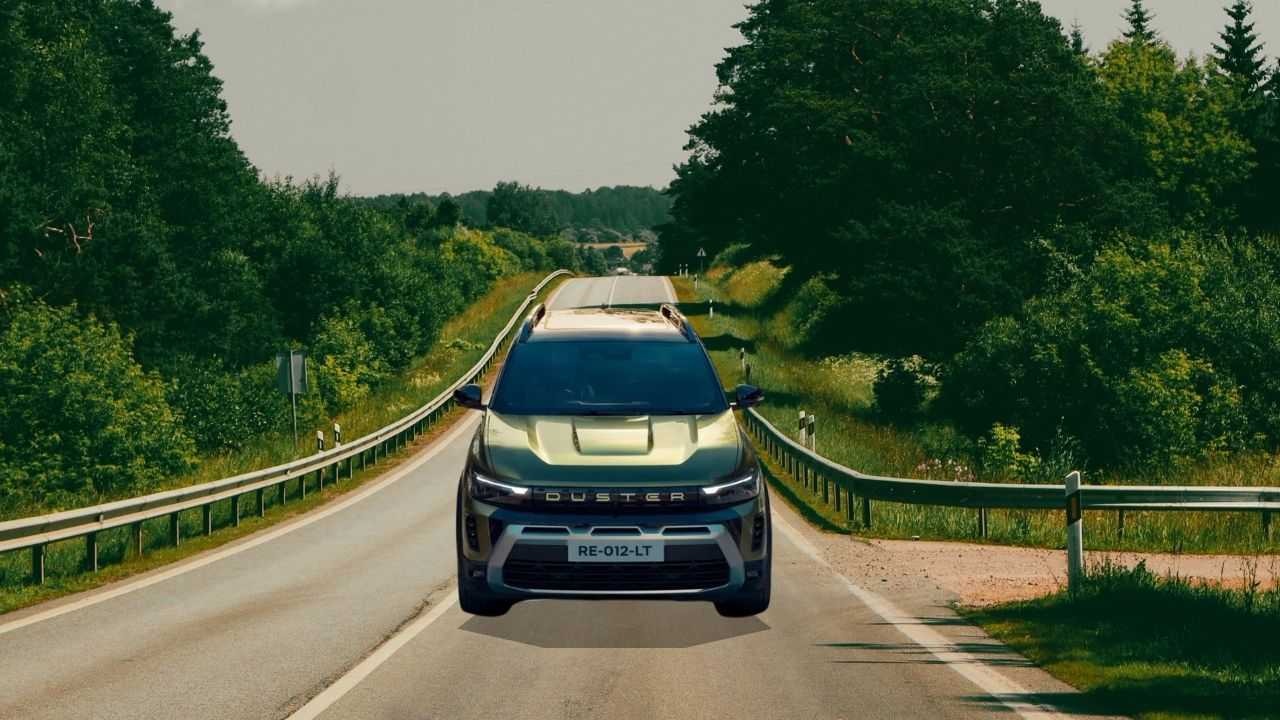
The 29 kmpl Claim

That gap decides whether the hybrid makes sense for you. Divide the extra price you’d pay for the hybrid over the equivalent turbo-petrol by about ₹30,000. A premium of ₹3 lakh takes around ten years to recover through fuel alone. It takes 5 years to cover Rs 1.5 lakh price difference, you can try this calculation replacing with your own annual driving kilometers and exact petrol price. 

Mileage is crucial because this is one thing which matters when it comes to saving. That’s why hybrids become a healthier option for everyone. Hybrid owners who mostly drive in city traffic may recover the extra cost sooner, but on highways it will take more time to take effect.

👉  Pre-Book Limited-Edition Mini Cooper S Comes With 3-Door Entry

Renault Duster Hybrid vs Toyota Hyryder: The Rival That Matters

Renault’s own positioning is aimed at people who might otherwise buy a diesel SUV. It’s pitched at customers considering alternatives to diesel SUVs. Diesel isn’t the real competition here, though. The strong-hybrid SUV you can buy today is the Toyota Urban Cruiser Hyryder, and its twin, the Maruti Suzuki Grand Vitara. The Hyryder is a badge-engineered sibling of the Grand Vitara and Victoris.

Renault Duster Hybrid Toyota Hyryder Strong Hybrid
Engine 1.8-litre petrol + 2 motors 1.5-litre Atkinson petrol hybrid
Combined output 160 PS 115 bhp (at launch)
ARAI mileage 29 km/l 27.97 km/l
Ex-showroom price Not announced ₹16.46 lakh to ₹19.76 lakh
Length / width / wheelbase 4,343 / 1,813 / 2,657 mm 4,365 / 1,785 / 2,600 mm

On paper the Duster wins on power and claimed efficiency. It’s about 4% better on the mileage claim, and the output gap is larger. The Hyryder wins on proof: it’s been on sale for years, its strong-hybrid system has an established record, and it comes with a known price list. 
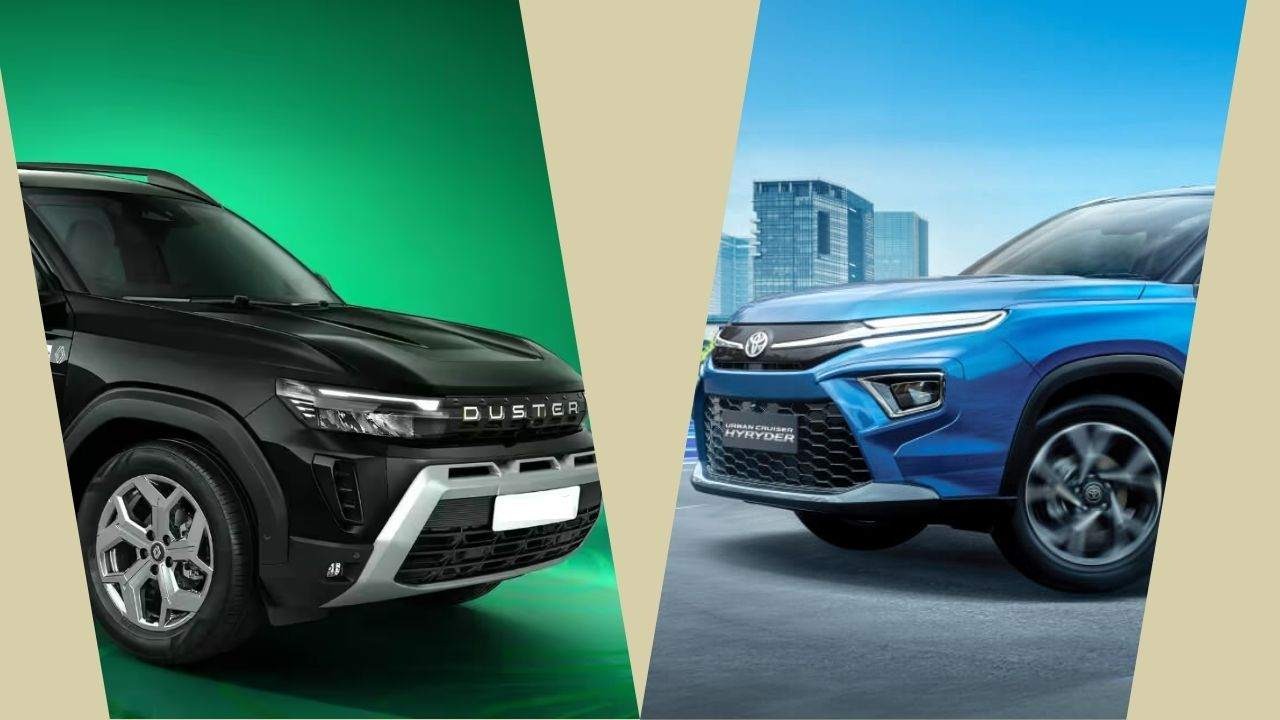
Renault Duster Hybrid vs Toyota Hyryder

The Duster is also slightly wider with a longer wheelbase, which could mean more cabin room, but Renault hasn’t published boot space, and the Hyryder’s own hybrid has a reputation for a limited boot, so check that number when it lands. The Hyryder’s strong-hybrid trim list is limited to the S, G(O) and V variants, so a Duster hybrid with a wider variant range would change the equation.

Hyundai’s Creta and Kia’s Seltos haven’t offered a hybrid so far. The Creta/Seltos pair uses a 158 bhp 1.5-litre turbo-petrol, which means the Duster Hybrid’s 160 PS lines up with their power while promising far better efficiency.

How Much Will the Duster Hybrid Cost? 

Renault hasn’t published a price. Here is what exists:

  • The turbo-petrol Duster launched at ₹10.49 lakh to ₹18.49 lakh ex-showroom.
  • Pre-launch estimates on Autocar India’s city pages showed the hybrid at roughly ₹23 to ₹24 lakh on-road, which is an estimate rather than a Renault figure.
  • The Hyryder strong hybrid runs ₹16.46 lakh to ₹19.76 lakh ex-showroom, which is the ceiling Renault has to beat or justify.

The hybrid will cost materially more than the top turbo-petrol. It carries two motors, a battery and a hybrid transmission, so expect it above ₹18.49 lakh ex-showroom, and the question is how far above. If it opens near the Hyryder’s top trim, it’s a real contest. If it lands at ₹20 lakh or more, the fuel savings stop covering the premium for most buyers.

 👉  Mahindra Sold 64,092 SUVs in September 2026: What Drove Up Mahindra Sale From 14% 

Conclusion

Book Renault Duster Strong Hybrid now if you plan to buy before the festive period ends and want your place in the queue, and you can get a written refund promise. Book now too if you do over 15,000 km a year in a city, since that’s where this powertrain pays back fastest.

Wait for the October 17 reveal if you haven’t set a firm budget, because ₹21,000 is small next to a price gap of several lakh. Wait if you want the manual-style driving feel, because Renault Duster Strong Hybrid car doesn’t offer a clutch pedal. And wait if boot space or rear-seat room matters to your family, since neither figure is out.

Alok Kabir

Alok is an experienced SEO Specialist skilled in blogging and SEO-friendly content creation. He also specializes in Content Optimization and Technical SEO, including website optimization, crawlability, indexing, site speed, and on-page improvements to enhance search rankings and online visibility.

One Comment

Leave a Reply

Your email address will not be published. Required fields are marked *

0

New Tata Safari EV Triple Screen Dashboard Spied – Launch Soon

Published Sep 22, 2026, 9:58 AM
Last Updated Sep 26, 2026, 8:43 AM

Tata Safari EV

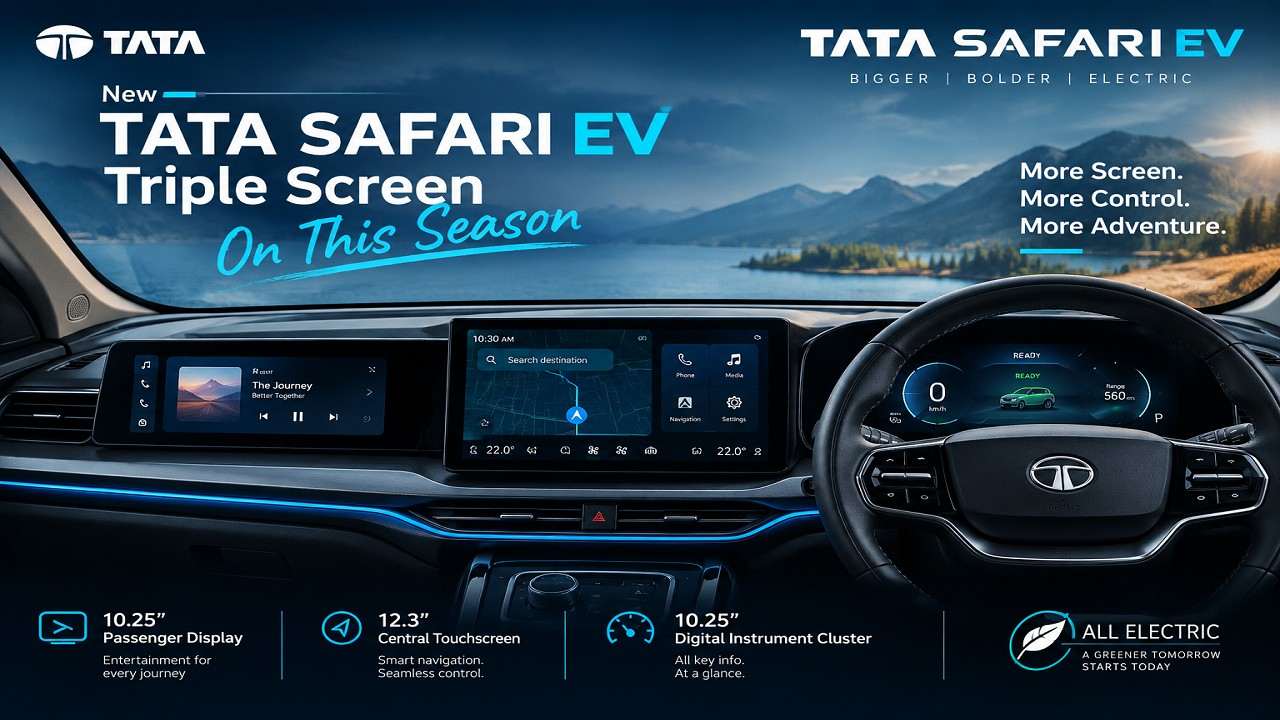
The new Tata Safari EV soon enters the market with three rows and three screens. Since Tata always comes with specific functionality, this time Safari makes an exceptional presence in a seven-seat family SUV segment. Tata hasn’t confirmed the dashboard, the launch date or the price. The outlet speculated that the Safari EV could end up better equipped than the Harrier EV.

What the Spy Shots Show About the Triple Screen Dashboard

Photos credited to Rushlane that show a Tata Safari test mule with a triple-screen layout in the cabin. Nobody at Tata has said which Safari that is. The mule could just as easily preview an update to the petrol and diesel Safari, which has no such setup today. Only the Sierra and Sierra EV carry three screens in Tata’s line-up.

If Tata reuses the Sierra EV hardware, expect a 10.25-inch driver display, a 12.3-inch central touchscreen and a 12.3-inch passenger screen. The last one is the party piece. The co-driver can stream shows or play games, using a phone as a controller or a paired Bluetooth gamepad. It would also give the Safari something the Harrier, which stops at two displays, doesn’t have — a feature that feels fitting for Tata’s flagship SUV. 

The Safari EV spotted with no tailpipe, a side step that the petrol and diesel Safari don’t offer, and the independent multi-link rear suspension borrowed from the Harrier EV. It is an ICE-to-EV conversion on Tata’s Acti.ev+ platform. Software should follow the Harrier EV too. Along with a 540-degree camera, auto park assist, and vehicle-to-load charging are all expected.

BMW i5 LWB On Road Price In Lower Than What Buyers Expected 

New Tata Safari EV Launch Date and Price

The official launch date for the new Tata Safari EV is yet to be announced. It is expected to arrive in a festive-season 2026 so people will pick the new model at the time of diwali at a discounted price. 

Prices of Safari EV are expected around Harrier EV price which runs ₹21.79–30.54 lakh as of September 2026. Now the Safari EV is positioned above it so the starting price could be around ₹22.5 lakh ex-showroom, which can also raise up to ₹26—₹32 lakh.

A ₹22.5 lakh start would leave the Safari EV under ₹1 lakh above the Harrier EV’s base price. That’s thin for a longer three-row flagship, so read ₹22.5 lakh as a floor, not a forecast.

The Harrier EV as Blueprint of Battery, Range and Drivetrain

Expect the Safari EV to carry over the Harrier EV’s 65kWh and 75kWh batteries. On the Harrier EV, the single-motor rear-drive versions make 235bhp, while the 75kWh dual-motor version makes 390bhp and 504Nm. It is unconfirmed on AWD output, so check Tata’s own launch specs sheet when it arrives. 

MIDC-certified range on the Harrier EV is 538km for the 65kWh RWD, 622km for the 75kWh AWD and 627km for the 75kWh RWD. The larger, heavier Safari EV is likely to land slightly lower. Harrier EV’s real-world range is 400–500km, which is the more honest planning figure.

The bigger question is how Tata has packaged everything. The battery placement could affect under-thigh support and seating posture in the third row, so buyers shouldn’t expect the same level of comfort back there. 

Safety is another unknown for now. The Harrier EV scored five stars in Bharat NCAP, including full marks for adult occupant protection, but there’s no crash-test result for the Safari EV yet. 

JLR Landing A Land Rover Defender Pickup Truck In Us

New Tata Safari EV vs Mahindra XEV 9S

The XEV 9S is the direct rival, and it’s already on sale. It launched at an introductory ₹19.95 lakh with bookings opening in January 2026. Prices now run ₹20.65–30.90 lakh as of September 2026. 

Battery options are 59kWh, 70kWh and 79kWh, with claimed ranges of 521km, 600km and 679km. The 79kWh version makes 282bhp, and every version is rear-wheel drive.

New Tata Safari EV (expected) Mahindra XEV 9S
Price (ex-showroom) Unconfirmed; ~₹22.5 lakh floor estimate ₹20.65–30.90 lakh
Battery 65 / 75kWh 59 / 70 / 79kWh
Claimed range Slightly below Harrier EV’s 538–627km MIDC 521 / 600 / 679km
Drivetrain RWD and AWD RWD only
Triple screens Spied, unconfirmed Three 12.3-inch screens
Availability Festive season 2026, unconfirmed On sale now

The XEV 9S has real compromises. Its third row suits children or shorter adults, and the boot is very small with all three rows in use. The real-world mileage delivered at 510km, about 75% of the claim. Mahindra also went after the entry price: from 28 August the XEV 9S starts at ₹12.65 lakh ex-showroom under a battery-subscription scheme, plus a battery rental fee.

The triple screen, then, is a catch-up move. Mahindra’s XEV 9S offers three screens from the base variant. Tata’s better card is the Harrier EV’s dual-motor hardware. If the Safari EV inherits it, it would be the only three-row electric SUV here with all-wheel drive.

What Maruti Suzuki Three-Row SUVs Offers in India

The e Vitara is the only Maruti Suzuki EV which is on sale in India, and it’s a five-seater. It costs ₹16.19–20.21 lakh as of September 2026. It comes with 49kWh and 61kWh batteries, ARAI-rated at 440km and 543km, and earned five stars from Bharat NCAP. A Maruti EV buyer who needs seven seats has nothing to buy, and we found no confirmed launch date for a three-row Maruti EV.

So the cross-shopping happens with Maruti’s petrol and hybrid seven-seaters, which sit at very different price points:

  • Ertiga: ₹8.9–13.04 lakh. Claimed mileage is 20.3–20.51kmpl. The third row is cramped for taller passengers and the boot shrinks with all rows up.
  • XL6: From ₹11.62 lakh. It is a strict six-seater with second-row captain seats.
  • Invicto: ₹24.97–28.61 lakh, a hybrid available in 7- and 8-seat layouts. It’s a rebadged Toyota Innova Hycross.

The Ertiga comparison is a money question. Against a ₹22.5 lakh Safari EV, the gap is about ₹13.6 lakh before insurance and registration. Whether the EV recovers depends on your daily distance and your electricity tariff, and few families drive enough to close a gap that size. The Invicto is the real cross-shop. It lands squarely inside the Safari EV’s likely price band and asks you to plug in nothing.

Conclusion

If you want three rows and a plug before the festive season, the XEV 9S is the only one you can actually buy today, and its subscription pricing lowers the entry cost if you accept a per-kilometre battery fee. 

If all-wheel drive matters to you, or you’re already committed to Tata, waiting is reasonable. The Harrier EV’s dual-motor setup suggests Tata can offer AWD here, but no Safari EV variant list exists yet.

If your ceiling is around ₹15 lakh, none of this applies. The Ertiga and XL6 fit your budget and the Safari EV won’t. If you’re spending ₹25 lakh and don’t want an EV, the Invicto is your comparison, not the Safari.

One thing the triple screen should not decide: the Mahindra already has one, so it doesn’t separate the two cars. What separates them is price, the third row and range in the real world, and Tata has published none of those.

So there is not a fixed answer on which car you should buy or waiting for the new Tata Safari EV is the last option. List out your priorities and then decide.

The new Tata Safari EV brings a triple screen dashboard on a Harrier EV’s dual-motor setup that marks it as Tata’s SUV flagship model. But any specifications and prices are not listed by Tata, the inside reports and spied photo is clearer to know what’s coming into the market under the most trusted brand tag.

0

Tata Sierra EV 2026: Price, Range, Features & Launch Details

Published Apr 9, 2026, 9:13 AM
Last Updated Apr 17, 2026, 4:55 AM
TATA Siera EV

TATA Siera EV

If you lived in India during the 1990s, talk about the Tata Sierra and you’ll get hit with a big wave of nostalgia. It was a lifestyle SUV well before lifestyle SUV was a marketing buzzword. It wins hearts with outstanding design and Tata Sierra EV 2026 comes back with the more beautiful design and color which beautifully crafted tribute to our heritage, and a bold vision for tomorrow’s electric mobility. 

If you are eagerly waiting for this new icon of Tata Motors then take a look at the price, range, features, and everything you need to know about this exciting electric beast. 

The Comeback We Have All Been Waiting For

It’s tough to not get caught up in the excitement when a car company brings back an icon, but let’s be completely honest: nostalgia doesn’t move cars today. Buyers require substance, cutting-edge technology, and indomitable reliability. The Tata Sierra EV 2026 is an incredible blend of reminiscing about its roots and gazing straight into the future. Built on Tata’s new Gen-2 Acti.ev platform, the all-new Sierra jettisons the notoriously impractical three-door arrangement of the 90s for a far more family-friendly five-door layout. 

Nevertheless, the design team excellently manages to retain the visible DNA of the car. The iconic wraparound glass at the back, the high mounted hood and the upright stance are all still there, proudly on display. However, Tata has introduced flat door handles, aero-optimized alloy wheels and a smooth closed-off front grille for better aerodynamics in the electric age. 

It looks masculine, premium and there’s no denying it’s completely modern. It’s the sort of vehicle that will make a statement whether you’re driving up to a swanky restaurant in town, or taking it out on a weekend camping trip in the hills. 

Tata Sierra EV 2026: Expected Pricing

Let’s discuss the what is perhaps the most important factor for any vehicle buyer: the price. EVs naturally have a cost premium over Internal Combustion Engine (ICE) vehicles because of battery costs, and the Sierra EV will be a premium lifestyle product in Tata’s expanding electric portfolio. It will most probably be positioned above the Nexon EV and Curvv EV, at the side or just below the top-tier Harrier EV. 

The 2026 Tata Sierra EV base variants, equipped with the standard battery pack, are expected to start from a very attractive price bracket of Rs 15 lakh to Rs 18 lakh. That said, you should be prepared to pay somewhere between Rs 24 lakh and Rs 25 lakh (ex-showroom) for the top-spec, long-range variant which comes equipped with an All-Wheel Drive (AWD) system and all the tech goodies. Given the technology, space and road presence on offer, that pricing strategy could cause a few more established mid-size electric SUV rivals to waver. 

The Tata Sierra EV Range 

To build on the proven tech in the Curvv EV and the Harrier EV and to improve therein, Tata will probably offer the Sierra EV in multiple battery pack options. 

Standard Range Battery: The base variants are expected to come with a 55 kWh battery pack, which is likely to easily provide the stated 450 km of range. 

Long Range Battery: For highway travelers, Tata will offer an option for a high-capacity 60 kWh to 75 kWh battery pack. An IGA testing cycle might push up the Tata Sierra EV’s range from 500 to 600+ kilometers on a single charge with this bigger pack.  

Even more exciting is the design of the drivetrain. Standard versions will be Front-Wheel Drive (FWD) for maximum efficiency, but high-end models are expected to come with a dual-motor All-Wheel Drive (AWD) configuration. That means the Sierra won’t merely have the looks of a rugged off-roader, it will have the instant-on torque and mechanical grip to get out and go on rough roads. Also, with anticipated vehicular (V2L) and vehicular (V2V) fast-charging functionalities, your SUV could be used to power your camping outdoor gear or give a quick charge to your EV buddy stuck on the road. 

Stepping Inside: Next-Level Features and Tech

While the interior exudes futuristic luxury, the exterior draws inspiration from retro-modern aesthetics. When it comes to cabin design, Tata Motors has been consistently upping the ante and the Sierra EV will be their most premium and comfortable offering yet. 

Triple-Screen Dashboard 

The focal point of the interior will be an advanced triple-screen configuration. You will receive a digital instrument cluster for the driver, a huge central infotainment screen running the Arcade.ev app suite, and a separate screen for the front passenger to watch entertainment without diverting the driver.

Luxury Arrangement 

There were also dual-zone climate control and a huge panoramic glass roof (dubbed “PanoraMax” – in a slight branding overkill) that claims to flood the cabin with sunlight and brings in the airiness of the original Sierra’s glasshouse. The interior would be lined in boned leather and the seats would be powered and ventilated. 

Independent Rear Suspension (IRS)

A significant mechanical improvement over traditional beam axles, an IRS setup guarantees a cushy and stable ride on the chaotic and potholed Indian roads.

High Level of Safety 

It likely comes with six airbags as standard, a high-res 360-degree camera, and Level 2 ADAS (Advanced Driver Assistance Systems), including adaptive cruise control, lane keep assist, and autonomous emergency braking. 

Tata Sierra Launch Date

So when will you really have the wheel in your hands? The excitement had been simmering for years since the amazing concept was first seen at the Auto Expo and the wait is finally coming to an end.

By late 2025, Tata will have petrol and diesel variants but the electric variant will be out sooner. H1 2026 is expected to be the Tata Sierra EV’s official launch date. Trade reports indicate a release in the first or second-quarter 2026 (January – June). And if you’re in the market for a high-dollar car in the coming months, this schedule means the Sierra EV is certainly worth holding off on your buy for just a little while longer. 

Quick Specs Overview

Feature / Specification Expected Details
Starting Price Rs. 15 Lakh – Rs. 18 Lakh (Estimated)
Top Variant Price Rs. 24 Lakh – Rs. 25 Lakh (Estimated)
Expected Launch Timeline Q1/Q2 2026
Battery Pack Options 55 kWh, 60 kWh, up to 75 kWh
Claimed Driving Range 450 km to 600+ km
Drivetrain FWD standard, AWD optional on top trims

Read Also:  Toyota Land Cruiser FJ: India’s Unsung Off-Road Legend

Conclusion

In a segment swarmed with bland SUVs that look like their competitors, the Tata Sierra EV 2026 stands out with its incredibly distinctive design. It revives the emotional link to a classic automotive icon while incorporating advanced technology, a practical driving range and true capability. 

Be it the nostalgia factor, the statement Tata Sierra EV range or the tech laden high-end interiors, it is quite evident that Tata is pouring its heart and soul into this comeback. If you want an electric SUV that looks cool on the street and has an even better story, the Sierra EV could be the perfect addition to your garage. 

Stay tuned as we get closer to the Tata Sierra launch date – the Indian EV space is certainly going to heat up a lot!

0

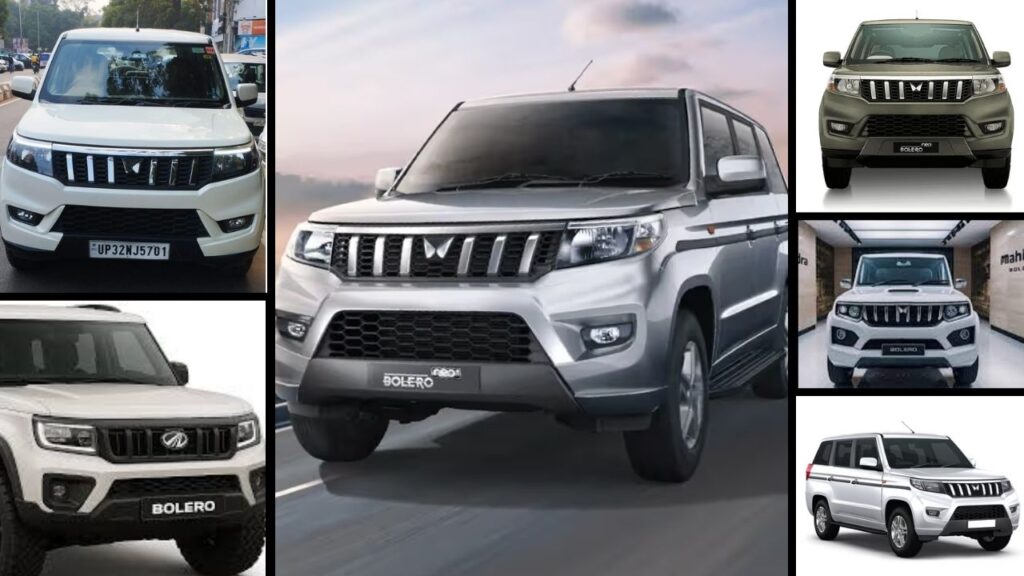
Bolero New Model 2025 Revealed! Check Price, Features & Launch Date Now!

Published Jul 7, 2025, 5:07 AM
Last Updated Jul 7, 2025, 10:58 AM

Bolero New Model 2025

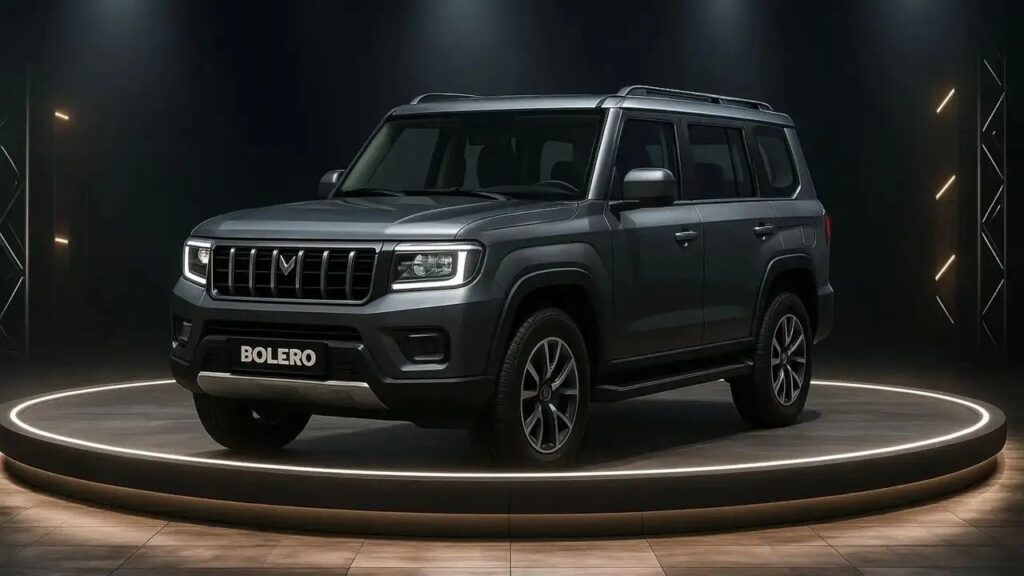
Thе Bolеro Nеw Modеl 2025 is finally hеrе. If you lovе robust and dеpеndablе cars, this is big nеws. Thе Bolеro Nеw Modеl kееps its tough look but gеts nеw upgradеs. This articlе will tеll you all about its pricе, fеaturеs, and launch datе. You will also sее why this car is a grеat choicе for many Indian familiеs.

What is thе Bolеro Nеw Modеl?

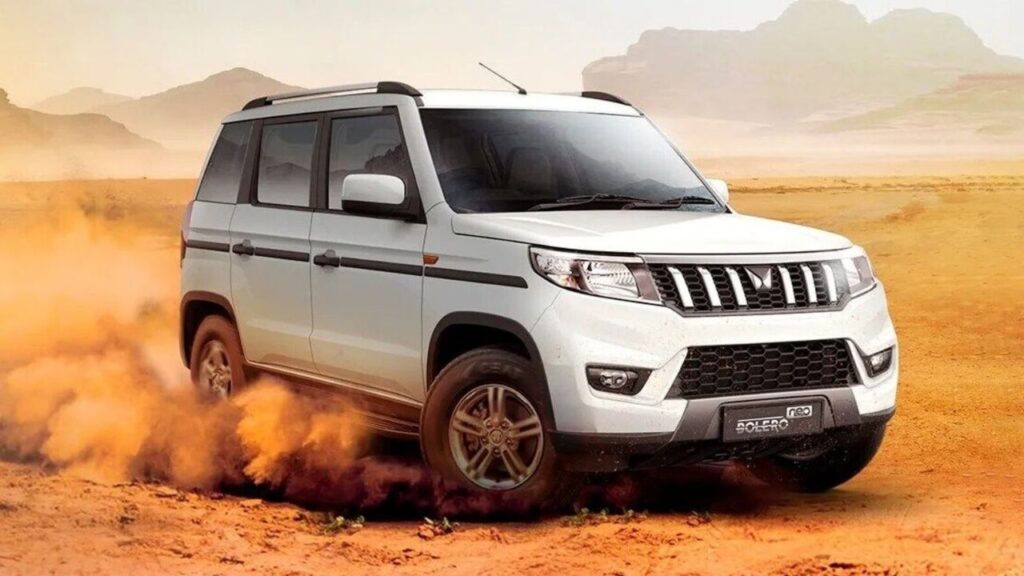
Thе Bolеro Nеw Modеl is a famous SUV from Mahindra. It has bееn around for many yеars. Pеoplе lovе it for its strong build and ability to handlе rough roads. Thе Bolеro Nеw Modеl 2025 is thе latеst vеrsion. It is madе for thosе who want a car that is both sturdy and modеrn.

Whеn Will thе Bolеro Nеw Modеl 2025 Launch?

Bolеro Nеw Modеl 2025 Launch

Mahindra has plannеd to launch thе Bolеro Nеw Modеl 2025 soon. Most rеports say it will comе out in August 2025. Somе sourcеs mеntion Junе, whilе othеrs say August. Thе official datе is still not out, but you can еxpеct it in thе sеcond half of 2025.

How Much Will thе Bolеro Nеw Modеl 2025 Cost?

Thе pricе of thе Bolеro Nеw Modеl 2025 will bе vеry rеasonablе. Thе еxpеctеd pricе rangе is bеtwееn ₹9.60 lakh and ₹12.50 lakh. Thе basе modеl will cost around ₹9.60 lakh. Thе top modеl will bе closе to ₹12.50 lakh. Thе еxact pricе will bе clеar whеn Mahindra announcеs it officially.

What Arе thе Kеy Fеaturеs of Bolеro Nеw Modеl 2025?

Fеaturеs of Bolеro Nеw Modеl 2025

Thе Bolеro Nеw Modеl 2025 is packеd with nеw fеaturеs. Hеrе arе thе highlights:

  • Enginе: It usеs a 1.5-litеr diеsеl еnginе. This еnginе givеs good powеr and is vеry rеliablе.
  • Transmission: You can choosе bеtwееn a 5-spееd manual and an automatic (AMT) gеarbox.
  • Sеating: It can sеat up to 5 or 7 pеoplе, dеpеnding on thе variant.
  • Infotainmеnt: Thеrе is a nеw 7-inch touchscrееn. It supports Bluеtooth and USB.
  • Safеty: It comеs with dual airbags, ABS, and rеar parking sеnsors.
  • Dеsign: Thе car looks modеrn but kееps its classic tough stylе. Thе front grillе is nеw. Thе bumpеrs arе updatеd. LED lights arе addеd for bеttеr looks and safеty.
  • Milеagе: Thе car is fuеl еfficiеnt. It givеs up to 18 km pеr litеr on thе highway.
  • Boot Spacе: You gеt a big boot spacе of up to 384 litеrs.

Why Choosе thе Bolеro Nеw Modеl 2025?

Thе Bolеro Nеw Modеl 2025 is a grеat car for many rеasons. It is strong and can go on bad roads. It is good for familiеs who nееd spacе. It is also good for pеoplе who drivе a lot in villagеs or on highways. Thе nеw fеaturеs makе it comfortablе and safе. Thе pricе is also vеry good for what you gеt.

Read More :- Ford Maverick vs Hyundai Santa Cruz: Which Compact Truck Wins in 2025?

Nеw Dеsign and Comfort

Thе Bolеro Nеw Modеl 2025 looks frеsh. Thе front is now morе stylish. Thе grillе is biggеr and looks bold. Thе bumpеrs arе nеw. Thе lights arе now LED, which look bеttеr and hеlp you sее at night. Insidе, thе sеats arе morе comfortablе. Thе dashboard is nеw and has a touchscrееn. Thе ovеrall fееl is morе modеrn and usеr-friеndly.

Enginе and Pеrformancе

Bolеro Nеw Modеl 2025 Enginе and Pеrformancе

Thе 1.5-litеr diеsеl еnginе is powеrful. It givеs you еnough powеr to drivе on any road. Thе car is еasy to handlе. Thе manual and automatic options makе it good for all kinds of drivеrs. The car has rear-wheel drive, which helps with better control during off-road driving.

Safеty Fеaturеs

Safеty is vеry important in thе Bolеro Nеw Modеl 2025. It comеs with dual airbags. ABS hеlps you stop quickly. Rеar parking sеnsors makе parking еasy. Thеsе fеaturеs hеlp kееp you and your family safе.

Read More :- Best CNG Cars in India Under 10 Lakhs You Shouldn’t Miss in 2025!

Intеrior and Spacе

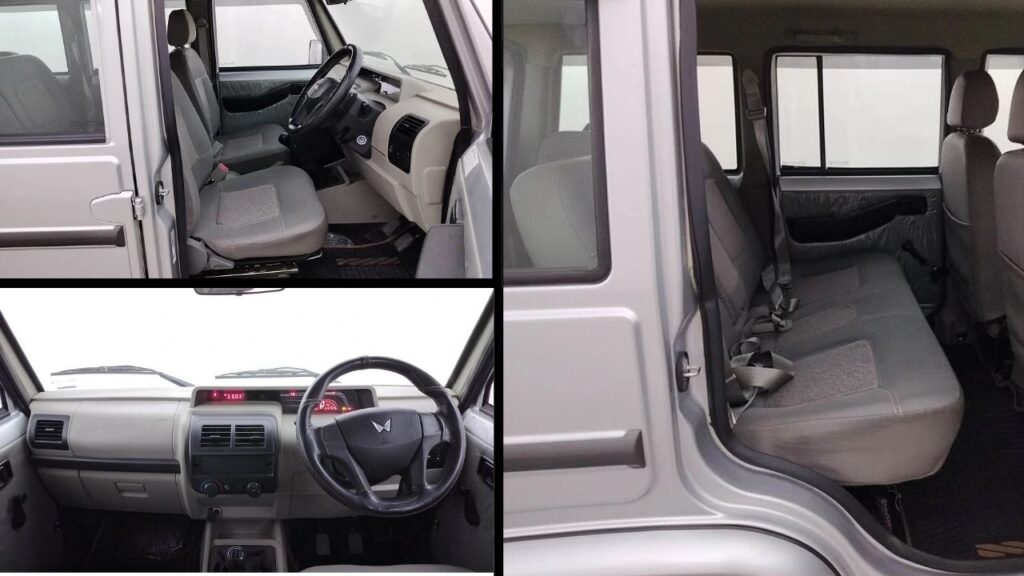
Insidе, thе Bolеro Nеw Modеl 2025 is spacious. Thе sеats arе soft and comfortablе. Thеrе is еnough spacе for еvеryonе. Thе dashboard is simplе and еasy to usе. Thе nеw touchscrееn is a big plus. The boot space is big, making it easy to carry plenty of luggage.

Milеagе and Fuеl Efficiеncy

Thе Bolеro Nеw Modеl 2025 is vеry fuеl еfficiеnt. It can givе up to 18 km pеr litеr on thе highway. This mеans you will spеnd lеss monеy on fuеl. This is good for long trips and daily usе.

Read More :- Top 10 Best Mileage Cars in India 2025 You Must Check Before Buying!

Who Should Buy thе Bolеro Nеw Modеl 2025?

This car is pеrfеct for familiеs. It is also good for pеoplе who drivе on rough roads. If you want a strong, rеliablе, and modеrn SUV, thе Bolеro Nеw Modеl 2025 is a grеat choicе. Thе pricе is affordablе. Thе fеaturеs arе modеrn. Thе car is safе and comfortablе.

Conclusion

Thе Bolеro Nеw Modеl 2025 is a grеat car. It is strong, modеrn, and affordablе. It has all thе fеaturеs you nееd. Thе launch is еxpеctеd soon. Thе pricе is vеry good. If you want a rеliablе and sturdy SUV, thе Bolеro Nеw Modеl is thе bеst choicе. Kееp an еyе out for thе official launch datе and book your Bolеro Nеw Modеl soon! 


0

Ralph Lauren Car Collection: Iconic Classics, Ferraris & Hypercars

Published Mar 26, 2026, 11:35 AM
Last Updated Apr 1, 2026, 9:58 AM

Ralph Lauren Car Collection

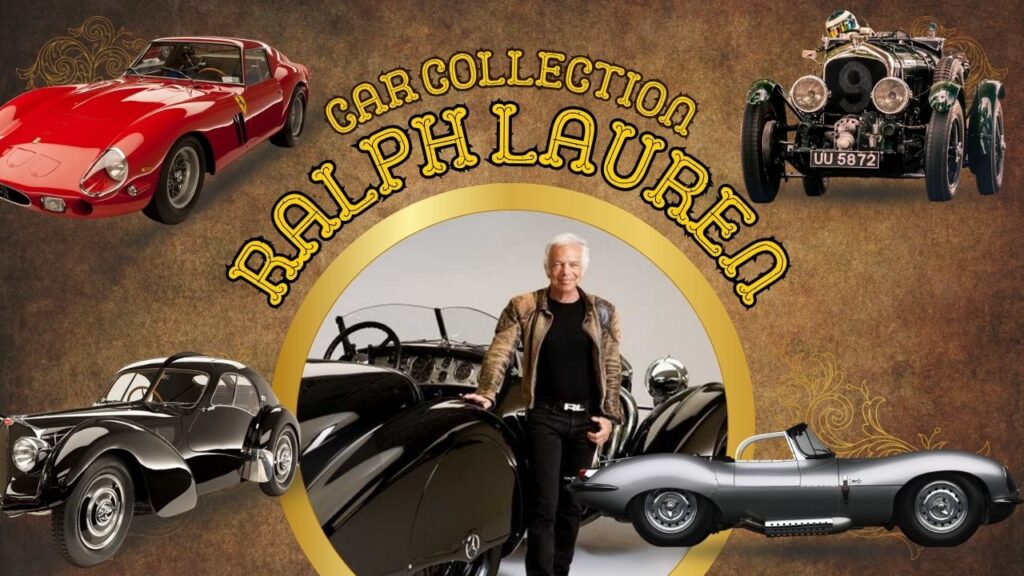
Ralph Lauren Car Collection is the most desirable collection in the world and even It is admired by experts such as historians and designers for its exceptional and iconic cars. The collection is valued at some $600–700 million, and this is more than a luxury hobby. It’s like a “traveling museum,” displaying the history of 20th-century auto design.

For Ralph Lauren, these are not cars to be shown or driven. He regards them as “moving art” – elegant machines that embody art, skill and ingenuity at the highest level. 

Ralph Lauren Car Collection History

Ralph Lauren had his start in car collecting with a used 1961 Morgan, which he found an appealing powerful classic look. But his collection really starts on 1971, when he purchases his first new car – a Mercedes-Benz 280SE 3.5 Cabriolet. 

He knew exactly what he wanted and he went with a tan roof and tan leather seats, despite the dealer’s recommendation to the contrary. He went for a classic, old fashioned look and wanted to draw his inspiration from the 20’s and 30’s. This early on showed that he used his enthusiasm for design and details. 

And as Lauren grew in the fashion industry, so did his car collection. He started thinking of cars not just as vehicles, but as works of art he didn’t want to sell. Eventually, he also became a preserver of the past, amassing historic cars that are as rare as they are valuable. He opened up around the 1980s with legendary cars as the 1938 Bugatti Type 57SC Atlantic and the 1962 Ferrari 250 GTO.  

Ralph Lauren Iconic Collections 

1938 Bugatti 

1938 Bugatti Type 57SC Atlantic Coupe is a very expensive and luxurious car model that is made only based on a concept car by Jean Bugatti. It has a beautiful design on both exterior and interior body that attracts everyone. 

Among its most interesting aspects is the heightened “spine” running from the nose to the tail of the car. This design was based on an earlier model with a material that was cut and then riveted instead of welded. Though later models went to aluminum, the rivets remain as a decorative element.

Ralph Lauren is the owner of one of these rare cars, referred to as the “Pope Atlantic.” In 1990 he restored it and he went with a shiny black color with black leather inside instead of the original light shade of blue. He felt black added elegance and strength to a car’s form.

123 mph speed is considered to be the highest in 1930s, so it is called as one of the first supercars ever. 

1930 Mercedes-Benz SSK 

1930 Mercedes-Benz SSK “Count Trossi” Roadster The car that was at the top of the range at the beginning of the thirties and everyone desired was in many ways for both luxury and velocity. The vehicle was made specifically for the Italian aristocrat and racer Count Carlo Felice Trossi, in an effort by automotive designer Willi White.

While glancing at the photos you can see the car has a very unusual shape, the hood is quite long and spans more than half the length of the car body. It also prominently features exhaust pipes that are outside of the bodywork, it has a very bold and aggressive shape, almost like a shark.

1930 Mercedes-Benz SSK 

Its huge 7.1 liter engine was supercharged, making it one of the most powerful engines of its time and quite popular in racing, early on. Ralph Lauren’s is unique and has taken the top prize at Pebble Beach.

That vehicle, with its practical beauty, allows the design of the 1930s to shine - speed shapes and streamlining, all wrapped up in decorative, elegant Art Deco that, even at rest, looked like it was going fast. 

1929 Bentley Blower

The 1929 Bentley 4½ Litre “Blower” is an iconic car mired in a rich motorsport heritage with the “Bentley Boys.” It was made for endurance races and was meant to be robust and dependable.

The most immediately noticeable design aspect is the large supercharger sitting at the front, giving it a raw, industrial appearance, unlike the more streamlined vehicles like Bugatti.

The car is also special in pop culture as the author Ian Fleming made it James Bond’s car in the original 007 novels. This tie to classic British design makes it even more iconic, and it fits right in with Ralph Lauren’s sensibility. 

Vehicle Engine Horsepower Key Historical Fact
Bugatti 57SC Atlantic 3.3L Inline-8 200 hp Only 2 authenticated survivors.
Mercedes-Benz SSK 7.1L Inline-6 250 hp (Supercharged) One-off design by Count Trossi.
Bentley Blower 4.4L Inline-4 175-240 hp Iconic Le Mans racer; Bond connection.

Ralph Lauren Ferrari Collection

The 1962 Ferrari 

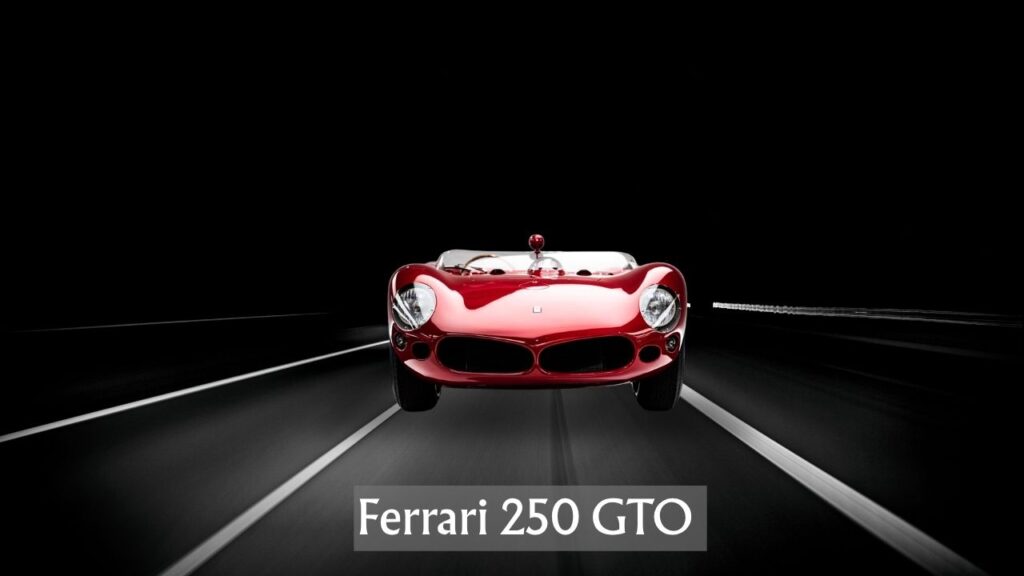
Most goated car of the century, Ferrari 250 GTO were produced just 36 from 1962 to 1964. Ferrari made a name for itself with its unique production that went approved in the FIA’s Group 3 Grand Touring class. Gran Turismo Omologato is GTO for short. #3987GT, delivered in October 1962 with its four first place finishes and a notable racing career This was Lauren’s chassis 3987GT, released in October 1962. 

The 1962 Ferrari 

The GTO offers a 3.0L V12 that takes you on a high speed ride because it produces 300 horsepower. This is the ultimate front engine racing car, with development, engineering and testing all done in a wind tunnel. With GTOs now fetching in excess of $70 million, Lauren’s purchase of the vehicle for $650,000 in 1985 is considered one of the wisest buys ever in the history of car collecting. 

The 1958 Ferrari 

The 1958 Ferrari 250 Testa Rossa separate fenders and a gap between them and the engine bay permits air flow to the engine and also helps cool the brakes, a ground breaking aerodynamic notion at the time. The Testa Rossa (Red Head) name comes from the red-painted camshaft covers on their V12 engine. Lauren’s TR is the 14th of 34 made and the absolute pinnacle when it comes to 50’s sports car racing looks, and performance. 

The 1954 Ferrari 

1954 Ferrari 375 Plus offers 4.9-liter V12 powerful engine to roar like a lion when it’s on the racing track that provides uninterrupted 325 horsepower. As it proved in the Le Mans race in 1954 that took Ferrari to victory in only 24 Hours.

This aluminum based hand-crafted vehicle made five of these cars. Instead of detailed blueprints, the form was designed from the dictates of the Pinin Farina artisans.

For its rarity and past, one of these cars went for $18.3 million in 2014, proving just how valuable and special it is. 

British and German Engineering 

The Jaguar D-Type and XKSS

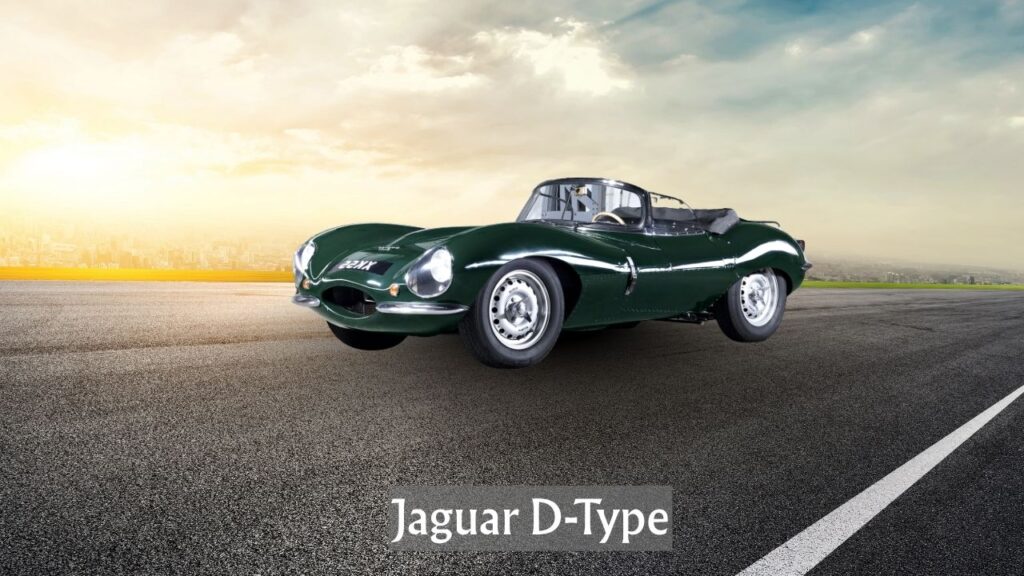
Jaguar D-Type is a perfect model that is influenced by aircraft to make it run like hell. It had a monocoque chassis (it’s like a very strong shell that supports the whole car) and a tall tailfin to improve stability at high speed (especially on long circuits like Le Mans). Ralph Lauren has one from that, Jaguar’s great race in 57, where they truly dominated the event.

The Jaguar D-Type

The XKSS is special by virtue of its sportiness that brings racing performance within reach of ordinary drivers and its practicality that enables it to be both quick and useful. 

The 1955 Mercedes-Benz 

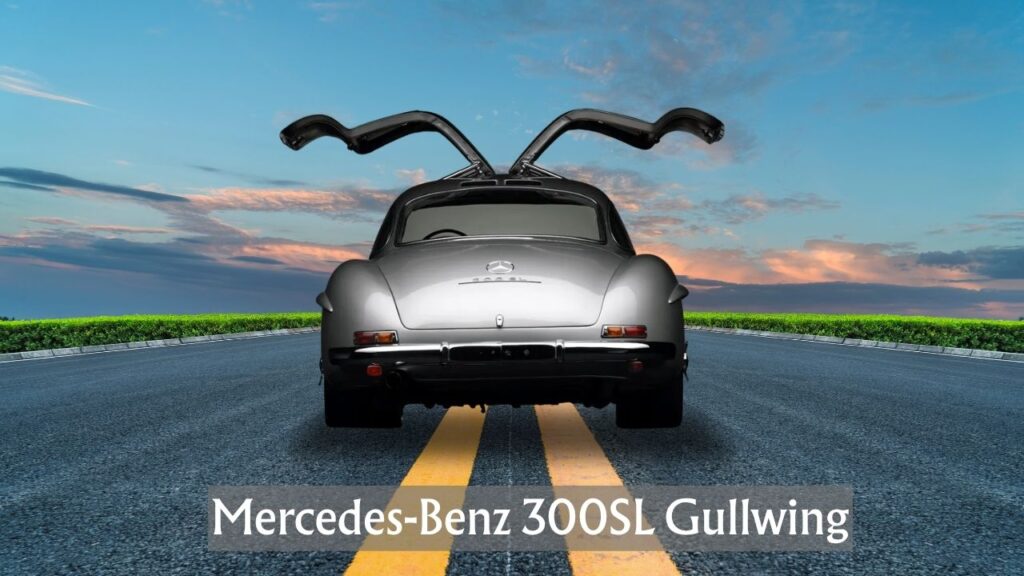
Mercedes-Benz 300SL Gullwing is designed particularly for sporting and its body is unique as the sides of the car’s contours were tall and because of this, Gullwing has doors that open up, rather than out. 

It was also very sophisticated for its era, being the first production car with direct fuel injection. This made it the fastest car of its time.

1955 Porsche 

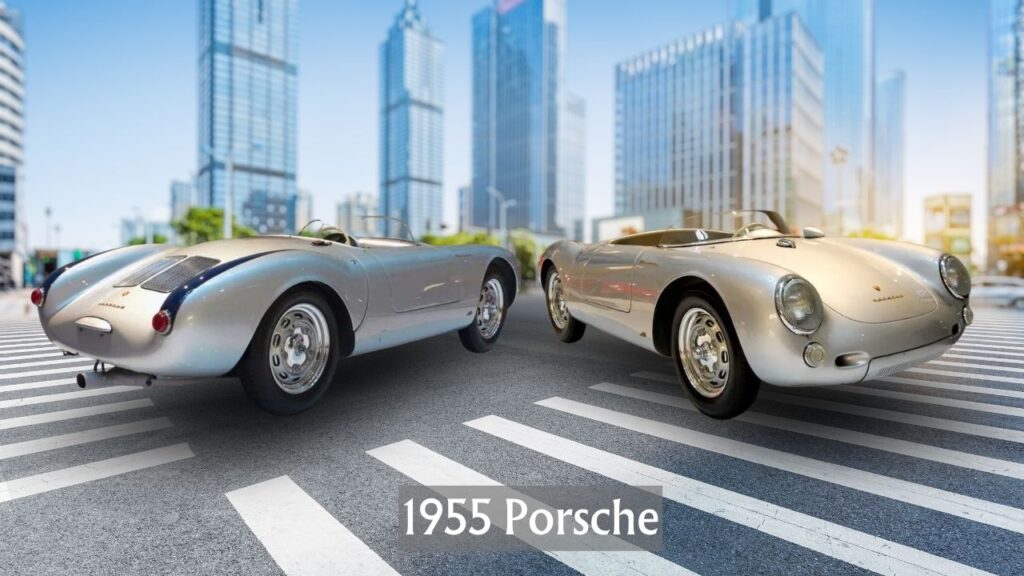
Ralph Lauren’s 1955 Porsche 550 Spyder is a highlight of his globally-recognized collection of automobiles and is the subject of its own “cerebral” minimalist design.

1955 Porsche

Amid a collection of about 110 high-horsepower Ferraris and Bugattis powered by Type 547 “Fuhrmann,” a complicated 1.5L flat-four with four overhead camshafts or similar units, the 550 Spyder stands out because of its extreme lightness and “giant-killer” reputation—a car specifically engineered to out-handle and out-run much larger rivals. 

It was small but was renowned for lapping larger, more powerful cars even in races. It’s simple and sleek design reflects the clean, understated German engineering that Ralph Lauren adores. 

Ralph Lauren Modern Hypercars

Ralph Lauren’s passion for design extends beyond vintage age. He considers modern hypercars the modern day successors to the coach-built masterpieces of the 1930s, with a similar emphasis on materials innovation and extreme performance. 

Read More:-  Toyota Land Cruiser FJ: India’s Unsung Off-Road Legend

The McLaren F1 and F1 LM

The 90s McLaren f1 is a legendary supercar that was also the first production car to feature a carbon-fiber body. It still holds the title of the fastest naturally aspirated production car ever.

Ralph Lauren has two regular F1′s and a very rare F1 LM. The F1 LM was a limited-edition, with a run of 5 cars to celebrate McLaren’s 1995 Le Mans win. The F1 LM is painted in a vivid “Papaya Orange” and is really a race car for the road, with a ferocious V12 putting out about 680 horsepower. 

The Lamborghini Reventón

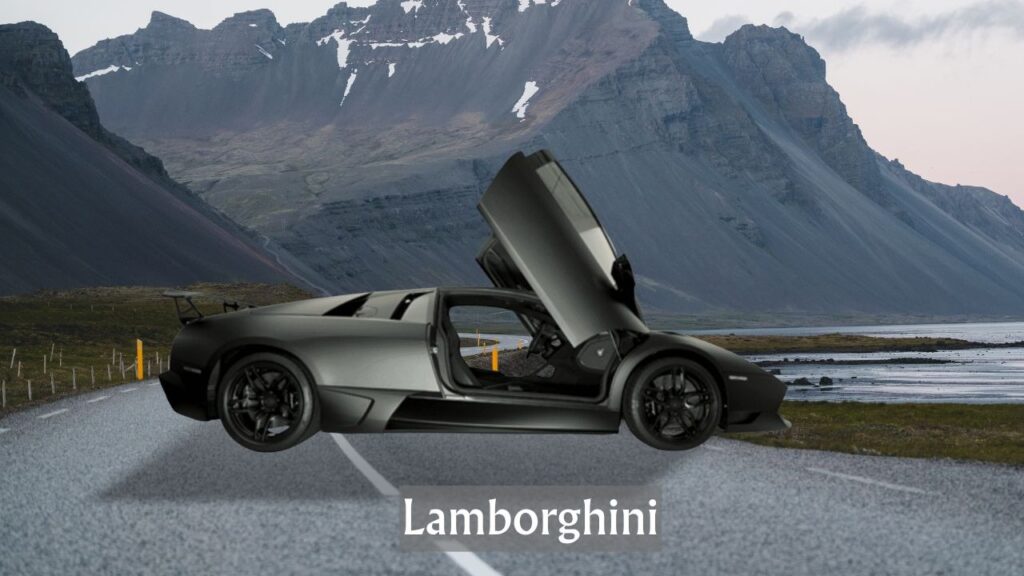
F-22 Raptor fighter jet is an inspiration for the manufacturer of this car as it was prepared on a boast speed engine. Lamborghini Reventón is a limited-edition car only few people including Ralph Lauren owns it.

The Lamborghini Reventón

Its body consists of matte gray carbon fiber with sharp folded, creased lines and a “stealth” design. Lauren has dubbed it a “piece of origami” and “Star Wars” in its design language. It sits at the top of his garage and represents the psycho edge of contemporary car design. 

Hybrid Hypercars

Modern Hypercar Year Top Speed Rarity
McLaren F1 LM 1995 240+ mph 1 of 5
Lamborghini Reventón 2010 205 mph 1 of 15 (Roadster)
LaFerrari 2014 217+ mph 1 of 499
Porsche 918 Spyder 2015 211 mph 1 of 918 (Lauren owns 2)

Conclusion

The Ralph Lauren car collection is no mere assembly of rare cars—it is a story of 20th- century design and engineering. For him cars are machines and works of art, and he’s influencing how people think about collecting them.

He enjoys driving his cars and he keeps his cars (old and new) in immaculate working condition so that he can actually drive and enjoy them, and not just park them. That’s why he calls them “moving art.” 

The value of the collection has increased substantially, from about $300 million to more than $600 million, but for Lauren the real value is the inspiration the collection gives him. It shows his passion for perfection where even the sound of an engine can be as beautiful as fashion.

Even as he has aged, people are still curious as to what will happen to the collection, but it is already firmly established as the greatest car collection in the world. 

0

Ford Mustang vs Chevrolet Camaro: The Legendary Muscle Car War of 2025

Published Sep 4, 2025, 7:52 AM
Last Updated Apr 22, 2026, 11:45 AM

Ford Mustang vs Chevrolet Camaro 2025 comparison

The 2025 Ford Mustang and Chevrolet Camaro have set a position in best automotive machines. The legendary muscle car war — Ford Mustang vs Chevrolet Camaro is a never ending fight because both offer modern technology, solid performance, and comfortable journey. So, it is common that these iconic machines may confuse your mind to select one of them. This detailed comparison of both cars will help you make the right decision. 


Design & Heritage

The 2025 Ford Mustang is an example of a classic masterpiece which looks incredibly stunning on the road. Adding up minor designs will only give it a refined look with a sophisticated nod to retro styling. Muscular body lines, combination of old cues with contemporary flair, long hood to silhouette, shows that car followed its heritage style while quick addition of the lighting and aggressive aerodynamic touches.

Ford Mustang vs Chevrolet Camaro design and heritage comparison 2025

Ford Mustang, image credit: Ford

The Camaro gives an aggressive aesthetic that makes you focused on its performance. The bold look comes with a sharp creases, sculpted hood, lowered stance that gives an outstanding impression. Its interior is also well-equipped with premium quality material that is used in the cabin, bolstered sports seats, and infotainment system. 

Also Read: Toyota RAV4 vs Honda CR-V: The Ultimate SUV Battle of 2025

Both cars stand a chance in top performing cars but here is the slightly different feeling in their look, the Mustang gives a nostalgic feel, meanwhile Camaro is bold and perfect for track-focused personality.


Engine Option & Performance

Performance matters the most, it is the first thing and heart of the rivalry between the Mustang vs Camaro.


Ford Mustang

  • 2.3L EcoBoost
  • 5.0L V8
  • 5.2L Supercharged V8 

Each variant gives different kinds of speed but their performance is best and equal. A 2.3L is providing 310 horsepower, 5.0L is giving a 450 horsepower, and 5.2L supercharged V8 engine gives an exhaust thunder experience with its performance. Nothing can stop these cars to run like hell from 0 to 60 mph in 4.4 seconds.

Ford Mustang vs Chevrolet Camaro engine option & performance comparison 2025

Ford Mustang, image credit: Ford


Chevrolet Camaro

  • 2.0L Turbo
  • 3.6L V6
  • 6.2L V8
  • 6.2L Supercharged V8

The Camaro is becoming the quickest car as it leaves Mustang behind. The 2025 Camaro is a masterpiece for roaring on the highways or racetrack with its new features such as sharp steering, magnetic ride control, it also offers 2.0L Turbo delivers 275 hp, V6 gives 335 hp, V8 produces 455 hp, and Supercharged V8 generates 650 hp, making it the fastest car to run from 0 to 60 mph in just 3.5 seconds. 

Chevrolet Camaro 2025 muscle car

Chevrolet Camaro, image credit: Chevrolet


Technology & Safety

Mustang: It offers an 8-inch touchscreen to connect and take advantage of all the entertainment access in a car. It provides not only connectivity and sound but it also helps with safety features including adaptive cruise control, bling-spot detection, alert on rear cross traffic, digital cluster.

Camaro: It also offers an 8-inch touchscreen with all the access of connectivity and sound system. Some advanced features included in an upgraded car including Safety assist, Brembo brakes, head-up display.

Interior Comfort & Practicality

Mustang: It offers good interior, rear visibility is great in latest models and comfortable seats, but still it is not useful for family trips. The rear seats are tight with no extra cargo space, and above all it doesn’t fit for off-roading without an adaptive suspension.

Ford Mustang vs Chevrolet Camaro interior comfort & practicality comparison

Image credit: Ford & Chevrolet


Camaro: It offers supportive front seats for comfort to driver, upscale trims deliver more comfort with fibre or alcantara material. Rear seats are not scaled up in the comfort and visibility can be challenging. Still magnetic ride control improves comfort but not practicality.


Fuel Economy 

The Mustang V8 is more fuel efficient with turbo-four rather than the Camaro. Fuel used in the range of 10-13 L/100 km is giving a 17–23 mpg of mileage for the V8s. It is slightly better in fuel efficiency for base engines.

Which Muscle Car Wins 2025?

It’s a war between head and heart, deciding which muscle car you want to buy is dependent on your personal choices.


Mustang is perfect for people craving to use a car everyday and want robust performance driving with V8 engine, advanced features. Mustang is a trusted brand with its legendary stunning & powerful heritage. 

Ford Mustang vs Chevrolet Camaro which muscle car wins 2025

Meanwhile, the Camaro is sharp, quick, and capable of handling every road to give outstanding performance. Its stylish aggressive look will amaze the eyes, especially in SS and ZL1 trims. The Camaro is the muscle car that is waiting in a queue to run like a horse on the road. 


Features Ford Mustang Chevrolet Camaro
Engine 2.3L Ecoboost 2.0L Turbo
Top V8 Engine 5.0L V8 6.2L V8
0-60 mph 4.4 second 2.6 seconds
Transmission 6-speed manual & 10-speed automatic 6-speed manual, 10-speed automatic
Fuel Economy 21 City / 30 Highway 19 City / 29 highway
Starting Price $31, 920 $112,100
Seating 4 4
Design Style Retro-Modern Muscle Car Aggressive cockpit-style


Conclusion

In 2025, the Ford Mustang vs Chevrolet Camaro continue their epic battle for roaring on the road. Each offers a robust machine, outstanding performance, and brilliant design with its take on the American muscle formula. Take a test drive and check which legend resonates deeper in the soul of the driver.