0

New Kia Niro EV Price 2025 – Full Details, Features & Latest Updates

New Kia Niro EV

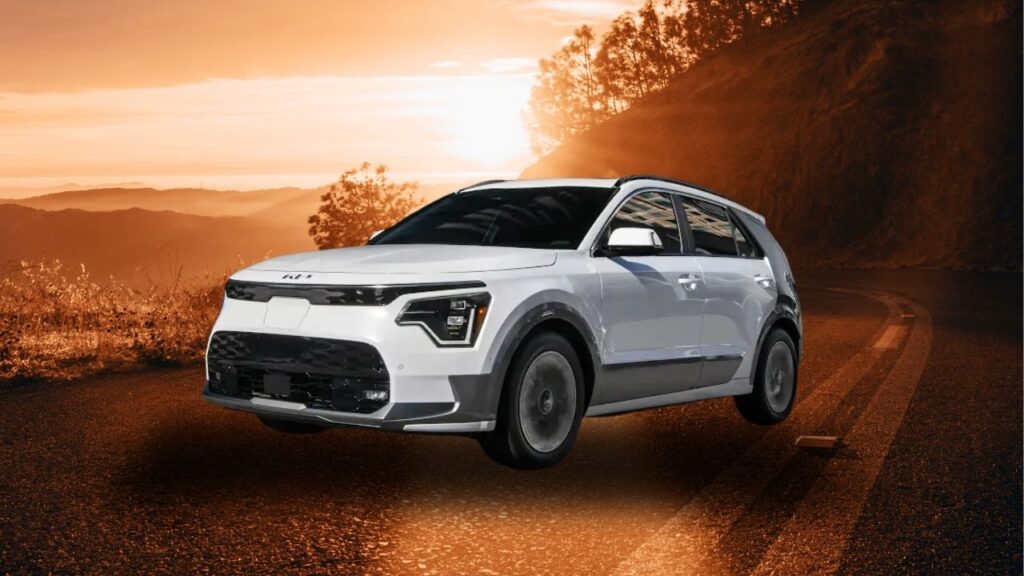
The 2025 Kia Niro EV is a total game-changer in the electric SUV class. If you’re considering an electric move without sacrificing comfort, style or practicality, this might just be the car you’ve been waiting for. So let’s take a closer look at what makes this little crossover such a thrilling proposition for green-minded drivers and adventure seekers alike. 

Niro EV Pricing Details

As far as the 2025 Kia Niro EV price is concerned, Kia offers an astonishingly good value-for-money package. The electric version begins at $40,995 for the Wind trim, which is quite affordable for a compact electric SUV. If you go for Wave trim, the price increases slowly, but the extra miles are worth it.​

To those in India curious about any possible pricing, the speculation is that if the Niro EV were to make a debut here, it could be priced in the region of ₹35 to ₹40 lakh, which would make it a really attractive premium cable option in the electric SUV segment. The recent penchant for EVs in India makes this a possibility to keep an eye out for. 

Niro’s Impressive Range That Won’t Let You Stop

Range anxiety is few and far between for the 2025 Kia Niro EV. With 253 miles of EPA-estimated range on one charge, this SUV will get you through your daily commute and weekend adventures. The car contains a 64.8 kWh battery pack that provides such excellent performance yet manages to be so efficient at 113 MPGe combined.​

Niro’s Impressive Range That Won’t Let You Stop

Everything is better charged and flexible. With a 240V home charger, you can charge the Niro EV from empty to full in about 7.5 hours. For those grab-and-go road trips, DC fast charging increases the battery from 10% to 80% in 45 minutes, long enough for a coffee break while your car is fuelled up. 

Unbeatable Design That Attracts Many Eyes

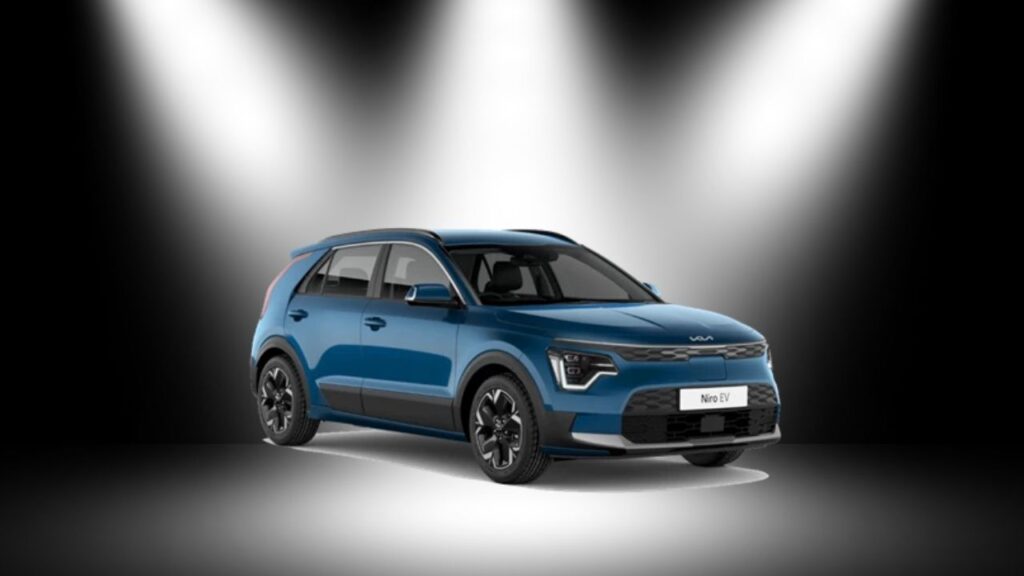
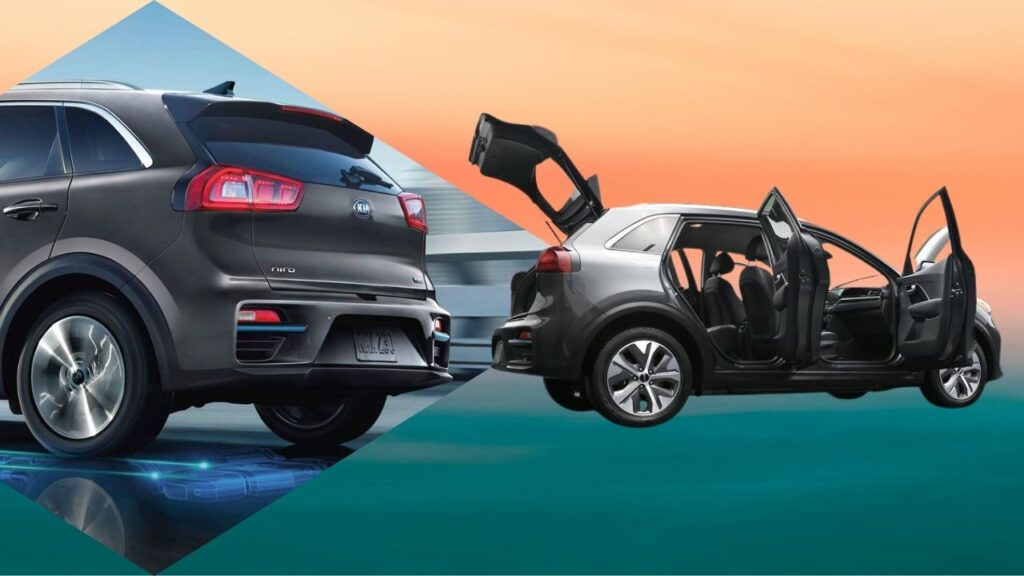
Kia’s design language has always been bold, and the 2025 Niro EV is no exception. The car comes with the signature ‘tiger face’ design at the front with eye-catching LED headlamps that makes it look clearly upscale. The body lines and the aerodynamic shape accompanied by the unique boomerang shaped LED rear lamps give the car a well-balanced modern and elegant look from every point of view.​

Unbeatable Design That Attracts Many Eyes

Its dynamic dimensions let you have an experience to drive comfortably in rush cities and perfect for road trips as it is large enough to carry everything so far. It offers 22.8 cubic feet of cargo capacity that can carry everything essential for the family trip including luggage, food or sporting equipment. 

Interior Experience That Feels Premium

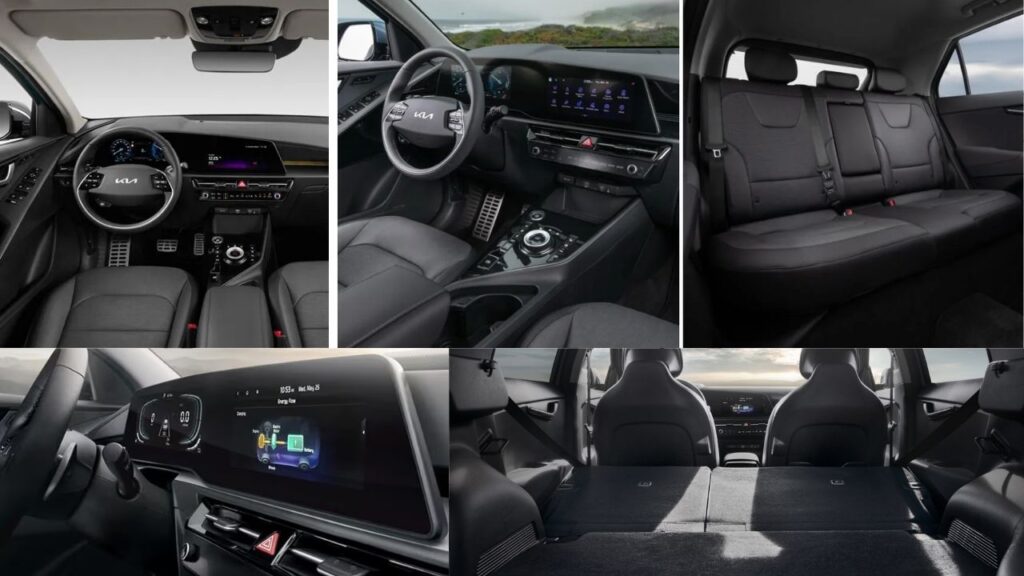
Step inside the 2025 Niro EV and the Kia Electrified philosophy of placing sustainability at the convenience-first focal point of the cabin is immediately clear. The two-screen setup features a 10.25-inch digital instrument cluster, 10.25-inch touchscreen infotainment system, and includes mirroring support for wireless Android Auto and Apple CarPlay. It allows you to keep your eyes on the road when using the maps or music, or when making calls.​

New Kia Niro EV Interior Experience That Feels Premium

What really sets the cabin apart is Kia’s commitment to sustainable materials.The interior features vegan leather seats and is lined with bio-based materials, demonstrating a genuine pursuit of sustainability in manufacturing. The 8-way power driver seat with lumbar support and heated seats for the front and rear passengers guarantee that comfort isn’t an afterthought. 

It provides a complete luxurious ride with amazing comfort features like dual-zone air conditioning, wireless charging and ambient lighting, a combination of fully premium vehicles. 

Powerful Performance of Niro EV 

Niro EV has 201 horsepower and 188 lb-ft of torque, enabling it to offer a responsive performance without sacrificing efficiency. The motor ’s instant torque also contributes to a smooth, quiet ride that makes driving in the city enjoyable.​ 

The suspension tuning is make-or-break – and it’s perfect. Niro EV Takes both a fine job of smoothing out bumps and potholes without becoming floaty, so it’s at home on both finely polished freeway lanes and rough-and-tumble city streets. The front-wheel-drive system delivers sufficient grip and stability on different terrains. 

Read More:- Nissan Leaf Expected ₹30 Lakh Price With Detailed Guide on Features and Range

Safety and Technology Features

Kia didn’t hold back with the safety equipment. The 2025 Niro EV includes the full DriveWise suite of safety features, with forward collision-avoidance assist, lane-keep assist, adaptive cruise control, and blind-spot detection. Features like automated emergency braking, lane-departure warning, and lane-centering assistance come as standard.​

Other safety features are a series of airbags and a high-strength body structure, which protect passengers in all kinds of situations. 

Conclusion

The 2025 Kia Niro EV is a well-rounded electric SUV that doesn’t makes any compromises when it comes to practicality, comfort, or style. Whether you’re a city dweller, a weekend adventurer, or just someone who’s excited to make the jump into electric mobility, this car makes a strong case. Thanks to its excellent range, stylish cabin, safety-first philosophy and reasonable price, Niro EV has the potential to be the best selling green car for convoying drivers who don’t want their green dreams to come at the expense of everyday living. 

Sharey Khan

Sharey Khan is an IT entrepreneur and petrol head & a car enthusiast. With a special focus on car-related content, he combines his deep passion for vehicles with a talent for crafting informative, engaging, and easy-to-understand content. His writing is driven by a genuine love for cars and he is committed to providing readers with accurate, up-to-date, and trustworthy information that empowers smarter driving decisions. 

Leave a Reply

Your email address will not be published. Required fields are marked *

0

How to Buy a New Car in India – Step by Step Car Buying Guide

Buy a New Car in India

Whenever you are going to buy a car you can get confused because of the sheer volume of choices. Don’t let your excitement make your wallet empty, carefully check the prices of the car then calculate them by adding RTO charges, insurance add-ons, etc. that surely seems hard to buy a new car in India. You will feel the sudden joy of owning a new car and getting buried under a pile of paperwork and pressure tactics.

If you’re planning to Buy a New Car in India, you should know your budget for driving the car home so you don’t end up overpaying. You can’t just go and buy a car from your neighbourhood showroom, choosing the right body style and brand to fit specific lifestyle needs is also important. 

This Car Buying Guide will help you understand what you should look for before buying a new car for yourself or your family member.

Why Buying a New Car is Hard?

There are tons of choices that attract you first but you get confused and never able to choose one right car for you. The fear that you might regret later so you are going to ask your friends and family members. 

What’s the catch? Car makers are upgrading features and variants each year so your friend who knows about the car which launched last year, but doesn’t know the latest launch of another car with the same price. The value of a car depreciates after one year, but if you want the right one which helps you commute places without burning your fuel and cause you expensive maintenance then look closely on the Car Buying Guide.

Why You Can’t Trust Car Dealership

Sales staff have pressure enough that they want to sell off the models which maximize profit. They know inside details from invoice pricing to backend profit margins but there are platforms like CarDekho that calculate it for you.

Dealerships often disguise the real amount of a car and often try to shift the focus to the monthly payment which costs you more than the total price of the car. This is a tactic to disguise inflated interest rates or extended loan terms. 

Financial Structure is Rarely Straightforward 

One thing you must understand is that a car price is just an approx amount, when you end up in a showroom then there are other charges that add-on and increase its value. Buyers have to account for taxes, registration fees of a car, dealership documentation fees along with add-ons charges.

Read More:- Best Automatic Cars in India Under 10 Lakhs – Easy Driving Options

How to Buy a New Car in India With Complete Car Buying Guide 

Step 1: Decide Your Budget 

Most people start by falling in love with a car model and then trying to “make the budget work.” Flip that approach.

Calculate your other commitments like mobile EMI, house rent, school fees and saving goals. After you put them aside, what’s your monthly take-home income will decide which car you can afford. A safe rule of thumb is to keep your total car-related EMI under 15-20% of your monthly income. Just make sure that those 15% includes the insurance, maintenance, and fuel cost too.

Don’t depend on the ex-showroom price that you see in ads. Search for on-road price of the car or calculate them with your state, RTO registration, road tax, and insurance. Overall, these charges are different across India but likely it’s somewhere between ₹80,000 to over ₹2 lakh.

Step 2: Decide Between Petrol, Diesel, CNG, Hybrid, or Electric

Where you wanna drive your car and upfront cost is a factor to decide which variant is best for you. It also matters on what purpose you are buying a car for:

Petrol cars are good for those who drive less than 1,000-1,200 km a month which means you wanna drive in a city. Maintenance cost is lower but fuel expenses can be higher over time. While diesel cars are good for drivers who run on highways because it can give you better fuel efficiency only at higher usage. 

CNG cars are a strong choice for those who want to switch from petrol or diesel cars. CNG cars offer great fuel efficiency but boot space and access to CNG stations are still a major problem. Hybrid cars offer both— better fuel efficiency and no worries on charging access but they are expensive.

Electric vehicles are best for those who have charging access at their home. City commuters can buy EV for their daily use within a predictable range. But if you live outside metro cities then it is still an issue for charging.

There’s no single car that comes as the best fuel type, only the one that matches your actual driving pattern.

Step 3: Shortlist 3-4 Cars, Not 1

It’s easy to get attached to a particular car after seeing an advertisement but make a decision after you’ve driven it yourself. It’s totally a different experience once you’re behind the wheel. 

Take a three–four cars test drive within the same budget and segment. Then compare their features to decide which one fits you. If the roads are rough, check if the car offers enough ground clearance. If you are looking for a car for your family then boot space and rear-seat comfort matters.

If you prefer CNG or electric cars then the service network in your city must be wider. It’s also wise to consider resale value trends and independent safety ratings since these can have a significant impact on long-term satisfaction. 

Spend time reading real owner reviews, not just marketing brochures. Forums and YouTube long-term review videos often reveal issues that don’t show up in a 15-minute test drive.

Step 4: Take a Proper Test Drive

Many buyers take a decision right after a 5-minute spin around the showroom parking lot which is just a waste of time. Real test driving must be performed in everyday conditions like rough roads, and traffic jams.

It will let you know ride comfort and suspension quality. Try reverse parking as well to assess visibility, turning radius, and the effectiveness of parking sensors or cameras. Also check features, air conditioning and cabin. Give a few minutes to check the comfort from every seat. Since the person who drives isn’t always the only person who matters in that car.

Step 5: Compare On-Road Prices Across Dealerships

Compare offers from multiple dealerships is the easiest way to stop overpaying. Many buyers think that there is a fixed price on a car but dealership margin, discount, and monthly sales targets can all influence the final amount you pay. 

Check out 3–4 dealerships and collect written on-road quotations. Don’t trust on words, just research about the RTO charges, Insurance deals, Add-ons, Accessories and warranty. Then add to the Ex-showroom price to get the actual price of the car. 

This single step alone can save you anywhere from ₹10,000 to ₹50,000, especially toward the end of a sales quarter when dealers are more flexible on discounts.

Step 6: Decide How You’ll Pay — Cash, Loan, or Lease

The way you finance your car can also affect the total cost of the car, buying at once can eliminate interest expenses. In the case of a car loan, choose the best offer among two–three lenders. 

If you’re paying upfront, you skip a lot of paperwork and interest cost — but make sure you’re not draining your emergency savings to do it. Dealership financing is convenient but they aren’t always the most cost-effective option. 

A few things to check before signing any loan agreement:

  • Processing fees and foreclosure charges
  • Whether the interest rate is fixed or floating
  • Loan tenure (shorter tenure means higher EMI but lower total interest)
  • Down payment requirement (usually 10-20% of on-road price)

If you change cars frequently or want lower monthly outflow without ownership hassles, a car lease through your employer (if available) is worth exploring too.

Read More:- How Electric Cars Are Changing the Future of Transportation

Step 7: Choose the Right Insurance — Don’t Just Take What the Dealer Offers

Dealers often bundle insurance into the on-road price, and it’s rarely the cheapest option available. You’re free to buy insurance from any insurer, not just the one the dealer pushes.

Compare:

  • Comprehensive vs. third-party-only cover (comprehensive is strongly recommended for a new car)
  • Zero depreciation add-on (almost essential for the first 3-5 years)
  • If you live in a city where roads are getting floody then engine protection is useful for you. 
  • Engine protection cover can also be beneficial, especially in cities that frequently experience flooding or waterlogging 
  • Other features such as No Claim Bonus protection and Roadside assistance can take away the financial burden of unexpected repairs or emergency assistance.

Step 8: Understand the Paperwork Before You Sign

This is where most first-time buyers get rushed. Take your time and check:

  • Booking receipt – confirms variant, color, and price locked in
  • Sales invoice – should match the agreed on-road price exactly
  • RC (Registration Certificate) application – usually handled by the dealer, but confirm the timeline
  • Verify that the policy details, coverage, and Insured Declared Value (IDV) are correct and match what was promised. 

Take care of document verification by yourself and never sign incomplete or blank forms.

Step 9: Do a Thorough Pre-Delivery Inspection (PDI)

Check everything before the car officially becomes yours. A final check is always a smart move even if the dealer has completed an inspection. Examine exterior and interior of the car, look for paint, panel gaps, tyres manufacturing dates, read odometer, and all the inside features and sensors. 

Confirm that all promised items have been delivered including extra tyre, manual and toolkit that listed in the invoice. Any missing item, tell the dealer before confirming the delivery. Solve every issue before the paperwork is completed so there is no headache after you completely own the car.

Step 10: Register the Car and Get RTO Formalities Done

You must know what’s happening even if the dealer is handling all the RTO registration for you. So there are no surprises after delivery. 

  • Temporary registration is usually valid for 30 days
  • Permanent registration and the RC book typically follow within a few weeks
  • HSRP (High Security Registration Plate) is mandatory and should be fitted before or shortly after delivery
  • FASTag activation is required before you take the car on toll roads

Organizing and keeping physical copies of key records such as the invoice, insurance policy, registration documents is necessary when roadside checks happen or during insurance.

A Few Things People Often Overlook

  • Resale value matters even on day one. Some brands and colors tend to retain their value better. If you might sell within 3-5 years, it can help you recover more of your investment.
  • Maintenance cost over 5 years, It’s also important to look beyond the sticker price, determining the real cost of ownership. A cheaper car with expensive spare parts can cost more in the long run.
  • Festive season discounts Dealerships often offer their most attractive discounts during festive season (Navratri, Diwali, year-end) are often the best time to buy. 
  • GST and cess on cars in India are already baked into the ex-showroom price, so don’t expect any further reduction there — buyers can often secure better deals through dealer discounts, complimentary accessories.

Conclusion of How to Buy a New Car in India

When there are a lot of cars around you that capture your eyes, how to Buy a New Car in India is the question that gets stuck into your mind. Why is it so hard and a Car Buying Guide will help you understand which car is right for you to buy.

There are reasons such as your budget, finance, variant, and design that reflects your decision. So choose 3–4 cars and compare them to buy a car, who rushed through one of these steps because they got excited or got pressured by a sales pitch regret later.

Take your time, ask for everything in writing, and remember that the dealer’s job is to sell you a car — your job is to make sure it’s the right car, at the right price, with the right paperwork. Do that, and buying your new car in India can actually be the smooth, satisfying experience it’s supposed to be.

0

Koenigsegg Cars: Fastest Models, Price, History and Top Hypercars

Published Mar 17, 2026, 12:43 PM
Last Updated Apr 6, 2026, 12:23 PM

Koenigsegg Cars

Let me tell you about a guy who as a kid in the 90s watched a Norwegian stop-motion film about a bike race and decided he was going to create the best sports car in the world. Christian von Koenigsegg was 22 when he established his company in 1994. While his friends were plotting their futures, he was ripping out pages from car magazines, teaching himself physics, and operating a strange trading business that involved importing misprinted plastic bags and — I am not making this up — frozen chickens. That poultry money? It would become the seed capital for what would ultimately supplant Ferrari, Porsche, and Bugatti.

Koenigsegg’s Fastest Creations

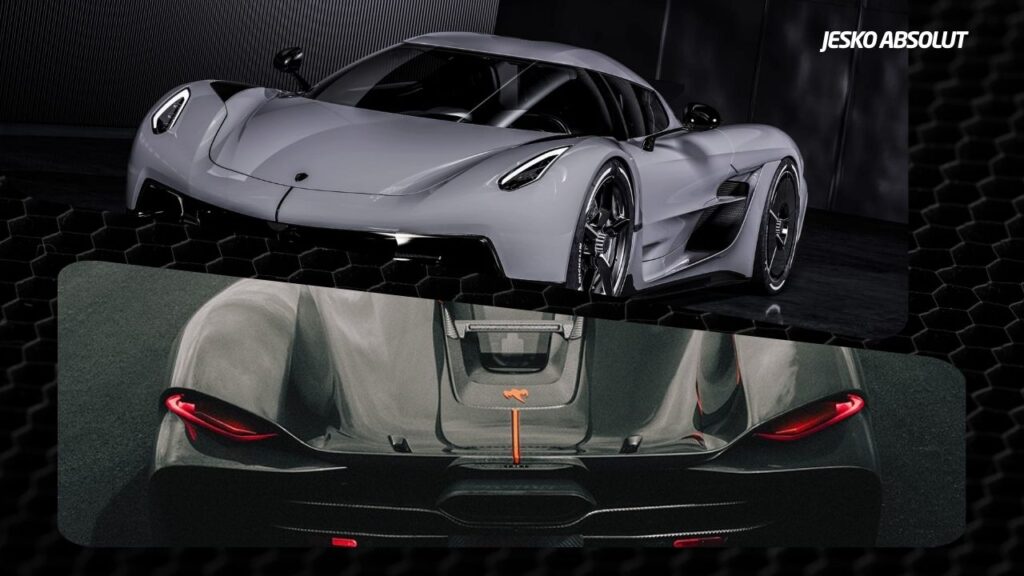
Jesko Absolut: Theoretical Velocity Champion

When Koenigsegg unveiled the Jesko Absolut back in 2019, they weren’t shy about making a sweeping statement: this would be their fastest car ever and could be the fastest production car ever. It takes its name from Christian’s father Jesko von Koenigsegg and features the ultimate expression of aerodynamic efficiency. Jesko Absolut’s drag coefficient is just 0.278 and maintaining very low frontal area and the Absolut creates only 40 kg of downforce at top speed – as opposed to around 1,400 kg generated by the Jesko on the track.

The Koenigsegg Jesko Absolut is a technical masterpiece, conceived to break new ground in terms of car performance.

Engine  twin-turbo V8
Power  1,600 horsepower on E85 biofuel
Transmission Koenigsegg’s Light Speed Transmission
Gear  nine-speed multi-clutch
Speed 330 mph

What makes this feat even more incredible is the engine is readily available. Koenigsegg’s V8, on the other hand, is a fairly compact unit compared to the monstrous W16—albeit elephantine in power levels and, really, it shouldn’t come as a surprise that it is also fairly massive. It’s over-efficiency meets excess, a marriage that encapsulates the brand. 

Regera: The Hybrid Game-Changer

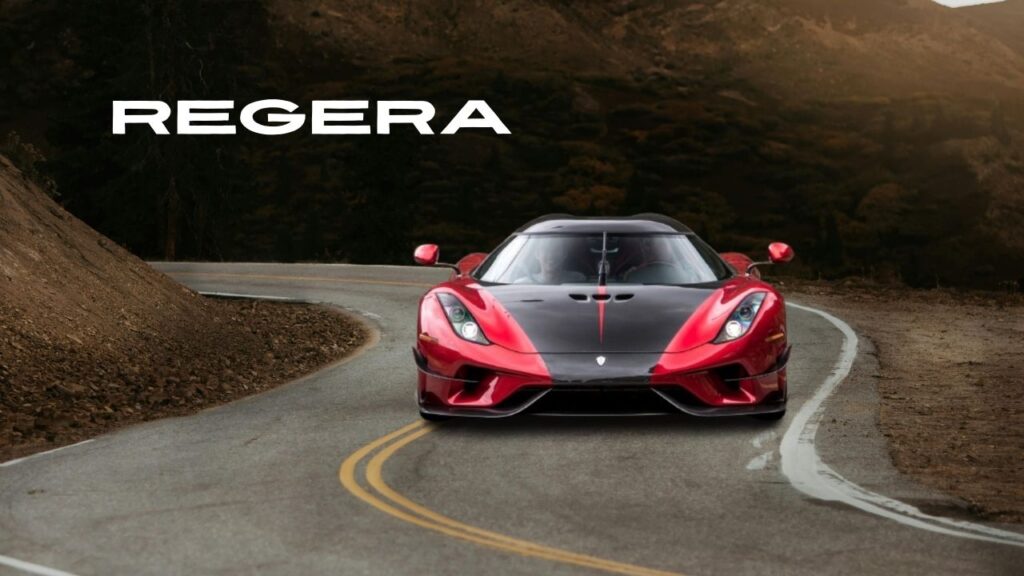
The Rager made hybrid performance look easy prior to the Jesko Absolut taking the spotlight. This revolutionary machine, which was presented in 2015, combined 3 electric motors with a 5.0-liter twin-turbo V8 engine generating 1,500 horsepower. Yet it was the transmission — or more specifically, what the car didn’t have in the way of one — that was the real invention, not the power. 

Regera

Koenigsegg has cut out the gearbox altogether, with its new Koenigsegg Direct Drive system. All speeds are taken care of by a single fixed gear ratio and at low speeds electric motors compensate for the torque gap. Regera offers smooth acceleration from 0— 250 mph within the same gear and it goes from 0-250 mph in 20 seconds, this raw number is a reality that feels like a dream but it’s true power.. 

It became an example of Koenigsegg’s thriller hero. The “Autoskin” makes the car open and close all its doors and panels like a transformer would show pieces of metal choreography. It’s redundant, over the top and completely mesmerizing — exactly what a hypercar should be. 

Agera RS: The Record Breaker

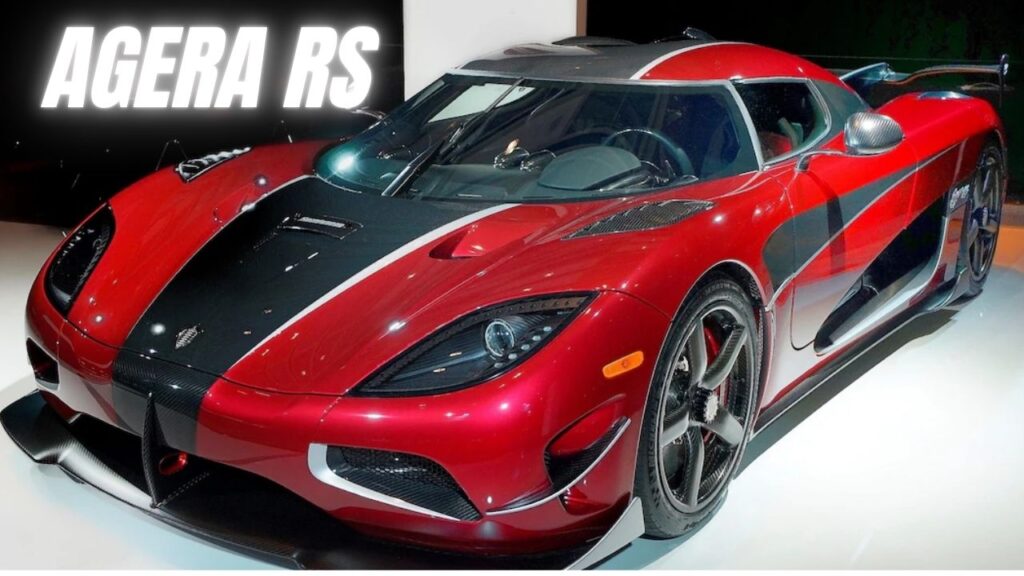
Agera RS is the top design car that exists on this land which was introduced in 2015, its mind-blowing power and speed covered with tech is extreme.

Agera RS

Engine  Twin-turbocharged 5.0-liter V8
Power  1,341 horsepower 
Top speed 277.9 mph (447.19 km/h)

It holds a position to break multiple records on the ground, it proves its capabilities and power to stand out as the most powerful engineered car on the platform.

Koenigsegg CC850 

This car is produced on high demand to the 70 units as it is a reboot of the old CC850. The end result is a hypercar that blends such familiar forms with genuinely new technology. 

Key Specifications

  • It offers a 5.0-litre twin-turbo V8 powerful engine to make 1,280 horsepower.
  • That’s not it, with 1,106 pound-feet of torque and 1,385 horsepower on E85—it runs like hell. 
  • The transmission is a cutting edge 9-speed multi-clutch system with gated shifter, which gives driver ability to shift gears manually. 
  • Performance: approximately 2.4 seconds to 0–100 mph.
  • This layout recreates the touch & feel of a real stick-shift without the use of a clutch pedal while keeping the drive-line connected to the driver. 
  • Price: Approximately $3.65 million  

Visually, the CC850 is inspired by the classic CC8S yet it’s completely up to date under the bonnet. It has clean lines, modern mechanics and a removable targa top that improves the driving experience and the timeless look of the car.  

Gemera: Revolutionary Technology

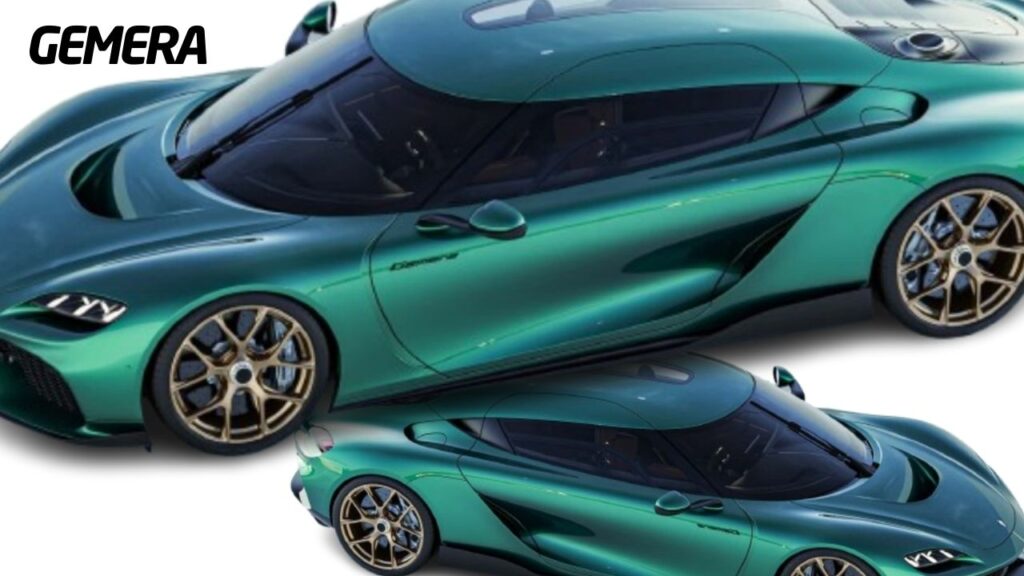
The Koenigsegg Gemera has been touted as the world’s first Mega-GT. The Gemera is not an outlier in that sense, but rather a sign that hypercars can be both blisteringly fast and useful, two traditional requirements that rarely coexist, though that is now changing with more mainstream products resembling megacars.

Gemera

It’s got true four-seat space with comfort and still manages to deliver the mind-bending power Koenigsegg is renowned for. 

Two Powertrain Options:

Three-Cylinder Hybrid

The above engine is one which has been engineered to amazement with extraordinary approach and thinking and hence the innovation in the automotive industry. 

  • It is a 2.0-liter twin-turbo three-cylinder engine with advanced Freevalve technology, which does away with the traditional camshaft. 
  • It produces a respectable 592 horsepower from just the internal combustion engine.
  • When combined with Koenigsegg’s Dark Matter electric motor, the overall total output upgrades to mind-boggling 1,381 horsepower and 1,364 lb-ft of torque. 
  • Despite its small size and lightweight design at a mere 70 kg (154 lbs), this engine is the most powerful three cylinder engine ever made. Its blend of power, efficiency, and innovation establishes a new standard in hypercar performance. 

Efficiency: This technology reduces emissions while driving by about 15–20% and cold-start emissions by nearly 60%, making it marginally cleaner than most hypercars. 

Hot V8 (HV8)

The Koenigsegg car described is the height of engineered automotive perfection and performance. 

engine  twin-turbo-charged 5.0-liter V8
advanced  “Hot-V” turbo
power 1,479 horse power
Combination with Dark Matter, a radical new, high-tech electric motor (800 additional hp)
Power & Torque 2300 total, 2028 torque

 About Transmission: Both the engines are equipped with Light Speed Tourbillon Transmission (LSTT) – a 9-speed, 7-clutch automatic inspired by the Jesko’s LST. For an instant shift from input shaft to the crankshaft for instant shifts of the flywheel. 

Practical Features:

Feature Details
Drivetrain 4-wheel drive and 4-wheel torque vectoring 
Storage 200 liters of storage space
Family-Friendly Options Isofix child seat mounts and roof rack compatibility
Fuel Tank 115-liter capacity
Battery & Electric Range 14 kWh battery pack providing 31 miles of electric-only range
Infotainment & Comfort Apple CarPlay and heated, electrically adjustable seats
Price Starting at $1.7 million USD

The Dark Matter E-Motor

Gemera spearheads Koenigsegg’s “Dark Matter” electric motor is a radical feat of engineering that will shape the design of future automobiles:

  • Output: 800 hp and 922 lb-ft (1,250 Nm) of torque
  • Weight: At only 39 kg (86 lbs), lighter than a bag of cement
  • Design: “Raxial Flux” - a radial and axial flux designs hybrid that wasn´t known in the automotive vocabulary until Koenigsegg designed it.
  • Technology: 6-phase system (double the usual 3-phase) based on silicon carbide semiconductors allowing for faster switching and low heat dissipation,
  • Materials: Motor is up to 90% carbon fiber including rotor and stator structures with no insulator layer added – world first
  • Size: 383.3 mm H × 381.5 mm W × 135.5 mm D – small enough to slip in a backpack! 

Topped off with the “David” inverter (at 33 lbs, the inverter is capable of 1,300+ amps and 850 volts), this system is the bleeding edge of electric propulsion. 

What Excellence Costs

Being able to own a Koenigsegg means you have the matching financial capabilities to the car’s insane performance. The Jesko, in Attack and Absolut versions, costs $3 million prior to options. The Regera, capped at 80, started at $1.9 million but now trades for far more in the secondary market. Even Gemera – which is basically entry-level in the hypercar firm’s product range, being a four-seater hybrid with 1,700hp – has a list price of over $1.7 million.

Excellence Costs

This is all to say: these numbers all make sense. Build a Koenigsegg, it takes about 4,000 hours. The carbon fiber monocoques are baked in autoclaves, the engines are hand built — not by robots — and quality control involves measurements within tolerances gauged in microns. So when you’re making about 50 cars a year, total — from all models — there are no economies of scale. 

Koenigsegg, however, insists its prices represent value relative to the other players. A Bugatti Chiron Super Sport 300+ is around $4 million, and limited edition Ferrari and Lamborghini models regularly go beyond the $2 million mark, although they’re less impressive in terms of numbers. In the wacky hypercar world economics, Koenigsegg is the engineer’s choice — buy for function, not badge heritage. 

Read More:- Gautam Singhania Car Collection 2026: Ferrari, Lamborghini, McLaren & More

Conclusion

What started as an impossible dream for a 22-year-old is now a reality in automotive form. Koenigsegg, the world’s most prestigious manufacturer, shows that passion, mixed with true engineering innovation, can trump the availability of resources. These are not just quick cars – they make statements on what is capable for human, making us think that the established ways really are the only way forward.

Each and every Koenigsegg is a culmination of two decades of obsessively refining, making engineering breakthroughs beyond any conventional understanding and a stubborn belief that perfection remains worth chasing up and chasing down, despite being ultimately unattainable. 

In a business increasingly defined by corporate consolidation and regulatory compromise, Koenigsegg is a beacon that originally appeared on Quattroruote in Italian individual vision and mechanical purity. The Ghost Squadron is still flying, faster and more vibrantly than ever, a reminder that there remains a place for the rebel in the highest veins of automotive excellence. 

0

This Used Luxury Car Costs the Same as a Top-Spec Maruti Fronx

Published Sep 12, 2026, 11:35 AM
Last Updated Sep 15, 2026, 6:22 AM

Used Luxury Car Costs

A luxury car usually comes with a luxury-sized price tag, but the used-car market can flip that equation pretty quickly. That same used luxury car price will depreciate 3x lower after a few years later. There are German luxury sedans that, after a few years of depreciation, can come within the same price territory as a new Maruti Fronx. 

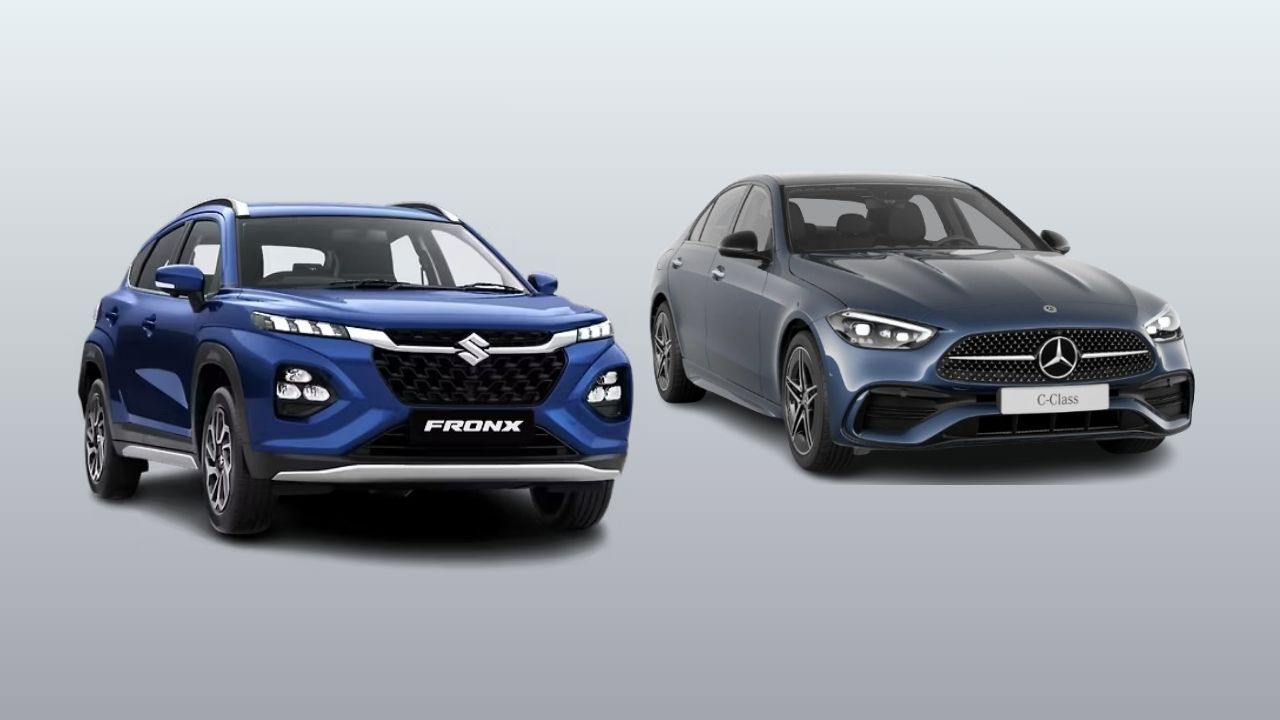
You can drive home a Mercedes-Benz C 220d Edition C instead. Same budget as Maruti Fronx. A three-pointed star instead of an “S” badge. That’s not a hype — it’s what eight years of depreciation does to a German diesel sedan that once cost more than three Fronxes put together.

This isn’t an argument that the used luxury car automatically wins. It’s a look at what you’re actually trading and what nobody tells you about when you take that trade.

Why a ₹43 Lakh Luxury Car Now Sits Next to a ₹14 Lakh Hatchback-SUV

Like any German Luxury Cars, Mercedes-Benz price comes three times down from the original price of ₹43.54 lakh ex-showroom. It reached nearly a Fronx Alpha cost today, starting at 7.57 lakh ex-showroom when one of the first owner of Edition C advertised C 220d Edition C at ₹7.90 lakh in Chandigarh.

It came with the design Hyacinth Red paint option (a first for the C-Class in India), gloss-black five-twin-spoke alloys, a black front apron spoiler and rear spoiler, open-pore black ash wood trim inside, stainless-steel sports pedals, and a Garmin Map Pilot navigation system as standard — kit that, at the time, most rivals charged extra for.

Nine years later, that same car — now with a typical 50,000–75,000 km on the odometer — is listed on used-car platforms with the exact number swinging hard based on mileage, ownership history, and whether it’s the diesel Avantgarde or a lower petrol trim. 

The 220d Edition C which runs around 55,000–65,000 km in its life is priced the same as the Maruti Fronx. However, well-maintained used car prices can be negotiable so the mentioned price are starting price point not a fixed price from the owner

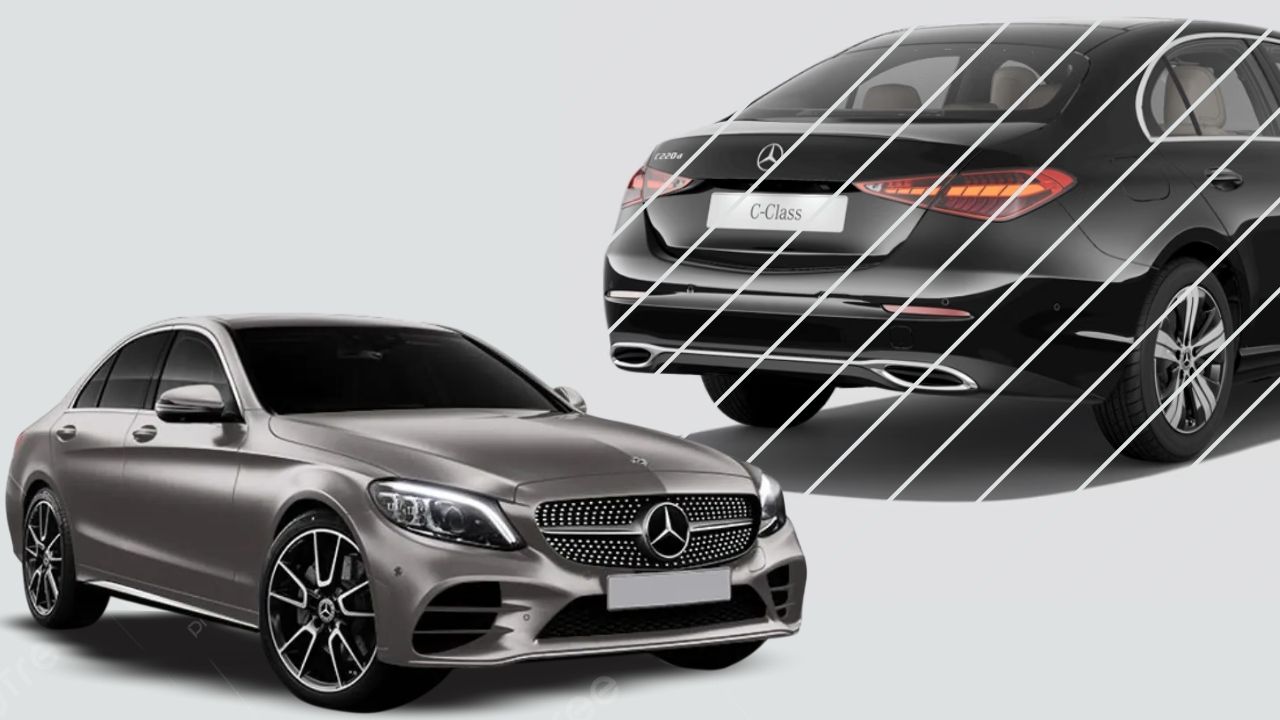
What the Mercedes-Benz C 220d Edition C Offers

C 220 d offers a 2.2-litre four-cylinder turbo-diesel engine which produces power of 170 bhp and 400 Nm of torque. The 2,143 cc diesel engine paired with 7G automatic transmission so inspect the exact gearbox generation before you commit to confirm.

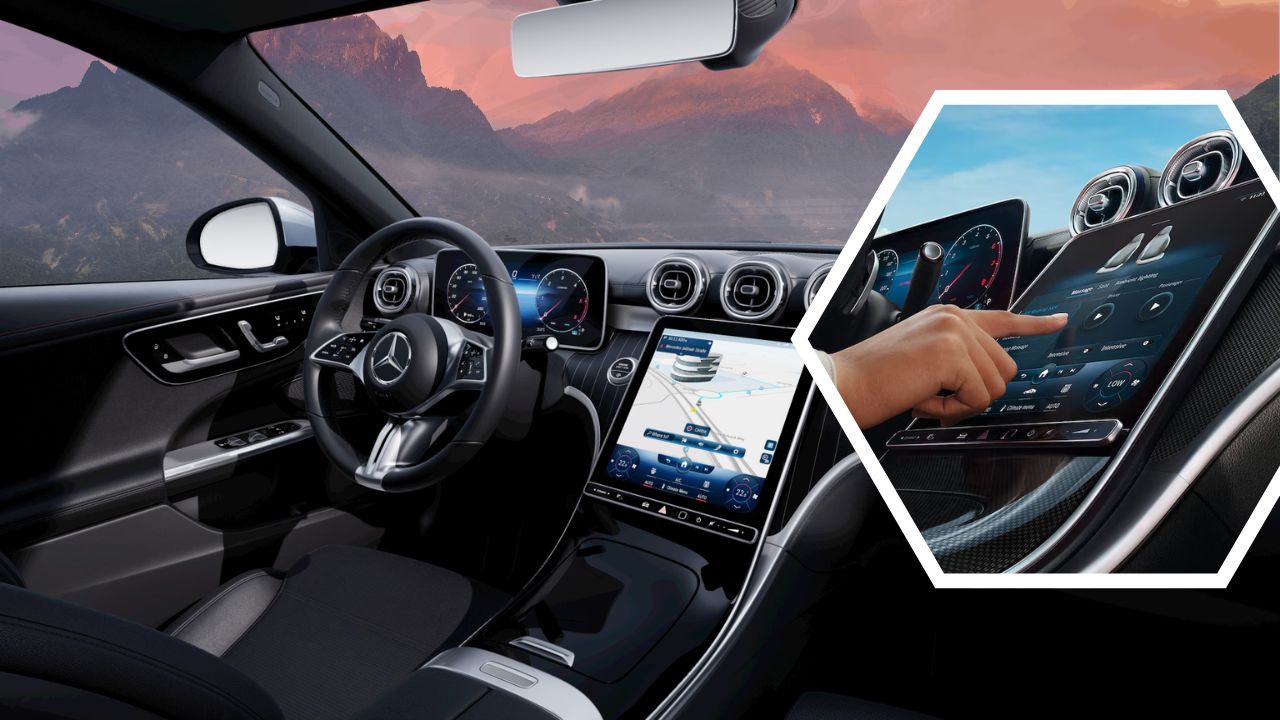
What makes this edition rare is its styling features, the AMG-style body that represents an aura. It introduced a next level look and cabin comfort as it was made of sports seats with contrast stitching, ambient lighting, split-folding rear seats

It offers 170bhp of power and 400Nm of torque with a torque-converter automatic gearbox so it doesn’t run but roaring on the road.
Mercedes-Benz C 220d Edition C Offers

What 400 Nm torque figure means on the road?

The 400 Nm of torque in a diesel car is rarely seen on Indian roads, and it arrives low in the rev range. That’s the reason why W205 diesel earned a reputation as an effortless highway cruiser rather than a usual car which takes a lot to get moving.

Benz 220d Edition C offers enough boot space for trips to become possible —  close to 480 litres. This space is perfectly great for even a family luggage too so that makes it noticeably larger than a compact SUV at this price point.

Diesel Torque vs Turbo-Petrol Efficiency Comparison

Spec Mercedes-Benz C 220d Edition C (2017, used) Maruti Fronx Alpha Turbo DT AT (2026, new)
Engine 2.2L 4-cyl turbo-diesel (OM651) 998cc 3-cyl turbo-petrol (Boosterjet)
Power 170 bhp 99 bhp @ 5,500 rpm
Torque 400 Nm 147.6 Nm @ 2,000–4,500 rpm
Transmission Automatic (torque converter) 6-speed torque-converter automatic
Drivetrain Rear-wheel drive Front-wheel drive
Claimed mileage 23 kmpl (ARAI, when new) 20.01 kmpl (ARAI)
Ground clearance Sedan-standard, sub-150mm 190mm
Boot space ~480 litres 308 litres
Price bracket (India, 2026) ₹11–17 lakh (used, condition-dependent) ₹11.98 lakh (ex-showroom) / ₹14.24 lakh (on-road, Delhi)

The Fronx’s 1.0-litre Boosterjet turbo-petrol is not equally powerful as the 220d Edition of Mercedes because it roughly produces 20 bhp of power and 20+ Nm of torque, even though it’s a less powerful option in its own segment. So it’s just a lightweight compact SUV which is reasonably efficient, and supported by Maruti’s extensive service network.
Diesel Torque vs Turbo-Petrol Efficiency Comparison

The C 220d, however, is running more than double the torque of the Fronx from an engine designed for autobahn cruising, wrapped in a body with genuine ground clearance and NVH refinement the Fronx simply can’t match. What the Fronx wins on is ground clearance for Indian roads, warranty backing, and a service bill you won’t flinch at.

Read More:-  Buy Tata Curvv Series X At Rs. 9.99 Lakh With Advanced Features Pack

What Is The Ownership Costs of German Luxury Car?

Every “buy a used luxury car for cheap” phrase doesn’t mean that the car has no value at all. This comparison will clarify that confusion without being more complex. 

A Mercedes-Benz authorized service visit on a W205 C-Class typically costs several times what a Fronx service costs at a Maruti dealership — parts like sensors, suspension bushes, and the diesel’s injectors are imported or semi-imported, and labour rates at luxury-brand service centres run considerably higher than mass-market ones. 

Based on many luxury used car services platforms for out-of-warranty annual running in India, one can expect the maintenance cost on the Mercedes-Benz C 220d Edition C is much higher than usual car services. 

Before buying any used Mercedes-Benz C 220d Edition C, insist on seeing recent oil-level and oil-condition checks, not just a service stamp. Insurance on a nine-year-old luxury sedan is also not cheap to insure comprehensively given the cost of replacement parts, even though the car’s depreciated value is low — get an actual quote before you commit.

German Luxury Car

Fuel Economy of Mercedes-Benz C 220d Edition C

The diesel engine favours the fuel bill, and it’s worth every ride. Since Diesel in Delhi is priced at ₹95.20 a litre against ₹102.12 for petrol as of early September 2026.

A used 220d realistically returning something like 16–18 kmpl in mixed real-world driving — down from its 23 kmpl ARAI-rated figure when new — works out to roughly ₹5,300–₹6,000 for 1,000 km. 

The Fronx Boosterjet AT, rated at 20.01 kmpl on paper but more realistically in the 14–16 kmpl range in everyday city-and-highway use, costs closer to ₹6,400–₹7,300 for the same 1,000 km at current petrol prices. 

Treat both real-world figures as estimates rather than guaranteed numbers — actual mileage depends heavily on driving style, AC use, and traffic conditions — but the direction is clear: the diesel’s torque advantage doesn’t come with a fuel-cost penalty here.

How to Buy on Finance

Not only new cars but used cars can also be bought on finance. But don’t take it blindly, see which benefits you the most. 

A new Fronx qualifies for a car loan with a 90% of loan value and 7-years of tenure. A 8 – 9% of interest rate applies depending on the lender and your credit score. 

While second hand Mercedes falls in a different lending category altogether because most banks and NBFCs cap used-car loan tenures at around five years, often giving only 70–80% of the car’s assessed value with a higher interest up to 14%.

Paying cash is the best option in buying a luxury used car but if you’re opting for financing then remember this factor in your head. The used luxury car’s lower purchase price doesn’t mean your EMI also gets lower. 

Resale is the other side of this. A Fronx has a well-understood depreciation curve and a large buyer pool. A nine-year-old luxury diesel sedan has a much smaller pool of buyers who want exactly this car, which means it can sit longer on used-cars platforms than a mass-market hatchback-SUV would.

How a Similarly-Priced Used BMW 320d Stacks Up

If the used luxury car route appeals to you, the C 220d Edition C isn’t the only option in this exact price band. A used 2016–2017 BMW 320d Sport Line or Luxury Line, with comparable 60,000–70,000 km on the clock, typically trades in a similar ₹12–17 lakh range on OLX and Cars24 listings. 

One of the sources documented buying an eight-year-old 320d with just 50,000 km for around ₹16 lakh — pointing out it undercut the on-road price of a Hyundai Creta or Kia Seltos at the time.
BMW 320d Stacks Up

The F30-generation 320d gets BMW’s 2.0-litre diesel, producing around 190 bhp in most Indian-spec versions — giving it a clear power advantage over the C 220d’s 170 bhp. It also brings the sharper steering and rear-wheel-drive setup that made this generation of the 3 Series particularly engaging to drive. 

Where the Mercedes tends to have an edge is outright cabin refinement and that Edition C’s extra kit list. If outright driving involvement matters more to you than plush cabin trim, the 320d deserves a test drive before you commit to the Mercedes on badge alone.

Read More:-   Tata Nexon On-Road Price Lucknow — Best Compact SUV At This Price Point

Should You Buy the Used Mercedes Over the New Fronx?

Buy the Mercedes-Benz C 220d Edition C if: you do most of your driving on highways rather than potholed city roads where ground clearance matters, you have a maintenance buffer set aside beyond the purchase price, you value cabin refinement and highway comfort over warranty peace of mind, and you’re buying from a verified seller with a complete, checkable service history.

Buy the Fronx instead if: this is your only car and you can’t absorb a large unplanned repair bill, you need Maruti’s service network because you’re outside a metro with easy access to Mercedes-authorized centres, you drive on broken or flooded roads where 190mm of ground clearance genuinely matters, or you want the safety net of a manufacturer warranty on a car that’s never had another owner’s driving habits baked into it.

There’s no wrong answer here — but there is a wrong way to make this decision, and that’s comparing only the purchase price. The Fronx’s ₹14.24 lakh is close to the entire cost of ownership for the next several years. The C 220d’s similar sticker price is closer to the entry fee.

Reliable Platforms to Buy Used Luxury Cars

There are verified platforms online like Spinny and Cars24 who sell German luxury cars after inspection and full history, which matters far more on a nine-year-old luxury diesel than it does on a new hatchback. Since they both run their own inspection and certification process, you don’t have to worry and run your inspection.

While OLX and CarDekho owners list their used cars and you have to deal with them directly. So, it’s hard to inspect a nine-year old diesel luxury car regardless of what the seller claims. 
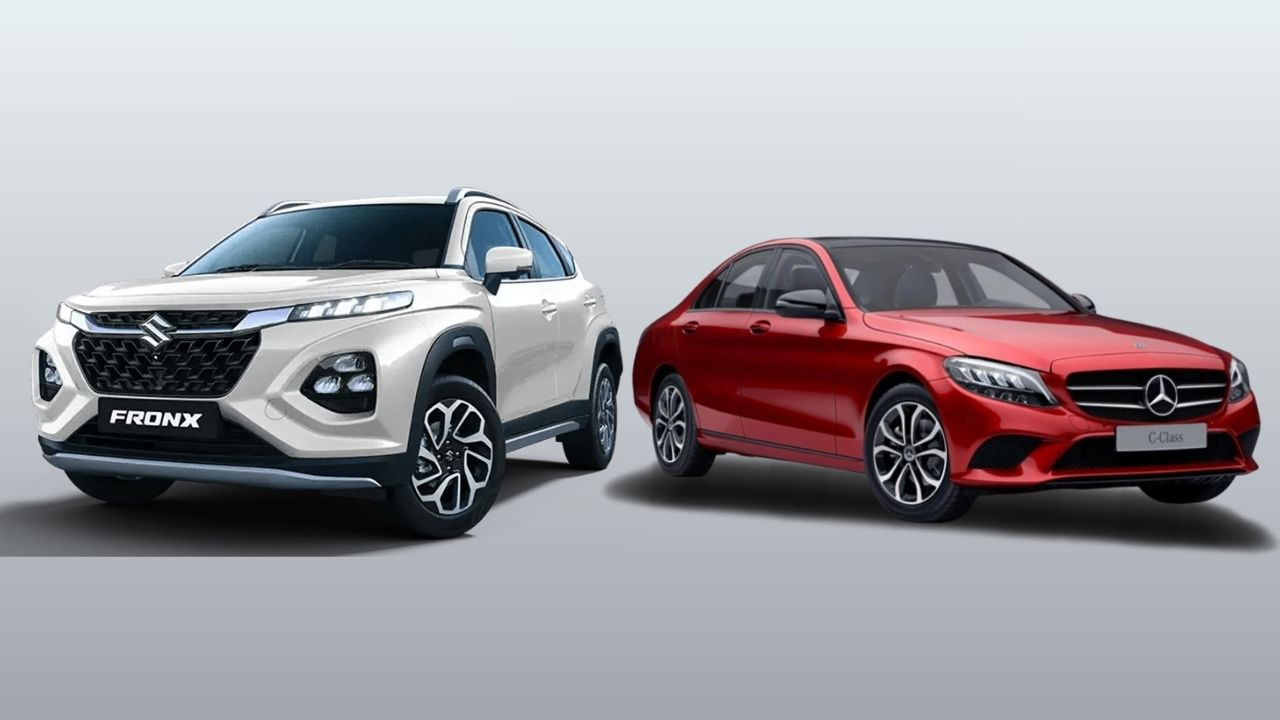
Luxury Cars

Ask specifically for: full service history from an authorized Mercedes-Benz workshop (not just a bill folder), confirmation of the exact transmission fitted, evidence of timely DPF and injector servicing, and a check on whether the car has ever been in an accident — a repainted panel on a nine-year-old car isn’t automatically a red flag, but undisclosed structural repair is.

Read More:-  Kia Carens CNG, Clavis CNG & Carnival Hybrid Pre-Bookings Open In India

Conclusion

If your comparison stops at “same price,” the Fronx and the Mercedes-Benz C 220d Edition C look like a toss-up. Run the comparison through five years of ownership instead, and the decision splits along one honest question: can you comfortably absorb a ₹40,000–₹80,000 repair bill if the Mercedes throws up a problem in year three of your ownership? 

If yes, the used luxury car is a genuinely compelling way to own a proper German sedan for hatchback-SUV money. If that number would hurt, the Fronx’s lower ceiling — even with its weaker engine and smaller boot — is the financially safer three-lakh-kilometre bet.

0

Mahindra Car Discount Price February 2026: Up to ₹2 Lakh Off on Thar, Scorpio N & XUV 3XO

Published Feb 16, 2026, 1:00 PM
Last Updated Apr 7, 2026, 6:22 AM

Mahindra Car

If you have been walking around in the cities of India then you must have felt the changing times with Mahindra Car Discount Price. It’s not the traffic, it’s the metal that’s driving through the traffic. By February 2026, Mahindra & Mahindra isn’t merely peddling “rugged Jeeps,” it is topping the Indian SUV charts with a dazzling cocktail of hi-tech safety and raw brawn.

But here’s the real kicker: If you happen to be in the market for a new car this month, you are poised at a monumental financial crossroad. With “Model Year 2025” (MY25) clearances and shinier new 2026 models on the way, it’s a fortune literally to be saved, or lost, based on how you play your cards.

Let’s take a look at the current Mahindra Car Discount Price stable and see which one is worth your time. 

Why the Big Discounts on Mahindra Now?

February serves as a kind of a “bridge” month in the automobile industry for the “vintage” 2025 models and the new 2026 models.

To make way for the new models, Mahindra is rolling out an Inventory Correction drive. They are offering steep discounts on 2025 stock—up to as high as ₹2.00 Lakh to shield the premium pricing of their 2026 models.

The Golden Rule for Feb 2026: If you’re a 5+ year+ driver, buy MY25 Stock. Those huge upfront savings more than make up for the slight dip in resale value you’ll take down the road.

The February 2026 Discount Landscape at a Glance

Vehicle Platform Primary MY25 Incentive Primary MY26 Incentive Strategic Implication
Thar Roxx (5-Door) Up to ₹2.00 Lakh (Diesel) ₹25,000 – ₹75,000 Aggressive push to clear high-value diesel inventory; protecting petrol margins.
Thar (3-Door) Up to ₹1.25 Lakh (AWD) ~₹30,000 (Accessories) High incentives on AWD to counter cannibalization by the 5-door Roxx.
XUV 3XO Up to ₹80,000 (AX7L) ₹20,000 – ₹40,000 Targeted discounts on top-spec variants to compete with Nexon/Brezza pricing.
Scorpio N Up to ₹1.00 Lakh (Petrol) ₹20,000 – ₹30,000 Heavy incentives on low-mileage petrol variants; diesel demand remains organic.

Thar 3-Door vs. Thar Roxx

The thar isn’t just for the weekend off-roader anymore, it’s a family statement. But with the arrival of the 5-door Thar Roxx, the range is now divided between two strikingly different vibes.

5-Door The Thar Roxx (5-Door)

This is the champion of the “Safe Lifestyle.” It recently clinched a 5-star Bharat NCAP rating, which makes it one the safest SUVs you can own on Indian roads.

Mahindra is going full diesel, the deal. Get up to ₹2.00 lakh in benefits on MY25 Diesel 4WD models.

Reality Check: A top-end Roxx will cost you anywhere around ₹26–27 Lakh on-road, 10–20% RTO. 

The Thar 3-Door

The OG is now being overshadowed by its larger brother. To get it going, Mahindra is providing a discount of up to ₹1.25 Lakh on the AWD variants.

Insider Tip: Big mid 2026 facelift coming. If you want the latest tech (LED projectors and digital clusters), wait. If you want a legendary mechanical beast at a bargain buy the present 4WD and go. 

The “Over-Spec” Overachiever: XUV 3XO

If you want a compact SUV that’s punching way above its weight class, the 3XO is your best bet. It is taking on the Nexon and Brezza, but is doing so with “big car” pretensions.

  • The “Skyroof”: It enjoys the biggest panoramic sunroof in its class – a major selling point for Indian buyers.
  • Performance: Most of the rivals are left behind by the 130 PS 1.2L mStallion engine.
  • The Sweet Spot: The AX7L Petrol is being offered with discounts packages worth up to ₹80,000 for the much-awaited MY25 units. At about Rs 16 Lakhs onroad price approximately, it brings you Level 2 ADAS and luxury-tier technology typically available for Rs 10 Lakhs more. 

Read More:- Maruti Suzuki Discount Feb 2026: Swift, Fronx & Brezza Offers Explained

The “Big Daddy” Presence: Scorpio N

The Scorpio N holds strong as the undisputed heavyweight champion in ₹15–25 Lakh category. But there’s a particular pattern emerging here: The Petrol Paradox.

While the mHawk Diesel gets all the attention for its torque (280 Nm to 450 Nm) and fuel efficiency (~10-17 kmpl), the 200 bhp Petrol mStallion is a speed demon and a thirsty one. Hence, to compensate for the costlier running expenses, Mahindra is providing a huge discount of ₹1 Lakh .

Pro Tip: For those who drive less than 10,000 km a year, that ₹1 Lakh discount on the Petrol Scorpio N more or less covers your fuel for the next two years. It is a “hidden” value play that nobody really notices and most people don’t understand. 

Which One Should You Buy?

Buy what is best for you and don’t make your wallet exhausted. Check out the recommendation models with specific quality that are worth your money.

Buyer Profile Recommended Model Why?
The Value Hunter MY25 Thar Roxx Diesel Peak discounts (₹2L) on a 5-star safety rated flagship.
The Tech Geek XUV 3XO AX7L Segment-first ADAS L2 and Panoramic “Skyroof.”
The Highway Cruiser Scorpio N Diesel Unmatched road presence and long-term resale value.
The Purist Thar 3-Door AWD High incentives now before the 2026 facelift resets prices.

Conclusion

The February 2026 options market is focused on timing, especially with Mahindra Car Discount Price. With BNCAP safety ratings as standard across the majority of the range, you are not just buying a rugged vehicle, you are buying peace of mind. Whether you’re looking at the Carbon Edition Scorpio, or just a base 3XO, the window to grab a MY25 deal is closing fast. 

0

Ford vs Chevrolet: The Ultimate 2025 Showdown You Can’t Ignore!

Published May 1, 2025, 7:16 AM
Last Updated Apr 8, 2026, 7:11 AM


Ford vs Chevrolet The Ultimate 2025 Showdown You Can’t Ignore!

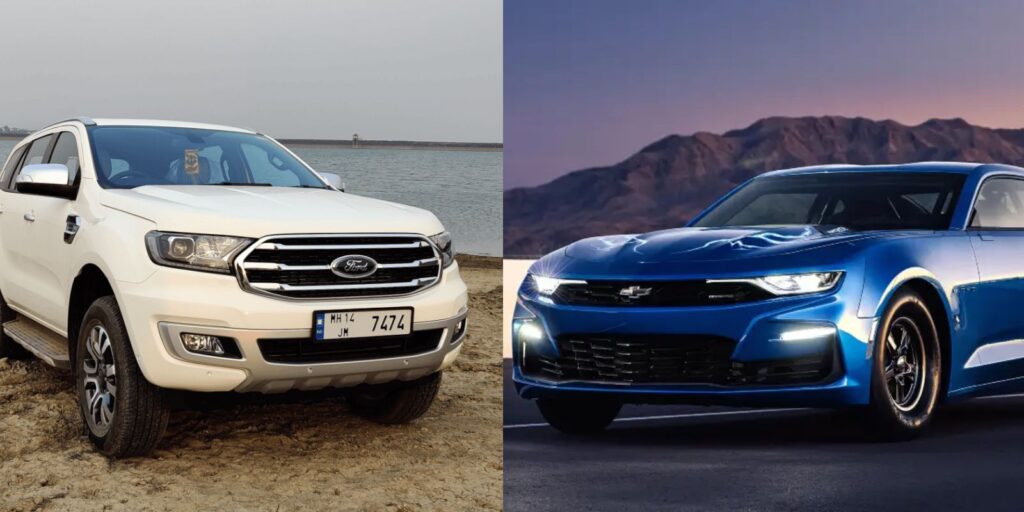
The Ford vs Chevrolet debate is an old one. Both brands make many cars, trucks, and SUVs. In 2025, each has new models and features. We compare them in six key ways below. This will help readers see how Ford and Chevy stack up in sales, electric vehicles, reliability, performance, price, and customer reviews.

Sales Numbers and Market Share

General Motors (Chevrolet’s parent) still sells more vehicles in the U.S. than Ford. In 2024, GM sold about 2.70 million cars and trucks. Ford sold about 2.08 million. That means GM had a larger share of the U.S. market (about 16.5%). Ford’s share was a bit lower.

Early in 2025, GM was doing better. In the first quarter of 2025, GM sold about 693,000 vehicles. That is 17% more than the same time last year. Ford sold about 501,000 cars and trucks in Q1 2025. This was 1.3% fewer than a year earlier. Ford’s best seller was its F-Series truck, with 190,389 sold (up 24.5%). GM noted that Chevy and GMC trucks were 40% of all U.S. truck sales in that quarter.

Overall, GM (with Chevy) has more sales and a bigger market share than Ford. Both brands do well, but recently GM has the edge in total sales.

Electric Vehicle (EV) Models and Popularity

Electric vehicles (EVs) are a big part of the 2025 car market. Ford and Chevrolet both offer electric models. Ford’s main EVs include the Mustang Mach-E SUV and the F-150 Lightning pickup truck. Chevrolet has the Bolt EV and EUV small cars, and it plans new EVs like the Equinox SUV and Silverado pickup.

Ford vs Chevy (2)

In 2025, GM’s EV sales jumped a lot. In Q1 2025, Chevy EV sales rose 119% over a year earlier. This was led by models like the Equinox EV and Blazer EV. Ford’s EV sales are growing too. The Mach-E sold 11,607 units in Q1 2025 (up 21% from a year before). Overall Ford sold 73,623 “electrified” vehicles (EVs + hybrids) in Q1, up 25.5%.

Both brands are putting more effort into EVs. In early 2025, Chevy saw its EV sales nearly double, while Ford’s EVs had steady growth. Popular EVs right now include the Mach-E and Lightning for Ford, and the Bolt plus upcoming Equinox/Blazer EVs for Chevy.

Reliability and Repair Costs

Reliability is how well cars avoid problems. It’s important to know if a car will last. RepairPal, a site that tracks repair data, gives both Ford and Chevrolet the same reliability rating: 3.5 out of 5.0. This means both brands are about average for reliability.

RepairPal also compares repair costs. On average, fixing a Ford costs about $775 per year. For a Chevrolet, the average cost is about $649 per year. So Ford repairs cost roughly 20% more than Chevy on average. This suggests that while reliability scores are the same, Ford owners pay a bit more in repairs.

In general, Ford and Chevy are similar in how often things break. Both have models that are praised for lasting a long time and models that get middling reviews. Consumer surveys (like those by J.D. Power or Consumer Reports) tend to rank them close to average. For example, both brands have some models ranked high for reliability and some that are just okay.

The data shows: Ford and Chevy both have a 3.5/5 reliability rating. Chevy’s average repair cost is about $649 a year; Ford’s is about $775. Both brands have many reports of minor issues, but no brand is clearly much more reliable. Overall, they tie on reliability, though Ford owners may pay slightly more for repairs.

Performance and Features

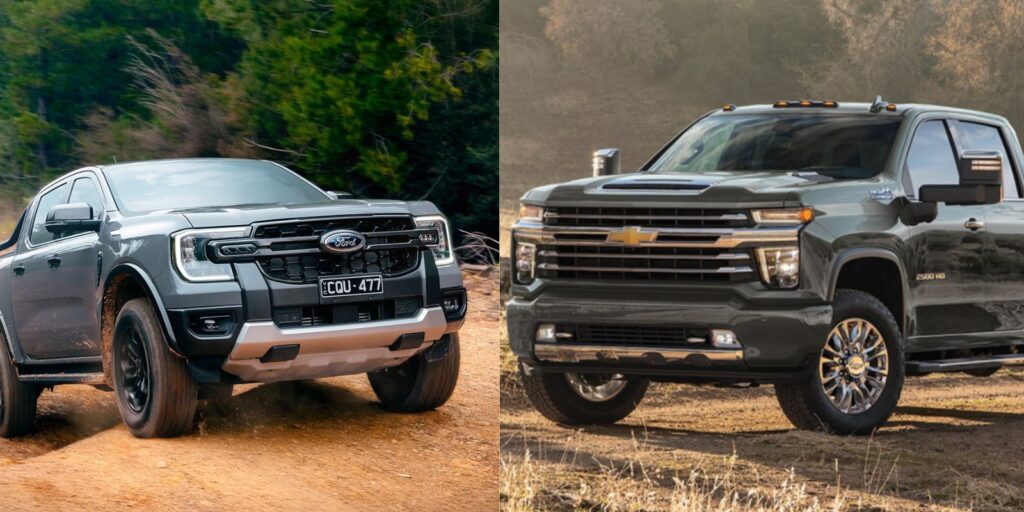
Both Ford and Chevrolet make powerful and feature-rich vehicles. A key comparison is their full-size pickup trucks, which many buyers use for work and play.

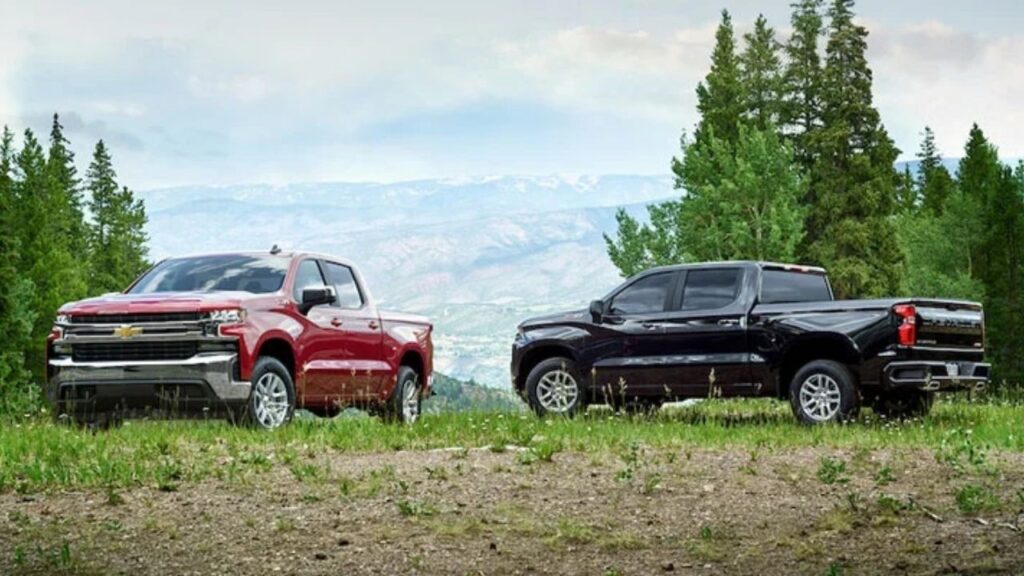
For example, the Ford F-150 and Chevy Silverado trucks can tow heavy loads. The 2025 F-150 can tow up to 13,500 pounds. The 2025 Silverado can tow about 13,300 pounds. This means each can haul big trailers, boats, or campers. Ford offers more engine choices (including hybrids and even a supercharged option). Chevy has fewer engine options but also a strong diesel version. The bottom line is that both brands have trucks with ample power, and Ford’s top engines can be even more powerful (up to 720 HP in special models, though Silverado’s biggest V8 is 420 HP.

Ford vs Chevy

Inside the vehicles, both brands have modern tech and comfort features. Ford’s trucks often have a larger touchscreen display – for example, the 2025 F-150 has a 12-inch screen. The photo below shows a Ford F-150 interior with that large screen. By comparison, a base Silverado has a 7-inch screen. Both systems work with Apple CarPlay and Android Auto to connect smartphones. Ford’s SYNC 4 system on the big screen and Chevrolet’s Infotainment 3 on its screen are both easy to use.

Ford’s trucks also offer unique options. For example, Ford has a “Pro Power Onboard” feature. This turns the truck into a generator so you can plug in tools or lights while you work. Chevy does not have this exact feature on Silverado (though they have other power accessories on some models). Both trucks have driver safety tech like lane-keeping assist, automatic emergency braking, and blind-spot monitors. In short, Ford and Chevy both pack their vehicles with advanced features and strong performance. Ford may have a slight edge with more engine and tech options, but Chevrolet offers competitive power and good features in its own right.

Ford vs Chevrolet Pricing and Value

The pricing of Ford and Chevrolet models is generally close. Both brands offer entry-level cars in the mid-$20,000 range. Their trucks and SUVs often start in the mid-to-high $30,000s for base models. For example, a base Ford F-150 and base Chevy Silverado each start around $36,000–$37,000 for 2024/25 models. Higher trims with more features can climb into the $50,000–$60,000 range. With options or luxury editions, prices can reach $70,000 or more.

Ford vs Chevrolet Pricing and Value

Image Credit: claycooleychevy

In terms of value, many reviewers find Ford and Chevy similar. Both brands often give good features for the price. For instance, even the base trucks come well-equipped. Ford’s trucks might have a bit more modern design and tech at a given price, while Chevy trucks might offer slightly more traditional styling or comfort. Deals can change value too: some months one brand may have incentives or lower prices.

Overall, neither brand is clearly cheaper. You can buy a basic Ford or a basic Chevy for about the same cost. At higher trim levels, costs are also similar. So the “value for money” fight is largely a tie. Buyers often look at specific features (like fuel economy or towing) rather than a big brand advantage. In 2025, both brands give buyers a lot of options in a similar price range.

Customer Satisfaction and Reviews

Customers generally like both Ford and Chevrolet. In surveys and studies, both brands score fairly well. For example, J.D. Power’s 2024 U.S. Sales Satisfaction study shows Chevrolet with an overall score of 812 out of 1000 and Ford with 805. That means customers reported slightly better buying experiences at Chevy dealers in that study. It does not mean the cars are rated; it means the sales process satisfaction. Still, it suggests buyers felt a bit more pleased on average with Chevrolet’s sales experience.

When looking at owner reviews of specific models, both brands have loyal fans. For instance, the Ford F-150 and Chevy Silverado each have thousands of online reviews, and both tend to average around 4 out of 5 stars on many websites. Owners praise Ford for its strong engines and innovative tech, and they praise Chevy for its comfort and smooth ride. Some buyers say Ford trucks feel tougher and offer more choices, while others say Chevy trucks feel roomy and easy to live with.

Brand loyalty is strong in the truck market. Around 2021–2022, roughly 58–59% of Ford truck owners returned to buy another Ford truck when they upgraded. For Chevrolet truck owners, it was about 54–56%. This shows both brands keep most of their customers. It also shows a lot of buyers pick based on familiarity.

In summary, reviews and satisfaction ratings do not give a runaway winner. Both brands get good marks for many models. Ford and Chevy each have passionate owners who mostly give positive feedback. Differences in satisfaction tend to be small and depend on the model and year. Right now, the customer scores are close enough that neither brand dominates on public opinion.

Conclusion

Both Ford and Chevrolet have strong points in 2025. Ford’s family of trucks and SUVs offers many high-tech features and strong performance. Chevrolet’s lineup shows big improvements in electric vehicles and a long record of reliable trucks. GM (Chevy) currently sells more vehicles overall, and its EV sales are growing faster. Ford’s gas-powered trucks are still best-sellers in the U.S., and Ford leads in pickup sales. Reliability ratings and repair costs end up about the same for each brand, with Chevy being a bit cheaper to fix.

There is no clear single winner. The choice often comes down to what a buyer needs. If you want the latest tech and a slightly larger truck cabin, you might lean toward Ford. If you want more electric model choices and a strong track record, you might lean toward Chevy. In surveys, both brands have many fans. In the Ford vs Chevrolet question, the answer is: it depends on the buyer’s priorities. Both brands win in different ways for different people.

Swift vs Baleno 2026 Comparison: Price, Mileage, Features & Verdict