0

Elon Musk Car Collection 2026: Tesla, Rare Cars & Net Worth

Published Apr 3, 2026, 4:54 AM
Last Updated Apr 17, 2026, 4:58 AM
Elon Musk Car Collection

Elon Musk Car Collection

Have you ever asked the question, what does the World’s richest man drive every day or on a weekend trip? You can have any car you want when you have that kind of money. Elon Musk Car Collection is pretty different from what you’d expect. And rather than a massive collection of exotic cars like many billionaires, Musk keeps his automotive stable surprisingly modest, with car that reflect his own personality. 

In the year 2026, Elon Musk isn’t just a CEO, he’s a global phenomenon. From taking Tesla to the next generation of robotics, to combining space exploration and artificial intelligence with his giant SpaceX and Grok AI enterprises, he’s living life at the pace of light. Yet even the rocket-builder and Mars-mission planner needs a dependable ride on Earth.

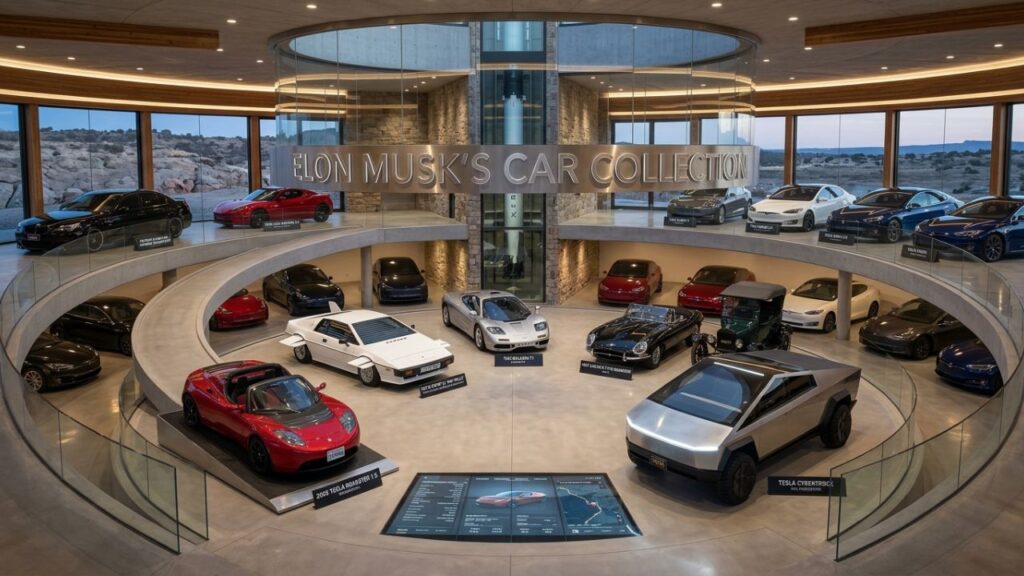
If you ever searched “how many car collections of Elon Musk” on any search engine, he has you running for a while with a pretty interesting story. His garage is a strange fusion of futuristic electric cars, rare historic classics, and movie props. 

Let’s look into a detailed article. We will talk about his favorite daily drivers, vintage beauties, net worth shocker in 2026 and how much the Elon Musk Car Collection price exactly is. Let’s take a look at the incredible, fast paced world of Elon Musk vehicles! 

Net Worth of Elon Musk in 2026

Before enjoying the beautiful cars in his driveway, we must first examine the extraordinary bank account that buys them. As of early 2026, Elon Musk is the richest person ever in human history, with other billionaires way behind him.

Elon Musk’s net worth has shot up to an unbelievable $844 Billion as per latest financial reports and global billionaire indexes Yes, you read that correctly. He is racing toward the trillion-dollar mark, a point that many financial experts believe he’ll reach very soon if his companies maintain their momentum. 

But how did his fortune balloon so much by 2026? Among the largest is the historic $1.25 trillion mega merge between his space exploration company, SpaceX, and his artificial intelligence startup, x AI. This audacious deal combined the two companies to dominate both an outer space satellite net internet (Star link) and the AI business (Grok). 

On top of that, his flagship company Tesla, has managed to successfully evolve from mere electric car manufacturer to massive robotics and AI powerhouse. This new age for Tesla is set to be marked by mass production of Optimus Gen 3 humanoid robots and the long-awaited, fully autonomous Cyber cab. 

When your net worth is a cool $844 billion, purchasing a rare, multi-million-dollar vintage car is the equivalent of an ordinary person grabbing a quick cup of coffee. Musk is notorious for saying that he is “cash poor” as his vast wealth is tied up in company stock and investments. A couple of years back he sold virtually all of his physical real estate and homes to finance his mission to Mars. Even though he sold his homes, he did keep the cars he loved. 

The Daily Drivers in Elon Musk Car Collection

1. Tesla Model S Performance (Plaid)

For Elon Musk himself, when he needs to travel quickly and comfortably to a business meeting, it’s likely that he’ll choose his Tesla Model S. However this isn’t a normal Model S, it’s the high performance Plaid Model S. It can go from 0 to 60 miles per hour in less than two seconds.

Elon Musk loves this car, because it makes the point that electric wheels can trounce even the most expensive and loudest gas powered race car around a racetrack. It’s cool and very comfortable and it has the latest, greatest self-driving autopilot.  

2. Tesla Cyber truck

Elon Musk Car Collection is incomplete without the Tesla Cybertruck. It excites him most because of its on-road/off-road armored capability. He is driving Cyber truck himself for a long time despite the fact they are rare on the road until 2026. 

And now, proudly proclaiming his delight in having an everyday decision over what to drive: “Whether to drive the dual motor+ performance+ stainless+ Cybertruck or drive the elegant Model S.” The angular, geometric design and impenetrable body of the Cyber truck make it the ideal physical representation of Musk’s defiant, futuristic image. 

3. Tesla Model X

When you’re a busy “business dad” with a lot of kids, you need room. The Tesla Model X is Musk’s default family car. The signature Falcon-wing rear doors that open upwards aren’t just for show they were born out of Musk’s own frustrations with traditional family SUVs. 

Before the Model X existed, Musk drove an Audi Q7, and claimed it was tough to ‘get his kids comfortable in the third row of seats in tight parking spaces.’ He insisted that the Model X doors open upwards, thereby completely solving the everyday annoyance. 

The Rare and Vintage Classics (Elon Musk All Car Collection)

4. 1967 Jaguar E-Type Roadster

This classic British sports car was Musk’s first real love in the automotive world. When he was only seventeen, he looked at a magazine picture of a Jaguar E-Type and vowed to himself that when he made it, he would buy one. After getting a $40,000 bonus check from his first tech company, Zip2, he at last bought a 1967 Jaguar E-Type.

Old cars always seemed to be broken in some way or another. Elon Musk said his brand new Model S broke down on his first trip home from the dealer, Tesla CEO laughed. Jaguar E-Type The Jaguar E-Type is considered by many to the most beautiful car ever, none the less with all its imperfections and in vintage car racing he has a special, nostalgic place in his heart. 

5. 1976 Lotus Esprit “Wet Nellie” (The James Bond Car)

This is maybe the most awesome, fun and iconic car he owns. When you watch the classic 1977 James Bond action flick The Spy Who Loved Me, you’ll no doubt recall the incredible white sports car that makes a dramatic exit off a wooden pier, plunges into the ocean and immediately turns into a working submarine.

In 2013, this very movie prop was put to auction in London. Musk was the winning bidder, and purchased it for just under $1 million. The movie prop didn’t transform, and it couldn’t even be driven on real roads! It was just a wet submarine shell in the shape of a car. Musk was slightly underwhelmed by the Hollywood hocus-pocus, but has said he hopes to convert the classic car to a “real, functioning submarine” at some point, with a futuristic Tesla electric powertrain. 

6. The Legendary McLaren F1

Musk bought the ultimate dream supercar of the time: the McLaren F1 when he sold Zip2 in the late 90s and became a young tech multi-millionaire This was a genuine engineering marvel, with a maximum speed of more than 240 mph, doors that opened like a beetle’s wings, and a distinctive three-seat interior layout, with the driver in the middle.

The tale of this particular car is very well-known in Silicon Valley. Musk was bragging about the car’s blistering acceleration in 1999 to his business partner, Peter Thiel when. He punched it, lost control, spun into the air, and smashed the priceless car heavily into the road. To add insult to injury, Musk hadn’t even gotten insurance on the car! 

Musk repaired the damaged McLaren F1 – one of his most legendary and dangerous early career stories – and sold it years later for a tidy profit, but it still stands as a testament to the risks he’s taken throughout his career. 

7. 1920 Ford Model T

You are going to be very surprised when there is a 100-year-old, slow, awful car sitting in the high-tech garage of a man who builds spaceships. However, the historical automobile that changed the entire world was the Ford Model T. Not only was it the first inexpensive, mass-produced car that made it possible for an ordinary working-class family to travel by car. This 1920 Ford Model T is a best engineering model which makes Elon Musk get profound respect for his choices.

8. Porsche 911 Turbo

Porsche 911 Turbo is an excellent piece manufacturing model before and after Tesla. It stand forever on the road and ready to beat the race in its own ways. Musk took his Porsche 911 Turbo out for a spin. He also expressed his interest in speed and sports engineering. 

But he also realized how dirty fuel was. That is an experience he would never forget, he said. This masterpiece inspired Elon to build an electric car which gives same features and specification as Porsche 911.

9. 1978 BMW 320i

This was the first car Elon Musk ever had. He bought it used for a mere $1,400 back in 1994. He renovated the place himself, purchasing inexpensive replacement parts from junkyards, he replaced the broken glass, and the filthy work receded hands-on mechanical labor. It was his reliable ride in the days when he was a struggling college student. Sadly, the car’s life ended when one of his first company interns borrowed it to make a run to the store and crashed it. 

The 2008 Tesla Roadster (Star man) is Out of this World

The biggest invention, Tesla Roadster, the compact sports car which changes the world electric cars definition by sparking out with its unique abilities. It showed a skeptical public that EVs didn’t have to be slow, dumb golf carts. For many years, Elon parked his cherry-red 2008 Tesla Roadster but then sparked out with a creative idea which no one else’s ever done in history.

Tesla Roadster traveled through space under the Falcon Heavy mission that proved Elon’s passion for automotive engineering. That same car is now somewhere in orbit around out in space. Star man in a SpaceX spacesuit highlighting “Don’t Panic” showed it conveyed the message to anyone who might read it.

Read Also: Sundar Pichai Car Collection 

Conclusion

Elon Musk Car Collection is more than just a few rowdy space cars to flaunt in orbit. It’s a distilled expression of his brilliantly chaotic vision of the world.

His selections tell you the story of his life, if you pay attention. The Jaguar E-Type stands for his late teenage aspirations. The McLaren F1 is his first major success (and lesson in failure) in the financial world. The Lotus Esprit embodies his playful imagination and pop cultural adoration. And his relatively modern fleet of Tesla’s are a testament to his unrelenting, indefatigable, desire to change the future of our planet’s energy.

Audi SQ8 Launched in India: New Engine, High Performance & Design

Bipin Sharma

Bipin Sharma is a seasoned automotive content writer with over 10 years of hands-on experience in the world of cars. From the latest car news and reviews to in-depth maintenance tips and expert buying guides, Bipin covers everything that drives the automotive world. Writing about cars isn’t just his profession — it’s his passion. His deep industry knowledge and love for automobiles fuel every blog he creates, helping readers make informed decisions and stay updated on the fast-evolving auto landscape.

Leave a Reply

Your email address will not be published. Required fields are marked *

0

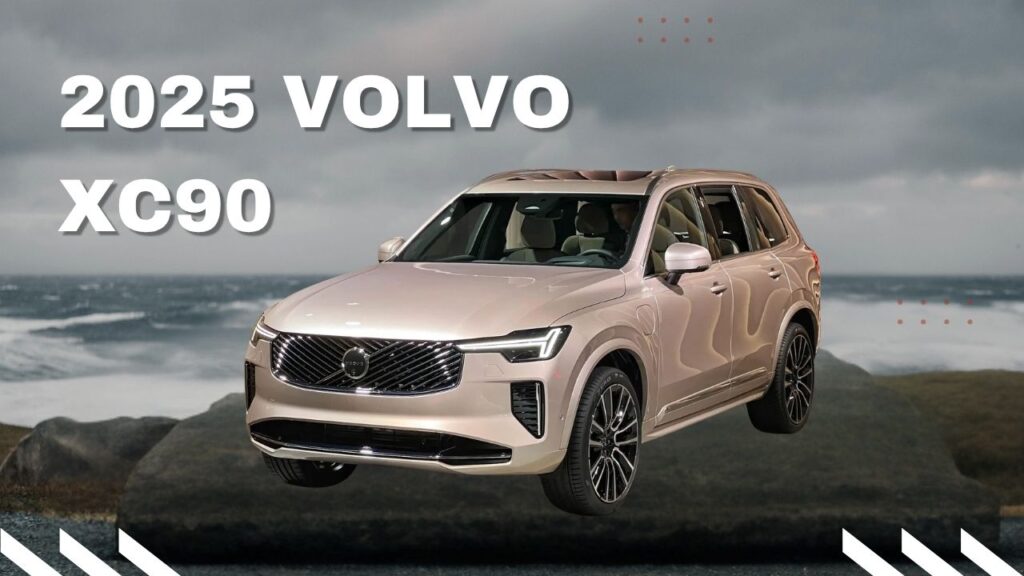
The 2025 Volvo XC90 Review, Safety Ratings and Pricing in Detail — Best Trims for Families

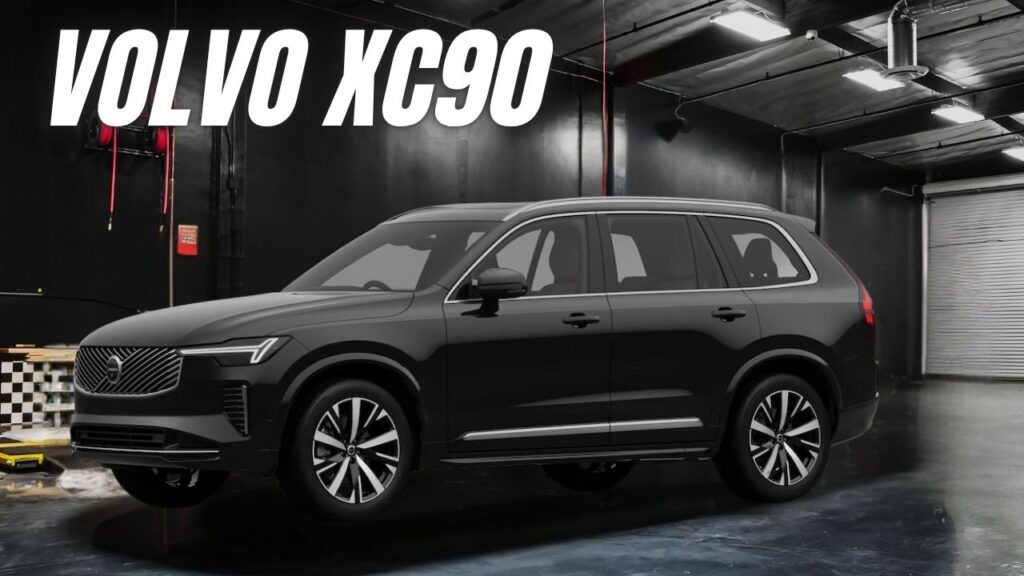
Volvo XC90 2025

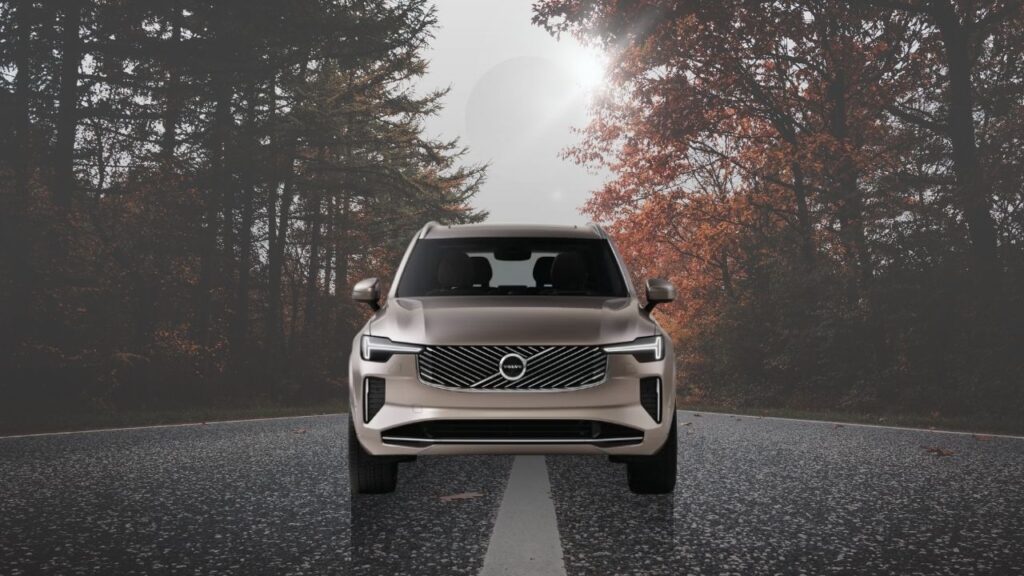
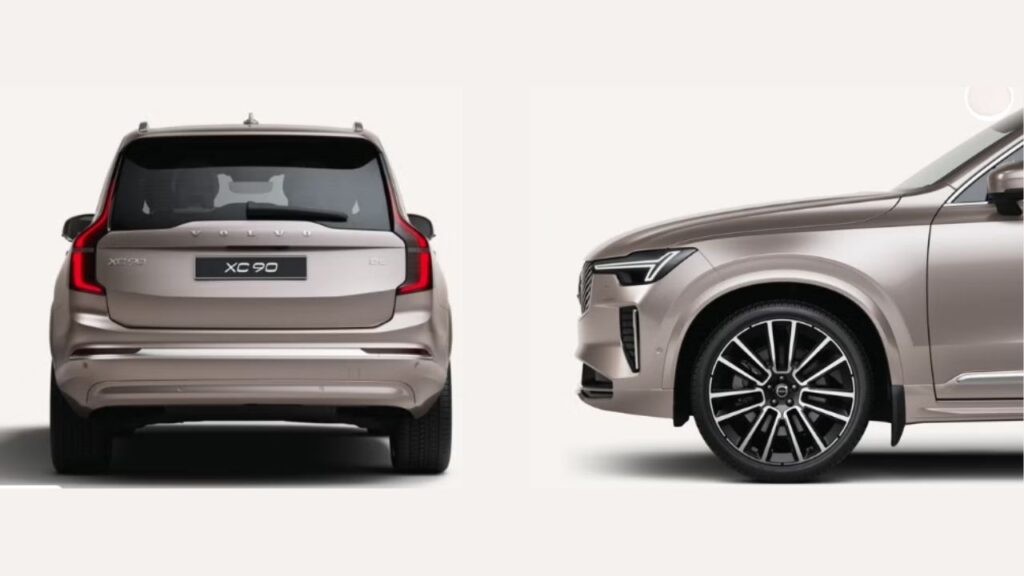
Scandinavian design and family-friendly practicality are two things that really should be synonymous in the luxury SUV segment — and the 2025 Volvo XC90 is still one of the best-rounded vehicles in that space on the market today. With its impeccable safety heritage, hybrid efficiency, and tranquil cabin design, the XC90 still sets the standard for what a luxury SUV for the family should be. Here’s a closer look at the performance, safety, features, pricing, and which trims are the best for families this year. Now the exterior features the familiar elegant lines of Volvo and a slightly revised front grille with LED signature headlights and updated cabin materials.

Inside it’s a different story: warm and inviting Scandinavian minimalism complemented by high-quality leather and wood that exudes comfort and class. The XC90 received IIHS Top Safety Pick+ status and a perfect five-star rating from the NHTSA. With Good ratings in all the crash tests, as well as a range of standard active safety features that include automatic emergency braking, blind-spot warnings, lane keep assist, and adaptive cruise control with lane centering.

Those excellent safety scores — along with Volvo’s free maintenance (3 years/36,000 miles) and strong warranty — make the XC90 a persuasive pick for safety-conscious families seeking peace of mind. 

Powertrain and Solid Performance Built

Volvo provides the XC90 with two 2.0L inline-four turbocharged engines, both 48V mild hybrids and a plug-in hybrid. The base “B5” makes 247 hp while the “B6” adds a supercharger and produces 295 hp. Both models come with AWD as standard, plus an 8-speed auto. When driving, the B5 was snappy enough for daily use, though a few testers say the new B5 “lacks the punch” of its competitors. For more power the B6 is even sharper with 0–60 in about 6.8 s and the XC90’s 5,000 lb maximum towing capacity is reserved for B6 models only (B5 tops out at 4,000 lb).

Volvo XC90 Powertrain and Solid Performance Built

Volvo’s premier T8 Plug-In Hybrid now returned to the original “T8” naming couples the turbo I4 with an electric motor for a total of 455 hp and about 33 miles of EV driving. The T8 accelerates briskly from low 5s to 60 and allows the XC90 to run on electric power for daily commutes. All three versions lean more toward comfort than sporty handling, and they boast a composed ride: “The XC90 continues to lean toward comfort rather than outright performance — which is exactly what a family SUV should do. 

The B5 has fairly solid fuel efficiency, the EPA estimates it gets about 26 mpg combined. If you’re looking at the B6, it’s a little bit less at 23 mpg. The T8, however, is the exception with a range of 33 miles on electricity and a fuel economy rating of 58 MPGe, so if you want something a little greener it’s definitely worth a look. 

Interior Comfort and Cabin Space

The redesigned XC90 has a roomy cabin that’s crafted to an incredibly high standard. Driver and passenger front-seat occupants benefit from a comfortable amount of legroom and support, the second row offers close to 37 inches of legroom both in 6- and 7-seat configurations.

Its is fairly roomy, although the optional third row (31.9″ of legroom) lends itself more for toddlers and short trips than for adults on long journeys. Volvo’s minimalist dash is dominated by the tall 11.2″ center display with Android Automotive/Google based and a 12.3″ digital gauge cluster. The more salient points of the cabin — open‑pore wood trim, matte-finish trim, and available ambient lighting — give it a luxury-minded look.

Families will like functional features such as multiple cupholders, the new sliding center console storage and a wireless charging pad (now repositioned). There’s plenty of cargo room as much as about 85.7 cu ft behind the front row because of its tall, beefer box shape. In general, the car’s interior is lauded as “a masterpiece of restraint” with a warm atmosphere”, even as they remark that Volvo still went mostly with touch controls.

Read more:- The Nissan Tekton Engineered for Superior Comfort on Rough Roads

Top Safety and ADAS Features 

Safety and driver assistance features are among the best. Beyond its 5-star crash-test ratings, the XC90 includes as standard equipment a suite of aids: automated emergency braking with pedestrian/cyclist detection, lane-departure warning and lane-keep assist, and adaptive cruise control with lane centering.

Volvo XC90 Safety and ADAS Features

Headlight performance differs by model — some Good, some Acceptable. But blind-spot monitors and rear automatic braking come with every trim level. Volvo even throws in three years of free scheduled maintenance and an 8-year/100k-mile battery warranty on the hybrids.

Pricing and Value of midsize luxury SUV XC90 

Trim  Engine Power Starting Price
XC90 B5 Core 2.0L Turbo hybrid 247 hp $58,695
XC90 B6 Plus 2.0L Turbo  295 hp $66,195
XC90 B6 Ultra 2.0L Turbo  295 hp $71,395
XC90 T8 Core (PHEV) Plug-in Hybrid 455 hp, 33 mi EV $73,195
XC90 T8 Ultra (PHEV) Plug-in Hybrid  455 hp, 33 mi EV $80,895

Best Trims for Families  

Experts prefer the mid-level Plus trim for the B6 engine with a seven‑seat bench configuration. The car’s Plus trim level incorporates practical amenities, including a panoramic sunroof and upgraded LED headlights, on top of the base Core model without making the vehicle too expensive. 

Volvo XC90 Best Trims for Families

Loaded out Ultra adds luxuries premium Bowers & Wilkins audio, ventilated massaging seats, four-zone climate control, multi-color ambient lighting, but Volvo’s kid-friendly safety kit comes stocked well even in lower trims. 

In general, prices are on the high side: the XC90 B5 Core starts at about $58,695, and the top PHEV T8 Ultra is below $82,800 (prior to discounts). With best-in-class safety, seating that flexes in six or seven configurations, and features that make life easier, the XC90 is a very good buy for families. 

Conclusion

The 2025 Volvo XC90 still shines as a family-friendly luxury SUV. It has a quiet, comfortable ride, an upscale and roomy cabin, and excellent safety scores and a long list of standard driver aids.The XC90 owes a lot of its value proposition to that segment, and now it excels there, particularly in the mid-grade Plus /Ultra trims with the B6 or plug-in powertrain, making it really easy to recommend for any family that needs three rows and a solid, safe vehicle. 

0

How to Claim Car Insurance for Own Damage: A Step-by-Step Guide

Published Jul 22, 2026, 9:04 AM
Last Updated Jul 22, 2026, 12:06 PM

How to Claim Car Insurance for Own Damage

Whether it’s a major accident or a minor scratch, damage to your car can leave you wondering what your insurance actually covers. That’s where understanding the Own Damage Cover section becomes important, as many car owners are not fully aware of how it works. Learning How to Claim Car Insurance for Own Damage can help you save money and ensure a hassle-free claims experience.

If you already have a comprehensive car insurance policy, you can claim compensation for damage to your own vehicle—not for damage caused to someone else’s. This is known as an Own Damage (OD) claim. However, simply having coverage isn’t enough. Understanding How to Claim Car Insurance for Own Damage correctly is essential to ensure your claim is processed smoothly and you receive the benefits you’re entitled to.

See Best Cars for Daily Office Commute.

What Counts as “Own Damage”

When your car gets damaged due to reasons that aren’t someone else’s fault or if it is but you are using your own damage cover to get your car repaired instead of relying on the other party’s insurance. 

For instance, your car faces situations including road accidents, collisions, fire, theft, natural disasters like floods, storms, or earthquakes. And even malicious damage like vandalism. That’s where Own Damage covers for repairs.

It is distinct from third-party liability, which covers damage you cause to another person’s vehicle or property. If you want coverage to repair your own vehicle, you need a comprehensive policy (with own damage included) – a third-party-only policy will not assist you in this matter. 

How to Claim Car Insurance for Own Damage

Step 1: Inform Your Insurer Immediately

When car trouble strikes, call your insurer or agent. Many companies allow for damage to be reported within 24-48 hours after the fact, and waiting can make your claim more complicated, or potentially even deny it. Have your policy number ready when you dial — it makes a big difference. 

If another vehicle is involved, or if your vehicle has been stolen or you suffered major damage, report it to the police too. Insurance companies frequently require such documentation, particularly for theft and hit-and-run, so it’s not wasted time even if it seems like you’re doing too much paperwork. You Know that Which Engine Oil is best for Your Car?

Step 2: Get the Vehicle Inspected

When you have reported the claim, the insurer will either arrange for a surveyor to inspect your car or ask you to take your car to a network garage for inspection. Don’t drive the vehicle or do any repairs until this happens — it’s an inspection prior to repair which validates your claim. If you go ahead of time and just fix it, you run the risk of your insurer denying the claim completely. 

Take photos or video of the damage from several angles before anything is touched. Seems like a simple step, but a lot of people forget it in the heat of the moment, and it really helps if there is any argument later on. 

Step 3: Choose Cashless or Reimbursement Claims

You’ll typically have two routes to get your car repaired.

Cashless claim: You bring your car to a garage in your insurer’s network. The insurer pays the garage bill directly, and you only pay the deductible and anything else your policy doesn’t cover. This is the easier, less stressful method and what the majority of people want. 

Reimbursement claim: You have the vehicle fixed at a garage of your choice, pay the full amount and then send the bills to your insurer for reimbursement. This option is good if your favorite garage is not in the insurer’s network, but that means you are paying first and then waiting for the money to come back to you. 

Step 4: Submit the Required Documents

Each insurer requires a unique set of documents, but the standard documents required are:

  • Your policy copy 
  • A filled and signed claim form 
  • Your driving license 
  • Vehicle’s registration certificate 
  • And the repair estimate or bill

In case a third party though or theft is involved, include the FIR or police report as well. 

Missing or incorrect documentation is also a frequent cause of claims being held up, so it’s worth making sure everything’s in order before you submit rather than doing it in dribs and drabs. 

Step 5: Claim Settlement

Once the surveyor approves the damage assessment and your documents are verified, the insurer settles the claim. For cashless claims, they pay the garage directly. For reimbursement claims, the amount is transferred to your account after you’ve paid the garage.

Keep in mind your No Claim Bonus (NCB) will reset if you file an own damage claim, and you’ll have to pay the compulsory deductible plus any voluntary deductible you opted for when buying the policy. For minor damage where repair costs are close to your deductible amount, it’s worth calculating whether filing a claim is even worth it — sometimes paying out of pocket protects your NCB and saves you more in the long run.

A Few Things That Trip People Up

Own damage claims get rejected more often than people expect, usually for avoidable reasons. Driving without a valid license, being under the influence at the time of the accident, using the vehicle for a purpose outside what’s declared in the policy (like using a private car for commercial purposes), or letting your policy lapse before renewal are all common grounds for rejection.

It also helps to know your Insured Declared Value (IDV) going in. This is the maximum amount your insurer will pay in case of total loss or theft, and it directly affects your premium and your payout. Setting it too low to save on premium can leave you underinsured exactly when you need the cover most.

Conclusion for 

Filing an own damage claim isn’t complicated once you know the sequence — report fast, get it inspected before repairs, pick the claim route that suits you, submit clean documentation, and stay aware of how it affects your NCB. The part that actually saves people money and stress isn’t the claim process itself, it’s understanding How to Claim Car Insurance for Own Damage and your policy terms before you’re standing next to a damaged car needing answers immediately.

0

Shubman Gill Car Collection: Inside the Luxury Garage of India’s Cricket Star

Shubman Gill Car Collection

Shubman Gill doesn’t just rule the cricket ground with his elegant cover drives and calm attitude towards batting, he is also quite graceful when it comes to selection of vehicles. The Gujarat Titans captain has tied his love for speed and the open road to one of Indian cricket’s most intriguing collections and Shubman Gill’s Car Collection speaks he has clearly got the dirigible ambition, as well as the success, and can certainly taste refined motor running. 

Let’s take you inside his private garage, where every car marks a moment in his stunning rise from a small-town kid to the future of India’s cricket. 

A Collection That Reflects His Journey

The Shubman Gill car collection is not random, it is intentional. From the dream-realized Range Rover Velar to the opulent Mahbach GLS 600 each vehicle signifies a plot in his unprecedented ascent. Gill has already got what at most people would take a lifetime to achieve at an age when many are just graduating. These aren’t cars to throw away—they’re rewards for discipline, talent, and a kind of calm that makes his cricket.

Gill can afford to live the luxuries of life with a salary of ₹16.50 crore from IPL, a Grade B BCCI Contract of ₹3 crore yearly and endorsements with Nike, Gillette, TATA Capital, and more. And his garage, yet another testament to his faultless style off the pitch. 

Range Rover Velar

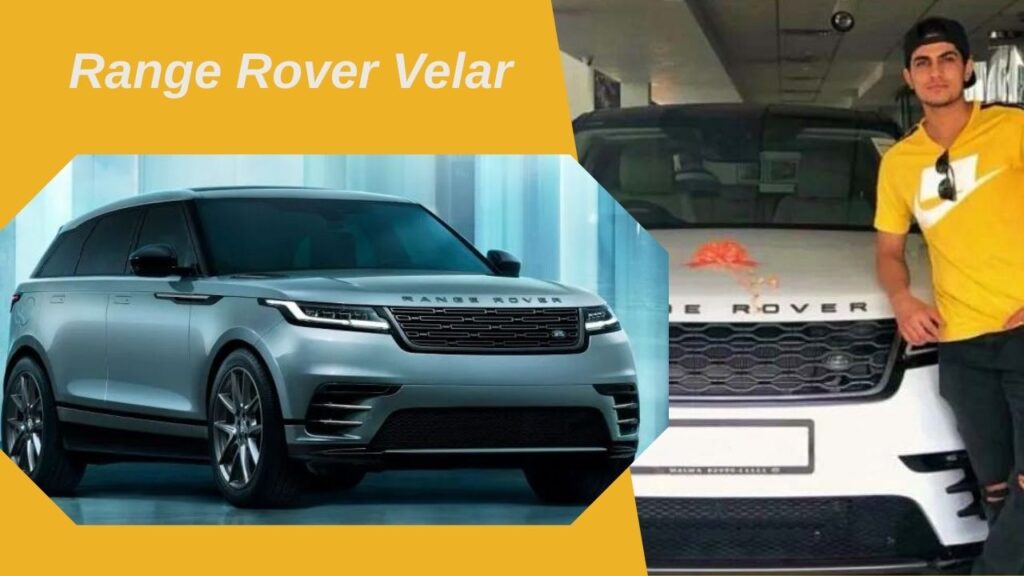
In an humor-filled video interview for Acko’s Love At First Gear, Shubman Gill had said the Range Rover was his dream car, and a few months later, this elegant SUV arrived in his garage.  

Range Rover Velar

The car has a strong 2.0L turbocharged engine outputting 246 horsepower, but is also outfitted with comfort amenities that would make you believe you are sitting in your living room during a long trip. The massage seats, panoramic sunroof and 12.3-inch digital instrument cluster are not simply extras. With a 5-star Global NCAP safety rating, this car is a perfect reflection of Gill’s own ethos: solid, dependable and hard-wearing. 

The Gift That Carries Gratitude: Mahindra Thar

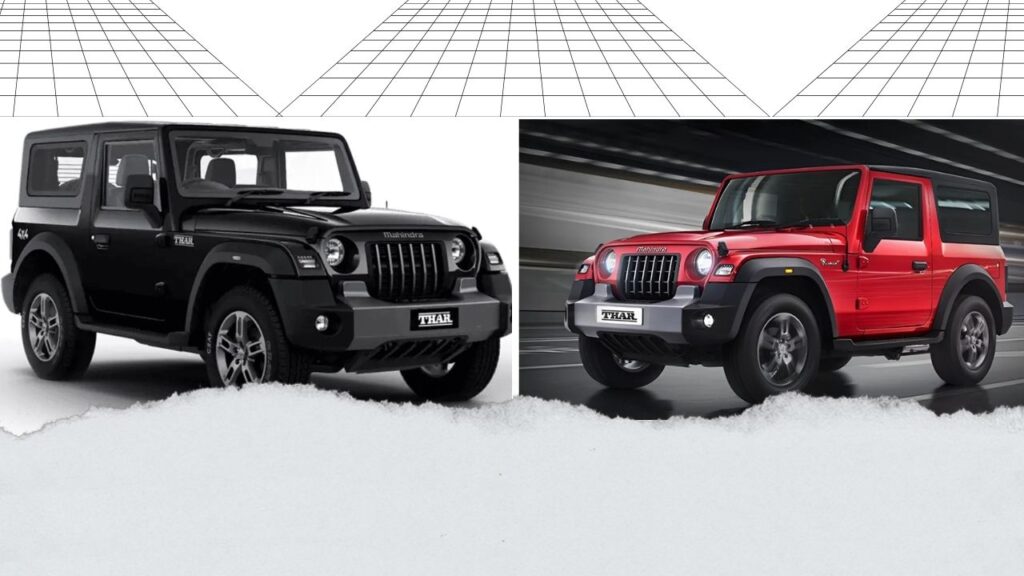
Gill did not buy all of the cars in his collection – a few come his way as a result of exceptional work. The Mahindra Thar is really special, and this is because it is a gift vehicle from industrialist Anand Mahindra himself. In 2021 when Shubman Gill was making his maiden appearance in the historic Border-Gavaskar Test series in Australia (2020-21), he scripted the extraordinary. Mahindra pledged to gift cars to the young cricketers who delivered, and he lived up to that promise to celebrate the young cricketing stars the match had produced.

Mahindra Thar

The Thar is more than just its sticker price of₹ 13.87—21.32 lakhs. Think of it as a rugged, capable off-road SUV with a four-star NCAP safety rating, that has been getting young adventure seekers hooked on the great outdoors. Meanwhile, Gill was busy cricketing and his family got to bring home this beautiful red coloured Thar as a proof that national pride does pay! 

The Mercedes Obsession: Where Luxury Meets Ambition

This is where the polished Shubman Gill from our compilation shines through and there is no doubt that the man is a Mercedes fan. 

Mercedes-Benz E350

Mercedes-Benz E350

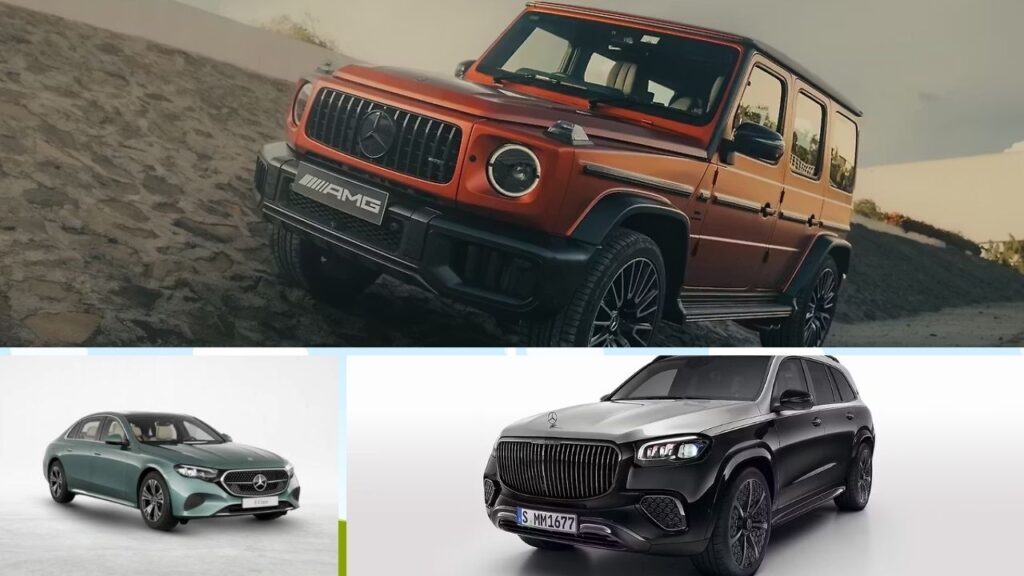
The Benz E350 is something like around the cost of ₹90 E350 is a luxury sedan that makes a very good balance between sophistication and practicality of daily everyday life. Its 3.0L V6 engine with 255 horsepower and 370 Nm torque also made the long journey from his Firozpur residence to Mumbai for IPL matches a smooth ride. 

Maybach GLS 600 Night Series

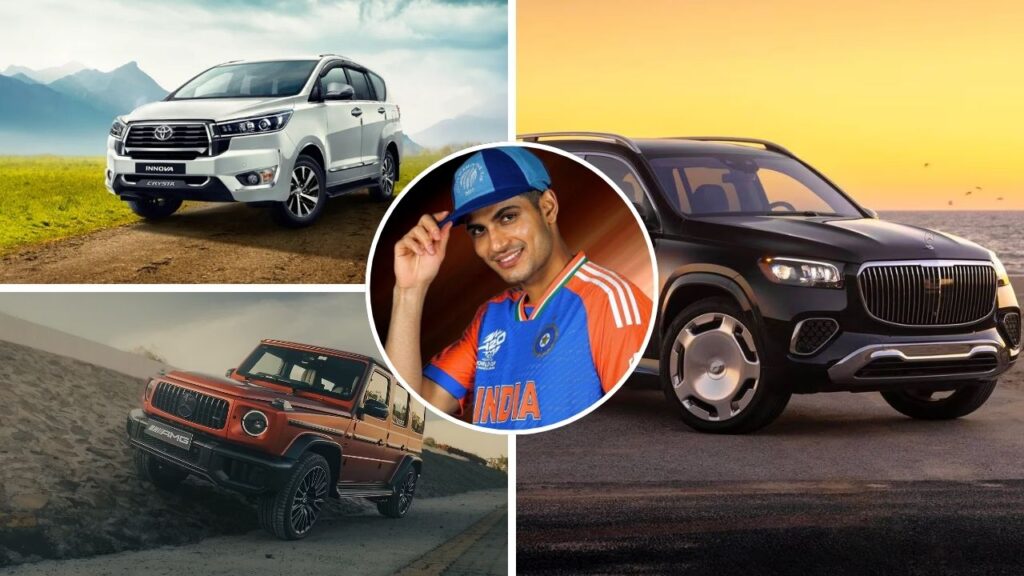
Yet Gill’s true obsession is with the Mercedes-Maybach GLS 600 Night Series, a loaded luxury sport utility vehicle that lists for about ₹3.88 crore on-road — nearly five times the cost of his initial luxury acquisition. This is no ordinary vehicle. The Maybach version takes the GLS 600 to stratospheric levels of extravagance, powered by a 4.0L V8 Biturbo engine producing an astounding 557 horsepower and 730 Nm of torque. Paired with a 48-volt mild-hybrid system, executive rear seats that would induce envy in first-class airline cabins, and a Burmester 3D surround sound system, this SUV makes each journey a thrill. 

Read More :-  Mahindra XUV 7XO Specs and Features: Engine, Mileage, Safety, Interior Details Overview

Mercedes-AMG G63

The G-Wagon is a staple in every celebrity car collection and Gill’s Mercedes-AMG G63 is no different. This angular, iconic SUV is brought to life by a 4.0L V8 turbo with mild-hybrid system, producing 585 horsepower and an earth-shattering 850 Nm of torque. Whenever this monster gains speed, it shouts power and glory. 

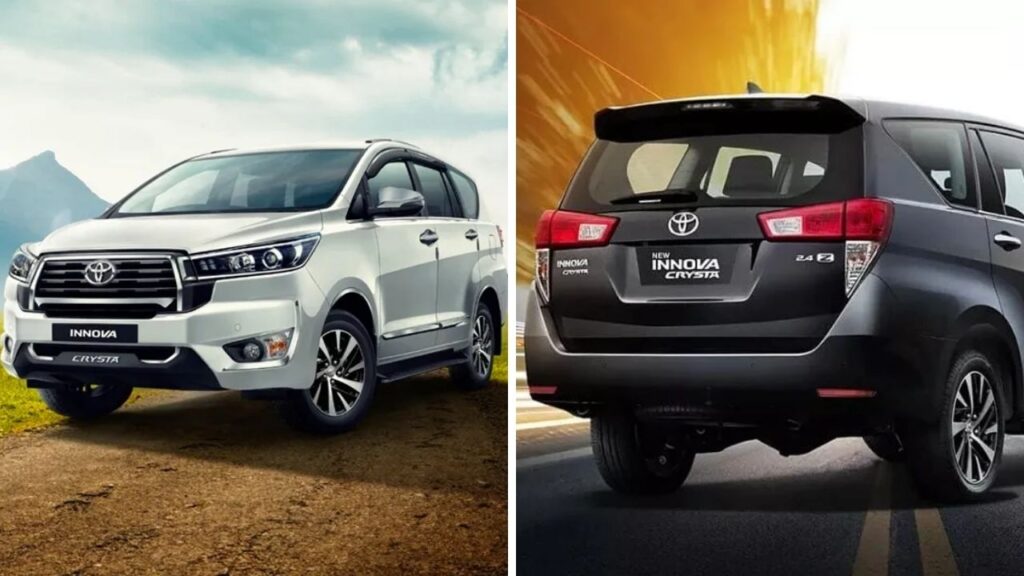
Toyota Innova Crysta

While the Mercedes and Range Rover make the headlines, Gill’s garage is not without the Toyota Innova Crysta (₹23.83-31.50 lakhs), a no-nonsense family SUV that more often than not ferries him to Mumbai’s Bandra eateries and Mumbai airport.

Toyota Innova Crysta

Clearly money and value for everyday and reliability over flash things up - it’s refreshing that despite being worth somewhere in the region of ₹34 crore he still thinks like that, and if he needs to take a stroll he’s wearing flip-flops and socks! 

Conclusion

Shubman Gill’s car collection is reflective of the man himself: humble but aspirational and stylish but practical. From the dream-come-true Range Rover Velar and the thankful Mahindra Thar to the uber-luxurious Mercedes-Maybach GLS 600 and the beastly AMG G63, each car has a story of hard work, discipline and success dusted off in style. 

What really jumps out, however, is the fact that Gill balances it so well: sitting next to the multi-crore luxury cars is a simple Toyota Innova Crysta, clearly Gill’s fame hasn’t taken away his grounding in everyday values. Much like and His batting, his garage exudes a calm, assured, and mature presence, but all that is only the beginning of his journey. 

0

2026 Maruti Suzuki Brezza – New Features, Price, Design & Full Details

Published Nov 24, 2025, 9:45 AM
Last Updated Apr 11, 2026, 11:07 AM

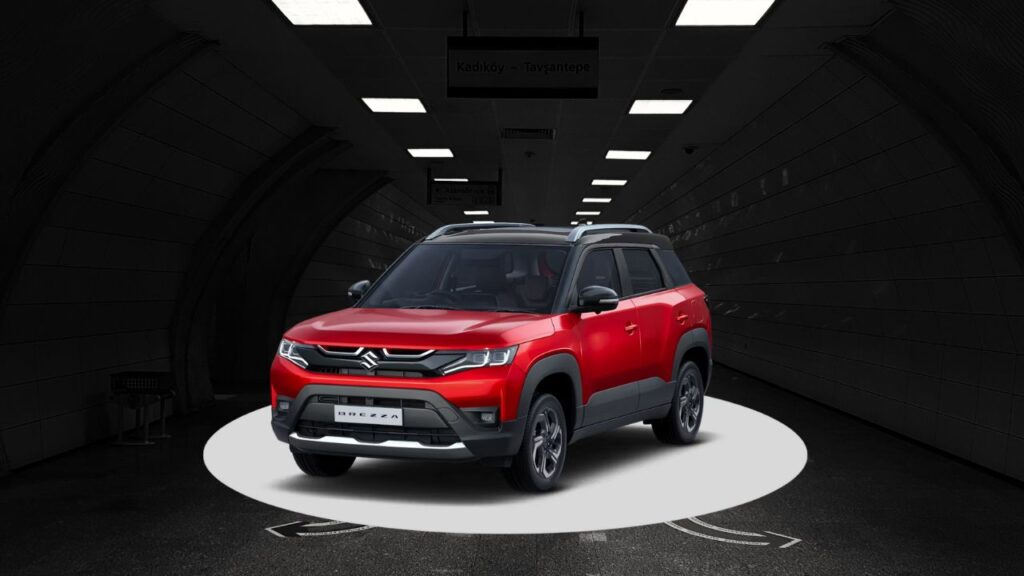
2026 Maruti Suzuki Brezza

The Maruti Suzuki Brezza is not just any car but it is a staple in the Indian automotive terrain. It has now been re-established, and since then, it has gone on to rule the sub-four meter SUV segment, raising the bar in terms dependability and, perhaps most importantly, fuel efficiency.

But they don’t rest, the competitions. With competitors upping the ante with turbo-petrol engines, more feature-laden cabins, and even ADAS (Advanced Driver Assistance Systems), the 2026 Maruti Suzuki Brezza will have to really pull a rabbit out of the proverbial hat in this fresh major generation update. And believe me, if the rumors are true, this is not just a refresh instead this is a revolution. 

We take a look under every stone for the expected design changes, the huge technology leaps in the cabin, and the strongest rumor of all, the introduction of the all-new Strong Hybrid powertrain. 

Design – Sharper Edges and a Premium Stance 

The current Brezza is a handsome beast with a bit of a butch charm and that falls somewhere between rugged and urbane. For 2026 model, Maruti Suzuki will likely integrate new, global design language that made a debut in their high-end models such as Grand Vitara, and Fronx.

What to expect on the outside:

A Revamped Front Fascia: Say adieu to the that mildly chubby grille. Expect a much sleeker, wider treatment of chrome or gloss black that runs constantly up to the new, sharper LED DRL signature. 

Maruti Suzuki Brezza Design

Image credit: MarutiSuzuki

The headlight clusters themselves might be divided, or have a more elaborate, multi-layered design, reminiscent of the conventional picture. The overall intent is to create a more aggressive, mature, and premium looking road presence – it needs to look like it can sit comfortably beside rivals that have undergone bolder dramatic design statements. 

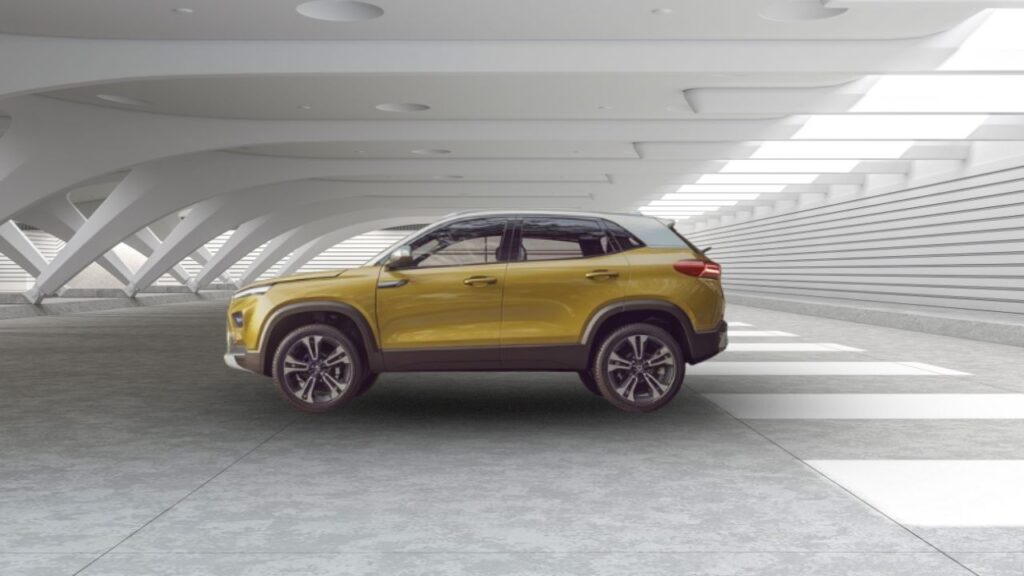
More Dynamic Profile: The next Brezza is expected to keep the boxy shape essential for the interior space, but will come with a few sharper edges and the character lines will be more defined on the side. The window line could be cleaner and the rear quarter glass might be reshaped.

New Alloy Wheels: This is a minor change but is important visually. We may get 17-inch dual-tone alloy wheels with a new, more complex, diamond cut design on the higher variants, bringing a much-needed dash of style and energy to the profile. 

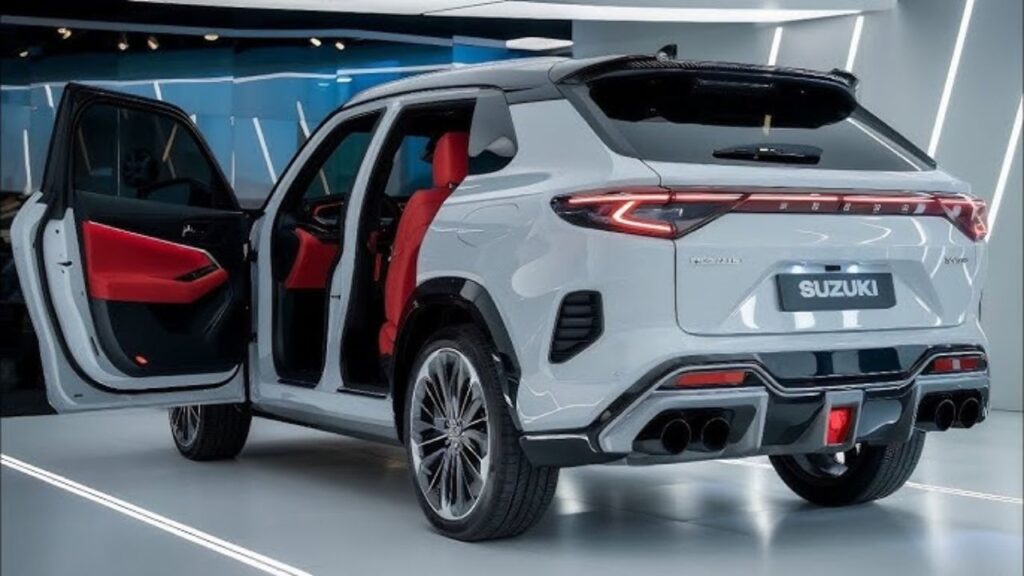
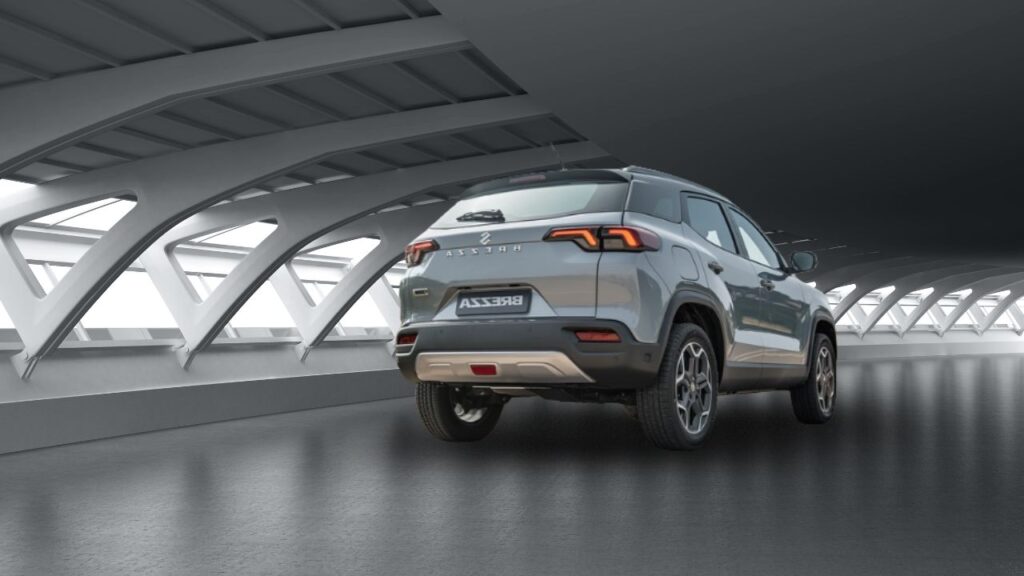
The New-Bolt Tailgate: Tailgates tend to be overlooked during a mid cycle refresh, but a generational change deserves to be focused on. There should be slimmer, wraparound LED taillights (potentially joined by a light bar, a huge trend at the moment) and a beefier, redesigned bumper that add the final touch to the premium appearance.

To put it simply, Brezza 2026 not only going to look new but it’s also going to look expensive – a must-have in a segment where buyers seem to be opting for style. 

The Cabin Reimagined – Technology and Luxury

Here is where the 2026 Brezza would be expected to shine, and from what Maruti is doing with its top-end models, it looks like we are in for a treat. The current cabin is functional but not inspiring like its rivals.

The Feature Juggernaut:

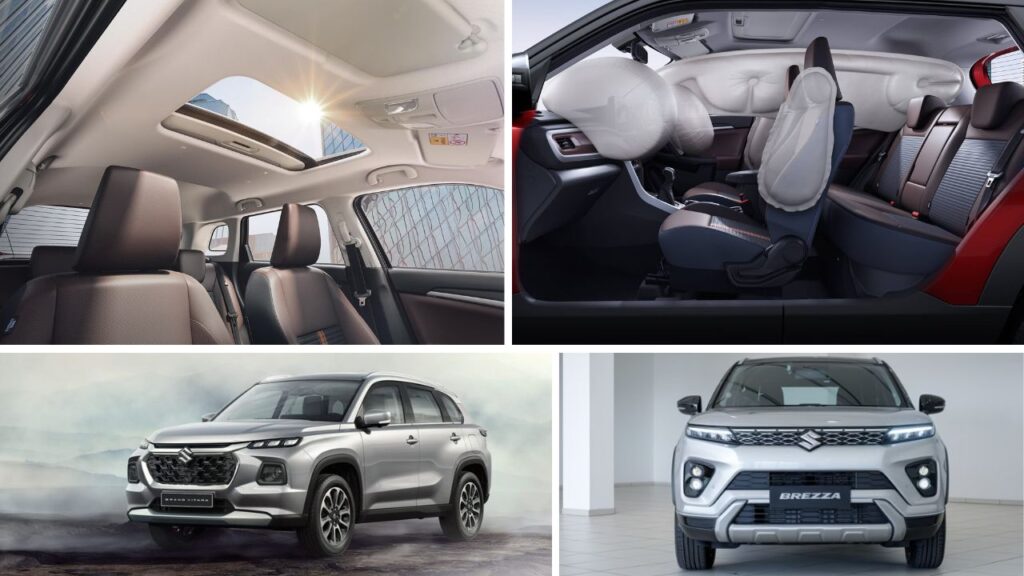
The Central Screen: The 9-inch SmartPlay Pro+ on the current model gets the job done but the 2026 iteration is said to be breaking the mould, coming with a gigantic 10.25-inch or a 12-inch floating infotainment screen. Expect an enhanced UI, faster processing, and the now-standard Wireless Apple CarPlay and Android Auto. 

Digital Driver Display: The current analog-digital mix is expected to be replaced by a fully digital instrument cluster (possibly 7-inch or larger) that is customizable. This is critical for information display for the new hybrid system and ADAS features.

Maruti Suzuki Brezza Technology and Luxury

Image credit: MarutiSuzuki

The Comfort Factor: Bulls-eye for two features that have been planted firmly on every buyer’s wish-list for as long as we can remember, Ventilated Front Seats, and a Premium Audio System. The 2026 Brezza will almost definitely come with front seat ventilation, a welcome relief for Indian summers. We could also see a tie-up for a special sound system, after the trend of premium car audio in the segment. 

Precision Safe (ADAS): It’s a biggest potential addition. To take on the big boys, the 2026 Brezza is expected to come with Level 1 ADAS. That might include Adaptive Cruise Control, Blind Spot Monitoring, Rear Cross-Traffic Alert and lane-keeping assist. This measure will immediately boost the Brezza’s safety credentials, and make it future-compliant for emissions regulations down the line.

The cabin itself will also get a revamp, featuring soft touch plastics and contrast stitching along with some new dual-tone combinations that’ll spruce up the cabin mood and make it look less utilitarian and more premium. 

The Strong Hybrid Game Changer – Powertrain & Efficiency

The present Brezza is powered by the tried and tested 1.5 liter K15C Smart Hybrid (a mHEV) engine well known for its good driveability and decent mileage ( of the order of 20-21 kmpl).

In saying that, the standout highlight of the 2026 model is said to be the addition of the Strong Hybrid Technology, which is the same technology powering the current Grand Vitara. 

Why Strong Hybrid is a Big Deal:

Unmatched Mileage: This is what makes the Brezza special. The Strong Hybrid system enables the vehicle to run on electric power only for brief distances and at low speed, contributing to a substantial improvement in fuel economy. 

Maruti Suzuki Brezza Powertrain & Efficiency

Image credit: MarutiSuzuki

Experts expect that the 2026 Brezza Strong Hybrid might fetch an incredible mileage figure around 27 kmpl to 30 kmpl. This would be an unbeatable selling point and a huge cost saver for city dwellers, he said. 

Silent Driving: Being able to drive silently while cruising in EV mode in stop-and-go traffic makes the driving experience more refined and premium.

Performance: Although it is an economy-oriented system, the hybrid also offers instant electric torque, thereby enhancing low-end acceleration and general responsiveness in city driving — a welcome improvement over the existing model. 

The standard K15C mild-hybrid petrol engine is expected to continue on the lower variants, mated to either the 5-speed Manual or a highly advanced 6-speed Automatic transmission. But the crown jewel will be the Strong Hybrid, now offered only with an e-CVT. 

Read More:- 2026 Toyota Tacoma – Full Overview, Features, and What to Expect

Price and Launch Timeline

Forecasting the two-year out price of a car is a challenge, but we can make some educated guesses around the technology that will be added.

Launch timeline: The next-gen Brezza is expected to launch in December 2025 or early 2026. Maruti usually targets the festival season for big launches.

Maruti Suzuki Brezza Price and Launch Timeline

Image credit: MarutiSuzuki

Cost implications: The addition of high-end options (ADAS, Strong Hybrid, Ventilated Seats, big screen) has a price tag.

The current Brezza starts at around ₹8.25 Lakh (ex-showroom). The prices of the 2026 models could be as follows: 

Variant Category Expected Ex-Showroom Price Range (Lakhs INR) Key Upgrades Justifying Price
Base Variants (Mild Hybrid) ₹9.5 Lakh – ₹12.5 Lakh Upgraded Design, Good Quality Interior Finish, Larger Infotainment Screen
Top Variants (Mild Hybrid) ₹13 Lakh – ₹14.5 Lakh Expected Panoramic Sunroof, Ventilated Seats, Digital Cluster
Strong Hybrid Variants (Top End) ₹15.5 Lakh – ₹17.5 Lakh+ Hybrid Powertrain is expected, ADAS Level 1, e-CVT Transmission

Sure, that high price tag is a big jump, but it’s the cost consumers pay for best-in-class features such as robust hybrid systems and sophisticated safety packages. 

Conclusion

Expected to be launched in 2025, the 2026 Maruti Suzuki Brezza will not be just an update, rather it will be a big design change and Maruti’s response to the changing needs of the Indian compact SUV buyer. It brings the brand’s DNA (dependability, efficiency) to the new demands of technology (big screens, ADAS planes) and high-end driving experiences (Strong Hybrid).

Considering the new compact SUV at this moment and if you think that fuel economy with the latest tech to keep you going well into the future are the most important considerations, the wait for the 2026 Brezza could be the smartest decision you make. It is going to be a real segment buster, again. 

0

What Your Car Loan Covers Beyond the Ex-Showroom Price 

Published Aug 31, 2026, 7:05 AM
Last Updated Sep 26, 2026, 8:44 AM

What Your Car Loan Covers

You’ve picked the car, negotiated the discount, and the dealer has quoted you an on-road price. The loan gets approved. Then, a day before delivery, the finance desk asks you to arrange another ₹80,000 to ₹1.5 lakh in cash because Your Car Loan Covers only ex-showroom price. Nobody lied to you, technically, but nobody told you that “Car Loan approved” and “on-road price covered” are two different sentences.

This is where most first-time car buyers in India get caught out, and it comes down to one thing: banks don’t lend against the same number you think they do.

Why Your On-Road Price Is Higher Than the Ex-Showroom Price 

The ex-showroom price is a manufacturing rate which the dealer has to pay to bring the car in. The on-road price involves RTO registration charges, road tax (depends on the city), insurance package, and handling fees.

In some cities, this extra cost can be up to 12-20% over the ex-showroom figure, so it depends on the state tax which is different everywhere in India. Check your state rates with your dealer. A car with ₹8 lakh on the ex-showroom price can easily cost you up to ₹9.2-9.5 lakh on-road commitment once you’re standing at the RTO counter.

The loan amount vs on-road price gap starts right here, because most buyers budget against the smaller number.

Car Loan Rate Depends on Your Ex-Showroom Price Mostly

Every lender will offer you different benefits and discounts so it’s worth checking specifically that your lender gives cash on what price before signing the deal.

Do not flatter the lender’s ad of 100% financing, can be calculated against the ex-showroom price. Federal Bank and ICICI Bank both structure their Car Loan schemes this way. And you have to pay RTO-and-insurance from your pocket.

Your On-Road Price

Other lenders finance against the on-road price directly, but cap the loan-to-value ratio below 100%. Union Bank of India, for instance, requires a minimum 10% margin against the vehicle’s on-road price — meaning you’re arranging that 10% yourself regardless of how the rest is structured.

Neither approach is wrong. But “up to 100% financing” and “90% of on-road price” can produce a down payment difference of tens of thousands of rupees on the same car, and dealership finance desks rarely spell out which formula applies until you ask.

Read More :-  Pre-Approved Car Loan Gains Dealership Discounts on Launch Day

Does Your Car Loan Covers RTO and Insurance? 

Registration and insurance don’t get uniform treatment across lenders. Several NBFCs and banks fold both into an on-road-price loan by default. Others exclude them entirely and finance only the ex-showroom component, treating RTO and insurance as the buyer’s responsibility from day one.

There’s a cost hiding inside the version where insurance does get bundled in: your loan principal goes up by the premium amount, and you pay interest on that premium for the entire loan tenure. 

On a five-year loan at 9-10% interest, financing a ₹35,000 insurance premium instead of paying it upfront can add a few thousand rupees in extra interest by the time you’re done — not a lot on its own, but it’s a cost nobody puts in the brochure.

Accessories Are Almost Never Part of the Loan

If you’re adding a sunroof kit, seat covers, or an infotainment upgrade at the dealership, don’t expect the loan to stretch to cover it. Most financiers, including Mahindra Finance, explicitly exclude aftermarket accessories from the loan amount and will only fund fittings that come standard from the factory, like built-in air conditioning. 

Financing Difference Changes

A handful of lenders will finance higher-value factory-approved add-ons on a case-by-case basis, but that’s the exception, not the rule. Budget for accessories the same way you’d budget for fuel — outside the loan, in cash or on a card.

How the Financing Difference Changes Your Down Payment 

Take a car with an ex-showroom price of ₹8,00,000. Add RTO, insurance, and handling, and the on-road price lands around ₹9,20,000 — again, this varies by state, so treat it as illustrative rather than a fixed rule.

  • If the lender finances 100% of ex-showroom: you get ₹8,00,000, and you’re arranging the remaining ₹1,20,000 yourself.
  • If the lender finances 90% of on-road price: you get ₹8,28,000, and you’re arranging ₹92,000.

Same car, same “high financing” pitch from two different lenders, and a ₹28,000 difference in what lands in your pocket versus what you pay upfront. That gap is the entire reason this question is worth asking before you’re standing at the delivery counter with a shortfall.

What to Ask Your Lender Before Taking a Car Loan 

Before you commit, get three answers from the lender in writing, not verbally from the dealership’s finance desk:

  1. Is the sanctioned loan amount calculated against the ex-showroom price or the on-road price? 
  2. Does that on-road figure, if used, already include RTO and insurance, or are those excluded? 
  3. And if insurance is being financed as part of the loan, what does that add to your total interest outgo over the full tenure?

None of this changes whether you should buy the car. Your Car Loan Covers changes whether the down payment you’ve budgeted for is the one you’ll actually be asked for. Ask the question at the sanction stage, not the delivery stage — that’s the only point where it’s still free to find out.

Read More :-  Best Car Accessories for Thar Roxx You Should Buy in 2026

Conclusion

Your Car Loan Covers more than just the ex-showroom price, but you should never assume that the entire on-road cost is financed. RTO charges, insurance, accessories, and the lender’s margin requirements can significantly change the amount you need to pay upfront.

Before signing the loan agreement, confirm exactly what Your Car Loan Covers, how much you need to contribute, and what the total interest will be. The loan with the highest financing percentage isn’t always the cheapest or most convenient option. What matters is the actual amount you receive, the cash you need on delivery day, and the total cost of borrowing.