0

Best Car Accessories for Thar Roxx You Should Buy in 2026

Best Car Accessories for Thar Roxx

Three weeks into owning a Thar Roxx, most buyers notice the same two things: the beige or tan seat trim already has a water-bottle ring on it, and the floor mat that came in the box is doing nothing against monsoon mud. That’s usually the moment people start searching for the best car accessories for Thar Roxx — and there are only a handful of them worth buying before anything else.

Accessory prices for the Roxx swing a lot depending on brand, material and whether you’re buying genuine Mahindra parts or aftermarket. What’s below is priced from current listings across a mix of sellers, so treat these as representative ranges rather than fixed numbers — always check the live price before checkout, especially on anything leather or electronic.

What You Car Needs Protecting First

The Thar Roxx has two known weak points for new owners: the factory floor carpet, which isn’t built for Indian monsoons, and the seat upholstery, especially on lighter interior colours. Everything else — paint protection, dash cams, trackers matters, but it’s a second-wave purchase once the interior is covered.

So buying these best car accessories for Thar Roxx is not only for maintaining an interior look but also to protect before anything running it.

Best Car Accessories for Thar Roxx: Worth Buying Picks

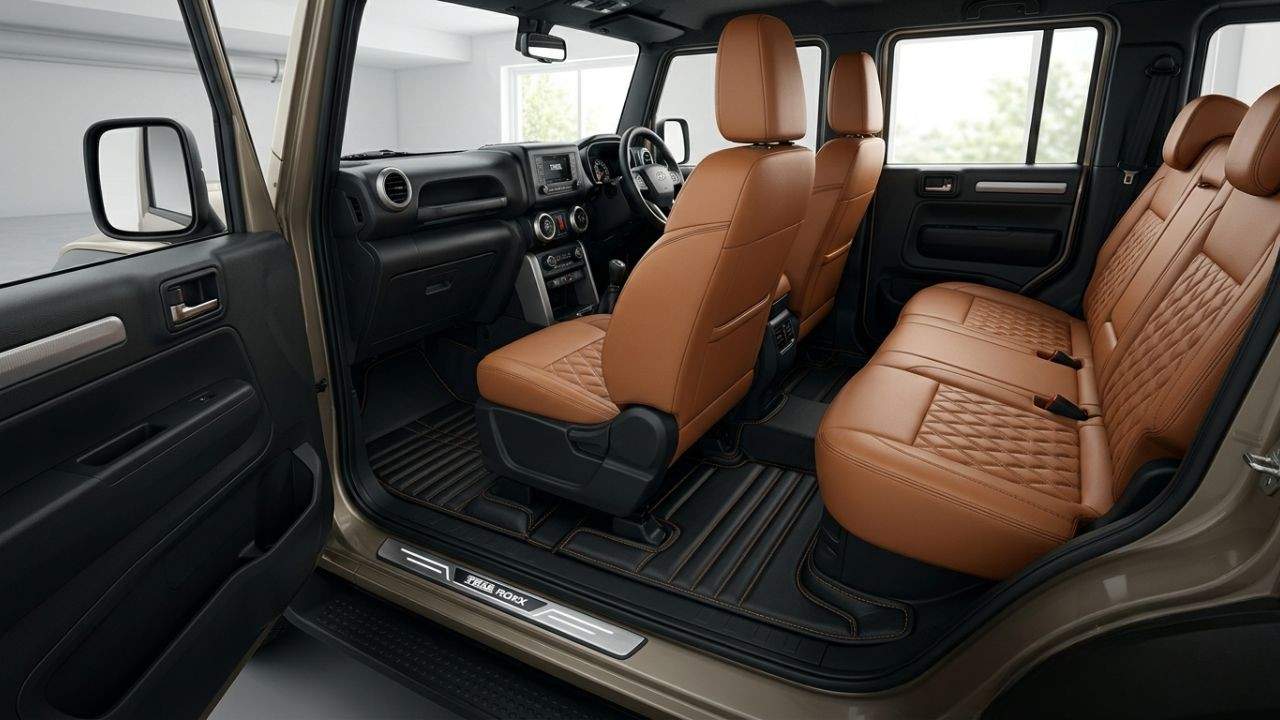
1. 7D Leather-Luxury Floor Mats — ₹4,999–₹9,999 

Custom-molded for the Roxx’s floor pan (manual and automatic get different mat shapes), with a detachable leatherette base and a grass-mat top layer, Velcro-backed to stay put. KVD’s version runs close to ₹4,999 on marketplaces like Autoclint; heavier 9D versions from AutoFurnish or Neodrift push toward ₹9,999. 
best car accessories for thar roxx

Full sidewall coverage means mud and spills never touch the actual carpet underneath. The trade-off: the grass-mat top needs regular vacuuming, or it starts trapping dust instead of catching it. 

Best for: buying in the first month of ownership, before daily grime sets in.

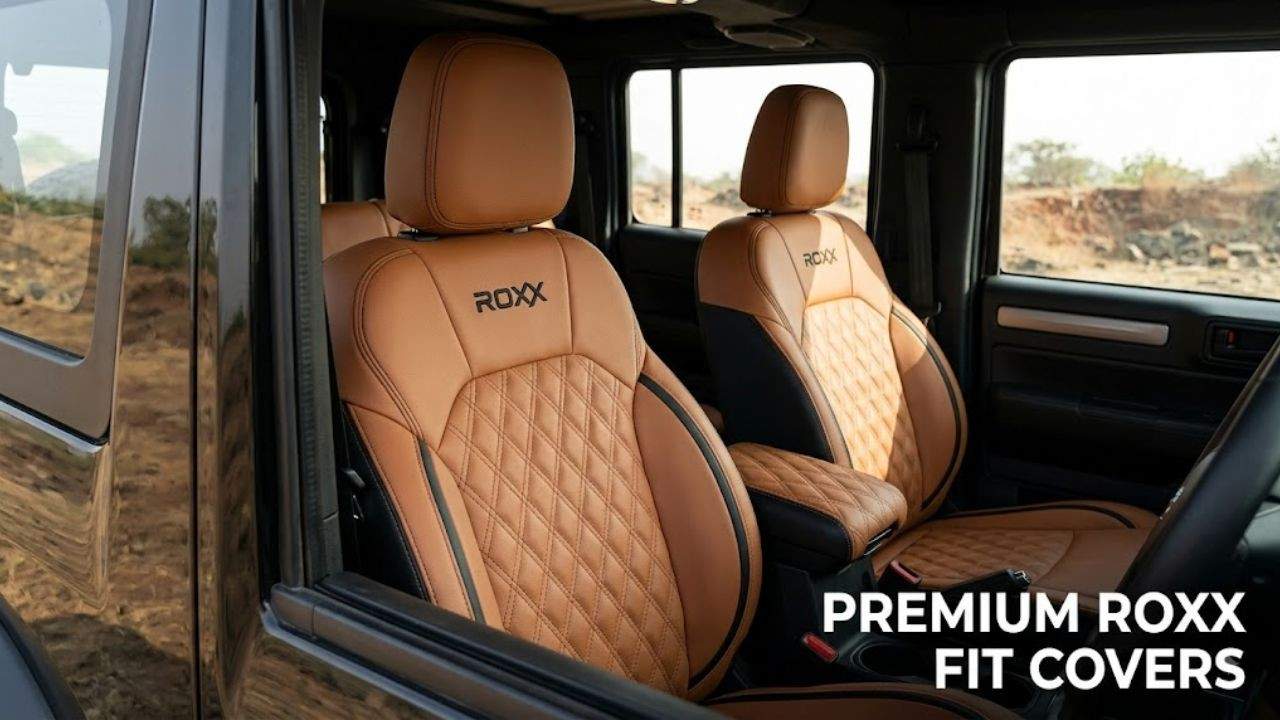
2. Seat Covers — ₹7,399–₹18,999 (Depending on Tier) 

Budget PU/art-leather covers (KVD Superior Leather and similar) sit around ₹7,399–₹8,399. Custom Nappa leather from boutique fitters like Jackspeed runs ₹18,360–₹18,999. Both are cut for the Roxx’s front captain-seat shape. The budget tier protects the factory seats for roughly a third of the premium price, but PU covers get noticeably hotter and stiffer under direct sun than real Nappa. 
Thar Roxx

Best for: anyone with the lighter (beige/tan) interior option, since it shows stains first.

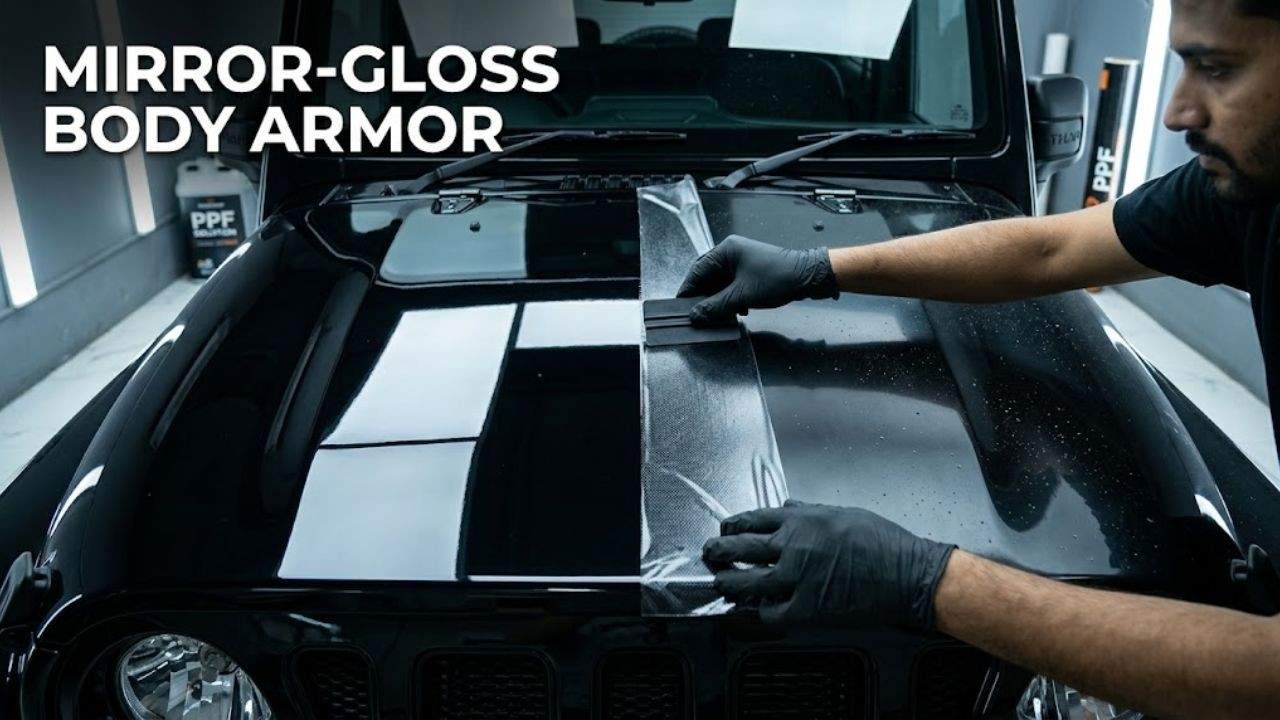
3. Paint Protection Film (8-year warranty) — ₹1.35 lakh 

Self-healing top coat, UV-stable, applied either to high-chip zones (bonnet, bumper, mirror caps) or the full body depending on the package. It protects resale value on a vehicle whose flat, boxy panels chip easily on highway drives. But the spend only makes sense if you’re keeping the car five-plus years — a short-term owner won’t recover the cost at resale. Shorter-warranty PPF packages exist for less, though exact current pricing on those wasn’t confirmed here. 
Thar Roxx

Best for: long-term owners prioritising resale value over upfront savings.

Read More:-  Top Car Insurance Plans to Buy in August 2026

4. Dash Camera — approx. ₹25,000 

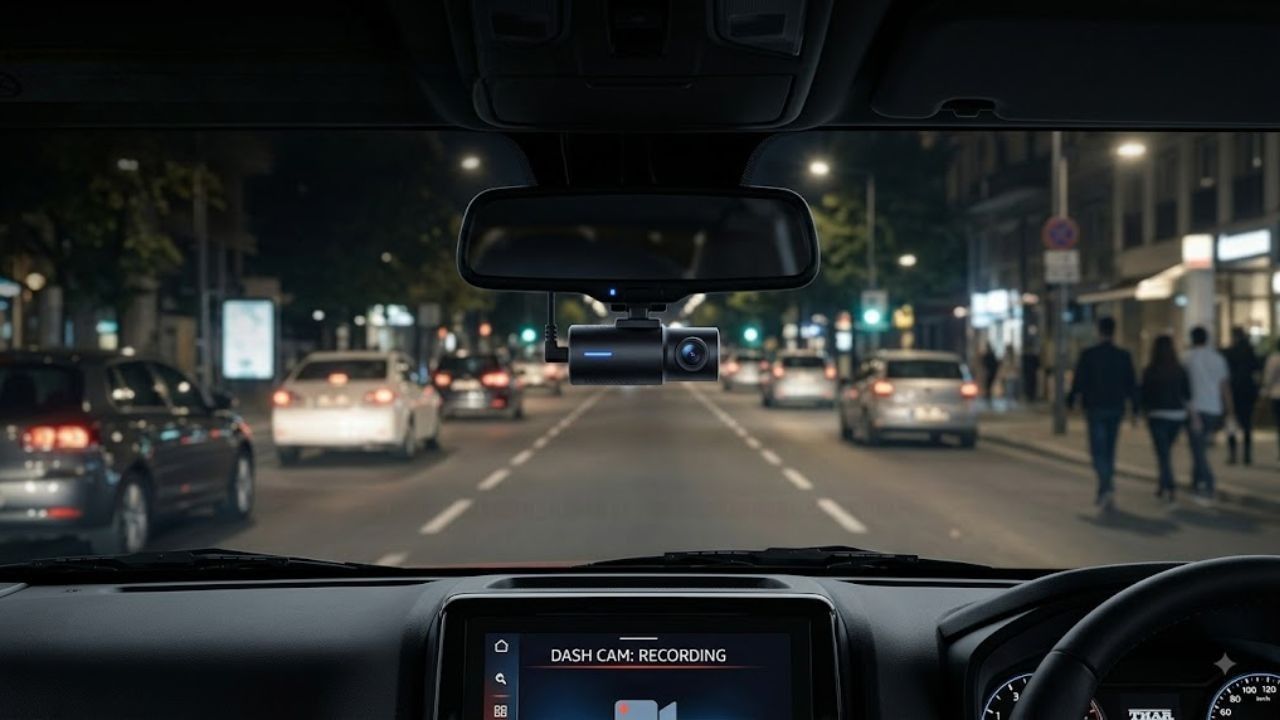
Front-and-rear dual-channel units with night vision, parking mode and loop recording land around this figure; front-only units cost meaningfully less. Treat ₹25,000 as a ceiling for a full dual-channel setup, not a fixed price. Real footage matters in hit-and-run or insurance disputes, and more Indian insurers are asking for it. Cheaper units without proper heat-resistant sensors tend to fail after a few summers parked in direct sun. 
Thar Roxx

Best for: daily commuters and highway drivers who want insurance-grade footage on file. This is one of the essential and best car accessories for Thar Roxx.

5. GPS Tracking Device — ₹12,499 

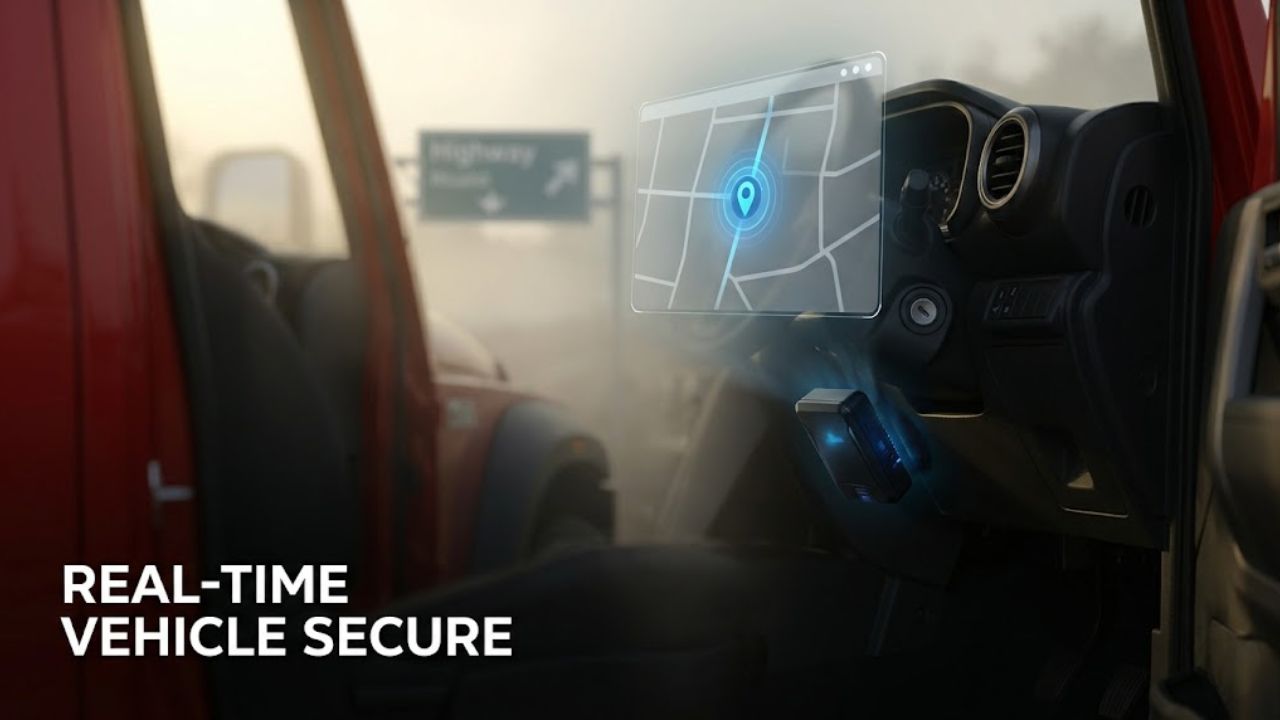
Real-time location via app, geofencing alerts, and ignition on/off tracking. It doubles as anti-theft and peace of mind if more than one person drives the car. The catch: most trackers need an active SIM or data plan, so the ₹12,499 hardware cost isn’t the full cost of ownership. 
Thar Roxx

This is the best car accessories for Thar Roxx because it’s good for multi-driver households, or parking regularly in high-theft areas.

6. Door Sill Guards — ₹1,175 

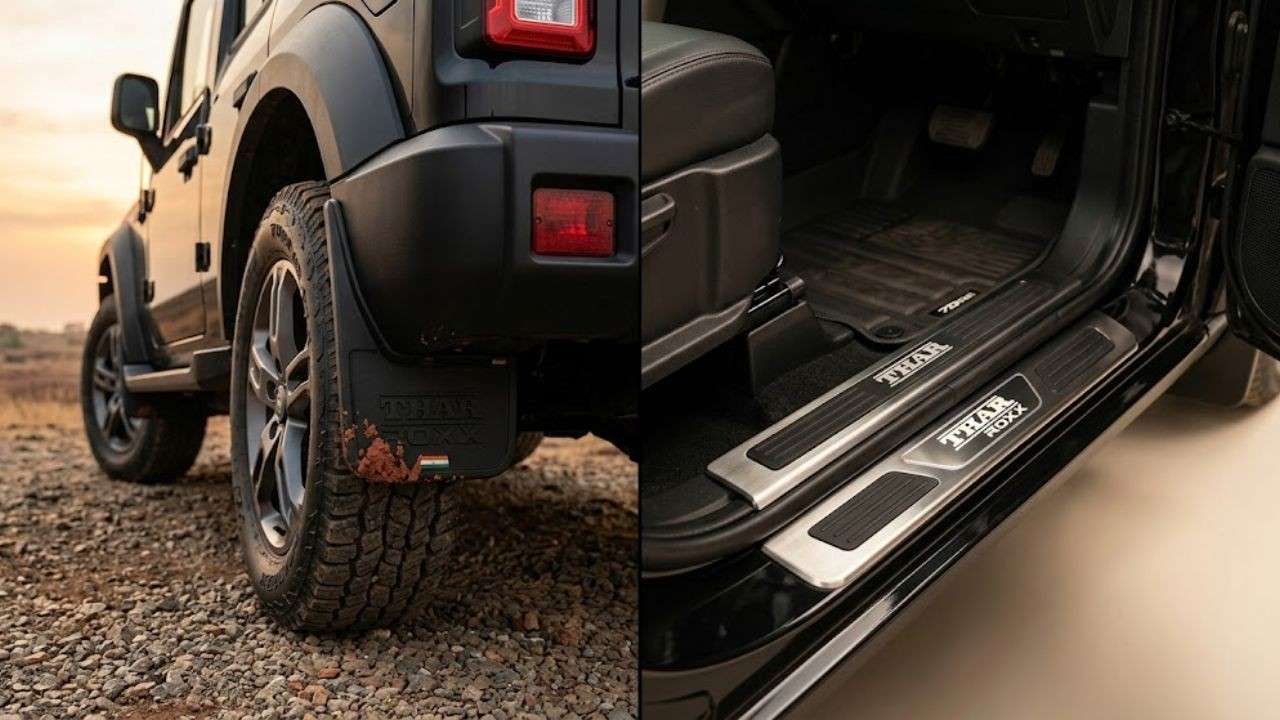
Stainless steel or ABS plates covering the door sill/entry step, some with blue LED accents. It’s the cheapest item on this list solving a guaranteed problem — every passenger’s shoe scuffs that still eventually. It’s purely cosmetic and protective, with no functional upside beyond that. 
Thar Roxx

Read More :-  Best Car Battery for Your Vehicle: Top Picks & Buying Guide 

The best car accessories for Thar Roxx to one easy, low-cost win before committing to bigger purchases.

7. Waterproof Body Cover — ₹1,895–₹2,150

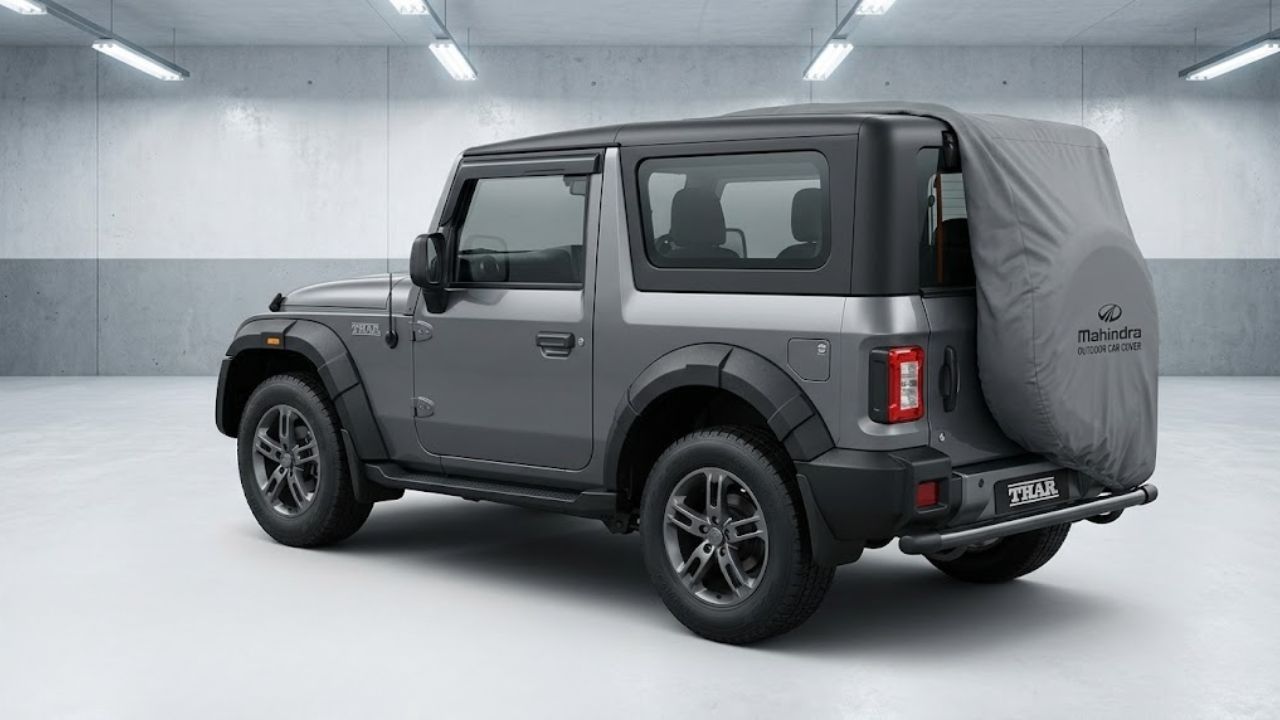
Triple-stitched, mirror-and-antenna-pocket covers built to fit the Roxx exactly (Kingsway, Autofurnish, and Drivestylish all sell versions in this range; MRP is usually listed near ₹4,400 but the real transaction price is the ₹1,895–2,150 band). Blocks UV, bird droppings, and tree sap for anyone parking outdoors without covered parking. This is one of the best car accessories for Thar Roxx but cheap covers trap moisture instead of shedding it, which can leave swirl marks if you don’t let the paint dry first.
Thar Roxx

Best for: owners without a garage or covered parking spot.

8. Mud Flaps (Set of 4) — ₹499–₹999

ABS plastic, OEM-fit, screw-in installation with no drilling. Autofurnish sells at the low end (₹499), RideoFrenzy and Techo sit closer to ₹990–999. Cheapest functional accessory on the whole list — stops mud and road spray from hitting the lower doors and undercarriage. Limitation is that the budget PP versions get brittle and crack in a couple of Indian summers, so this is one spot where paying slightly more (ABS over PP) actually matters.
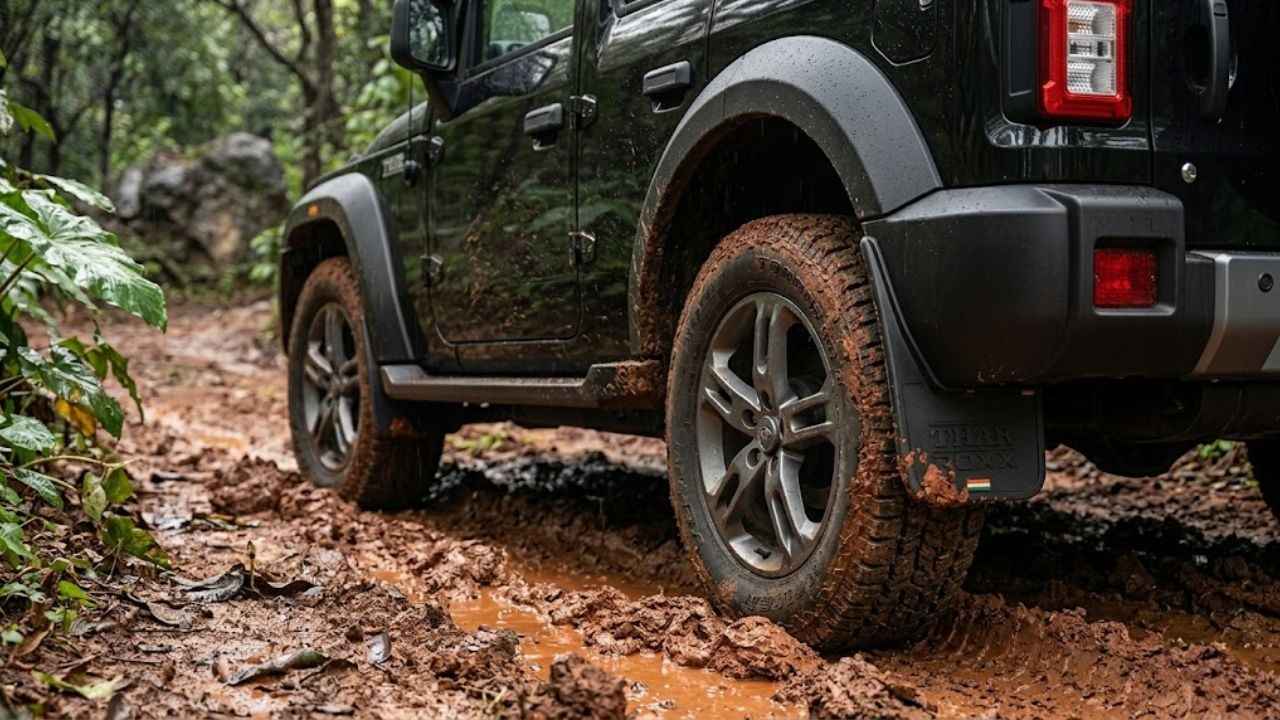
Thar Roxx

Best for: anyone who drives on unpaved or waterlogged roads regularly.

Floor Mats vs. Seat Covers: Which Comes First?

7D Floor Mats Seat Covers
Starting price ₹4,999 ₹7,399
Protects against Daily, guaranteed damage — mud, water, spills Slower-building damage — stains, wear
Urgency Needed from week one, especially in monsoon states Matters most on light-colour interiors

Floor mats protect against damage that happens on day one of ownership; seat covers guard against wear that accumulates over months. If the budget only stretches to one, the mats come first — they cost less and cover the area that takes damage every single drive, rain or not.

Read More :-   Best Brake Pads for Cars: Top Options for Safe Driving

Conclusion 

These best car accessories for Thar Roxx comes under ₹6,200 combined, floor mats plus a sill guard cover the two spots on a Thar Roxx that show wear fastest. Once the budget clears ₹20,000, budget-tier seat covers close the interior-protection loop entirely. PPF and a dash cam are worth holding off on until two questions are answered: how long you’re actually keeping the car, and whether your insurer asks for dash-cam footage in the first place. Let those answers decide the spend — not the order on this list.

Sharey Khan

Sharey Khan is an IT entrepreneur and petrol head & a car enthusiast. With a special focus on car-related content, he combines his deep passion for vehicles with a talent for crafting informative, engaging, and easy-to-understand content. His writing is driven by a genuine love for cars and he is committed to providing readers with accurate, up-to-date, and trustworthy information that empowers smarter driving decisions. 

Leave a Reply

Your email address will not be published. Required fields are marked *

0

Best Cars for Mountain Roads: Drive Smoothly on Snow, Hills & Winding Terrains

Published Sep 12, 2025, 6:06 AM
Last Updated Sep 12, 2025, 10:51 AM

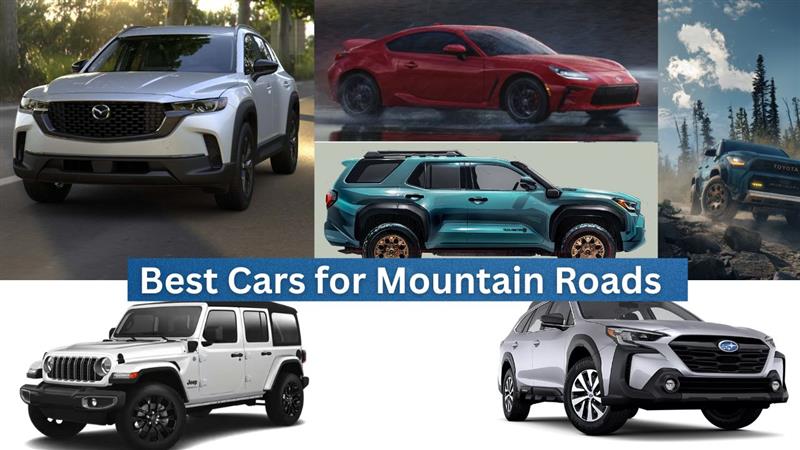
Driving smoothly on Snow, Hills & Winding Terrains is not easy, but it allows you to experience the best views, sharp switchbacks, and satisfaction of reaching a high summit. Wrong cars may give you stress from accidents and discomfort on these roads, so the best cars for mountain roads are specifically made to tackle the wilderness and give you a comfortable ride. Consider the facts in your mind while choosing the right car because different kinds of roads require different cars. 

What Matters for Mountain Driving

Mountain driving is difficult with just any vehicle, choosing specially built off-road cars is the best option. Choosing the right one for your needs matters when it comes to your safety. It might prevent the risks of accidents or crashes on your journey.

Try to figure out your road type – 

Is it snow and icy or mostly dry and twisted?

Do you need to carry bikes or skis?

Do you meet the rough road or stay on the pavement?

Key features in a car you must look for this kind of journey are traction (AWD or 4WD), high ground clearance for rough roads, low GC for winding roads. But most importantly good tires will help you to tackle every road, especially in mountain driving which most people ignore.

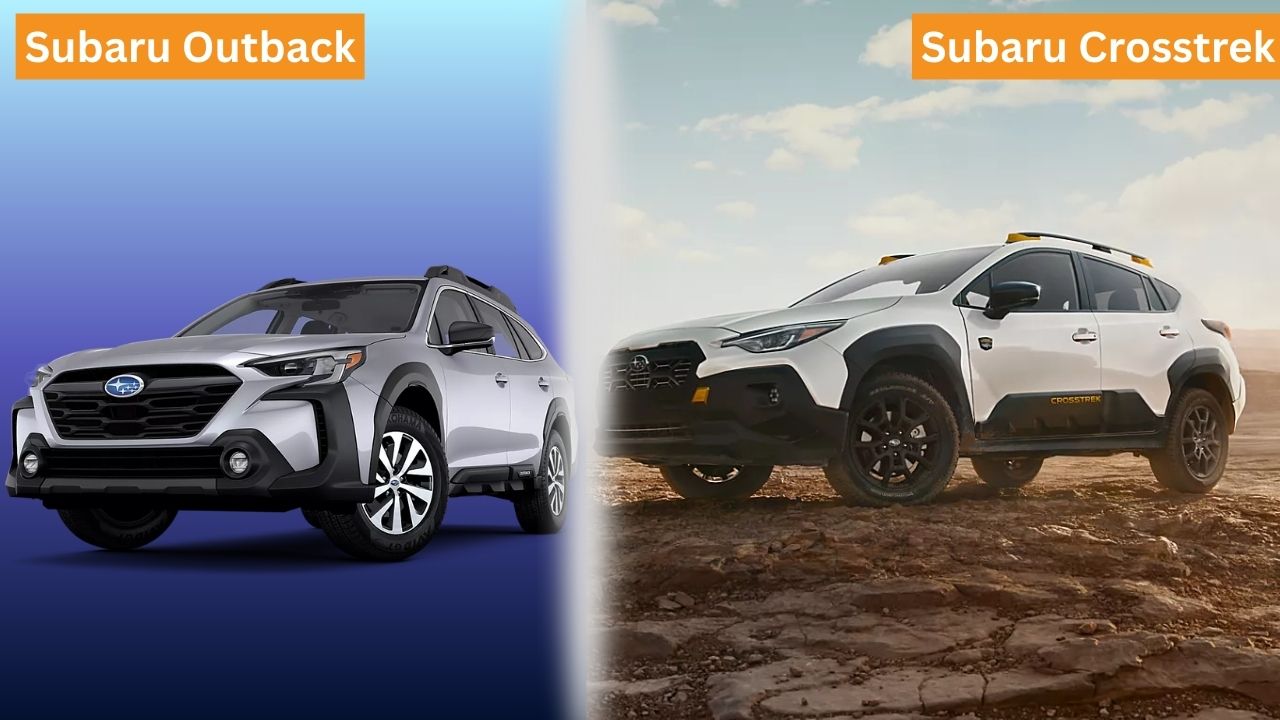
Best Car For Snow Mountain Roads: Subaru Outback / Crosstrek

Driving on roads with snow is kind of tricky, you need the best car for snow mountain roads. With all-wheel drive and enough ground space you can face snowy mountain roads. Subaru Outback and Crosstrek are good options for handling snowy roads. They offer excellent looks, symmetrical AWD, and sensible ground clearance. It is ideal for family trips or comfortably used daily with practical cargo space, making it comfortable and confident in ice and deep snow roads. Note: AWD is not enough but the right set of winter tires is making a big difference for this situation.

Subaru Outback

Subaru Outback is an outstanding off road performer with nine trims. It features a 2.5-litre engine to produce 182 hp. It delivers good mileage up to 26 city and 32 highways in non-turbo models. With 32.6 cargo space, still delivering advanced tech functions and symmetrical AWD to support mountain drive. 

Image credit: Subaru

Subaru Crosstrek

It offers a 2.0-litre engine that delivers 152 hp and supports AWD with high ground clearance. Crosstrek offers mileage up to 27 city and 34 highway with standard functions for off-road capability. Sport specific interior and technology that ensure the best driving experience.

Feature Subaru Outback Subaru Crosstrek
Engine Options 2.5L (182 hp), 2.4L Turbo 2.0L (152 hp), 2.5L (182 hp)
AWD System Standard Standard
Ground Clearance 8.7–9.5 in. 8.7 in., 9.3 in.
MPG (City/Hwy) 26/32 (2.5L), 22/29 (2.4L-T) Up to 27/34
Seating 5 5
Trim Levels available 9 5
Price $41,710 $33,795

When You Want To Go Off The Beaten Path: Jeep Wrangler / Toyota 4Runner

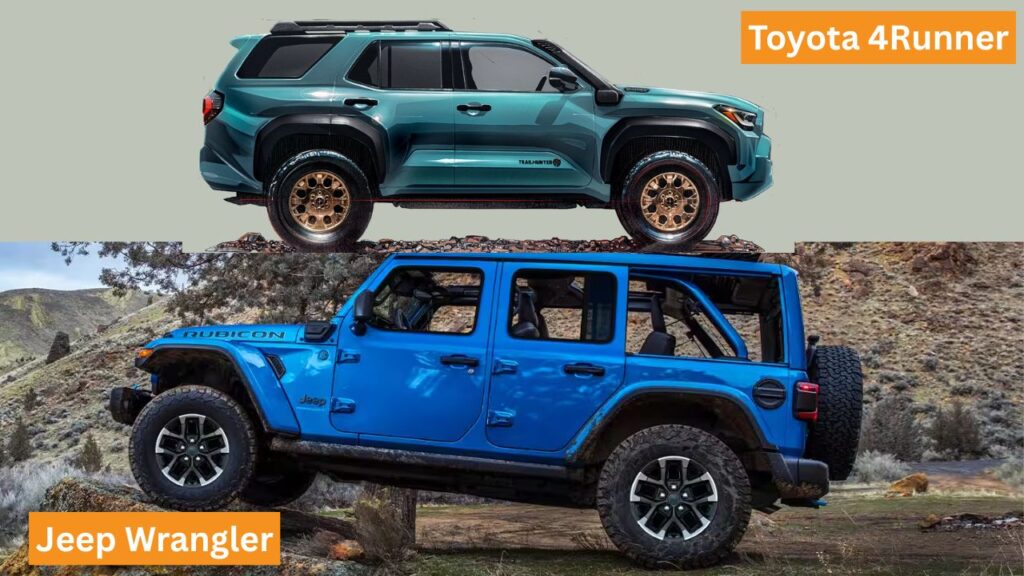
Rough paths on mountain driving can be challenging, prefer 4×4 system cars to run on steep hills and rocky grounds. Jeep Wrangler and Toyota 4Runner are a beast that is specially made to run out fluently from these challenges. They offer special gears for slow crawling and locks for the wheels. Ideal for rough mountain driving not paved or smooth routes. These cars are the best answer if you are wondering, what is the best car to drive in the mountains.

Jeep Wrangler Features

The Wrangler comes with a 3.6L V6 powerful engine to produce 285 hp and plug-in hybrid also available for impeccable off-road capability. It offers 4×4 drivetrain and 6-speed manual transmission for mountain rides. Advanced infotainment system, 85+ safety feature to ensure safe rides on roughly mountains. It offers off-road gear and interior comfort to make it ideal for long trips.

Image credit: jeep & Toyota

Toyota 4Runner Features

It offers a 2.4L turbo engine with 8-speed automatic transmission. Rear-wheel drive is allowing this vehicle to be fluent on off-road. With locking rear differential and off-road cruise control, mountain riding will become easier for trained drivers. It also offers maximum cargo space and premium interior made with quality products, making it perfect for long journeys. 

Feature Jeep Wrangler Toyota 4Runner
Engine Options V6, I-4 Turbo, V8, PHEV 4xe 2.4L Turbo I-4 (278 hp), Hybrid
AWD/4WD System Standard, multiple advanced types Standard RWD, 4WD optional
Safety Over 85 features; ADAS, airbags Toyota Safety Sense 3.0 suite
Interior Options Leather, heated/ventilated seats Leather, ventilation all rows
Towing Capacity Up to 5,000 lbs varies by trim
Off-Road Gear Class-leading, lockers, winch, 35″ tires Lockers, stabilizer bars, crawl control
Price $32,095 $42,765

For Carving Twisty Mountain Roads: Mazda MX-5 and Toyota GR86

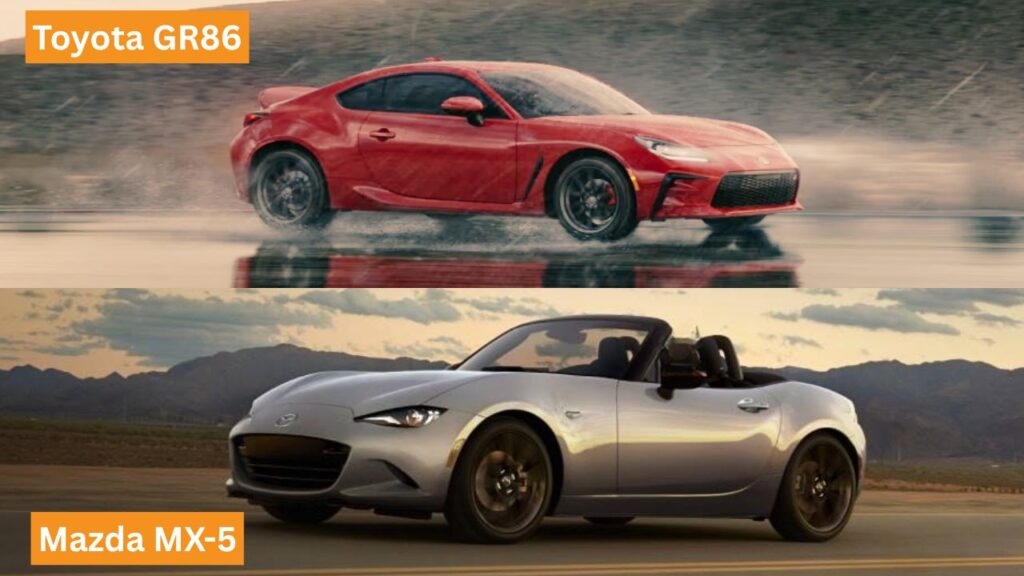
The lightweight sports car shines on twisty mountain roads. When people wonder about the best car for winding mountain roads, the Mazda MX-5 Miata and Toyota GR86 often come on top. They are balanced, small, and powerful letting you experience compact performance. It offers more speed and usually provides more fun in driving but also ensures a secure ride on tight mountain roads.

Mazda MX-5 Features

It offers a 2.0L engine that delivers 181 hp of power that drives you through twisty mountain roads with confidence. It offers transmission up to 6-speed manual/automantic with RWD feature. The lightweight Mazda MX-5 is designed for off-road ridings. It offers sport-tuned suspension, advanced safety functions, it costs you around $29,500.

Image credit: mazdausa & toyota

Toyota GR86 Features

It offers 2.4L engine to give your powerful speed with 6-speed transmission. It is also designed on RWD and provides safety with Vehicle Stability Control, seven airbags, hill start assist. Trim available for luxurious interior and it also included flexible cargo with folded seats. It cost around $30,000 but worth it for the best mountain driving experience.

Feature Mazda MX-5 Toyota GR86
Engine 2.0L I-4, 181 hp 2.4L Boxer-4, 228 hp
Transmission 6MT / 6AT 6MT / 6AT
Drivetrain RWD RWD
Curb Weight 2,340 lbs 2,800 lbs
Seats 2 (convertible) 2+2 coupe

The Everyday, Family-Friendly Mountain Car: AWD Crossovers

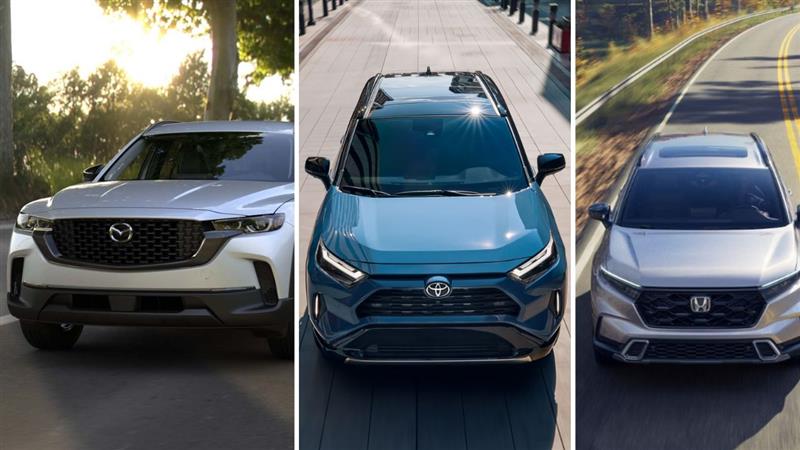
What cars are good for mountains while planning for family trips. The modern AWD crossovers models like Mazda CX-50, Toyota RAV4 and Honda CR-V offer a cargo space, comfortable cabin, and decent capability in poor weather. This is all you need for a fun and safe journey on mountains. 

Image credit: Mazda, Toyota, Honda

Feature Mazda CX-50 Toyota RAV4 Honda CR-V
Engine Options 2.5L / 2.5T / Hybrid 2.5L / Hybrid / Plug-in 1.5T / Hybrid
Power (hp) 187-256 (gas) / 219 (hyb) 203 (gas) / 302 (hybrid) 190 (gas) / 204 (hybrid)
Drivetrain AWD standard FWD/AWD FWD/AWD
Fuel Economy 28 (gas), 38 (hyb) 30 (gas), 40 (hyb), 94 MPGe 30 (gas), 40 (hyb)
Cargo Volume 31.4/56.3 37.6/69.8 39.3/76.5
Safety Suite Full suite standard TSS 2.5 standard Honda Sensing standard
Price $30,500 $29,800 $42,250

Conclusion

If you are wondering about what is the best car to drive in the mountains then there are a lot of options for you. First, think about your priorities and budget, it may help you to choose the right car for you. All these cars fitted to different roles — Subaru Outback or Crosstrek for snow roads, Jeep Wrangler and Toyota 4Runner for Rocky trails, and Mazda MX-5 for twisty paved roads but right tires are the most important part of these cars. Your mountain rides will be safer, comfortable, and enjoyable with these cars.


0

Monsoon Car Care Tips: Keep Your Car Safe During the Rainy Season

Published Jul 9, 2026, 12:40 PM
Last Updated Jul 22, 2026, 12:07 PM

Car Care Tips

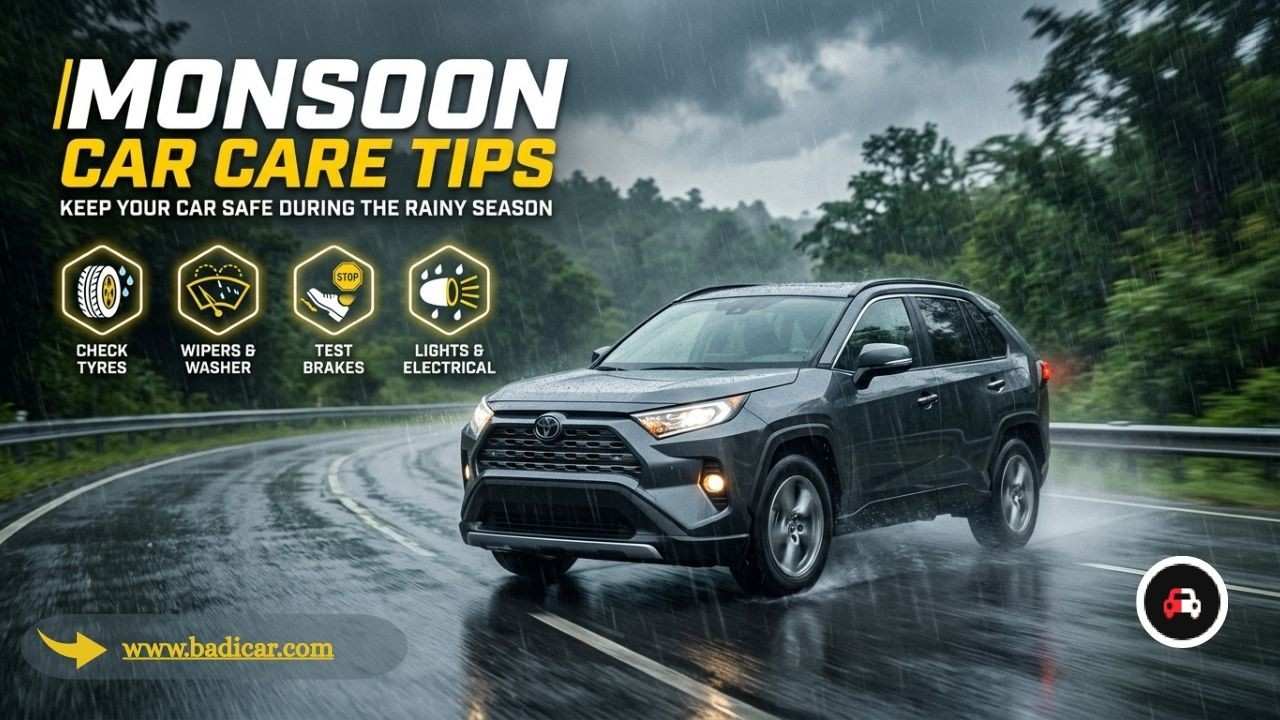
Monsoon can give a hard time to your car while you’re sitting inside and taking short trips. Your car is dealing with water, mud, and humidity altogether but with right Monsoon Car Care Tips before the season starts can save unexpected breakdowns of a car, rusted parts, and also save your money which can cost you dearly.

Monsoon isn’t just rainy weather for your car. It’s a stress test on the engine, electricals, brakes, tyres, and body — all at once, every single day for weeks.

Why Monsoon Car Care Actually Matters

Monsoon brings not just water but that rain carries road grime, salt, and pollutants that speed up corrosion. Indian roads also have poor drainage systems that cause heavy flow and slippery surfaces and if you neglect Monsoon Car Care Tips that turn into major failures fast.

A car that runs fine in the summer can start misbehaving during the monsoon if you don’t get basics like wipers, battery terminals, and tyre tread checked up on. Some preventive maintenance before the rainy season can really save money on unexpected breakdowns or costly repairs down the road. 

Read Also: Which Engine Oil is best for your Car?

The Real Damage Rain Can Cause

Before getting into tips, it’s helpful to know what your car is actually being protected from: 

Indian roads become a pool in the rainy season and that causes rust and corrosion in metal parts of the car. Wiring malfunctioned due to moisture which made it difficult to generate spark.

The most risky part is the engine if water flows into the air intake when driving through flooded areas, be ready for engine damage. Moisture negatively affects the brake performance by reducing friction between the brake pads and the disc. Old cars with manual gear can suffer from clutch slipping if the clutch plate area becomes wet from water ingress, leading to loss of control over the car.

Car Care Tips

Early Maintenance: What to Check Before the Rains Start

It makes all the difference to do this a few weeks before monsoon hits, and not when the first floodwaters arrive. 

Tyres: 

You should be very diligent about checking tread depth. Bald or worn tyres lose grip virtually immediately on rain-slicked roads. Keep tyres at the right pressure – underinflated ones are more likely to go into a spin. 

Brakes: 

Have the brake pads and discs checked along with the brake fluid level. Wet roads require brakes that deliver the right response immediately, not brakes that have already given their all. 

Wipers: Replace the wiper blades if they streak or make noise (such as squeaking). This is the cheapest upgrade that does the most to visibility in a rainstorm.  

Battery and electricals: Clean your battery terminals and look for signs of buildup. Have exposed wires inspected, that is if your car is not brand new. 

Underbody coating: A rust-proof underbody salt-spray or wax treatment before the monsoon protects from continuous splattering of dirty water.  

Door and window seals: Worn rubber seals allow water to enter into the cabin resulting in musty odors, electrical shorts and mold. Replace them if they have hardened or split.  

Air filter and engine air intake: Ensure the air intake is not too low as to draw in water when waterlogging. If you’re in a flood-prone area, this is one to talk over with your mechanic. 

Car Care Tips

Monsoon Car Care Tips By Car Type

Hatchbacks and Small Cars

They’re also lower to the ground, so a flooded road is more hazardous. Don’t drive through water above the lower door sill. Maintain your tyre pressure a little higher than normal for extra grip and have your underbody checked for rust a little more often with reduced ground clearance. 

Sedans 

Sedans typically have acceptable clearance but they also have a longer body, which exposes more surface area to splashing and rusting. Have a close look at the boot and rear wheel arches where moisture lingers. Wax the exterior before the season to shield the paint. 

SUVs 

SUVs benefit from greater ground clearance when in flooded conditions, but don’t get too big for your britches — even SUVs can stall if water gets into the air intake. Inspect for rust on four-wheel-drive components and undercarriage, as SUVs tend to be driven on rougher, muddier ground in the monsoon. 

Electric Vehicles

EVs are typically well sealed from water with IP rated battery packs, but charging ports and connectors still need to be kept dry. Don’t charge in the open in heavy rain, have the battery compartment seals checked. Never take for granted that “electric” means “waterproof all the time.” 

Driving Tips That Matter As Much As Maintenance

  • Slow down in plenty of time before you drive into standing water, since you can hydroplane at relatively low speeds. 
  • Allow more space between your car and the car in front as wet roads can add up to 15 percent to stopping distances. 
  • Turn on your headlights while driving in heavy rain so that you can see and be seen by other drivers. Don’t just use the tail or parking lights. 
  • Never drive on flooded roads unless you’re certain of the water depth. A puddle that looks shallow could hide a deep hole, an open sewer or other dangers. 
  • If your vehicle dies after you drive it into water, do not try to restart it. Trying that can squeeze water further into the engine and cause expensive repairs. 

After the Rain: Don’t Skip This Step

After driving in a heavy rain you should probably clean your car or mud, dirt and road grime will get stuck inside the parts of your car if you just parked it. Dry the cabin quickly if you get any water inside as it generates foul smell and damages the fabrics. Check features if they are working properly like turning on your AC. 

If you schedule a professional inspection and cleaning once a month during the rainy season, you can catch problems early and avoid having to make expensive repairs later on. 

One Thing Most People Forget: The Emergency Kit

A monsoon emergency kit doesn’t need to be fancy — a flashlight, an extra wiper blade, jumper cables, a tow rope and a rain poncho can cover it. If you ever find yourself stranded in flooded traffic or your car breaks down, this kit makes an overwhelming situation a controllable one. 

Conclusion

Monsoon does not destroy cars in a single day, it deteriorates them with small exposure after multiple exposures. A little pre-monsoon prep, a bit of driving caution and a post-rain cleaning is honestly all you need to get through the season without any unplanned garage visits. View these Monsoon Car Care Tips as a checklist instead of once-off information and your car will take care of the rains just fine.

0

Punch vs Exter: Best Budget Micro-SUV for First-Time Car Buyers

Punch vs Exter

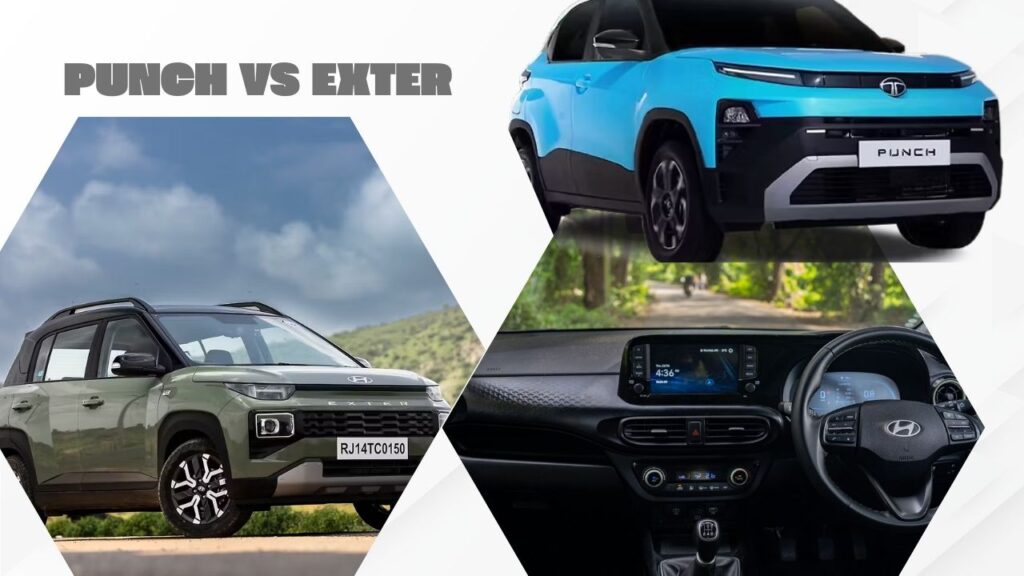
Buying your first car is a little like selecting a long-term roommate. You want it to be reliable and comfortable to live with every day, and cheap enough that the payments don’t make you sweat. That’s precisely why the Tata Punch vs Hyundai Exter comparison has turned out to be a big talking point. For a lot of first-time buyers, this micro-SUV war can confuse them enough to make them go weak in the knees. 

In the 2026 Indian market, two names have turned out to be the de-facto choices for every first-time buyer — Tata Punch & Hyundai Exter. Both the new models are “Micro-SUVs,” which means you get a commanding high-seating position and the “big car” feel without the hassle of parking a tank in a small city space.

But which one should you actually buy? Let’s take a look at the Punch vs Exter comparison to see which one suits you better. 

The First Impression: Design and Presence

For a lot of first-time buyers, the word “SUV” is minimalistic enough.

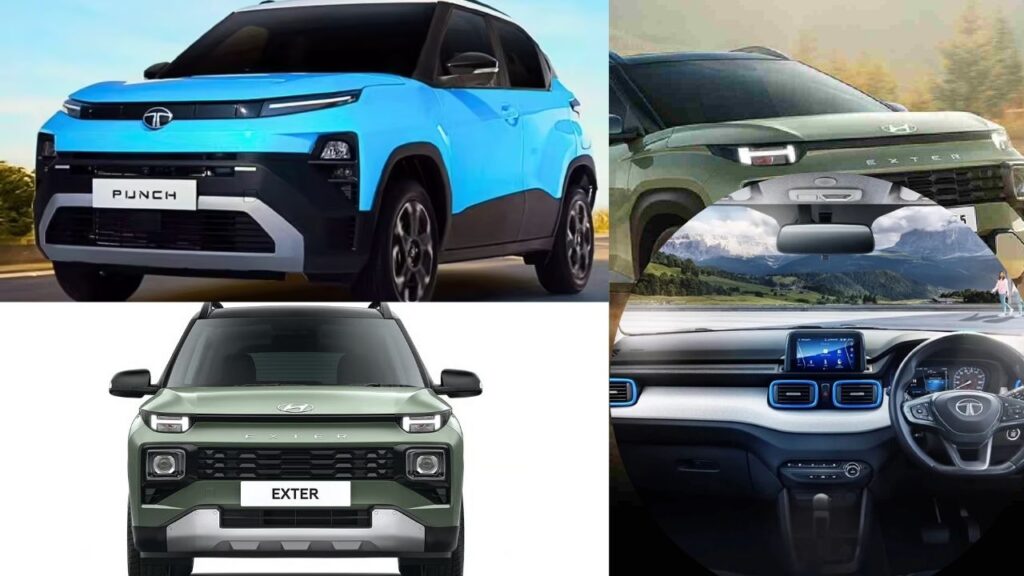
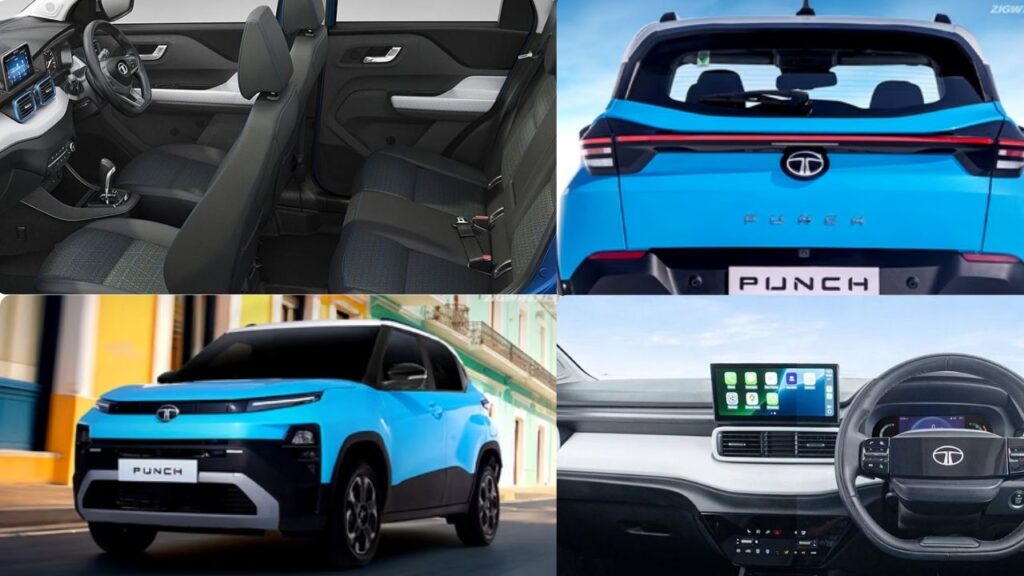
At first look the Punch 2026 facelift appears robust and sturdy, with the presence and stance of a compact SUV that can take on anything. Its good ground clearance of 193 mm is one of the best in the segment and helps a lot on Indian roads. If your route to work has potholes, patches of rough pavement, or water-filled streets in the monsoon, the Punch is a vehicle that looks like it can take those pummellings and keep going without a second thought.

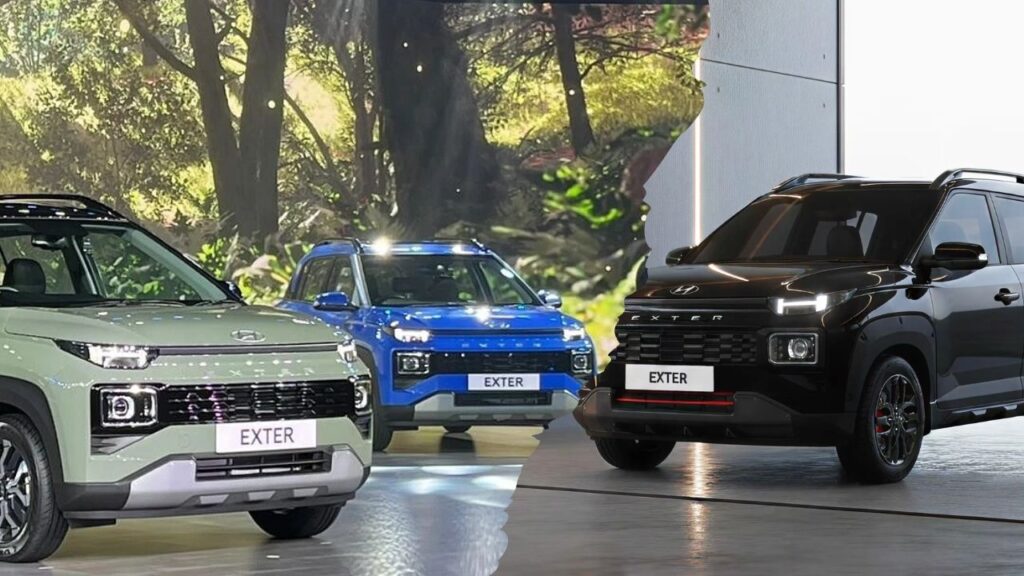
Hyundai Exter: The Exter taps into a “funky-urban” theme. It’s a little more boxy and “tall-boy” in shape. The H-formed LED lights spark conversation, and it looks like a high-tech gadget on wheels. Though it isn’t as “rugged” looking as the Punch, it does have a polished look that would feel right at home in the parking lot of a corporate headquarters. 

Performance: City Zipping vs. Highway Cruising

Since this is maybe your first car ever, you probably want an easy, no-stress driving experience, particularly when you’re inching along in city traffic.

The Smooth Operator – Hyundai Exter:

The Exter buit on a comfort and refinement that was given by a 1.2-litre 4-cylinder engine. You can sneak in and out from anywhere without making a huge noise when your car goes on. This poise makes for a lot more relaxing, especially in stop-and-go city traffic and what seems like an endless daily grind. And light steering and a quiet cabin also make new drivers feel comfortable behind the wheel. 

City Zipping vs. Highway Cruising

Highway Titan Power Punch

The Power Punch (Tata): The Punch also packs in a 1.2L engine, but it is a 3-cylinder unit, which can seem a bit “vocal” when compared to the Hyundai. But for 2026 Tata has launched a Turbo-Petrol variant for all those who want this car to have a little more “oomph.” For weekend jaunts up the mountains or long hauls on the highway, the Punch’s beefier steering and solid platform seem more grounded and “unstoppable” at speed. 

The “Tech” Factor: What’s Inside?

This is where the fight gets fierce. Features have always been Hyundai’s forte, but Tata has got there fast. 

Feature Tata Punch (Facelift) Hyundai Exter
Infotainment 10.25-inch (Huge & Crisp) 8-inch (User-friendly)
Connectivity Wireless Android Auto/Apple CarPlay Mostly Wired (needs adapter)
Sunroof Yes (Voice Assisted) Yes (Voice Assisted)
Cameras 360-degree camera Rear Camera only
Special Bits Ventilated Seats, Air Purifier Dashcam with Dual Camera

The Punch’s 360-degree camera is a huge boon for a first-time driver. It’s like parking in a video game and not a nerve-racking task. Flip side, the Exter’s factory-fitted dashcam is a great safety feature to record your drives. 

Safety: The Peace of Mind

Tata is inextricable from safety.

Tata Punch – It boasts of 5-star safety rating (Bharat NCAP). The doors close with a satisfying “thud” that makes you feel secure. If safety is the number 1 priority in your life because you have to haul around family, then the Punch is the undisputed reigning heavyweight champion of that category.

Safety The Peace of Mind

Hyundai Exter: Six Airbags are now standard on all variants and that is great. While it’s not yet crash-tested officially, it does bring electronic safety aids such as Stability Control (ESC), and Hill Start Assist so you don’t lose grip on slopes. 

Mileage and Price Matters the Most

As a budget SUV, running cost matters.

  • Fuel efficiency: The Exter manages to fetch a little bit more mileage in the city drive, that too on the CNG variants, which happen to be one of the most polished variants in India.
  • Pricing: Both the cars are priced from around ₹6 lakh (ex-showroom) to ₹10.5 lakh for the top-end variants.

Pro Tip: The Punch CNG is now offered with “Twin Cylinder” technology, which means you get the economy of CNG without the space of your boot for luggage. It’s a game-changer for small families.” 

Which one should you buy?

If you are torn between Tata Punch and Hyundai Exter, have a look at the following points:

Choose the Tata Punch for safety especially in this segment If you want to prioritize safety. You Should Get It Also If You Drive On Rough Roads Or If You Bump Up High Often. For those who love to go spirited driving on the highway, the Turbo engine would be great in this case. 

Punch vs Exter buy

Hyundai Exter giving you quiet engine to drive smoothly on city roads. Its high-end interior quality aside, a better fit and finish also enhances its appeal. The jolt-free, dependable AMT ensures smooth driving and with a wide service network of Hyundai, ownership will be taken care of without any hassles. 

Read More :-  Jeff Bezos’ Insane Car Collection: From Humble Hyundais to Hypercar Royalty

Conclusion

Tata Punch, Hyundai Exter both are great options for a first-time vehicle buyer in the budget micro-SUV segment.

Tata Punch is the safer choice, is more robustly built and can handle rough roads better. If you want a more refined engine, better city ride quality and more refined cabins, Hyundai Exter is the way to go. 

In short, Punch is ideal for durability and safety, while Exter is great for city-friendly comfort and features. 

0

The Future of Electric Vehicles: What Drivers Need to Know

Published Jun 12, 2026, 1:03 PM
Last Updated Jun 19, 2026, 9:46 AM

The Future of Electric Vehicles What Drivers Need to Know

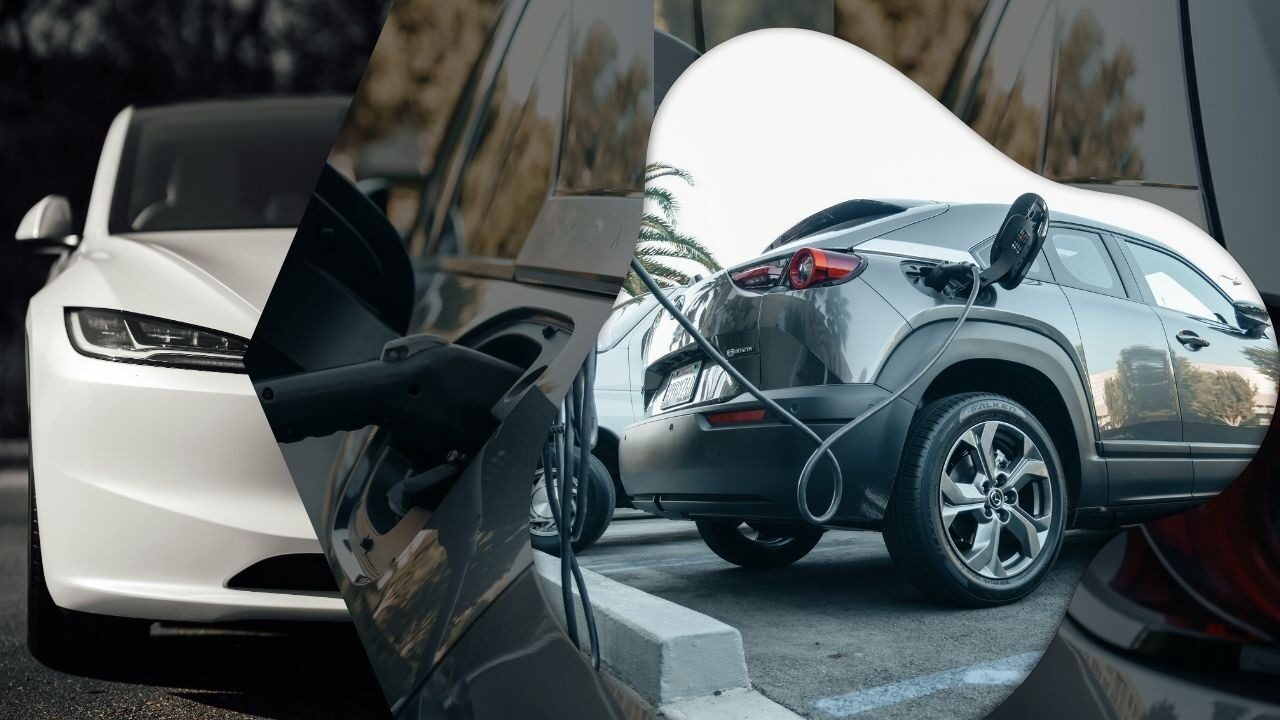
The car market is shifting rapidly from petrol or diesel to Electric Vehicles. It directs us to the conversation around the future of electric vehicles which everyone thinks is far away in the future. But not anymore, auto-driving features and zero emission cars are now here in the market and anyone can buy them.

Electric Vehicles are no longer a niche product for eco-conscious early adopters. In a recent report, over 116 million electric vehicles produced and landed in the market globally by 2026, the numbers EVs are increasing on the road day-by-day – they’re on highways, in parking lots, outside schools, and probably in your neighbor’s driveway right now.

But for millions of everyday drivers, the big questions remain. Is now the right time to switch? What is actually changing in the EV space? And what do you, as a driver, really need to know before you make a decision? Let’s break it all down — no jargon, no fluff.

40% of new cars sold globally expected to be electric by 2030
700 km single-charge range on next-gen EV batteries
15 min target fast-charge time for 80% battery in new models

The Range Problem Is Getting Solved

The number one worry drivers have about EVs is range anxiety — the fear of running out of charge in the middle of nowhere. And honestly, it was a legitimate concern a few years ago. Early EVs could barely do 200–250 kilometres on a full charge. But things have changed dramatically.

Standard EVs deliver around 500 kilometres in one charge. Automakers are continuously working to generate solid-state batteries to launch commercially that could push that number past 700 kilometres. This is real-world performance. The future of electric vehicles is one where range anxiety becomes as outdated as particularly the shift toward more energy-dense solid-state batteries and cost-effective lithium iron phosphate (LFP) cells, so you don’t have to worry about charging.

The future of electric vehicles is basically opting for a green environment, but it isn’t stopped there. The way they are exercising to make smarter, cheaper, more connected EVs in 2026. It suggests that Modern EVs retain an impressive 95% of their original range even after five years. 

Charging Infrastructure Is Growing Fast

One of the real bottlenecks for EV adoption has always been the charging network. The entire world class Electric Car will break down if there’s nowhere to charge it. Now the charging stations are growing rapidly so there won’t be any problem anymore for the EV owners. 

India’s EV charging infrastructure is rapidly growing under national programmes, with thousands of fast-charging stations being installed along highways and in urban centres. Globally, there are malls, offices, and highway stops where charging stations are integrated. 

Ultra-fast chargers that can deliver 200–350 kW of power will charge in 15-20 minutes and provide you thousands of kilometers, that’s why they are becoming more common. The goal, increasingly, is to make charging as unremarkable as stopping at a petrol station — something you do without planning your entire day around it.

The Cost Equation Is Shifting in Your Favour

If you’ve looked at EV price tags and walked away, you’re not alone. The buying cost is so expensive that a middle-class man won’t be able to afford it. But that gap is closing faster than most people realise.

Battery costs have fallen by over 90% in the last decade, and they continue to drop year on year. This will make Electric Vehicles cars affordable in the ₹10–15 lakh range and are becoming genuinely viable options in car markets. Once you invest in an Electric Vehicles, you won’t have to worry about later expenses as fuel costs are lower, cheaper servicing, and government subsidies under schemes like FAME II, the total cost of ownership over five years often comes out lower than a traditional ICE vehicle.

Key Cost Advantages for EV Drivers

  • Electricity costs roughly 60–70% less than petrol per kilometre driven
  • No oil changes, fewer brake replacements, simpler drivetrain
  • Government subsidies and tax benefits available in most states
  • Lower insurance premiums trending in the EV segment
  • Higher resale value as ICE vehicle demand declines

EVs Are Getting Smarter, Not Just Greener

The future of Electric Vehicles is not just about the motor replacing the engine. It’s about software, connectivity, and intelligence becoming core parts of the car experience. Exploring modern EVs like a computer with advanced tech and they are getting faster, safer, and more efficient without you ever visiting a service centre.

Features like regenerative braking, predictive route planning that factors in charging stops, smart home energy integration, and even vehicle-to-grid technology — where your car battery feeds power back to your home during peak hours — are not distant possibilities. They’re available today and will become standard across most models in the coming years.

What Should Drivers Do Right Now?

In the future, there will be fewer petrol or diesel cars left on the road because the current global situation of fuel has highly impacted on automotive industries. You don’t have to rush out and buy an EV today. But dismissing it entirely would also be a mistake. 

  • If you drive mostly within a city and have access to home charging, an EV makes financial and practical sense right now. The math works in your favour even at current prices. 
  • If you’re a long-distance driver or live in an area with limited charging infrastructure, waiting another two to three years might be the smarter move — the network will be much stronger by then.
  • Either way, start learning. Test drive an EV, understand your electricity tariff, check your state’s subsidy policy. The transition is coming, and informed drivers always make better decisions than rushed ones.

The Road Ahead Is Electric

There’s a moment in every technological shift when what felt futuristic suddenly feels inevitable. Electric Vehicles have crossed that line. The debate is no longer whether EVs will dominate — it’s how quickly and whether you’ll be ready when they do.

The future of electric vehicles is one of greater range, smarter charging, lower costs, and a driving experience that most petrol car owners would genuinely prefer once they try it. The road ahead is electric — and for drivers who do their homework now, it’s also a very smooth one.

Conclusion

Electric Vehicles are no longer just a glimpse of the future—they are becoming a practical choice for everyday drivers. In the car market, the future of electric vehicles is growing with longer range, low fuel cost, faster charging and expanding charging infrastructure. EVs are becoming more convenient and affordable with continued development and government support.

Whether you switch today or a few years from now, understanding the EV landscape will help you make a smarter decision. The future of mobility is clearly electric, and being prepared for that change can save money, reduce emissions, and offer a more advanced driving experience.

0

Creta vs Seltos: The Battle of Korean Siblings That’s Tearing Car Buyers Apart

Published Jan 30, 2026, 7:17 AM
Last Updated Apr 6, 2026, 4:39 AM

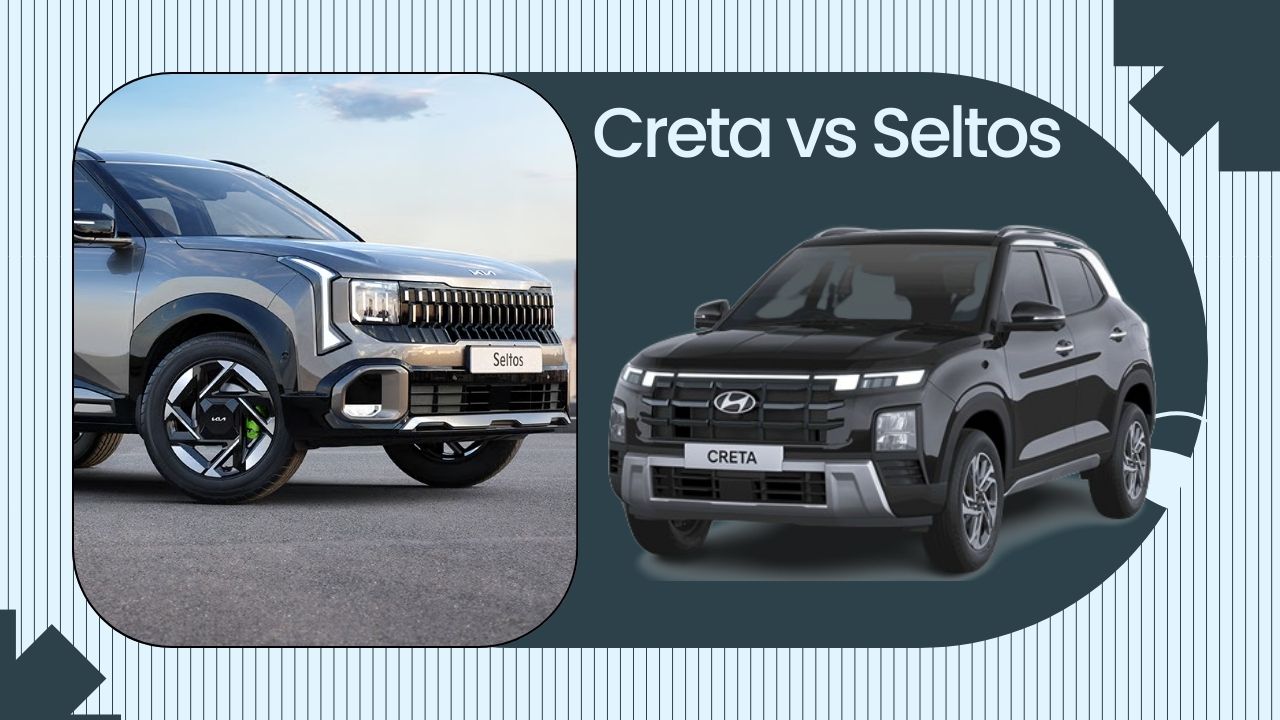
Creta vs Seltos

If you’ve been lurking on car forums or asking friends about purchasing an SUV, you’ve likely encountered the mandatory query: Creta vs Seltos? Both the models are quite similar as they are based on the same platform, however, each one is distinct in its own way. It’s tricky to choose between them.

This is more than a feature and figure comparison. It’s designed to give you a feel of how each car drives in the real world, since purchasing a car isn’t just a practical decision—it’s an emotional one. 

Creta vs Seltos — First Impression

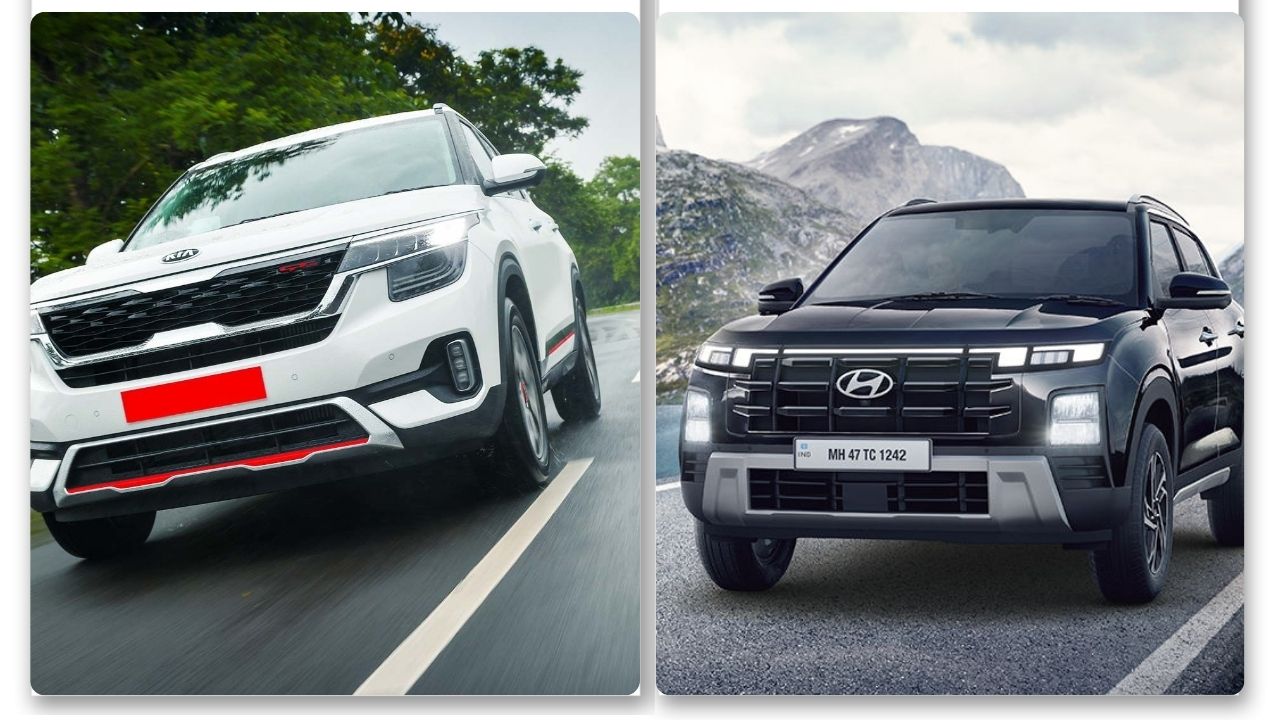
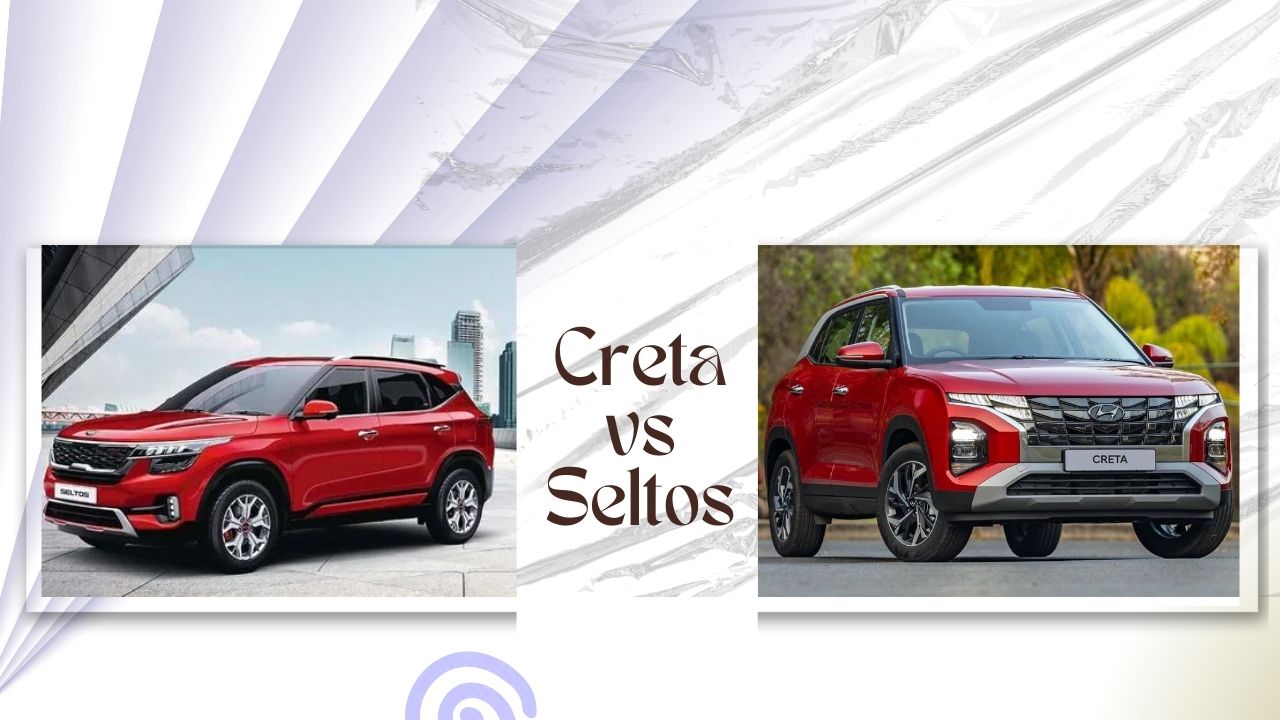
When the Seltos rolls through, it demands a second look. The 2026 Kia Seltos lays down a sharper, more aggressive attitude on-road. It has come of age in stature and size – stretching 4,460 mm in length on a generous 2,690 mm wheelbase that actually puts it ahead of its Hyundai rival. Flush door handles, a bold front grille and razor-sharp LED headlights all announce its arrival confidently. That’s the car that makes you look back twice before you walk away.

The Creta adopts a different tone: elegant versus loud. While the more premium model measures just 4,330 mm in length with a wheelbase of 2,610 mm, it pitches itself as a more sophisticated and premium product that will attract buyers who prefer a muted rather than a loud design statement. 

Put it this way: the Seltos stakes out the space with vibrancy, but the Creta commands the space with classic styling.  

Inside the Cabin: Your Daily Environment

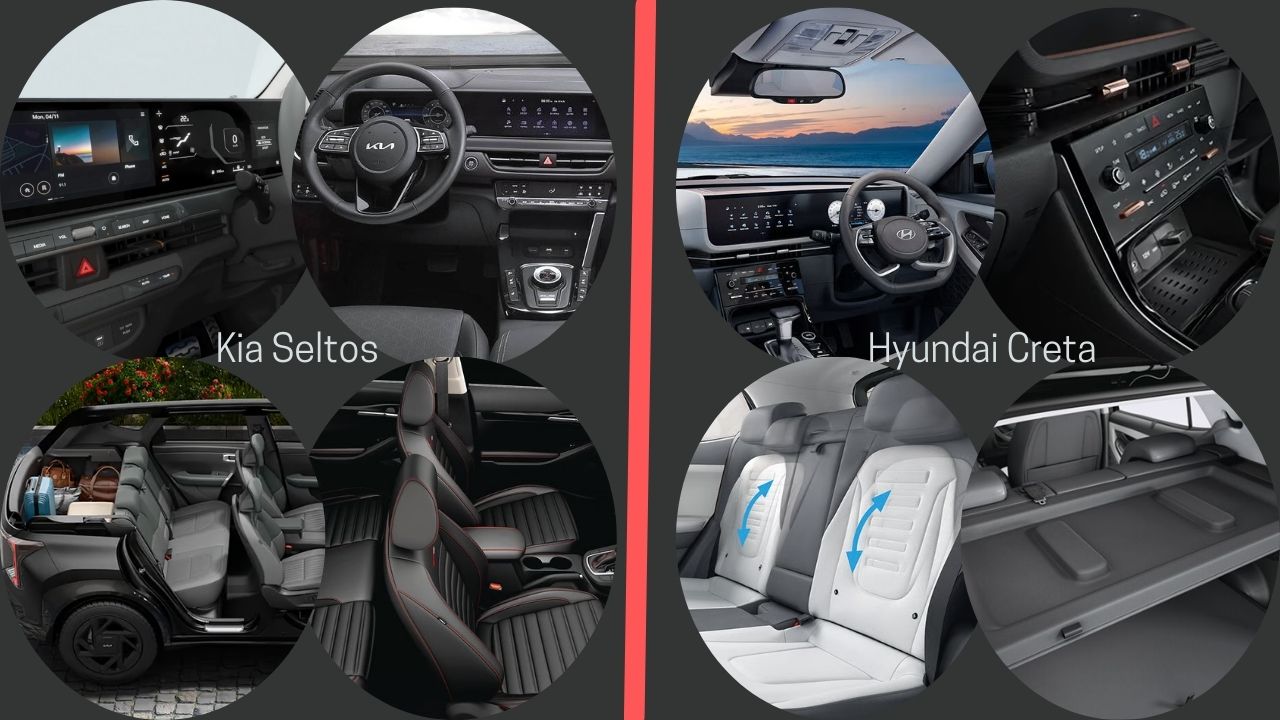
This is where the real story begins, Behind the scenes, however, the two SUVs are virtually the same —

  • They offered a powerful 1.5L turbo engine to drive you crazy with 160 hp and 260 Nm of Torque. 
  • They are mechanical siblings, with both averaging in the 21.8 kmpl range. Climb inside though, and the divergence is evident.
  • The new Seltos offers a segment-first 10-way power adjustable driver’s seat with memory function – an absolute bonanza for multi-driver families. 
  • No memory function, though, for the Creta comes with an 8-way power seat that’s comfortably sufficient. 
  • Recent head-to-heads have the Seltos GTX variant surprisingly edging out the Creta King when it comes features, with more digital touch points for comparable money. 

Interior Feels inside Creta and Seltos

That’s where the Creta fights back: cabin refinement. The soundproofing is genuinely better. It’s hushed, calm — the kind of cabin where road conversations can keep pace, rather than shouting matches over road noise. For drivers who long for that library-quiet serenity on long drives, the Creta comes out well ahead.  

Comfort vs Sportiness

The Creta uses a softer suspension setup. bumps and craters are absorbed with an ease, as if the car is gliding over India’s chaotic road surface. It’s brilliantly tuned for family towing and long distance comfort. Elderly parents or fidgety kids in the backseat won’t feel every imperfection in the tarmac or grumble about yet another speed bump.

Creta uses a softer suspension setup

The Seltos is firmer when it comes to ride quality. It’s not punishing—just more connected and athletic. Enthusiastic drivers will appreciate how the Seltos remains composed and predictable when pushed hard into corners and when the handling is sufficiently responsive and spirited enough to hold the attention of such drivers. Up at speed, it’s taut and solid, and the sense of command it imparts—one that makes driving really fun instead of just something you have to do—is comforting. 

Read More:- The MG Majestor launch: India’s New Flagship SUV Set to Shake Up the Premium Game

The Price Tag: What’s Your Money Buying?

Here is where it becomes difficult. The Hyundai Creta E variant price starts at Rs 10.79 lakh ex-showroom while Kia Seltos HTE variant price starts at Rs 10.99 lakh —which makes the Seltos a bit on pricier side at the entry point. But as you move up the variant tree, Seltos usually gives you more features for your money, especially in the mid-level trims.

Price for 2026 Creta vs Seltos

But there is another issue to take into account: resale value. Multiple sources agree that Creta tends to retain its resale value better than Seltos – attributed to the fact that Hyundai has a more reliable after-sales reputation and far-reaching service network across India.”If you are thinking in terms of five years down, when you have to upgrade, that could be real money in your pocket. 

Conclusion

After all that, you’re probably still baffled — and, honestly, that’s fair. Both are unique in their own way.

  • If you want a bolder look, a bit more features, more space inside and a sportier ride and handling than the Kia Seltos. It’s for anyone who wants their car to make a statement and isn’t worried about paying a little more for the latest tech. 
  • Opt for the Hyundai Creta if: Comfort is your religion, you care about resale value and you like a more refined, quieter cabin. It’s the reliable choice that will never let you down and which will probably age better when it comes to retaining value.

In the final count, these two Korean siblings are both winners. You really can’t go wrong — you’re just picking between Creta vs Seltos flavors of excellence. 

My advice? Take both for a spin, bring your family, and trust your gut after you turn the key. For sometimes the best choice isn’t on paper — it’s in what the car makes you feel.