2

Tesla Flying Car Mechanics Make The Flight Possible

Published Oct 16, 2026, 10:33 AM
Last Updated Oct 16, 2026, 12:23 PM

Tesla Flying Car Mechanics

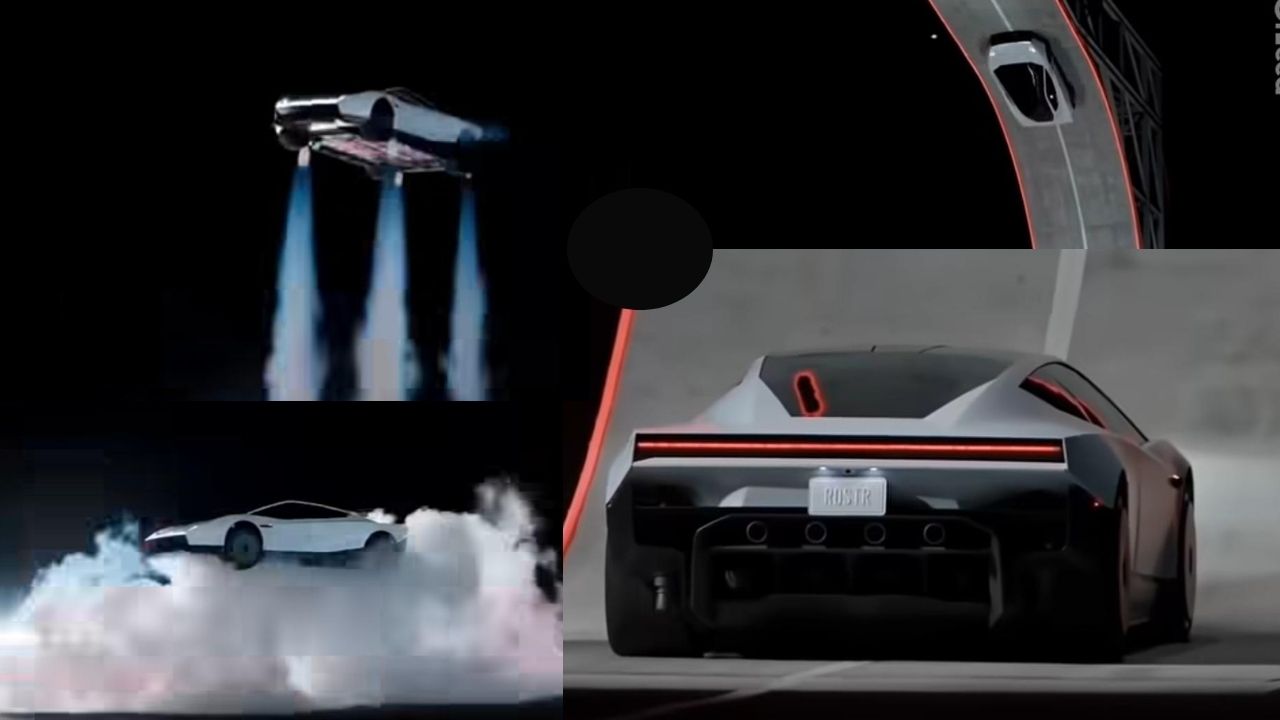
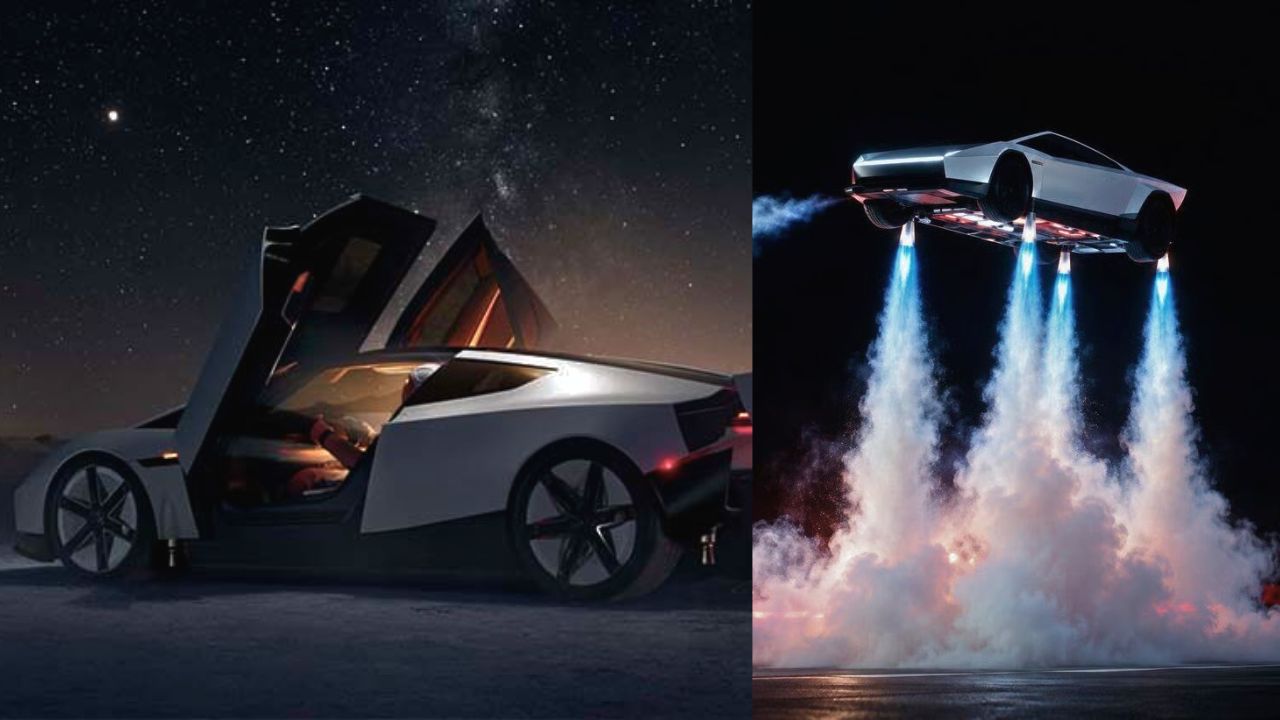
Somewhere between the upside-down ramp and the midair flip, a lot of people watching Tesla’s livestream asked the same thing: is that a real Tesla flying car, or a very expensive stunt? Yes, it comes possible with compressed air, a carbon-fiber tank and a few seconds of very violent thrust.

The new Roadster was revealed by Tesla on October 15, 2026 at SpaceX’s McGregor, Texas facility. The vehicle drove upside down, jump across five Tesla vehicles lined up side-by-side and executed a midair roll with the help of SpaceX thrusters. The aerial moves differently, as a flip or a barrel roll, so consider the exact maneuver as up in the air until Tesla shares the entire video. 

Elon Musk said the car was technically autonomous for the stunt, to avoid anyone getting hurt. No driver was flying it.

Is the Tesla Flying Car Really Flying?

Not in the way an aircraft flies. Tesla calls the top version “air ready,” and Tesla’s own description says the Rocket variant uses perimeter-mounted thrusters for forward and upward acceleration plus lateral rotational movement. That is controlled hopping, not cruising. The reason is simple arithmetic, which we’ll get to below.

How Cold-Gas Thrusters Work

Cold gas means there’s no combustion involved. A Tesla flying car stores air at very high pressure and releases it through a nozzle. When the air is released in one direction, it propels the car in the other direction. 

The Tank: 5,500 psi of Stored Air

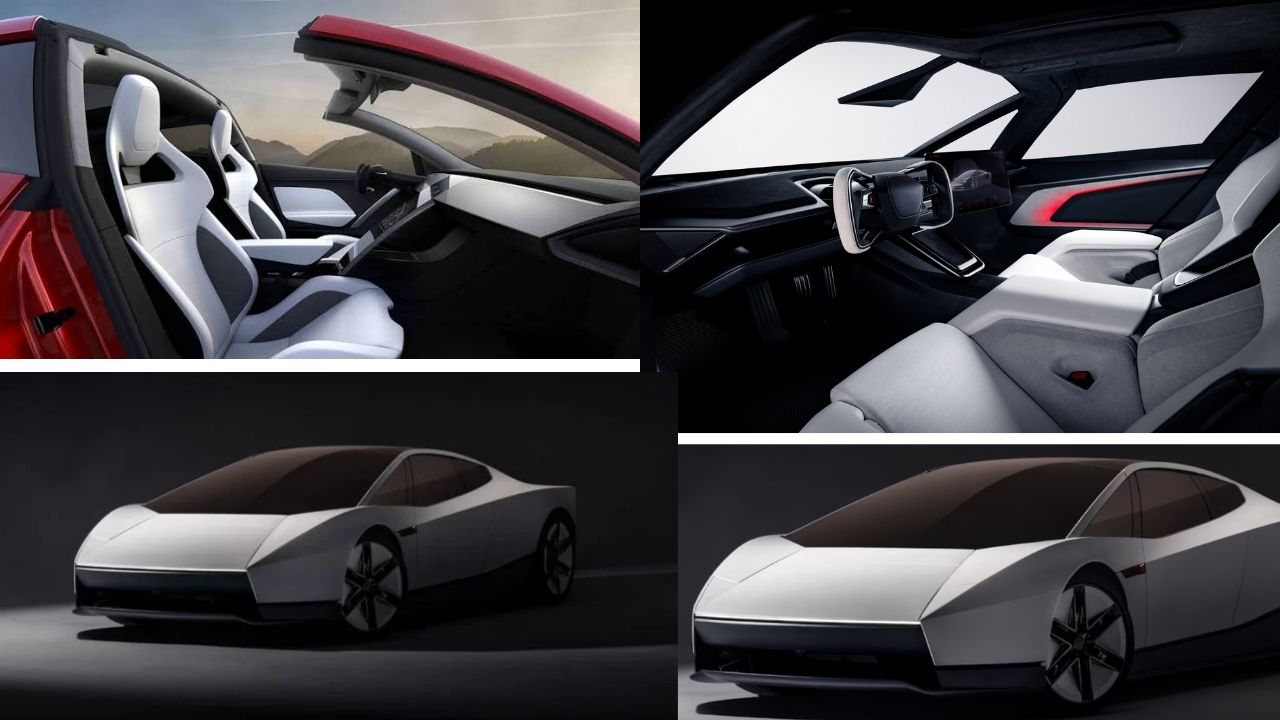
Tesla didn’t announce a Tesla flying car tank spec on stage, but the track screen in its interior photos shows a “Thruster” readout of 5,500 psi, about 380 bar. A pressure that high almost certainly means a composite-wrapped vessel, though Tesla hasn’t confirmed the construction.
The Tank

The Nozzle: Where Pressure Becomes Push

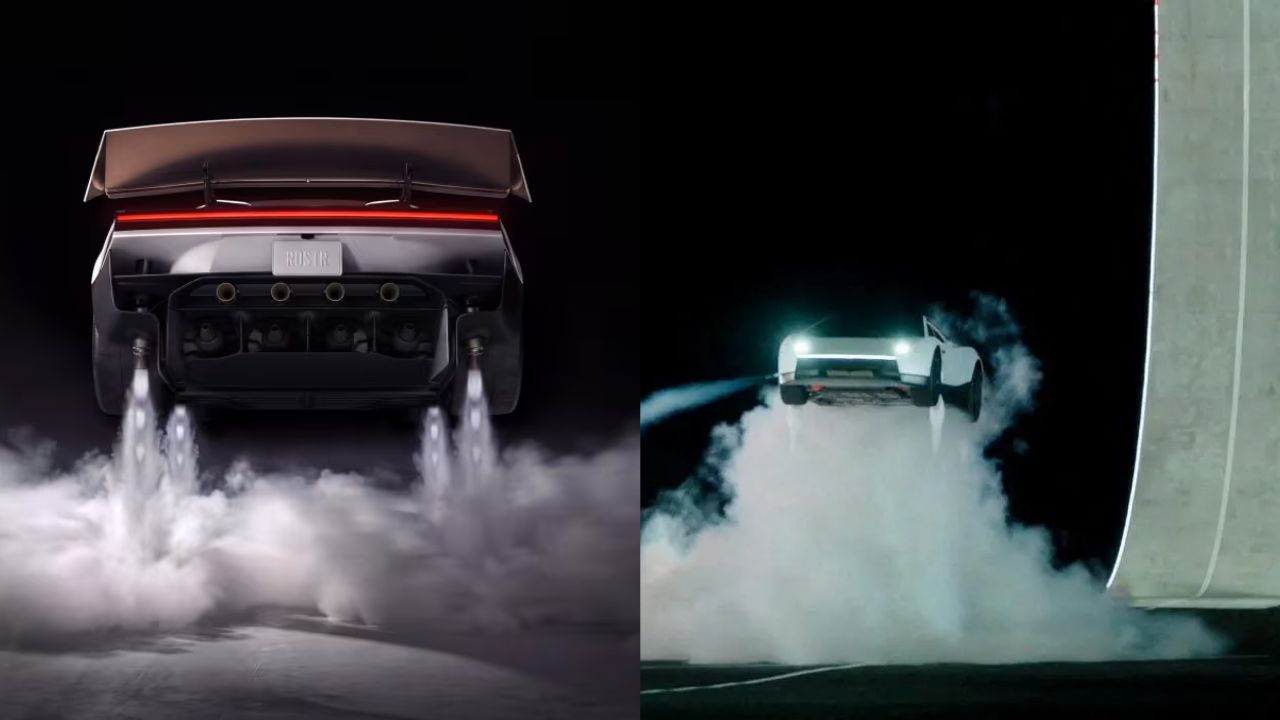
As the air squeezes through the throat of a flared nozzle, it accelerates to very high speed and chills sharply, which is why the plume looks like white vapor. That’s the same family of hardware SpaceX uses for attitude control on its rockets. Tesla’s claim is that the thruster system produces 4–5 times the force the tires can. Tires top out around 1 to 1.5 g, so the thrusters are doing the heavy lifting.

Read More :-   Hyundai Motor Group Announced $15.5 Billion Investment In India From 2026 to 2032

How High Tesla Flying Car Can Jump?

The 0-60 mph figures show additional push the thrusters provide. Tesla quotes the production-ready Performance model at less than 1.6 seconds, the Thrust model at less than 0.9 seconds and the Rocket at less than 0.59 seconds. 

The 0-60 mph numbers show how much extra shove the thrusters add. Tesla lists the road-ready Performance version at under 1.6 seconds, the Thrust version at under 0.9 seconds and the Rocket at under 0.59 seconds. The Tesla flying car reached 60 mph in 0.81 seconds in the demo. This figure has not yet been independently verified. 0.81 seconds over that distance is an average of about 3.4 g. 
High Tesla Flying Car Can Jump

The upside-down drive wasn’t thrusters alone. A multi-mode fan and ground-sealing system sucks air from under the car and can hold it upside down even when stationary. It’s like a vacuum cleaner that sticks the car to the ground. The suction also allows the tires to have more grip, which is beneficial on a track. 

Why the Air Runs Out in Seconds

This is my own back-of-envelope estimate, not a Tesla figure. Assume a car of about 1,800 kg, since I couldn’t find a published curb weight. Hovering it needs roughly 17.7 kN of thrust. The exiting cold air from the nozzle moves at approximately 600 to 700 meters per second, so the engine intakes 25 to 30 kg of air per second. At 380 bar, the air has a density of about 370 kg/m3 which means every 100 litres of tank provides little more than a second of hover. 

Tank size is the unknown. Even a generous tank gives seconds, not minutes. That is why every moment in the demo was a launch, a hop or a burst, never a sustained float.

Staying Level: How Attitude Control Works

Getting airborne is easy. Landing the right way up is the hard part. Tesla says the thrusters use all-electric actuators for micro adjustments that stabilize the car in flight. Tesla hasn’t shown where any smaller attitude thrusters sit, so how the car steers in the air remains partly inference.
Tesla Flying Car

The physics is the same as on any spacecraft. Thrust applied off the car’s center of mass creates rotation, so pairs of jets firing in opposite directions can spin the car without pushing it sideways. Short, controlled pulses hold the angle steady. The control software also has to know the live tank pressure, because thrust fades as the tank empties. That is a job for a system, which fits the demo being autonomous.

Can You Buy a Tesla Flying Car?

Tesla now sells the Roadster in three versions. Performance is road-ready and available by reservation, Thrust is a limited release for the track, and Rocket is invite only. Tesla also notes the car is not approved for public road use, and production is planned for Giga Texas in 2027 or 2028.

Roadster vs Rivals

Car Claimed 0-60 mph Price
Tesla Roadster (Performance / Thrust) under 1.6 s / under 0.9 s Not announced
Rimac Nevera about 1.74 s Roughly US$2 million or more
Lucid Air Sapphire about 1.89 s Roughly US$250,000

Rival figures are manufacturer claims prices vary by market, so verify both.

Tesla hasn’t announced Tesla flying car price, but it has reopened reservations at 65,000 in Singapore and roughly AED 184,000 in Dubai, depending on the exchange rate. None of those markets has confirmed deliveries.

Explore :-    Everything On Mahindra XUV 3XO CNG: Top The Compact SUV Segment

Conclusion

The Performance version is the only road-ready one, and even that is not yet approved for public roads. The Thrust and Rocket versions need the thruster system to work reliably, repeatedly and legally, and none of that is proven yet. Musk himself has said it is a halo product that may not move revenue much.

Watch Tesla’s earnings call on October 21 for any change in timing or pricing. Until the price, the tank size and the refill time are published, the Tesla flying car is a spectacular demo rather than something you can plan around.

Bipin Sharma

Bipin Sharma is a seasoned automotive content writer with over 10 years of hands-on experience in the world of cars. From the latest car news and reviews to in-depth maintenance tips and expert buying guides, Bipin covers everything that drives the automotive world. Writing about cars isn’t just his profession — it’s his passion. His deep industry knowledge and love for automobiles fuel every blog he creates, helping readers make informed decisions and stay updated on the fast-evolving auto landscape.

2 Comments

Leave a Reply

Your email address will not be published. Required fields are marked *

0

Manual vs Automatic Cars — Which One Should You Buy?

Published May 29, 2026, 1:07 PM
Last Updated Jun 19, 2026, 9:47 AM

Manual vs Automatic Cars

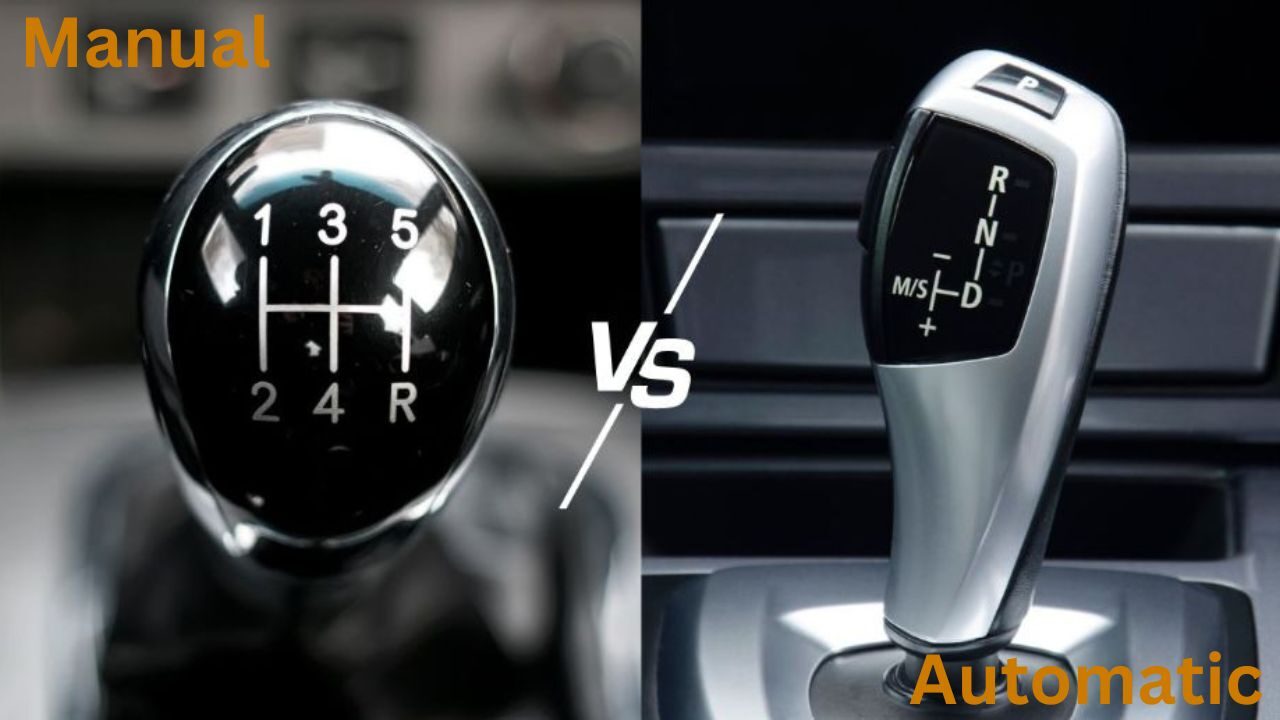
Buying a new car made you jump on the debate in Manual vs Automatic Cars. You start looking for manual cars then you remember that you don’t have a budget or you need more fuel efficiency, so understanding which car you should buy is crucial and this comparison will help you find out. 

Both gearboxes have earned their place on the road. The real question isn’t which is better — it’s which is better for you.

Manual

Stick shift

Automatic

Self-shifting

  • Full control over gear selection
  • Easier in heavy stop-start traffic
  • Typically cheaper to buy & maintain
  • Faster lap times (modern dual-clutch)
  • Better fuel efficiency (older models)
  • Lower learning curve
  • Driver engagement & “feel”
  • Better for accessibility needs
  • Harder to steal in many regions
  • Dominant in EVs & hybrids

Why This Comparison Still Matters

In an era where electric vehicles are rising and dual-clutch automatics are faster than any human thumb, you’d think the manual vs automatic debate is dead. It isn’t. Every year, millions of first-time buyers and experienced drivers switching segments, face this exact fork in the road.

This debate is consistently occurring because both transmissions are genuinely excellent at what they’re designed to do. There’s no universal winner. The “right” choice depends on your city, your commute, your budget, and honestly — your personality.

The best transmission is the one you’ll enjoy driving every single day, not the one that wins a spec sheet comparison.

The Case for Manual Cars

Driving a manual isn’t just a skill — it’s a philosophy. When you control the clutch and shift yourself, you’re not a passenger in the driving experience; you’re the co-author of it. Enthusiasts will tell you that a mountain road in a manual car is a fundamentally different — and richer — experience than the same road in an automatic.

Beyond romance, manuals carry real practical advantages. They tend to cost less upfront (often ₹50,000–₹1 lakh cheaper on the same model in India), have simpler transmission mechanics that are cheaper to repair, and give you full authority over engine braking — useful in hilly terrain or wet roads.

There’s also a security perk that rarely gets mentioned: a significant portion of car thieves in India and globally simply don’t know how to drive stick. A manual car can be a surprisingly effective deterrent.

Read More:-  Kendrick Lamar Car Collection is Classic Garage With Old & New Luxury Cars

The Case for Automatic Car

Modern automatics — especially CVTs and dual-clutch transmissions — have erased almost every disadvantage they once carried. Today’s 8-speed torque-converter automatics shift faster than a human hand, and DCTs used in performance cars are flat-out faster on a track than any manual equivalent.

In Indian traffic conditions — Lucknow’s congested chowks, Bangalore’s perpetual gridlock, Mumbai’s coastal highway crawl, the case for automatic is almost self-evident. Clutch fatigue is real. Left-knee strain from thousands of small engagements in a daily commute adds up. An automatic eliminates all of that, leaving mental bandwidth for actual driving decisions.

In city traffic, an automatic doesn’t just make driving easier — it makes it safer, by keeping both hands on the wheel and both eyes on the road.

Automatics are also the only real option if you’re buying a hybrid or EV. The Maruti Suzuki Grand Vitara’s strong hybrid, Tata Nexon EV, or MG Windsor — all automatic by design. The future of powertrain tech is speaking clearly here.

Head-to-head Comparison of Manual & Automatic

Factor Manual Automatic
Purchase price Lower (same model) ₹50k–₹1.5L premium typically
City driving ease Tiring in traffic Significantly easier
Highway driving More engagement, fine Effortless cruise
Fuel economy Better (driver-dependent) Near-equal in modern units
Maintenance cost Lower long-term Gearbox service is pricier
Resale value Lower in urban markets Higher demand in cities
Driving fun Higher engagement Depends on transmission type
Accessibility Harder for some users More universally usable

Both Sides Of The Argument Are Genuinely Valid

Here’s what the internet debates often miss: manual vs automatic transmissions solve different problems excellently. A manual car in the hands of an engaged driver on a smooth state highway is pure joy. That same car in the rush hour of the city is a workout nobody asked for.

Conversely, an automatic is undeniably more accessible, less fatiguing, and increasingly more fuel-efficient. But ask a driving purist and they’ll tell you something important is lost — that thin-but-real tactile feedback between you and the road.

Neither camp is wrong. The manual loyalist isn’t being nostalgic for nostalgia’s sake. The automatic advocate isn’t being lazy. They’re optimizing for genuinely different things: one for immersion, one for practicality.

Who Should Buy What?

Choose manual if: you are long trips enthusiast and travel is your passion because experiencing the driving on open road is itself enjoyable, you have enough budget, or you live in a hilly area where engine braking matters.

Choose automatic if: you need to go to the office daily because it is the most rush hour in the city, you want to buy an EV, or you are a beginner.

And if you’re genuinely torn? Drive both. Borrow a friend’s car for a week. One rush-hour commute in a manual versus an automatic will give you an answer no spec sheet ever can.

Conclusion

The Manual vs Automatic Cars debate happens when you are going to buy a car because your friends might suggest their opinion, your family says something else and you get confused. It is not a perfect answer of which is right, because both transmissions are right in their own context. Buy the one that fits your daily reality, your budget, and the way driving makes you feel. That’s always the correct answer.

0

Toyota Vellfire Car Price 2025 – On-Road Cost, Interior & Features

Published Sep 17, 2025, 11:18 AM
Last Updated Apr 9, 2026, 11:23 AM

The 2025 Toyota Vellfire is a top-class model meticulously engineered with comfy, private space for folks who want a luxurious ride. The Vellfire commands a high price which places it in direct competition to other luxury cars and SUVs. But Vellfore delivers unique features and luxury, especially its passenger seats that won’t be found elsewhere. Take a look at Toyota Vellfire Car Price 2025, its features and clever design which makes this car a special kind of modern luxury.

A Redefined Toyota Vellfire

The new-generation Vellfire is a symbol of luxury and class. The latest Vellfire represents a major upgrade with high-end features and an extremely powerful engine. Its captivating exterior and interior make it a first-class vehicle. This is the experience the 2025 Toyota Vellfire will give you. It’s a unique piece of Toyota delivered in India at an expensive price but worth it. Even European SUVs fail to deliver this kind of comfort and luxury in a car back-seat. 

Toyota Vellfire Price and On-Road Cost

The pricing of the Vellfire in India shows it’s a premium choice. It comes in two types: the basic “Hi” and the fancy “VIP Executive Lounge.” The ex-showroom price for “Hi” variant nearly starts at ₹1.22 crore, while the “VIP Executive Lounge” price starts at ₹1.32 crore. It’s a big jump from the previous model price in 2020, a ₹40 lakh hike shows the new model gives more luxury and enhanced features. The price is worth it for its top-tier luxury item like the other high-end cars in a market. It is almost unaffected by the market fluctuations in this gap of time or even a slight price reduction anticipated from a “GST 2.0” reform.

Image credit: Toyotabharat

To understand the real price for a Vellfire, you need to look at the past showroom tag. The on-road cost, which is the amount a buyer ultimately pays, includes several things like showroom price, RTO fees and road tax, insurance, and other charges. The most significant is road tax as it depends on the car’s price, engine size, and fuel type. It also affected from state to state. For example, this car’s price is over ₹10 lakh at 11% of their showroom price in Uttar Pradesh. Here is the breakdown for estimated on-road price range for Vellfire in different states.

City Estimated On-Road Price Range
Delhi ₹1.41 – ₹1.53 Crore
Mumbai ₹1.45 – ₹1.57 Crore
Bengaluru ₹1.51 – ₹1.64 Crore
Hyderabad ₹1.44 – ₹1.56 Crore

Interior, Comfort, and Features

The rear cabin is the heart of Vellfire which is designed to be the best relaxing space for trips enthusiasts. Its VIP Executive Lounge gives a first-class comfort with soft leather and cool stitching. You can move them according to your comfort, also have heat,cooling and back massage functions. Power footrest is a unique feature of this car which lets you stretch out on long drives. The Vellfire offers a special handheld device and buttons for tweaking seat settings, lights, sunroof, and power doors. One of the coolest smart features of Vellfire is “Pitch & Bounce Control,” which cuts down on up-and-down motion for ultimate passenger comfort.

Image credit: Toyotabharat

A big 14-inch screen is positioned in front and center and also a 14-inch TV in the back for entertainment. You can stream from your phone, fully customizable digital driver’s display, wireless charging, and Heads-up display on the windshield, all these features available inside the car. You are going to get a fancy vibe with top-notch materials, Two sunroofs and mood lighting with 14 base colors and 50 custom options, all these features enhance your personalization and space.

Bold and Commanding Exterior and Presence

The 2025 Toyota Vellfire grabs attention with its aggressive and commanding exterior that delivers a unique entry on road. Its front grille with chrome and black accents make an intense vibe for a strong look. Its two-tone bright and dark 19-inch wheels deliver a more promising ride than any other vehicle. It comes in three colors: Black, Grey, and White which defines the classic appearances.

Read More:- Nissan Frontier vs Toyota Tacoma: Which Truck Should You Choose in 2025?

Performance and Engineering

The most important part of the vehicle is their engineering which makes them a strong contender on the road. The Vellfire offers a 2.5-litre hybrid engine which makes 190 horsepower and 240 Nm of torque. It offers All-wheel drive, e-CVT automatic, to deliver steady and smooth rides.

The Vellfire consumes less fuel about 19.28 km per liter which makes it more convenient. Well, it provides smooth comfortable not but fit for speedy rides, the stiff suspension can be bumpy on rough roads. However, the vellfire engine is ideal for relaxed and city trips. 

Safety and Security

Safety is a priority, whether you ride comfortably in a city but accidents or crashes can happen at any time. The 2025 Vellfire comes with 6 airbags, touch body, and Toyota smart Safety Sense system to give you peace of mind. It got a 4-star safety score from Japan NCAP in 2024. It offers co-pilot which gives collision warning, cruise control, lane keeping, blind spot warning, 360-degree camera. All these features will ensure your safety as a protective guardian. 

Conclusion

The Toyota Vellfire is a great pick for wealthy people who use a driver for city rides. It delivers luxurious private space and an excellent ride which puts passengers in a calm and comfortable ride. The Vellfire delivers smart and high tech features which makes you experience excellent first-class comfort. 

0

Best Self Driving Cars in India 2026: Top Models, Prices & Features

Published Sep 1, 2025, 9:40 AM
Last Updated Apr 2, 2026, 8:22 AM

Top self-driving cars in India with ADAS technology

The automobile market is changing rapidly with more advanced features. Cars emerging with high-end tech improves the capability for both driver and passengers, making their journey beautiful. Self-driving cars doesn’t mean that there will be no need for a driver. It just makes driving easy and safe with the Advanced Driver Assistance System (ADAS). Whether you use it for daily office travel or long trips, these best self-driving cars in India are creating a new era with comfort, reliability, and tech features. 

What is ADAS and why is it important?

ASAD is a system that comes from a group of technologies that makes driving safer and easier. It includes features such as Adaptive Cruise Control, Lane Departure Alert, Emergency Brakes, Collision Alert, and it comes on a different level. The level 2 is best for cars in India, level 2 ADAS includes control over steering and braking to some extent but the driver must be alert on the road. It is just making the driving easy, not holding the position of a driver. 

Let’s see some of the best self-driving (ADAS) cars of 2026

1. Mahindra XUV700

Starting Price: Rs. 13.99 Lakh 

The price of Mahindra XUV700 varies on the variants and it can go up to Rs. 26.99 Lakh. It offers Level 2 ADAS technology, petrol & diesel engine with manual and automatic transmission. 

Mahindra XUV700 SUV with Level 2 ADAS features

Image credit: Auto Mahindra

Features of Mahindra XUV700

Category Feature
Engine Options 2.0L Petrol , 2.2L Diesel 
Transmission Manual/Automatic
Seating Capacity 6 or 7
Panoramic Sunroof Skyroof (Panoramic)
Infotainment Dual 10.25” displays (instrument + media)

2. Hyundai Creta

Starting price: Rs. 11 Lakh

The Price of Hyundai Creta is depending upon the variants of the car which can raise up to Rs 20 Lakh. It offers Level 2 ADAS technology within its mid-range variants. 

Hyundai Creta mid-size SUV with ADAS technology

Image credit: Hyundai Creta

Features of Hyundai Creta

Category Feature Details
Engine Options 1.5L MPi Petrol, 1.5L Turbo Petrol, 1.5L Diesel
Power 113-157 bhp
Torque 143-253 Nm
Transmission 6-speed Manual, CVT, Automatic
Drive Type FWD
Mileage (ARAI) 17 – 21 kmpl
Ground Clearance 190 mm

Read More :- Toyota RAV4 vs Honda CR-V: The Ultimate SUV Battle of 2025

3. MG Astor

Starting Price: 10 Lakh

MG Astor : The price can go high with different variants, valued around Rs. 18 Lakh. Astor comes with Level 2 ADAS, making it the most affordable car in India. It not just offers advanced features but is also known for its technology and stylish interior.

MG Astor compact SUV with Level 2 ADAS

Image credit: MG Motor

Features of MG Astor

Category Feature
Engine Options 1.5L Petrol MT/CVT, 1.3 Turbo AT
Transmission Manual, Automatic (CVT & AT)
Mileage (ARAI) 14.8–15.4 kmpl
Seating Capacity 5
Infotainment Dual 10.25” displays (instrument + media)

4. Kia Seltos

Starting Price: Rs. 10 Lakh 

The price varies on the variant, going up around Rs. 20 Lakh. Kia Seltos also offers Level 2 ADAS for self-driving with 19 features included. It is well-known for its strong performance and advanced features.

Kia Seltos SUV with advanced ADAS features

Image credit: Kia

Category Features
Engine 1.5L Petrol / Diesel
Power 157 bhp
Transmission 6-speed manual / CVT / 7-speed DCT
Drive Type  FWD
Mileage 19.1 kmpl

5. Tata Harrier

Starting Price: 15 Lakh

Tata Harrier price can go higher around Rs. 24 Lakh. It offers a camera-based ADAS system, making flagship SUV for safe driving. The premium gives an incredible experience in both diesel and automatic variants, ideal for families with its stability and comfort. 

Tata Harrier flagship SUV with camera-based ADAS

Image Credit: TataMotors

Features of Tata Harrier

Category Features
Engine 2.0L Diesel
Power 170 PS
Transmission 6-speed manual / 6-speed automatic
Drive Modes  City, Sports, Rough
Mileage 16.8 kmpl

City-Wise Best Picks for Self-Drive Cars

Most of the people prefer cars that can be easily adapted in their cities. Mid-size cars are perfect for some cities but compact SUVs are more convenient for rush cities. 

Tata Harrier and Kia Seltos are considered as the best self drive cars in Bangalore. These are the most running SUVs on the tech city roads because it offers both comfort and stability, handles Bangalore traffic and weekends gateways easily.

The XUV700 and Hyundai Creta are best self drive cars in Hyderabad for daily commutes, even people prefer these cars as best self drive car rentals in Hyderabad. These spacious and powerful SUVs are perfect for road trips.

Narrow roads of Guwahati demanded compact SUVs like MG Astor. This is the best self drive car in Guwahati which offers compact and fuel efficient SUV. 

Conclusion

In 2025, best self-driving cars in India  are required to handle the rush and bitter roads which can cause accidents easily. These vehicles are useful for India to prevent accidents. These self-driving cars are becoming common due to their advanced safety features in both metro cities and normal cities.

0

Toyota Land Cruiser FJ: India’s Unsung Off-Road Legend

Toyota Land Cruiser FJ

Toyota Land Cruiser FJ gets a second look every time. It’s not the glare of a brand new luxury SUV ripping through the streets of a city. No, it’s a calm appreciation, reminiscence and respect for a vehicle that really made history. 

In India, where the car market has long been the land of the fuel-efficient hatchback and, more recently, the compact SUV, the Land Cruiser FJ is almost a mythical animal — glimpsed rarely, revered profoundly, and comprehended fully by an exceedingly small number of souls who truly know what off-roading means. 

Toyota Land Cruiser FJ India Heritage 

The FJ Land Cruiser is built on the robust IMV platform – which stands for International Multi-purpose Vehicle. Its ladder-frame underpins, for instance, the Fortuner, Hilux and Innova Crysta, Toyota’s global top sellers. 

For the FJ, Toyota has taken a variant of this platform, with major underpinnings shared with the Hilux Champ, a beast designed for hard work and rugged use. 

Dimensions Specifications

The Land Cruiser FJ body is shaped to provide adequate interior space while meeting “approach and departure” angle requirements for off-road use. Unlike its bigger brothers, the FJ is made to skate around in tight places, on trail and in dense Indian urban areas. 

Specification Measurement
Overall Length 4,575 mm to 4,610 mm
Overall Width 1,855 mm
Overall Height 1,890 mm to 1,960 mm
Wheelbase 2,580 mm
Ground Clearance 215.3 mm to 245 mm

Design Philosophy

Toyota unveils Land Cruiser FJ “Playful Dice” concept. Inspired by the original FJ40, the design features clean geometric shapes, a beveled square body, and a tall stance that is immediately recognizable. The look works well beyond style. Its boxy shape and flat sides increase the interior cargo space and give drivers excellent views of all four corners. 

Toyota

Land Cruiser FJ has sporty and rugged looks. Aggressive fender flares pop out. Bold black cladding extends from front to back. Now front and rear corner bumpers break away into removable pieces. This modular system enables owners to exchange damaged modules after off-road excursions. They can install aftermarket parts, such as winch mounts. No major body repairs required. 

The front end has a rectangular gloss black grille with a “TOYOTA” tag reminiscent of our heritage, in place of the standard logo on the passenger cars. Reduced beltlines and a lowered cowl enhance the driver’s downward line of sight, which is crucial for seeing blockages straightaway. Lighting is part of the FJ character, with the availability of either heritage-inspired round LED headlamps or contemporary C-shaped LED arrays. 

The rear styling is dominated by a tailgate-hinged spare wheel, a must-have for bona fide off-roaders if they’re to maximize departure angles and interior room. 

Powertrain Dynamics: Petrol and Hybrid Engine

The 2TR-FE Petrol Engine

The naturally aspirated base gas engine is the 2.7L 2TR-FE I4 at launch. It has a long place in Toyota’s lineup, and its key features were reliability and easy maintenance, rather than huge power. 

Specification Details
Engine Parameter 2.7L Petrol (2TR-FE)
Configuration Inline 4-cylinder, DOHC, Dual VVT-i
Displacement 2,694 cc
Maximum Power 163 PS / 166 hp @ 5,200 rpm
Peak Torque 245 Nm @ 4,000 rpm
Compression Ratio 10.2 : 1
Transmission 6-speed Super ECT Automatic

It offers 6-speed Electronically Controlled Transmission which delivers smoother rides and an impressive level of torque (which is especially beneficial when climbing tough slopes). 

Toyota Land Cruiser FJ of Future Hybrids

Toyota’s green mobility initiative brings strong hybrid and plug-in hybrid (PHEV) versions to the FJ. TNGA-based systems will enable the FJ to comply with the tougher CAFE fuel efficiency standards in India. Low-end torque? Electric motors have that too. 

Off-Road Engineering of Toyota Land Cruiser FJ

This vehicle has a part-time 4WD to allow its driver to adjust according to the conditions. It also offers speed that shifts into 4H or 4L very quickly whenever you need extra control and torque.

Advanced Off-Road Systems

It offers an advanced driving system that holds everything that you need to go off-road. Multi-Terrain Select will help you to switch modes on different kinds of roads (muddy, rocky, Gravel). The system adjusts throttle, brake and traction control to the terrain.

Land Cruiser

And then there is Crawl Control, which is pretty much a cruise control for off-road driving. It controls The throttle and brakes at slow speeds, That way you can pay 100 percent attention to navigating through challenging obstacles without having to worry about Losing control.

On upper-level models, you also get the Stabilizer Disconnect System (SDM). With the simple press of a button, the anti-roll bars disengage, letting the wheels flex more freely – ideal for crawling over big rocks and rough terrain.

Active Traction Control is popular to use on icy roads because (A-TRC) controls the wheel by applying brakes when it starts spinning to slow it down. And transfers power to the wheel that has more grip, so that you can keep going even in difficult conditions. 

Suspension Level

The FJ is equipped with a double-wishbone front suspension with coil springs, a stabilizer bar and a 4-link rear suspension with coil springs and a stabilizer. The system is tuned for “Land Cruiser-worthy” wheel articulation, meaning that chassis stability and tire contact patch with the ground are maintained, even on very bumpy terrain. 

Impressive Interior: Function Meets Modernity

The Land Cruiser FJ cabin is designed very carefully, which means it combines rugged materials with intelligent ergonomics to provide exceptional utility and visibility. The dashboard’s flat layered design helps keep drivers focused on the road — or trail — when off-roading. 

Technology and Comfort Features

Despite the FJ’s tough mission, there is no compromise when it comes to what modern technology users expect. The centerpiece is a 12.3-inch or 12.5-inch freestanding infotainment screen. This comes with a 7-inch digital driver’s display that shows live information about pitch, roll and drivetrain condition. 

interior features of FJ

The following key interior features have been confirmed for different markets:

  • Climate control gives an amazing experience especially with rear AC vents.
  • Leatherette seats with reclining feature option in second row.
  • Tactile physical buttons for AC and 4WD, so they are user-friendly even off-road or when you’re wearing gloves.
  • Safety Sense 3.0 package, with Level 2 ADAS (Advanced Driver Assistance Systems) including Pre-Collision Safety with Pedestrian Detection, Dynamic Radar Cruise Control and Lane Tracing Assist.
  • Totally 7 airbags of front, side, curtain and driver knee ensure full protection for occupants. 

Pricing of Land Cruiser FJ

Toyota has to ensure that the Land Cruiser FJ pricing does not dent the Fortuner sales. The starting price is Rs 20-25 lakh that goes up to Rs 30-35 lakh for top-end hybrid or diesel variants. 

This makes the FJ a premium lifestyle product for those who truly want the Land Cruiser experience without the footprint and price tag of an LC300. 

Conclusion

The Toyota Land Cruiser FJ is a risky wager that the world’s most dependable off-road nameplate can be scaled back without being watered down. With manufacture going to roll at the new Maharashtra plant, “baby” Land Cruiser is all set to deliver on the promise of “Freedom and Joy” for a new generation of Indian adventurers as J-series legacy continues to trail through 21st century changing terrains. 

0

Lamborghini Urus vs Bentley Bentayga: Which Luxury Beast Deserves Your Garage in 2025?

Published Aug 11, 2025, 7:42 AM
Last Updated Apr 13, 2026, 12:18 PM

Lamborghini Urus vs Bentley Bentayga luxury SUVs side-by-side comparison showing exterior design and performance features

In the world of luxury SUVs, Lamborghini Urus vs Bentley Bentayga are deserving brands to park in your garage. Choosing any one of them is hard because of their incredible features and advanced driving system. While Lamborghini is known for its bold, track-bred aggression, Bentley, on the other hand, is offering classic luxury style with handcrafted beauty. Let’s see their detailed features and specs for deciding any one SUV for your journey.


Performance: The Urus SE Roar vs. The Bentley’s Effortless Power

Urus SE

Urus has always been the top SUVs segment, now it’s taking it to the new heights with the new Urus SE, a plug-in hybrid model which offers twin-turbo 4-litre V8 engine with 192 horsepower electric motor. The combined double power delivers a 789 horsepower which makes it the most powerful SUV ever. It delivers the fastest speed experience of 0 to 60 mph within 3.4 seconds and reaches up to top speed of 193 mph. 

Performance comparison between Lamborghini Urus SE’s roaring power and Bentley Bentayga’s smooth, effortless engine performance

Other than hybrid one, the regular Urus S and Performante models are also offering 666 hp V8 powerful engines to drive from 0 to 60 mph within 3.3 seconds. But the Urus Hybrid is not delivering just raw power but fast steering, high stability, and different driving modes including Strada for street, Sport, Corsa for Race, and off-road settings are all ready for giving you supercar driving experience.

Bentley Bentayga

However, Bentley Bentayga is also offering the best performance but in a different style. Instead of brute-force assault, it delivers a smooth and easy power. In 2025, Bentley offers different engine options for different requirements. V8 has 4-litre twin-turbo which produces 542 hp and 568 lb-ft of torque. The strong engine will deliver the fastest speed from 0 to 60 mph within just 4.4 seconds and it can go up to 641 hp and 627 of torque by pushing the speed to the edges. 

It almost delivers the same speed as a Lamborghini. Its plug-in hybrid model is giving 456 hp with a 3-litre V6 engine. It is best for people who are looking for an eco-friendly vehicle. While Behtayga can offer that fast speed with the promise of a smooth and quiet ride and it all makes possible with its adaptive air suspension and dynamic ride system.

Interior and Technology: The Urus’s Fighter Jet vs. The Bentayga’s Grand Salon


Urus interior will make you say–WOW! The premium materials such as Alcantara, carbon fibre and leather are giving authentic blend to have a premium experience. Take flying experience on the road with a switching system and large HMI touchscreen infotainment. 


The Bentayga offers classic English luxury look with metal trim, wood veneers, and hand-stitched leather cabin which delivers an impression of enhanced comfort for driver and passenger. Most importantly it offers vast options for customization, big space, and technology features including auto climate adjusting, enhanced audio system that delivers a luxurious experience on your journey with family or business travel.

Read Also: Land Rover Defender vs Jeep Wrangler: The Off-Road Battle You Need to See Before You Buy!

Pricing and Practicality

The Lamborghini Urus SE price is nearly $262,630, its Performante model is nearly around $273,880. Urus is a high performance SUV focusing on style with aggressive design and speed on a firm ride. It is ideal for a small family as it offers seating up to five. The Bentayga price is around $200,000. The price will rise according to its custom options. Overall, fuel efficiency, elegance, and drive comfort comes best with Bentayga. 


Conclusion

The choice between these two beasts is totally up to your personal preference and priority. The Lamborghini Urus vs Bentley Bentayga is a complex competition because both offer automotive engineering and luxury driving experience.

Choose the Urus SE: if you are interested more in thrilling high performance vehicles to give you the supercar driving experience. You want an aggressive bold design and stylish interior that will comfort the journey.

Choose the Bentley Bentayga: if you are a challenging person who is always ready for adventurous rides but sometimes like silent rides with hybrid mode. It will quickly adapt according to your needs and provide the best experience in your journey.