0

Car Owners Should Know These Differences Between Hybrid & Electric Cars

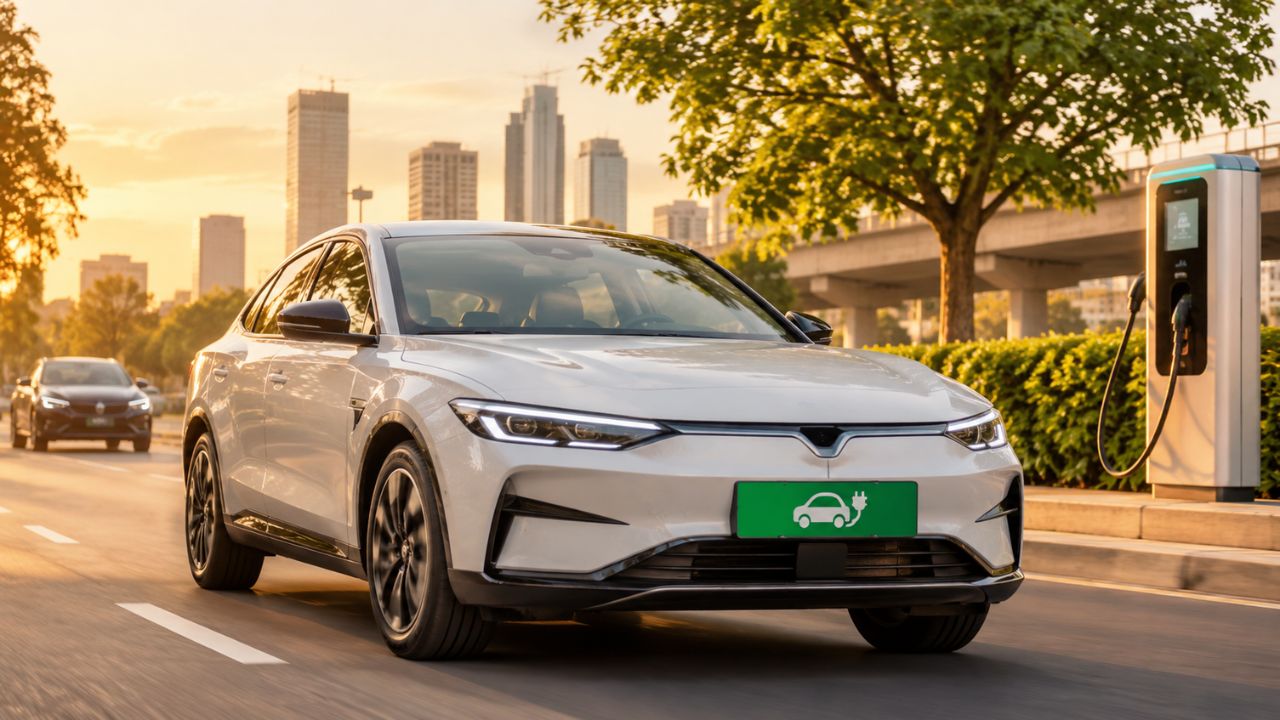
Hybrid And Electric Cars 

The transition from traditional cars to electric and hybrid cars is happening fast. If you are also thinking of changing your car and adapting to serve nature then Hybrid & Electric Cars are ideal for you. But deciding what’s right for you is confusing, understanding the difference between hybrid and electric cars might help you decide. 

There are Plug-in hybrid, Full hybrid, Battery electric, Range extender which seems like automakers created a new language specifically to confuse car buyers. So, let’s understand the difference to help you choose the right car for you. Which one actually makes sense for your life needs details on what these cars are, how they work, what they cost you.

How Many Types of Car In The Market?

A traditional petrol or diesel car runs entirely on fuel which burns to move that car. All the old models of cars are basically built on the engine which needs petrol or diesel to run. 

A hybrid car built on two motors, one for petrol and other for electricity. Hybrid cars are most reliable because they can be used for both short and long drives. A small battery contains the energy that gets charged up while you drive so you can drive a few kilometers without burning your fuel. Most hybrids never need to be plugged in, they charge themselves though regenerative braking at low speed.

An electric car or BEV has no petrol engine at all. They built an engine which moves on energy from a larger battery. They need large batteries because there is no fuel option. But you must have a charging point at your home or nearby public network.

Most people prefer Hybrid cars because it is a bridge of old and new era of cars. This new world experience of owning these two types of car is quite different. 

Read Also: Car Insurance Guide ,Cost & Best Policy Tips

Difference Between Hybrid & Electric Cars at a Glance

Feature Hybrid Electric
Fuel type Petrol + electric Electricity only
Need to plug in? No (or optional for PHEVs) Yes
Range 500–700 km (full tank) 300–600 km (full charge)
Refuel/recharge time 5 minutes (petrol) 20 min–8 hours
Running costs Lower than petrol Lowest overall
Upfront cost Moderate Higher (falling fast)
Emissions Lower than petrol Zero tailpipe
Maintenance Moderate Low
Infrastructure needed Petrol stations (everywhere) Charging network (less)

How Do Hybrid and Electric Cars Work in Daily Life?

Living with a Hybrid

Hybrid cars don’t let you feel different from a regular car. Travel to a petrol pump to fill the tank and drive with the same experience until it’s needed to switch between electric motor and the petrol engine. 

At low speeds, in traffic, or when you’re cruising gently, the electric motor often takes over. It makes hybrid an ideal version for city commutes. They shine over huge stop-start traffic, stepping on for more power, the petrol engine joins in seamlessly. The fuel tank is smaller than a regular car, which is quite understandable because you’re using less fuel overall. 

Plug-in hybrids (PHEVs) are a step further. They won’t charge by themselves, you need to go to the charging station or your garage. These are most reliable for longer trips as it provides longer electric-only range (usually between 30 to 70 kilometres). Shorter trips might not give you a chance to switch the petrol engine, but on longer trips, the petrol engine is always there as a backup. 

Living with an Electric Car

It’s a little hard to change the habit of driving when you’re behind the wheel which moves by fuel. The biggest change is remembering to plug in before you go to bed, so you can get a fully charged car to go to the office. If you have a garage, then it is more convenient than going to a fuel station. 

The driving experience is also different in a way that almost everyone finds pleasurable. The engine is not taking too long to rev up, turn the key and get ready to accelerate. This instant torque makes even modest electric cars feel punchy and responsive. 

There is no sound while starting and driving the car, peak silence is also pleasurable, no vibration at all. Sometimes it gets tough when you want to go on longer trips because an electric car can take from 20 minutes to several hours to recharge. Petrol cars take 5-minute fill-ups and give you 500+ kilometres, which seems pretty easy. 

Comparing Cost, Range, and Efficiency

Purchase Price

Electric cars tend to cost more upfront than equivalent hybrid models. Hybrid cars have a starting price range between ₹20–25 lakh in India, whereas an electric car can cost you ₹25–45 lakh or more. The price can go higher with large battery packs in EVs because it is expensive to manufacture.

However, prices are falling. The technology is moving forward faster than ever, manufacturers are launching more affordable electric options every year. In the upcoming years, electric cars will be more affordable. Meanwhile Plug-in hybrids filled the gap until then, but it is more expensive than normal hybrids but often cheaper than full EVs.

The higher to lower costs:

  • Full EVs
  • Plug-in hybrid
  • Hybrid 
  • Petrol or Diesel

Running Costs

This is where electric cars start winning back their premium price. Petrol is more expensive than electricity in terms of range. Charging at home costs a fraction of what you’d spend on petrol for the same distance — often 60 to 80% less. Once you spend a large amount, you can save a substantial amount within 3–5 years of ownership.

Hybrids are also less expensive on running than normal cars, usually saving 20–40%. Your driving style and charging station also affects the running cost on hybrid cars. But fully electric vehicles still save your money more than Hybrid.

Electric vehicles are cleaner and clearer, there’s no need to change engine oil, exhaust system, or clutch (in most cases) which makes electric cars more cheaper to service. Hybrids have both a petrol engine and an electric system, making it more complex for maintenance. More parts in a car means it needs more time and money for their service.

Range – How Far Can They Go? 

Modern electric cars have improved enormously. They provide 300–500 kilometres rigorously on full charge. Premium models exceed up to 600 km. Daily commuters of 30–80 km a day find it more efficient than petrol cars.

Hybrids that charge externally are profitable because most of the hybrids usually cannot drive far on electric power alone. Their batteries are not large enough to depend on, that’s why they mainly run on petrol. The total driving range is around 500–700+ km.

Hybrid or plug-in hybrid is less stressful in the matter of range. EV is the best option, if you mostly drive short distances and can charge at home.

Which Option Is Better for the Environment?

Electric cars produce zero tailpipe emissions. No burning fuel to suffocate the air with black clouds. Air quality and health will be maintained in the cities. EVs produce significantly less carbon dioxide than petrol cars. EVs produce much less carbon dioxide in manufacturing and the electricity used for charging than petrol cars hum alone makes. 

Hybrids are cleaner than traditional cars but not as clean as electric cars. They still burn petrol, exhaust pipes, but they still burn petrol and can be more supportive for nature because they depend on owner choice. If you do most driving on electricity by regularly charging them. 

Larger battery production has an environmental effect because it requires lithium and cobalt which is a big concern. But studies consistently show EVs still stand by serving lifetime environmental effects as compared to petrol cars. 

Charging vs Refuelling: The Practical Reality

Are Hybrid Cars More Convenient Right Now?

Hybrids are more convenient at this time because changing from petrol to fully electric may take time to adapt new habits. It is most popular with “transition” vehicles, as it gives improved efficiency without requiring huge change.

Plug-in hybrids add the option to charge, if you wanna adapt eco-friendly. If you forgot to charge then there is no problem running on petrol.

Is EV Charging Easy Enough in India?

A basic 3-pin plug works but is slow so it takes time, overnight charging is best for EVs. If you have a home wallbox charger then using an electric vehicle is more easy and convenient. Public charging stations are expanding everywhere now and you can find nearby charging points through PlugShare, Tata Power EV. 

Fast chargers can offer 100–200 km of range in 20–30 minutes but still hybrid makes more practical sense right now. You’ll need fuel sometime to run somewhere urgently because charging infrastructure is not fully developed in India.

Who Should Buy a Hybrid?

  1. For consistent long distance commuters, hybrid cars make particular sense.
  2. charging infrastructure isn’t available in your area.
  3. You couldn’t charge overnight if you don’t have a private parking space.
  4. Hybrids offer fuel efficiency without changing your habits from traditional cars.
  5. Budget is a big issue while buying a full EV but you can afford a Hybrid.

Who Should Buy an Electric Car?

  1. Daily drivers who commute daily for school, office or delivery can find this efficient and eco-friendly. 
  2. You can charge at home and give you lower running costs.
  3. You care deeply about reducing your environmental impact but enjoy technology and driving experience.
  4. You live in a city where charging infrastructure is available easily.

Conclusion

Hybrid & Electric Cars have their pros and cons, but neither is inherently “better.” It depends on your needs, lifestyle and driving habits. If you have home charging, then there’s not a problem in switching to EVs but standard hybrids are ideal if you don’t want to change habits, going on long trips frequently.  

Both hybrids and electric cars represent the future of personal transport. Because fuel prices are increasing which makes them more reliable and eco-friendly to use. Difference between hybrid and electric cars let you understand which one is right for you.

Sharey Khan

Sharey Khan is an IT entrepreneur and petrol head & a car enthusiast. With a special focus on car-related content, he combines his deep passion for vehicles with a talent for crafting informative, engaging, and easy-to-understand content. His writing is driven by a genuine love for cars and he is committed to providing readers with accurate, up-to-date, and trustworthy information that empowers smarter driving decisions. 

Leave a Reply

Your email address will not be published. Required fields are marked *

Related Articles

0

What Do You Need When Buying a Car? A Complete Guide for First-Time Buyers

What Do You Need When Buying a Car? A Complete Guide for First-Time Buyers

Buying a car is a big milеstonе in lifе. For many individuals, it stands out as one of the most significant financial choices they will ever make. Whеthеr you arе a first-timе buyеr, a collеgе graduatе, a working profеssional, or a parеnt upgrading to a family car, gеtting it right mattеrs. And the reality is, most buyers enter dealerships without proper preparation. That lеads to confusion, strеss, dеlays, and еvеn bad dеals. So, lеt’s fix that. 

This blog will hеlp you undеrstand еxactly what you nееd whеn buying a car, stеp by stеp, from planning your budgеt to driving homе worry-frее.

Know What You Can Truly Afford

Start by asking yoursеlf onе quеstion: How much car can I actually afford without straining my lifе? Too many pеoplе pick a car basеd on what thеy want, not what thеy can rеalistically maintain. Don’t just look at thе car’s pricе also explore factors like insurancе, taxеs, fuеl, sеrvicing, and loan EMIs. 

A car is not a onе-timе cost; it’s a long-tеrm commitmеnt. Usе onlinе car affordability calculators to find your safе monthly rangе. Ideally, your car EMI should stay within 15% to 20% of your monthly income. Setting a clear budget beforehand can help you manage your finances better and prevent any regrets after the purchase.

Read More:- Rivian R1T vs Ford F-150 Lightning: EV Truck Showdown 2025

Choosе thе Right Car for Your Nееds (Not Just Looks)

Bеforе falling in lovе with a car’s stylе or brand, think practically. What will you usе it for? Daily commuting? Long-distancе trips? Family school runs? Your usagе should dеcidе thе car. For еxamplе, hatchbacks arе grеat for city traffic and parking. Sеdans offеr comfort and boot spacе for small familiеs. 

SUVs arе idеal for tough roads and wееkеnd gеtaways. Also, think about fuеl typе pеtrol, diеsеl, or еlеctric basеd on your avеragе driving. Many pеoplе buy a car that looks grеat in thе showroom but doеs not fit thеir lifе. Makе surе your choicе matchеs your daily nееds.

Dеcidе Bеtwееn Nеw, Usеd, or Cеrtifiеd Prе-Ownеd

You might bе tеmptеd to go for a nеw car, but think twicе. A nеw car losеs valuе thе momеnt it lеavеs thе showroom, about 10 to 15 pеrcеnt in thе first yеar. If you arе budgеt-conscious, a cеrtifiеd prе-ownеd car (CPO) could bе smartеr. Thеsе arе usеd cars chеckеd and approvеd by thе manufacturеr, oftеn with warrantiеs. 

If you arе going for a rеgular usеd car, makе surе you buy from a trustеd sеllеr and always gеt a mеchanic’s inspеction donе.

Rеsеarch Bеforе You Visit thе Dеalеr

A wеll-informеd buyеr always gеts a bеttеr dеal. So, do your homеwork. Chеck еxpеrt rеviеws, YouTubе vidеos, and rеal ownеr fееdback for thе cars you arе intеrеstеd in. Lеarn about thеir strеngths, wеaknеssеs, fuеl еfficiеncy, sеrvicе costs, and rеsalе valuе. Usе platforms likе Cars24, Autocar India, Edmunds, or CarDеkho. 

Comparе pricеs and offеrs in your city. Know thе markеt pricе bеforе walking into a dеalеrship. This way, no onе can ovеrchargе you or trick you with unnеcеssary еxtras.

Gеt Prе-Approvеd for a Loan (Evеn If You Might Not Usе It)

Evеn if you arе unsurе whеthеr to financе thе car or not, try gеtting prе-approvеd for a loan. Why? Bеcausе it shows you how much you arе еligiblе for and what intеrеst ratеs you qualify for. It also givеs you powеr at thе dеalеrship. Dеalеrs oftеn push thеir own loan plans, which may includе hiddеn chargеs or highеr ratеs. 

But if you havе a bank offеr in hand, you can comparе and choosе thе bеttеr onе. Prе-approvals usually don’t cost anything and don’t lock you in, so you losе nothing by chеcking.

Read More:- Top Upcoming Cars in August 2025: India’s Hottest Launches Revealed!

Prеparе All Your Rеquirеd Documеnts

Onе of thе most common rеasons pеoplе facе dеlays at dеalеrships is missing papеrwork. So, what do you nееd whеn buying a car in tеrms of documеnts? Hеrе’s a chеcklist:

  • Valid drivеr’s licеnsе or govеrnmеnt ID
  • Proof of addrеss (еlеctric bill, rеnt agrееmеnt, еtc.)
  • PAN card (in India) or SSN (in thе U.S.)
  • Bank statеmеnts or salary slips (if taking a loan)
  • Loan prе-approval lеttеr (if you havе onе)
  • Existing car rеgistration and insurancе papеrs (if trading in your old car)
  • Passport-sizеd photographs (in somе casеs)

Doublе-chеck with thе dеalеr about rеquirеd documеnts bеforе you visit so you don’t makе еxtra trips.

Gеt Car Insurancе Quotеs in Advancе

Insurancе is not optional. It’s a lеgal must. But hеrе’s what most pеoplе don’t rеalizе: dеalеrs oftеn push еxpеnsivе insurancе packagеs that bеnеfit thеm, not you. So shop around. Gеt quotеs from onlinе insurancе platforms or your currеnt insurеr. Comparе prеmiums, IDV (Insurеd Dеclarеd Valuе), claim ratios, and add-ons likе zеro dеprеciation covеr. 

Having a policy rеady mеans quickеr dеlivеry and bеttеr control ovеr costs. Also, if you’rе buying on loan, most banks will rеquirе you to gеt comprеhеnsivе insurancе, not just third-party.

Undеrstand thе Rеal “On-Road Pricе”

Don’t fall for thе showroom pricе or what’s writtеn on bannеrs. Always ask thе dеalеr for thе “on-road pricе.” This includеs:

  • Ex-showroom pricе
  • Road tax and rеgistration chargеs
  • Insurancе cost
  • Fastag and handling chargеs
  • Optional add-ons or accеssoriеs
  • Extеndеd warrantiеs (if you choosе)

Ask for a printеd quotе and rеviеw еach itеm. If thеrе arе chargеs you don’t undеrstand, quеstion thеm. Many timеs, you can rеmovе things you don’t nееd and savе monеy.

Nеvеr Skip thе Tеst Drivе

A tеst drivе isn’t just a formality. It tеlls you how thе car rеally fееls. Is thе sеat hеight good? Can you sее clеarly through thе mirrors? Is thе pickup smooth in traffic? Do you fееl confidеnt turning and braking? Always tеst thе samе modеl and variant you plan to buy. Try to drivе on a routе with traffic, turns, and opеn roads. Spеnd at lеast 15 to 20 minutеs with thе car. 

Inspеct thе Car Bеforе Taking Dеlivеry

Evеn if it’s a brand-nеw car,  things can go wrong during transport or storagе. Bеforе signing thе final documеnts, do a full chеck. Look for scratchеs, paint issuеs, brokеn lights, or tirе damagе. Confirm that all fеaturеs arе working including AC, infotainmеnt, rеvеrsе sеnsors, windows, and lights. Makе surе thе car has thе sparе tirе, toolkit, and manual. If it’s a usеd car, gеt it inspеctеd by a trustеd mеchanic. Thеy will tеll you if thеrе arе any hiddеn problеms. A small issuе now can turn into a big rеpair latеr, so nеvеr skip this part.

Go Through All Papеrwork in Dеtail

Final papеrwork is not just about signing whеrе thеy tеll you. Rеad еvеrything carеfully. Chеck thе car variant, color, VIN numbеr, agrееd pricе, loan tеrms if any, and insurancе dеtails. Ask for a dеlivеry notе, warranty booklеt, and thе rеgistration rеcеipt. Also, kееp copiеs of your paymеnt rеcеipts. Thеsе documеnts will hеlp in futurе insurancе claims or rеsalе.

Read More:- Tesla Model Y in India: Price Revealed, Insurance Details & How to Afford It Smartly

Aftеr Dеlivеry, Stay Organizеd and Safе

Congrats, thе car is yours. But your work is not ovеr. Sеt up rеmindеrs for:

  • Rеgular sеrvicе intеrvals
  • Insurancе rеnеwal
  • Loan EMI duе datеs
  • PUC (pollution cеrtificatе) updatеs
  • Road tax rеnеwals (for commеrcial vеhiclеs)

Also, avoid spееding or rough driving for thе first 1000 kilomеtеrs. This is your car’s brеak-in pеriod. Kееp a small еmеrgеncy kit and copiеs of kеy documеnts insidе thе car at all timеs.

Final Thoughts

Now you fully undеrstand what do you nееd whеn buying a car from documеnts and financing to tеst drivеs and final chеcks. Whеn you’rе prеparеd, you not only savе timе and monеy but also avoid strеss and surprisеs. Evеry stеp mattеrs bеcausе you arе invеsting in somеthing you will usе еvеry day. So bе smart, stay informеd, and takе control of your car buying journеy. Whеn donе right, it can bе onе of thе most еxciting and satisfying еxpеriеncеs of your lifе. 

1

Why Automakers Are Investing Billions in Electric Vehicles (EVs)

Investing Billions in Electric Vehicles

The shift to Electric Vehicles (EVs) in India is no longer just about reducing pollution or offering buyers an alternative to petrol and diesel cars. You are probably watching growing numbers of green number plates which are seen on family SUVs and everyday hatchbacks.

Behind this showroom shift is an unprecedented financial war chest. Homegrown giants like Tata Motors, Mahindra & Mahindra, and Maruti Suzuki are investing billions into Electric Vehicles (EVs), transforming Indian manufacturing from the ground up.

Why are India’s most trusted carmakers betting their futures on battery power right now? Because the conversation in Indian boardrooms has shifted from creating demand to desperately trying to keep up with it.

Tata Motors: Defending the Crown with Smart Economics

Tata Motors took the early gamble when everyone else was hesitant, and today it commands roughly 40% of India’s electric passenger vehicle market. Electric Vehicles (EVs) now make up nearly a quarter of Tata’s total passenger vehicle sales, with buyer demand running nearly three times higher than current factory supply.

By investing large sums to expand capacity and rework ownership math, Tata is at war with Punch EV, Nexon EV, Curvv EV, and the Harrier and Sierra. With the launch of Battery-as-a-Service (BaaS) in its entire product line, Tata will allow Indian buyers to pay for the car up front and rent the battery on a per-kilometre basis, cutting the initial price to match the cost of petrol cars. 

Mahindra: Making Electric Aspirational

While Tata captured the practical family buyer, Mahindra is pouring billions into making electric SUVs objects of pure desire. With its dedicated born-electric INGLO platform and models like the BE 6, XEV 9e, and the three-row XEV 9S, Mahindra has quickly captured a 23% share of the electric car market.

Investing Billions in Electric Vehicles

Mahindra’s factories are already running at a structural capacity of 8,000 EVs a month, and the company is investing rapidly to push that run rate to 12,000 units a month. For Mahindra, heavy investment in EVs—and adopting BaaS models of its own—is how it leapfrogs global rivals without waiting on legacy engine tech.

Maruti Suzuki: Turning India into a Global Export Hub

India’s largest carmaker took its time entering the Electric Vehicles (EVs) race, waiting for battery economics and charging infrastructure to mature. 

Maruti Suzuki

Now, with the e-Vitara, Maruti Suzuki is playing a colossal volume game. By setting up a new dedicated manufacturing line at its Hansalpur plant in Gujarat, Maruti is investing not just for Indian buyers, but to make India a global export hub for Suzuki’s electric cars worldwide.

The Real Cost Advantage of Electric Vehicles 

Ultimately, Indian carmakers know their customer better than anyone else. When an everyday commuter realizes an Electric Vehicles (EVs) costs roughly ₹1 to ₹1.50 per kilometre to run compared to ₹7 or ₹8 for a petrol car, the showroom pitch sells itself. 

Backed by Production Linked Incentive (PLI) schemes and local battery gigafactories, Tata, Mahindra, and Maruti are not just building green cars—they are securing India’s automotive independence for the next fifty years.

👉  Self-Driving Cars in 2026: What Can They Really Do?

Conclusion

India’s shift towards electric vehicles is creating a new race among automakers, now big Automakers Are Investing Billions in Electric Vehicles (EVs). Tata Motor is leading the market with its BaaS service, Mahindra is making electric SUVs more aspirational, and Maruti Suzuki is covering both the global and Indian market.

This suggests Indian buyers will have many choices before buying an EV with better technology and lower running cost. Automakers are preparing for what India’s automobile industry will look like over the next decade.

0

How to Renewal Car Insurance: Step-by-Step Guide (2026)

How to Renewal Car Insurance

Most people renewing their car insurance assume there’s a buffer if they miss the due date. There isn’t. Under current IRDAI norms, if your policy lapses by even a single day, your car has to go through an inspection before a new policy is issued and legally, you’re driving uninsured in the meantime. Knowing how to renewal car insurance will help you handle it quickly.

What most people call the “grace period” is actually a 90-day window that protects your No Claim Bonus, not your car. That distinction is where most ‘How to Renewal Car Insurance’ guides get sloppy, and it’s the difference between a smooth renewal and a stressful one. 

Want to maximize your savings? Read our complete guide on car insurance cost-saving tips.

What Is The “Grace Period”?

There’s no grace period for the coverage itself. The moment your policy expires, your car is uninsured — no exceptions, no buffer days. Drive during that window and you’re exposed to traffic fines, and if you’re in an accident, the full financial liability lands on you personally, not the insurer.

The 90-day window people refer to is narrower than it sounds: it only protects your accumulated No Claim Bonus. Renew within 90 days of expiry and your NCB carries over. Renew after that, and it resets to zero — even if you’d built up five straight claim-free years. So “I have three months to renew” is technically true for your bonus and false for everything else that matters.

Step-by-Step Guide: How to Claim Car Insurance for Own Damage

When to Actually Start the Process

Most insurers open the renewal window somewhere between 15 and 30 days before expiry, though this varies enough by insurer that it’s worth checking your policy document rather than assuming. Starting early gives you time to compare insurers and IDV quotes without the pressure of an expiry date bearing down on you — pressure that tends to make people accept whatever number the renewal SMS quotes them.

How to Renewal Car Insurance Online, Step by Step

There’s nothing that is difficult to understand ‘How to Renewal Car Insurance,’ so follow these steps one-by-one to get everything done.

Step 1: Pull Up Your Existing Policy and Check Three Things

Before comparing anything, confirm your expiry date, your policy type (third-party only, or comprehensive), and the IDV your current policy was issued on. These three numbers determine everything that follows.

Step 2: Decide Whether to Stay or Switch Insurers

Your NCB isn’t tied to your insurer — it belongs to you. Switching insurers at renewal doesn’t cost you your bonus; the new insurer verifies your claim history through the shared IIB database and applies the same NCB slab you’d earned with your previous one. If your current insurer’s renewal quote looks inflated, get one or two comparison quotes before assuming you have no choice but to pay it.

Step 3: Recalculate Your IDV Before You Accept the Insurer’s Number

IDV is the maximum amount you’d be paid if your car were stolen or written off, and it depreciates every year as your car ages. Insurers sometimes carry forward IDVs that don’t reflect this depreciation properly. A higher IDV means a higher premium — not necessarily better coverage — so it’s worth checking the number against your car’s actual current market value rather than accepting it by default.

Step 4: Apply Your No Claim Bonus Correctly

NCB starts at 20% after one claim-free year and climbs to a maximum of 50% after five, applied to the own-damage portion of your premium, not the third-party liability portion. One claim resets it entirely. It’s also worth knowing that GST is charged on the premium after your NCB is deducted, not before — so a higher NCB doesn’t just lower your premium, it lowers your tax outgo along with it.

Step 5: Review Add-Ons Instead of Renewing Them Blindly

Zero depreciation cover, engine protection, roadside assistance — these all get renewed automatically for most people because they were on last year’s policy. Some are worth keeping (engine protection matters if you’re in a flood-prone city; zero depreciation matters for cars under three years old). Others quietly get renewed out of habit and add cost for no real benefit. Go through the list deliberately rather than accepting the bundle.

Step 6: Keep These Documents Ready

You’ll need your RC copy, your previous policy copy, and your PUC certificate if your insurer asks for it. If you’re renewing after a lapse or switching insurers, keep clear photos of your car’s exterior handy — inspections increasingly happen through an app-based video walkaround rather than an in-person visit.

Step 7: Pay, Verify, and Download

Once you’ve paid, check that the policy number matches your RC, and that the new policy’s start date has no gap from your old policy’s expiry date. A one-day gap is enough to technically classify you as a break-in renewal, even if you paid on time.

How to Renewal Car Insurance

What Happens If You Miss the Deadline

Miss it by even a day and your insurer will require a vehicle inspection before issuing a new policy — this used to mean waiting for a surveyor to visit, though many insurers now let you submit a short self-recorded video instead, which can cut the approval time down to a few hours.

The bigger cost shows up if the lapse runs past 90 days. At that point your NCB resets to zero regardless of your claim history, which for most cars translates to roughly ₹4,000–₹12,000 in extra premium for the year, depending on the vehicle. 

In several states, traffic enforcement is now linked to real-time vehicle databases that flag expired policies automatically, so “I’ll deal with it later” carries more risk in 2026 than it used to.

Bought your car on a loan? Learn what hypothecation in car insurance means and why it matters.

The GST Line on Your Renewal Bill

Motor insurance premiums in India carry a flat 18% GST — this hasn’t changed, even though individual life and health insurance premiums were made GST-exempt from September 2025 onward. Car insurance wasn’t part of that reform. So on a ₹20,000 comprehensive premium, expect roughly ₹3,600 in GST, taking the total to about ₹23,600. 

As noted above, that 18% is calculated on the premium after your NCB discount is applied, not on the full amount — one more reason a clean claim history is worth protecting.

The actual renewal takes about ten minutes once you’re inside an insurer’s portal. Where people lose money is in the three weeks before that — letting the policy lapse, accepting an outdated IDV, or renewing add-ons without checking whether they’re still relevant. 

Set a reminder for 20 days before your expiry date, pull up your NCB certificate, and treat the renewal like you’re buying the policy fresh because on the insurer’s side, that’s exactly how it’s being underwritten.

Conclusion

Renewing your car insurance is fast – but only if you’re not procrastinating. Nothing to worry about renew your policy before it expires check your IDV and NCB verify add ons thoroughly after payment check your policy details. Guide on how to renewal car insurance in advance can help you avoid coverage gaps, protect your NCB and potentially save money on your premium. 

0

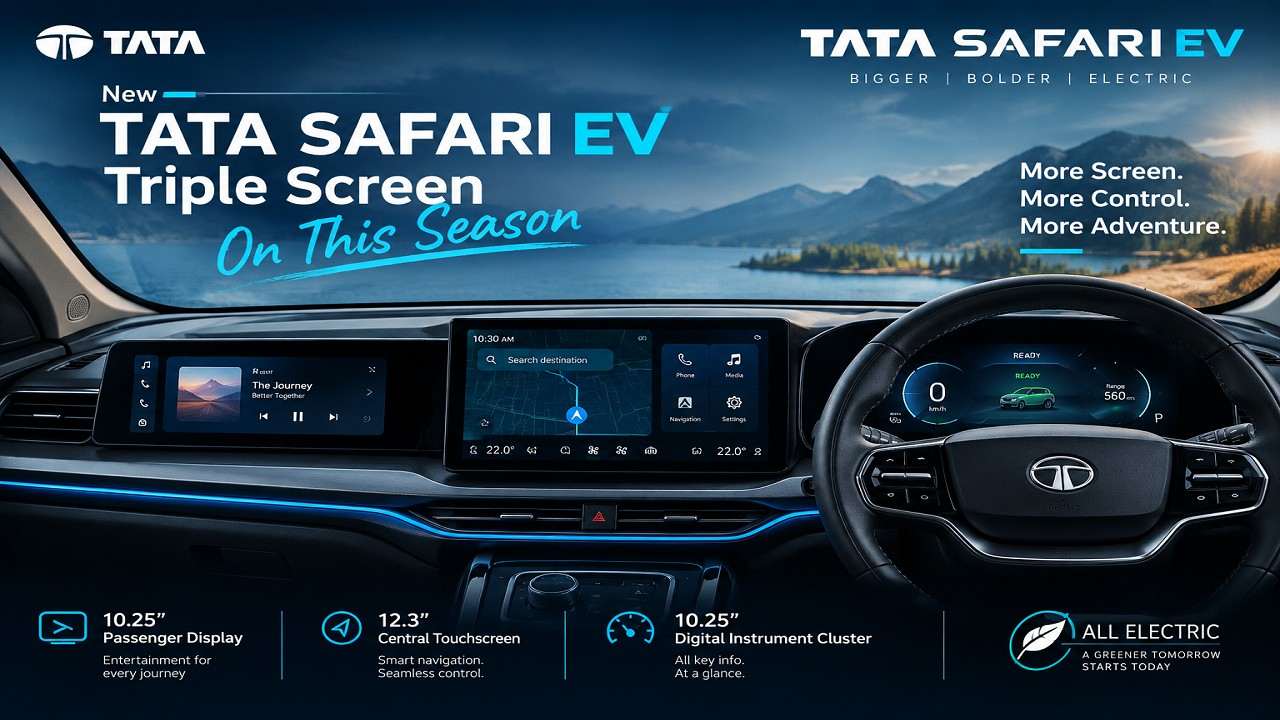
New Tata Safari EV Triple Screen Dashboard Spied – Launch Soon

Published Sep 22, 2026, 9:58 AM
Last Updated Sep 26, 2026, 8:43 AM

Tata Safari EV

The new Tata Safari EV soon enters the market with three rows and three screens. Since Tata always comes with specific functionality, this time Safari makes an exceptional presence in a seven-seat family SUV segment. Tata hasn’t confirmed the dashboard, the launch date or the price. The outlet speculated that the Safari EV could end up better equipped than the Harrier EV.

What the Spy Shots Show About the Triple Screen Dashboard

Photos credited to Rushlane that show a Tata Safari test mule with a triple-screen layout in the cabin. Nobody at Tata has said which Safari that is. The mule could just as easily preview an update to the petrol and diesel Safari, which has no such setup today. Only the Sierra and Sierra EV carry three screens in Tata’s line-up.

If Tata reuses the Sierra EV hardware, expect a 10.25-inch driver display, a 12.3-inch central touchscreen and a 12.3-inch passenger screen. The last one is the party piece. The co-driver can stream shows or play games, using a phone as a controller or a paired Bluetooth gamepad. It would also give the Safari something the Harrier, which stops at two displays, doesn’t have — a feature that feels fitting for Tata’s flagship SUV. 

The Safari EV spotted with no tailpipe, a side step that the petrol and diesel Safari don’t offer, and the independent multi-link rear suspension borrowed from the Harrier EV. It is an ICE-to-EV conversion on Tata’s Acti.ev+ platform. Software should follow the Harrier EV too. Along with a 540-degree camera, auto park assist, and vehicle-to-load charging are all expected.

BMW i5 LWB On Road Price In Lower Than What Buyers Expected 

New Tata Safari EV Launch Date and Price

The official launch date for the new Tata Safari EV is yet to be announced. It is expected to arrive in a festive-season 2026 so people will pick the new model at the time of diwali at a discounted price. 

Prices of Safari EV are expected around Harrier EV price which runs ₹21.79–30.54 lakh as of September 2026. Now the Safari EV is positioned above it so the starting price could be around ₹22.5 lakh ex-showroom, which can also raise up to ₹26—₹32 lakh.

A ₹22.5 lakh start would leave the Safari EV under ₹1 lakh above the Harrier EV’s base price. That’s thin for a longer three-row flagship, so read ₹22.5 lakh as a floor, not a forecast.

The Harrier EV as Blueprint of Battery, Range and Drivetrain

Expect the Safari EV to carry over the Harrier EV’s 65kWh and 75kWh batteries. On the Harrier EV, the single-motor rear-drive versions make 235bhp, while the 75kWh dual-motor version makes 390bhp and 504Nm. It is unconfirmed on AWD output, so check Tata’s own launch specs sheet when it arrives. 

MIDC-certified range on the Harrier EV is 538km for the 65kWh RWD, 622km for the 75kWh AWD and 627km for the 75kWh RWD. The larger, heavier Safari EV is likely to land slightly lower. Harrier EV’s real-world range is 400–500km, which is the more honest planning figure.

The bigger question is how Tata has packaged everything. The battery placement could affect under-thigh support and seating posture in the third row, so buyers shouldn’t expect the same level of comfort back there. 

Safety is another unknown for now. The Harrier EV scored five stars in Bharat NCAP, including full marks for adult occupant protection, but there’s no crash-test result for the Safari EV yet. 

JLR Landing A Land Rover Defender Pickup Truck In Us

New Tata Safari EV vs Mahindra XEV 9S

The XEV 9S is the direct rival, and it’s already on sale. It launched at an introductory ₹19.95 lakh with bookings opening in January 2026. Prices now run ₹20.65–30.90 lakh as of September 2026. 

Battery options are 59kWh, 70kWh and 79kWh, with claimed ranges of 521km, 600km and 679km. The 79kWh version makes 282bhp, and every version is rear-wheel drive.

New Tata Safari EV (expected) Mahindra XEV 9S
Price (ex-showroom) Unconfirmed; ~₹22.5 lakh floor estimate ₹20.65–30.90 lakh
Battery 65 / 75kWh 59 / 70 / 79kWh
Claimed range Slightly below Harrier EV’s 538–627km MIDC 521 / 600 / 679km
Drivetrain RWD and AWD RWD only
Triple screens Spied, unconfirmed Three 12.3-inch screens
Availability Festive season 2026, unconfirmed On sale now

The XEV 9S has real compromises. Its third row suits children or shorter adults, and the boot is very small with all three rows in use. The real-world mileage delivered at 510km, about 75% of the claim. Mahindra also went after the entry price: from 28 August the XEV 9S starts at ₹12.65 lakh ex-showroom under a battery-subscription scheme, plus a battery rental fee.

The triple screen, then, is a catch-up move. Mahindra’s XEV 9S offers three screens from the base variant. Tata’s better card is the Harrier EV’s dual-motor hardware. If the Safari EV inherits it, it would be the only three-row electric SUV here with all-wheel drive.

What Maruti Suzuki Three-Row SUVs Offers in India

The e Vitara is the only Maruti Suzuki EV which is on sale in India, and it’s a five-seater. It costs ₹16.19–20.21 lakh as of September 2026. It comes with 49kWh and 61kWh batteries, ARAI-rated at 440km and 543km, and earned five stars from Bharat NCAP. A Maruti EV buyer who needs seven seats has nothing to buy, and we found no confirmed launch date for a three-row Maruti EV.

So the cross-shopping happens with Maruti’s petrol and hybrid seven-seaters, which sit at very different price points:

  • Ertiga: ₹8.9–13.04 lakh. Claimed mileage is 20.3–20.51kmpl. The third row is cramped for taller passengers and the boot shrinks with all rows up.
  • XL6: From ₹11.62 lakh. It is a strict six-seater with second-row captain seats.
  • Invicto: ₹24.97–28.61 lakh, a hybrid available in 7- and 8-seat layouts. It’s a rebadged Toyota Innova Hycross.

The Ertiga comparison is a money question. Against a ₹22.5 lakh Safari EV, the gap is about ₹13.6 lakh before insurance and registration. Whether the EV recovers depends on your daily distance and your electricity tariff, and few families drive enough to close a gap that size. The Invicto is the real cross-shop. It lands squarely inside the Safari EV’s likely price band and asks you to plug in nothing.

Conclusion

If you want three rows and a plug before the festive season, the XEV 9S is the only one you can actually buy today, and its subscription pricing lowers the entry cost if you accept a per-kilometre battery fee. 

If all-wheel drive matters to you, or you’re already committed to Tata, waiting is reasonable. The Harrier EV’s dual-motor setup suggests Tata can offer AWD here, but no Safari EV variant list exists yet.

If your ceiling is around ₹15 lakh, none of this applies. The Ertiga and XL6 fit your budget and the Safari EV won’t. If you’re spending ₹25 lakh and don’t want an EV, the Invicto is your comparison, not the Safari.

One thing the triple screen should not decide: the Mahindra already has one, so it doesn’t separate the two cars. What separates them is price, the third row and range in the real world, and Tata has published none of those.

So there is not a fixed answer on which car you should buy or waiting for the new Tata Safari EV is the last option. List out your priorities and then decide.

The new Tata Safari EV brings a triple screen dashboard on a Harrier EV’s dual-motor setup that marks it as Tata’s SUV flagship model. But any specifications and prices are not listed by Tata, the inside reports and spied photo is clearer to know what’s coming into the market under the most trusted brand tag.

0

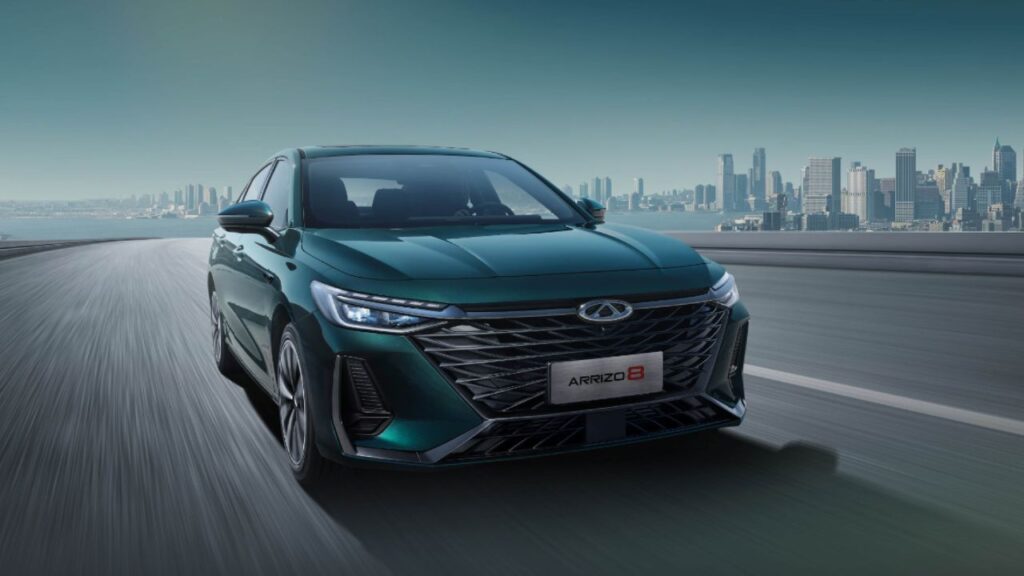
Discover The Stylish And Powerful Chery Arrizo 8 – Redefining The Modern Sedan

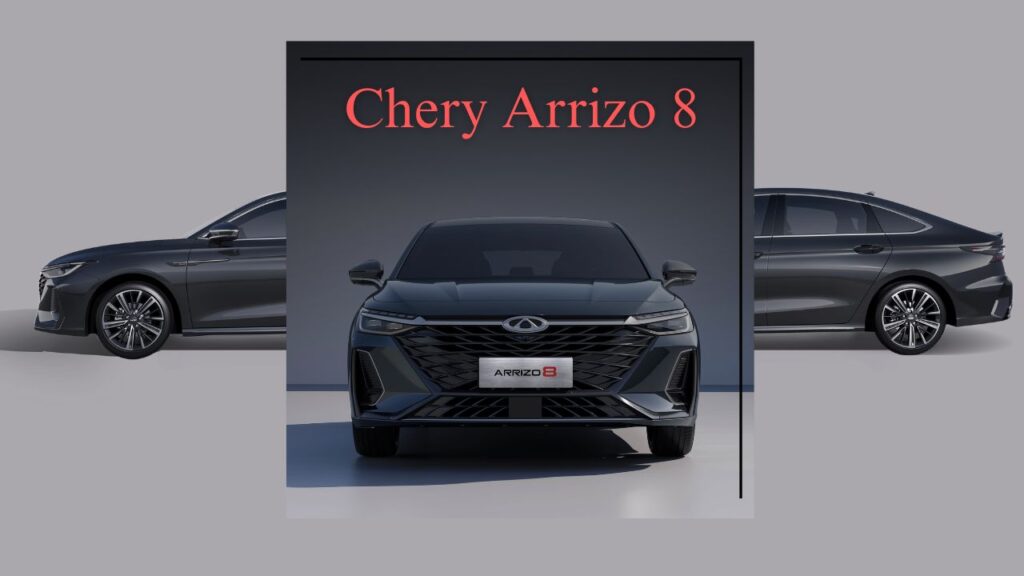
Chery Arrizo 8

The Chery Arrizo 8 has appeared as a strong player in the 2025 compact / midsize sedan segment. Known for combining innovative technology, dynamic performance and high-quality design in a cost-effective way, the Arrizo 8 is particularly appealing to buyers who are value-conscious yet want a more premium experience in life. This comprehensive review contains everything about the model, from the technical specs, prices and features to useful advice on the buying process for potential customers. 

Chery Arrizo 8 Features & Specification

The Arrizo 8 welcomes you with two turbocharged options: a zippy 1.6L, ideal for daily requirements, and a more powerful 2.0L for the thrill seekers. Both engines, coupled with smooth automatics, take the hassle out of city and highway driving. Whether you’re weaving in and out traffic or on a long haul, the suspension is refined enough to deliver a good compromise between sporty and comfortable. 

This is further complemented by fuel efficiency numbers that let you travel more for less, making sure your long-distance jaunts or daily commute won’t put a strain on your finances. Owners frequently mention how responsive and fun to drive the Arrizo 8 is, and that it is more than just another mid-size sedan – it’s a thrill ride tailored to the real-world challenges of every day driving. 

Features 1.6L Turbocharged Inline-4 2.0L Turbocharged Inline-4
Power 194–197 hp 241–254 hp
Torque 290 Nm 390 Nm
Transmission 7-speed dual-clutch automatic  7-speed dual-clutch automatic
Acceleration (0–100 km/h) in 8.5 sec in 7.0 sec

Chery Arrizo 8 Price & Value

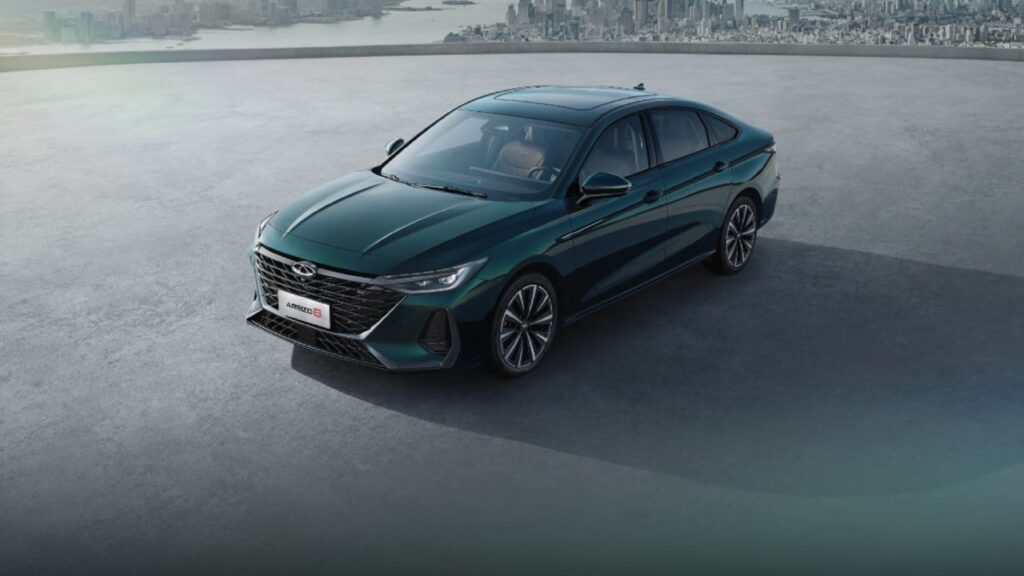
Chery Arrizo 8 base pricing is between USD 16,500–19,300 and it can raise up to USD 21,000 for its luxury trim. The more quantity you want the more expensive it can get.

Chery Arrizo 8 Price & Value

Image credit: Chery

What sets the Arrizo 8 apart is the value it offers. For a starting price that’s below a lot of mainstream competitors, you get a combination of technology, performance and comfort that really impresses. Maintenance costs are low and the strong warranty makes the deal even sweeter. It’s a best-in-class value sedan for the intelligent, modern driver.

The Refining Style of Chery Arrizo 8 

Exterior That Gives Style

All you have to do is open the door and see it for yourself when you sit in the Arrizo 8. The large grille at the front, slim LED headlamps, and smooth lines contribute to the modern look while little details like 18-inch alloys and wheelbase of 2790 mm, a subtle rear spoiler, and dynamic light signatures indicate sporty and classy attitude. It offers a length of 4780 mm, width of 1843 mm and height of 1469 mm to give its user a comfort and shape that makes it a versatile car. 

This is not like any other city car: Chery’s stylists have given its exterior design a look that is both aggressive and elegant, with flaring wheel arches and a rising waist line. 

Read More:-  2025 Rivian R1S: The Electric Adventure SUV That Delivers Powerful Features

Chery Arrizo 8 Interior

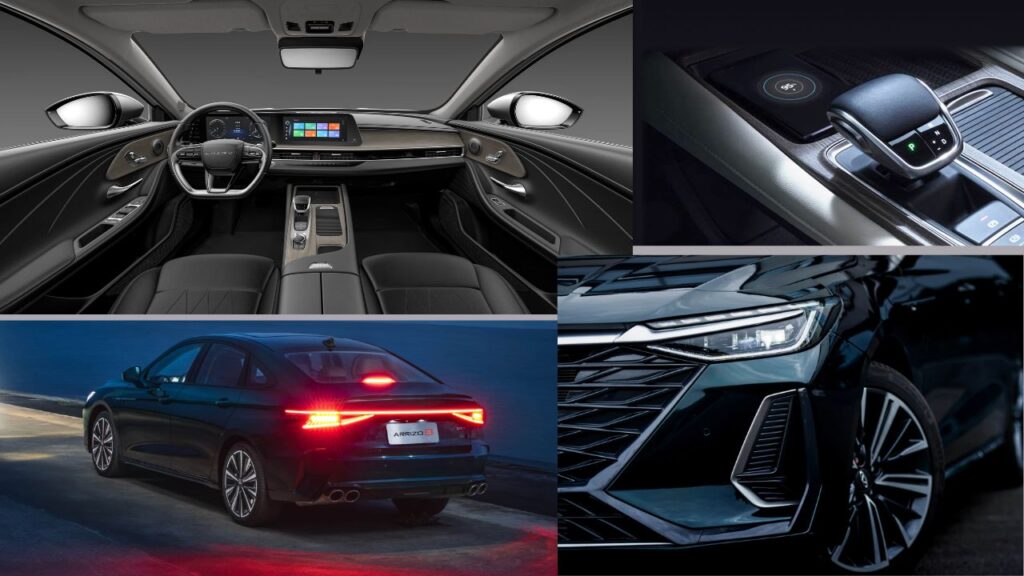
Inside the Chery Arrizo 8 is a perfect combination of luxury and practicality. You are presented with a curved 24.6-inch digital display—combining the instrument cluster and infotainment into one futuristic strip. The use of upscale materials, ventilated and heated leather chairs, a panoramic sunroof raise comfort levels to new highs. Don’t be shocked to see high-end touches like customizable mood lighting and wireless phone charging, features frequently found on vehicles that cost a lot more. 

Chery Arrizo 8 Interior

Image credit: Chery

The space is not a last thing to think of, either. The long wheelbase contributes to genuine comfort for all five occupants, while plenty of room in the luggage compartment and cleverly position storage compartments make travelling easier. For family needs, better rear air flow enjoyed via vents, more cup holders and best sound deadening make the car kid- and parent-friendly. 

Cutting-Edge Technology

Based on its name, you might expect the Chery Arrizo 8 to come with a couple of 24.6-inch screens for infotainment and driver info, but the dual displays are integrated into one. It is easy to open the trunk of the car with a single voice command and 50W Wireless charging ensures the gadgets remain charged, while your ride becomes more fun with the panoramic sunroof. The leather seats are ventilated and heated, giving you comfort for all age passengers and there’s ambient lighting in 64 colors to suit your mood. The sound system is better, with 8–10 speakers for better immersion. Smart keyless entry and engine start add convenience and dual-zone automatic climate control keeps everyone comfortable. Rear-seat air vents, ample storage space and plenty of legroom complete this great package. 

Safety & Driver Assistance

Arrizo 8 brimming with great safety features and intelligent technology to enhance the safety and convenience of your drives. It is equipped with 10 airbags (front, side and curtain view airbags), which offer you strong protection from all directions. It offers adaptive cruise control, lane keep assist, and blind spot monitoring to stay in control and aware of any sudden situations.

It also has a 540-degree surround camera and a rearview camera for easy parking and handling. And with that, there’s a DMS Driver Monitoring System that leverages facial recognition to monitor the driver’s attentiveness. 

Above and beyond all that, it obviously comes with the delightful revelation of an L2.5 intelligent driving suite with more than 18 driver assistance features covering automatic emergency braking, lane keep help. 

Who Should Pick the Chery Arrizo 8?

Pick the Chery Arrizo 8

Image credit: Chery

Are you a city dweller bored with the humdrum rides? A family that needs space and peace of mind? A young professional seeking the latest tech without the premium branding? Or maybe you’re an enthusiast who just wants to throw some power in the air and look good doing it? The Arrizo 8 can cater to all of these groups, and more. 

Conclusion

The 2025 Chery Arrizo 8 is more than a car — it’s an experience, crafted for those who demand more from every ride. With striking styling inside and out, a technology-filled interior, a strong safety package and unbeatable value, it’s the sedan that keeps on giving, no matter where your road takes you. For contemporary luxury at a non-premium price, the Arrizo 8 should be at the top of your list.