0

Top 10 Best Used Cars for Tall Drivers That Actually Fit Your Frame

Published May 20, 2025, 1:09 PM
Last Updated Apr 6, 2026, 12:32 PM

Top 10 Best Used Cars for Tall Drivers That Actually Fit Your Frame

Finding a car that fits your body is very important, especially if you are tall. Some cars feel too tight. Your knees hit the dashboard. Your head touches the roof. That makes driving painful. The good news is many used cars offer big space and comfort. 

We made a list of the best used cars for tall drivers. These cars provide more legroom and headroom for your efficiency. They also come with other good features and fair prices.

Honda Odyssey

Honda Odyssey

The Honda Odyssey is one of the great choices for all the tall drivers. It has a high roof and wide seats. You can stretch your legs and sit up straight. It also has smooth steering and good safety features.

  • Front Headroom: 40.7 inches
  • Front Legroom: 40.9 inches
  • Used Price Range (2017-2020): $18,000 – $30,000
  • Seats: Up to 8 people
  • Good Features: Power sliding doors, rear-seat entertainment system, rearview camera, Apple CarPlay/Android Auto

Toyota Sienna

Toyota Sienna

The Toyota Sienna is another roomy minivan. It has soft seats and so much space so even very tall drivers fit comfortably. The Toyota Sienna is also the only minivan with available all-wheel drive.

  • Front Headroom: 41.0 inches
  • Front Legroom: 40.5 inches
  • Used Price Range (2017-2020): $19,000 – $32,000
  • Seats: Up to 8 people
  • Good Features: AWD option, tri-zone climate control, advanced safety tech, strong resale value

Ford F-150

The Ford F-150 is a full-size pickup truck. It gives you a lot of legroom and a tall driving position. You feel high up and safe. It is also very good for towing and hauling.

  • Front Headroom: 40.8 inches
  • Front Legroom: 43.9 inches
  • Used Price Range (2015-2020): $20,000 – $40,000
  • Seats: Up to 6 in crew cab
  • Good Features: Strong towing, spacious cabin, V6 or V8 engine, advanced safety features in newer models

GMC Canyon

GMC Canyon

The GMC Canyon is a midsize pickup, but it feels very roomy. It is easy to drive and park. In the crew cab model, it offers one of the best legroom numbers for a truck.

  • Front Headroom: 40.3 inches
  • Front Legroom: 45.2 inches
  • Used Price Range (2016-2020): $18,000 – $33,000
  • Seats: Up to 5
  • Good Features: Good fuel economy, touchscreen system, smooth ride for a truck

Ford Taurus

Ford Taurus

The Ford Taurus is a large sedan with lots of interior space. It is no longer made new, but you can find second-hand used cars at the best prices. It is quiet, comfortable, and easy to drive.

  • Front Headroom: 39.0 inches
  • Front Legroom: 44.2 inches
  • Used Price Range (2015-2019): $10,000 – $20,000
  • Seats: 5
  • Good Features: Big trunk, V6 engine, comfortable highway ride, optional AWD

Ford Expedition

Ford Expedition

The Ford Expedition is a big SUV. It has huge space inside and can tow heavy things. The seats are tall and wide, so tall drivers feel relaxed. You sit high and get a great view.

  • Front Headroom: 41.5 inches
  • Front Legroom: 43.9 inches
  • Used Price Range (2017-2020): $28,000 – $45,000
  • Seats: Up to 8
  • Good Features: Powerful V6, big cargo space, smooth ride, great for road trips

Toyota Highlander

Toyota Highlander

The Toyota Highlander is a midsize SUV. It has a roomy cabin and soft seats. The controls are easy to reach. Tall drivers enjoy the legroom and relaxed driving style.

  • Front Headroom: 39.5 inches
  • Front Legroom: 44.2 inches
  • Used Price Range (2017-2020): $22,000 – $35,000
  • Seats: Up to 8
  • Good Features: Great safety ratings, strong resale value, V6 engine, AWD available

Subaru Forester

Subaru Forester

The Subaru Forester is a small SUV, but it feels very open inside. The tall roof gives extra headroom. It also has great visibility and comes with all-wheel drive.

  • Front Headroom: 41.2 inches
  • Front Legroom: 43.3 inches
  • Used Price Range (2017-2020): $17,000 – $28,000
  • Seats: 5
  • Good Features: Standard AWD, high safety scores, good gas mileage, roomy feel

Honda CR-V

Honda CR-V

The Honda CR-V car is one of the best-selling SUVs cars of 2024. It is not too big, but the inside is roomy. Tall drivers like the high seat and easy controls. It also has great reliability.

  • Front Headroom: 40.0 inches
  • Front Legroom: 41.3 inches
  • Used Price Range (2017-2020): $18,000 – $30,000
  • Seats: 5
  • Good Features: Excellent fuel economy, smart interior layout, very reliable

Subaru Outback

Subaru Outback

The Subaru Outback is like a mix between a car and an SUV. It has a tall ride height and a flat roof. This gives tall people plenty of space. It also comes with standard AWD.

  • Front Headroom: 40.1 inches
  • Front Legroom: 42.8 inches
  • Used Price Range (2017-2020): $19,000 – $32,000
  • Seats: 5
  • Good Features: Smooth ride, strong safety ratings, lots of cargo room, great in snow

Final Thoughts

If you are tall, you need a car that gives you enough room. Cramped cars can cause back pain, sore knees, and a bad driving experience. The best used cars for tall drivers offer comfort, safety, and good value. Whether you want a van, SUV, truck, or sedan, there is a perfect match out there. Before buying, always check the headroom and legroom and you should also sit in the car and take a test drive.

With the right car, driving becomes fun again. All the cars in this list are good options. They give tall people the comfort and space they need.

Bipin Sharma

Bipin Sharma is a seasoned automotive content writer with over 10 years of hands-on experience in the world of cars. From the latest car news and reviews to in-depth maintenance tips and expert buying guides, Bipin covers everything that drives the automotive world. Writing about cars isn’t just his profession — it’s his passion. His deep industry knowledge and love for automobiles fuel every blog he creates, helping readers make informed decisions and stay updated on the fast-evolving auto landscape.

Leave a Reply

Your email address will not be published. Required fields are marked *

0

Renault and Nissan Alliance Guide – History, Benefits & Future Vision

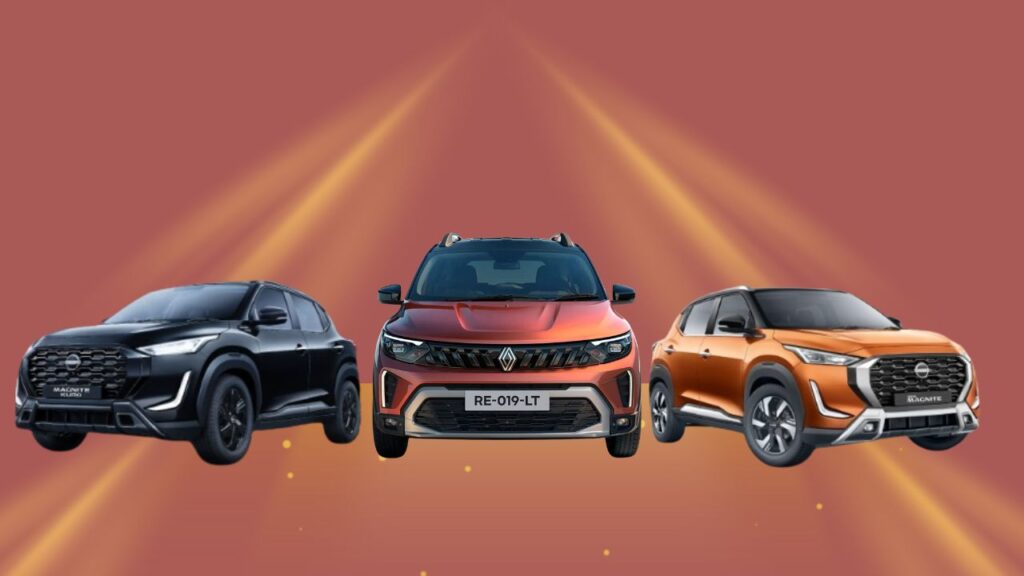
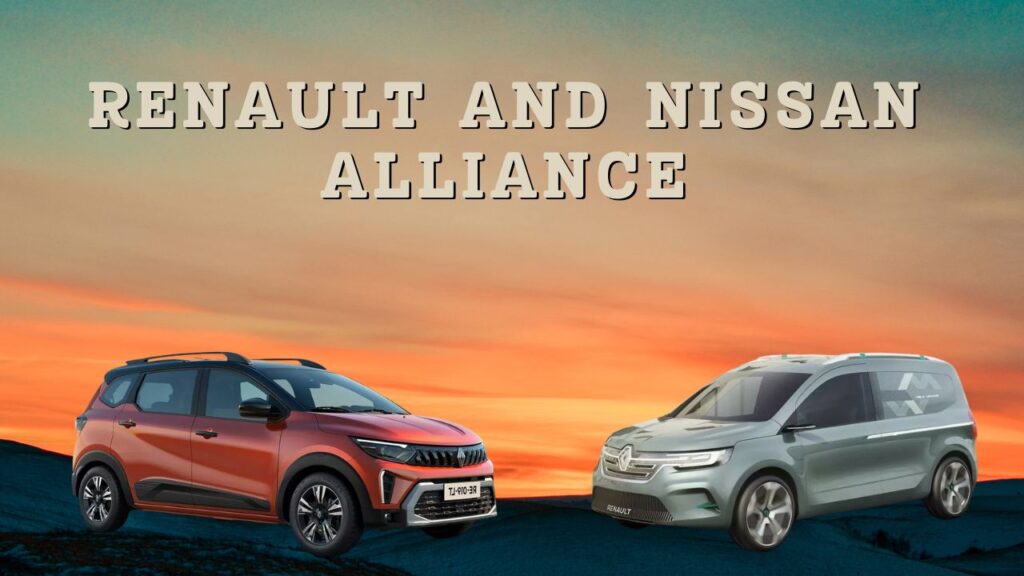
Renault and Nissan Alliance

The Renault-Nissan Alliance is one of the best examples of cross-cultural collaboration within the automotive industry worldwide. Since 1999, the strategic cooperation of two very different market players has never ceased to shake and reshape the globally automotive industry with shared technologies, economies of scale and coordinated market strategies. Now the Alliance, which has expanded to include Mitsubishi Motors, oversees eight major automotive brands, is one of the largest automotive groups in the world in terms of sales volume. 

From Rescue to Revolutionary Partnership History

The Founding Era (1999-2003)

The Renault-Nissan Alliance was born out of a time of crisis for Nissan. In 1999, the Japanese carmaker was on the verge of collapse and was seeking a strategic partner worldwide. On March 27, 1999 in Tokyo, Louis Schweitzer of Renault and Yoshikazu Hanawa of Nissan concluded the historic Alliance agreement, with Renault purchasing a 36.8% equity stake in Nissan Motor for around $3.5 billion. That deal also involved the sale of a 15.2% share in Nissan Diesel and the divestiture of Nissan’s five financial units.​

Alliance making was systematic and strategically planned. From mid-1998 to March 1999, a nine-month negotiation process, the two companies pinpointed around 20 potential synergy areas and formed 21 joint study teams to conduct feasibility studies. Carlos Ghosn – who was named President and CEO of Nissan in June, 1999 and who played a key role in formulating the turnaround strategy that saved Nissan in the early days of the alliance. 

In 2001, after Nissan’s return to financial health, the partnership reached an equilibrium with a 15% stake of Nissan in Renault and a 43.4% stake of Renault in Nissan. The two companies exchanged shares, creating the basis for a truly collaborative rather than a controlling partnership. 

Early Growth and Scale Achievement (2003-2010)

The benefits of the Alliance swiftly became evident: joint buying, shared logistics and joint part development. By 2010 the Alliance was delivering annual synergies of over €1.5 billion as a result of combined purchasing, shared warehousing, combined transportation, and harmonized customs procedures over the major markets.  

Alliance With Mitsubishi  (2011-2019)

With Mitsubishi Motors weakening and struggling in 2016, Nissan bought a majority stake in the company. The year after, the Alliance revealed its “full member” concept, enabling Mitsubishi to become part of Renault-Nissan-Mitsubishi from 2017. This enabled growth of the Alliance’s global production base. The expanded Alliance was delivering €5.7 billion in annual synergies by 2017, representing a 14% increase over the previous year. 

The Alliance 2022 strategic plan, disclosed in September 2017, was expected to raise annual synergies to an aggressive €10 billion for the end of 2022. The scheme projected combined sales of more than 14 million units with revenues of $240 billion, as the three member companies shift common platform usage to cover a wider product range. 

Organizational Challenges and Transformation of the Leadership (2018-2020)

Alliance cohesion was to be greatly shaken when Carlos Ghosn was arrested in Japan in November 2018 and subsequently ousted from his executive positions at Nissan and Mitsubishi. This geopolitics crisis activated long dormant tensions between the French government’s role as shareholder and Japanese management fears of losing control.  

To help bring stability back to the partnership, Renault vowed in a legally binding commitment not to oppose the Nisan board in shareholders meetings.​

Organizational Challenges and Transformation of the Leadership (2018-2020)

In the face of these difficulties, the Alliance unveiled an all-encompassing, €2 billion, three-year cost-cutting package in May 2020 that would slash the number of vehicle platforms from seven to four and that included a “leader-follower” system where one corporate iliad develops a technology first, and others then adopt it. The mission of this structural rethink reinvented the alliance around profits from scale rather than expansion. 

Alliance 2030: The Electric and Connected Future (2020-Present)

In January 2022, the Alliance launched its most ambitious strategic plan for the future –Alliance 2030 – with a pledge to invest €23 billion in electrification over the next five years and with goals for 35 new EV models by 2030. The green roadmap identified pure-electric and intelligent connected mobility as the two key pillars for future growth. 

How the Alliance Creates Value

1. Unprecedented Economies of Scale

The reason for the Alliance’s superiority is that it combines the buying and manufacturing power of three of the world’s largest car companies. As of 2017 it was the largest car manufacturer in the world based on light vehicle sales, assembling more than 10.6 million vehicles annually. The size of the senior from translates into tangible benefits for:

Bargaining powers: The Alliance has precise bargaining powers: against suppliers, through the Renault-Nissan Purchasing Organization (RNPO), created in 2004, managing supplier negotiations for all the three partners. This line of centralized defense significantly cuts component prices. The Common Module Family (CMF) concept tries to achieve 30 to 40 percent reduction in entry costs per vehicle, and 20 to 30 percent reduction in parts costs through massive scale economies.

Platform and component sharing: Instead of developing separately, Alliance partners create modular architecture that allows global use across different brands and vehicle categories. This saves you engineering dollars and still differentiates brands. The same underbody modules, for example, can also underpin vehicles as varied as compact cars and sport-utility vehicles, even across multiple marques. 

2. Shared Technology Development and Innovation

The Alliance pools R&D investment for capital-intensive projects that individual companies might find difficult to finance alone. Prominent areas of innovation are:

Battery and electric vehicle technologies : The Alliance has pledged to renew 220 GWh of battery production capacity worldwide by 2030. 

Nissan pioneers development of revolutionary all-solid-state battery (ASSB) technology that promises to deliver twice the energy density of current lithium-ion batteries while offering one-third the charging time. The aim is to have full-scale production of the ASSB in the mid-2028, and if the future cost target of $65 per kWh is achieved to contribute to cost competitiveness against internal combustion engines.​

Alliance Creates Value

Image credit: Nissan

Common EV platforms: Presently, the CMF-EV platform that has been engineered as a modular platform for 100 percent electric vehicles underpins the Nissan Ariya crossover and Renault Megane E-Tech Electric (with more than 15 models planned for launch by 2030 on this platform, totalling 1.5 million vehicles per year).

Autonomous and connected systems: The Alliance relies on its 20 years of experience in ADAS (advanced driver-assistance systems) and robotic driving to develop the next generation of safety systems. The Alliance aims in originality and development. The Alliance foresees the use of autonomous systems on 10 million vehicles for 45 models by 2026. The joint approach to innovation is exemplified by Nissan’s award-winning ProPILOT system. 

3. Geographic Market Expansion

Add to that the geography of the two companies and the Alliance combines Renault’s strength in Europe, Latin America and Russia with that of Nissan’s in the Asia-Pacific region and strong presence in North America. Mitsubishi brings more expertise to the table in the Southeast Asian region. This geographic complementarity means that:

Joint development of the market: All the three members the Alliance, namely, are focused strategically on India where vehicle development, manufacturing and sales are coordinated. A restructuring in 2025 enabled Renault to buy out its Chennai joint venture (Renault Nissan Automotive India Private Ltd) and streamline its operations.​

Common dealer networks: The Alliance manages dealer profitability and cost reduction through the shared services center and digital platform, enabling a reduction in the cost of infrastructure duplication. 

4. Financial and Operational Synergies

The Alliance generated €5.7 billion of synergies on an annual basis by 2017, which equated to around $6.6 billion of cost reductions and revenue enhancements. These synergies come from:​

Share logistics services: The Alliance achieves more than €200 million a year in logistics synergies through sharing warehouses, containers, crates, seagoing vessels, customs procedures.

Joint financial services: The Alliance’s far-reaching combined financial and bank activities allow for better credit terms and financing fees.

Cross-manufacture of vehicles: The success in commercial vehicles highlights the advantage of cross-manufacture — the Renault Kangoo/Nissan Kubistar, the Master/Nissan Interstar, and the Trafic/Nissan Primastar all share roughly 80% of parts while still distinct brands. 

Core Innovation: Common Module Family (CMF) Architecture

The Common Module Family is the Alliance’s biggest breakthrough in vehicle development efficiency. To be clear, rather than build full platforms for single vehicles, CMF applies modular design with interchangeable “Big Modules”:

The five core modules:

  • Engine compartment module
  • Cockpit module
  • Front underbody module
  • Rear underbody module
  • Electrical and electronic architecture module 

These modules can be mixed and matched to build cars across segments and brands. As an example, a single underbody can be stretched and stretched again to produce a compact sedan, a mid-size sport-utility vehicle and even a large crossover simply by changing module sizes and configurations. 80% of the Alliance model launches between 2014 and 2016 will be based on shared platform and CMF standardisation.​

The CMF architecture evolved drastically towards the Alliance 2030 vision, with the aim of achieving 80% platform commonization by 2026 for the three member companies, in contrast to 60% currently. 

Present Status & Developments (2024-2025)

Nissan is Ready To Overcome Challenges

Nissan was under increasing pressure financially in 2024 with its net profit for the first half falling 93% and the carmaker announcing it was cutting tens of thousands of jobs. There were several reasons: obsolete products, battered brand image, competition from Chinese carmakers, import tariffs in the US, and costs of shifting rapidly to EVs.​

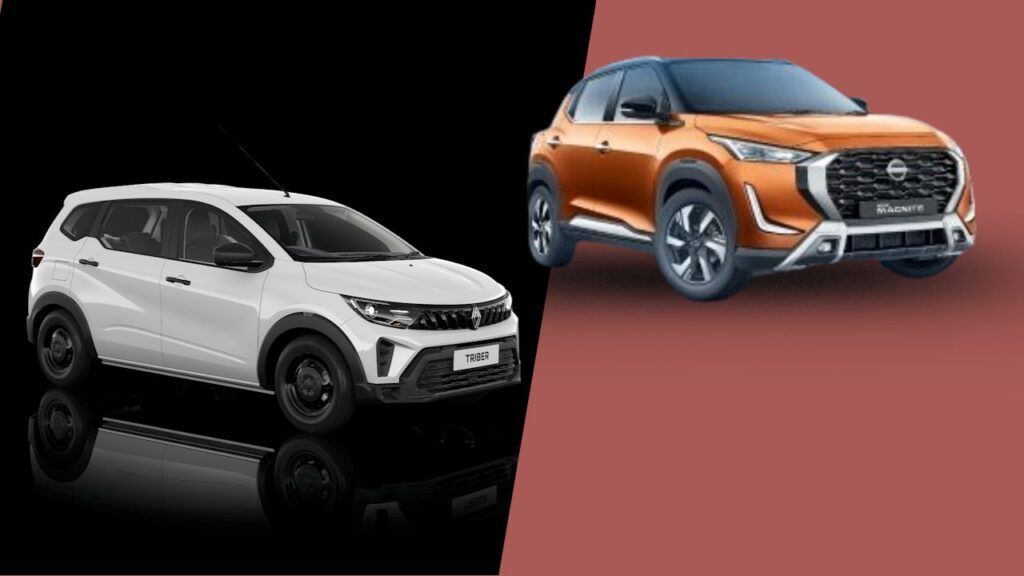
Re:Nissan Recovery Plan

Futuristic looks, a great new engine series, etc. In May 2025, Nissan’s CEO, Ivan Espinosa, presented the all-encompassing “Re:Nissan” revival strategy with a focus on achieving profitability in fiscal 2026. 
Nissan Recovery Plan

There are numerous activities to take into account including the following:­

Manufacturing restructuring: Streamlining production and slashing global capacity by 20% through cutting production plants from 17 to 10. This restructuring shift capital toward electric vehicles and autonomous technology investments. 

Cost saving: Aiming for €400 billion yen (£3.6 billion) in savings by consolidating its supplier panel to obtain higher volume from fewer suppliers and also by reducing legacy inefficiencies.​

Restructuring: Reducing top management by 20 percent, implementing a single-layer non-officer structure, and establishing a smaller, faster-moving global headquarters.

Product focus: Stopping further advanced and post-2026 development to turn 3,000 employees’ attention to cost-cutting. 

Restructured Alliance Agreement

March 2025 was a major overhaul in the Renault-Nissan alliance. The revised agreement allowed more flexibility in cross-shareholdings by reducing the lock-up obligation from 15% to 10%, thus granting more freedom to both companies in terms of shareholding. 

Renault bought 51% stake of Nissan in Renault nissan automotive India, now with this acquisition Renault got full hold on the joint venture and subsided its presence in India while $200 million to Nissan’s immediate cash. Nissan was freed from its obligation to invest in Ampere (Renault’s EV investment company) while continuing on other agreed product projects. 

Read More:- Renault and Nissan Alliance Guide – History, Benefits & Future Vision

Future Vision: Alliance 2030 Roadmap

The Alliance 2030 strategic plan is the most advanced vision of the partnership’s future, built on three pillars: 

1. Electrification Leadership

The €23 billion investment pledge for the next five years backs the development of 35 new EV models by 2030. Of these, 90% will be developed against five common EV platforms which address the major global markets and covers all vehicle segments.”​

Some major EV platforms include the following:

CMF-EV: The global flagship platform is also the first to be built on with the Nissan Ariya and Renault Megane E-Tech Electric as production models

CMF-BEV: A new small car platform for the replacement of Micra EV in Europe 

Shared platforms: Shared models for all three group companies across the C-, D- and SUV segments

Battery strategy: In addition to the 220 GWh production capacity target, the Alliance has full ownership of battery hardware and software—enabling predictive health monitoring, advanced recycling protocols and second life battery applications. 

2. Connected and Autonomous Mobility

The Alliance aims for 25 million connected vehicles exchanging data through the Alliance Cloud by 2026, versus 3 million today. This connectivity enables:​ 

Software updates: Enable all customers such as you & retailers and workshop to enjoy and get more – fend off older game features with new additional features more and services, safety improvements, and personalisation of vehicles and services.

Active driver assistance system: 10 million vehicles with autonomous driving functions across 45 models in 2026 

Google ecosystem integration: The Alliance will be the first mass-market automaker to bring the Google ecosystem to vehicles with native Google Maps, Google Assistant and Google Play integration. 

3. Sustainable and Profitable Growth

Sustainable Vision 2030 is consistent to become a full supporter of a sustainable future with other goals for the environment. The Alliance targets to reach full carbon neutrality in Europe by 2040, to play its part in wider climate goals and stay competitively profitable. 

Conclusion

The Renault-Nissan-Mitsubishi Alliance is a unique strategic automotive collaboration, which has allowed three very different companies to achieve substantial benefits and efficiencies. A relentless focus on EVs, battery technology, software-defined vehicles and autonomous driving systems positions the Alliance to lead the transformation of the automotive industry into sustainable, connected mobility.

The Alliance 2030 roadmap with its target of 35 new EV models, 220 GWh battery capacity and 25 million connected vehicles reaffirms that the tripartite cooperation, though facing short term challenges, is still strategically committed to industry leadership in an era of unprecedented automotive change. 

0

Pagani Huayra: The Perfect Fusion of Luxury, Power and Performance

Published Mar 18, 2026, 12:10 PM
Last Updated Apr 6, 2026, 5:00 AM

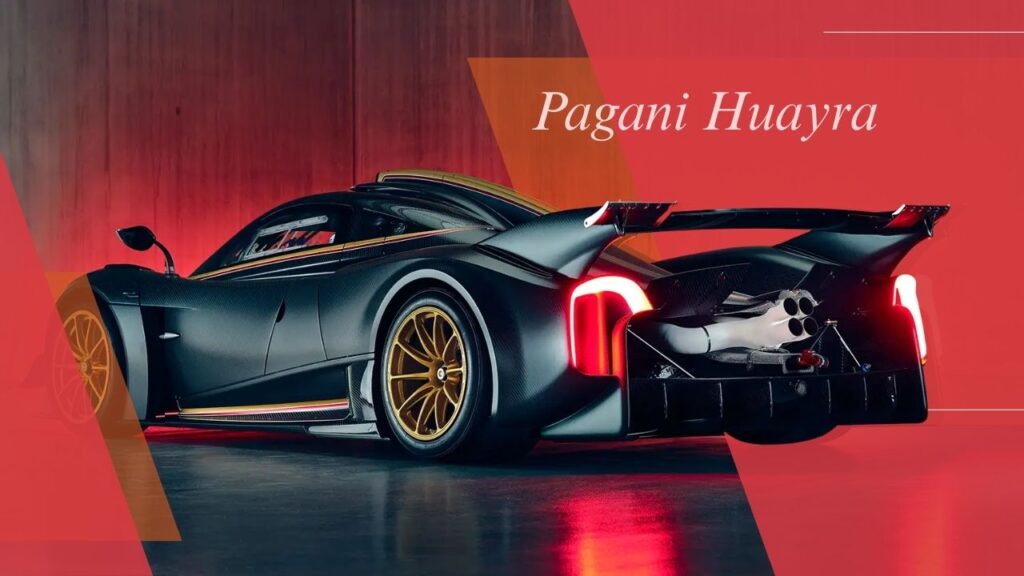
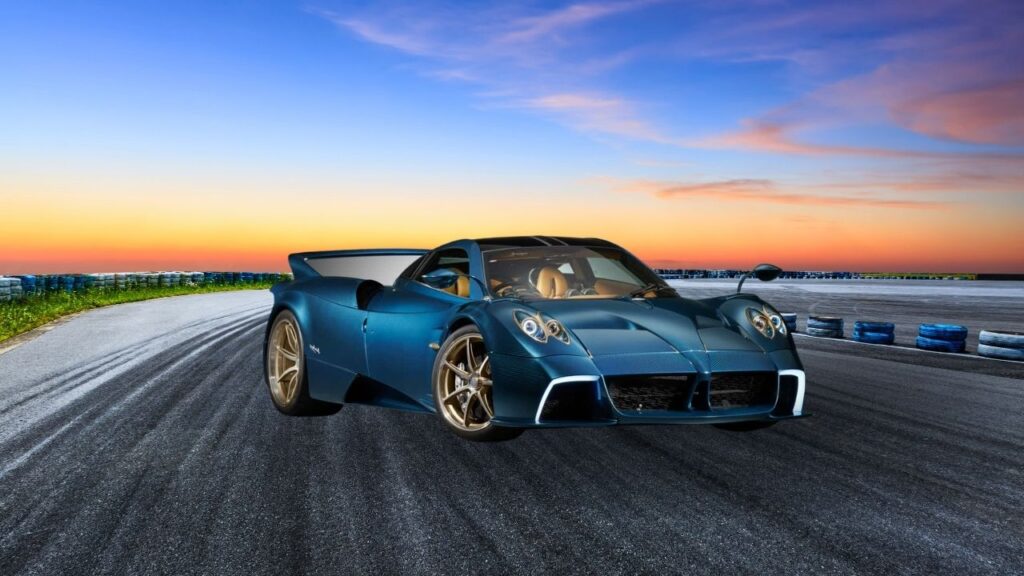
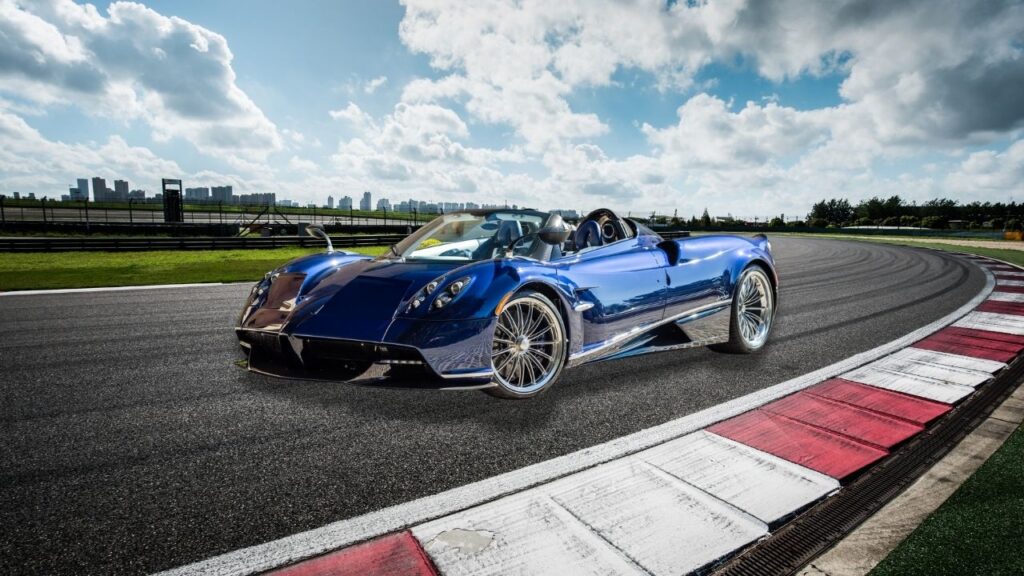
Pagani Huayra

There is a moment that every car lover dreams that they’d see so fast, so fulfillingly it will be the breathless moment in which what they are looking at is Pagani Huayra — stunningly beautiful on the first glance. Not in a bland showroom, but grazing the warmth of a spring afternoon along an highway, its active aerodynamic flaps moving in unison like the wings of a mechanical bird. It wasn’t just rolling. It was alive. 

The Wind that Whisper in Ears

There is something more than the new Zonda that was launched in 2011. Name is Huayra which opt after Huayra Tata, the ancient Incan god of wind, this hypercar came onto the scene with a presence that was almost mythical. From the rolling hills of Modena, Italy, a car was born that solidified what it truly means to pair art with engineering. 

The track made by Horacio from a tiny garage in Argentina to the heart of supercar manufacturing sounds like a fairy tale. While playing outside, other kids could see his obsession as he crafted tiny cars as a boy that would eventually bring him to the workshops of Lamborghini, and ultimately to his own atelier. 

The Huayra is the apex of that obsession – a car crafted by the ideas of the Renaissance master that “Art and Science are two disciplines that must walk together hand in hand.

A Design That Breathes

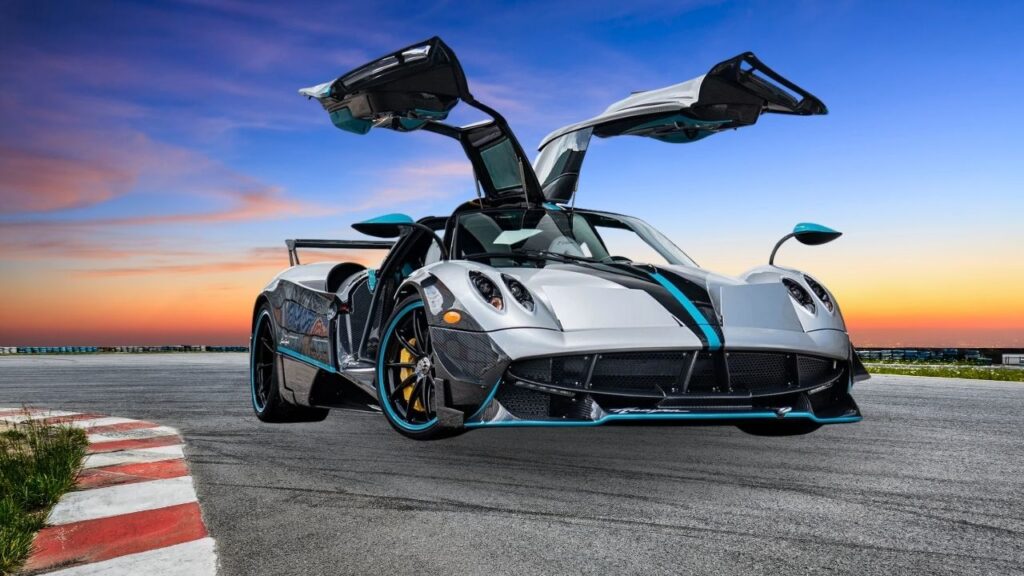
Stand in front of a Huayra and you’re caught between wanting to drive it and wanting to photograph it. All the different elements have a function, and none feels pre-meditated. The gullwing doors don’t simply open, they dance to uncover a cabin more akin to the inside of a luxury watch than a car. 

The active aerodynamics—four movable flaps that can move independently make the car look like it is alive, as if it is breathing, reacting to the air flowing along its carbon-fiber skin 

Built on Premium Materials

What hits you right away is the detail that borders on obsessive. The titanium exhaust system is under 10 kg, hand crafted with hydroformed joints that reduce back pressure while producing a sound that automotive journalists have described as operatic.

Built on Premium Materials

The Carbo-Titanium monocoque — a material so advanced, Pagani had to invent it — delivers the stiffness of steel for a fraction of the weight. This is not just engineering, it’s metallurgy art. 

Powerful Engine 

Pagani Huayra is built on Mercedes-AMG powerful engine of 6.0-litre twin-turbo V12 with alteration to fit in. Now it gives 864 hp of power to run without interruption in its latest iterations and it also provides 840 Nm of torque that can be reached already at 2,800 rpm. 

But here’s more to the story that Horacio wants. It later became naturally aspirated despite its forced induction because of a genius mind that suggested minimizing the turbo lag and sharpening the throttle response.

Speed

The Huayra became the answer to the jet-like speed question with a top speed of 238 mph means you can end up racing up to 383 km/h. The fastest speed it can give is 0-60 mph (97 km/h) in 2.8 seconds and lateral acceleration of up to 1.66 g on Pirelli tires. 

Despite many hypercars, the Huayra is amazing and smooth, it talks like a living cell in our body tries to run as fast as it can. It’s in the steering wheel, it sings through the chassis, and it makes 700-plus horsepower seem tame, perhaps even a little kind.  

Transmission

What’s particularly intriguing, is that Pagani purposely opted for a single-clutch sequential transmission rather than a dual-clutch transaxle. The reason? Weight. If Horacio adds dual-clutch then the weight of the vehicle will increase to 70 kilos, this adamant that he felt would more than offset any gain from faster shifts. 

Pagani Huayra is entirely built from aluminium to keep on the minimum weight, at 96 kilograms that’s something understandable with marvel package efficiency of transmission. 

An Interior That Transcends Time

The interior is tremendous once you experience it behind the wheel then there’s no going back. It offers stuff that carmakers never dreamed of using. Machined aluminum, leather that’s made by the same artisans who supply haute couture, and using carbon fiber with refinement is so exquisitely finished that you’d love to watch it. 

An Interior That Transcends Time

The steering wheel is not made to be confused with buttons and distractions, it’s so simple that you will hit the road with raw immediacy. Each and every lever is crafted to the same exacting standard as a luxury watch. Pagani produces approximately one car per week, and Each is bespoke to its buyer. 

Personalization of Huayra 

The “Grandi Complicazioni” division caters to unique demands that would scare other makers such as the Huayra Epitome, the first and only Huayra ever to feature a manual gear shift, for the ones who live for the most mechanical connection between human and machine. 

With this degree of personalization, no two Huayras are alike; each is a moving autobiography of the tastes and wishes of the owner. 

The Evolution Continues

The Huayra story is not frozen in time in the past. The Huayra BC, named for Benny Caiola, Pagani’s first customer and a man who saw Horacio’s vision well before anybody else took the boundaries up even further with 1.8 G of lateral acceleration, the most that has ever been recorded for a road car on street tires.

The Evolution Continues

The Huayra Roadster did the unthinkable by being lighter than the coupe which it was made from advanced Carbo-Triax HP52 composite materials that increased stiffness by 52% while reducing weight by 80 kilograms. 

New Gen Huayra 

In the latest generation, the Huayra R Evo Roadster is the ultimate track-focused expression of this lineage.With a naturally aspirated 900-horsepower V12 engine that screams to 9,200 rpm, “codalunga” long-tail aerodynamics that adds 45% more downforce, and a weight of only 1,060 kilograms, it’s essentially a Le Mans prototype donning Pagani’s signature styling. 

But even this extreme machine carries Horacio’s philosophy that “the customer is the only real employer”—each is built up as a result of direct dialogue with its future owner. 

See:- Best Self Driving Car in India

Conclusion

The Pagani Huayra is emblematic of a very rare thing in today’s world: an object designed and built with no compromise, by human hands and by human eyesight. It’s proof that when art and science actually do go hand-in-hand, what you get isn’t just transportation, it’s transcendence. From the moment those gull-wing doors lift like a raptor taking flight, to the instant the V12 clears its throat and roars, the Huayra shows us why we fell in love with cars to begin with. 

Amid an industry racing toward electric and self-driving cars, the Huayra is a love song to the combustion engine, to hand craftsmanship, to the concept that driving ought to be an emotional experience. It’s not the world’s fastest hypercar, or even the most technologically advanced. 

But it may be the most soulful — the perfect combination of luxury, power and performance that pays homage to the wind god from which it takes its name, lifting you up and taking you to the realm of automotive dreams. 

0

New Hyundai Flagship Models Arriving Soon to Dominate Indian SUV Market

Published Sep 25, 2026, 11:10 AM
Last Updated Sep 26, 2026, 8:03 AM


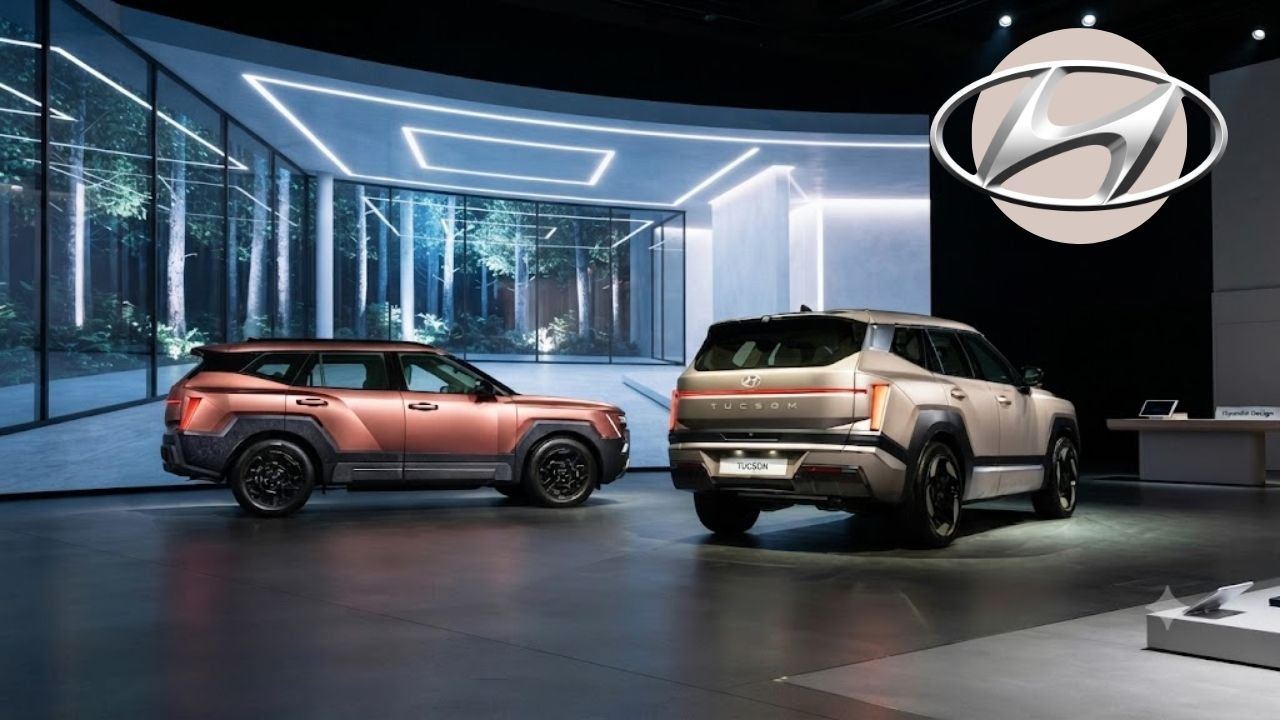
New Hyundai Flagship Models

The New Hyundai Flagship Models are preparing to dominate the Indian SUV market. The 2026 end and 2027 is holding off the new vehicle purchase for both cars. The New 2027 Hyundai Tucson and Hyundai Bayon are going to be in every car buyer’s radar. However, Tucson lunch date is unconfirmed so early buyers should reconsider it.

One is a massive generational shift for Hyundai’s premium offering, pushing hard into luxury territory. The other is a compact crossover meant to bring European styling to the sub-15 lakh bracket. Here is exactly what you get with both models, how they stack up against the competition, and whether you should actually wait for them.

Why the Tucson Is Coming Back at All

The current Tucson stopped coming in the market in 2025 because it doesn’t hold its foot against premium D-segment rivals. It seems like a second chance for the model to return rather than a routine update. Hyundai clearly thinks the formula needs to change, because what it has revealed globally is not a mild facelift — it’s a full fifth-generation redesign.

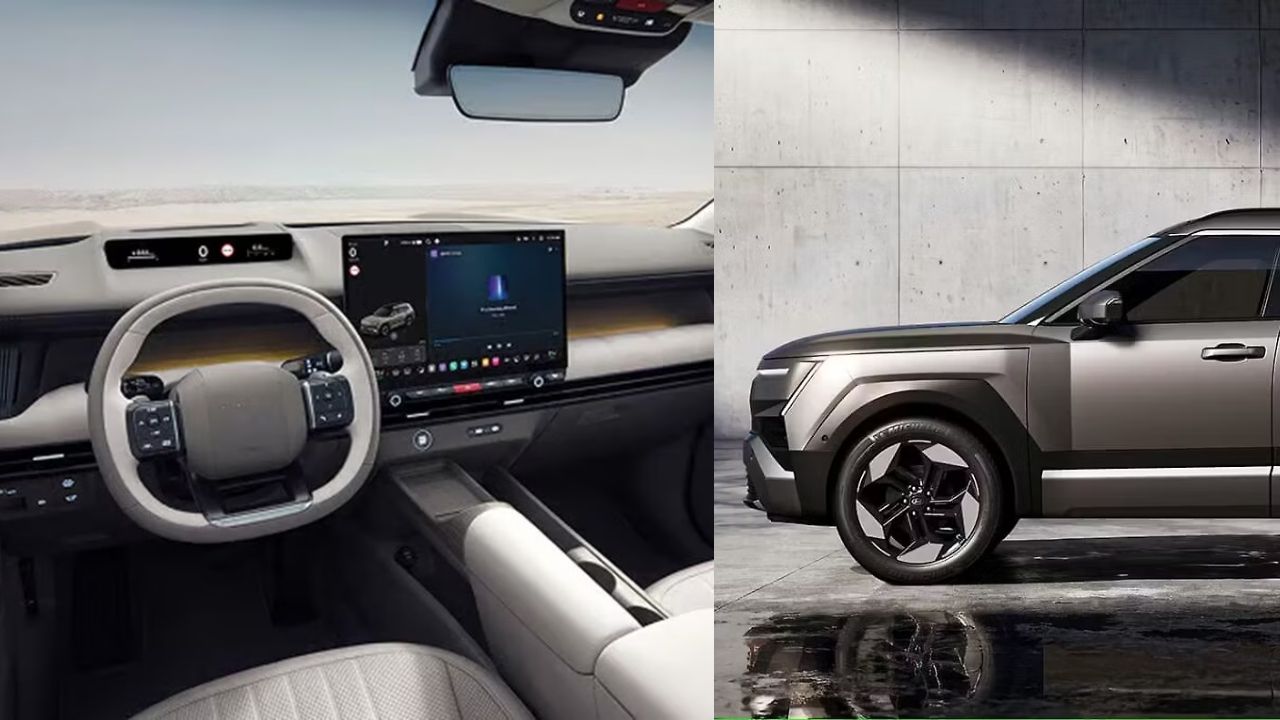
The new-gen Tucson has been revealed with a radical boxy design, larger dimensions and Hyundai’s new Pleos infotainment system, and it could also preview future India-bound models. That last part matters for Indian buyers specifically, because Hyundai has a habit of trickling design language down from global flagships into mass-market SUVs — the current Creta’s styling cues borrowed heavily from the previous Tucson and Santa Fe, and this cycle looks set to repeat.

Read Also 👉  Maruti Suzuki Cars Are Coming To India by 2027 

2027 Hyundai Tucson: Boxier, Bigger, & Hybrid-Powered

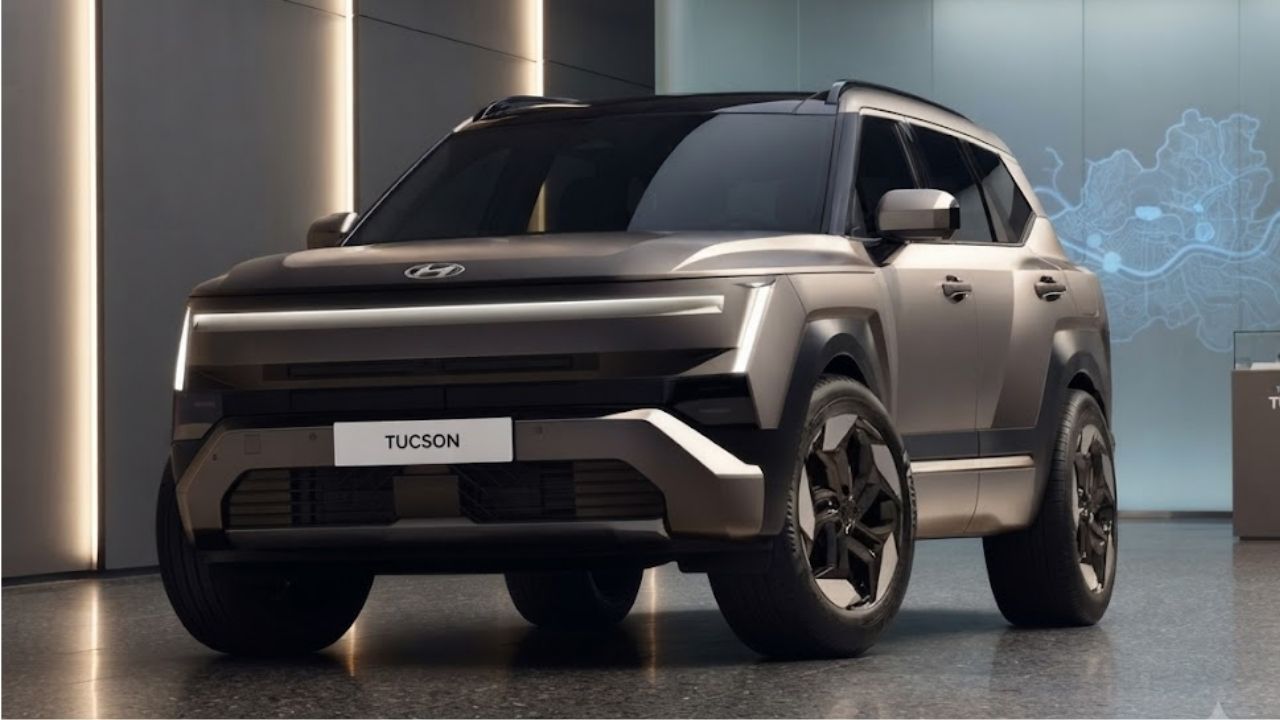
The confirmed specification of the fifth-generation Tucson is revealed in South Korea but Hyundai hasn’t announced India specific technical details yet. Current model has sharp flowing lines but 2027 Tucson adopts the “Art of Steel” design language. The design is boxy, upright, and rugged more like a scaled-down Palisade.

2027 Hyundai Tucson

Tucson Dimensions: Growing in Every Direction

The 2027 Hyundai Tucson model is significantly larger, up to 4.7 meters long, 40mm wider and 20mm taller than the outgoing model. It’s coming with more wheelbase — 30mm to 2,785mm.

So it resolves the current model rear-seat space problem with extra 29mm of height which gives more headroom to sit in the back seat comfortably. The rear doors are now changed with an 83-degree angle to provide easier access. Tucson is behaving like a full-size SUV lion who accomplished its territory. 

Powertrain: The Hybrid Push

The specifications are still unconfirm for the Indian model but global model reveal highlights a major shift toward hybridization. Its petrol engine of 1.6L is producing 193 bph of power and 265 Nm of torque. It runs on an 8-speed automatic transmission which combined with a next-generation hybrid system for a total output of 245hp. 

For a Hybrid set up, a 1.6-litre turbo-petrol combined with a next-generation hybrid system for a total output of 245hp on a 8-speed automatic transmission. The power like this in a hybrid is absolute engineering. Hyundai claims an impressive fuel efficiency figure of 17.4kpl for this setup.

Tucson Dimensions

Tech and Cabin Upgrades

The cabin receives a massive overhaul, centered around the new Pleos Connect infotainment system running built-in Gleo AI. The central touchscreen will be available in massive 12.9-inch or 17-inch sizes depending on the trim. Hyundai smartly retains physical controls for essential functions, avoiding the trap of hiding climate settings in endless touchscreen menus.

Safety gets a boost with 9 airbags as standard, an updated navigation-based adaptive cruise control, and a memory-based reverse assist that can automatically steer the car backward along its previous path.

Read Also 👉 Why Salaried Indians Are Buying Mercedes Cars

Tucson Competitor Comparison: The Luxury SUV Battle

The current Tucson rivals in the Indian markets are Jeep Compass and VW Tiguan but the new model is extended its size and hybrid powertrain which also raises the price and pushes it into entry-level luxury SUVs.

Feature 2027 Hyundai Tucson (Global Spec) Jeep Compass Volkswagen Tiguan
Engine 1.6L Turbo / 1.6L Hybrid 2.0L Diesel 2.0L Turbo Petrol
Power 193hp / 245hp 170hp 190hp
Dimensions (LxWxH) 4700 x 1905 x 1685 mm 4405 x 1818 x 1640 mm 4509 x 1839 x 1665 mm
Key Tech 17-inch screen, Reverse Assist 10.1-inch screen 8-inch screen

Hyundai Bayon: The Premium Compact Crossover

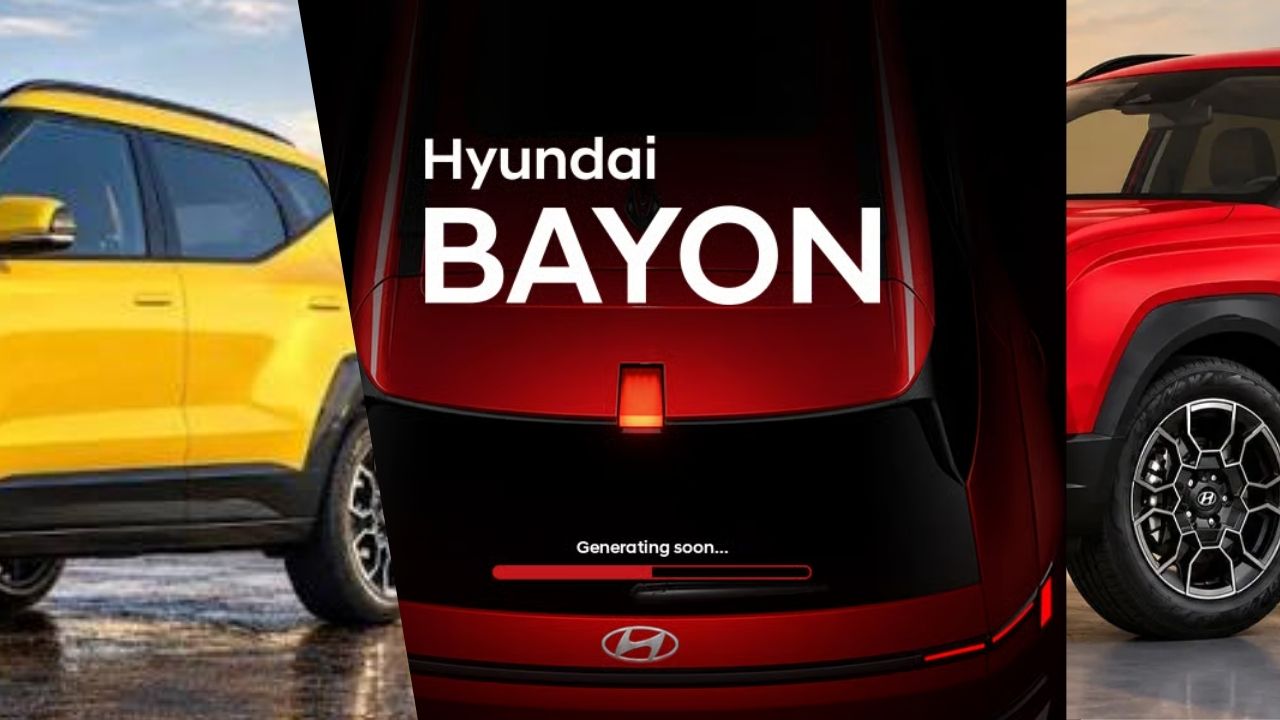
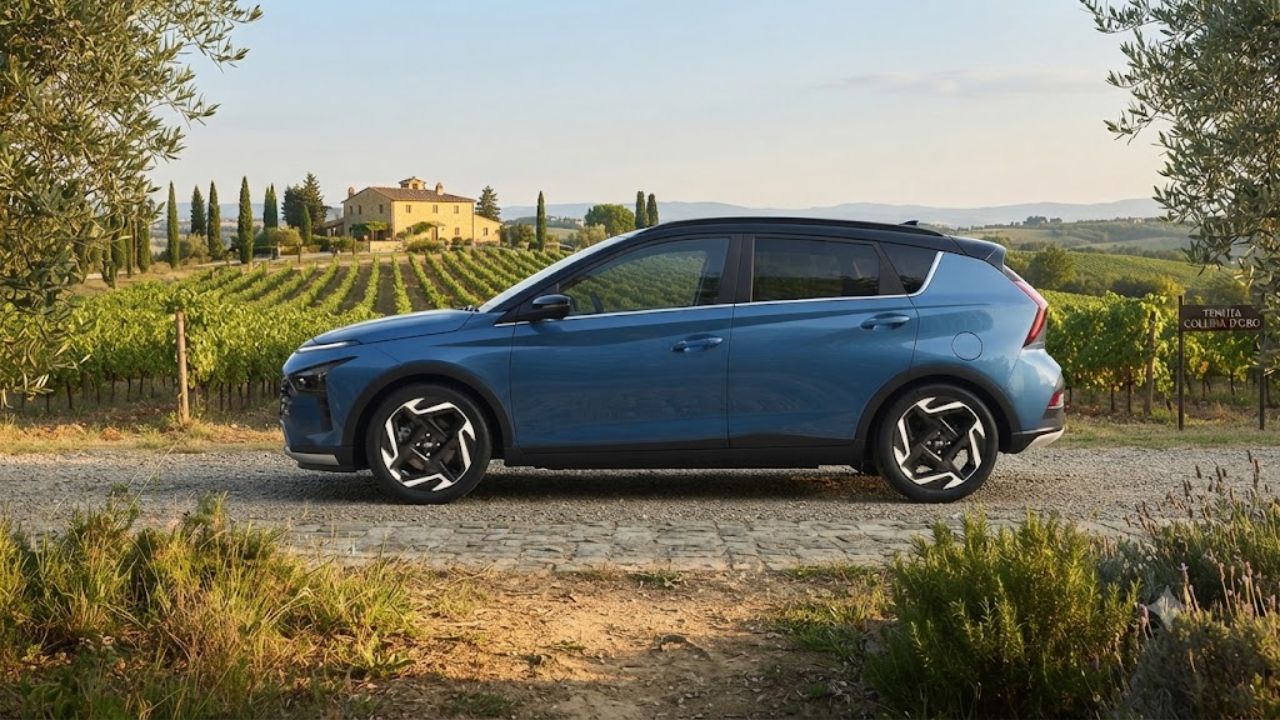
While the Tucson goes upmarket, the Hyundai Bayon aims to fill a gap in the highly competitive compact SUV segment. Bayon will arrive in the festive season of 2026 at a price range of ₹10 lakh — ₹15 lakh (ex-showroom). It is basically a crossover version of the i20 platform designed specifically for the European market.

The Hyundai Bayon specifications for the Indian model is based on the international Bayon’s underpinnings. It is a compact SUV positioned between Venue and the next-generation Creta, not too small, not too expensive. Hyundai opened bookings across dealerships and its website on September 23, 2026. 

Hyundai Bayon

Bayon’s Engine That Aim High

The current model carries a 1.0L petrol engine which gives 90 bhp of power and 172 Nm of torque. The transmission is up to 7-speed DCT automatic while the upcoming model brings 6-speed manual and CVT automatic options. It extended the engine to 1.5L 4-cylinder petrol producing 115PS of power and 144Nm of torque. This is the same engine set up that Creta and Verna uses.

But Bayon is the first Hyundai model engineered with a factory-fitted CNG option in a 4.3 metres long vehicle. It expects to use a 1.5L Hy-CNG dual-cylinder setup.

Features That Sets Hyundai Bayon Apart

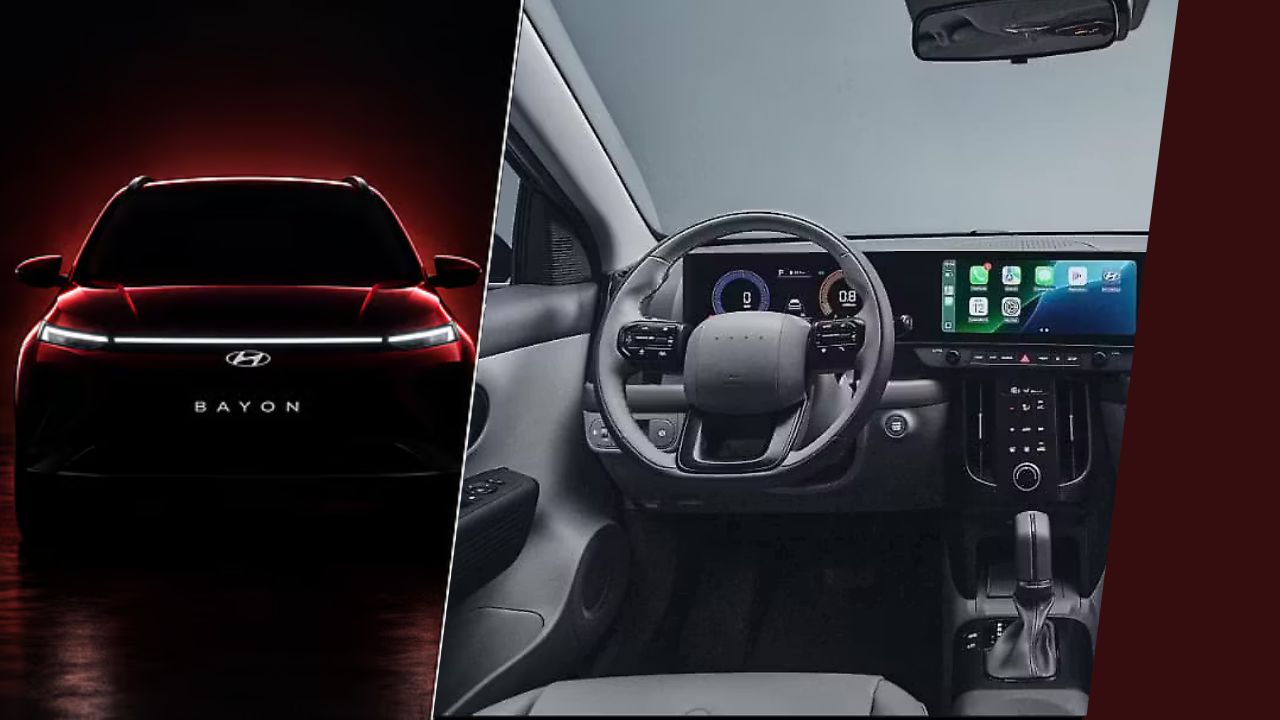
Hyundai is known for packing its cars with features, and the Bayon is no exception. It brings a full convenient setup — a dual 10.25-inch screen for infotainment and digital cluster. It offers full experience to admire nature with a panoramic sunroof, and ventilated seats. The connectivity is reliable, providing wireless Android Auto/Apple CarPlay. View all corners outside the car with a 360-degree camera. The Bayon is a full-packed flagship segment that offers a premium experience.

Features That Sets Hyundai Bayon Apart

With advanced features, Hyundai never compromising on the safety of their customers. Expect a Level 2 ADAS suite and 6 airbags as standard, meeting the growing demand for safety tech in the Indian market. 

Hyundai has confirmed the Bayon uses the Art of Steel language featuring sculpted surfaces and sharp character lines. Inside, the cabin takes heavy inspiration from the Brazil-spec fourth-generation i20. Hyundai also teased the Wheel specifics, it offers 17-inch dual-tone machine-cut alloy wheels wrapped in 215/55-section tyres.

Hyundai Bayon Rivals: The Crowded Compact Segment

The Bayon will battle the Maruti Suzuki Fronx, Tata Nexon, and even its sibling, the Venue.

Feature Hyundai Bayon (Expected) Maruti Suzuki Fronx Tata Nexon
Engine 1.0L Turbo Petrol 1.0L Turbo / 1.2L NA 1.2L Turbo / 1.5L Diesel
Max Power ~88.5 bhp 100 bhp / 89 bhp 118 bhp / 113 bhp
Price (Estimated/Current) ₹10 – 15 Lakh ₹7.51 – 13.04 Lakh ₹8.00 – 15.50 Lakh
ADAS Yes (Level 2 Expected) No No (Only basic features)

How the Hyundai Bayon Stacks Up Against the Victoris

The most bigger rival is Maruti Suzuki Victoris since it already occupies the space the Bayon is aiming for and uses the same powertrain strategy. Victoris mild-hybrid petrol price starts at Rs 10.50 lakh for base variant and goes up at Rs 19.22 lakh for the top AWD automatic variant.

While the pricing for CNG and strong Hybrid variants can rise up to Rs 14.57 lakh and Rs 19.99 lakh respectively. Check the dealership price at your location because the total price depends on the additional charges of your city. 

Hyundai Bayon Stacks Up Against the Victoris

If the Bayon really does launch at Rs 9–14 lakh, its top-spec CNG or automatic variant would undercut the Victoris’s equivalent trims by a meaningful margin, while offering a smaller footprint. The trade-off is obvious: the Victoris gets a strong-hybrid option and AWD, neither of which the Bayon is expected to offer at launch. 

If fuel efficiency and hybrid tech matter more to you than price, the Victoris still has the edge on paper — but if you want CNG practicality in a package smaller and cheaper than a full-size Creta rival, the Bayon is shaping up to be the more sensible buy.

Should You Wait for the Tucson or Buy Now?

This is really two different buyer conversations, because the Tucson and Bayon aren’t competing for the same money.

Hyundai has not announced the new 2027 Hyundai Tucson price and specification details for India. Nobody knows the actual launch date yet so treating any number online is a guess. Wait for this boxier Art of Steel design and the promise of a proper generational leap in refinement and tech, if you are not in a hurry to buy a vehicle this year. Buying any — a Skoda Kodiaq, Tata Harrier, the same segment makes more sense.

If you’re shopping in the Rs 10–15 lakh compact SUV space, the Hyundai Bayon is a much more actionable wait. Bookings have already opened, the festive-season launch window is real and near-term, and the CNG option addresses a genuine gap that the Victoris and Kushaq don’t fully cover at this price point. Unless you need a car immediately, holding off a few weeks to see final Bayon pricing and variant specifics is a low-risk decision — you’re not waiting on a car that might slip by a year, you’re waiting on one that’s already taking bookings.

Read Also 👉  Rolls Royce Unveils Custom Car Using Sea Snail Shells 

Conclusion 

These New Hyundai Flagship Models are expanding the company’s territory in the powerful SUV segment. The new 2027 Hyundai Tucson is coming back with refined components to deliver an excellent driving experience. On the other hand, Hyundai Bayon is launching in this year’s festive season with a CNG option, a direct rival to Victoris, Fronx, Nexon. Indian buyers who are looking for a new vehicle in a range of Rs 10 lakh can consider this flagship model to buy.


0

Kia Carnival Hybrid Price In India And Additional Cost For Accessories

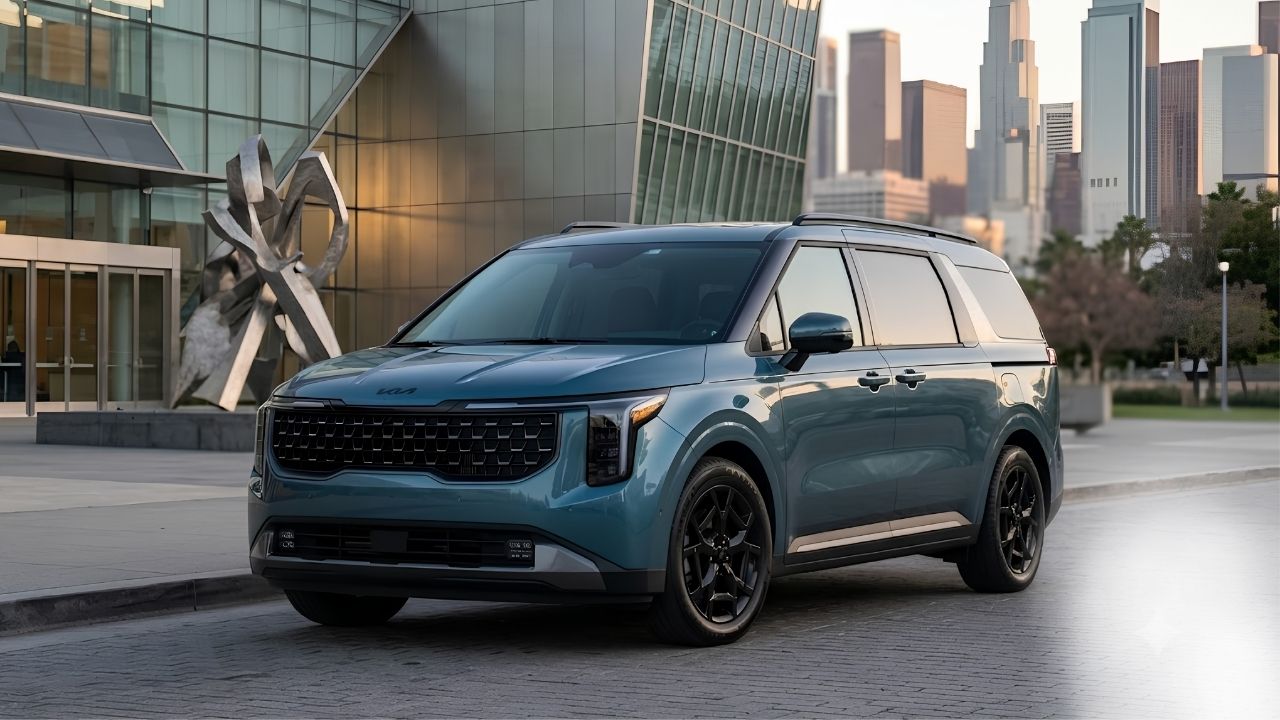
Kia Carnival Hybrid

Waiting for two days more for the hybrid is worth it if you are buying for city errands. Kia Carnival Hybrid price in India is not officially announced yet, you will know at the time of launch on September 4, 2026. Expected to arrive with more high-end features, better mileage, and comfortable seating along with smart driving assistance.

Other than that, there are essential accessories that keep the interior manageable. Additional cost for accessories mostly added on-road price but check whether you need it or not. In this segment, it could be expensive but some of them are non-negotiable so let’s see the important accessories cost and Kia Carnival Hybrid expected price.

Will Carnival Hybrid be More Expensive Than Its Diesel Model?

Kia hasn’t published pricing for the Carnival Hybrid. The car will sit alongside the existing diesel model rather than replace it on September 4. We now know today is diesel Carnival’s ex-showroom price of ₹59.65 lakh, sold in a single fully-loaded Limousine Plus trim. The on-road price will sum up to around ₹70-75 lakh depending on your city’s registration and insurance costs.

Automotive industry reporters suggest that hybrid models put at an accessible entry point into Carnival lineup rather than premium over diesel and this positively makes sense because parallel-hybrid systems are usually cheaper to build at scale than a big turbo-diesel and 8-speed gearbox. 

A working estimate of roughly ₹55-65 lakh ex-showroom is a reasonable range since it’s a hybrid model but it’s not a quote so treat this range as a guess point. Wait for Kia’s confirmed range on the 4th before making a decision to buy.

Read More 👉 New Kia Niro EV Price 2025 – Full Details, Features & Latest Updates

Features And Performance

Most of the features and specifications of hybrids are similar from diesel Carnival including body size but we can expect powerful powertrains that gives you new experience.

Powertrain

The Carnival Hybrid swaps the current 2.2-litre diesel (193 PS, 441 Nm, paired with an 8-speed automatic) for a 1.6-litre turbo-petrol engine working with a 54kW electric motor through a 6-speed automatic. 

Combined output is expected to land around 242 HP and 367 Nm, matching the figures Kia quotes for this powertrain in international markets. 

Kia Carnival Hybrid Features And Performance

Fuel Economy

The system also gets three levels of regenerative braking, which is what’s expected to close the efficiency gap with the diesel — global specs suggest fuel economy near 14.5 km/l for the hybrid, close to the diesel’s ARAI-rated 14.85 kmpl, but with petrol running costs and none of the diesel’s low-end clatter.

Body Size & Exterior

Dimensions carry over largely unchanged: 5,156mm long, 1,994mm wide, 1,740mm tall, on a 3,091mm wheelbase — so the hybrid isn’t a smaller, more city-friendly Carnival. It’s the same big MPV with a different heart.

Carnival Hybrid Rival in The Indian Car Market

If you’re cross-shopping, the decision splits pretty cleanly along how you actually drive. The diesel Carnival’s 441 Nm of torque and proven 8-speed gearbox still make sense if you’re doing long, loaded highway runs regularly — that’s where diesel torque earns its keep. The hybrid makes more sense if your driving is a city-highway mix, since the electric motor and regen braking do their best work in stop-start traffic where the diesel is least efficient.

In this segment, one more name is sitting on the top: Toyota Vellfire, pricing starts at ₹1.20 crore and runs to ₹1.30 crore ex-showroom so it’s not a really competitor of Carnival in price. In functions, it comes with a 2.5-litre hybrid engine that makes 190 HP of power with 240 Nm torque which is less than what Kia offers, but Vellfire claimed 19.28 kmpl with a more opulent cabin in higher trim.

If your budget tops out anywhere near ₹60-75 lakh, the real comparison is Carnival diesel vs. Carnival hybrid, not Carnival vs. Vellfire.

What’s Different to Look At, Not Just Drive

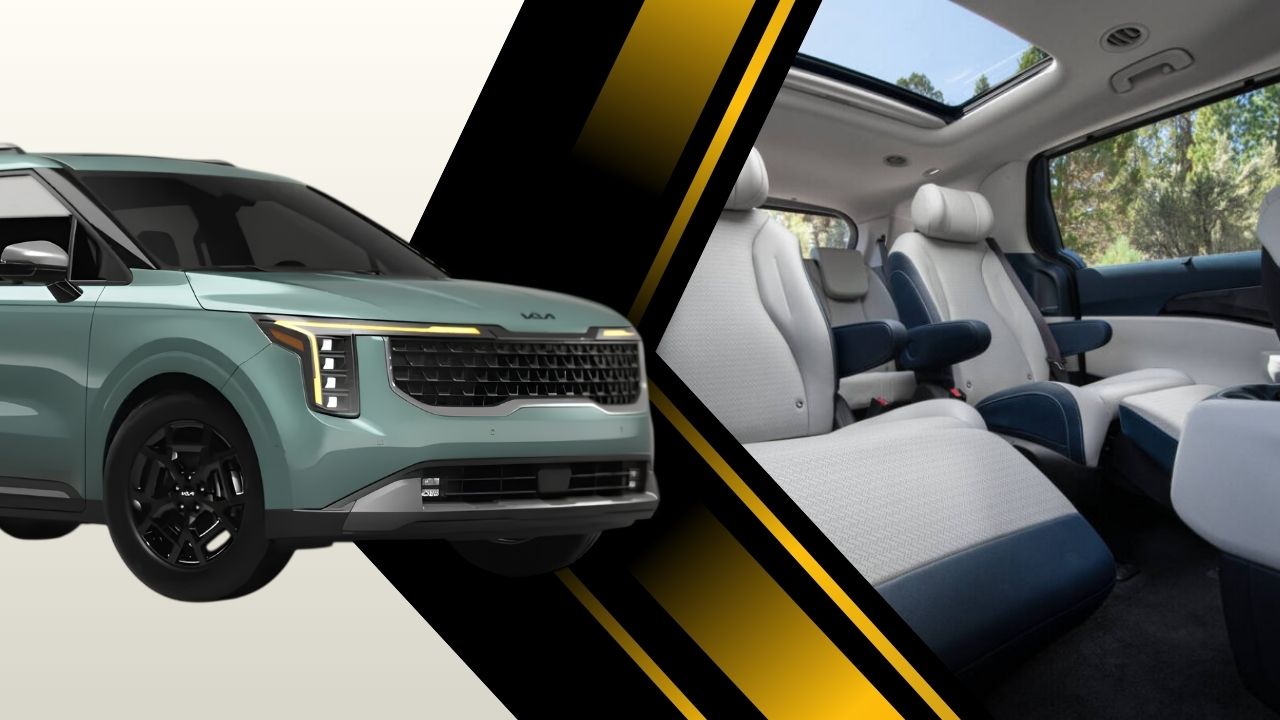
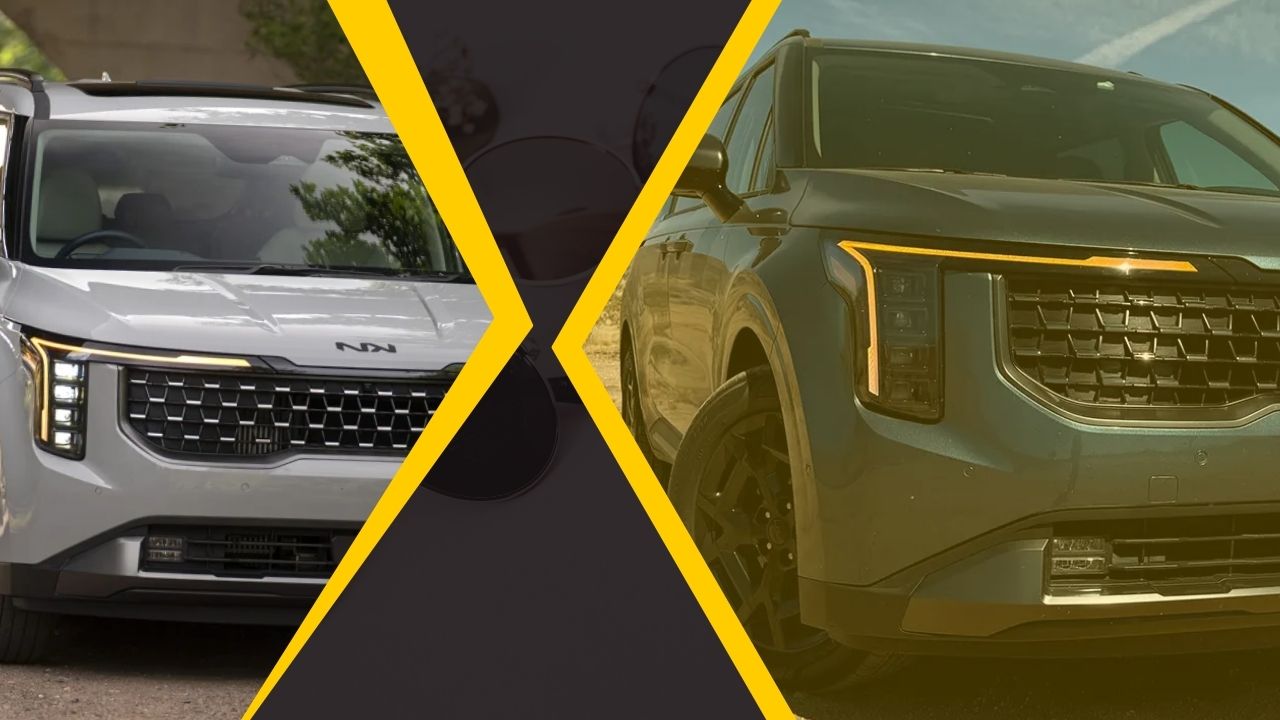
The hybrid isn’t just a badge change. It will be a more futuristic and sleek-packed design with 19-inch glossy black alloys and a Dark Edition trim option. Front and rear full LED lighting is making a presence remarkably extinguish. For higher trims, relaxed second-row seating with power adjustment, recline, and ottomans, plus heating and ventilation is a peak comfort. Kia is leaning into chauffeur-driven appeal rather than turning it into a conventional family MPV.
Read More 👉 EMI vs Lease: Which Is Better If You Plan to Upgrade Your Car Every 3 Years 

Additional Cost For Kia Carnival Hybrid Accessories

Accessories are a separate line item worth buying along with a new car to secure it from daily dirt and keep it refreshed. It’s mostly added in an on-road price quote but Kia hasn’t published a hybrid-specific accessory catalogue yet. So we should look into the Kia-authorized accessory for the current Carnival which is a reasonable stand-in given the hybrid shares the same body and cabin.

Essential Accessories to keep the car clean and refreshed while finishing city errands or going on a longer trip, comfort and styling comes from little care and small things. If you are buying a Kia Carnival Hybrid. Keeping the add-ons in the list will increase a little money but it will be worth it.

Accessory Price Range (₹)
Lifelong 7D floor mats (full set) 8,000 – 10,000
Leather-look seat covers (full set) 8,000 – 10,000
Car garbage bin 760 – 900
Tissue box holder 410 – 480
Microfiber cloths (set) 200 – 420

If you want more styling and make it look like a premium car then adding a few more things like a genuine chrome accessory kit, door visors, or a body cover is enough to make your car attractive. There is no fixed mention price because it is quoted per-order rather than listed at a fixed price. So ask your dealer for an itemized accessory bundle rather than guessing.

One outlier worth a premium aftermarket horn upgrade with relay was priced around ₹2,600 — a small but common add-on for MPV owners who find the stock horn underwhelming.

Kia Carnival Hybrid Accessories

None of this is optional-optional if you’re buying a car in this price bracket — dealers routinely bundle ₹40,000-60,000 worth of mats, covers, and styling extras into the on-road price quote, and it’s easy to miss that this is negotiable.

Should You Book Now or Wait Two Days?

If you’re not in a hurry, waiting until September 4 costs you nothing and gets you a real number instead of a range. If you’re already leaning diesel because you need the towing torque or you’re not interested in a wait, there’s no reason the hybrid launch should change your plans — you’re not cross-shopping the same use case anyway. 
Either way, treat every “Carnival Hybrid price” you see published before the 4th, including the estimates in this piece, as a placeholder until Kia says otherwise.

Read More 👉  Ceramic Coating vs PPF For Kia Carnival Hybrid 2026 

Conclusion

The Kia Carnival Hybrid is worth waiting for if most of your driving happens in the city, especially if you want a quieter, smoother MPV without giving up the Carnival’s space and premium features. But don’t book it based on the ₹55-65 lakh estimate yet — Kia’s September 4 pricing will determine whether the hybrid is genuinely better value than the ₹59.65 lakh diesel.

If your priority is highway touring, full-load performance and maximum torque, buy the diesel. For a mixed city-highway lifestyle, the hybrid is the version to watch. For additional cost for the accessories to buy along with a new car can be around ₹40,000-60,000 other than the cost of the car.

So wait for the hybrid’s official price point from Kia then compare it with the final on-road price of diesel, if Kia manages to keep the hybrid near the ₹60 lakh mark, that’s a win-win for urban buyers.

0

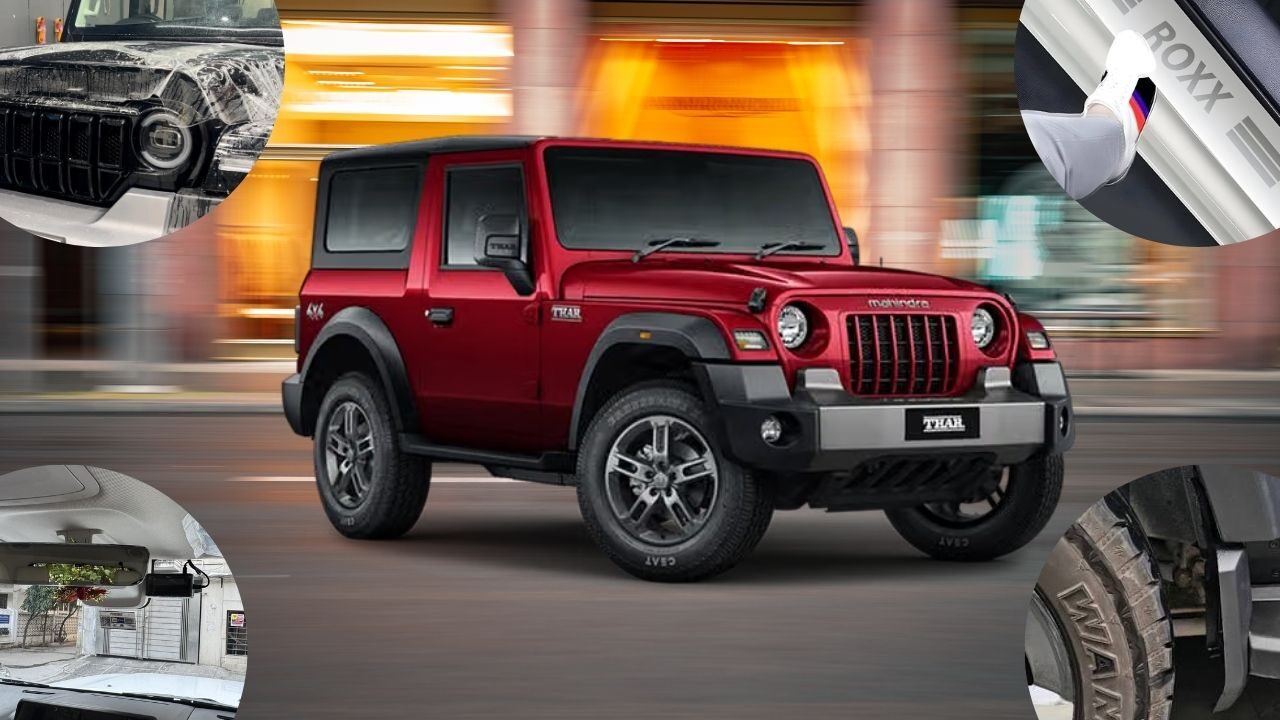
Thar Roxx Accessories to Buy Online That Actually Worth Buying in 2026 

Published Aug 13, 2026, 12:59 PM
Last Updated Aug 31, 2026, 6:55 AM

Thar Roxx Accessories

Walk into a Mahindra dealership after booking a Thar Roxx and someone will hand you an accessories catalogue before you’ve even signed the delivery paperwork. You should check Thar Roxx Accessories to buy online because they offer you a long list — everything from a ₹300 alloy wheel hub cap to a ₹1.35 lakh paint protection job and almost nobody explains which of it actually matters. 

Add in the aftermarket sellers online pushing “off-road bumper guards” that are quietly illegal, and shopping for Thar Roxx accessories turns into a research project you didn’t sign up for. This guide sorts through what’s genuine in Thar Roxx Accessories Online to buy and what’s worth skipping.

Mahindra Genuine vs. Aftermarket Accessories: How to Spend Smart on Upgrades 

Mahindra sells its own accessory range through its dealer network and its official m2ALL online store. These are engineered to bolt onto the Thar Roxx without cutting or drilling anything, and they don’t touch your warranty. The trade-off is price — genuine parts routinely cost double or triple what a comparable aftermarket version runs.

That’s where sellers like Drivestylish, Carhatke, Elegantautoretail, and Automods.in come in. They stock everything from seat covers to LED light kits at lower prices, with faster shipping and a bigger range of styling options than any dealership carries. The catch is consistency — quality swings from vendor to vendor, and “genuine OEM” claims on aftermarket sites aren’t always verifiable, so it’s worth asking for a proper GST invoice before you pay.

Which route makes more sense partly comes down to which Thar Roxx you actually bought. The lineup runs six variants — MX1, MX3, AX3L, MX5, AX5L, and AX7L — priced roughly between ₹12.99 lakh and ₹23.09 lakh ex-showroom. Buyers on a loaded AX7L already have most creature comforts built in and are usually shopping for styling extras. Buyers on the MX1 or MX3 are often filling real gaps — floor mats, mud flaps, basic protection — that higher trims get standard.

Read More:-  Best Car Accessories for Thar Roxx You Should Buy in 2026

The Accessory Everyone Sells That You Legally Can’t Fit

Search “Thar Roxx accessories” on any marketplace and bull bars show up constantly, sometimes relabeled as “off-road bumper guards” to dodge the obvious red flag. They’re illegal. The Ministry of Road Transport and Highways banned bull bars and crash guards outright in a December 2017 circular, and fitting one violates Section 52 of the Motor Vehicles Act, 1988. Fines run ₹1,000 for a first offence up to ₹5,000 for repeat violations or for the seller who fitted it, under Sections 190 and 191.

The engineering reason matters more than the fine. A bull bar is bolted straight to the chassis, which means a collision transfers force directly into the frame instead of letting the factory crumple zone absorb it — and it can interfere with front airbag sensors. 

Several insurers will refuse or dispute a claim if a bull bar is fitted at the time of an accident. If what you actually want is protection for the bumper on gravel trails, a skid plate or a bumper-specific PPF section does the job without the legal exposure.

Best Thar Roxx Accessories to Buy in 2026

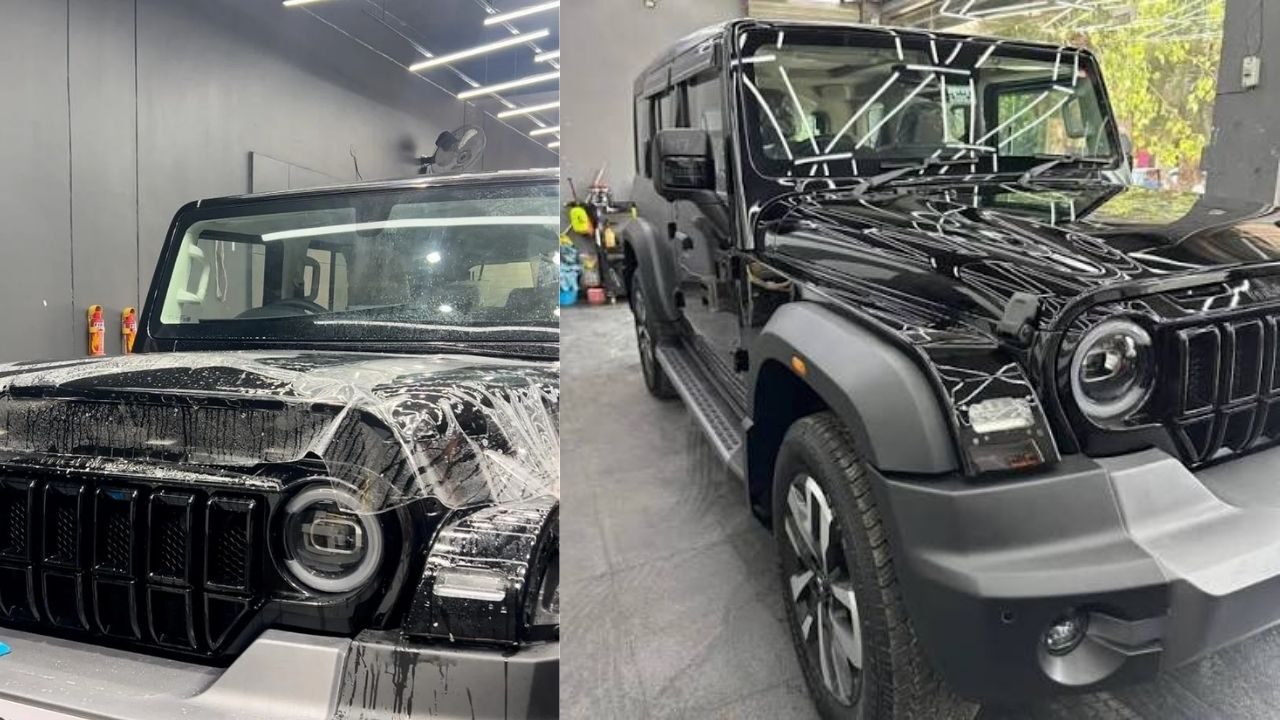
1. Paint Protection Film (PPF) — ₹1.35 lakh (8-year warranty) 

Thar Roxx Accessories

Full-body ceramic-infused film with a self-healing top coat. Genuinely protects resale value on a vehicle known for picking up stone chips on its flat panels and wheel arches — but at over a tenth of the base model’s price, it only pays off if you’re keeping the Roxx for five years or more.

Best for: owners planning a long-term hold.

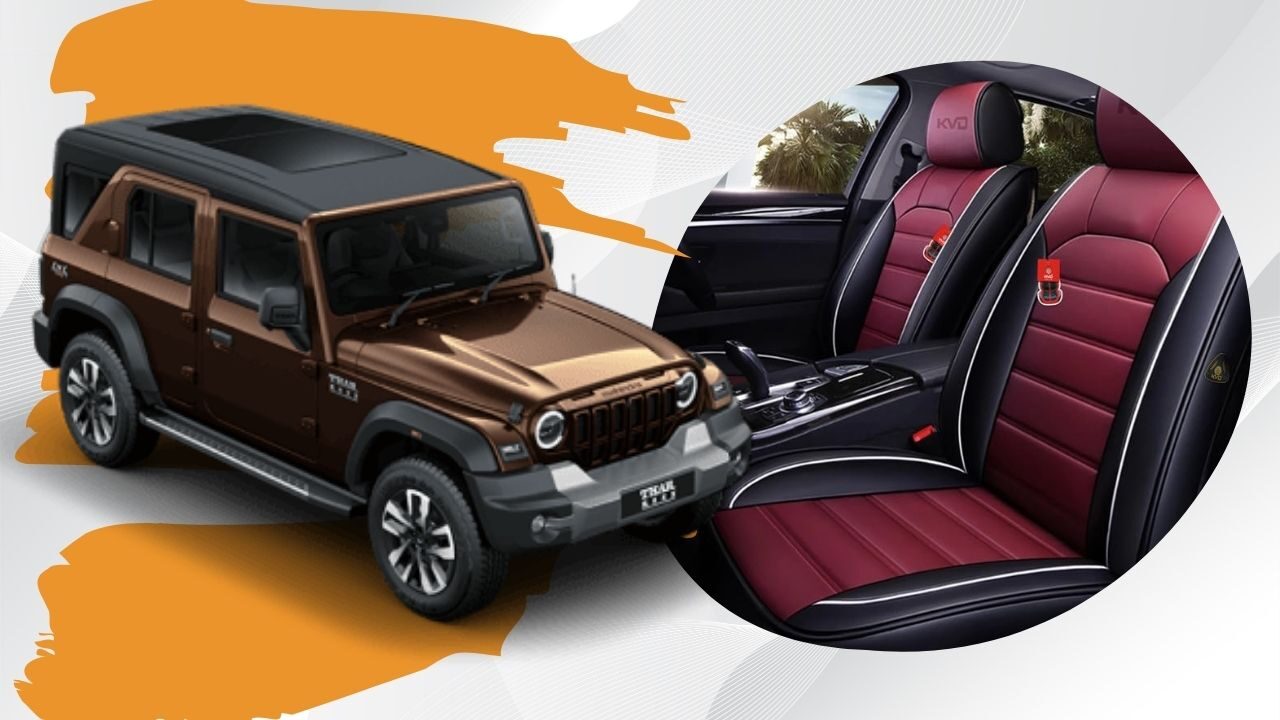
2. Bucket Seat Covers — ₹20,000 

Thar Roxx Accessories

Tailored fit, breathable fabric, factory-accurate stitching. The fit is a level aftermarket covers can’t quite match — but aftermarket seat covers run ₹2,000–₹10,000 for similar comfort if exact fit isn’t a dealbreaker for you.

Best for: buyers who don’t want any compromise on how it looks from the driver’s seat.

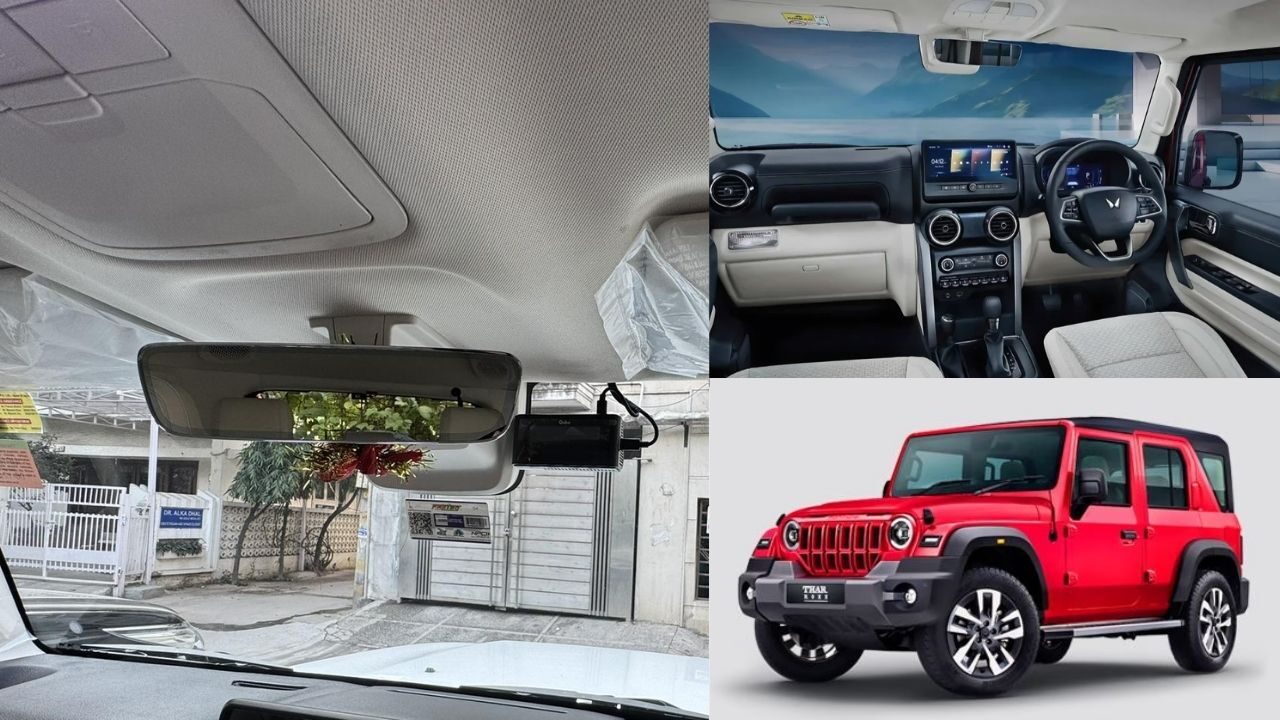
3. Dash Camera — ₹25,000  

Dash Camera

Integrated wiring, factory-fit mounting, no visible cables. Clean installation and solid footage for insurance disputes — though standalone aftermarket dash cams do the same core job for ₹3,000–₹8,000, just with a visible cable run.

Best for: daily commuters who want accident evidence without a wiring mess.

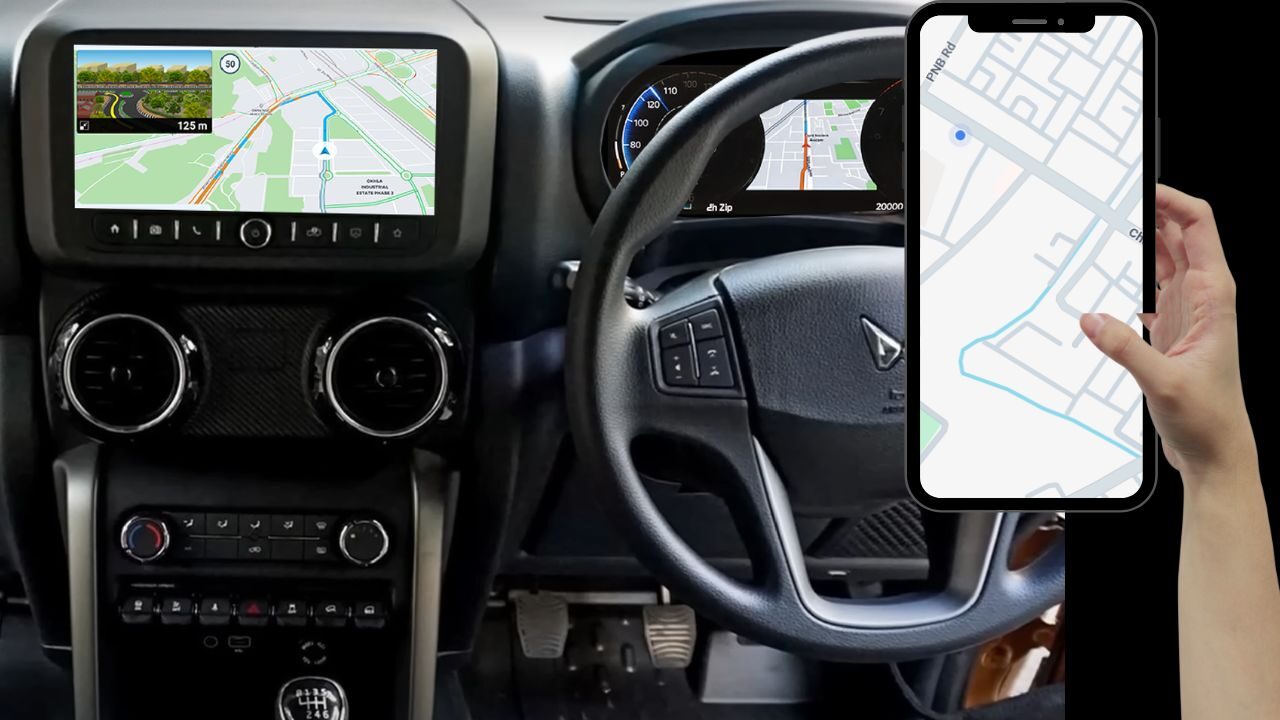
4. GPS Tracking Device — ₹12,499  

GPS Tracking Device

Real-time location tracking, geofencing. Useful if the vehicle gets shared across family members or parked in a theft-prone area — confirm whether there’s a recurring subscription fee before buying, since that’s not always advertised upfront.

Best for: shared vehicles or high-risk parking situations.

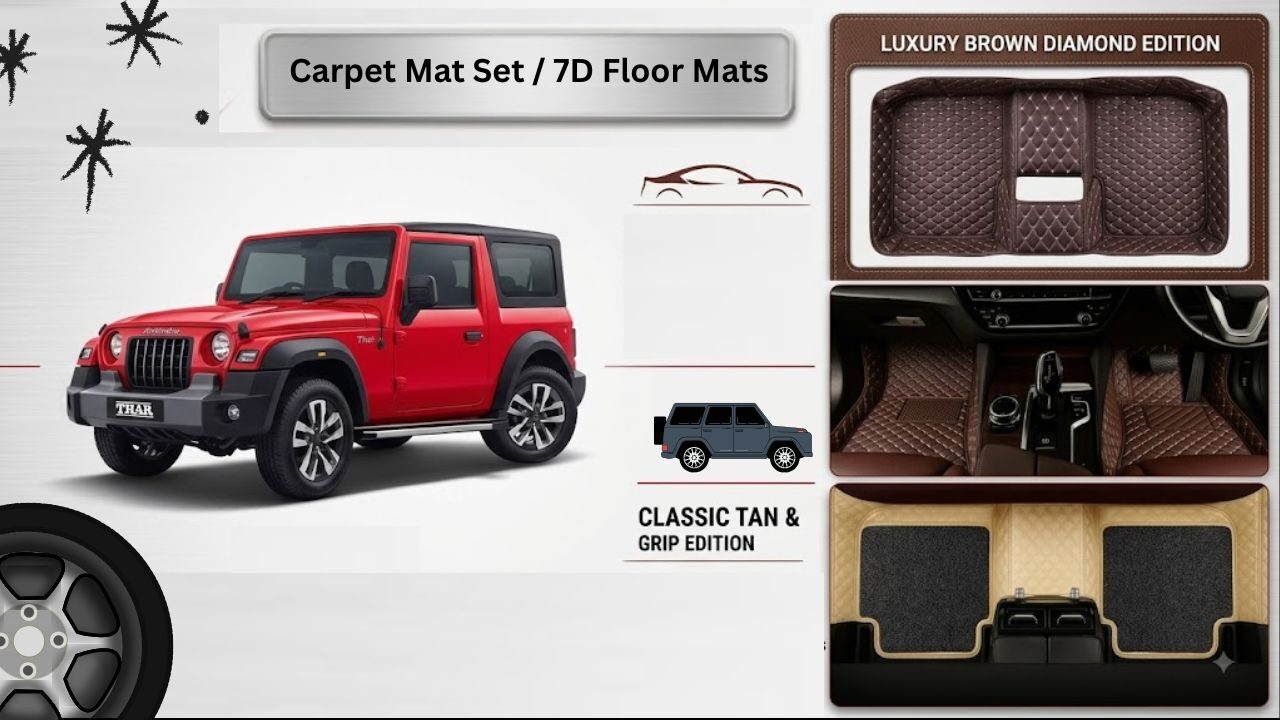
5. Carpet Mat Set / 7D Floor Mats — ₹3,950–₹9,999 

Carpet Mat Set

Raised edges, waterproof backing, model-specific fit. Real protection during monsoon months, which matters more on a vehicle that regularly sees mud and standing water — cheap aftermarket 7D mats can trap moisture underneath if the backing isn’t genuinely waterproof, so check reviews before buying the bargain option. 

Best for: monsoon-heavy regions.

Read More:-  Best Brake Pads for Cars: Top Options for Safe Driving

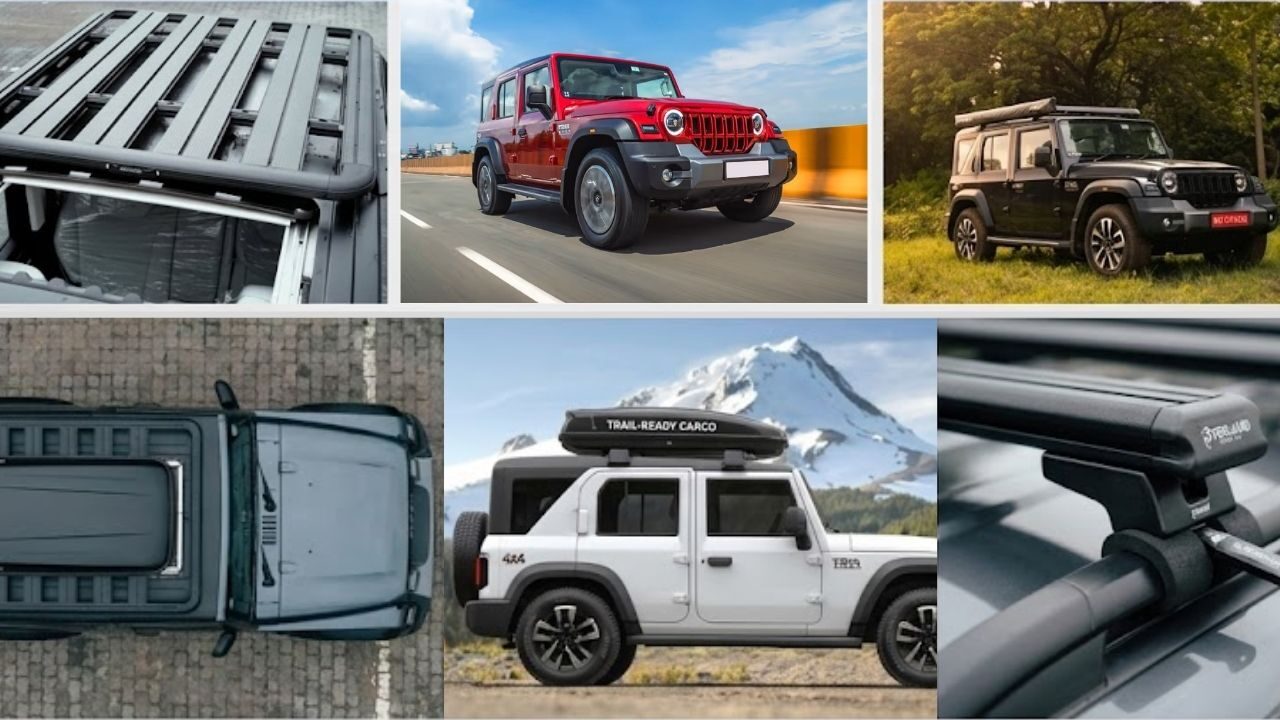
6. Roof Rails and Roof Carrier — indicative ₹10,000–₹30,000 (aftermarket range, confirm before buying) 

Roof Rails and Roof Carrier

Static or dynamic load-rated bars mounting to factory roof points. Turns the Roxx into a real camping and road-trip vehicle but load ratings vary a lot between sellers, so verify the actual rated capacity for your specific variant before strapping down gear. 

Best for: road-trippers and weekend campers.

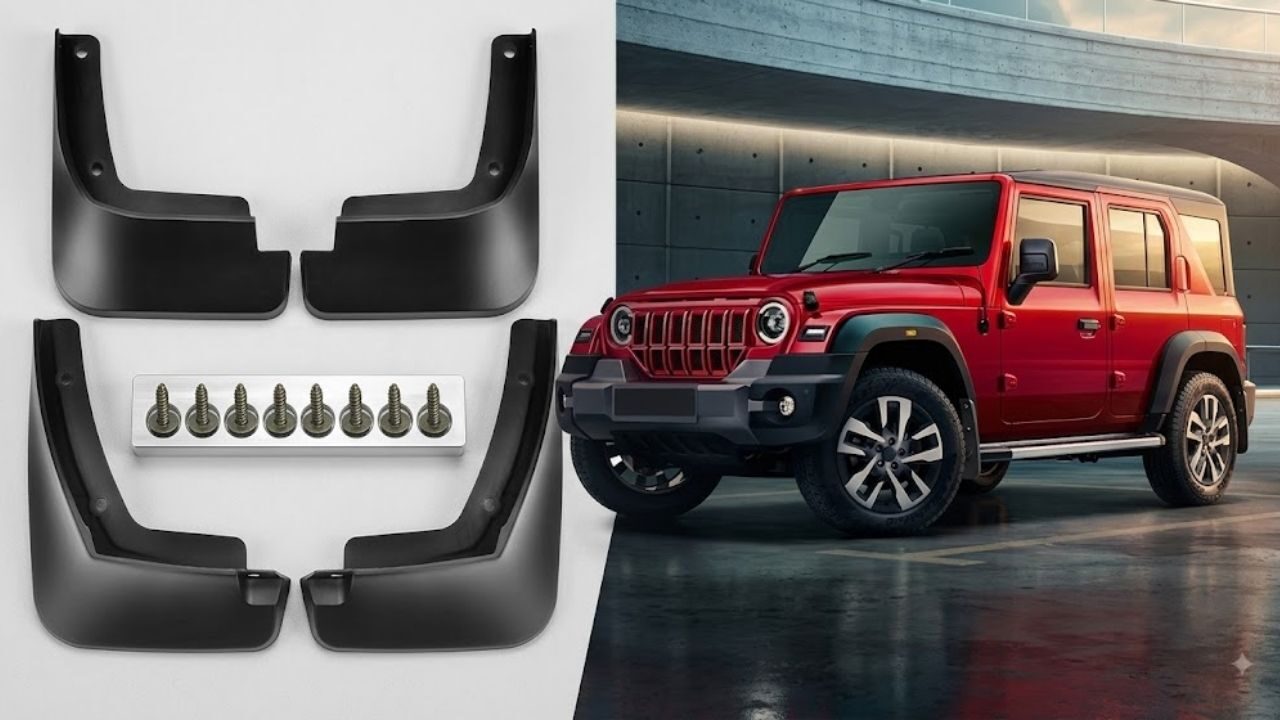
7. Mud Flaps — ₹500–₹3,000 

Mud Flaps

Front and rear sets, OEM or vehicle-specific fitted design. Cheap, effective protection against underbody rust from mud and rain splash — genuine Mahindra units cost noticeably more than near-identical fitted aftermarket versions from sellers like Carhatke or Techo. 

Best for: rural or muddy road driving, and as a low-cost first purchase.

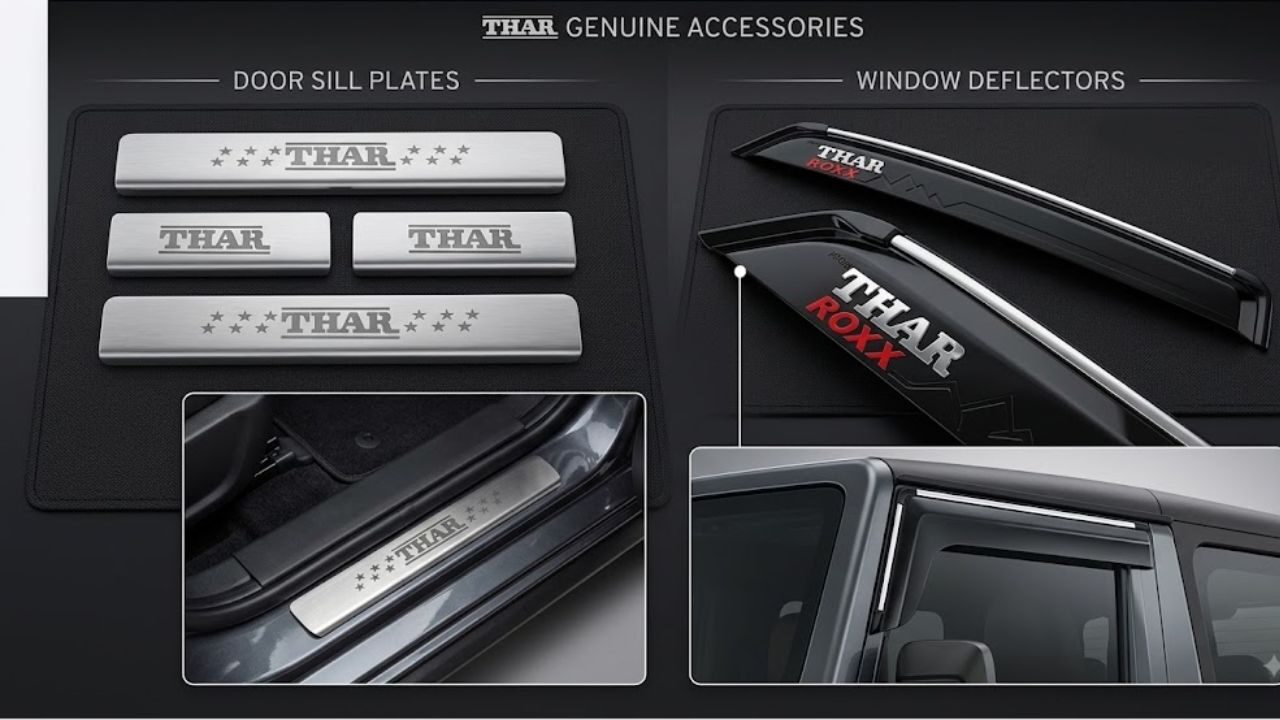
8. Sill Guards — ₹1,175  

Sill Guards

Brushed-finish scuff protection along the door sills. Mostly cosmetic, but it’s an affordable way to stop shoe scuffs from wearing down the paint at the door edge. 

Best for: budget buyers who want one cheap, low-effort upgrade.

PPF vs Ceramic Coating: True Comparison For Best Paint Protection

These two get lumped together as “paint protection,” but they solve different problems.

Paint Protection Film Ceramic Coating
Price ₹1.35 lakh (genuine, 8-yr warranty) Roughly ₹15,000–₹40,000 depending on tier — get an exact quote, pricing varies a lot by shop
What it actually does Physical film barrier — absorbs stone chips and scratches Adds gloss and a hydrophobic layer — doesn’t stop physical impact
Best suited to Regular gravel or off-road driving Mostly city and highway driving

If you’re taking the Roxx onto gravel trails or rough terrain often, PPF’s physical protection is doing real work. If it’s mostly tarmac and you want the shine, ceramic coating gets you most of the visual benefit for a fraction of the cost.

Where to Actually Buy Thar Roxx Accessories Online

For anything that touches warranty — seat covers, dash cams, tracking devices — go through your dealership. For styling and protection extras, Drivestylish, Carhatke, Elegantautoretail, and Automods.in all stock Thar Roxx–specific parts with home delivery across India. 

Prices for the same item can differ meaningfully between these sellers, so for anything above ₹5,000, it’s worth checking at least two listings before you buy.

Which Thar Roxx Accessory Should You Actually Buy First?

If your budget is under ₹3,000, start with mud flaps and sill guards — cheap, functional, and genuinely useful on Indian roads. Between ₹3,000 and ₹15,000, floor mats and an aftermarket Dash Cam cover the two things most owners regret not having within the first year. 

From ₹15,000 to ₹50,000, seat covers, ceramic coating, or roof rails are where personal use cases should decide — road-trippers go roof rails, everyone else probably wants seat covers. Above ₹50,000, PPF only makes sense if you’re planning to keep the vehicle long enough to see the resale benefit.

And regardless of budget: skip the bull bar, no matter how many sellers have it listed as a “must-have.” It’s not protecting anything — it’s a fine waiting to happen.

Read More:-  How Often Should You Change Oil in Your Car? What Actually Matters in India

Conclusion

The best Thar Roxx accessories aren’t necessarily the most expensive ones. And you don’t have to buy everything you see online so here is the list that contains the genuine Thar Roxx accessories to buy online which can make your car more sensible. Practical upgrades like mud flaps, quality floor mats and a dash cam, are standard materials to buy when you buy Thar Roxx. 

All other accessories depend on your driving needs, PPF is worth it for owners who consistently take their vehicles off-road, whereas ceramic coating is the better value for average city and highway drivers. Roof rails and seat covers have everything to do with how you use the Roxx and nothing to do with what the dealership tells you you need. 

Compare original and aftermarket prices, check fitment and warranties, and avoid illegal bull bars altogether.