0

New Kia Sorento 7 Seater Hybrid AWD, Diesel SUV – First TVC Out

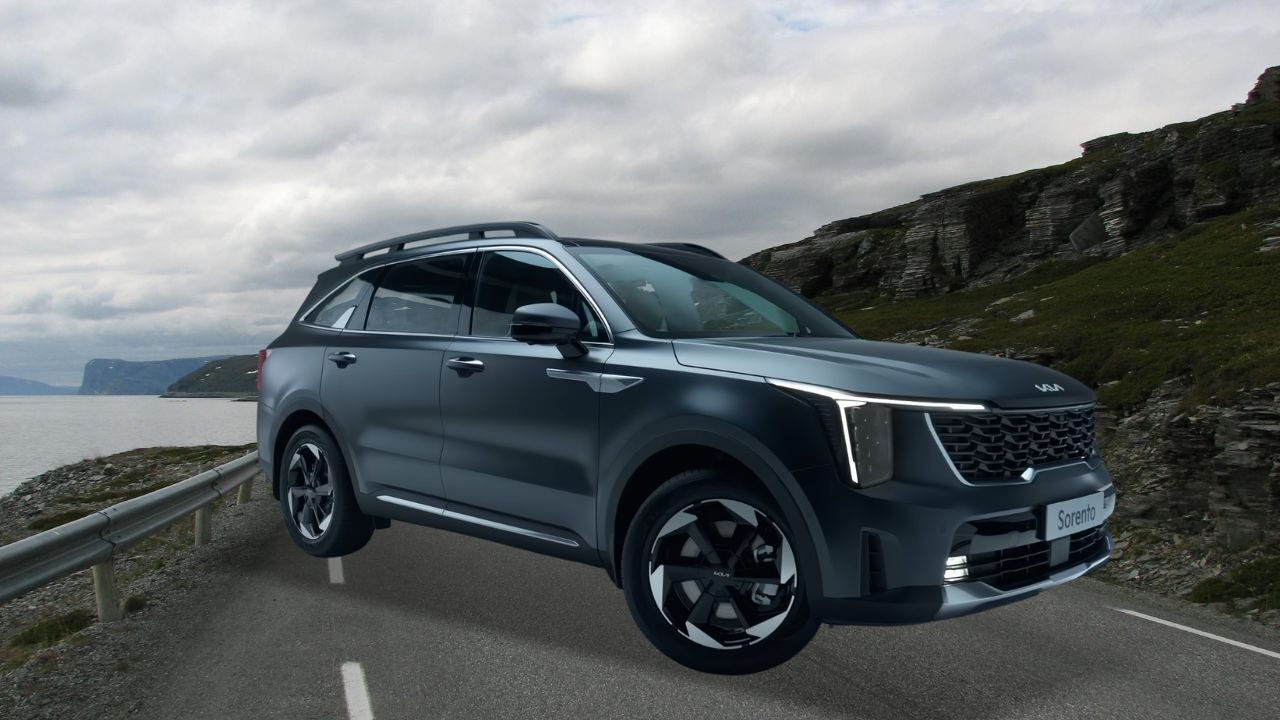
Kia Sorento 7 Seater

The new Kia Sorento 7 Seater Hybrid AWD is launching on September 4, 2026 with a more extinguished exterior stance and all-wheel-drive system which is more capable. The sharpened model of Sorento Hybrid for 2026 offers more control and comfort over a big SUV segment. 

The three row hybrid SUV sits on glossy black 19-inch wheels that glorify the look. Higher trims offer a more luxurious accent than lower trims. There’s nothing extra in interior features but there’s an upgrade in Terrain mode, it is now standard in all the AWD Hybrid trim.

Kia Sorento Hybrid Polished Exterior Appearance

The main exterior update is the X-Line trim, which gives a new rugged, blacked-out appearance of Sorento Hybrid rather than the chrome-accented styling of lower trims. It represents a classic black soberness blended with modern design with 19-inch glossy black wheels, black roof rails, and a darkened grille surround. It also has updated front and rear bumpers which sets the tone exquisite stylish. 
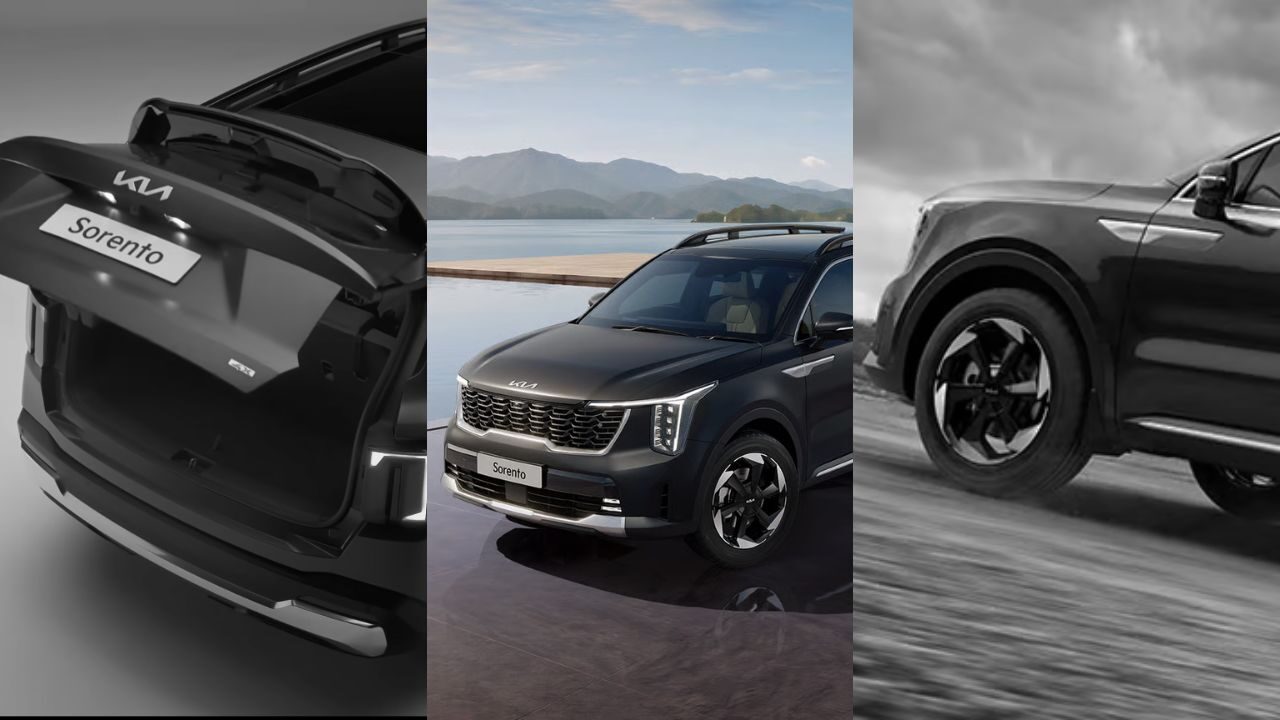
Kia Sorento Hybrid

Lower trims keep the more traditional look — chrome accents, LED projector headlights across the board while X-Line and X-Pro variants get the gloss-black treatment instead. It’s a trim-level styling split rather than a full model redesign, so if you liked the outgoing Sorento’s shape, nothing about the silhouette has moved.

Sorento Hybrid Body and Dimensions

The body itself carries over largely unchanged, which is worth knowing if you’re cross-shopping against a genuinely new-generation rival:

Specification Value
Overall length 189.6 inches
Width (with mirrors) 74.8 inches
Wheelbase 110.8 inches
Ground clearance 6.9 inches
Cargo capacity Up to 75.5 cu ft (2nd & 3rd rows folded)
Seating 7 (standard 2nd-row bench) or 6 (optional 2nd-row captain’s chairs)
Curb weight (Hybrid) Around 4,345 lbs
Curb weight (Plug-in Hybrid) Around 4,650 lbs

That’s a mid-size three-rows segment but the size is smaller than Telluride and Grand Highlander. It doesn’t mean that space is narrow, there’s a large space inside the car where adults sit comfortably in the third row.

Read More:- How to Get a Car Loan in 2026: Know Everything Before Purchasing 

The Interior Is Almost The Same For 2026 Sorento Hybrid 

Kia doesn’t change the features of Sorento’s Hybrid for 2026 model but once you sit inside the car, there’s minor changes that show up:

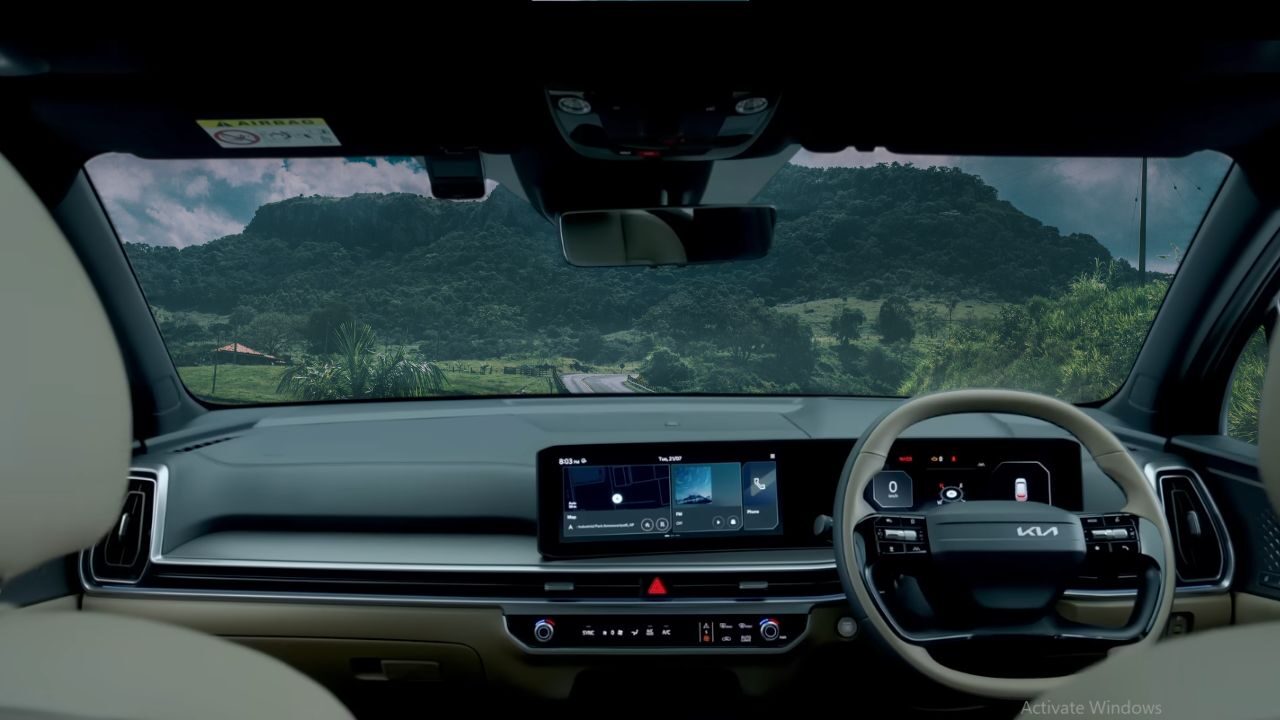
New steering wheel. A redesigned wheel with hands-on detection technology debuts across the range. It’s a torque- and capacitive-sensing system that confirms the driver’s hands are on the wheel — a requirement for Kia’s semi-autonomous highway driving assist to stay active, rather than a purely cosmetic swap.

Revised color palette. Kia updated the interior with black tone which gives a classic look rather two-tone Dust blue look. Its leather is soft and perfect in this tone which makes it a perfect choice for the buyer who wants a luxury feel.
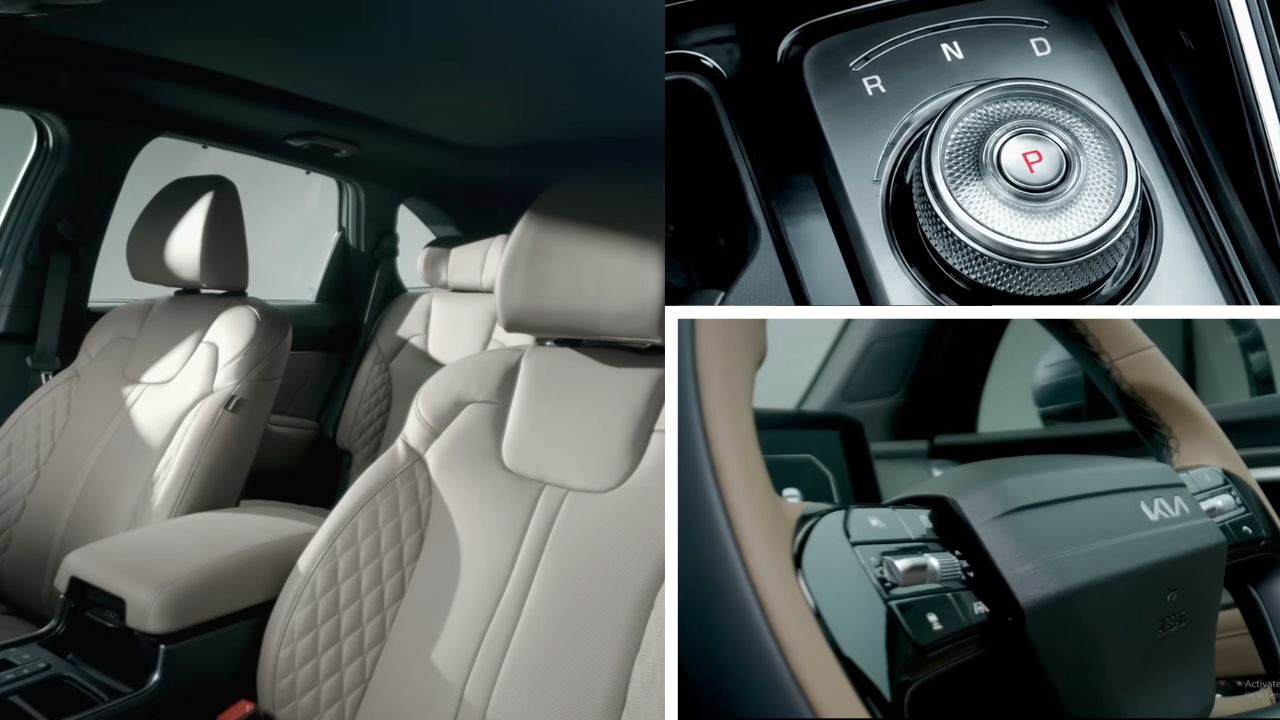
Kia Sorento 7 Seater Interior

Panoramic display carryover. Upper trims continue to offer Kia’s combined digital cluster and infotainment display setup (up to 24 inches of combined screen on select trims), paired with the tunnel-mounted physical climate controls Kia kept when it moved to the widescreen layout a few years back.

Practical touches. A hands-free smart power liftgate with auto-close remains available, and the second-row captain’s chair option — which drops seating to six — is still there for buyers who want more flexibility over three-across capacity.

None of this is a reinvention. It’s Kia refreshing the parts of the cabin buyers touch and look at most often, while leaving the underlying tech stack alone.

Kia Sorento Hybrid Upgraded With The AWD System

Kia offers new driving experience with updated Terrain Mode which is now accessible in every Sorento Hybrid trim, not the upper-trim exclusive. Paired with a center-locking differential, drivers can select the driving modes for mud, sand, or snow, redistributing torque which supports off-road trips and comfortable rides.
Kia Sorento Hybrid

The rest of the powertrain is unchanged from the outgoing car, it offers the same 1.6-liter turbocharged four-cylinder paired with an electric motor, producing 227 combined horsepower through a 6-speed automatic. 

Fuel economy is configured with EPA-estimated 37 mpg combined on the front-wheel-drive EX (655-mile range), stepping down to roughly 34 mpg combined on AWD trims. That combined-mpg gap is the real-world tradeoff for the added traction hardware which is worth weighing if most of your driving is highway commuting rather than genuinely rough terrain.

Read More:- BMW X1 LWB vs Audi Q3 vs Mercedes GLA: Which Entry-Luxury SUV Actually Makes Sense in 2026?

Kia Sorento Features Overview

Two hybrid three-row rivals are worth a direct look, since both share meaningful DNA or positioning with the Sorento:

Kia Sorento Hybrid AWD Hyundai Santa Fe Hybrid Toyota Highlander Hybrid
Engine 1.6L turbo-hybrid 1.6L turbo-hybrid (same engine family) 2.5L hybrid, no turbo
Horsepower 227 hp 231 hp 243 hp
Combined MPG ~34 (AWD) 34–36 35 (AWD standard)
Seating 6–7 7 7–8
AWD availability Optional, w/ Terrain Mode Optional Standard

The Santa Fe Hybrid is effectively the Sorento’s platform sibling — same engine, similar output — so the choice between the two often comes down to styling and trim structure rather than mechanical differences. 

The Highlander Hybrid, by contrast, makes AWD standard rather than optional and edges out both Korean rivals on horsepower, but it’s a naturally aspirated setup without Terrain Mode’s off-road drive-mode selector, so it trades outright grip flexibility for Toyota’s reliability reputation.

Kia 2026 refresh Model is Aimed At

The 2026 refresh isn’t aimed at someone cross-shopping a full redesign — it’s aimed at buyers who already liked the Sorento Hybrid’s size and efficiency and wanted a tougher-looking trim option, and an AWD system that’s genuinely more capable off-pavement rather than just badge-deep. 
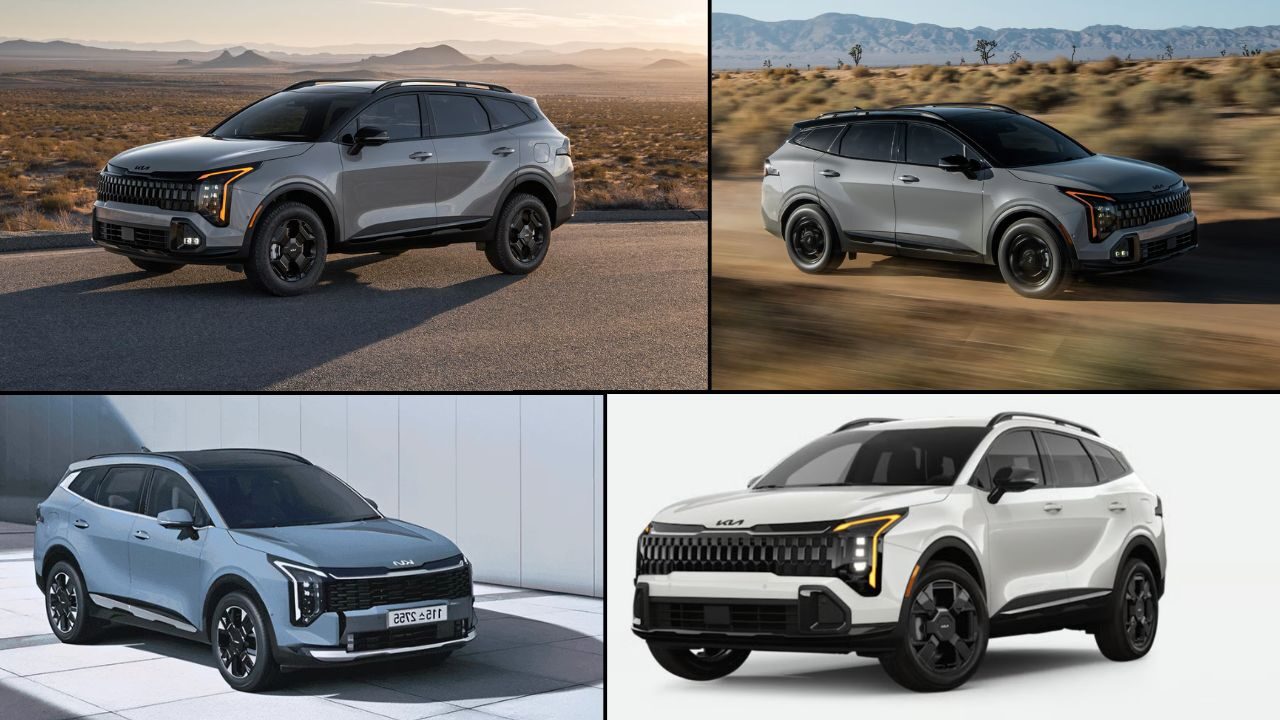
Kia 2026

If that’s the itch you’re scratching, the X-Line package and standard Terrain Mode deliver on both counts. If you were hoping for a bigger third row, a new platform, or a materially different interior layout, this isn’t that update — and the Santa Fe Hybrid or Highlander Hybrid are worth cross-shopping before you commit either way.

The expected price ranges between ₹43.90 – ₹46.21 Lakh for Kia Sorento Hybrid AWD 2026 model. It may fluctuate lower or higher according to your region and trim. Pre Bookings are opened on the official site of Kia, hurry up because it’s the global icon designed to set the power performance.

Read More:-  Volkswagen Confirms Plans to Launch New Sub-4-metre SUV by 2027

Conclusion

The new Kia Sorento 7 Seater Hybrid AWD isn’t chasing a redesign — it’s closing the gap between what the badge promised and what the AWD trim actually delivered. Terrain Mode going standard is the change that matters most; everything else, from the X-Line’s blacked-out styling to the steering wheel swap, is Kia sanding down rough edges on a formula that already worked. 

Kia gives you genuine off-road drive-mode flexibility at a lower horsepower ceiling. Book your session to take a test drive and experience the powerful performance of the 2026 model.

Sharey Khan

Sharey Khan is an IT entrepreneur and petrol head & a car enthusiast. With a special focus on car-related content, he combines his deep passion for vehicles with a talent for crafting informative, engaging, and easy-to-understand content. His writing is driven by a genuine love for cars and he is committed to providing readers with accurate, up-to-date, and trustworthy information that empowers smarter driving decisions. 

Leave a Reply

Your email address will not be published. Required fields are marked *

0

Manny Khoshbin Car Collection: Luxury & Hypercars Garage

Manny Khoshbin Car Collection

Manny Khoshbin was just 14 years old when he came to the United States from Iran, and his family had very little. At one point, they were even living in a Datsun station wagon. Fast forward to today and that same boy now owns one of the most mind-blowing car collections on the planet, at $250 million. The Manny Khoshbin Car Collection is not only about cars—it is the pursuit of the American Dream in the most unrelenting form, and his garage is the ultimate testament of that journey. 

If anything distinguishes Manny Khoshbin from the rest of the billionaire car collector pack, it’s his forward-thinking collaboration with Hermès, the iconic French luxury brand. This isn’t your typical car customization. Manny went all-in with three separate Hermès Edition hypercars, each costing millions and taking years to complete. 

Pagani Huayra Hermès Edition

First on the block is the 2016 Pagani Huayra Hermès Edition. It is now worth about $5 million, the same as what its launch price was of $2.5 million. The Partnership was twofold, both in the factories and on the race track The Pagani and the Hermès house teams worked together in perfect union. 

Pagani Huayra Hermès Edition

The rich exterior heritage brown color is complemented by laser-etched Hermès ‘H’ logos on the grills; the entire interior is wrapped in Hermès leather; even the trunk is dressed, with a seven-piece Hermès luggage set that can be custom-fitted to it.

McLaren Speedtail

Then there was the $3m 2021 McLaren Speedtail Hermès Edition. Manny received the 24th Speedtail off the line and dispatched it to Hermès for an 18-month customization odyssey. It is in abyss blue with Hermès ‘H’ logos embossed along the door lines.

McLaren Speedtail

Even the side-view mirrors bear the precise latitude and longitude coordinates of the Hermès and McLaren factories. The Hermès factor had added $1 million to the base of $2.5 million and a few weeks out of the shop, Manny was offered $5 million for it. 

Bugatti Being a Crown Jewel — Chiron

Bugatti Chiron is also owned by Manny and is worth around $5 million as the most expensive Chiron ever made. Everything was thought through to the finest details during almost five years of work and Manny even canceled the design twice to get the whole thing absolutely perfect.

Bugatti Being a Crown Jewel — Chiron

The exterior shines in Hermès Craie paint, and the interior is wrapped in bespoke cream-colored Hermès leather.This car has logged less than 300 miles, and as for Manny’s car, that has hardly moved because, well, It’s just too precious. 

Mercedes SLRs

Manny doesn’t just buy one car he loves-he buys them in groups. His Mercedes-Benz SLR McLaren addiction is mythic among collectors. He has owned nine of these breathtaking machines, both coupe and roadster variants, starting his collection in 2008-2009 with a 2009 SLR 722 Edition Roadster. At the time he snatched up a handful of these cars for half the original MSRP, with shockingly low miles. 

Mercedes SLRs

Each one now commands over $1 million. The Mercedes-Benz SLR HDK with the High Downforce Kit by McLaren Special Operations Just 12 units were made.

Porsche 911 Sport Classic, Porsche 911 GTS Cabriolet American Edition & Porsche 935

But more recently Manny has moved his attention towards Porsche and now particularly the iconic 911 family. His collection boasts such vehicles as the 2023 Porsche 911 Sport Classic, the breathtaking Porsche 935 in mythical Martini Racing livery (named “Moby Dick”), the 2023 Porsche 911 Dakar and the eye-popping Porsche 911 GTS Cabriolet American Edition. He’s got his sights set on even more variants.  

Read More :- Tata Harrier & Safari Petrol Launched In India at Rs. 12.89 Lakh

The Hypercar Hall of Fame: McLarens, Bugattis, and Beyond

Aside from the Hermès collabs, Manny’s collection is a who’s who of hypercar royalty. His 2014 McLaren P1 in Carbon Black is one of just twenty full-carbon build cars ever produced – a true engineering and aesthetic masterpiece. He has several Bugatti Veyrons including a very rare 2014 Bugatti Veyron Rembrandt Edition, of which three units are all that exist across the planet. And then there’s the Bugatti Bolide, limited to 40 pieces worldwide for a jaw dropping $4 million.

Manny Khoshbin Car Collection Overview

Car Name Brand Special Edition Approx Value Why It’s Special
Pagani Huayra Pagani Hermès Edition $5 Million Full Hermès leather interior, custom luggage – truly an ultra-luxe hypercar. 
Speedtail McLaren Hermès Edition $5 Million designed over 18 month, hermès embossed logos, limited edition production 
Chiron Bugatti Hermès Custom $5 Million Most expensive Chiron, Craie paint, ultra-low mileage
SLR McLaren Mercedes-Benz 722 / HDK Editions $1M+ each Rare collector cars, only 12 units of the HDK were built
P1 McLaren Full Carbon $2 Million One of just 20 full carbon fiber builds
Veyron Bugatti Rembrandt Edition Multi-Million Only 3 units in the world
Bolide Bugatti Track-Only Hypercar $4 Million Limited to 40 cars worldwide
911 Sport Classic Porsche Limited Edition $300K+ Retro design, heritage-inspired 911
935 “Moby Dick” Porsche Martini Racing Livery $3 Million Track-focused, motorsport icon
911 Dakar Porsche Rally Edition $250K+ Off-road-ready 911, rare spec
911 GTS Cabriolet Porsche American Edition $200K+ USA-exclusive styling, convertible performance

Conclusion

The Manny Khoshbin Car Collection is not the dollars—it’s the story behind each purchase. Each car represents a moment in his career, either as a result of collaboration with a luxury brand or a vehicle so special that owning one is an honour. From the Tesla Model X he regularly drives to the million-dollar hypercars he lovingly maintains, Manny’s garage is a testament to the fact that ambitions, when pursued, have no limits.   

0

Mahindra Car Discount Price February 2026: Up to ₹2 Lakh Off on Thar, Scorpio N & XUV 3XO

Published Feb 16, 2026, 1:00 PM
Last Updated Apr 7, 2026, 6:22 AM

Mahindra Car

If you have been walking around in the cities of India then you must have felt the changing times with Mahindra Car Discount Price. It’s not the traffic, it’s the metal that’s driving through the traffic. By February 2026, Mahindra & Mahindra isn’t merely peddling “rugged Jeeps,” it is topping the Indian SUV charts with a dazzling cocktail of hi-tech safety and raw brawn.

But here’s the real kicker: If you happen to be in the market for a new car this month, you are poised at a monumental financial crossroad. With “Model Year 2025” (MY25) clearances and shinier new 2026 models on the way, it’s a fortune literally to be saved, or lost, based on how you play your cards.

Let’s take a look at the current Mahindra Car Discount Price stable and see which one is worth your time. 

Why the Big Discounts on Mahindra Now?

February serves as a kind of a “bridge” month in the automobile industry for the “vintage” 2025 models and the new 2026 models.

To make way for the new models, Mahindra is rolling out an Inventory Correction drive. They are offering steep discounts on 2025 stock—up to as high as ₹2.00 Lakh to shield the premium pricing of their 2026 models.

The Golden Rule for Feb 2026: If you’re a 5+ year+ driver, buy MY25 Stock. Those huge upfront savings more than make up for the slight dip in resale value you’ll take down the road.

The February 2026 Discount Landscape at a Glance

Vehicle Platform Primary MY25 Incentive Primary MY26 Incentive Strategic Implication
Thar Roxx (5-Door) Up to ₹2.00 Lakh (Diesel) ₹25,000 – ₹75,000 Aggressive push to clear high-value diesel inventory; protecting petrol margins.
Thar (3-Door) Up to ₹1.25 Lakh (AWD) ~₹30,000 (Accessories) High incentives on AWD to counter cannibalization by the 5-door Roxx.
XUV 3XO Up to ₹80,000 (AX7L) ₹20,000 – ₹40,000 Targeted discounts on top-spec variants to compete with Nexon/Brezza pricing.
Scorpio N Up to ₹1.00 Lakh (Petrol) ₹20,000 – ₹30,000 Heavy incentives on low-mileage petrol variants; diesel demand remains organic.

Thar 3-Door vs. Thar Roxx

The thar isn’t just for the weekend off-roader anymore, it’s a family statement. But with the arrival of the 5-door Thar Roxx, the range is now divided between two strikingly different vibes.

5-Door The Thar Roxx (5-Door)

This is the champion of the “Safe Lifestyle.” It recently clinched a 5-star Bharat NCAP rating, which makes it one the safest SUVs you can own on Indian roads.

Mahindra is going full diesel, the deal. Get up to ₹2.00 lakh in benefits on MY25 Diesel 4WD models.

Reality Check: A top-end Roxx will cost you anywhere around ₹26–27 Lakh on-road, 10–20% RTO. 

The Thar 3-Door

The OG is now being overshadowed by its larger brother. To get it going, Mahindra is providing a discount of up to ₹1.25 Lakh on the AWD variants.

Insider Tip: Big mid 2026 facelift coming. If you want the latest tech (LED projectors and digital clusters), wait. If you want a legendary mechanical beast at a bargain buy the present 4WD and go. 

The “Over-Spec” Overachiever: XUV 3XO

If you want a compact SUV that’s punching way above its weight class, the 3XO is your best bet. It is taking on the Nexon and Brezza, but is doing so with “big car” pretensions.

  • The “Skyroof”: It enjoys the biggest panoramic sunroof in its class – a major selling point for Indian buyers.
  • Performance: Most of the rivals are left behind by the 130 PS 1.2L mStallion engine.
  • The Sweet Spot: The AX7L Petrol is being offered with discounts packages worth up to ₹80,000 for the much-awaited MY25 units. At about Rs 16 Lakhs onroad price approximately, it brings you Level 2 ADAS and luxury-tier technology typically available for Rs 10 Lakhs more. 

Read More:- Maruti Suzuki Discount Feb 2026: Swift, Fronx & Brezza Offers Explained

The “Big Daddy” Presence: Scorpio N

The Scorpio N holds strong as the undisputed heavyweight champion in ₹15–25 Lakh category. But there’s a particular pattern emerging here: The Petrol Paradox.

While the mHawk Diesel gets all the attention for its torque (280 Nm to 450 Nm) and fuel efficiency (~10-17 kmpl), the 200 bhp Petrol mStallion is a speed demon and a thirsty one. Hence, to compensate for the costlier running expenses, Mahindra is providing a huge discount of ₹1 Lakh .

Pro Tip: For those who drive less than 10,000 km a year, that ₹1 Lakh discount on the Petrol Scorpio N more or less covers your fuel for the next two years. It is a “hidden” value play that nobody really notices and most people don’t understand. 

Which One Should You Buy?

Buy what is best for you and don’t make your wallet exhausted. Check out the recommendation models with specific quality that are worth your money.

Buyer Profile Recommended Model Why?
The Value Hunter MY25 Thar Roxx Diesel Peak discounts (₹2L) on a 5-star safety rated flagship.
The Tech Geek XUV 3XO AX7L Segment-first ADAS L2 and Panoramic “Skyroof.”
The Highway Cruiser Scorpio N Diesel Unmatched road presence and long-term resale value.
The Purist Thar 3-Door AWD High incentives now before the 2026 facelift resets prices.

Conclusion

The February 2026 options market is focused on timing, especially with Mahindra Car Discount Price. With BNCAP safety ratings as standard across the majority of the range, you are not just buying a rugged vehicle, you are buying peace of mind. Whether you’re looking at the Carbon Edition Scorpio, or just a base 3XO, the window to grab a MY25 deal is closing fast. 

0

JLR Landing a Land Rover Defender Pickup Truck In US 

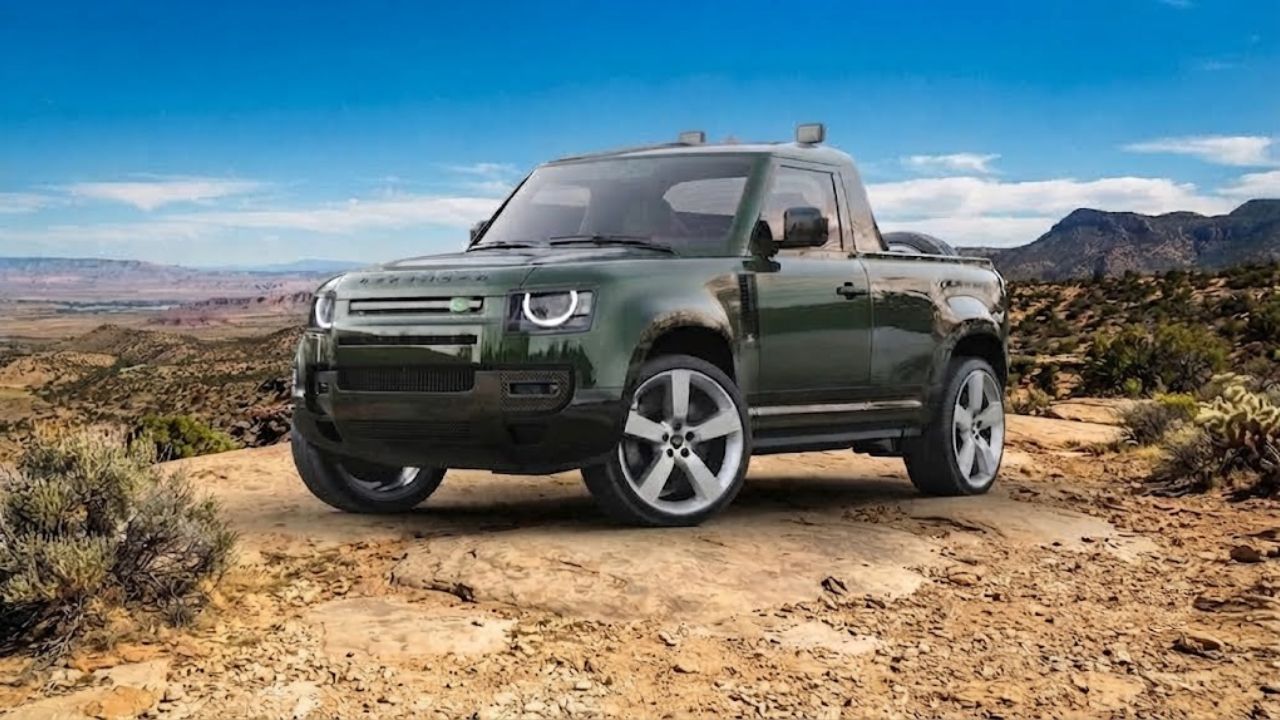
Land Rover Defender Pickup Truck

For years, Defender fans have asked why Land Rover keeps teasing a pickup version and never builds one. Now, Jaguar Land Rover (JLR) is working with Stellantis to build a Land Rover Defender pickup truck in the United States — and the reason has less to do with off-road capability and more to do with import tariffs.

The specifications are still not confirmed. This is the first product of collaboration so expecting great tech and reliability of a pickup truck is the first thing to think about.

The Official Agreement Between JLR and Stellantis on Product Development

Back in May 2026, JLR and Stellantis signed a non-binding memorandum of understanding (MoU) to “explore opportunities to collaborate on product development” in the US, along with shared manufacturing capacity. At the time, neither company named a specific vehicle.

That changed in September 2026, when Automotive News reported that the first product out of this alliance would be a Land Rover Defender pickup truck built for the US market. JLR’s Chief Financial Officer, Richard Molyneux, confirmed on an earnings call that the two companies intend to finalize the broader agreement by the end of 2026. JLR’s CEO, PB Balaji, has separately said the goal is to grow JLR’s US business to eventually match the size of its entire global business — a genuinely ambitious target.

JLR and Stellantis

Stellantis has acknowledged joint discussions are underway, but neither company has publicly confirmed “pickup truck” as the specific output. 

Why Land Rover Defender Pickup Truck Has to Be Built in America

This is really a tariff story wearing a product story’s clothes.

Every Defender sold in the US today — the 90, 110, and 130 — ships in from JLR’s plant in Nitra, Slovakia. Passenger vehicles built in the UK and EU already face added US import tariffs. But trucks get hit worse: American light trucks and pickups imported from abroad face the 25% “Chicken Tax,” a tariff that’s been on the books since the 1960s and makes shipping a European-built truck to the US financially unworkable.

Building the pickup on US soil with Stellantis sidesteps that tariff entirely. North America now accounts for roughly 30% of JLR’s global sales, while China — once its biggest market — has fallen to under 7%. A pickup built for Americans, by an American-based partner, is JLR reading the room.

If it happens, it would also mark JLR’s first vehicle assembly in the US, and the first Land Rover-badged pickup sold there since British Leyland shipped over Series I and Series II trucks in the 1960s and early ’70s.

Read More 👉  This Used Luxury Car Costs the Same as a Top-Spec Maruti Fronx

The Engineering Behind Defender

The current Defender is a unibody vehicle. Stellantis’s American trucks — the Ram 1500, Ram Heavy Duty, and Jeep Gladiator — are body-on-frame. Those are different structural philosophies, and no one has said which way a Defender pickup would go. 

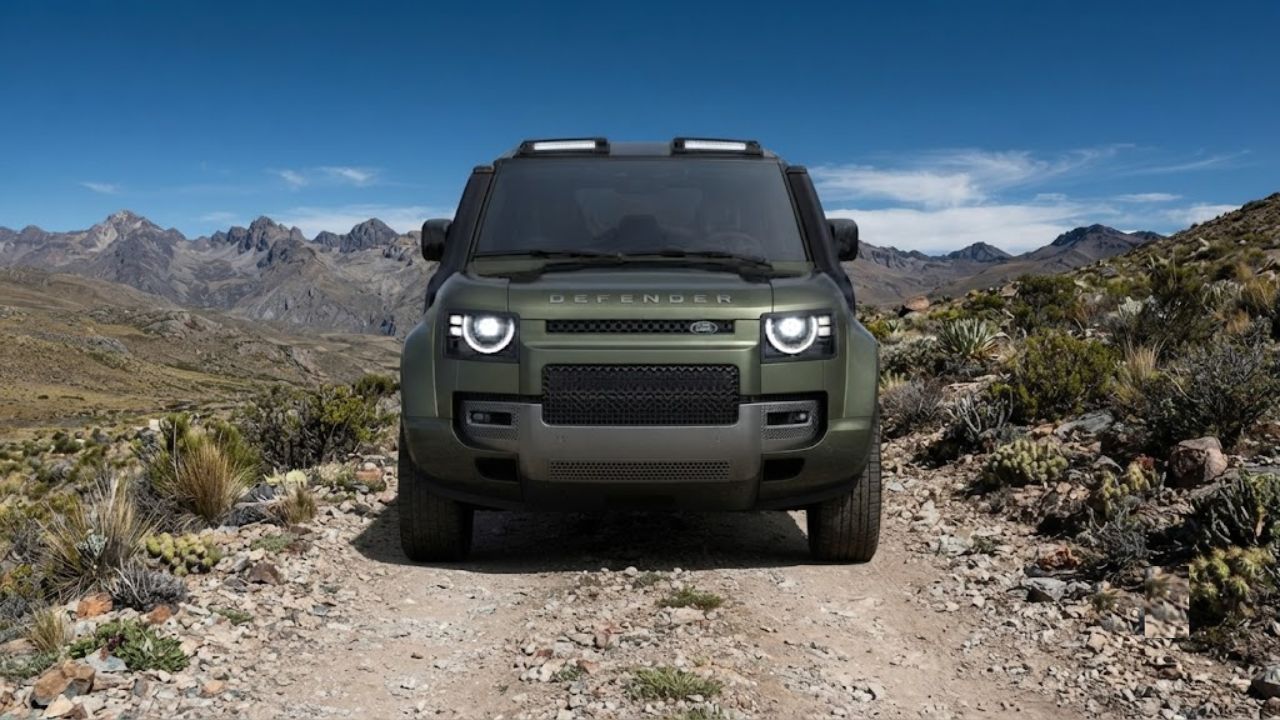
Land Rover Defender

Stellantis does have unibody experience through the Jeep Grand Cherokee and Dodge Durango, so a unibody truck isn’t off the table, but it’s not confirmed either.

Powertrain is just as open. Shipping Defender’s European engines to the US would trigger its own tariffs, but slotting in an off-the-shelf Stellantis engine might not fit a vehicle Land Rover wants to sell at premium prices. 

Size, trim strategy, launch year, and pricing haven’t been disclosed by either company. Any number you see for engine output, mileage, or price right now is a guess dressed up as a leak.

Land Rover Defender Pickup Truck Rivals Already In The Market

The Ineos Grenadier Quartermaster as the closest natural rival — a body-on-frame, old-school off-roader with genuine pickup credibility and a similar niche, premium-utility positioning. The Jeep Gladiator gets the hook too, though as a lower-priced, less luxury-focused alternative rather than a direct match.

Beyond that, a Defender pickup would land in the same rarefied air as loaded trim levels of the Ford F-150 Platinum and GMC Sierra Denali — trucks that compete less on payload bragging rights and more on cabin quality and brand cachet. If JLR positions this as a genuine luxury pickup rather than a rebadged Stellantis product, that’s the shelf it’s aiming for.

Read More 👉 Get New Maruti Premium Hatchback at Lower Price

Expected Specification and Size of Land Rover Defender Pickup Truck 

Land Rover Defender Pickup are using the Defender 110 as the donor vehicle since it’s the volume model closest to a crew-cab truck’s proportions. The current Defender 110 measures around 5,018mm in length including the rear-mounted spare wheel and uses a 3,022mm wheelbase. The most-floated build approach isn’t a clean-sheet truck at all — it would keep the 110’s front section, four doors and five-seat cabin, and simply replace the rear luggage compartment with an open load bed. 

Land Rover Defender

Unlike traditional pickups, the Defender uses JLR’s aluminium D7x monocoque architecture rather than a separate ladder-frame chassis. Stellantis’s US trucks (Ram 1500, Ram HD, Gladiator) are body-on-frame. But still it’s unconfirmed.

The current lineup runs from a 296-hp turbocharged four-cylinder to a 626-hp twin-turbo V8, but European-built JLR engines would face import tariffs if shipped over for US assembly. An off-the-shelf Stellantis engine dodges that, but risks feeling wrong in a truck JLR wants to price at a premium. 

Read More 👉 BMW i5 LWB On Road Price Is Lower Than What Buyers Expected

Conclusion

If the deal is finalized by the end of 2026 as JLR’s CFO suggested, the realistic next milestone to watch for is an official confirmation of the vehicle itself. Concept reveals, platform confirmations, and pricing typically trail an MoU finalization by a year or more in projects like this.

For now, JLR wants an American-built Land Rover Defender Pickup Truck badly enough to partner with a rival automaker to get around a 60-year-old tariff law. Everything past that — what it looks like, what it costs, whether it ever reaches a market outside the US is still an open question.


0

Tata Avinya EV Specs and Features: Range, Technology, Design, Safety, Performance Details

Published Dec 24, 2025, 10:13 AM
Last Updated Apr 7, 2026, 11:05 AM

Tata Avinya EV Specs and Features

Electric cars aren’t just about saving on gas or reducing emissions—they’re about making a bold statement. Try to imagine driving on the crowded city streets in India and turning heads not because of the sound of a roaring engine but the bold, futuristic form that looks like it came out of a sci-fi movie. That’s the kind of impact Tata Avinya EV wants to make.

The Avinya is more than just Tata Motors’ next electric vehicle – it is a bold vision for the future. The vehicle, which is expected to be released sometime in 2026 or 2027, will be a giant leap for electric mobility in India. Tata’s next-generation electric vehicle platform, the Gen 3 EV platform, serves as the foundation for the Avinya, which brings together cutting-edge technology, sustainable luxury, long-distance performance, and a human-centric design philosophy. From screen-free cabin innovation to its remarkable driving range and next-gen safety features, the Tata Avinya is not just another electric car — it is Tata’s vision for how the future of mobility could be. 

Range That Actually Goes the Distance

A big concern when purchasing an EV is range anxiety—the fear of being stranded on the road with a dead battery. Tata has eliminated that worry with the Avinya. This high-end electric car has a stated minimum range of 500 kilometers on one full charge. Whether you’re planning a weekend getaway to Agra or a long drive to the hills, the Avinya’s range won’t disappoint.​

Range That Actually Goes the Distance

Extreme fast charging performance is a real game changer. Avinya can be charged to 80% in under 30 minutes enabled by next-generation battery technology.  Imagine pulling off the highway for a brief coffee break at a charging station, and coming back to a car charged for another 500 kilometers. That’s the kind of convenience that could make electric vehicles genuinely here to stay on Indian roads. 

Amazing & Beautiful Design 

The Avinya has a signature look and is genuinely stunning. Drawing on the clean profile of a catamaran, this machine epitomizes agility, equilibrium, and futuristic technology. Now the genius of Tata is how it combines several vehicle types in a single package.​

It’s essentially the best of three worlds: the nimble handling of a premium hatchback, the utility of an SUV, and the generous space of an MPV. Tata dubs this “mixology,” and it’s a neat way of developing a vehicle that doesn’t sit comfortably within traditional segments—it breaks them. 

Amazing & Beautiful Design 

The bodywork has a futuristic shape that looks amazing and is aerodynamically efficient, having a direct effect on improving the range and the performance. Inside, the design ethos is flashy to functional. The Panoramic Sky Dome roof brings natural light into the cabin enhancing the sense of space. Standard on all models, the signature butterfly doors open wide, welcoming you into an authentically luxurious lounge-like cabin that delivers comfort for every journey. 

Eye-Catching Technology

Here is where Avinya defies conventional wisdom — it has virtually no screens. In an era where car makers are competing to fill dashboards with massive displays, Tata has gone in the opposite direction, and it’s surprisingly innovative.

Instead of distracting displays, the Avinya favors intuitive voice-based commands for major functions. This design for a screenless cabin is based on true human-centered principles. Less time looking at screens means less distraction, less motion sickness on long rides and a more relaxing driving experience. It’s technology that works silently behind the scenes as you keep your eyes on the road.​

The Avinya is powered by the Gen 3 platform, which delivers high-level connectivity and advanced driver assistance systems (ADAS) as well as artificial intelligence (AI) features that can enhance — but never overwhelm — your driving experience. Vehicle-to-Load (V2L) and Vehicle-to-Vehicle (V2V) technology are now inbuilt, ensuring that you remain connected and safe while on the road. 

Read More:-  Shubman Gill Car Collection: Inside the Luxury Garage of India’s Cricket Star

Safety That Puts Your Mind at Ease

Safety was obviously the key focus in the Avinya’s design. Based on Tata’s Gen 3 electric platform, the car boasts of high structural safety and features advanced waterproofing and dust proofing based on global standards. This is very important for Indian roads where you can run into anything from flooding monsoons to arid dirt tracks.​

The active safety system also comprises a 360-degree camera, dual airbags (six in the range-topping variants), overspeed warnings and seat belt reminders. They’re not just glitzy add-ons – they’re actual safety nets that shield you and your family every time you take a drive. 

Performance That Doesn’t Compromise

Based on the newly developed Gen 3 electric platform tailor-made for battery electric vehicles, the Avinya offers exhilarating performance without the noise and emissions of standard powertrains. The architecture is made of lightweight materials with optimized structure for delivering efficient power with minimum mass.

Range That Actually Goes the Distance

Tata has designed this EV for all-wheel-drive availability on select variants, providing you with the assurance on multiple terrains – smooth city highways to rough country trails. Each component is finely tuned under the “Minimize-Maximize-Optimize” concept to deliver the best ranges and performance. 

Premium Comfort with Sustainability

Go in and you’ll see something immediately different—everything is tailored to your wellbeing. The interiors are embellished with sustainable material which reflects the environmental responsibility of Tata. Introducing an integrated aroma diffuser for a multi-sensory experience that is truly calming, every drive feels like a retreat for well-being and not just a commute.​

With its clean lines and the unencumbered minimalist design, the flat floor creates a huge amount of space. The two spokes in the steering wheel are home to touch controls that allow you to keep your hands on the wheel. 

Conclusion

The Tata Avinya EV signals a real shift in what is possible when designing and engineering electric vehicles. With more than 500 km range, ultra-fast charging, revolutionary design, intelligent technology and a real emphasis on human well-being, it ticks all the boxes that Indian car buyers have been looking for.

With a starting price of ₹ 30 lakh and going all the way up to ₹ 60 lakh, the Avinya will bring high-end electric motoring to the masses. This is not just a car – it’s a statement of how Tata Motors defines the future of mobility in India and globally. If you’re been longing for a electric vehicle that’s practical, luxurious, innovative in design and green in the environmental sense, well your wait is almost over. 

0

Top Car Insurance Plans to Buy in August 2026

Car Insurance Plans

Your third-party premium hasn’t moved since FY 2022-23. That’s about to change. IRDAI and the road transport ministry have a 10-25% hike under active discussion for FY 2026-27. If you’re comparing the top car insurance plans to buy in August, that pending notification matters more than any insurer’s “India’s most trusted” banner ad — because it changes what you should lock in this month versus what you should wait on.

However, “top” doesn’t mean the same thing for every car owner. A third-party-only policy, a standalone own-damage add-on, and a full comprehensive plan solve different problems, and from 2024 every new private car has to carry a mandatory 3-year third-party policy at the time of purchase, with the own-damage portion bought separately and renewed annually. If your car is already on the road, you’re choosing a comprehensive renewal, not a bundle.

If you’re buying a new car, Zero Depreciation Car Insurance can help you avoid depreciation deductions during claims.

The One Number IRDAI Actually Fixes

Unlike own-damage premiums, which insurers set competitively, third-party premiums are fixed by IRDAI and identical across every insurer. The base annual rates are:

  • Up to 1000cc: ₹2,094
  • 1001cc–1500cc: ₹3,416
  • Above 1500cc: ₹7,897

Add 18% GST on top, and knock off 15% if you drive an EV or 7.5% for a hybrid. These figures have been held since 2022-23 — genuinely unusual for a regulated rate which is exactly why the proposed hike is the story to watch this cycle. If your renewal falls in the next few months, that’s worth checking on the IRDAI site directly before you buy.

What Changed in the Rules This Year

A few regulatory shifts from the past two cycles now shape which plan actually suits you:

Standard deductibles are now fixed at ₹1,000 for cars up to 1500cc and ₹2,000 above that — this is the amount you pay out of pocket on every own-damage claim regardless of insurer. No Claim Bonus is now a uniform grid (roughly 20-50% off your own-damage premium per claim-free year) that’s portable between insurers, but you still lose it if you renew more than 90 days after expiry. 

Car Insurance Plans

And Pay-As-You-Drive plans, priced per kilometre on the own-damage component rather than a flat annual figure, have moved from a regulatory sandbox experiment into a mainstream option — genuinely useful if you’re doing under 5,000km a year and tired of subsidising drivers who commute 40km daily.

Before your policy expires, read our How to Renew Car Insurance guide.

Top Car Insurance Plans To Buy In August 

Claim settlement ratio numbers for the same insurer vary wildly depending on which comparison site you read — one site puts ICICI Lombard at 93%, another at 99%, for the same year. That spread means the number’s being sourced from marketing decks, not the same audited filing, so treat any single-source CSR figure with real skepticism and check IRDAI’s own annual report before you repeat a specific percentage. 

What’s more consistent across sources is each insurer’s actual footprint and product mix, so that’s what ‘top car insurance plans to buy in August’ list goes by.

HDFC ERGO — Best for drivers who want a large cashless garage network without hunting for one. Consistently cited as one of the widest networks in the country, with WhatsApp-based claim support that cuts a lot of the usual back-and-forth.

ICICI Lombard — Best for people who want to customize heavily. Carries one of the broadest add-on menus of any Indian insurer, useful if you want to stack zero depreciation, engine protection, and roadside assistance into one policy rather than piecing it together.

Digit Insurance — Best for a fully digital, low-friction claim. Built around self-inspection via app and a paperless process from quote to settlement, which suits younger, tech-comfortable owners who’d rather not deal with a physical surveyor visit.

SBI General — Best for owners outside metro cities. Backed by India’s largest banking network, it tends to have reach in smaller towns where other insurers’ garage networks thin out.

Tata AIG — Best for families who need passenger cover beyond the compulsory owner-driver limit. Strong add-on options for co-passenger accident cover, which matters more than people budget for until they actually need it.

Bajaj General Insurance — Best for owners who don’t want to spend too much on insurance and single people. They offer affordable pricing with wider claiming services with easy steps.

Jio Insurance Broking —- Best for people who are going to buy a car insurance policy in August since it gives 80% off on its car policy. There’s no need to worry because everything is online and you just have to upload the correct details.

Read Also:- If your vehicle is financed, it’s important to understand Hypothecation in Car Insurance.

HDFC ERGO vs. Digit, head-to-head

Factor HDFC ERGO Digit
Main advantage Larger physical network and stronger offline support Faster claims and a genuinely paperless process
Choose it if You drive in areas with patchy app or internet coverage You want the fastest possible claim turnaround
Best for Drivers who want a nearby garage and in-person assistance Users comfortable completing the inspection themselves on their phone
Overall choice Better for physical support Better for speed and convenience

How to Buy These Plans

Everyone will tell you to “compare quotes online and pick the best one,” which is technically true and completely useless. The part that actually trips people up happens earlier than that. Let’s see how to buy top car insurance plans to buy in August.

Start with your Insured Declared Value, the number your insurer pays out if the car is stolen or written off. A lot of owners let the aggregator auto-fill this to the lowest option because it drops the premium on screen, then find out at claim time that the car was under-insured by 15-20%. Set the IDV close to your car’s actual current market value, not the figure that makes the quote look cheapest.

Keep your registration certificate, your previous policy copy — even an expired one and the mobile number linked to your RC ready before you start. Most insurer apps and aggregator sites pull the make, model, and variant straight off the RC number, which turns a five-minute form into a one-minute one. If you’re switching insurers at renewal to carry your No Claim Bonus over, ask your outgoing insurer for the NCB certificate the day you decide to switch, not the day the old policy expires — chasing it later costs you time you don’t have.

Car Insurance Plans

Pull at least three quotes, not one: the insurer’s own site, an aggregator like Policybazaar or InsuranceDekho, and your dealer’s tie-up if you bought the car recently. Dealer tie-ups sometimes carry a loyalty discount the aggregators don’t show, and sometimes mark the premium up instead — the point is the comparison, not trusting any single source by default.

Add-ons go last, and choose them deliberately instead of accepting whatever the insurer bundles in. Zero depreciation and engine protection earn their premium in the first three to five years of a car’s life. Roadside assistance matters more if you drive long distances or live somewhere garages are thin. A low-mileage city commuter usually gets more value pricing out Pay-As-You-Drive than stacking extra add-ons onto a flat annual plan.

Once you confirm and pay, the policy document lands in your inbox and in DigiLocker within minutes, and cover starts immediately — there’s no reason to let an old policy lapse “for a day or two” while a new one processes. Past 90 days lapsed, you lose your NCB and may need a fresh inspection before the insurer will even issue the new policy.

Which One Should You Actually Buy

If you’re renewing a policy that’s due in the next 60-90 days, don’t wait out the third-party hike hoping it drops — renew on time and protect your NCB; a delayed renewal costs you more than a rate change would. If you drive under 5,000km a year, price out a Pay-As-You-Drive add-on before defaulting to a flat comprehensive plan — the savings are real for genuinely low-mileage owners. 

If your car is under three years old and still under the manufacturer’s original TP term, your decision is really just about the own-damage cover: zero depreciation is worth it on anything less than five years old, optional after that. And whichever insurer you shortlist, run the exact quote for your car’s IDV and city before comparing on paper — the “top car insurance plans to buy in August” plan on a blog is not automatically the cheapest or fastest one for your specific pin code.

Read More:- Best Dash Cam for Cars | Top Features, Reviews & Buying Guide

Conclusion 

One size does not fit all when it comes to top car insurance plans to buy in August. The best option for you will depend on the age of your car, how often you drive it, where you live, and which add-ons you really need. “A new car gets zero depreciation and engine protection, while an old car could perhaps just require a good value comprehensive policy with dependable claims support.

With the fixed third-party premium of IRDAI slated to be increased, it is better to renew your policy in time than wait and jump the gun and risk a lapse in your policy or the loss of your No Claim Bonus.  

Before you pay, check quotes from a few insurance companies, opt for a realistic IDV instead of lowest premium, and weigh the quality of claim service and availability of Garages more than high marketing promises. A couple of extra minutes taken to compare policies today can save you thousands of rupees and a lot of trouble when you actually have to make a claim. 

Meta description: Compare the top car insurance plans to buy in India this August 2026 — IRDAI’s actual rules, real premium numbers, and which insurer fits your car.