

The Renault-Nissan Alliance is one of the best examples of cross-cultural collaboration within the automotive industry worldwide. Since 1999, the strategic cooperation of two very different market players has never ceased to shake and reshape the globally automotive industry with shared technologies, economies of scale and coordinated market strategies. Now the Alliance, which has expanded to include Mitsubishi Motors, oversees eight major automotive brands, is one of the largest automotive groups in the world in terms of sales volume.
From Rescue to Revolutionary Partnership History
The Founding Era (1999-2003)
The Renault-Nissan Alliance was born out of a time of crisis for Nissan. In 1999, the Japanese carmaker was on the verge of collapse and was seeking a strategic partner worldwide. On March 27, 1999 in Tokyo, Louis Schweitzer of Renault and Yoshikazu Hanawa of Nissan concluded the historic Alliance agreement, with Renault purchasing a 36.8% equity stake in Nissan Motor for around $3.5 billion. That deal also involved the sale of a 15.2% share in Nissan Diesel and the divestiture of Nissan’s five financial units.
Alliance making was systematic and strategically planned. From mid-1998 to March 1999, a nine-month negotiation process, the two companies pinpointed around 20 potential synergy areas and formed 21 joint study teams to conduct feasibility studies. Carlos Ghosn – who was named President and CEO of Nissan in June, 1999 and who played a key role in formulating the turnaround strategy that saved Nissan in the early days of the alliance.
In 2001, after Nissan’s return to financial health, the partnership reached an equilibrium with a 15% stake of Nissan in Renault and a 43.4% stake of Renault in Nissan. The two companies exchanged shares, creating the basis for a truly collaborative rather than a controlling partnership.
Early Growth and Scale Achievement (2003-2010)
The benefits of the Alliance swiftly became evident: joint buying, shared logistics and joint part development. By 2010 the Alliance was delivering annual synergies of over €1.5 billion as a result of combined purchasing, shared warehousing, combined transportation, and harmonized customs procedures over the major markets.
Alliance With Mitsubishi (2011-2019)
With Mitsubishi Motors weakening and struggling in 2016, Nissan bought a majority stake in the company. The year after, the Alliance revealed its “full member” concept, enabling Mitsubishi to become part of Renault-Nissan-Mitsubishi from 2017. This enabled growth of the Alliance’s global production base. The expanded Alliance was delivering €5.7 billion in annual synergies by 2017, representing a 14% increase over the previous year.
The Alliance 2022 strategic plan, disclosed in September 2017, was expected to raise annual synergies to an aggressive €10 billion for the end of 2022. The scheme projected combined sales of more than 14 million units with revenues of $240 billion, as the three member companies shift common platform usage to cover a wider product range.
Organizational Challenges and Transformation of the Leadership (2018-2020)
Alliance cohesion was to be greatly shaken when Carlos Ghosn was arrested in Japan in November 2018 and subsequently ousted from his executive positions at Nissan and Mitsubishi. This geopolitics crisis activated long dormant tensions between the French government’s role as shareholder and Japanese management fears of losing control.
To help bring stability back to the partnership, Renault vowed in a legally binding commitment not to oppose the Nisan board in shareholders meetings.
In the face of these difficulties, the Alliance unveiled an all-encompassing, €2 billion, three-year cost-cutting package in May 2020 that would slash the number of vehicle platforms from seven to four and that included a “leader-follower” system where one corporate iliad develops a technology first, and others then adopt it. The mission of this structural rethink reinvented the alliance around profits from scale rather than expansion.
Alliance 2030: The Electric and Connected Future (2020-Present)
In January 2022, the Alliance launched its most ambitious strategic plan for the future –Alliance 2030 – with a pledge to invest €23 billion in electrification over the next five years and with goals for 35 new EV models by 2030. The green roadmap identified pure-electric and intelligent connected mobility as the two key pillars for future growth.
How the Alliance Creates Value
1. Unprecedented Economies of Scale
The reason for the Alliance’s superiority is that it combines the buying and manufacturing power of three of the world’s largest car companies. As of 2017 it was the largest car manufacturer in the world based on light vehicle sales, assembling more than 10.6 million vehicles annually. The size of the senior from translates into tangible benefits for:
Bargaining powers: The Alliance has precise bargaining powers: against suppliers, through the Renault-Nissan Purchasing Organization (RNPO), created in 2004, managing supplier negotiations for all the three partners. This line of centralized defense significantly cuts component prices. The Common Module Family (CMF) concept tries to achieve 30 to 40 percent reduction in entry costs per vehicle, and 20 to 30 percent reduction in parts costs through massive scale economies.
Platform and component sharing: Instead of developing separately, Alliance partners create modular architecture that allows global use across different brands and vehicle categories. This saves you engineering dollars and still differentiates brands. The same underbody modules, for example, can also underpin vehicles as varied as compact cars and sport-utility vehicles, even across multiple marques.
2. Shared Technology Development and Innovation
The Alliance pools R&D investment for capital-intensive projects that individual companies might find difficult to finance alone. Prominent areas of innovation are:
Battery and electric vehicle technologies : The Alliance has pledged to renew 220 GWh of battery production capacity worldwide by 2030.
Nissan pioneers development of revolutionary all-solid-state battery (ASSB) technology that promises to deliver twice the energy density of current lithium-ion batteries while offering one-third the charging time. The aim is to have full-scale production of the ASSB in the mid-2028, and if the future cost target of $65 per kWh is achieved to contribute to cost competitiveness against internal combustion engines.
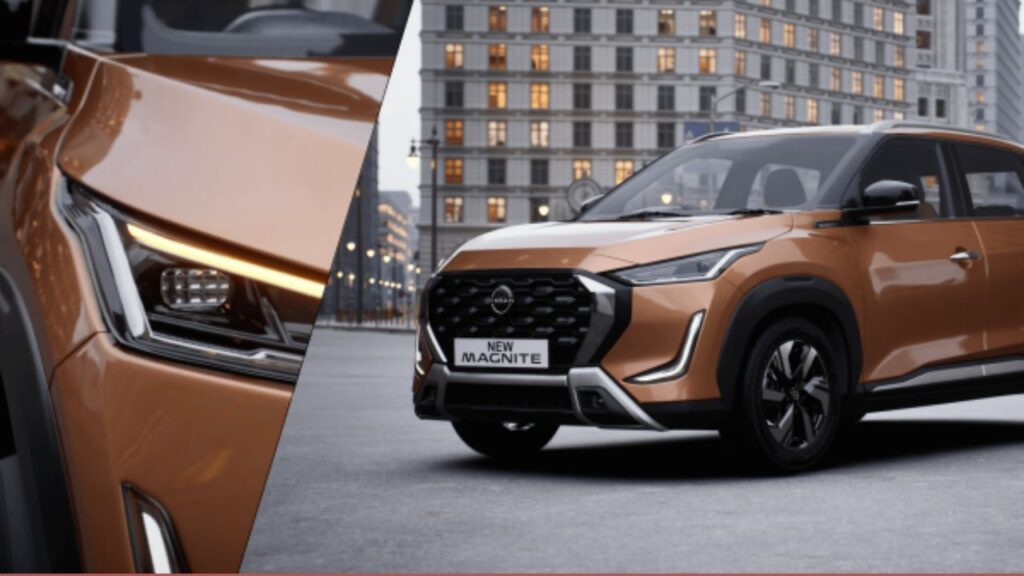
Image credit: Nissan
Common EV platforms: Presently, the CMF-EV platform that has been engineered as a modular platform for 100 percent electric vehicles underpins the Nissan Ariya crossover and Renault Megane E-Tech Electric (with more than 15 models planned for launch by 2030 on this platform, totalling 1.5 million vehicles per year).
Autonomous and connected systems: The Alliance relies on its 20 years of experience in ADAS (advanced driver-assistance systems) and robotic driving to develop the next generation of safety systems. The Alliance aims in originality and development. The Alliance foresees the use of autonomous systems on 10 million vehicles for 45 models by 2026. The joint approach to innovation is exemplified by Nissan’s award-winning ProPILOT system.
3. Geographic Market Expansion
Add to that the geography of the two companies and the Alliance combines Renault’s strength in Europe, Latin America and Russia with that of Nissan’s in the Asia-Pacific region and strong presence in North America. Mitsubishi brings more expertise to the table in the Southeast Asian region. This geographic complementarity means that:
Joint development of the market: All the three members the Alliance, namely, are focused strategically on India where vehicle development, manufacturing and sales are coordinated. A restructuring in 2025 enabled Renault to buy out its Chennai joint venture (Renault Nissan Automotive India Private Ltd) and streamline its operations.
Common dealer networks: The Alliance manages dealer profitability and cost reduction through the shared services center and digital platform, enabling a reduction in the cost of infrastructure duplication.
4. Financial and Operational Synergies
The Alliance generated €5.7 billion of synergies on an annual basis by 2017, which equated to around $6.6 billion of cost reductions and revenue enhancements. These synergies come from:
Share logistics services: The Alliance achieves more than €200 million a year in logistics synergies through sharing warehouses, containers, crates, seagoing vessels, customs procedures.
Joint financial services: The Alliance’s far-reaching combined financial and bank activities allow for better credit terms and financing fees.
Cross-manufacture of vehicles: The success in commercial vehicles highlights the advantage of cross-manufacture — the Renault Kangoo/Nissan Kubistar, the Master/Nissan Interstar, and the Trafic/Nissan Primastar all share roughly 80% of parts while still distinct brands.
Core Innovation: Common Module Family (CMF) Architecture
The Common Module Family is the Alliance’s biggest breakthrough in vehicle development efficiency. To be clear, rather than build full platforms for single vehicles, CMF applies modular design with interchangeable “Big Modules”:
The five core modules:
- Engine compartment module
- Cockpit module
- Front underbody module
- Rear underbody module
- Electrical and electronic architecture module
These modules can be mixed and matched to build cars across segments and brands. As an example, a single underbody can be stretched and stretched again to produce a compact sedan, a mid-size sport-utility vehicle and even a large crossover simply by changing module sizes and configurations. 80% of the Alliance model launches between 2014 and 2016 will be based on shared platform and CMF standardisation.
The CMF architecture evolved drastically towards the Alliance 2030 vision, with the aim of achieving 80% platform commonization by 2026 for the three member companies, in contrast to 60% currently.
Present Status & Developments (2024-2025)
Nissan is Ready To Overcome Challenges
Nissan was under increasing pressure financially in 2024 with its net profit for the first half falling 93% and the carmaker announcing it was cutting tens of thousands of jobs. There were several reasons: obsolete products, battered brand image, competition from Chinese carmakers, import tariffs in the US, and costs of shifting rapidly to EVs.
Re:Nissan Recovery Plan
Futuristic looks, a great new engine series, etc. In May 2025, Nissan’s CEO, Ivan Espinosa, presented the all-encompassing “Re:Nissan” revival strategy with a focus on achieving profitability in fiscal 2026.
There are numerous activities to take into account including the following:
Manufacturing restructuring: Streamlining production and slashing global capacity by 20% through cutting production plants from 17 to 10. This restructuring shift capital toward electric vehicles and autonomous technology investments.
Cost saving: Aiming for €400 billion yen (£3.6 billion) in savings by consolidating its supplier panel to obtain higher volume from fewer suppliers and also by reducing legacy inefficiencies.
Restructuring: Reducing top management by 20 percent, implementing a single-layer non-officer structure, and establishing a smaller, faster-moving global headquarters.
Product focus: Stopping further advanced and post-2026 development to turn 3,000 employees’ attention to cost-cutting.
Restructured Alliance Agreement
March 2025 was a major overhaul in the Renault-Nissan alliance. The revised agreement allowed more flexibility in cross-shareholdings by reducing the lock-up obligation from 15% to 10%, thus granting more freedom to both companies in terms of shareholding.
Renault bought 51% stake of Nissan in Renault nissan automotive India, now with this acquisition Renault got full hold on the joint venture and subsided its presence in India while $200 million to Nissan’s immediate cash. Nissan was freed from its obligation to invest in Ampere (Renault’s EV investment company) while continuing on other agreed product projects.
Read More:- Renault and Nissan Alliance Guide – History, Benefits & Future Vision
Future Vision: Alliance 2030 Roadmap
The Alliance 2030 strategic plan is the most advanced vision of the partnership’s future, built on three pillars:
1. Electrification Leadership
The €23 billion investment pledge for the next five years backs the development of 35 new EV models by 2030. Of these, 90% will be developed against five common EV platforms which address the major global markets and covers all vehicle segments.”
Some major EV platforms include the following:
CMF-EV: The global flagship platform is also the first to be built on with the Nissan Ariya and Renault Megane E-Tech Electric as production models
CMF-BEV: A new small car platform for the replacement of Micra EV in Europe
Shared platforms: Shared models for all three group companies across the C-, D- and SUV segments
Battery strategy: In addition to the 220 GWh production capacity target, the Alliance has full ownership of battery hardware and software—enabling predictive health monitoring, advanced recycling protocols and second life battery applications.
2. Connected and Autonomous Mobility
The Alliance aims for 25 million connected vehicles exchanging data through the Alliance Cloud by 2026, versus 3 million today. This connectivity enables:
Software updates: Enable all customers such as you & retailers and workshop to enjoy and get more – fend off older game features with new additional features more and services, safety improvements, and personalisation of vehicles and services.
Active driver assistance system: 10 million vehicles with autonomous driving functions across 45 models in 2026
Google ecosystem integration: The Alliance will be the first mass-market automaker to bring the Google ecosystem to vehicles with native Google Maps, Google Assistant and Google Play integration.
3. Sustainable and Profitable Growth
Sustainable Vision 2030 is consistent to become a full supporter of a sustainable future with other goals for the environment. The Alliance targets to reach full carbon neutrality in Europe by 2040, to play its part in wider climate goals and stay competitively profitable.
Conclusion
The Renault-Nissan-Mitsubishi Alliance is a unique strategic automotive collaboration, which has allowed three very different companies to achieve substantial benefits and efficiencies. A relentless focus on EVs, battery technology, software-defined vehicles and autonomous driving systems positions the Alliance to lead the transformation of the automotive industry into sustainable, connected mobility.
The Alliance 2030 roadmap with its target of 35 new EV models, 220 GWh battery capacity and 25 million connected vehicles reaffirms that the tripartite cooperation, though facing short term challenges, is still strategically committed to industry leadership in an era of unprecedented automotive change.
